Indoor Cycling
Best Budget Smart Indoor Trainer Setups: Six Options Worth Considering
Smart indoor trainers keep getting better while prices come down. Six setups and components worth considering, from the cheapest Zwift-ready option upward.
Introduction
Indoor training has long carried a reputation as the expensive corner of cycling. A fully immersive smart trainer setup once looked more like an aspirational social media post than something most riders would realistically buy, and that gap put plenty of people off riding indoors altogether.
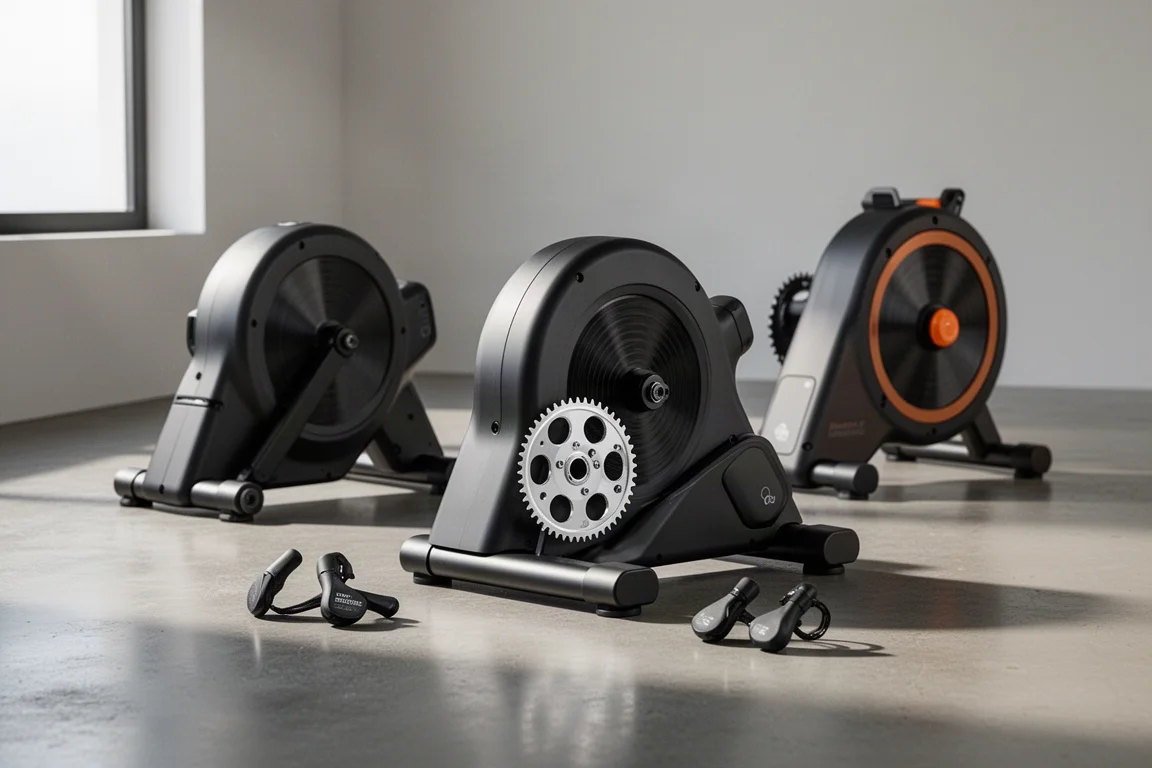
That has changed. Smart direct drive trainers, the type that measure your power output and link up with indoor training apps, are improving quickly while prices come down. A direct drive smart trainer with a Zwift Cog included can now be found for less than $300, which is a very different proposition from the days when a four-figure outlay was the norm.
The shift is not only about price. Moving from a cassette to a single cog with virtual shifting has made indoor training quieter, smoother and easier to live with, particularly when more than one bike or more than one rider shares the same trainer. The six options below cover the range, from the lowest-priced Zwift-ready trainer to a higher-specification unit with tighter power accuracy.
What to Look For in a Smart Indoor Trainer
Direct drive trainers replaced the older wheel-on design, and the difference matters. A direct drive unit measures your power output and connects to indoor training apps, which is what makes structured sessions and virtual riding possible in the first place.
When comparing models, a handful of numbers do most of the work. Power accuracy tells you how closely the trainer’s readings track reality. Maximum power tells you how much headroom the unit has for hard efforts. Gradient simulation tells you how steep the virtual climbs can get. Beyond the numbers, connectivity is where the newest trainers are separating themselves, with Wi-Fi, direct pairing to heart rate monitors and direct pairing to handlebar controllers all appearing on current models.
Virtual shifting compatibility is the other thing to check, because it determines which bikes will work with a single-cog setup and how simple the whole system is to operate day to day.
Van Riel D100: The Lowest-Cost Entry Point
The D100 is the lowest-priced Zwift-ready trainer on sale in the UK. It costs £279 in the UK and £299 in Europe with the Zwift Cog and Click installed, which makes it the most affordable way into a smart direct drive setup. Van Riel combines a presence at the cutting edge of professional cycling with the scale of a large retail operation.
The trade-off is headroom. Riders who put out a lot of power, or who want to replicate very steep climbs, may find the limits of this trainer. For getting started with structured indoor training, though, it is a straightforward and low-risk entry point.
If you are new to indoor training and want to find out whether it fits your routine before spending more, the D100 is the sensible place to begin.
JetBlack Victory: Mid-Range Accuracy and Power
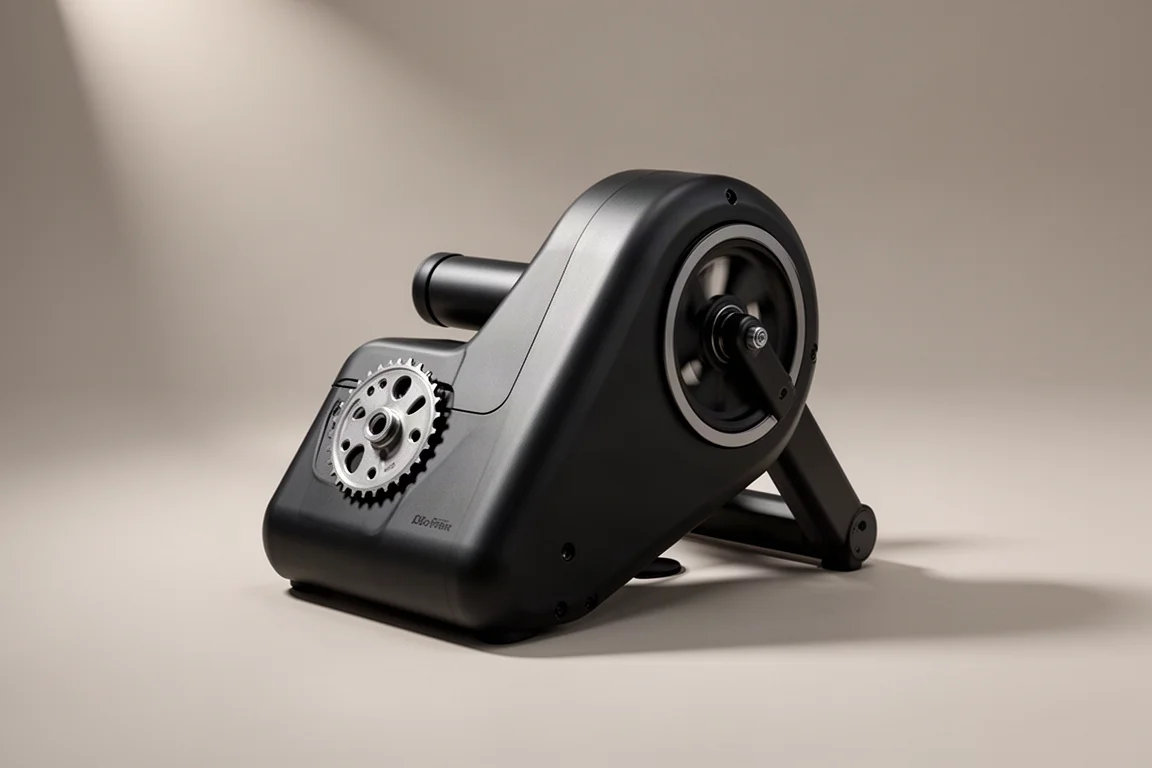
The JetBlack Victory sits close to the Wahoo KICKR Core V2 in specification. It offers power accuracy of plus or minus 2 percent and accommodates up to 1,800 watts, which is more than enough for most riders. It is an update to the earlier JetBlack Volt.
That combination of accuracy and power ceiling covers the vast majority of indoor sessions, from steady endurance work through to hard intervals, without pushing into premium pricing territory.
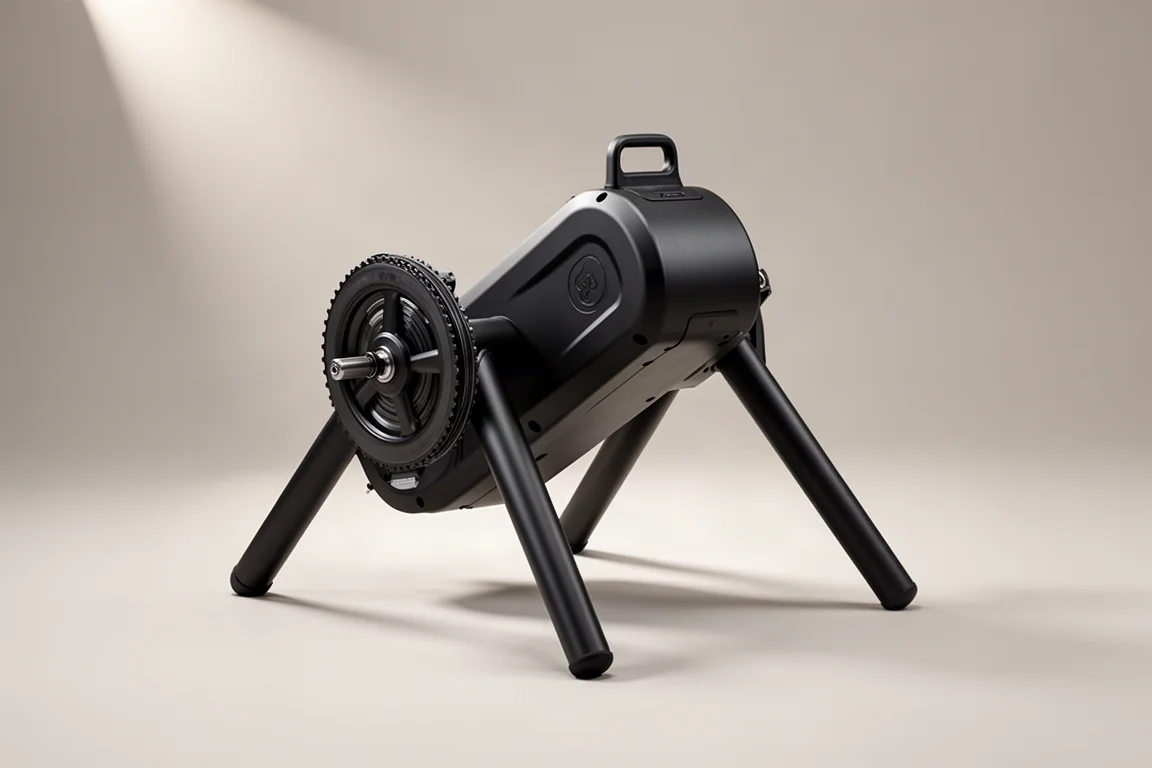
Wahoo KICKR Core V2: New Connectivity
The Wahoo KICKR Core V2 is a new release and, like the original, supports up to 1,800 watts with plus or minus 2 percent accuracy. For most indoor riders that is more than adequate.
The focus of this version is connectivity. It adds Wi-Fi, and it can connect directly to devices such as a heart rate monitor and the Zwift Click controllers mounted on your handlebars. Initial setup, which was already straightforward, has been made easier still.
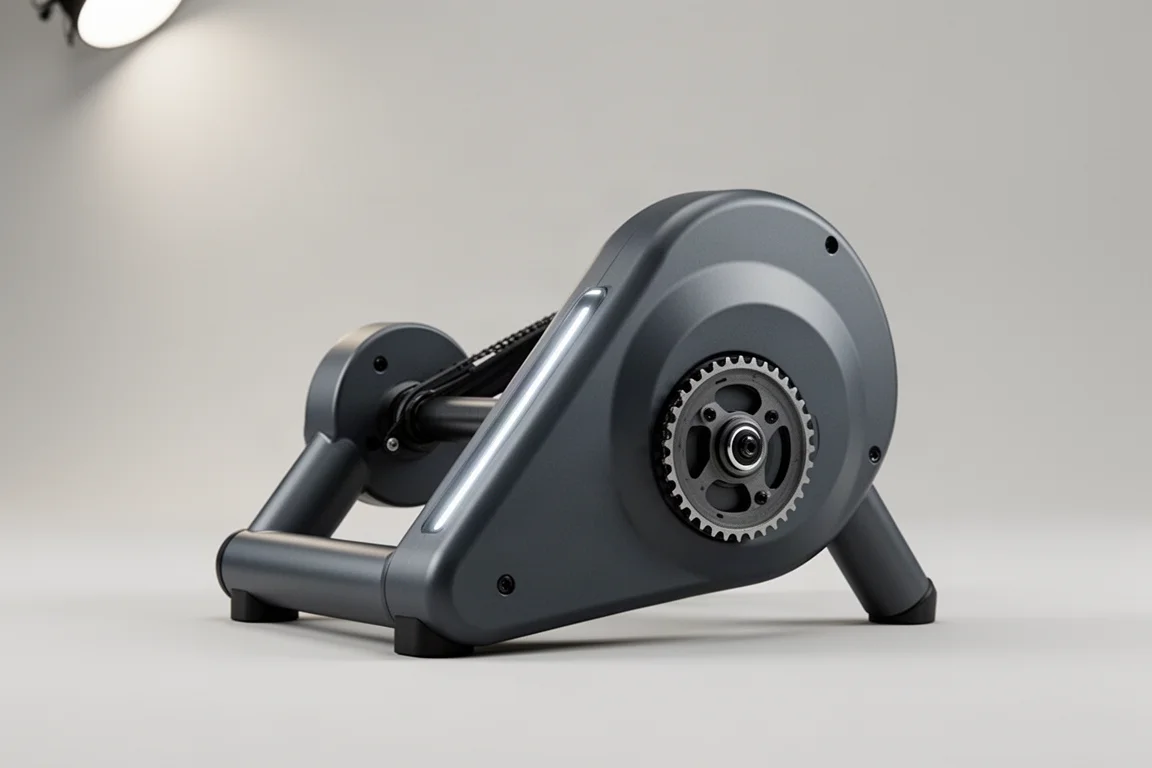
Wahoo KICKR: More Accuracy and More Headroom
If you want a Wahoo trainer with more on offer, the KICKR steps up in two clear ways. Power accuracy improves to plus or minus 1 percent, and it can accommodate up to 2,000 watts. It also introduces a small amount of left and right movement, which adds comfort over longer sessions.
That combination suits riders who train seriously indoors and want the tightest accuracy available in this group.
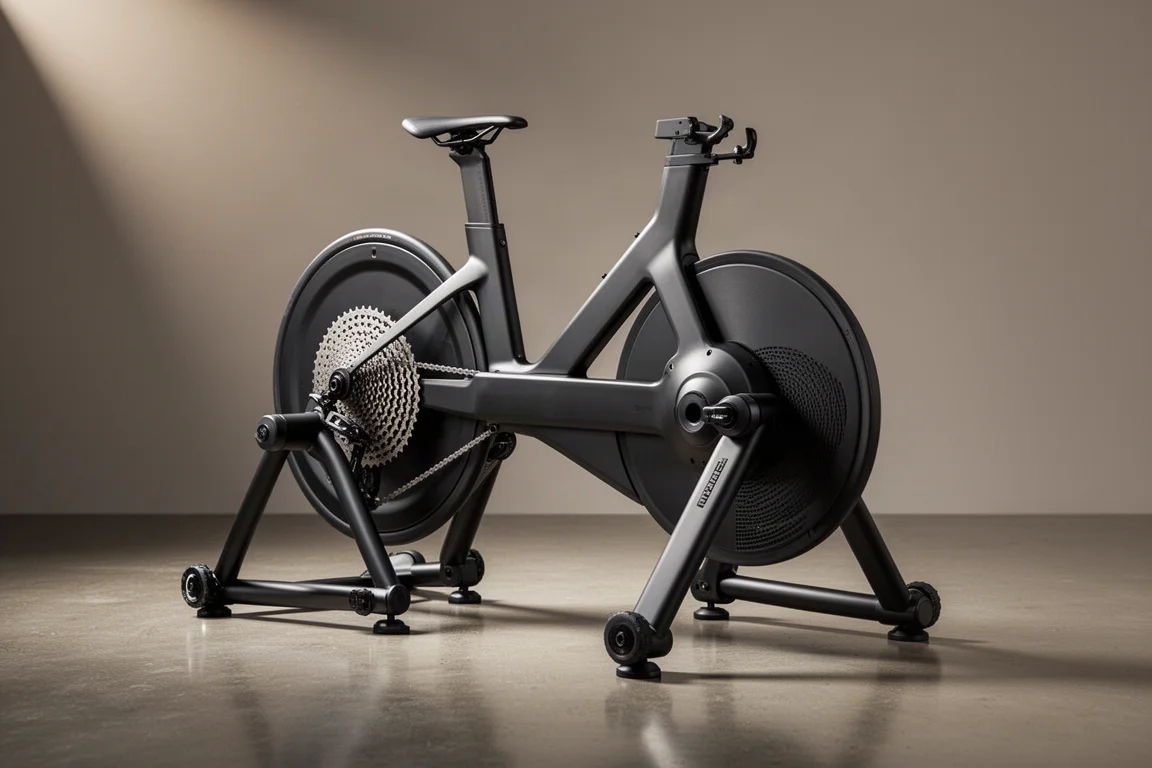
Elite Revo: Beginner-Friendly With Steep Gradient Simulation
Elite has been a leading producer of smart trainers for a long time, and the Revo is its latest beginner-friendly model, supplied with the Zwift Cog and Click. It comes in at £499 or $519.
It offers the same array of connectivity as the Wahoo and JetBlack trainers here, and it can simulate gradients of up to 18 percent. Elite has also released a firmware update that allows the Zwift Cog to work with most of its smart trainers.
Zwift Cog and Click: Virtual Shifting for Almost Any Bike
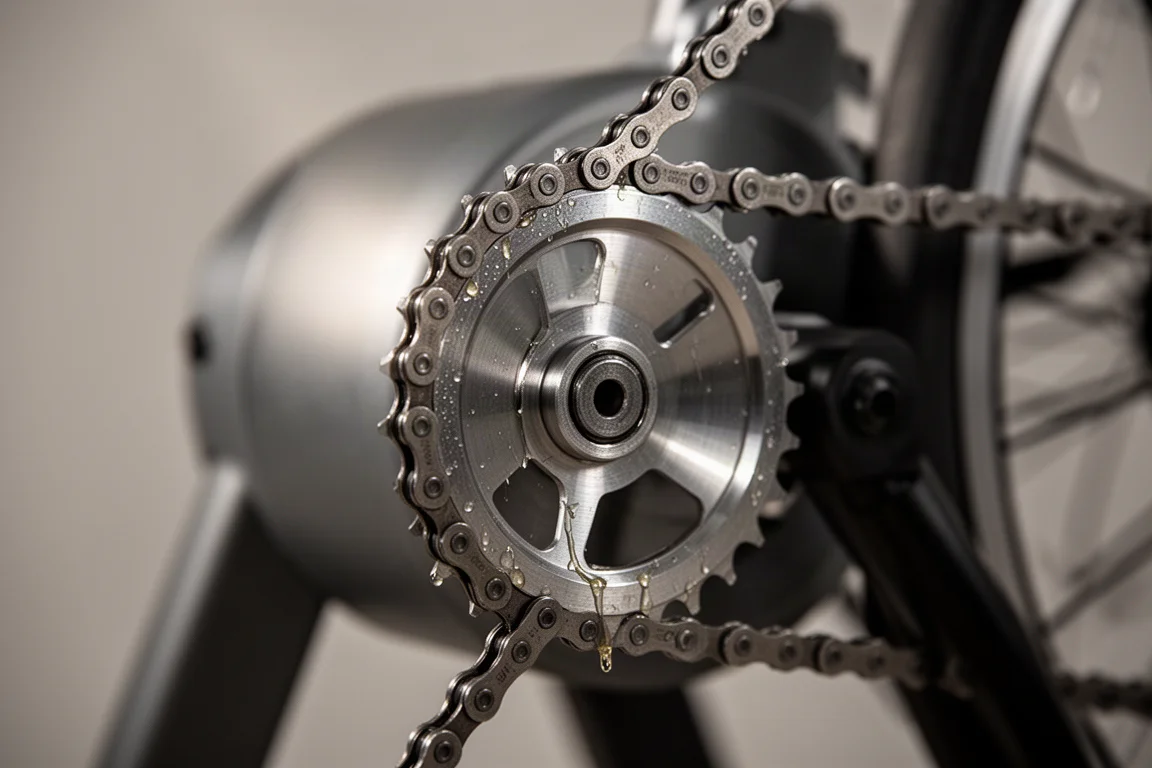
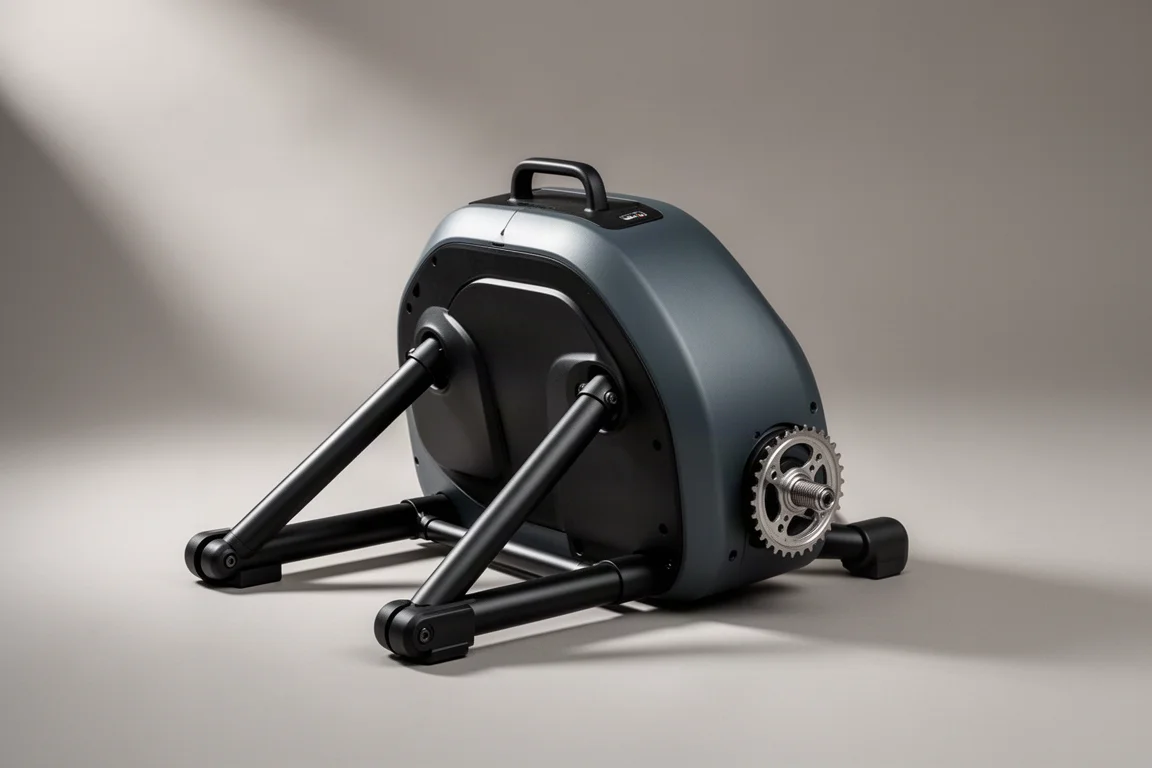
The Zwift Cog and Click is the component that has opened indoor training up the most. Instead of fitting a cassette to your trainer, you fit a single cog, and the handlebar-mounted controllers take care of gear changes virtually. The result is quieter, smoother and more immersive than a conventional gearing setup.
Compatibility is broad. The system works with almost any bike that has somewhere between 8 and 12 gears at the rear, which covers mountain bikes, commuter bikes and even a child’s bike if they want to ride indoors. Because there is only one cog, taking a bike off the trainer and putting another one back on is much simpler, and virtual shifting handles the gearing for you. It works with nearly all Wahoo smart trainers and, following a firmware update, with most Elite smart trainers as well. It is worth checking the compatibility details before buying.
What Else You Need for a Complete Setup
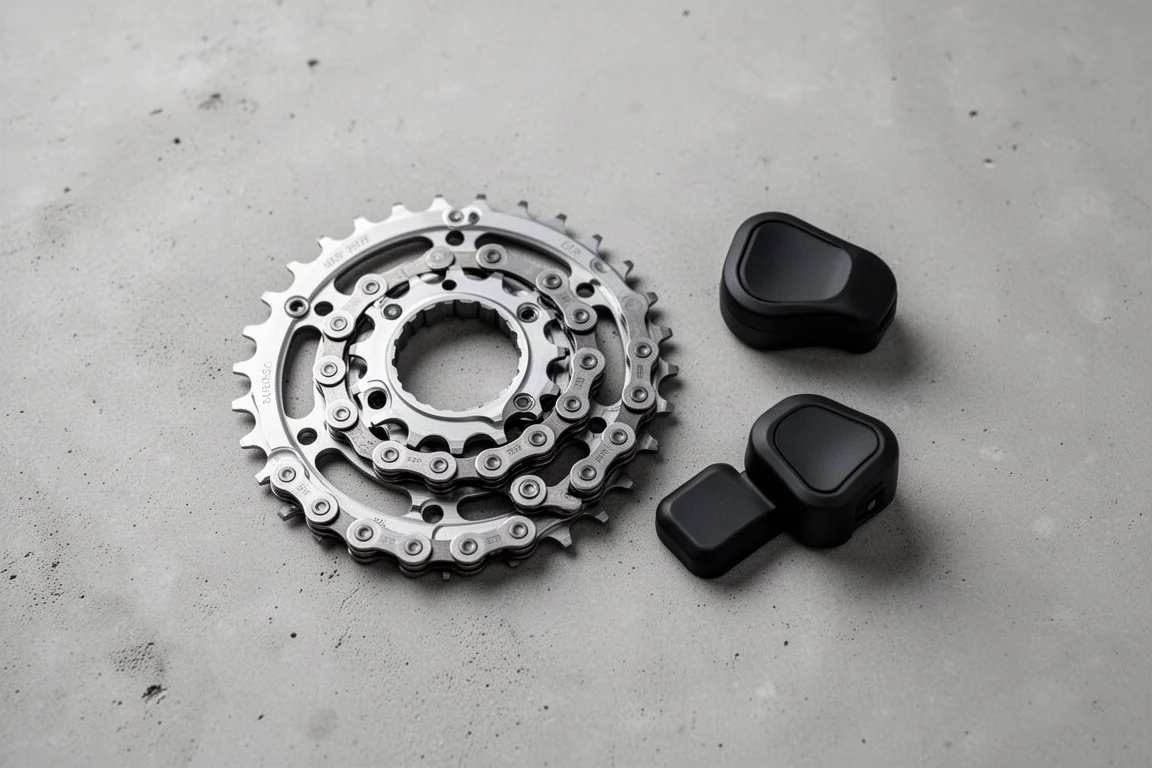
Hardware is only part of the picture. A Zwift subscription is needed to use the platform. There is currently a 14-day free trial, after which the cost is £17.99 per month or $19.99, with 20 percent off if you subscribe annually.
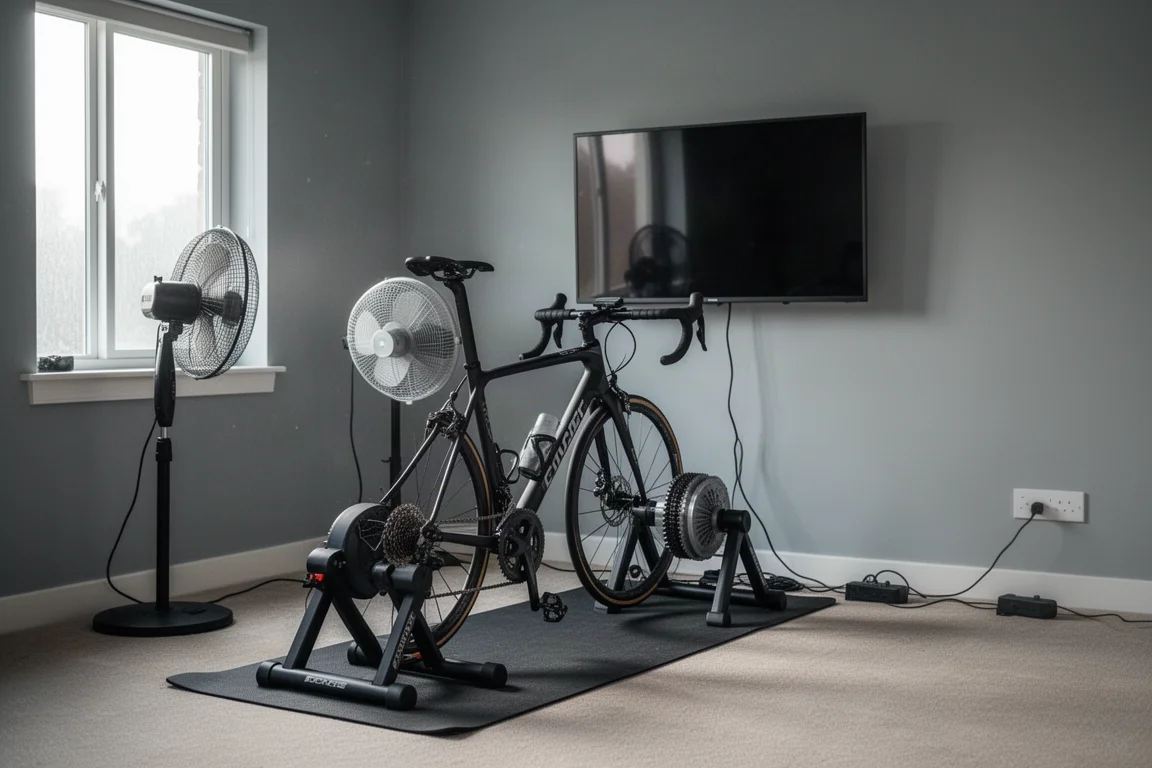
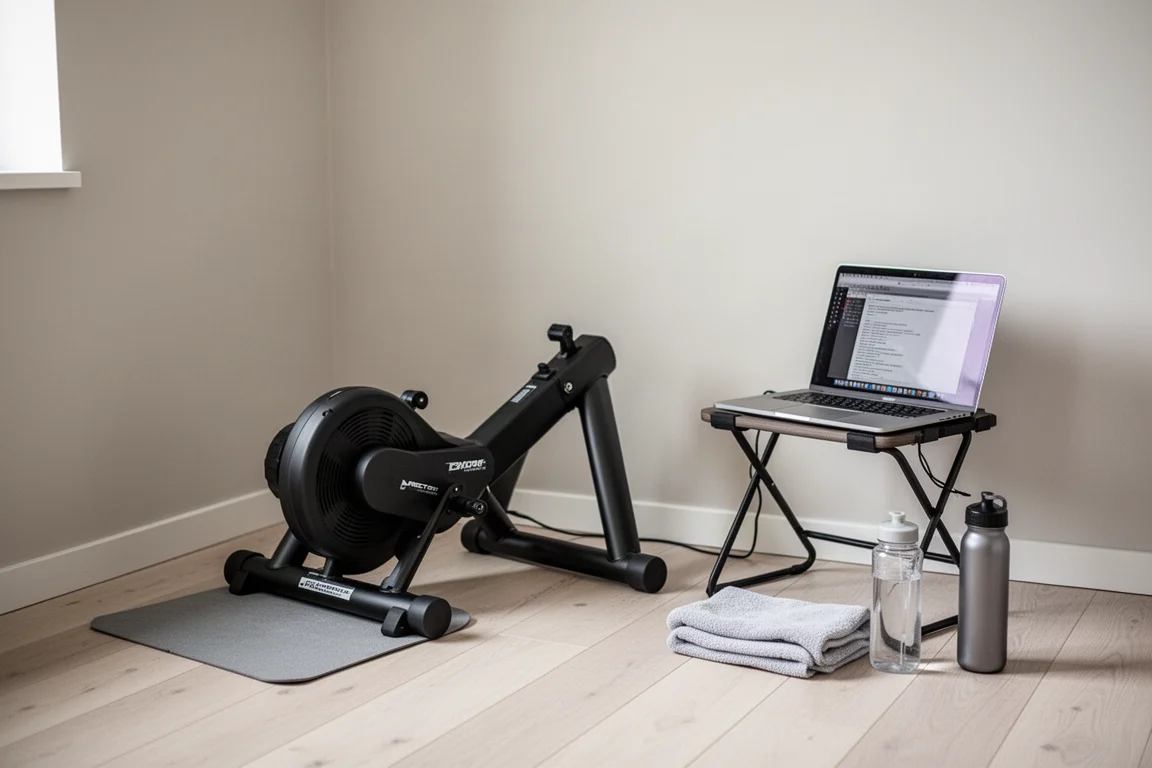
You also need something to watch your workout on. A flat screen smart TV is the obvious choice, and a laptop or tablet works well too. A phone is not recommended for regular indoor workouts: the experience is far less immersive, and it prevents you from using the separate companion app.
A heart rate strap is worth adding. It is not required to get started, but it helps you monitor progress as your fitness improves. Padded shorts make a substantial difference to comfort indoors, and an indoor trainer is a safe place to try clipless pedals and shoes for the first time, since falling off a stationary setup is unlikely.
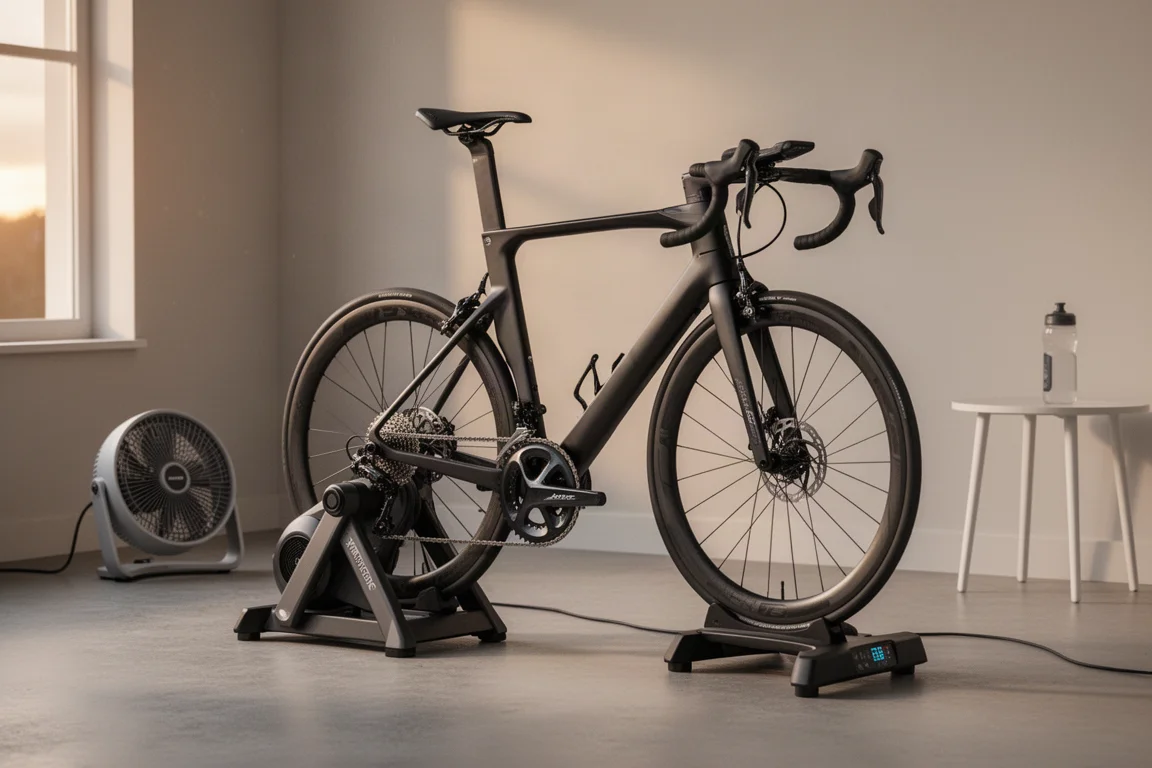
Two practical items are easy to overlook. A fan is close to essential, because without airflow you will overheat quickly. And something to protect the floor, and your bike, from sweat is a sensible addition. Finally, you need a bike, and with the Zwift Cog and Click that can be almost any bike you already own.
Choosing Between These Setups
The right choice comes down to how much you want to spend and how hard you intend to ride indoors. The Van Riel D100 is the clear starting point for anyone testing whether indoor training suits them, at the lowest cost of the group and with the Zwift Cog and Click included in Europe. Riders who expect to push hard or want steeper virtual climbs simulated should look further up the range.
The JetBlack Victory and the Wahoo KICKR Core V2 occupy similar ground, with plus or minus 2 percent accuracy and 1,800 watts of headroom. The KICKR Core V2 adds Wi-Fi and direct pairing with heart rate monitors and the Zwift Click controllers, which makes it the simpler system to live with day to day. The Elite Revo matches that connectivity and adds gradient simulation of up to 18 percent, which matters if steep virtual climbs are part of your training.
At the top of this group, the Wahoo KICKR offers the tightest accuracy at plus or minus 1 percent, a 2,000 watt ceiling and a small amount of side-to-side movement for comfort. If you already own a compatible smart trainer, or you find a good secondhand unit, adding the Zwift Cog and Click is a much cheaper route to virtual shifting and quieter, smoother gearing.
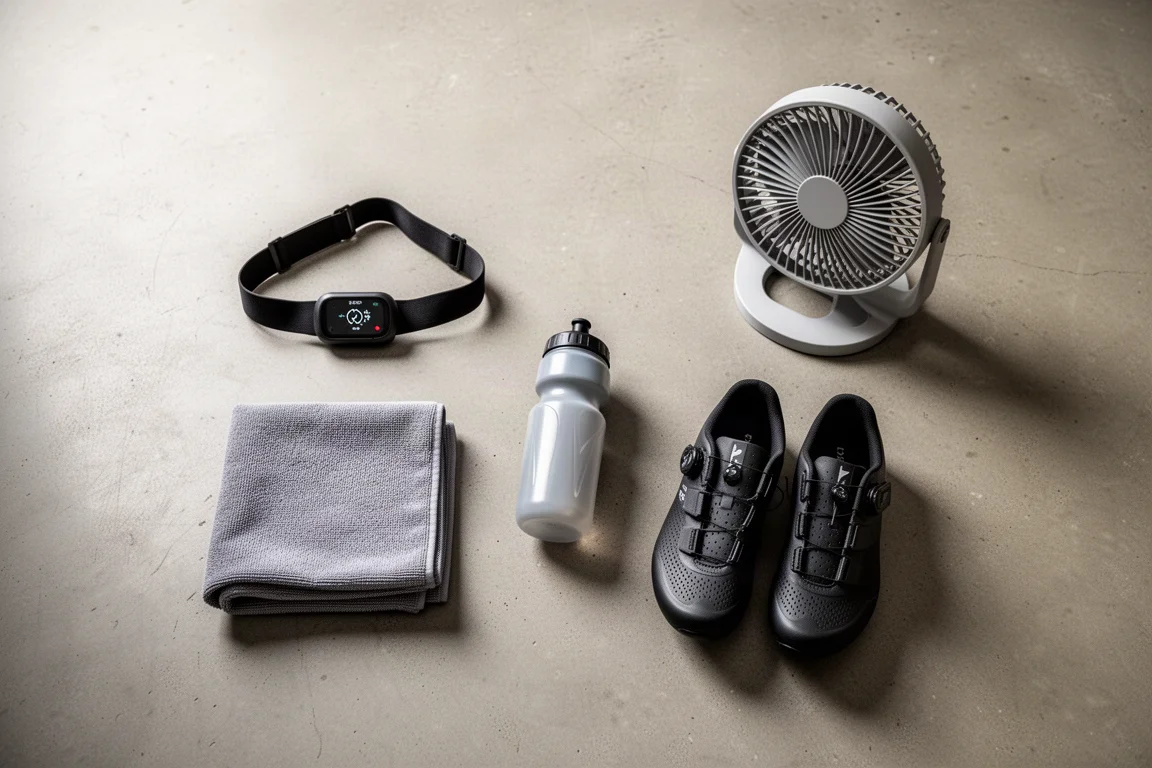
Whichever route you take, the supporting items are the same: a subscription, a screen, a heart rate strap, padded shorts, a fan and floor protection. Budget for those alongside the trainer, because they make a bigger difference to the experience than most people expect.
Conclusion
Indoor training is one part of cycling where the technology is genuinely improving while the cost of entry falls. A smart direct drive trainer with virtual shifting no longer requires a four-figure outlay, and the addition of the Zwift Cog and Click means the bike you already own is very likely to work.
Start with the setup that matches your budget and your training ambitions, then build the rest of the environment around it. The trainer is the foundation, but the fan, the screen and the subscription are what turn it into a routine you will actually keep.
Further reading
Related Reviews
Indoor Cycling
Best Budget Smart Indoor Trainers for Immersive Cycling in 2026
A practical guide to affordable smart indoor trainer setups, including budget and mid-range options with virtual shifting.
Indoor Cycling
Best Indoor Cycling Apps and Smart Trainers: A Winter Buying Guide
A practical look at the indoor training platforms and smart trainers that matter this season, from a new challenger to Zwift to the entry-level trainer that stands out on value.
Indoor Cycling
Best Indoor Cycling Trainer Setups for Every Budget
Entry level smart trainers, mid-range options, dedicated indoor bikes and premium direct drive setups compared, plus the add-ons that make indoor riding feel more real.