Indoor Cycling
Wahoo KICKR Bike Shift Review: The Smart Bike That Costs $1,000 Less
A dedicated indoor smart bike with real cockpit hardware, a new belt-driven resistance system, and excellent accuracy at a friendlier price than the KICKR Bike V2.
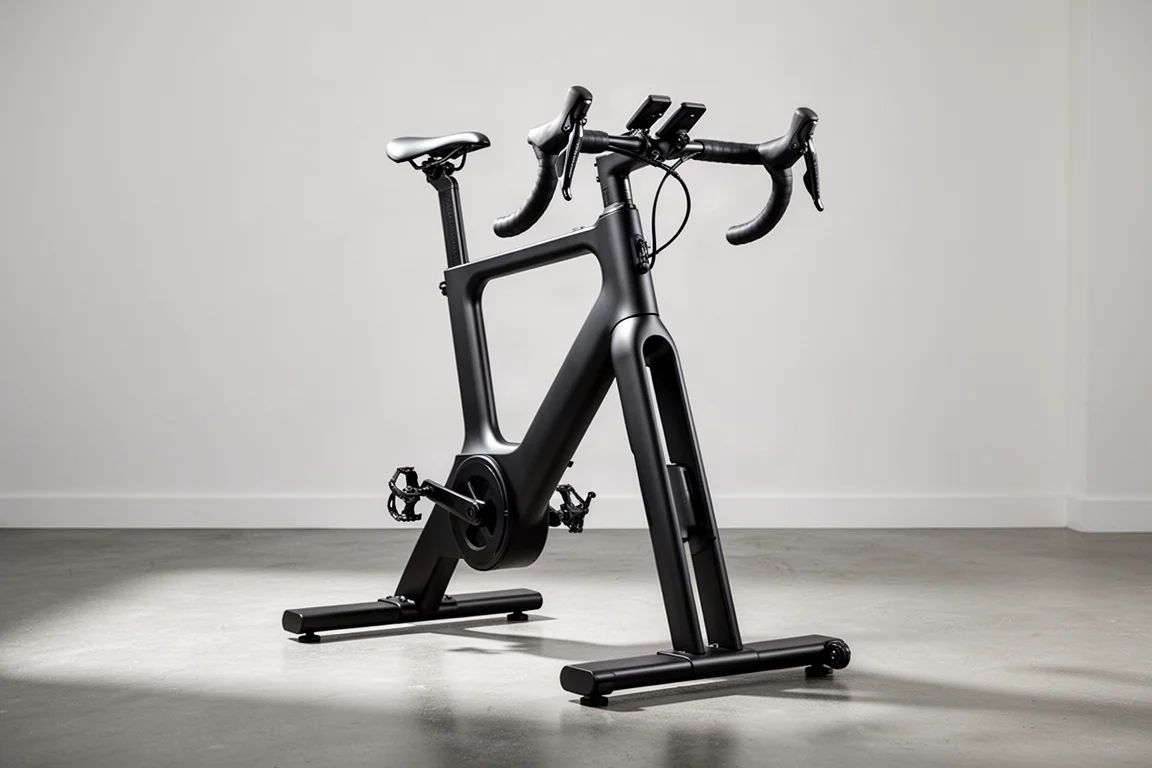
Introduction
Wahoo’s new KICKR Bike Shift has a simple mission: deliver nearly everything that makes a dedicated smart bike appealing, but in a package that costs $1,000 less than the KICKR Bike V2. It still lands at $2,999 against the V2’s $3,999, so this is not a budget machine. It is a premium indoor bike with a few carefully chosen features removed, plus some genuine improvements along the way.
The headline omission is the pivot point found at the base of the KICKR Bike V2, which physically tilts the bike to simulate climbing and descending. Everything else, from the real cockpit hardware to the impressive power accuracy, carries over largely intact, and the new belt-driven resistance system is arguably quieter and smoother than before.
Why Choose a Dedicated Smart Bike?
Direct drive trainers are excellent, but they come with a recurring hassle: installing your outdoor bike when you want to ride inside, then removing it when you want to ride outside again. A dedicated smart bike eliminates that friction entirely. It is always set up and ready to go.
There is also the multi-rider household argument. If more than one person in your home rides and you only own one trainer, everyone has to swap bikes on and off it. With a dedicated smart bike, each rider simply makes a few size adjustments and starts pedaling. You also avoid additional wear and tear on your real bike. The trade-off is cost, which is exactly the gap the KICKR Bike Shift is designed to close.
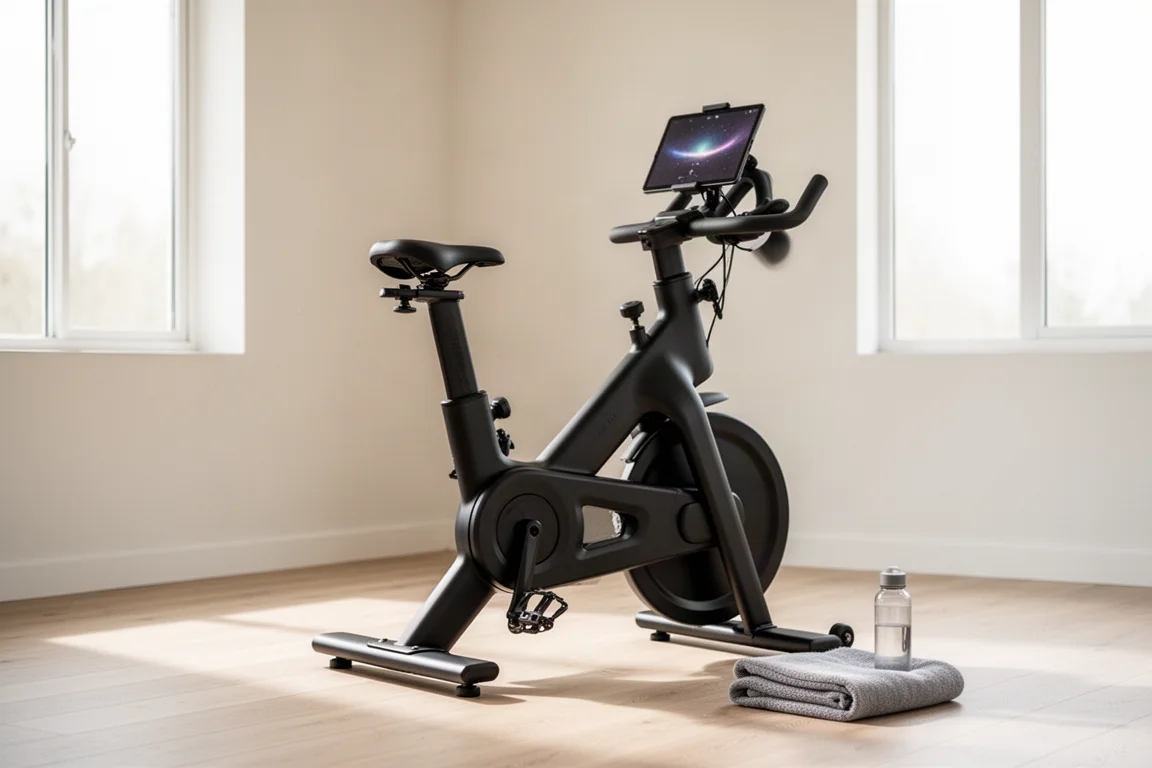
KICKR Bike Shift at a Glance
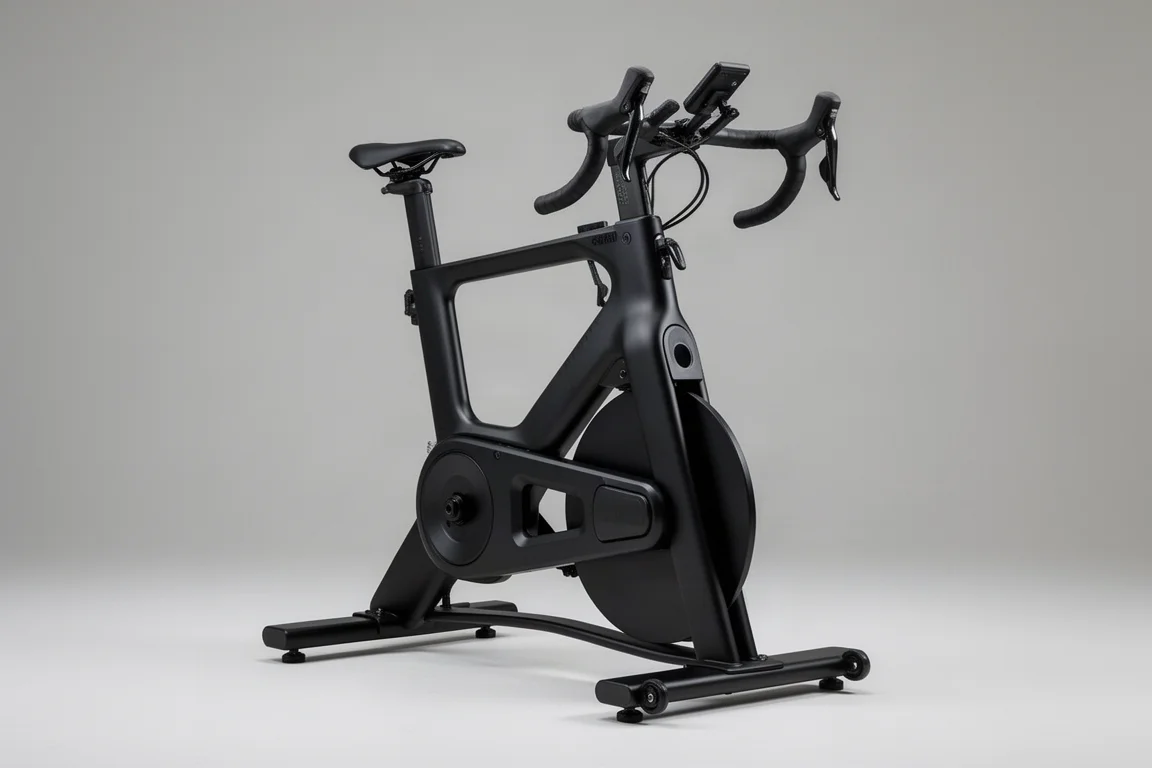
The KICKR Bike Shift is a dedicated interactive smart bike designed to mirror your outdoor bike, with a real stem, real handlebars, real shifters and real brake levers that actually stop the flywheel. The brake-shift lever combos feel close to normal road levers, and there are steering buttons for compatible training platforms.
Key specs from Wahoo include:
- Up to 2,200 watts of resistance, which covers nearly every rider
- Slope simulation up to a 20 percent grade
- Claimed power accuracy of plus or minus one percent
- Belt-driven brake resistance, new versus the motor system on the original KICKR Bike
- Around 100 pounds (40 kg) total weight, with a 250-pound maximum rider weight
- Advertised rider height range of roughly 5’0” to 6’4”, with the option to swap the seatpost and stem if you are taller
- Connectivity: three Bluetooth channels including Bluetooth FTMS and FTMS FE-C for trainer control, plus Wi-Fi and a Direct Connect port for a hardwired network connection
With that connection list, it works with essentially any training app on any device: an iPad or tablet, a Mac or PC, an Apple TV, even a bike computer.
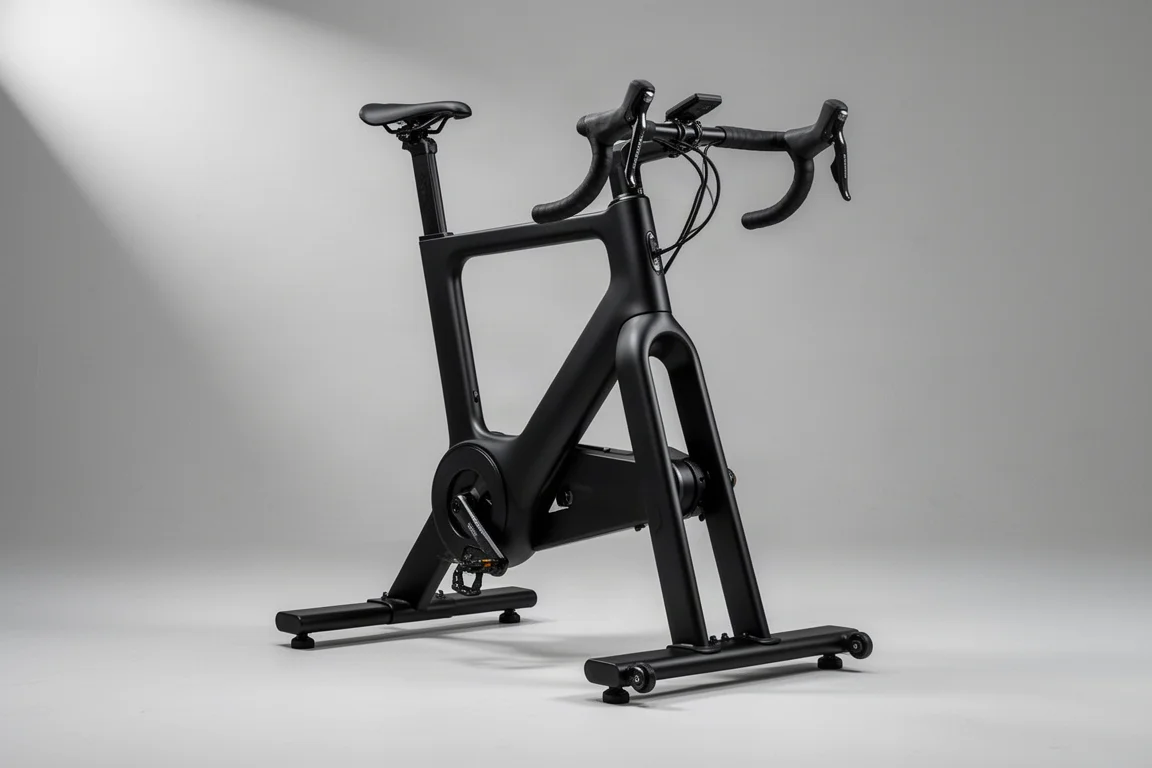
A New, Much Quieter Resistance System
The most striking improvement is noise. The KICKR Bike Shift uses a new enclosed brake resistance system with a belt drive, replacing the exposed-flywheel motor design of the original KICKR Bike. The motor on the V2 can drive the flywheel forward for downhill simulation in compatible apps, but it is not completely silent. It carries a light hum that grows louder as speed increases.
The Shift, by contrast, is one of the quietest smart bikes or trainers available. At normal speaking volume you can talk over it without raising your voice, and even sprints only nudge the sound level slightly. It is also remarkably smooth. Wahoo attributes this to a very small amount of overall drag in the new system, which means even without downhill drive simulation, descents feel smoother than on many other trainers because the flywheel resists so little.
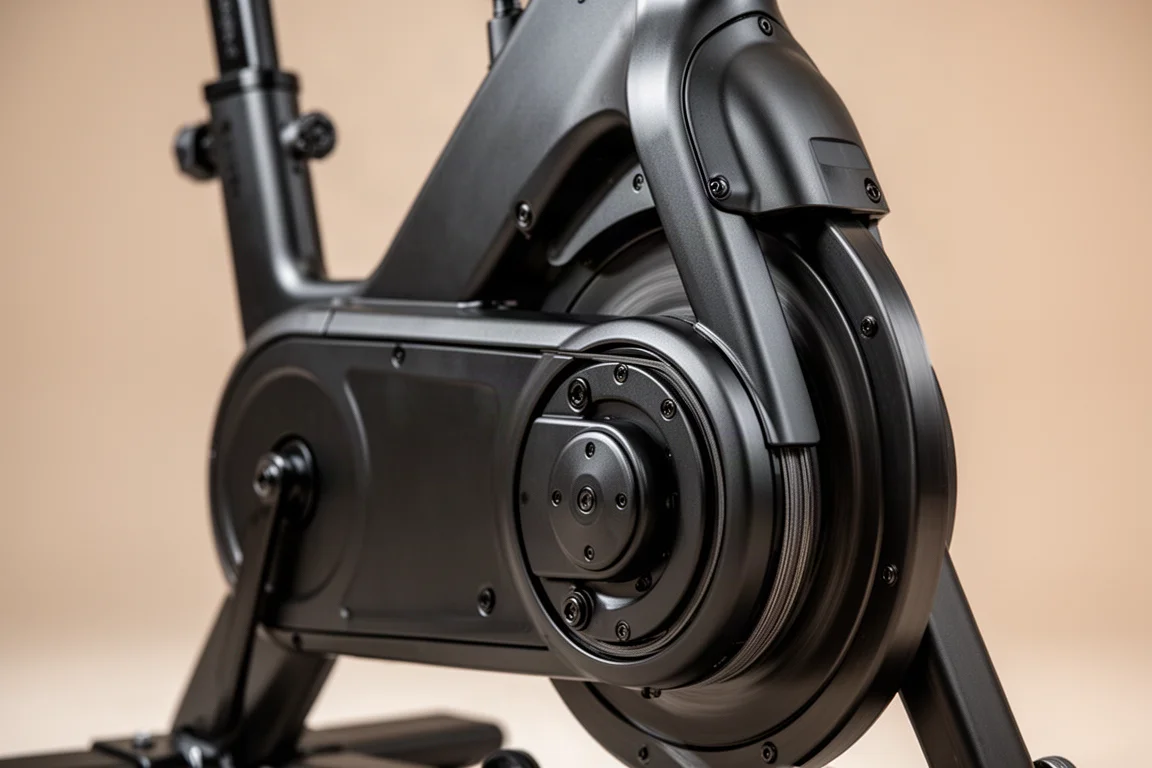
Ride feel benefits too: the resistance ramps up naturally like an outdoor bike, and there is a good amount of inertia once you are up to speed. Overall, the drivetrain, flywheel and quietness combine into one of the best-feeling resistance systems around.
Build, Adjustments and the Saddle
Construction is very robust, arguably a touch more so than the V2 simply because there is one less moving part. The base is rock solid under sprints, and slightly more stable than the V2 since there is no pivot mechanism. There is a small amount of intentional flex at the front adjustment point in the stem and handlebar area, which softens the ride without feeling wobbly.
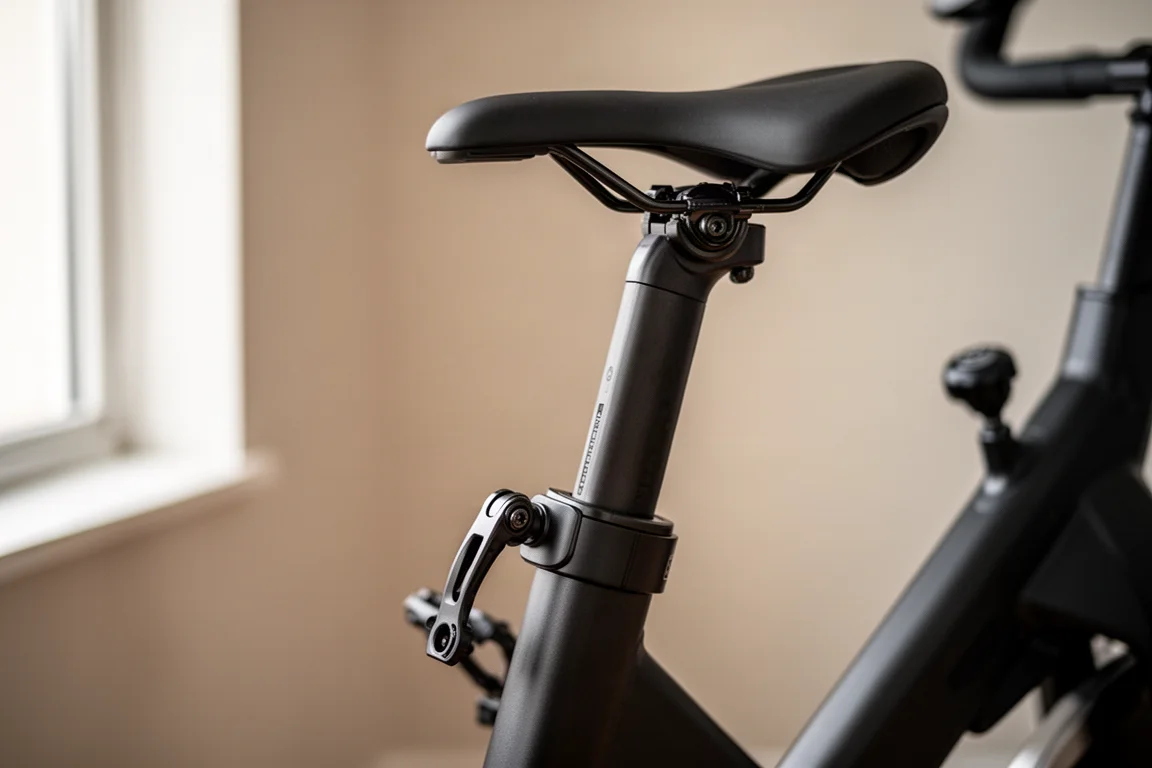
Changes versus the original include more rounded rectangular tube shapes (the originals were more triangular), a slightly narrower top tube to reduce the chance of thigh rub, and revised adjustment hardware: a knob for the standover adjustment, repositionable levers for reach and saddle fore/aft, and standard quick releases for seatpost and stem height. The adjustable crank length system carries over, ranging from 165 mm to 175 mm.
The one clear weak point is the stock saddle. It is simply a fairly basic saddle and a genuine pain point for longer sessions. If you plan to spend serious hours indoors, plan to swap in your favorite saddle.
Fit, Adjustments and Customization
Customization is a major strength. Within the Wahoo app you can create multiple bike profiles and mirror your outdoor drivetrain almost exactly: Shimano Di2 or mechanical, Shimano Di2 Synchro Shift, SRAM eTap, SRAM mechanical, or Campagnolo shifting. You can choose brake configuration, chainring setup (1x, 2x or triple) with per-chainring tooth counts, cassette speed from 9 to 13, cassette range, and even a custom range. Multiple profiles can be loaded at any time, which makes the bike easy to share in a household with different preferences.
One cost-saving change: there is no gear display beneath the top tube like on the V2. The electronics now sit beneath the stem, connected by a small cable that attaches via a magnet. After several weeks of riding, the display was not missed, especially since some training apps show gear data on screen anyway.
Setup Experience
Wahoo has put clear effort into assembly. The bike arrives in a large box, and it helps to have a second person for lifting. A QR code on the box launches a well-produced setup video that walks you through every step, and the video helpfully displays the required numbers for each adjustment point as you go.
You lay the box on its side, attach one side leg for easier lifting, then the other side leg and front leg (all Allen bolts are identical, so there is no confusion), install the handlebars via a quick release, connect the electronics magnet, and insert the seatpost. Pedals are the only thing you need to supply.
Fit setup is equally thoughtful: if you have measurements from a fitting system like Retul, you can enter them directly and get exact positions for every adjustment point. Otherwise, the app asks for your inseam and generates the numbers. In testing, the inseam-based fit landed about 95 percent of a preferred road bike fit, needing only minor saddle height and reach tweaks, plus a crank length change from the suggested 170 mm back to 172.5 mm.
Power Accuracy and ERG Mode
Cadence readings track reference dual-sided pedals closely, running about 1 rpm low, with no odd spikes or drops in either ERG mode or free ride. That is well within acceptable range for virtual cadence.
Power accuracy is excellent. In free rides, output lines up almost exactly with reference dual-sided power pedals, often within a few watts even through surges, sprints and rapid cadence changes. One ride averaged around 3.5 watts of difference, still comfortably within the claimed plus or minus one percent tolerance when accounting for slight discrepancy between the bike and the pedals. A couple of momentary blips appeared, but they look more like recording-side artifacts than trainer faults.
ERG mode behavior is equally strong. The Shift adjusts resistance subtly when you drift above or below your power target, avoiding the common problem of trainers overcorrecting in either direction. Power takes about four to seven seconds to settle into each interval, which feels natural and keeps you from overshooting. The easy start ERG mode feature also ramps power up over roughly 10 seconds when you resume a stopped interval, making it much easier to get back on target.
How It Compares to the KICKR Bike V2
The KICKR Bike V2 remains the flagship, and its pivot point at the base tilts the bike physically as you climb and descend in compatible apps. It is a neat experience that keeps riding more engaging, but it adds complexity, an occasional point to check for tightness, and some noise when standing, all of which contributed to the higher price.
Worth noting: long-term V2 owners asked about it reported they used the tilt feature frequently at first, then much less over time. The V2’s motor also enables downhill drive simulation, where the flywheel is spun forward on descents. If those features matter to you, the extra $1,000 may be worth it. If not, the Shift delivers nearly everything else at a notably lower price, with a quieter and smoother drivetrain as a bonus.
Buying Advice: Which One Should You Get?
If you train indoors a lot and want the convenience of a dedicated smart bike, the KICKR Bike Shift ticks nearly every box. The quietness, smooth ride feel, accuracy and deep customization make it easy to live with, and the missing pivot point is a feature many owners barely use after the novelty wears off.
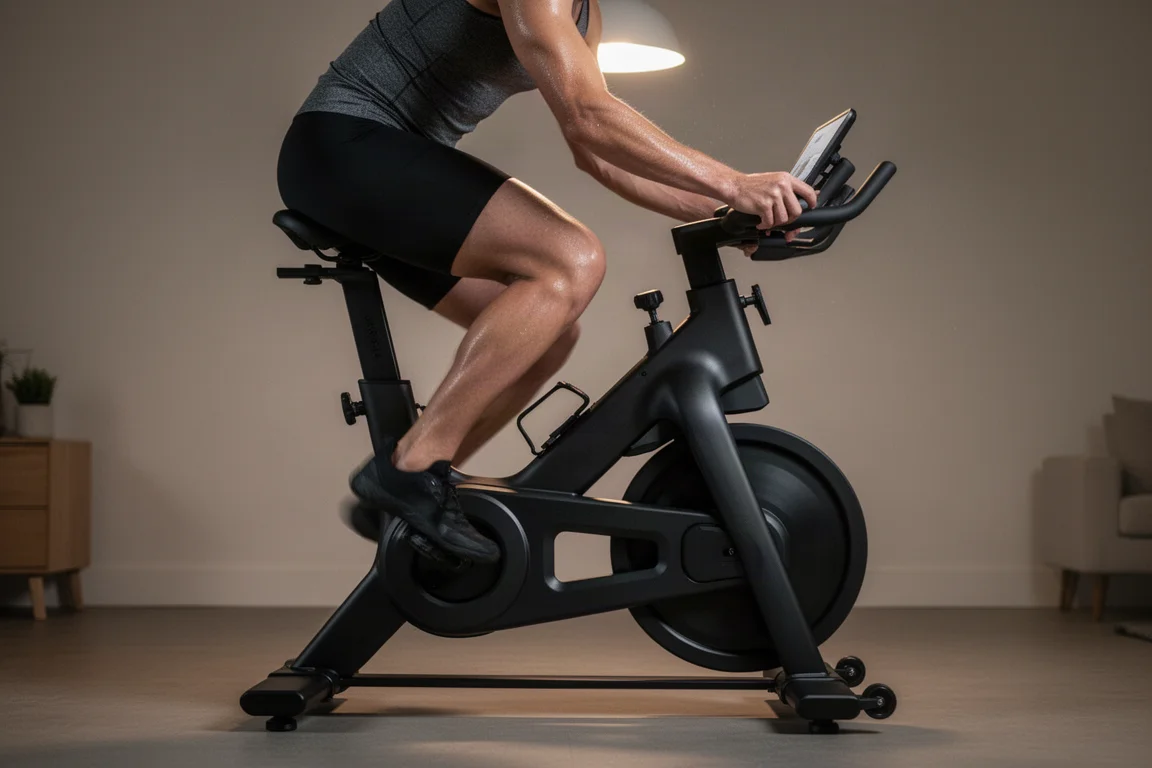
Two things to plan around: budget for a better saddle, and know that like most dedicated smart bikes there is not much lateral movement or flex, which can contribute to fatigue on very long indoor sessions. That is a category-wide trait rather than a Shift-specific flaw, and it is part of why movement-focused trainers exist as an alternative. If you have the space and the budget, the Shift is the smarter value; choose the V2 only if the tilting frame and downhill drive genuinely appeal to you.
Conclusion
The KICKR Bike Shift proves that a dedicated smart bike does not need every bell and whistle to be excellent. By removing the pivot point and gear display, Wahoo shaved $1,000 off the price while simultaneously improving quietness and smoothness with the new belt-driven resistance system. Power accuracy, ERG mode behavior and build quality all hold up to serious training use. For most indoor riders, this is now the smart bike to buy first.
Further reading
Related Reviews
Indoor Cycling
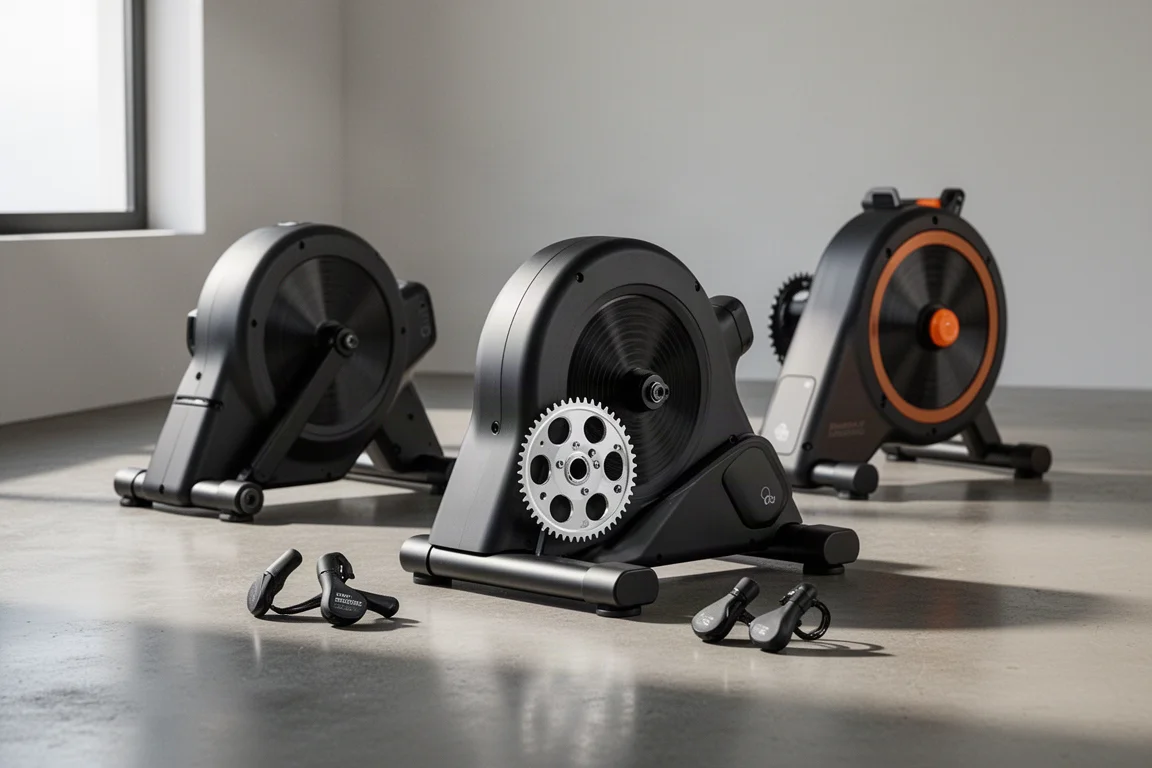
Best Budget Smart Indoor Trainer Setups: Six Options Worth Considering
Smart indoor trainers keep getting better while prices come down. Six setups and components worth considering, from the cheapest Zwift-ready option upward.
Indoor Cycling
Best Budget Smart Indoor Trainers for Immersive Cycling in 2026
A practical guide to affordable smart indoor trainer setups, including budget and mid-range options with virtual shifting.
Indoor Cycling
Best Indoor Cycling Apps and Smart Trainers: A Winter Buying Guide
A practical look at the indoor training platforms and smart trainers that matter this season, from a new challenger to Zwift to the entry-level trainer that stands out on value.