Indoor Cycling
Wahoo Headwind vs Elite Area: Which Smart Trainer Fan Is Worth the Money?
Two premium smart trainer fans go head to head on airflow, adjustability, sensor connectivity, and everyday practicality.
Introduction
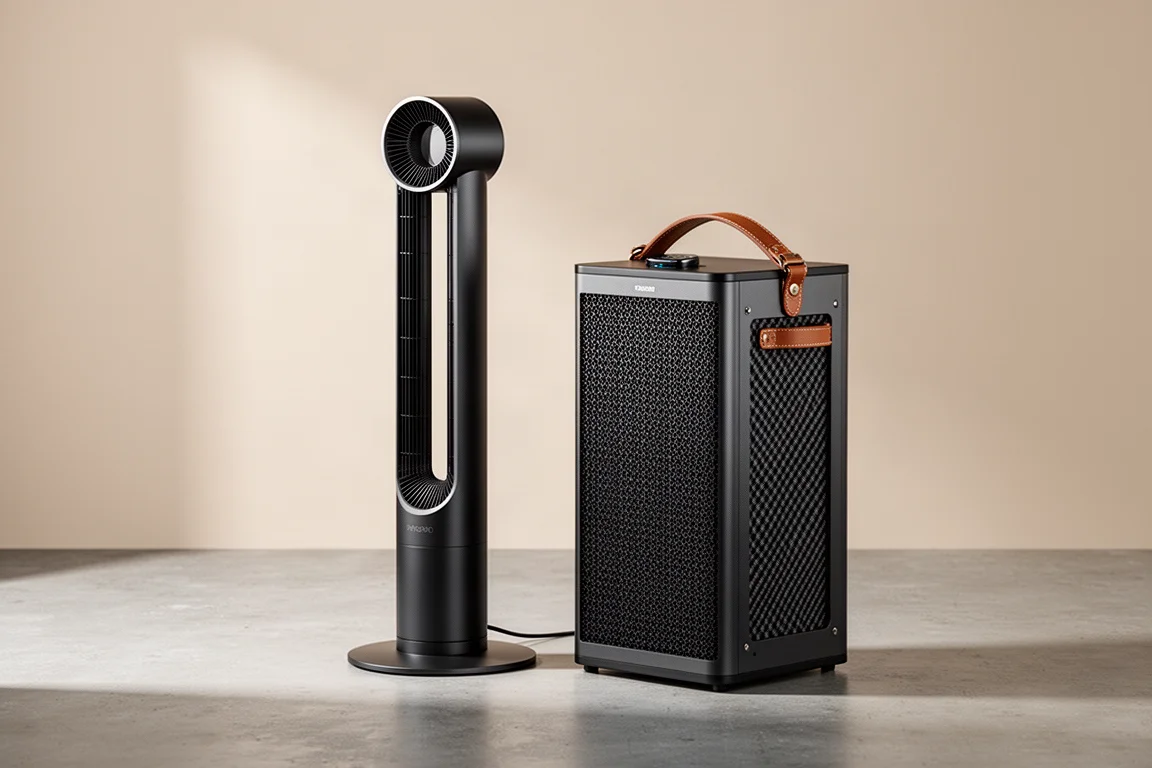
Smart trainer fans occupy a strange corner of the indoor cycling market: they look like ordinary fans, but they can react to your power meter, heart rate strap, or trainer and adjust their output automatically. Two models dominate this niche: the Wahoo Headwind, which has been around for roughly half a decade, and the much newer Elite Area, which has been shipping for about a year. Both are expensive for a fan, so this comparison focuses on which one delivers the better overall package for indoor training.
Why These Two Fans Cost So Much
Both fans exist because of one feature most cheap fans lack: connectivity. The Wahoo Headwind retails for $299 and the Elite Area for $349, and both can be triggered by smart trainers, heart rate sensors, speed sensors, and other equipment so that fan speed rises and falls with your effort automatically.
That said, a basic $10 fan or a $60 shop fan will still move plenty of air. The premium price buys the automatic control, so if you simply want airflow and never plan to pair sensors, the cheaper options behind these two remain perfectly functional.
Design and Hardware: Elite Area
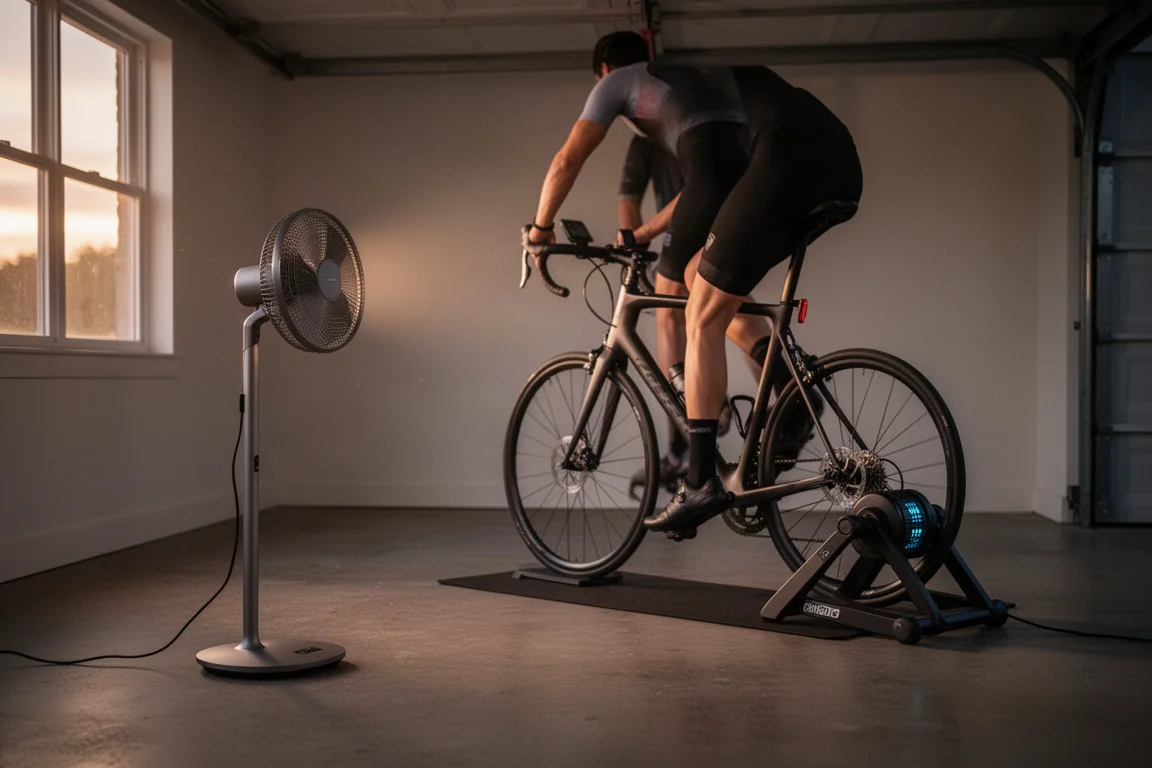
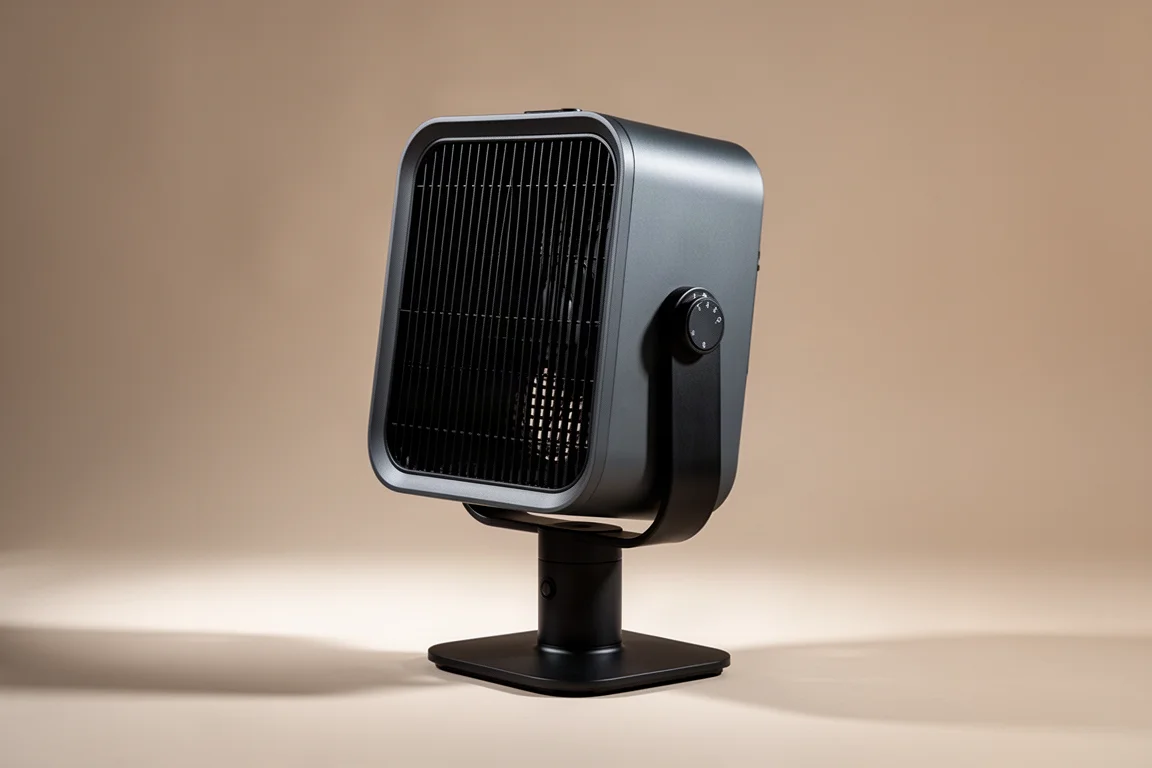
The Elite Area has 10 adjustable positions with distinct clicks, letting you angle the airflow up and down precisely. The Wahoo Headwind has no true adjustable positions: its pop-out legs only redirect air further downward, which is mainly useful for clearing space under a trainer desk rather than aiming the wind where you want it.
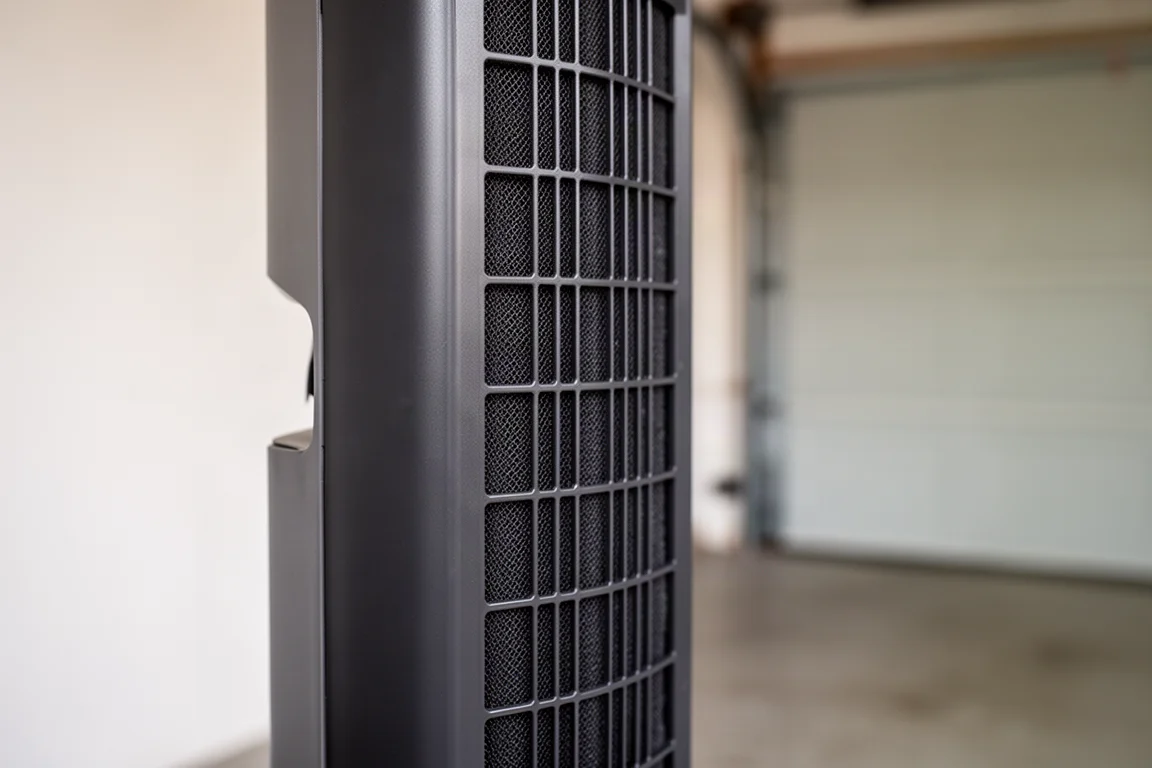
Elite leans on a pair of carbon-activated filters, one on each side, that the company claims reduce odors and remove harmful particles. That is hard to verify in practice, but for anyone training in a dusty garage where the fan pulls air from floor level straight into your face, some filtration seems sensible. The filters are rated for about 500 hours, a small red light indicates when they need replacing, and the fan keeps working normally after that. A two-pack replacement costs $15, which feels reasonable.
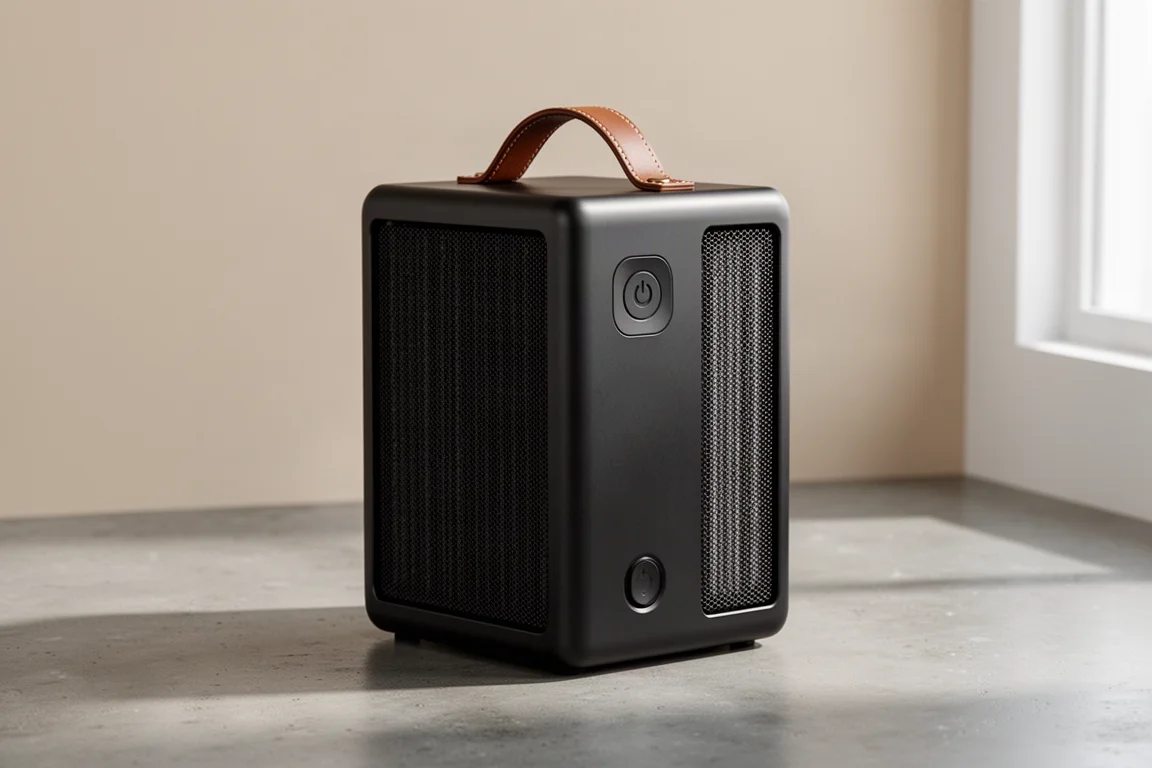
Other hardware notes: the Elite fan has a leather carry handle and a detachable power cord, though nowhere to store the cord. The Wahoo fan instead offers a cord wraparound on the back, which is genuinely handy, but its power cord is permanently attached. Both fans have front-panel controls for power and manual speed adjustment.
Design and Hardware: Wahoo Headwind
The Wahoo Headwind’s main hardware advantage is practical rather than flashy: the loopable cord wrap on the back keeps the permanently attached power cable tidy, something the Elite Area cannot match since its detachable cord simply flops around when unplugged.
Otherwise, the Wahoo fan is more limited. No angle adjustment means you position it on the floor and move it forward or back until the air hits the right spot. It lifts by the top of the unit rather than offering a dedicated handle. If adjustability matters to your setup, this is the single biggest physical difference between the two.
Airflow Performance
Both fans claim a top wind speed of approximately 48 km/h, with some scenarios quoted at 50 km/h. Measured directly at the front grille, both units registered roughly 45 km/h. Notably, the highest output sits at the very top of each fan: drop even an inch lower and speed falls to around 40 km/h.
The more important observation is how quickly airflow drops off with distance. Move even 30 cm away and the wind power falls considerably, and at the typical distance from floor to rider the output is much lower than the headline figure. Both fans produce a relatively thin, focused column of air designed to hit your torso and head straight on, which is what separates them from generic fans.
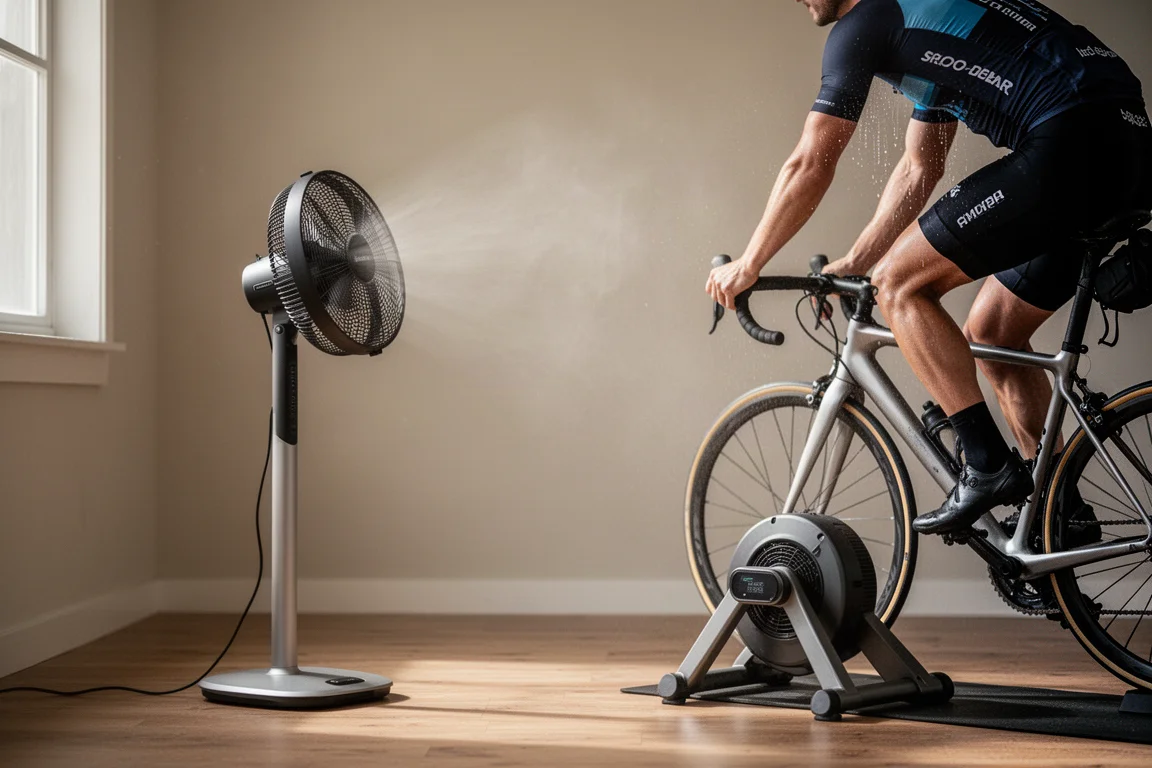
In real use, few riders need 50 km/h wind in the face at all times, so the distance falloff is worth testing against your own setup rather than treating the peak figure as the whole story.
Sensor Connectivity Compared
This is where the two diverge most. Both fans pair with ANT+ heart rate sensors, both connect to smart trainers via ANT+ FE-C (which effectively every trainer supports), and both work with ANT+ speed sensors for roller setups.
The Elite Area adds Bluetooth heart rate support, which matters because newer watches from Polar, Fitbit, and others often broadcast only over Bluetooth. It also connects to ANT+ power meters, a niche but welcome extra. The Wahoo Headwind instead connects to the Element bike computer series, the Wahoo Rival GPS watch, and a handful of third-party apps, plus the CORE body temperature sensor, which can adjust fan output based on your body temperature.
Neither fan offers Google Home, Apple Home, or HomeKit integration, which is a missed opportunity given how cheap smart outlets are.
App Control and Everyday Quirks
Both fans pair to their respective phone apps, where you configure sensors with a floor and ceiling threshold: a minimum value to start the fan and a maximum value at which it runs full speed. One practical caution: do not set your maximum heart rate as the ceiling, because you only reach that point after you already needed cooling.
There is also a genuine limitation with sensor-driven control: after a hard virtual climb, when you coast downhill and your speed or power drops, the fan slows down exactly when you still need cooling. That is why simpler always-on fans remain appealing for many riders.
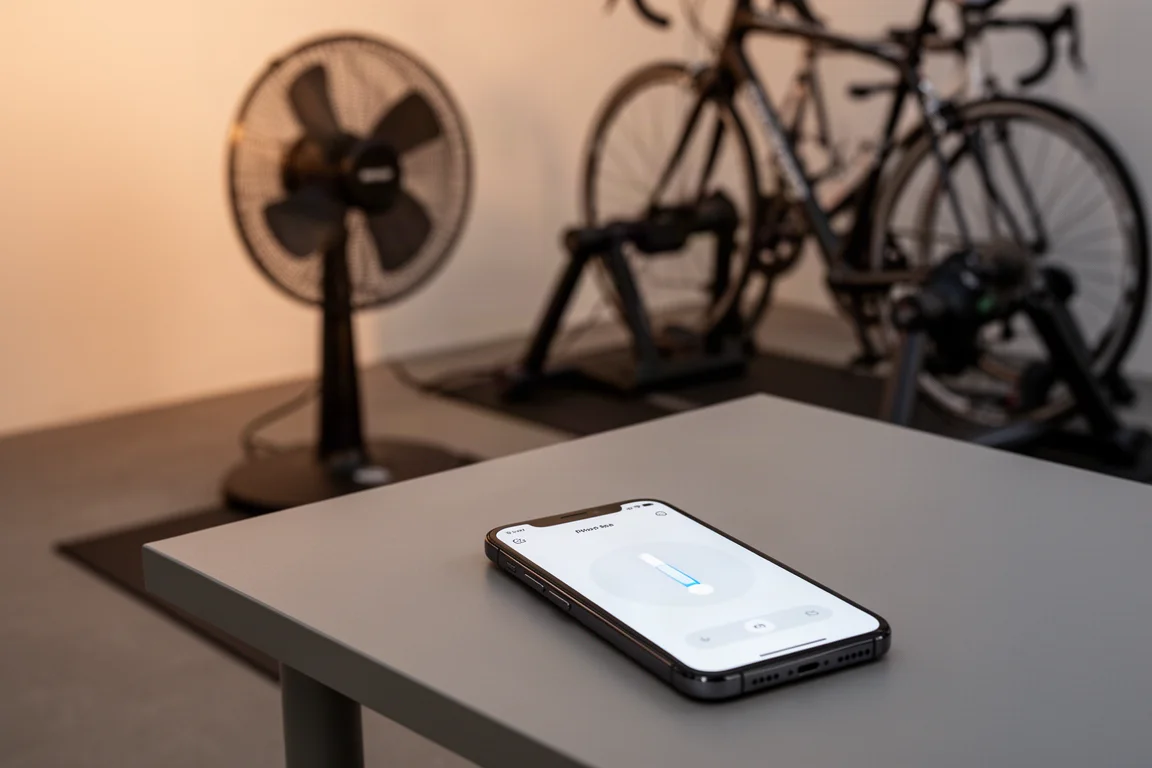
The phone app does solve the most common frustration: starting a race, realizing 90 seconds in that the fan is still off, and being able to switch it on without sacrificing the effort. One quirk on the Elite Area: its passive standby mode turns the fan on when you start pedaling, but it sleeps after 5 minutes and needs a button press or app connection to wake, though a firmware fix is expected.
Which One Should You Buy?
At $299 versus $349, the $50 gap is unlikely to be the deciding factor. Functionally, the Elite Area simply does more: more connectivity, more integration, more adjustability, and better coverage of modern Bluetooth-only heart rate sources. The Wahoo Headwind’s advantages are the cord wrap and the CORE sensor pairing, both nice but narrow.
A hypothetical Headwind V2 with angle adjustment and Bluetooth heart rate support would change the calculus, but as things stand, the Elite Area is the stronger buy if you want the best smart trainer fan for the money.
Conclusion
The Elite Area wins on features, adjustability, and sensor flexibility, while the Wahoo Headwind remains a solid choice for riders already invested in the Wahoo ecosystem. Both deliver focused, automatic cooling that no cheap fan can replicate, so match the choice to your sensors and setup rather than the price tag.
Further reading
Related Reviews
Indoor Cycling
Best Budget Smart Indoor Trainer Setups: Six Options Worth Considering
Smart indoor trainers keep getting better while prices come down. Six setups and components worth considering, from the cheapest Zwift-ready option upward.
Indoor Cycling
Best Budget Smart Indoor Trainers for Immersive Cycling in 2026
A practical guide to affordable smart indoor trainer setups, including budget and mid-range options with virtual shifting.
Indoor Cycling
Best Indoor Cycling Apps and Smart Trainers: A Winter Buying Guide
A practical look at the indoor training platforms and smart trainers that matter this season, from a new challenger to Zwift to the entry-level trainer that stands out on value.