Sim Racing
VR vs Triple Screens for Sim Racing in 2026: What Actually Works
A practical look at the current state of high-end VR headsets versus triple screen setups for sim racing, including what to consider before choosing.
Introduction
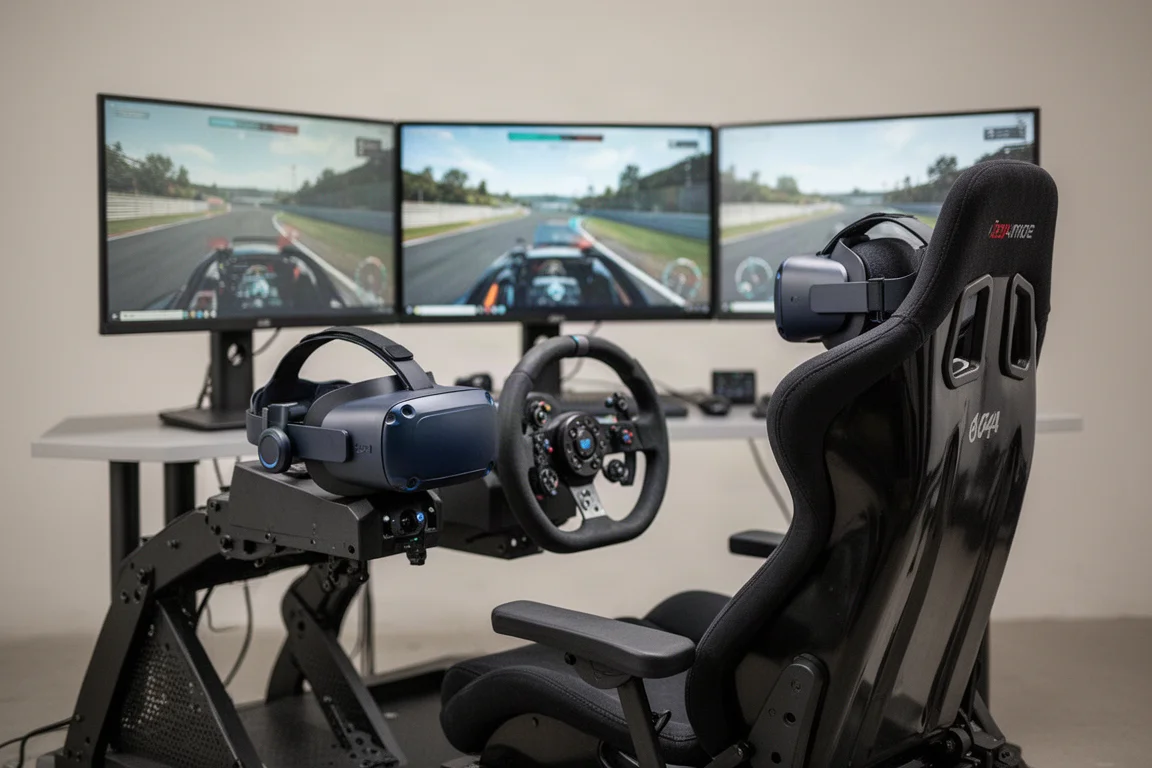
The debate between triple screens and virtual reality for sim racing has been running for years, but the technology on both sides has moved significantly. Triple screens have become far more affordable, while high-end VR headsets have improved in resolution, optics, and comfort. This guide breaks down what each option offers in 2026, what the real trade-offs are, and which headsets are worth considering if you decide to go the VR route.
The Case for Triple Screens
Triple screen setups remain a strong choice for many sim racers, and the hardware has become much more accessible. A quality 4K screen that would have cost a small fortune a few years ago can now be picked up for a fraction of that price. For most people, the sweet spot is triple flat screens in the 30 to 40 inch range. This size keeps the screens far enough away to avoid eye strain while still filling your peripheral vision, and it keeps the overall cost much lower than going with oversized displays.
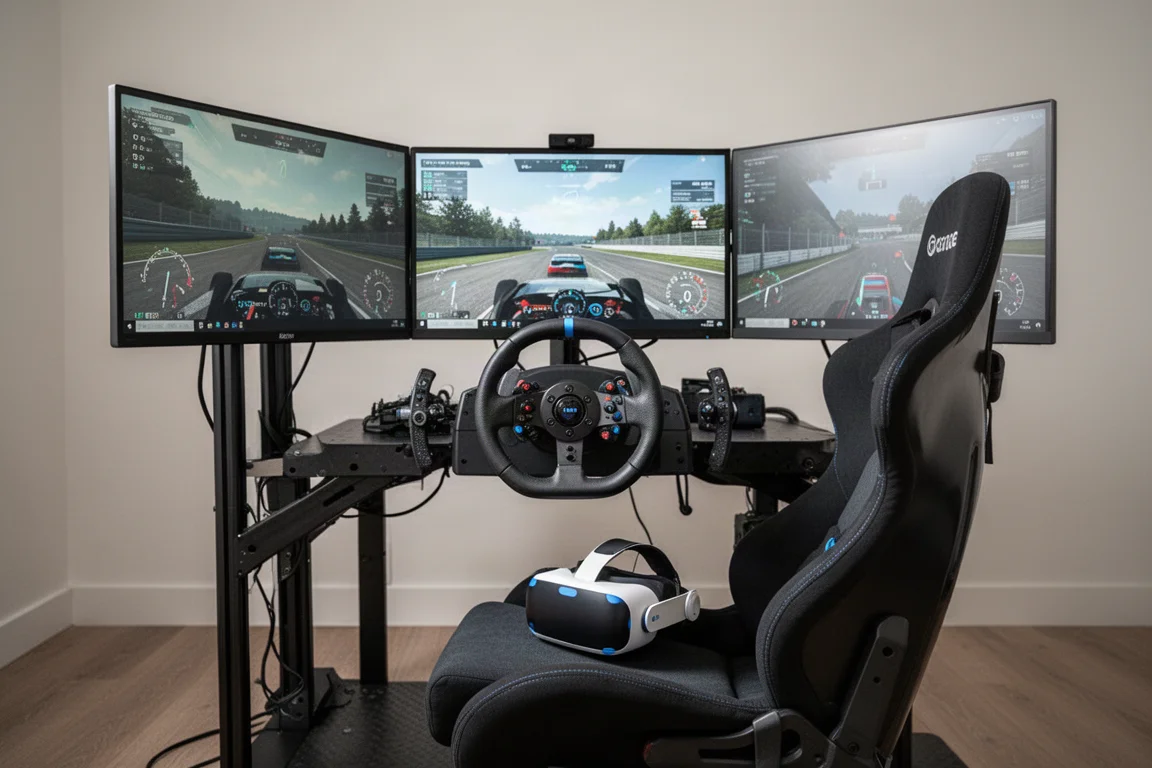
There are still some important limitations to keep in mind. The footprint of a triple screen rig is substantial. Even with 30 to 40 inch screens, you are looking at roughly 1.8 to 2 meters of width at the back of the rig, plus about 2 meters of length. A large setup can easily fill most of a single bedroom. The screens also need to be positioned carefully relative to your head height. If your head moves up or down, the image at the seams between screens can bow and distort, so you have to pick a sweet spot and accept some bending at the top or bottom.
Another consideration is motion. If you run a motion rig, the screens need to be fixed to the ground while the cockpit moves independently. This creates relative movement that can make you feel like you are floating inside the car, which can feel disconnected. And while you can train yourself to judge braking markers and become very quick on triple screens, learning a new car or track tends to be a trial and error process rather than something that happens instinctively.
The Case for VR
VR has always had a theoretical advantage over screens because it provides true depth perception, parallax, and spatial awareness. When you approach a braking point in real life, your brain solves a complex distance problem without conscious effort. In a two-dimensional environment, even with three screens wrapping around you, that natural depth perception is missing. This is why many people argue that VR is fundamentally better for sim racing, and the theory holds up.
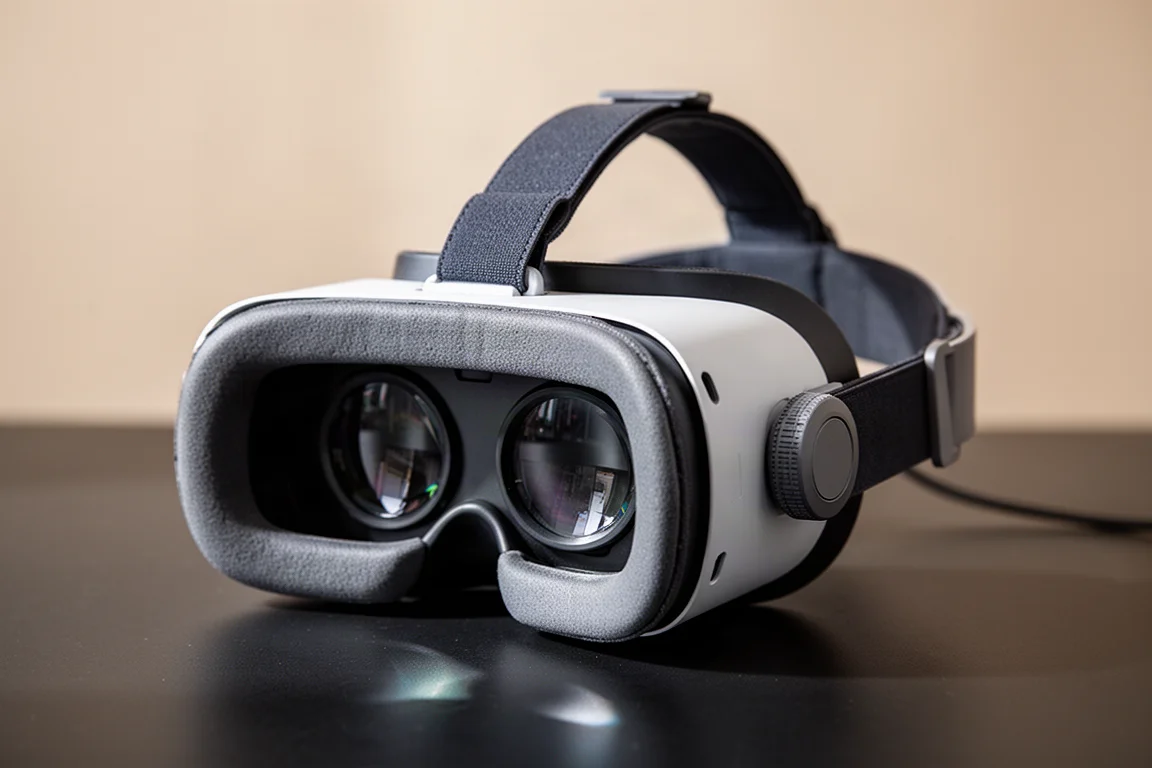
The practical experience has improved dramatically. Early headsets suffered from low pixel density, a visible screen door effect, and significant eye fatigue. Many people could only manage short sessions before headaches set in. Modern high-end headsets have largely eliminated the screen door effect, and the optics have improved to the point where the field of view is actually usable without distortion. That said, there are still trade-offs. Most headsets have a small vertical sweet spot, meaning the headset has to sit in exactly the right position on your face or everything goes blurry. This is especially important in sim racing, where force feedback and heavy pedals cause constant micro movements.
There is also the question of how you use your rig. If you regularly participate in league races or chat with friends on Discord, VR can be clumsy. You will find yourself taking the headset on and off frequently for anything other than pure driving. And while hand tracking is not yet rendered in current sim racing titles, you have to feel your way around the wheel, shifter, and handbrake without seeing your hands.
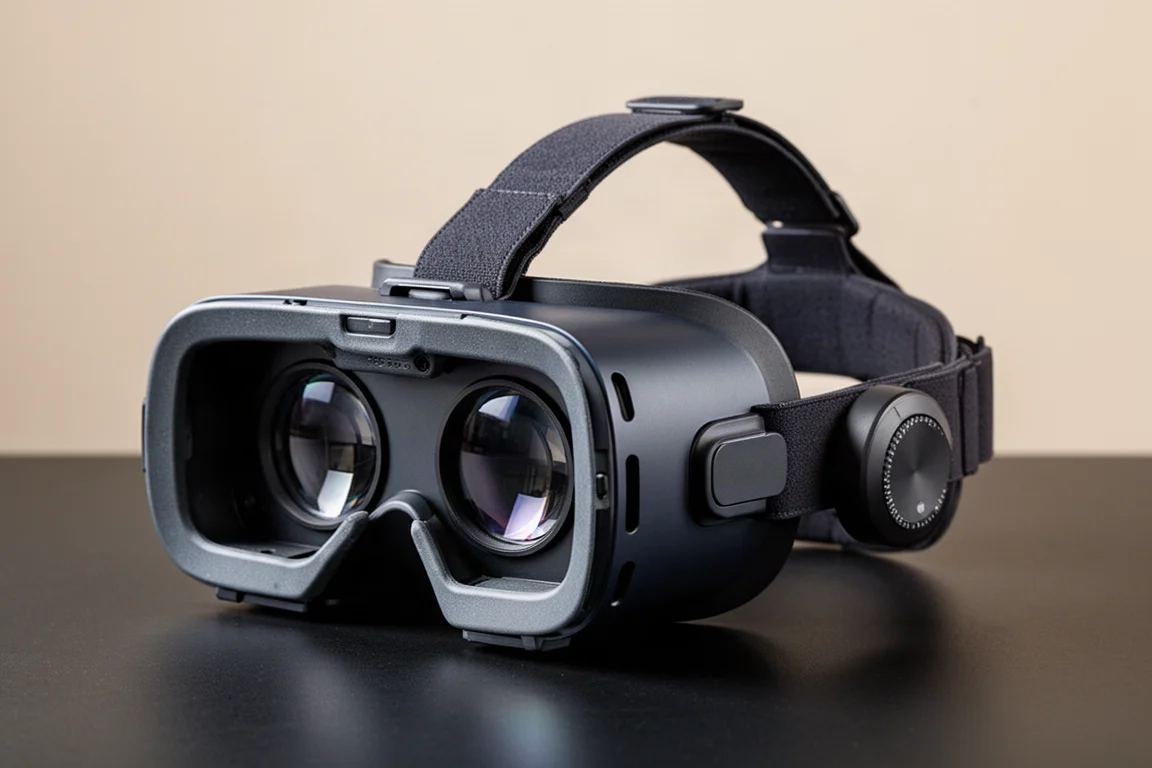
Pimax Crystal Super
The Pimax Crystal Super is a high-end headset that uses Micro OLED panels, offering very high visual fidelity and resolution. The field of view is somewhat restricted compared to wider headsets, but the clarity is exceptional. In practice, the narrower field of view did not make a huge difference to the driving experience, though it was slightly noticeable vertically.
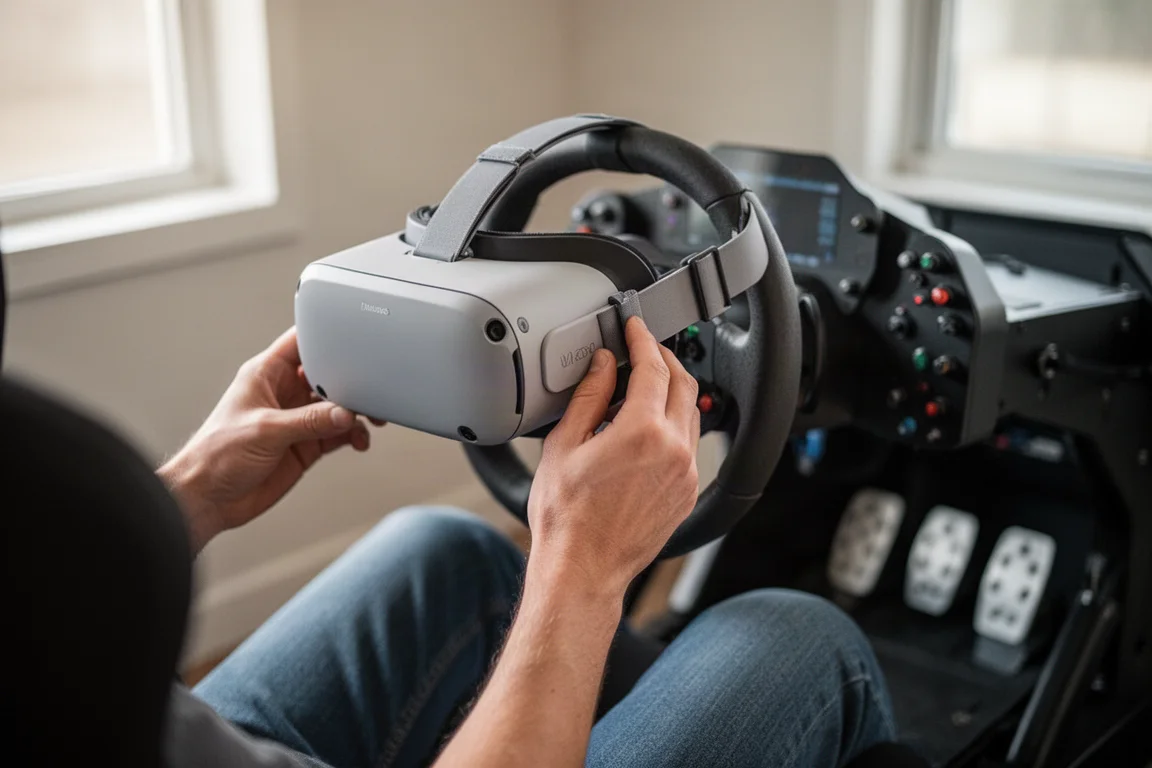
One of the standout features is the swappable optical module. You can pull off the face plate, release two tabs, and slide out the optical module to replace it with an ultra-wide LCD module. This means you can switch between a high-fidelity OLED experience and a wider field of view without replacing the entire headset. The ultra-wide module uses LCD technology, which has a lower contrast ratio and more chromatic distortion at the edges, but it does add to the immersion of being in a large 3D environment.
The main downside is the bulk. This is a large, front-heavy headset, and the head strap has a big adjustment point at the back that can get in the way when you want to rest your head against a racing seat headrest. It can feel like you are cramped forward, similar to wearing a helmet. There have also been some build quality concerns, and the face cushion does not fit particularly well, allowing light to seep in at the sides. For sim racing specifically, if you have the budget, the lighter Dream Air headsets are generally the better choice.
Pimax Dream Air
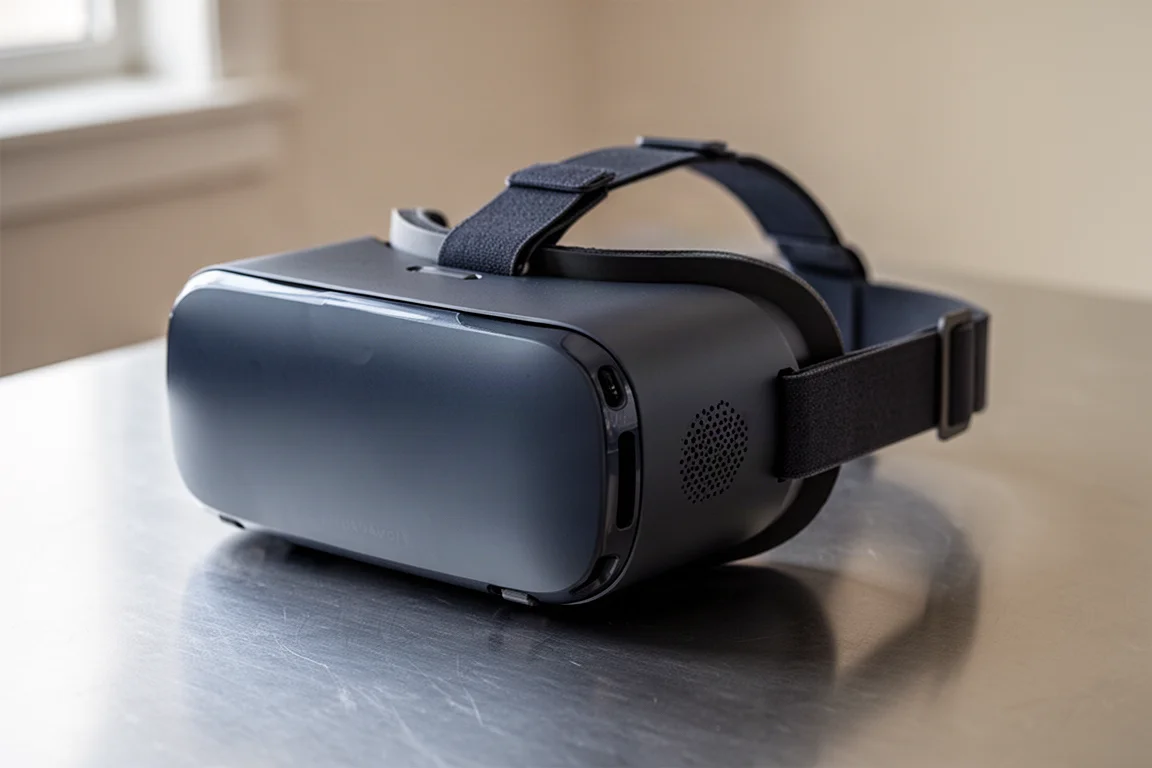
The Pimax Dream Air headsets are significantly smaller and lighter than the Crystal Super, and they use the same Micro OLED visual technology. The visual clarity is genuinely impressive, and it is the first time that VR has felt like something you could use every day without fatigue. The difference in sharpness compared to older headsets is striking, similar to putting on glasses for the first time and realizing that blades of grass actually have detail.
These headsets have built-in speakers in the side grills. They are not the highest fidelity audio, with limited bass and mid-range, but they are good enough for most people. The lack of in-ear monitors actually reduces the feeling of being tethered, which is a nice benefit. The head strap is narrower and tends to sit above the ears, which works well for most people, though those with larger ears may find it pushes down on the tops of their ears.
There are some frustrations. The junction box on the back of the headset gets quite hot during operation, and it dangles down behind your head where you would normally rest against a cushion. The cables are fixed, so if you damage them, you have to send the entire headset in for repair. The build quality, while better than the Crystal Super, still uses a lot of plastic and elastic materials, and there are small gaps in the side pieces that can catch hair. The software experience was also inconsistent at first, though it worked well once set up on a dedicated sim racing PC.
Bigscreen Beyond V2 and V1
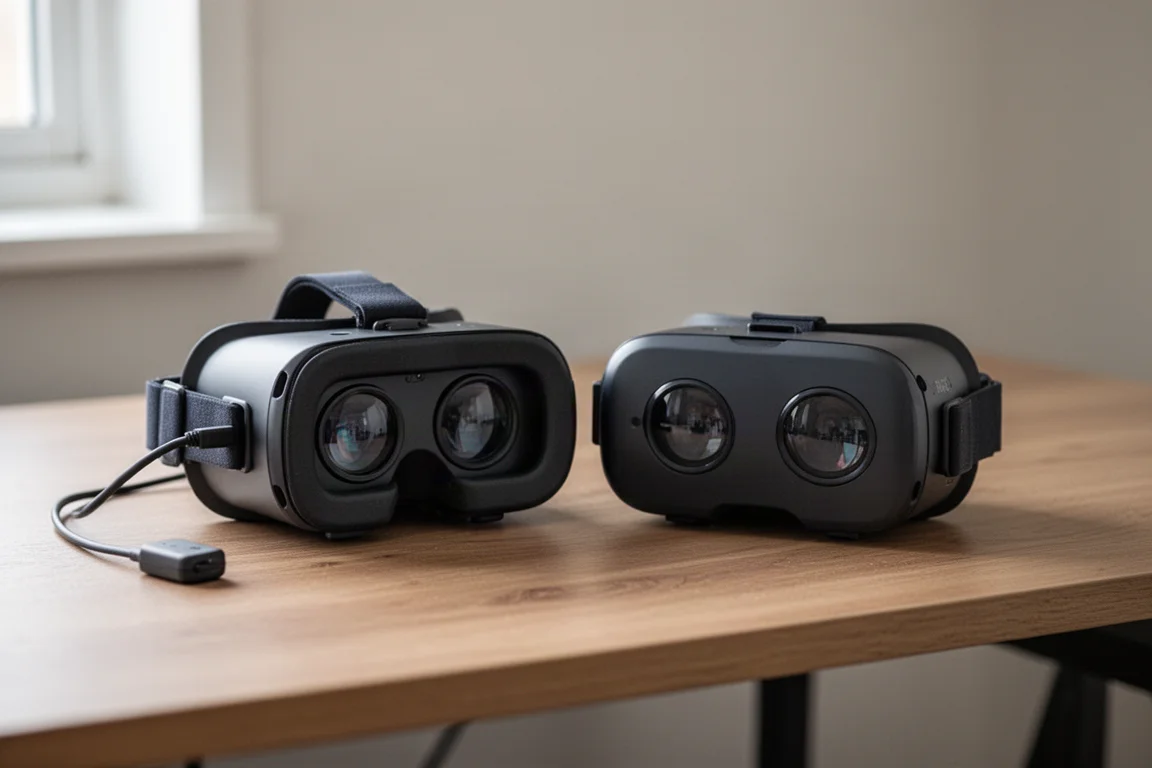
The Bigscreen Beyond headsets are the smallest and lightest of the group. The V1 was released a couple of years ago, and the V2 came about a year later. Both use a face gasket that is 3D molded to your face based on a scan you send in, which means a perfect fit for your specific anatomy.
The V1 had a fixed interpupillary distance, which made it difficult to sell secondhand because the next owner would need the same IPD and would have to order a new face gasket. The V2 introduced a mechanically adjustable IPD, which solved that problem. The bigger improvement in the V2 was the optical quality. The V1 suffered from internal reflection that created a bloom effect around high contrast objects, like bright white text next to black. The V2 largely fixed this issue.
The V2 also added eye tracking, which is useful for dynamic foveated rendering. This renders the image at full resolution in your direct line of sight and reduces resolution in your peripheral vision, lowering the load on your computer. With eye tracking, the headset adjusts the resolution in real time as you look around. On a high-end PC, you may not need this feature, but it can help with super sampling and performance on less powerful systems.
These headsets do not have built-in audio, so you will need external headphones or one of the audio straps. The cable is removable and higher quality than what comes with the Pimax headsets, which makes it feel less like you are tethered. The main issue is the head strap, which can push down on the tops of your ears. If you raise it to avoid that, it tends to slip forward and you lose the sweet spot. It is a design that does not work perfectly for every head shape.
Tracking Considerations
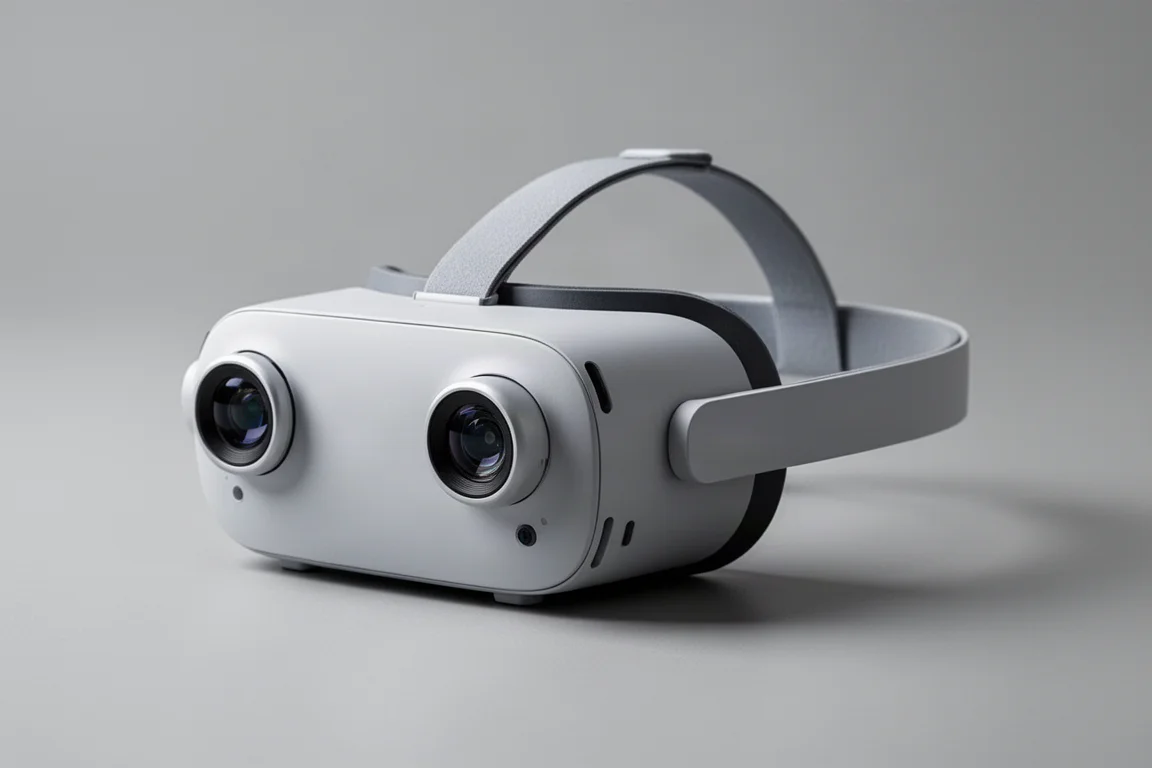
There are two types of VR tracking: inside-out and outside-in. Inside-out headsets use cameras to understand their position in space, while outside-in headsets rely on external base stations called lighthouses, which are an additional cost.
In a controlled environment with consistent lighting, inside-out tracking worked flawlessly in testing, even with reflective surfaces and screens nearby. Outside-in tracking, on the other hand, had issues when bright LED lights or direct sunlight interfered with the infrared signal from the lighthouses. The experience can vary depending on your specific room, so consider your environment. If you have moving objects like curtains, trees, or people walking past, inside-out tracking may be less reliable, and outside-in could be the better choice.
Performance Requirements
High-end VR headsets demand a powerful PC. For any of these headsets, a minimum of a 5080 graphics card is recommended, and a 5090 is needed to really take full advantage of them. VR is more resource hungry than triple screens at the same vertical resolution, often by about 30 percent, because of the way the perspective is rendered. Frame rate is critical in VR. If the frame rate drops below the native refresh rate of the panels, it can cause motion sickness almost immediately.
Overall Buying Advice
If you are happy with a triple screen setup and prefer the social aspects of sim racing, screens remain a solid choice. They are more affordable than high-end VR, and you can see your hands and physical controls at all times. The main limitation is the lack of true depth perception, which makes learning new tracks and cars more of a trial and error process.
If you are willing to invest in a high-end PC and want the most immersive experience, VR is now genuinely viable for daily use. The Pimax Dream Air offers the best combination of visual clarity and lightweight comfort, making it the recommended choice for sim racing if budget is not a concern. The Bigscreen Beyond V2 is a strong alternative with excellent optics and a removable cable, though the head strap design may not suit everyone. The Pimax Crystal Super is capable but bulky, and its main advantage is the swappable optical module.
Conclusion
The technology has reached a point where VR can finally replace triple screens for many sim racers. The visual clarity of the latest headsets eliminates the eye fatigue that plagued earlier models, and the lightweight designs remove the physical strain. While the high-end headsets are expensive, the technology is likely to trickle down to more affordable options over the next few years. If you are planning iterative upgrades to your rig, it is worth considering VR as your long-term direction.
Further reading
Related Reviews
Sim Racing
Asetek Initium Direct Drive Bundle Review: A Strong Entry Point With a Standout Pedal Set
The Asetek Initium bundle brings a 5.5 Nm upgradeable wheelbase, a functional round wheel, and a surprisingly capable pedal set to a crowded entry-level direct drive market.
Sim Racing
ConSimPit Ecosystem Overview 2026: Wheelbases, Pedals, and Wheels
A detailed look at ConSimPit's sim racing ecosystem, covering wheelbases, pedals, and steering wheels with honest observations on quality and value.
Sim Racing
Cube Controls Astra Review: A Lightweight Sim Racing Wheel That Nails the Fundamentals
The Cube Controls Astra is a lightweight aluminum sim racing wheel that focuses on build quality and driving feel over extra features.