Sim Racing
ConSimPit Ecosystem Overview 2026: Wheelbases, Pedals, and Wheels
A detailed look at ConSimPit's sim racing ecosystem, covering wheelbases, pedals, and steering wheels with honest observations on quality and value.
Introduction
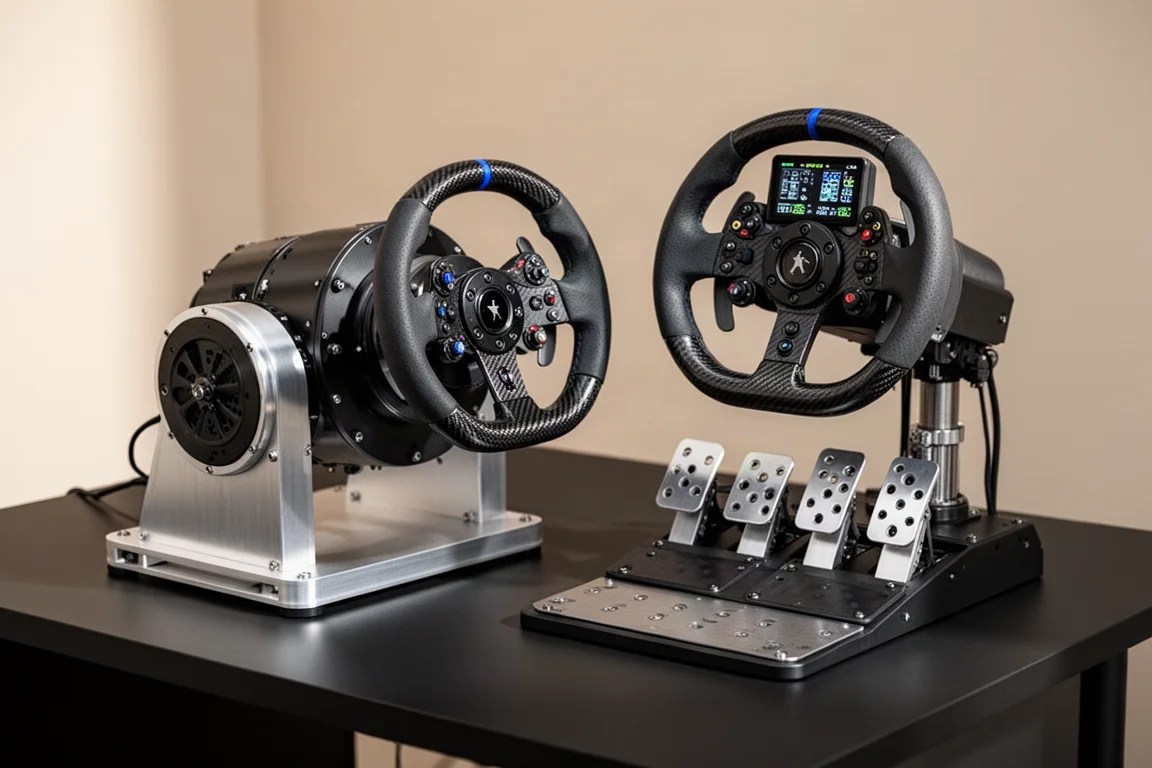
ConSimPit has made a name for itself in the sim racing world with products that promise strong feature sets and quality materials at competitive prices. After spending over a year testing a wide range of their gear, this overview covers what you can expect when buying into their ecosystem. We will look at their wheelbases, quick-release systems, steering wheels, pedals, and supporting software.
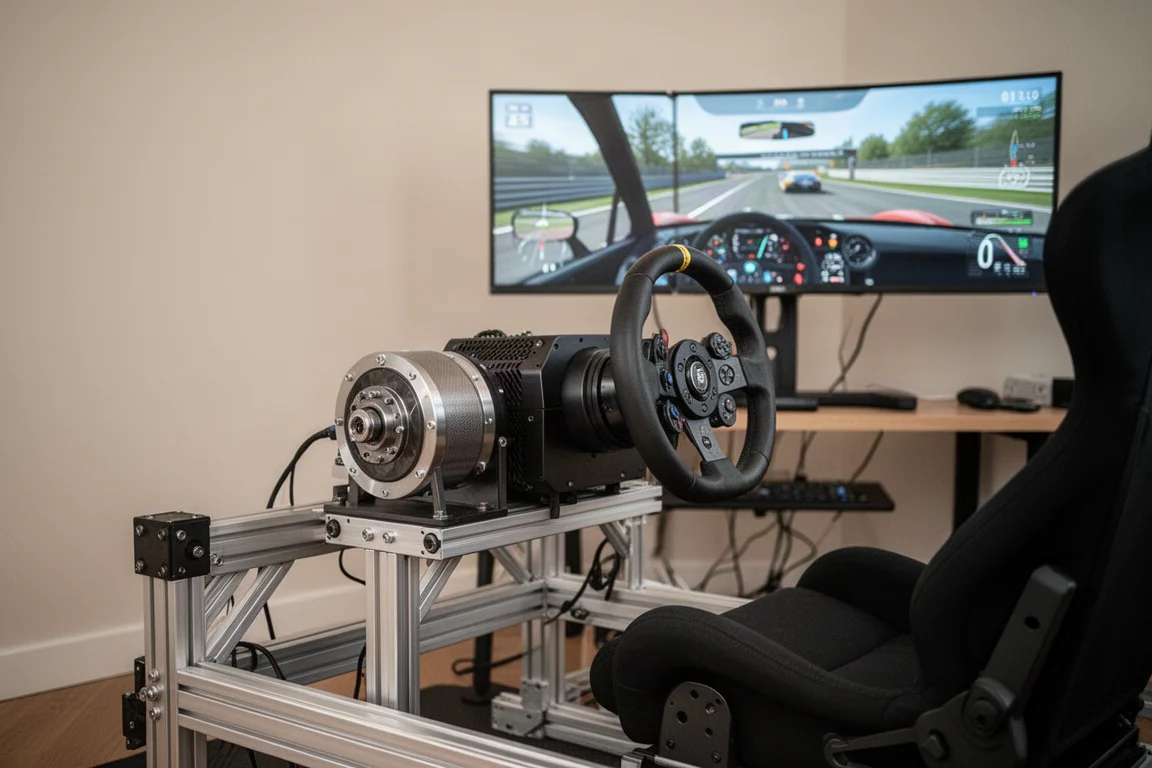
The lineup includes three wheelbases, three tiers of pedals, and a growing selection of steering wheels. Pricing starts at $419 for the entry-level Apex wheelbase and goes up to $1,799 for the flagship PW1 steering wheel. This guide focuses on the products we have hands-on experience with, giving you a practical sense of what the brand delivers for the money.
Pricing Overview
ConSimPit’s pricing strategy is aggressive on paper. The top-tier Ares Platinum wheelbase is advertised at 20 Newton meters of continuous force and sells for $749. The Aries 12 offers 12 Newton meters of holding torque at $539, and the Apex model comes in at $419. All prices are in US dollars and exclude shipping and import duties.
On the pedal side, the CPP Evo V3 three-pedal set is priced at $799, with a two-pedal version at $699. The CPP Apex two-pedal set is $319, with a $50 clutch add-on, and the CPP Light three-pedal set is $640. Steering wheels range from the 300 GT at $474 to the 290 GP at $734, with the Max 01 at $804 and the premium PW1 at $1,799.
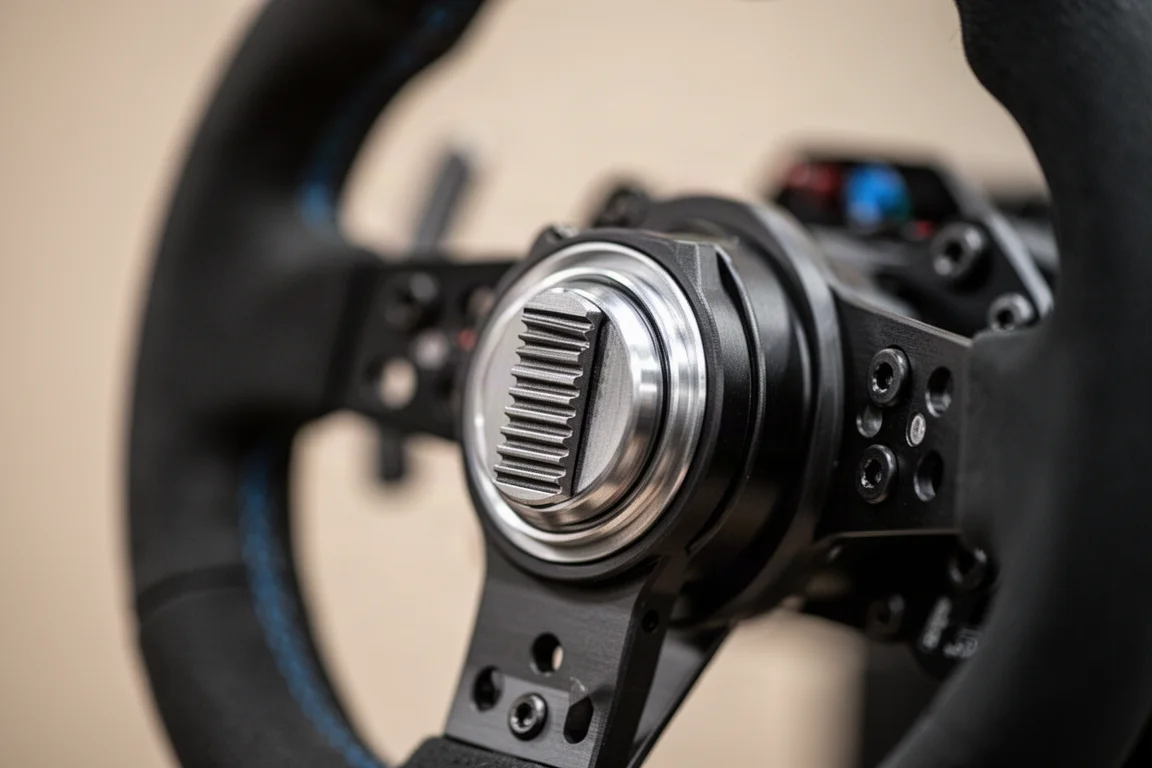
Quick-release accessories are reasonably priced. A USB adapter ring costs $29, a CDR wheel-side quick release is $49, and an adapter shim that converts the 50 mm three-stud pattern to a standard 70 mm pattern costs $67. This open approach means force feedback is not locked out, and you can use third-party wheels without expensive proprietary adapters.
Wheelbase Hardware and Quick Releases
The Ares Platinum and Aries 12 share a similar visual design that strikes a balance between high-class aesthetics and restraint. Build quality is comparable to what you see from Simagic, Fanatec, and Moza at this price point, with plastic front and rear covers and a CNC machined aluminum housing for heat dissipation.
Both bases feature a 23-bit encoder resolution, which translates to just under 8.4 million individual steps per rotation. This is notably high for the price range and should contribute to smoother force feedback on paper. The Apex model steps down to 21-bit resolution. The bases use optical encoders rather than magnetic ones, a point of difference the company highlights in its marketing, though whether this provides a tangible real-world advantage remains open to debate.
Mounting is straightforward. The bases have side mounting holes tapped to M8 and bottom aluminum profile rails with pre-installed T-nuts, matching the standard Fanatec and Moza mounting pattern. The Platinum has slightly wider hole spacing and longer channels on the back for additional flexibility.
Internally, the design philosophy differs from many competitors. The motherboard is connected to the housing rather than being left behind when the cover slides off, which requires more cable slack. Some cables sit against components that run warm, and there is no active or passive cooling inside. We did not experience any thermal management issues during testing, even at 100% force for extended periods, but the lack of cooling is worth noting.
The quick-release situation is where we found the most inconsistency. Across roughly ten CDR quick releases from different batches, about half were perfectly solid while the other half had noticeable play. The CDP design, which uses a spline-style engagement, showed some play in every combination we tested, despite being theoretically more solid. This varied by batch and hardware revision, suggesting quality control issues that early adopters may encounter. Some quick releases also had different finishes, though pre-production samples were excluded from our assessment.
CPP Evo V3 Pedals
The CPP Evo V3 pedals sit at the top of the pedal lineup and use a closed hydraulic system for the brake, similar in concept to the Heusinkveld Sprint. A 20 MPa pressure sensor measures hydraulic pressure, and the throttle and clutch use Hall effect sensors. Each pedal has a haptic motor that can be assigned to effects like ABS or traction control, either through the ConSimPit software or SimHub.
The machining and presentation are excellent, but some quality details fall short. The clutch pedal felt grainy and scraped during travel, though it smoothed out over time as the sleeve wore in. The brake pedal base plate flexes noticeably in its high-resistance setting, which can dampen input precision. The throttle pedal, by contrast, is smooth with a nice adjustable throw mechanism.
One notable observation involves the external reservoir on the brake. It is completely dry and appears to be cosmetic, with the system vacuum-filled and sealed at the factory. Tags on the pedals warn against loosening the reservoir, citing warranty concerns, but there is no fluid in it and it does not appear to connect to the system. This raises questions about whether the design prioritizes appearance over function.
The pedals also include a tag recommending periodic adjustment of the preload knob to maintain brake feel as elastomers wear. This is a red flag for consistency, as a brake pedal should perform reliably over time to support muscle memory. While the pedals drive fine and offer plenty of adjustment, they feel like they prioritize features and looks over the refined fundamentals that more experienced brands deliver.
Steering Wheels: Max 01, 290 GP, and 300 GT
The steering wheels are the standout part of the ConSimPit ecosystem. Early production units had manufacturing defects, including cracked carbon fiber that passed quality control, but later revisions have improved significantly. The current units we tested show solid build quality with aluminum housings, carbon fiber construction, and decent switch gear.
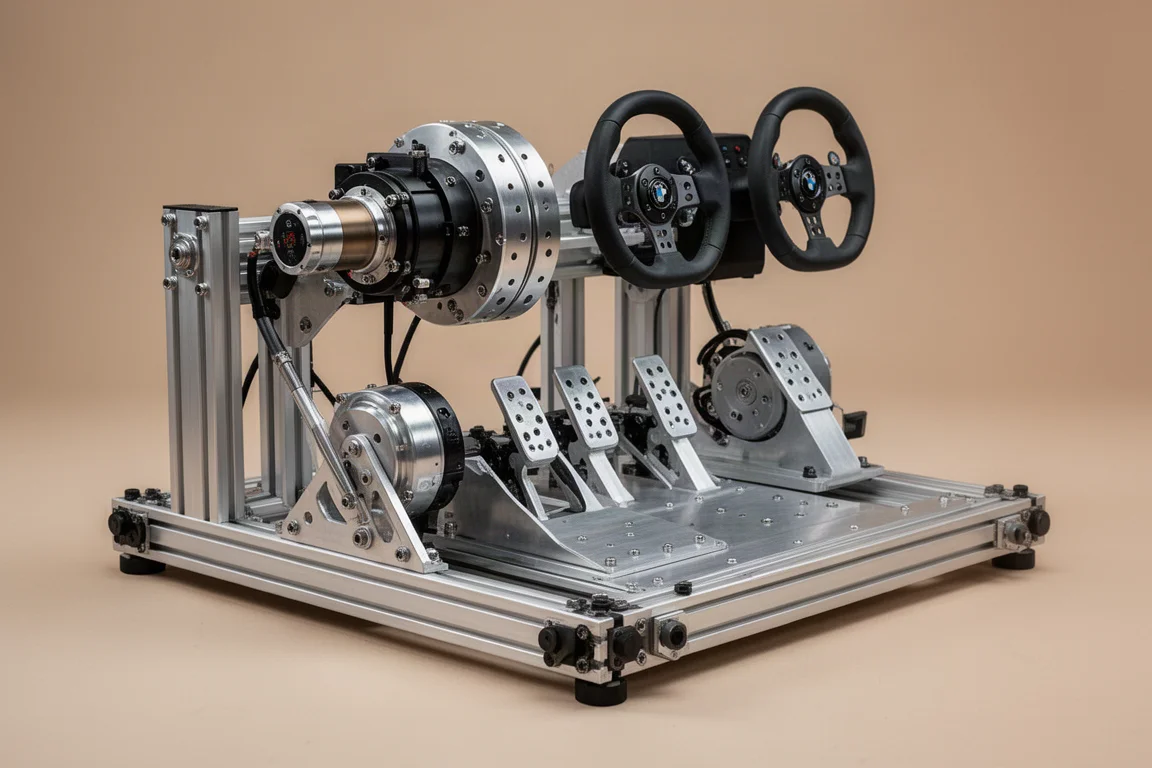
The Max 01 is the most impressive, with quality approaching that of much more expensive wheels like those from Ascher Racing. It features a touchscreen and is SimHub compatible, which opens up extensive customization options. The 290 GP and 300 GT are also well-built but lack SimHub support, relying instead on integrated dashboards. Consistency across the ecosystem would be welcome here.
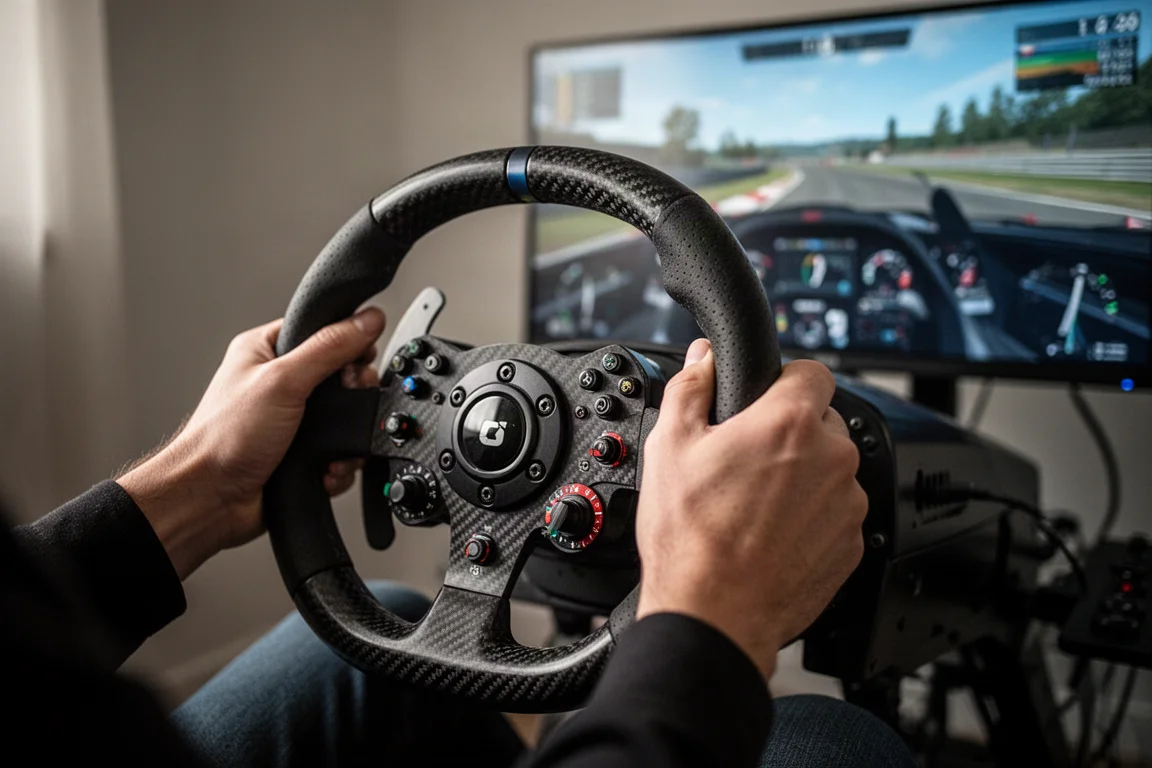
Ergonomics are a highlight across all three wheels. The grips have a good thickness and squishiness without the rubberized material that can degrade over time. The buttons feel solid, and the shifters are high quality. The wheels are not too heavy and feel balanced in hand.
All three wheels work outside the ConSimPit ecosystem. They ship with a USB adapter that allows connection to any PC, and the mounting pattern supports standard 70 mm and 50 mm quick releases. This makes them a compelling option even if you do not own a ConSimPit wheelbase.
Software and Driving Experience
The ConSimPit software, called ConSim Link 2.0, covers the fundamentals well. It includes UDP port forwarding, which is a thoughtful feature that lets multiple software packages ingest telemetry data simultaneously. Device settings, calibration, and profile management are all present, and the built-in FAQ is comprehensive.
However, the software lacks depth. The advanced settings menu has been removed in the latest update, with settings consolidated into a basic page. This limits fine-tuning compared to competitors like Simagic or Fanatec. The presets module works well and covers major sim racing titles, but there is no cloud-based profile sharing, and the maximum force setting in software tops out at 18 Newton meters for the Platinum and 10 for the Aries, below their advertised ratings.
The driving experience is mixed. The motors are smooth and responsive, and force feedback is consistent across different sim titles once a good baseline is established. However, there are occasional large, sudden jerks in force feedback during oversteer or snap events that feel unrealistic. Drifting, in particular, revealed issues where the wheel required physical force to keep up with the car’s rotation, and this could not be dialed out through settings.
Overall, the force feedback quality is good for the money but not game-changing. The wheels are the strongest part of the experience, while the pedals and software leave room for refinement. The ecosystem is not bad value, but it does not deliver the dramatic leap in quality that some community feedback might suggest.
Overall Buying Advice
If you are considering ConSimPit, the steering wheels are the most compelling reason to buy in. They offer strong ergonomics, build quality, and value, and they work with any wheelbase thanks to the USB adapter. The wheelbases are solid performers with high encoder resolution and good thermal behavior, but the quick-release inconsistencies and limited software tuning are drawbacks.
The pedals are visually impressive and feature-rich, but the hydraulic system does not necessarily provide a better driving experience than a good set of load cell pedals. The cosmetic reservoir and preload maintenance requirement suggest a focus on features over long-term consistency.
For the same budget, alternatives like the VRS DFP 20 or DFP 15 and Simagic’s Evo range offer more refined overall experiences. ConSimPit is very good value for money, but it is not the game-changing ecosystem that redefines what is possible at this price point. Your decision should come down to what you value most: feature density and aesthetics, or refined fundamentals and software polish.
Conclusion
ConSimPit has built a credible ecosystem with strong potential. The wheels are excellent, the wheelbases perform well, and the pricing is competitive. However, quality control inconsistencies, a limited software experience, and pedals that prioritize looks over refinement hold the brand back from being a clear recommendation over more established competitors.
If you are drawn to the value proposition, the wheels alone are worth considering, even for use on another brand’s wheelbase. For a complete ecosystem, weigh the trade-offs carefully and consider what matters most to your sim racing experience.
Product link
View more details for ConSimPit Ares Platinum
This product is mentioned in the review. Check the specifications, options, and compatibility before buying.
View more details for ConSimPit Ares PlatinumFurther reading
Related Reviews
Sim Racing
Asetek Initium Direct Drive Bundle Review: A Strong Entry Point With a Standout Pedal Set
The Asetek Initium bundle brings a 5.5 Nm upgradeable wheelbase, a functional round wheel, and a surprisingly capable pedal set to a crowded entry-level direct drive market.
Sim Racing
Cube Controls Astra Review: A Lightweight Sim Racing Wheel That Nails the Fundamentals
The Cube Controls Astra is a lightweight aluminum sim racing wheel that focuses on build quality and driving feel over extra features.
Sim Racing
Direct Drive Wheelbase Technology Explained: What You Need to Know in 2026
A practical breakdown of direct drive wheelbase technology, from torque and dynamic range to telemetry force feedback, LF effects, and more.