Ski Poles
Völkl Phantastick Ski Poles Review: A Light Carbon Pole for All-Mountain Days
A practical look at the Völkl Phantastick ski poles, covering carbon construction, grip and strap feel, basket width, length advice, and who should buy them.
Introduction
Ski poles are the piece of gear most people think about last, and that is understandable: they do far less of the work than boots, skis or a well-fitted jacket. But they sit in your hands all day, and the small differences between a cheap aluminium pair and a well-built carbon pair show up on every single run.
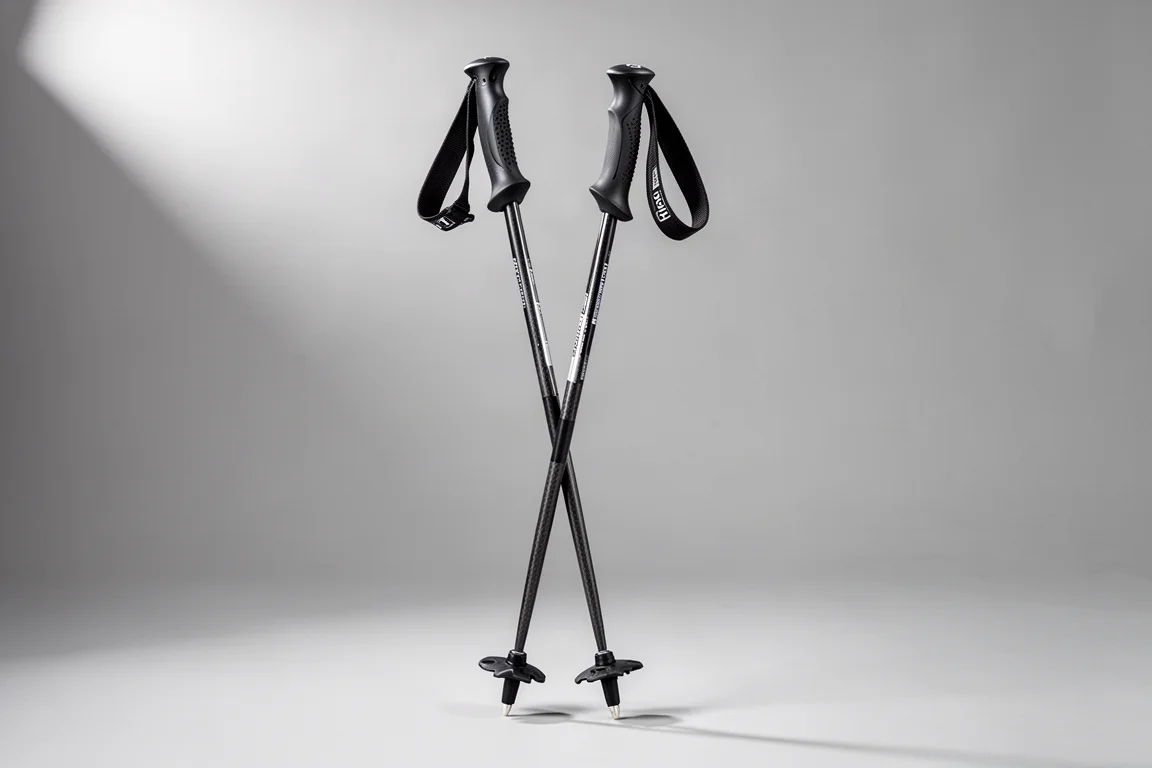
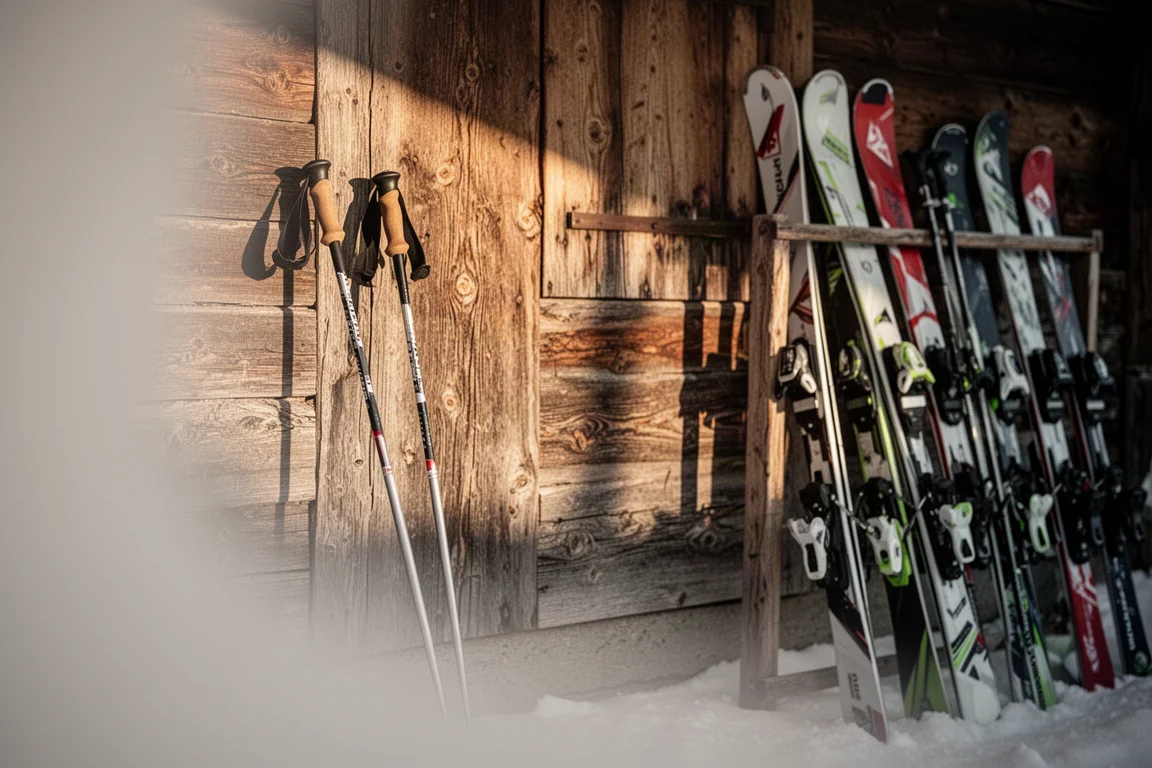
Three things define a ski pole. The material it is made from, the basket at the bottom, and the grip at the top. The Völkl Phantastick is a carbon pole with a grip that includes a long trigger ridge, paired with a basket width that sits between the very wide backcountry shape and the narrow racing shape.
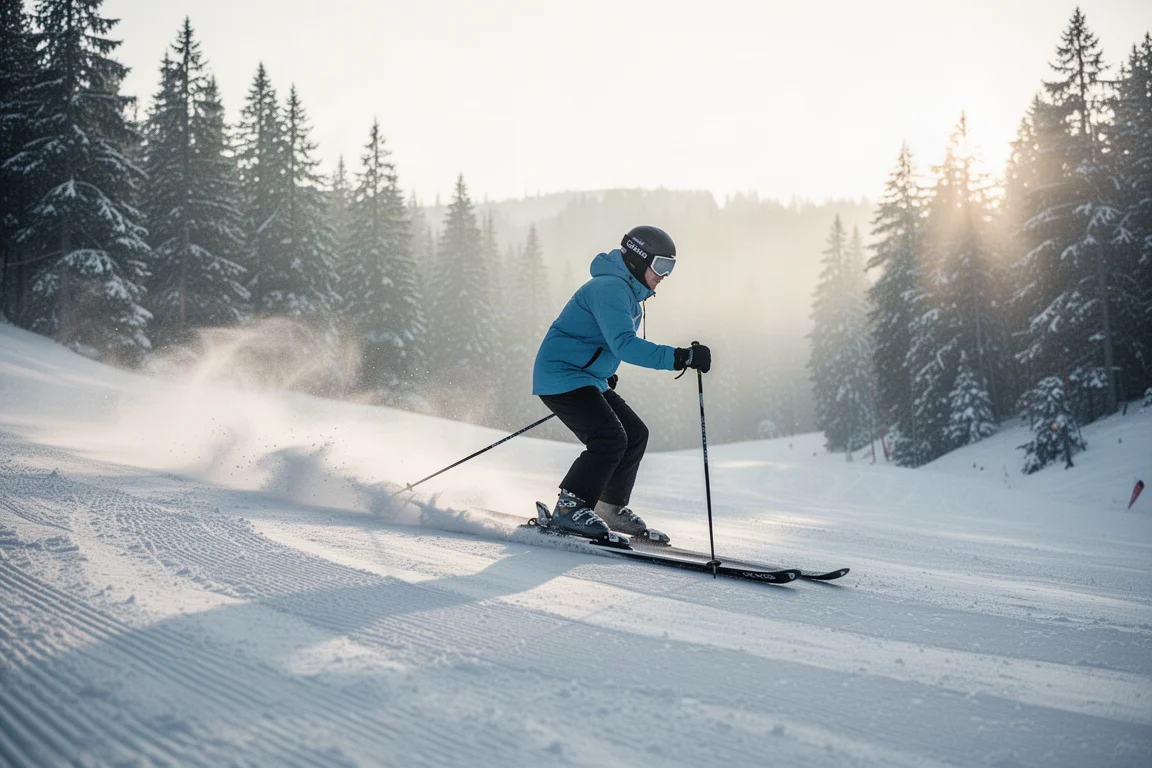
This review covers what the Phantastick does well, where it holds back, how it compares with other grip styles, and how to choose the right length for the way you actually ski.
Who These Poles Are For
The Phantastick is aimed at anyone who rides a chairlift. It handles powder, it works on groomed runs, and it holds up through the kind of mixed day where you move between hard pack, soft snow and short tree runs. It also traverses through powder well, and the baskets stay attached rather than being torn off during aggressive carving.
Material choice matters most for people who ski a lot. For anyone getting out fewer than roughly 30 days a season, the extra weight of a heavier pole simply does not add up to much over a day. For skiers who go often and ski hard, a lighter pole is a genuine comfort upgrade, and carbon is the material that delivers it.
These are not racing poles and they are not dedicated backcountry poles. They are built for recreational skiing in resorts and sidecountry, which is where most skiers spend their time.
Main Strengths
Carbon construction keeps the swing weight low, and that is the core of the appeal here. The good news is that carbon poles are no longer a luxury purchase. Where carbon poles once cost a couple of hundred dollars, they now sell for roughly half of that, which makes a lightweight pole a far easier recommendation than it used to be.
The grip is the second standout. It uses a long trigger ridge with a firm, shaped body that helps keep the hand anchored in the right position through a turn. The strap runs on the looser side, which leaves room to reach through and take hold of the handle directly instead of being locked tight against the wrist.
The basket is the detail that ties it together. It is wide enough to give leverage in powder and to resist sinking, yet smooth enough that it does not snag and rip away when you are carving on hard pack. That balance is what lets one pole work across an entire season rather than one type of day.
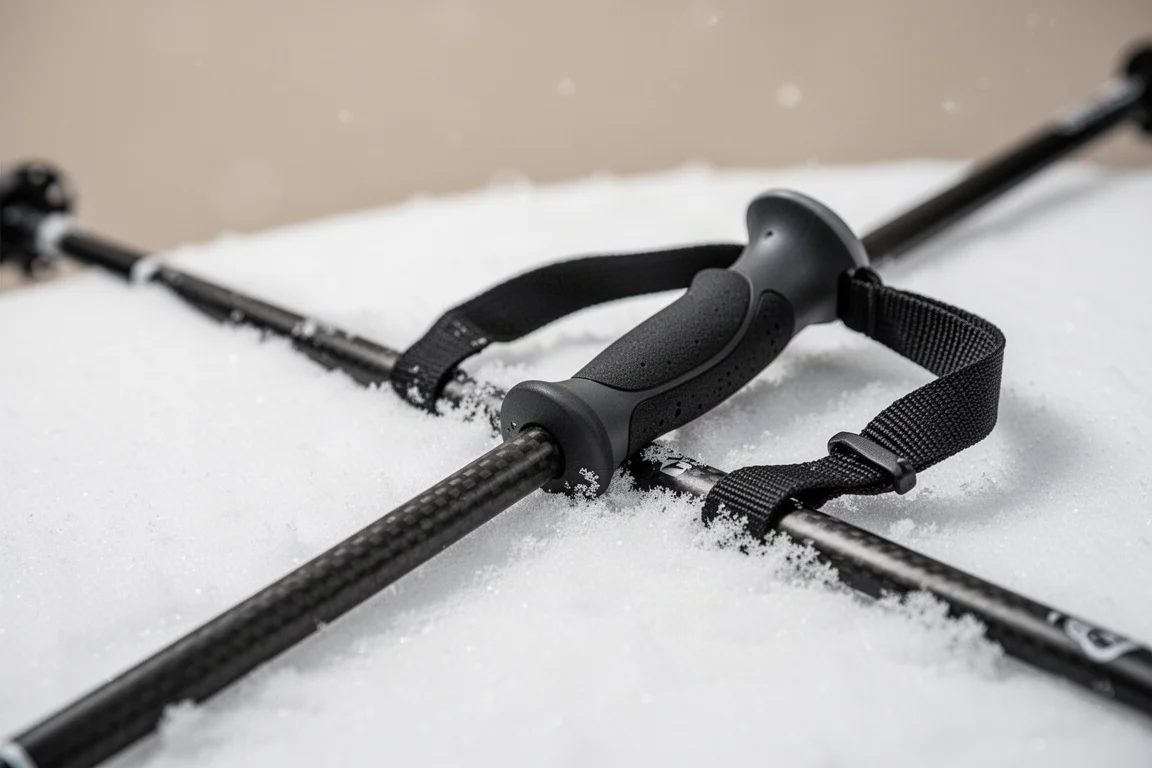
The practical result is a pole that stays planted where you put it and feels light on the swing, which matters more than most people expect once you are linking turns at speed.
Handle, Strap, and Basket Design
Grip choice is entirely personal, and it comes down to hand shape, hand size and how firmly you like to hold a pole. The Phantastick leans toward a firm, conforming feel, with the long trigger ridge doing most of the work of keeping the hand located correctly during turns.
Not every skier wants that. Some poles use a tighter strap and a handle with less of a trigger ridge, which leaves the grip feeling more free-form and less shaped around the hand. For skiers who prefer a relaxed hold, that style can feel better. There are also systems that route a trigger directly under the glove, which is more hardware than most recreational skiers need and can feel restrictive.
The strap arrangement matters as much as the grip. A looser strap lets you reach through and grab the handle directly, which keeps the wrist less constrained and makes it easier to reposition your hand. A tight strap that loops around the wrist and sits between thumb and index finger effectively thickens the grip and reduces room to move.
The basket follows the same logic. A very wide basket is built for backcountry travel, where spreading weight across a larger surface keeps the pole from sinking while skinning uphill. A very narrow basket is built for racing, where the goal is to avoid catching on gates. The Phantastick sits deliberately in the middle, which is why it works so well as an everyday resort pole.
Things to Consider Before Buying
Poles are a low-priority purchase in the wider gear picture. Boots and skis change how a day feels far more than a pole does, so if the budget is tight, this is not the place to start.
The Phantastick is also not an innovative design. It does not reinvent the grip or change what a ski pole can be. What it does is execute a proven formula very well, which is a different kind of value.
Finally, grip preference is genuinely personal. If you already know you like a free-form handle with a tight strap, or a trigger system that sits under the glove, this shaped grip with its looser strap may not suit you. That is worth checking in person if you can.
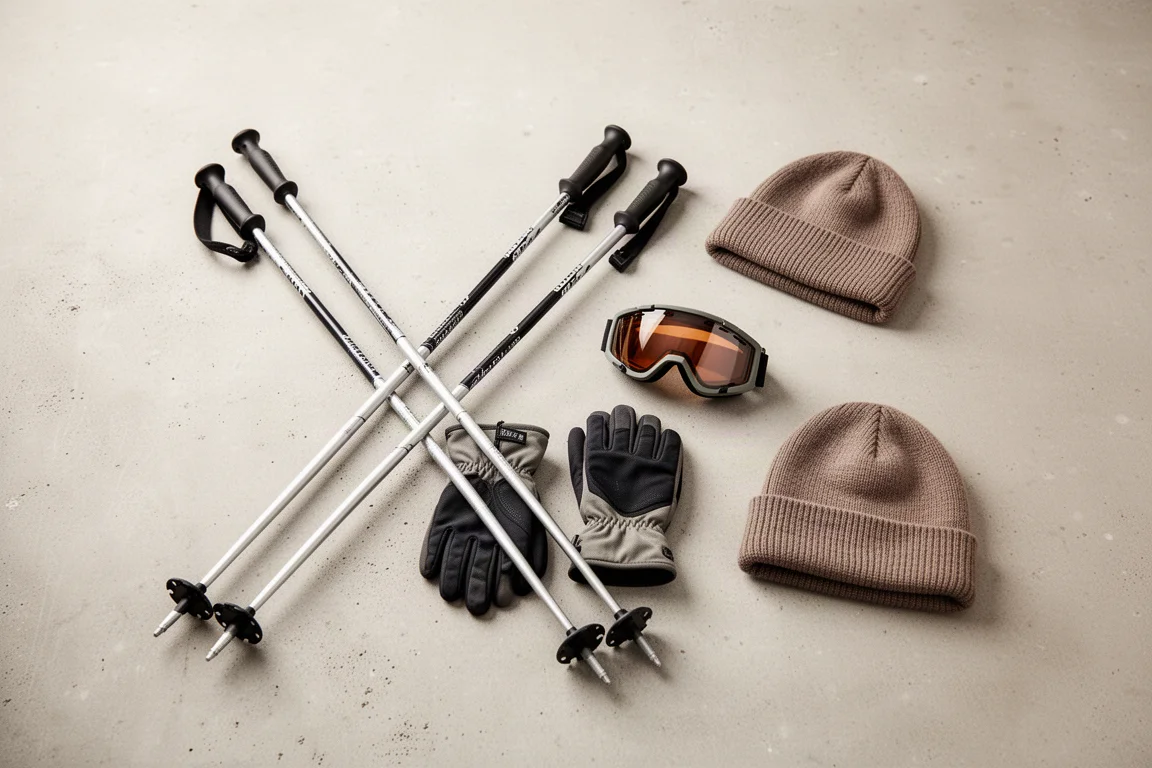
It is also worth skipping poles that add complexity you will never use. Extendable backcountry poles with oversized baskets are designed for skiers who are actually touring and skinning uphill. On a chairlift, on groomed runs and even in the trees, that extra hardware is weight and bulk you do not need. Bamboo is another one to leave alone: it is brittle, it breaks, and it does not serve a purpose that a modern pole does not serve better.
Sizing and Setup Tips
Sizing is where most skiers get it wrong. The common recommendation is to size shorter than the chart suggests, taking roughly five centimetres off whatever length the chart points you toward. As a reference point, a skier at six foot one can comfortably use a 120 centimetre pole, where a chart would typically suggest something closer to 125 or 130 centimetres.
Strap technique is the other small adjustment worth making. Rather than looping a hand through the strap and trapping it between thumb and index finger, simply reach through the strap and take hold of the handle directly. That gives more room in the grip and feels less restrictive on the wrist.
One more note for anyone who has wondered about the bent shaft on racing poles. The bend exists so the pole can wrap around the waist when a racer is in a low tuck, which keeps the poles out of the wind and makes the position more comfortable. For an everyday skier it does nothing useful. Unless you are racing, there is no advantage to buying race poles, and the plant feels worse off trail.
Buying Advice
These are the best all-around poles for the way most people ski, and arguably the best value available in a lightweight carbon pole. They are light, the grip is comfortable and secure, the basket width is right for mixed conditions, and the build quality is high. On a personal scale they land at a strong 9 out of 10.
The only reason they are not a perfect score is that they are not innovative. A perfect pole would be one that genuinely changes what a grip can do, and this one does not attempt that. It simply does the fundamentals exceptionally well.
If you ski a handful of days a season on rental or entry-level gear, a basic aluminium pole will do the job and the money is better spent elsewhere. If you ski regularly, get out in powder and groomers alike, and want a pole that feels light in the hand, plants cleanly, and keeps its baskets through a full season of carving, this is an easy recommendation.
Conclusion
The Völkl Phantastick is a well-made carbon pole with a secure, shaped grip, a sensibly loose strap and a basket width that handles powder and hard pack without compromise. It is not a radical design, but it is a genuinely good one, and it earns its place as a low-effort upgrade for skiers who put in real days on the mountain.
Product link
View more details for Völkl Phantastick Ski Poles
This product is mentioned in the review. Check the specifications, options, and compatibility before buying.
View more details for Völkl Phantastick Ski PolesFurther reading
Related Reviews
Road Bikes
Best Cheap Modern Classic Road Bikes: 8 Secondhand Carbon Picks
Eight lightweight carbon road bikes from the 2010 to 2020 era that deliver race-ready performance at secondhand prices, plus what to check before you buy.
Gravel Bikes
Best Gravel Bikes: Six Carbon and Aluminium Options Compared
Six gravel bikes from Specialized, Canyon, Giant, Cube, Merida and Cannondale, compared on frame material, groupset, tire clearance and geometry.
Road Bikes
10 Modern Classic Road Bikes Worth Buying Secondhand
Ten lightweight rim-brake era road bikes that still deliver real performance, plus what to inspect before you buy used carbon.