Electric Scooters
VMAX VX5 Pro vs Budget Electric Scooter: Real-World Performance Tested
A detailed comparison of the VMAX VX5 Pro against a bestselling budget scooter, testing top speed, hill climbing, range, and ride quality to help you decide if the premium option is worth the investment.
Introduction
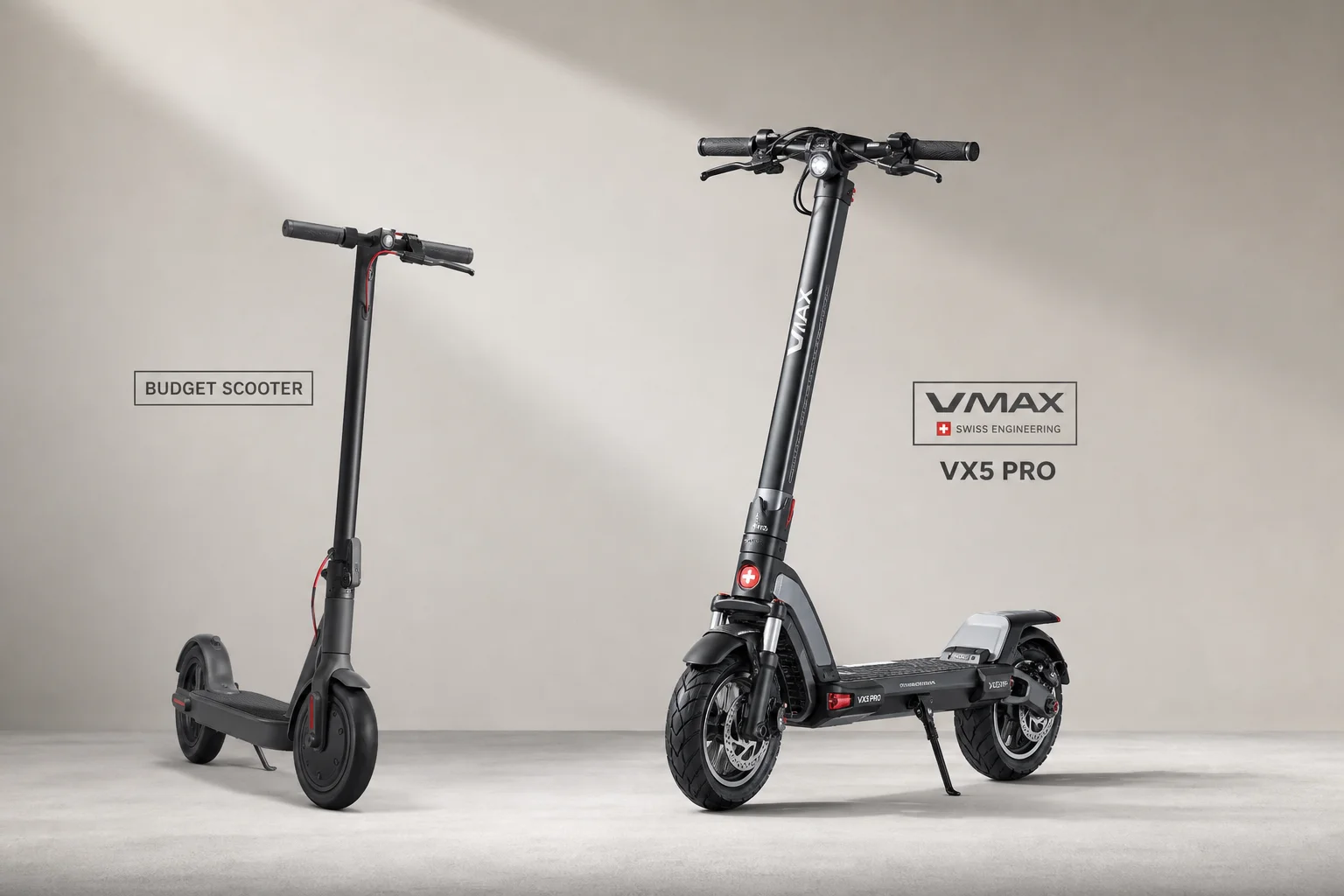
The electric scooter market spans a wide range of prices and quality levels. At one end sits the budget option: a bestselling scooter on Amazon priced around $200. At the other sits the VMAX VX5 Pro, a Swiss-engineered model at $500. The question is straightforward: does the premium option deliver enough real-world benefit to justify the price difference?
To answer this, I tested both scooters across the same metrics: top speed using precision data logging, hill climbing ability on a standardized 10-percent grade test hill, real-world range on a consistent test course, and overall ride quality. The results reveal clear trade-offs between affordability and performance.
Top Speed Performance
The budget scooter’s specifications claim a top speed of 19 mph, with a note that it might reach 21 mph under certain conditions. Testing with a $500 data logger showed the scooter reaching a consistent 19 mph on the speedometer, though the actual data logger reading came in slightly lower at approximately 18 mph. The scooter appeared to be firmware-limited to this speed; even with the front wheel lifted off the ground and freewheeling, it would not exceed 19 mph.
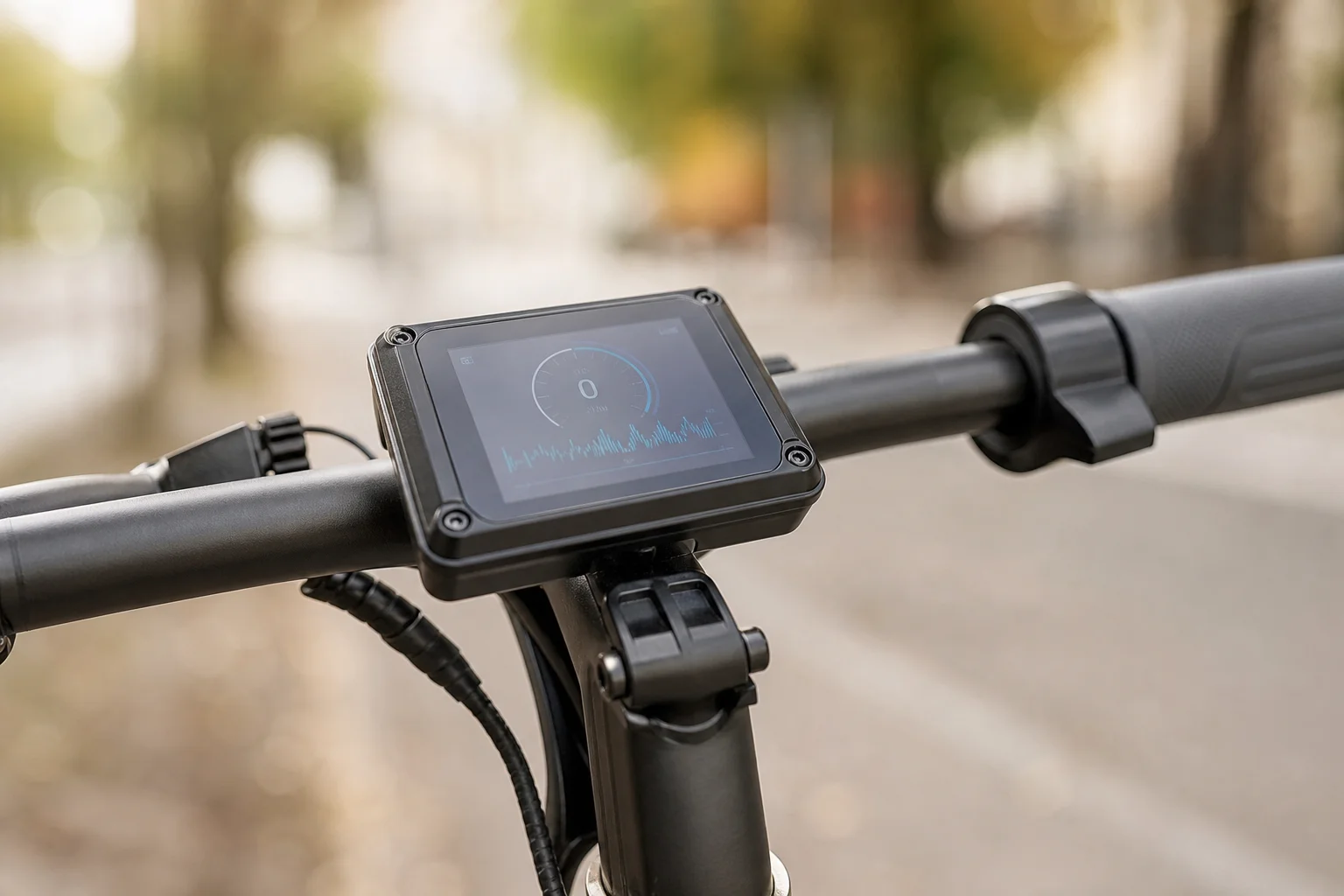
The VMAX VX5 Pro, by contrast, showed an indicated speed of 18 mph on the speedometer, with the data logger confirming approximately 17 mph. While the top speed is comparable, the acceleration profile differs significantly. From 0 to 10 mph, the VX5 Pro achieved this in 2.1 seconds, compared to 3.3 seconds for the budget scooter. This stronger initial acceleration is noticeable in real riding and contributes to a more responsive feel overall.
One early observation emerged during cornering: the budget scooter’s solid tires exhibited reduced traction on turns, requiring careful handling even at moderate speeds. The VX5 Pro’s tubeless tires provided noticeably better grip.
Hill Climbing Ability
Hill climbing performance revealed the largest performance gap between the two scooters. Both were tested on the same standardized 10-percent grade test hill, a slope representative of the steepest hills most riders encounter in normal use.
The budget scooter climbed the hill in 31.7 seconds at an average speed of 4.3 mph. The rider had to maintain careful balance at such low speeds, and the scooter’s limited power made the ascent laborious.
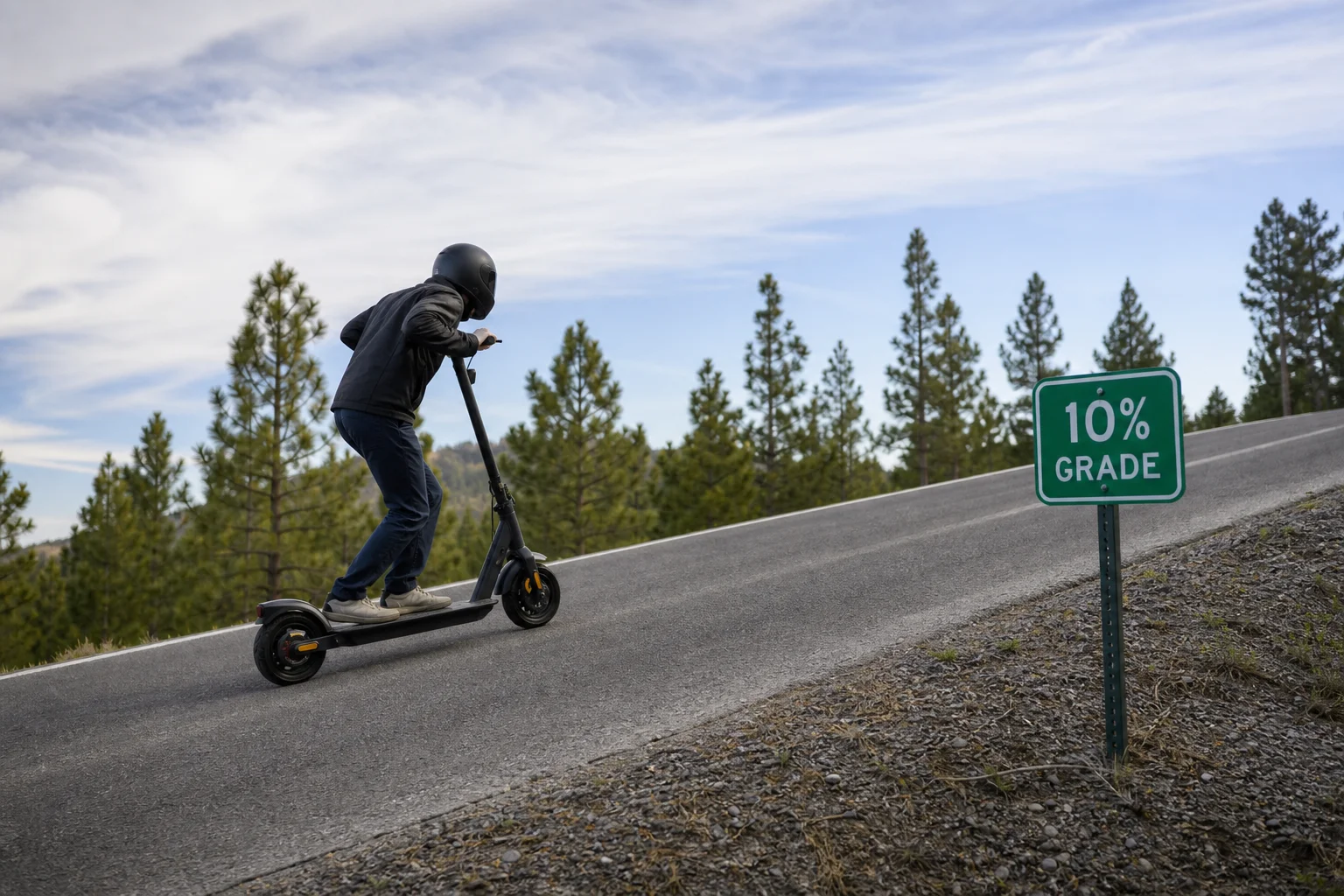
The VMAX VX5 Pro completed the same hill in 16.3 seconds at an average speed of 8.4 mph, nearly twice as fast. This difference is not merely a matter of comfort; it reflects a fundamental design philosophy. VMAX scooters are engineered in Switzerland with the expectation of climbing substantial elevation changes while carrying heavier riders. The VX5 Pro’s superior motor and battery configuration make it capable of sustained hill climbing that the budget model simply cannot match.
For riders weighing 165 pounds or less on mostly flat terrain, the budget scooter may suffice. For heavier riders or those encountering regular hills, the VX5 Pro becomes the practical choice.
Real-World Range Testing
Range testing was conducted on a consistent test course to measure how far each scooter could travel on a full charge before stopping.
The budget scooter achieved 12.1 miles on the test course. This exceeded my initial expectations given its modest battery capacity, though it falls short of the manufacturer’s claim of 21 to 28 miles. Real-world conditions, terrain, and rider weight all affect actual range.
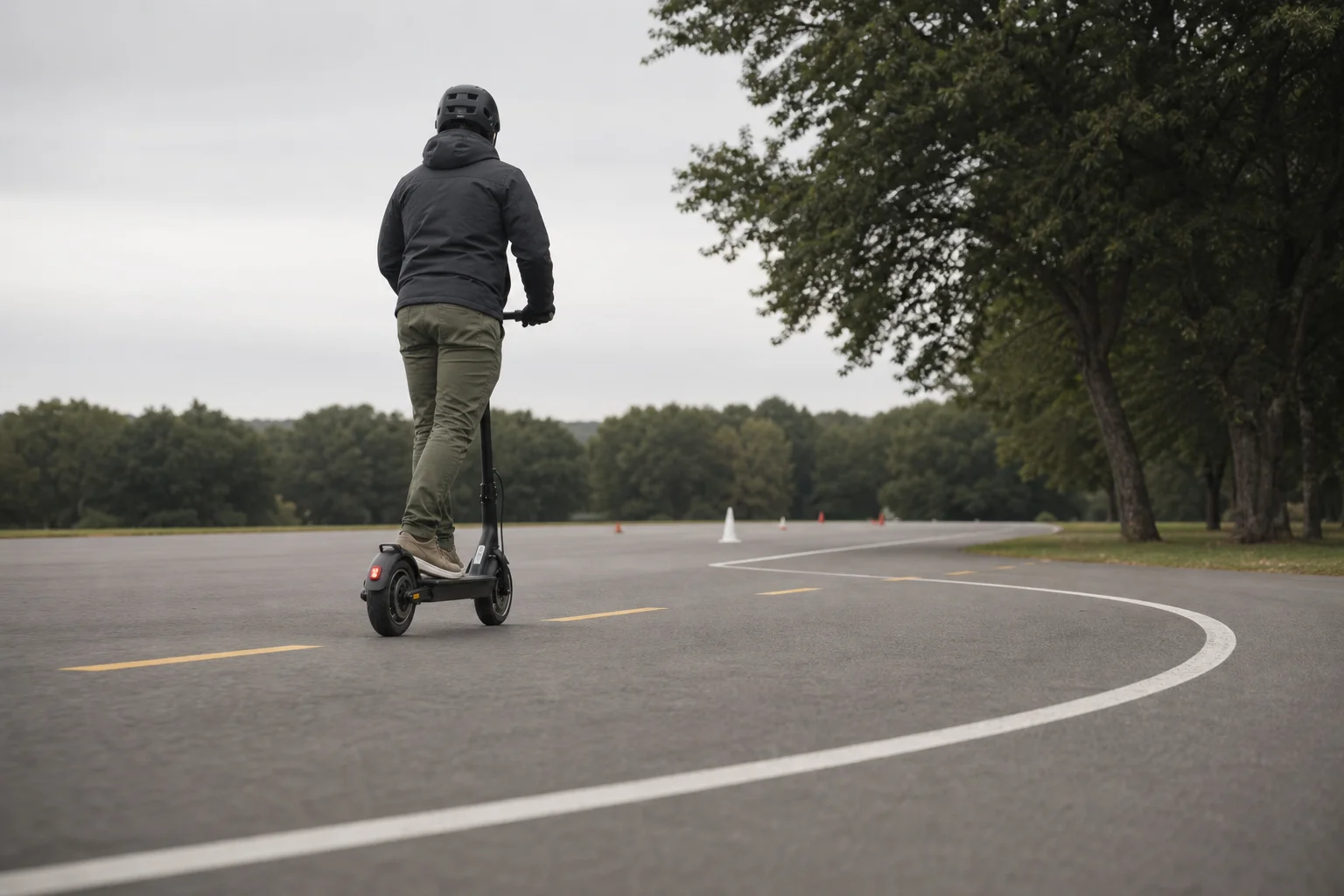
The VMAX VX5 Pro GT variant completed the same course in 19.7 miles. The ST version tested in this comparison, which uses a smaller battery, would deliver approximately 15 miles under the same conditions based on battery size comparison with the GT model.
The practical implication is clear: the VX5 Pro extends your usable range by roughly 50 percent, reducing the likelihood of being stranded mid-journey. For commuters or recreational riders planning trips beyond 10 miles, this difference matters.
Braking and Handling
Both scooters use regenerative braking, but the implementation differs significantly. The budget scooter’s regen brake operates as an on-off switch: any lever pressure triggers immediate braking with no gradation. This abrupt response makes smooth, light braking difficult and can feel lurchy during normal riding.
The VMAX VX5 Pro features a variable regen brake where brake force increases proportionally with lever pressure. Gentle lever inputs produce light braking; harder pulls generate stronger deceleration. This variable approach, uncommon even among premium scooters, allows for smoother speed control and more natural riding dynamics.
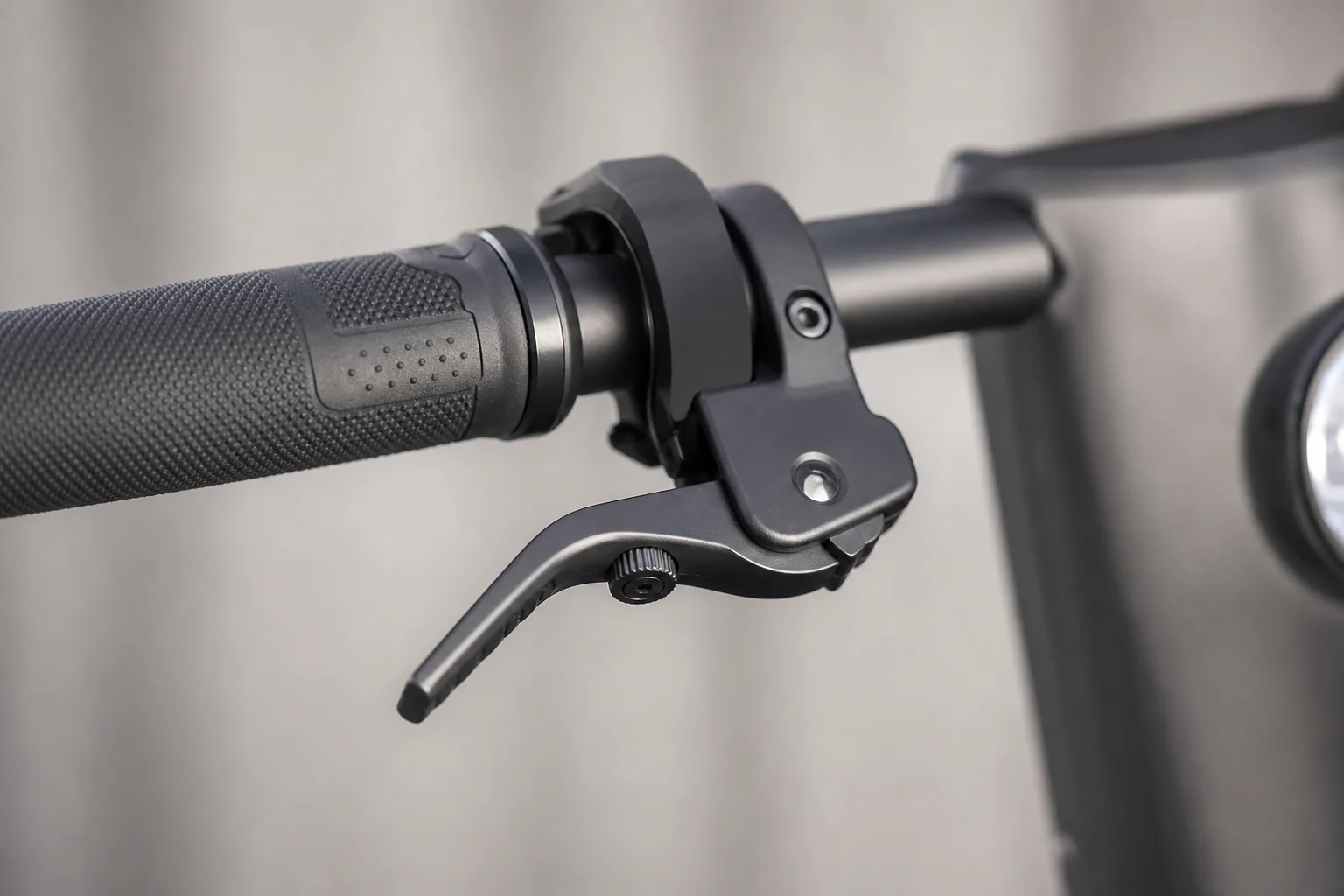
The budget scooter’s solid tires and lack of suspension create a harsh, vibration-heavy ride on anything but perfectly smooth pavement. Riders report eye-blurring vibration on typical road surfaces. The VX5 Pro’s tubeless tires and suspension design absorb road imperfections, resulting in a significantly more comfortable experience over extended rides.
Handlebar height on the budget scooter measures approximately 38 inches, suitable for shorter riders but low for riders taller than 5 feet 10 inches. The VX5 Pro offers better ergonomics for a wider range of rider heights.
Warranty and Parts Availability
A critical but often overlooked consideration is what happens when something breaks. The budget scooter carries a one-year warranty, though the fine print indicates only 180 days coverage for some unspecified parts. The manufacturer, listed as Maxshot H, provides no website or phone support, only an email address with a stated 24-hour response time that, in testing, went unanswered for two days.
Spare parts are essentially unavailable through official channels. If a brake lever breaks or a motor fails after the 30-day Amazon return window closes, the scooter becomes difficult or impossible to repair affordably.
VMAX, by contrast, maintains a network of authorized retailers across the United States and provides genuine parts support. Repairs and replacements are feasible, and the warranty is transparent and enforceable.
Who Should Buy Each Scooter
The budget scooter serves a specific use case: riders seeking the absolute lowest entry point into electric scooter ownership, planning to ride 10 to 12 miles per day on smooth pavement, and accepting that the scooter may not be repairable after the initial return period. At $200, it provides affordable short-distance transportation.
The VMAX VX5 Pro suits riders planning to own a scooter for a year or more, those encountering hills or varied terrain, heavier riders, and anyone prioritizing ride comfort and reliability. The $500 investment yields better performance, a genuine warranty, parts availability, and a more enjoyable riding experience.
Conclusion
The $300 price difference between these scooters reflects real engineering and design choices. The budget scooter delivers basic transportation at minimal cost but sacrifices comfort, performance, and long-term reliability. The VMAX VX5 Pro costs more but provides Swiss-engineered precision, better components, and a warranty backed by actual support infrastructure.
For casual, short-distance use on a tight budget, the budget scooter makes sense. For anyone planning regular riding or expecting the scooter to last beyond a few months, the VMAX VX5 Pro represents better value despite its higher upfront cost.
Product link
View more details for VMAX VX5 Pro
This product is mentioned in the review. Check the specifications, options, and compatibility before buying.
View more details for VMAX VX5 ProFurther reading
Related Reviews
3D Scanning Equipment
Best 3D Scanners Under $1000: Four Practical Options for Enthusiasts
A detailed comparison of four sub-$1000 3D scanners for larger scans and detailed parts, tested on real projects with accuracy measurements and usability insights.
Coffee Equipment
Best Automatic Coffee Makers: Six Models Tested for Brewing Quality and Design
We tested six automatic coffee makers across temperature stability, extraction, and user experience to help you find the right brewer for your needs.
Coffee Equipment
Best Electric Gooseneck Kettles: Eight Models Tested for Pour Quality and Speed
A detailed comparison of eight temperature-controlled electric gooseneck kettles, tested for heating efficiency, pour quality, and everyday usability.