Electric Scooters
GoTrax Flex Review: A Budget Seated E-Scooter That Hauls More Than You'd Expect
A hands-on look at the GoTrax Flex seated electric scooter, including real range after a battery replacement, towing capacity, ride quality, and what to check before buying.
Introduction
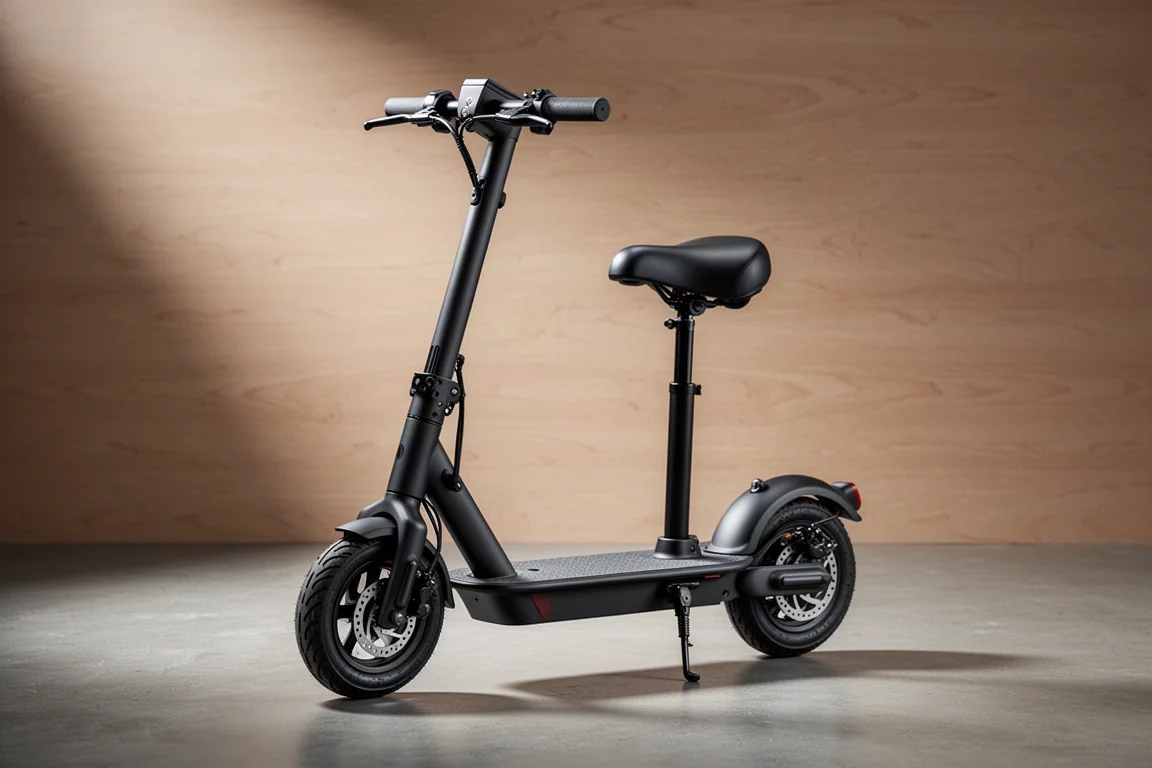
The GoTrax Flex sits in an awkward in-between category: it is not quite an e-bike and not quite a kick scooter. After spending serious time with one on a rural property, using it as a daily workhorse rather than a showroom commuter, the honest verdict is that it is one of the harder products in its price class to beat at around $300.
This was purchased independently and ridden hard, including towing, off-road grass, and daily trips to a mailbox half a mile away. That kind of use reveals things a quick spin around a parking lot never will. Here is what held up, what did not, and who this scooter actually makes sense for.
Who the GoTrax Flex Is For
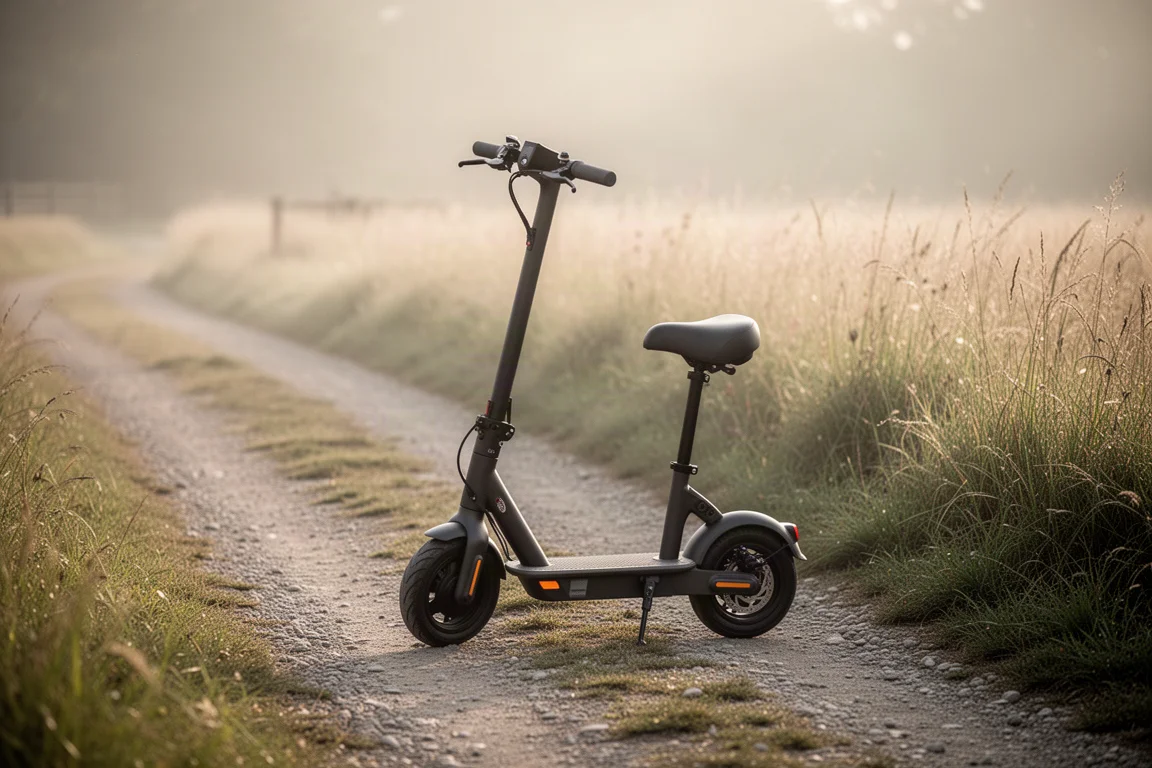
The Flex was bought for a specific job: cheap, low-maintenance transport around a farm and down rural back roads. The main draw was its unusually high weight capacity, which allows roughly 80 extra pounds of towing beyond what most budget seated scooters claim to handle.
If your use case is short utility trips, property chores, or relaxed cruising where hauling gear matters more than top speed, this scooter fits that brief remarkably well. It replaces the gas mini-bike pattern of constant fuel runs and maintenance with something you basically charge and ride.
Main Strengths
Power and Cruising Performance
The Flex has genuine low-end pep that surprises most first-time riders. At full throttle it does not surge like a gas engine, but acceleration is steady and the cruising speed is genuinely useful, even with a loaded trailer behind it. The ride remains confident at the speeds it reaches.
Battery and Real-World Range
One important note on range: the original battery underperformed badly, delivering only three or four miles before cutting out. GoTrax handled it well, shipping a replacement battery at no cost, and the swap itself was straightforward. The one quirk: the battery sits extremely tight in its bay, with double-sided tape holding it in place, so expect to need a pry bar and a little patience.
With the new battery installed, real-world range improved to roughly 15 to 18 miles when not holding full speed constantly. That is a solid figure for a scooter at this price, and the overall ownership experience after the swap has been excellent.
Ride Quality, Brakes, and Lights
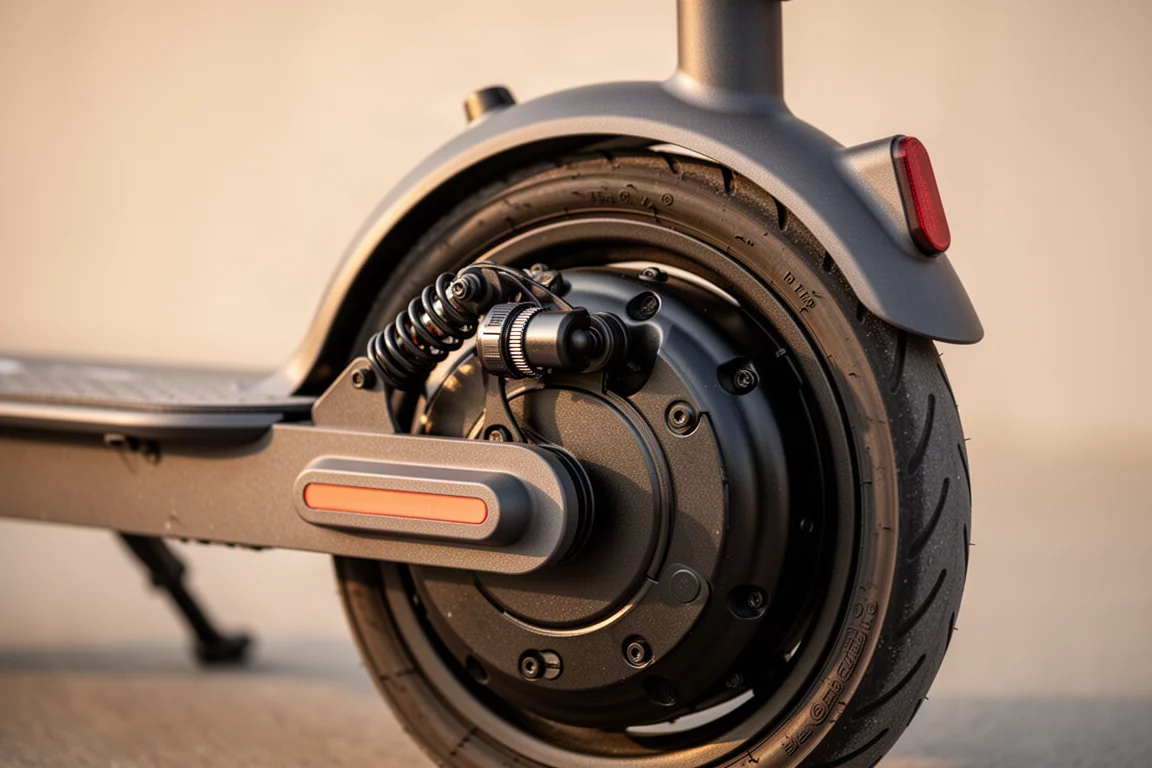
The Flex runs drum brakes front and rear, both adjustable, plus rear suspension with adjustable shocks. The brakes can be set sensitive enough to lock the tires if you really pull, which translates to strong, confident stopping power rather than the mushy feel common at this price. They do feel a bit sticky on application rather than perfectly smooth, but that firmness works in their favor.
The suspension is honest but modest. The seat sits over the frame rather than over the shock, so larger riders will bottom out the travel quickly even at around 200 pounds of rider weight. It is still noticeably better than a rigid frame, just do not expect full-suspension comfort.
Lighting is a mixed bag. The rear light doubles as a brake light and flashes continuously while the brake lever is held, which is exactly what you want at a stop. The front light is weak for genuinely dark conditions, more of a small spotlight than a trail illuminator, and its angle needs manual adjustment to be useful.
The battery gauge is only sort of accurate: bars can drop under hard acceleration and recover at a stop. Three power modes (off, lights-only, and full power) are controlled by a simple keyed switch, and the scooter ships with three keys.
Towing and Utility: The Surprise Strength
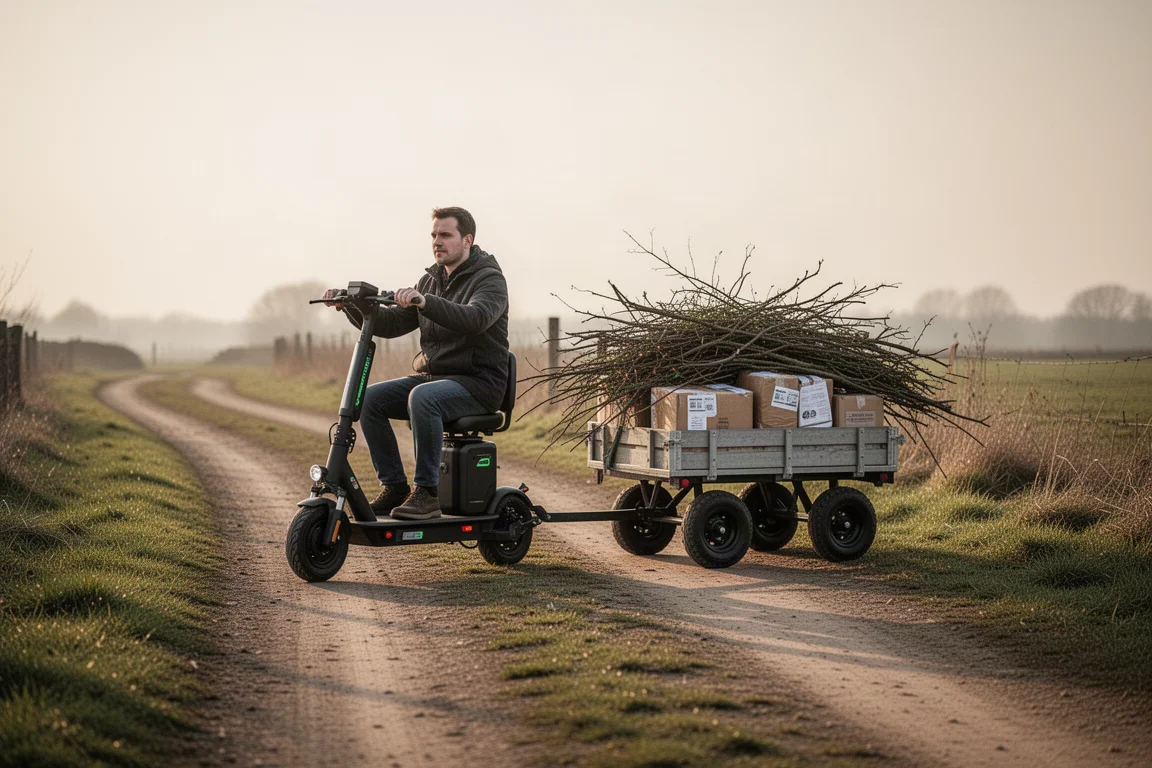
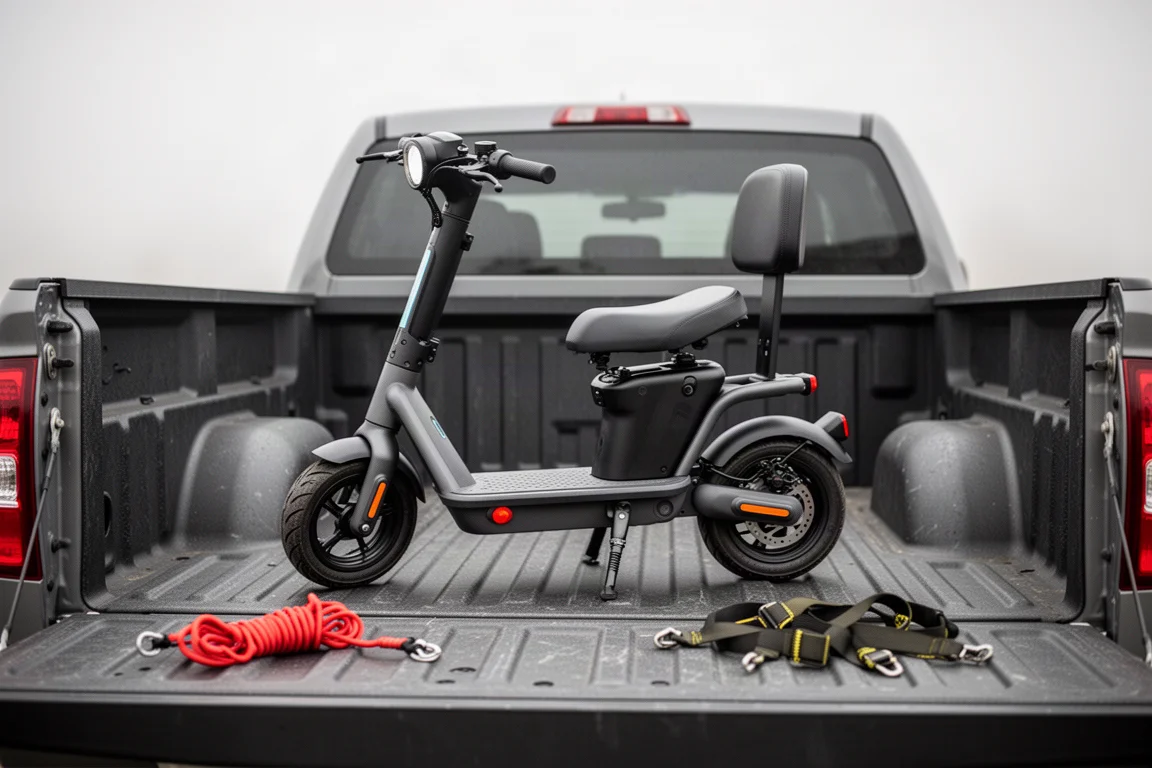
This is where the Flex genuinely stands apart. With a lightweight four-wheeled utility cart fitted with a golf-cart style hitch, it has hauled loads up to around 200 pounds in the trailer, everything from tree branches to mail to trash. It keeps cruising at a usable speed even loaded, which is remarkable for a $300 scooter.
That said, towing heavy loads visibly beats up the rear basket area, so if you plan to use it this way, factor in cosmetic wear. Keep bungee cords and a ratchet strap handy for securing cargo.
Things to Consider Before Buying
The tires are the weakest hardware on the scooter. They are budget-spec and have leaked roughly 5 PSI per week in testing, though topping them up is quick and easy. The suspension bottoms out quickly under heavier riders, the front light is underpowered after dark, and the fuel gauge lacks precision. None of these are deal-breakers for the price, but they are worth knowing upfront.
Buying Advice
Buy the GoTrax Flex if you want a cheap, seated utility scooter for short rural or property use and you value low maintenance over raw speed. It is easier to live with than a gas mini-bike and hauls far more than its price suggests. Be prepared for a possible battery replacement early in ownership, and check tire pressure regularly. If you need a smoother ride, stronger night lighting, or precise range readings, look upmarket.
Conclusion
The GoTrax Flex is not refined, but it is genuinely impressive at around $300. With a working battery it delivers 15 to 18 miles of real range, surprising towing ability, strong adjustable drum brakes, and construction that has shrugged off serious abuse. For budget-focused utility riders, it earns a clear recommendation.
Product link
View more details for GoTrax Flex
This product is mentioned in the review. Check the specifications, options, and compatibility before buying.
View more details for GoTrax FlexFurther reading
Related Reviews
Electric Scooters
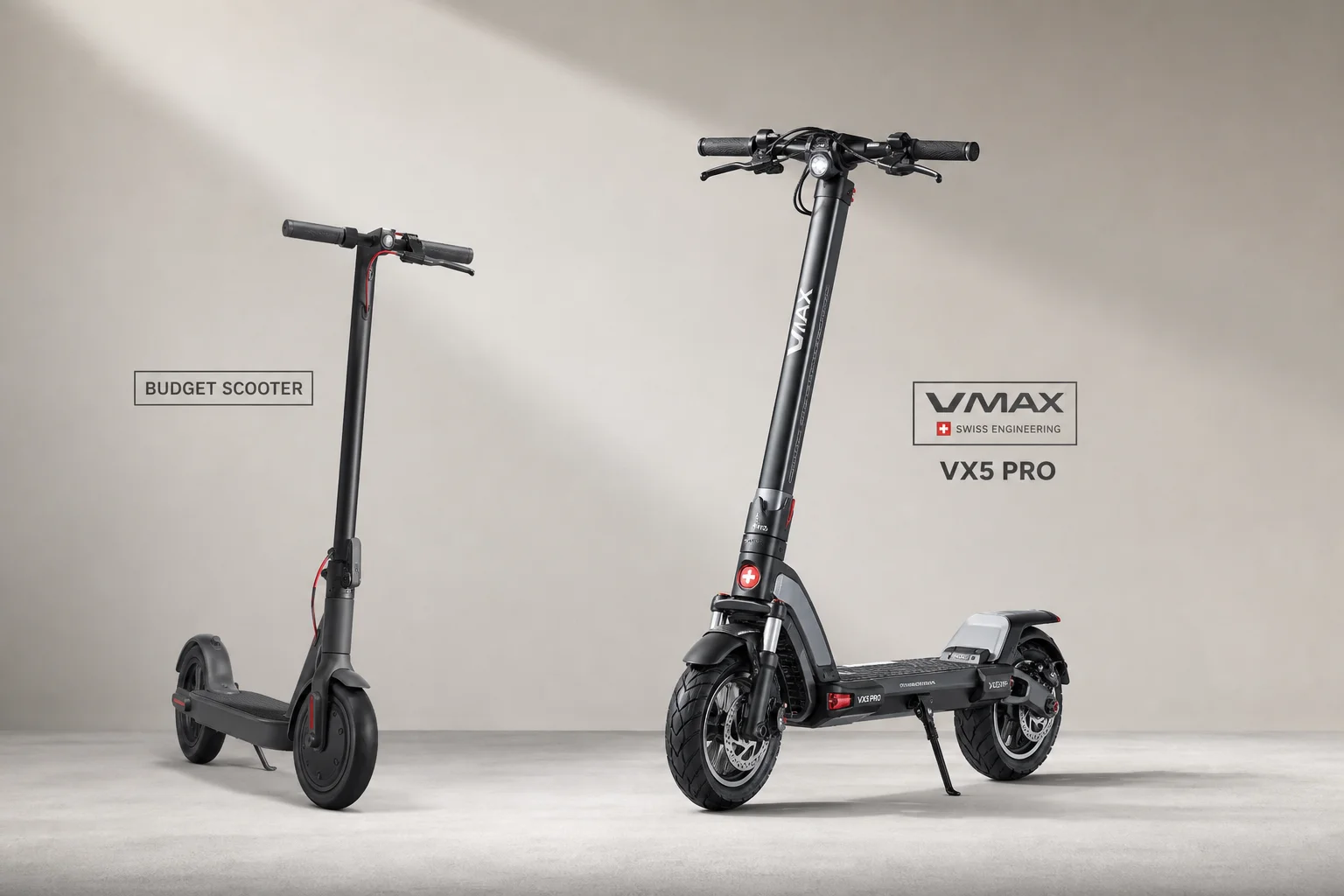
VMAX VX5 Pro vs Budget Electric Scooter: Real-World Performance Tested
A detailed comparison of the VMAX VX5 Pro against a bestselling budget scooter, testing top speed, hill climbing, range, and ride quality to help you decide if the premium option is worth the investment.
Electric Scooters
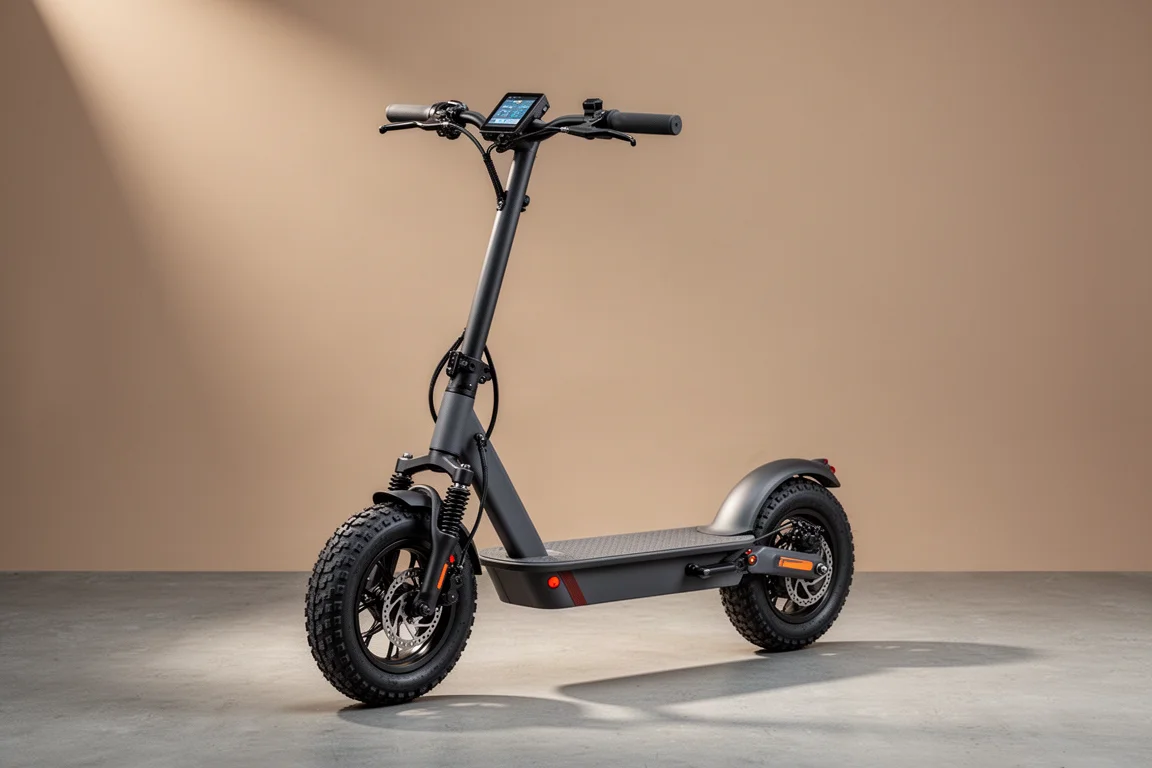
Anyide S1 Electric Scooter Review: Suspension, Speed, and Everyday Usability
A practical look at the Anyide S1 electric scooter, from its 135 mm suspension and dual disc brakes to its speed modes, safety features, and real-world range expectations.
Electric Scooters
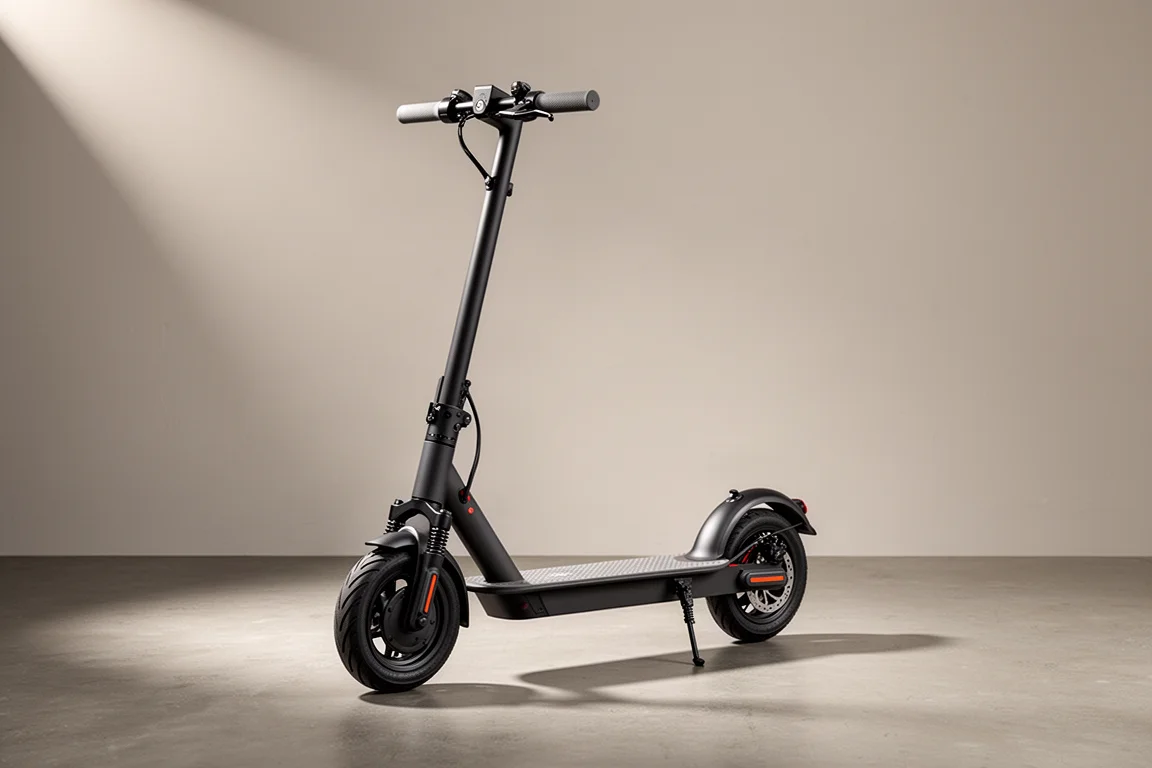
iScooter i9 Max Review: A 500W E-Scooter Built for Everyday Riding
A practical look at the iScooter i9 Max after six months of use, covering build quality, suspension, range, top speed, app features, and what to weigh before buying.