Grow Equipment
VivoSun VCure Review: A Dedicated Drying and Curing Box With Real Controls
A close look at the VivoSun VCure: capacity, climate control, recipes, airflow design, and the practical details that matter for home growers.
Introduction
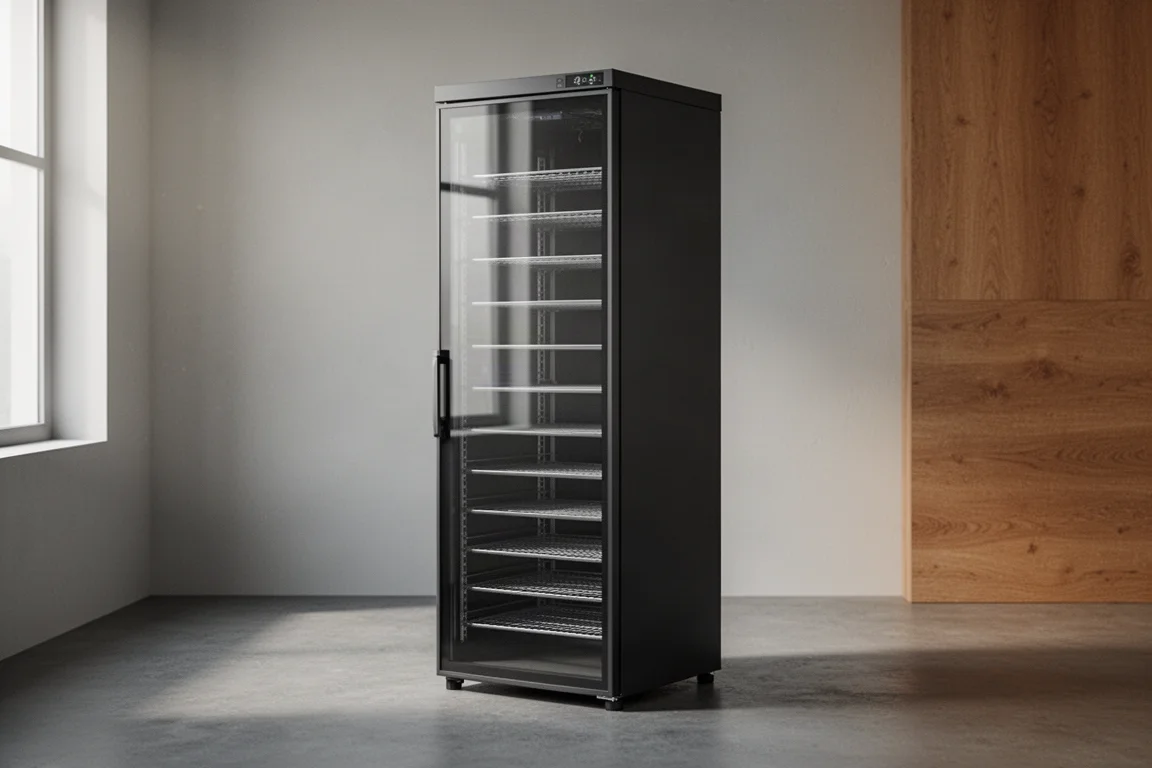
Drying and curing is where a lot of home harvests quietly lose quality. Temperature swings, dry ambient air, and stray light all take a toll, and improvised setups make it hard to keep conditions stable. The VivoSun VCure is a dedicated sealed box built specifically for this phase, and after spending time with it, the design choices feel deliberate rather than gimmicky. Here is what it offers, how it behaves in a real dry cycle, and the details worth knowing before you buy.
Who This Product Is For
The VCure suits growers who want a controlled, enclosed environment for drying and curing without rigging up tents, humidifiers, and timers on their own. It is especially relevant if you grow in a challenging climate. In a very dry desert environment around 30% relative humidity, for example, a sealed box with active humidity control stops being a luxury and becomes the difference between harsh, over-dried flower and a properly cured result.
It is also a practical fit for households with small children. A built-in child lock keeps the door closed, and the box is designed so a child could not get trapped inside, which we will come back to below.
Capacity and Climate Sensing
Inside, the VCure offers roughly 24 gallons of space, which works out to about 3.3 to 3.4 cubic feet. That is enough room for a meaningful personal harvest spread across the included racks, without the unit dominating a room.
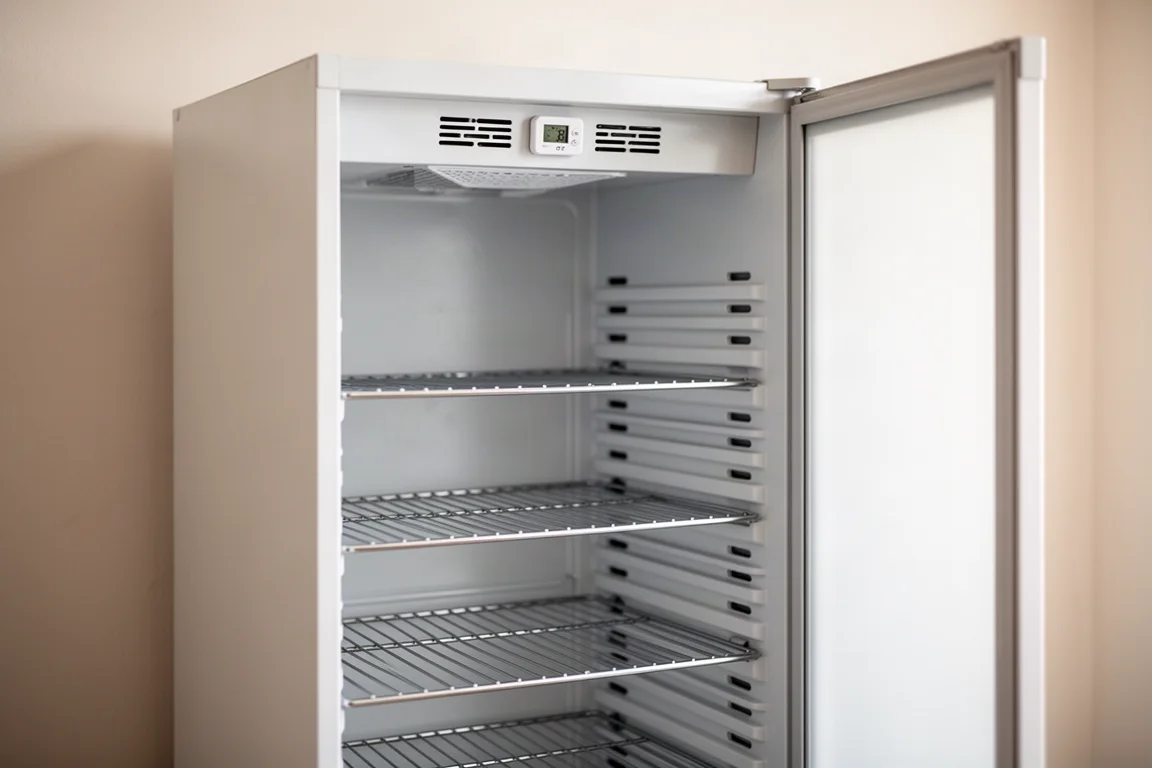
The temperature and humidity probe is deliberately placed near the air inlet. The reasoning is straightforward: air entering from the environment gets well mixed and balanced before passing that point, so the sensor reads conditions that genuinely represent the inside of the box rather than a misleading corner value.
Privacy Glass and Light Blocking
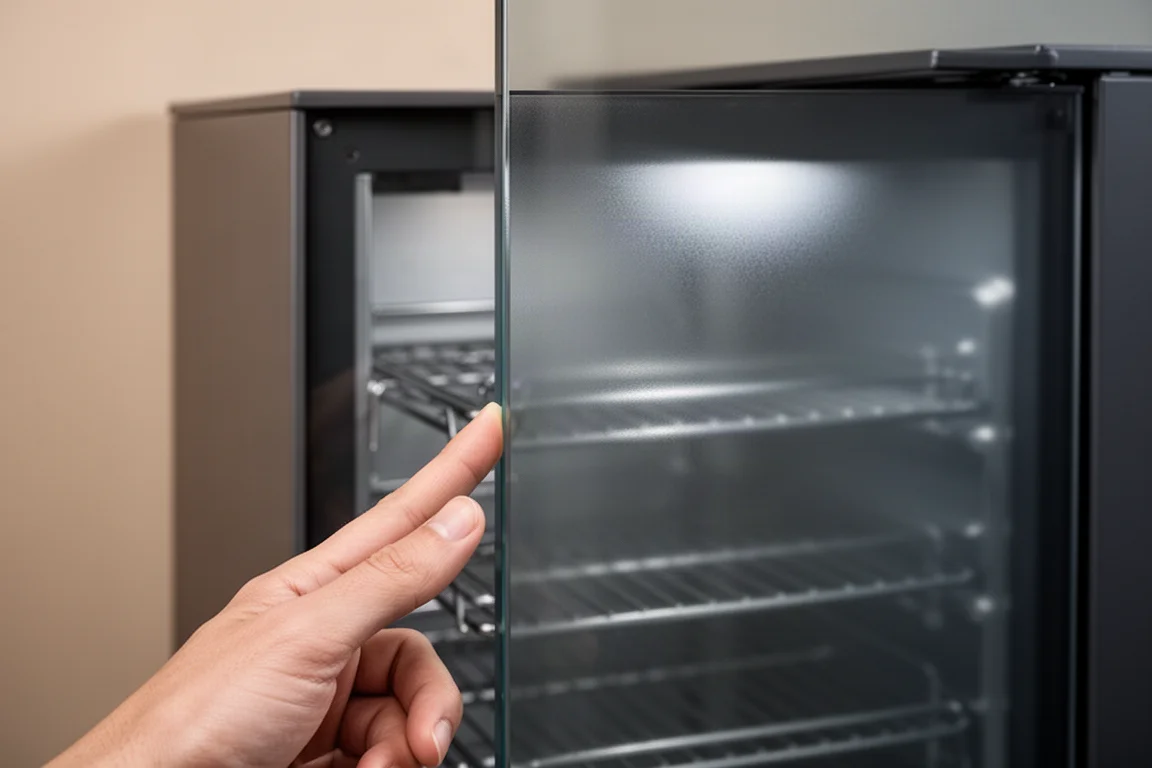
The front glass is a three-layer construction: two layers of glass with a dimming film sandwiched between them. With one touch it shifts to a frosted privacy state, which is a genuinely nice touch when the box lives in a shared living space.
More importantly for curing, the glass blocks light aggressively. Testing showed more than 99% of visible ambient light is blocked, so if 100 units of light hit the glass, less than one gets through. UV blocking is even stronger: with two glass layers each blocking more than 99%, the transmitted UV is effectively negligible. During drying, keeping light off your flower is exactly what you want.
Child Lock and Safety Details
The child lock works two ways. You can unlock it from your phone, which is arguably the safer route since nobody else is handling your device. There is also a hidden hardware method: long-pressing the return button on the unit unlocks it, but only if you know to look for it in the menu. Otherwise it stays closed.
One detail that looks odd at first: the middle rack is secured with a screw. This is a legal safety requirement. Because the child lock means the door cannot be opened from inside, fixing that rack ensures the remaining space is not large enough for a child to fit in. It is a thoughtful, regulation-driven touch rather than an inconvenience.
Water Tank and Humidity Stability
Below the racks there is a small tray and, beneath it, a water tank that you fill to roughly 700 ml. The tray serves double duty: it catches any loose material that drops down, and the water helps balance internal vapor pressure and moisture.
The guidance here depends on your environment. If outside conditions are reasonable and your target setting is something like 60% humidity, you may not strictly need to add water. But if ambient conditions are harsh, for example humidity below 40 to 45% or temperatures above 70 to 75 degrees, water in the tray keeps conditions in check.
The practical advice from the maker is simple: after loading your harvest, just add water anyway. It does no harm, and it helps hold temperature and moisture at a more stable level. In real use, that showed up in the logs: over one hour, temperature drifted between roughly 62.6 and 66.2 degrees and humidity between 59 and 62%. Adding water to the tray tightens that swing further, which matters if you live somewhere dry.
Recipes and Custom Scheduling
The VCure ships with five preset recipes, each aimed at a different priority:
- Quick Cycle: about 8 days, for growers who want speed and will accept some quality trade-off. It dries, cures, and moves into storage mode fast.
- Craft Cycle: roughly two weeks, with gradually changing and maintained temperature to preserve as much of the desirable compounds and flavor as possible.
- Cure Only: for growers who dry elsewhere and want the box purely for the curing phase.
- Cold Storage: holds flower at cold temperatures to extend storage life as long as possible.
- Extract Cure: a separate profile for curing extracts such as hash, which behaves very differently from curing flower.
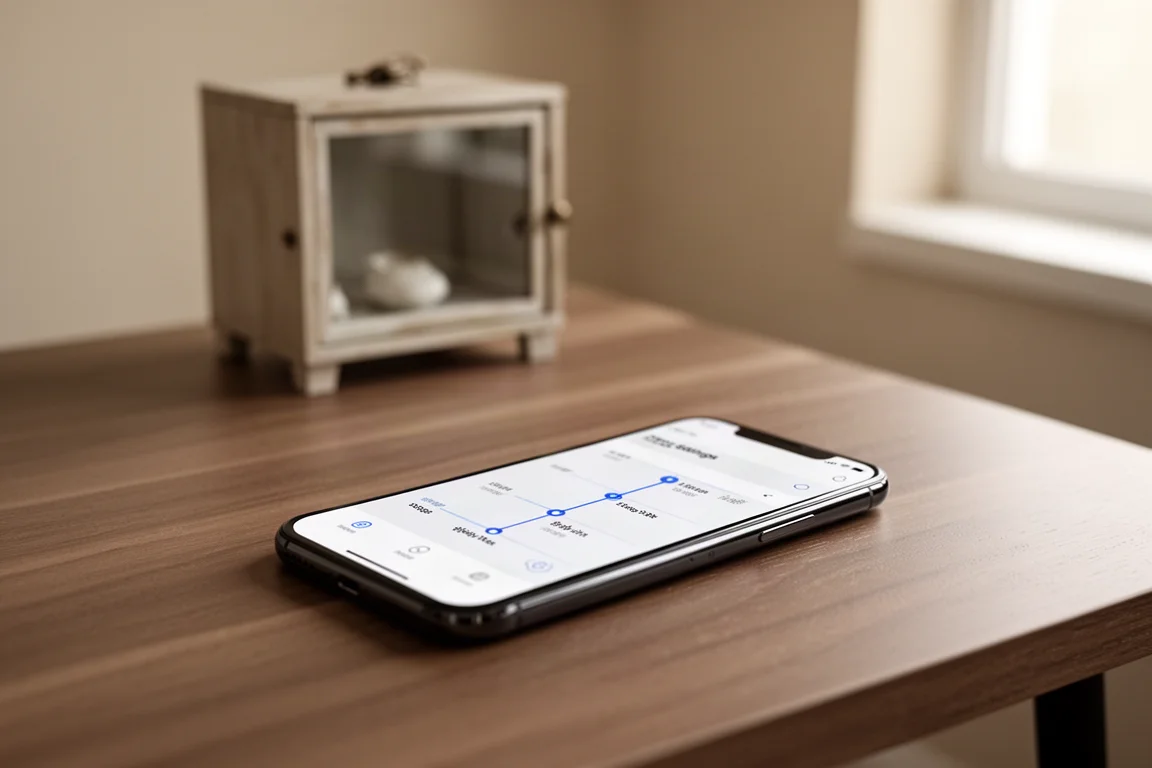
Beyond the presets, the companion app lets you build fully custom recipes. You structure them in stages: drying, curing, storing, and within each stage you can add per-day conditions that run in sequence, specifying how long each condition lasts, one day, two days, three days, and so on. You can experiment with settings, and once you have dialed in a recipe, you can share it with friends or your community so others can run it directly.
Loading and Airflow: How to Stack
A common question is whether big buds belong on top and small ones below, or how to arrange different sizes across racks. The answer, thanks to the ventilation design, is refreshingly simple: it mostly does not matter.
Every rack receives horizontal airflow from the sides and from front to back, so each level gets even air movement. You can place large or small buds anywhere, top or bottom, center or edge, without worrying about uneven drying.
The one rule: do not stack multiple layers of flower in a single rack. Keep one layer per rack and let the airflow do its work.
If you prefer to keep flower in bags, quality sealed cure bags remain a good choice. They are also useful for a practical reason: if the box is in storage mode and you bring in a fresh harvest, sealing the previous, already-cured flower in a bag keeps its flavor from mingling with the fresh material and lets it sit in its own stable micro-environment while the open space handles the new dry and cure cycle.
Heat Output, Smell, and Maintenance
Under the hood, the VCure uses an inverter compressor as its core, rated at a maximum of around 400 BTU. That is the peak; in normal operation it runs at a much lower level, around 100 BTU, which the maker compares to a very small refrigerator. In everyday use, heat output into the room is minimal.
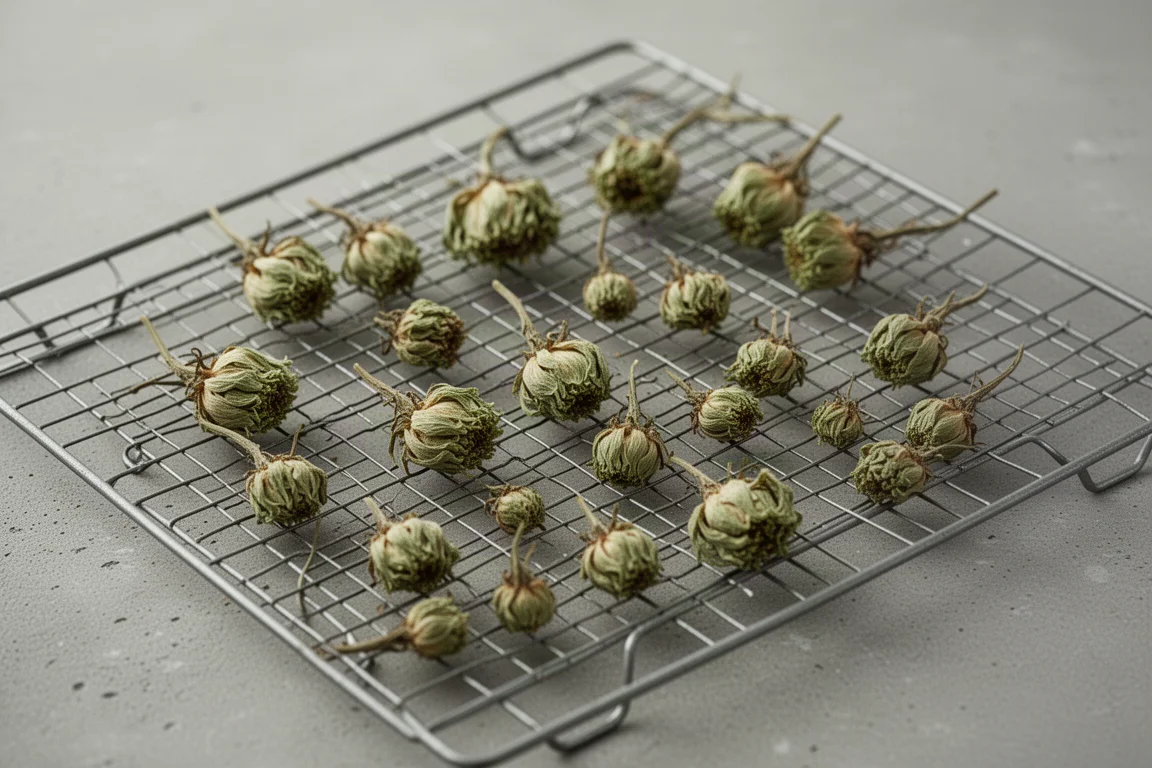
Smell is handled by a carbon filter at the bottom, and the design is clever: all condensate and exhaust air passes through the filter, and the collected condensate is heated and evaporated away, so there is effectively no water to empty and no maintenance routine around it. The filter has been tested running well for at least three months; the full lifespan is still being evaluated. Replacement filters are available, and one spare is included in the box. The practical check: if you start noticing smell in the room, it is probably time to swap the filter.
Buying Advice
If you harvest more than a couple of plants a year and care about flavor and smoothness at the end of the process, a dedicated sealed drying and curing environment is one of the more meaningful upgrades you can make. The VCure stands out for the completeness of its recipe system, the genuinely light-tight glass, and the low-maintenance smell control. Before buying, measure the space where it will live and be honest about your typical harvest size against the 3.4 cubic foot capacity. If you are in a dry or hot climate, plan on using the water tray from day one; it is the single easiest way to get tighter conditions.
Conclusion
The VivoSun VCure is a focused product that does one job with uncommon care: even per-rack airflow, precise sensing at the air inlet, strong light blocking, flexible recipes down to the individual day, and a child lock backed by real safety engineering. For growers tired of babysitting a drying tent, it is an easy recommendation.
Product link
View more details for VivoSun VCure
This product is mentioned in the review. Check the specifications, options, and compatibility before buying.
View more details for VivoSun VCureFurther reading
Related Reviews
Grow Equipment
AC Infinity Cultivator Kit Review: A Complete 2x4 Grow Tent Setup
A full starter setup with tent, EVO 3 LED grow light, ventilation, nutrients, medium, and even genetics. Here is what the Cultivator Kit includes and who it suits.
Grow Equipment
VivoSun V Cure vs Cannatrol Cool Cure: Which Cannabis Drying Machine Is Worth It?
A hands-on comparison of two controlled cannabis drying machines, covering technology, price, stability, capacity, app control, and real test data.
Grow Equipment
VivoSun Vgrow Smart Box Review: A Compact All-in-One Grow Cabinet
Hands-on first impressions of the VivoSun Vgrow Smart Box, from assembly and app setup to coco prep, nutrient mixing, and dialing in the seedling environment.