Grow Equipment
VivoSun V Cure vs Cannatrol Cool Cure: Which Cannabis Drying Machine Is Worth It?
A hands-on comparison of two controlled cannabis drying machines, covering technology, price, stability, capacity, app control, and real test data.
Introduction
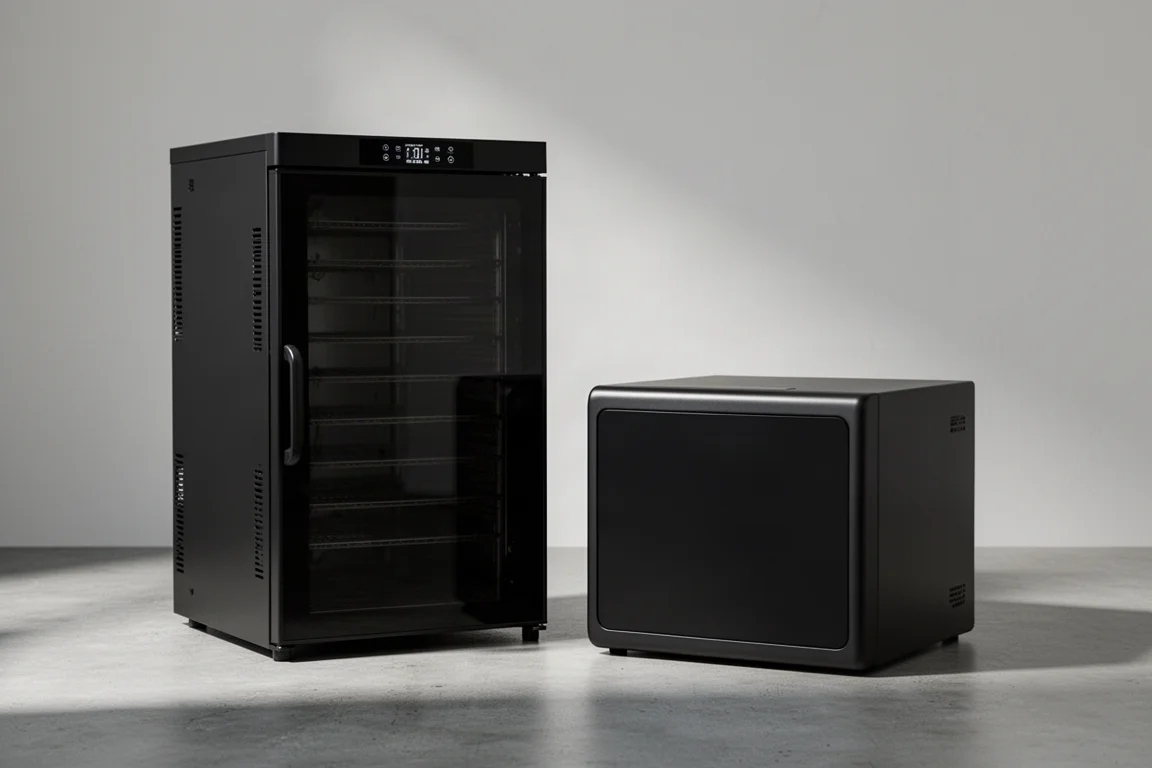
Drying is one of the most fragile stages of a cannabis grow. Hang plants in a tent and the room’s temperature, humidity, and airflow all fight against you, and small mistakes during drying can affect the final quality of the buds. The VivoSun V Cure and the Cannatrol Cool Cure both aim to remove that risk by automating the dry in a sealed, controlled chamber.
This comparison covers what each machine does, how their drying technology differs, price, and a side-by-side look at design, capacity, app control, and maintenance. The testing also included a traditional dry in a grow tent running at the same time, followed by at-home testing of THC, CBD, moisture content, and water activity for all three methods. Neither company paid for this comparison; both units were provided for general use, and the testing device was purchased independently with a small retailer discount.
What These Machines Actually Do
Both devices solve the same core problem: drying cannabis consistently instead of leaving it to fluctuating room conditions. Traditionally, growers hang plants in a room or tent and try to maintain ideal temperature and humidity, but airflow and air exchange can be inconsistent, and even small mistakes during drying can impact final quality.
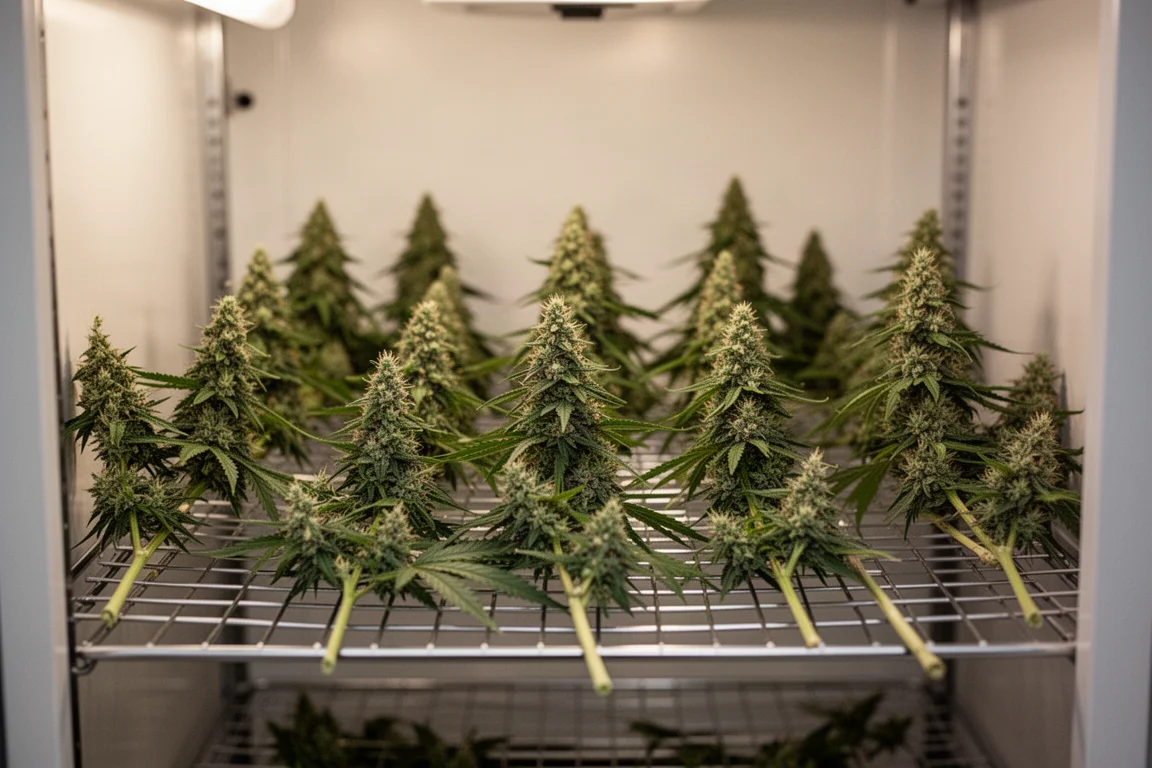
Both machines create a controlled environment that removes moisture from the buds in a more predictable way. The goal is the same in each case: remove moisture gradually and evenly while preserving flower quality, with careful airflow management to avoid case hardening, where the outside of the buds dries faster than the inside.
Drying Technology: Two Different Approaches
The Cannatrol Cool Cure uses what the company calls Vaportrol technology, designed to control the vapor pressure around the flower rather than simply controlling temperature and relative humidity. The key mechanism is dew point control. Cannatrol’s argument is that relative humidity is only part of the equation because it is directly influenced by temperature: 60% relative humidity at 60 degrees F is not the same drying environment as 60% relative humidity at 75 degrees F. By controlling dew point, the machine controls the driving force behind moisture movement, producing a slower, more consistent dry. One note on older Cool Cure models: the unit could not reach its set temperature if the room was more than 10 degrees F (5.5 degrees C) warmer than the target. This is reported to no longer be an issue with the new models.
The V Cure takes a different route. It automatically manages temperature, humidity, and airflow, and uses a refrigeration compressor, similar to a household refrigerator, to actively cool the chamber while removing moisture from the air.
Price and Model Differences
The VivoSun V Cure retails for $999. The Cannatrol Cool Cure C, the base model, retails for $1,199, a $200 difference. Cannatrol also offers the C Plus at $1,324 and the C2 at $1,499. Part of the gap likely comes from where each company is based: VivoSun is headquartered in China where labor costs are generally lower, while Cannatrol is based in the United States where production costs are typically higher.
Model differences within the Cool Cure lineup are straightforward. The C has no Wi-Fi or app connectivity. The C Plus adds built-in Wi-Fi and access to the Cannatouch app. The C2 keeps those features but upgrades the exterior from matte black to stainless steel.
If your priority is lowest cost, the base C model is worth considering since it forgoes app control entirely. For the month of August, Cannatrol ran sales at $999 for the C, $1,049 for the C Plus, and $1,199 for the C2 and C Limited Edition, with free shipping. Neither machine is cheap, and price is by far the biggest complaint about this category, but value depends on what each additional dollar actually buys.
Design, Screens, and Loading
Design comes down to personal preference. Some will prefer the V Cure’s tall upright look with privacy glass; others will favor the Cool Cure’s boxy form, which is also available in stainless steel on the C2.
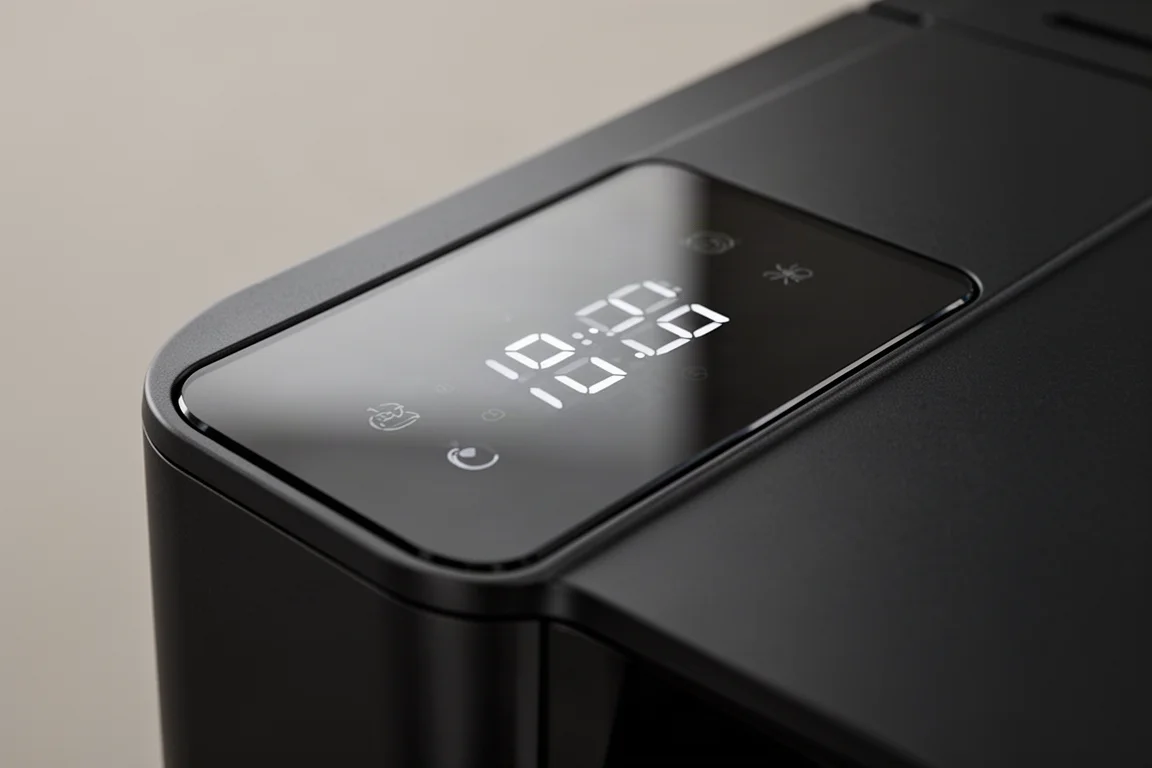
The screens differ meaningfully. The V Cure has full touchscreen functionality for changing settings. The Cool Cure’s screen technically supports touch but with a stylus, which feels a bit outdated in 2026. Inside, both have lighting: the V Cure has a fixed color light toggled from outside, while the Cool Cure defaults to green but lets you change the color, including a natural white.
Racking is another practical difference. The Cool Cure’s trays can be pulled partway out and rested while loading, making it easier to place branches on lower trays. The V Cure’s tray drops down automatically when pulled, so you have to remove the entire tray to load it, which makes loading a little more difficult.
The V Cure’s privacy glass is a genuinely useful touch: press a button to make the glass opaque and keep light out entirely. The Cool Cure has no front glass at all, which removes the light-leak problem that required covering the glass on Cannatrol’s older OG models. Both machines include a child lock feature.
Size, Weight, and Capacity
The Cool Cure measures 17.75 inches wide, 20.75 inches deep, and 20.25 inches high. The V Cure is larger at 19.1 inches wide, 19.3 inches deep, and 33.1 inches high, giving it more internal storage capacity: 3.4 cubic feet versus 2.5 cubic feet for the Cool Cure.
Weight is a significant difference. The V Cure weighs 79 lb (35.8 kg) and realistically needs a dolly to move around. The Cool Cure weighs 51.3 lb (23.25 kg) and can be lifted and repositioned without much effort.
Capacity is where expectations need managing. Cannatrol advertises up to 2.5 lb (1.13 kg) of wet flower, drying down to up to 4.5 lb (2 kg) of dry flower. The V Cure only specifies 2.5 lb of harvest, assumed to be wet weight, with no dry weight figure given. In practice, both units fit maybe one or two small plants, so staggering harvests helps make full use of them. If you grow large plants, most of a harvest will likely not fit. Cannatrol is reportedly working on a larger, much taller unit, though no release details are known.
Noise, Temperature, and Humidity Ranges
Both machines are quiet, similar to a mini fridge. The V Cure is rated at 40 dB or less; the Cool Cure at 30 dB or less.
Temperature ranges differ: the V Cure can run from 50 to 72 degrees F (10 to 22 degrees C), while the Cool Cure runs from 58 to 76 degrees F (14 to 24 degrees C). Humidity ranges are more one-sided. The Cool Cure spans 35% to 100% relative humidity, while the V Cure is advertised at 55% to 65%. Because of the V Cure’s compressor, humidity cannot exceed 65%, which acts as a built-in fail-safe: even if the chamber is overloaded, it is less likely to mold inside.
On smell, the V Cure includes a carbon filter inside, with one installed plus a spare included in the box. The Cool Cure has no carbon filter. Cannatrol’s explanation is that smell is managed at the source by preserving trichome heads where terpenes live: traditional methods rupture up to 30% of trichome heads, releasing terpenes into the air, while the Cool Cure holds that to just 1 to 2%, limiting the compounds that would escape and need filtering.
Power, Connectivity, and Maintenance
The Cool Cure draws 30 W in store mode and up to 75 W during dry and cure. The V Cure’s power draw was not advertised, and no figure was measured during this comparison.
Both are Wi-Fi enabled, though Wi-Fi applies only to the C Plus and C2 Cool Cure models, not the base C.
Maintenance is where one notable issue surfaced. The V Cure can have large environmental swings in very dry conditions. Filling the bottom water tray with water is said by VivoSun’s engineer to help stabilize conditions, but in a roughly 30% relative humidity room it did not help in practice. The V Cure also requires a wet sponge inside at all times after the first day or two of drying to help control the environment. These machines reportedly perform less well in drier climates.
App Control
The V Cure’s app is the more capable of the two. From the VivoSun app you can control the light, privacy glass, and door lock, view current temperature, humidity, and VPD, see the active drying cycle, stop cycles, and check a log of events such as door openings.
The Cannatouch app is far more limited. You can check and start cycles and edit configurations, but it can be slow to load and timed out during testing. There is no historical environmental data at all, which is a real gap. Neither app offers push alerts when something goes wrong, such as the sponge drying out in the Cool Cure or the water tray running dry in the V Cure. A notification when conditions drift out of range would be a meaningful improvement for both companies.
Customer Service and Warranty
Customer service experiences, gathered from grower feedback, were mixed for VivoSun, with some reporting very good experiences and others very bad ones. Cannatrol feedback was uniformly positive at the time of writing, with growers praising responsiveness.
Both companies offer a similar 24-month, two-year warranty covering parts: if a part fails, they send a replacement.
Environmental Stability During the Dry
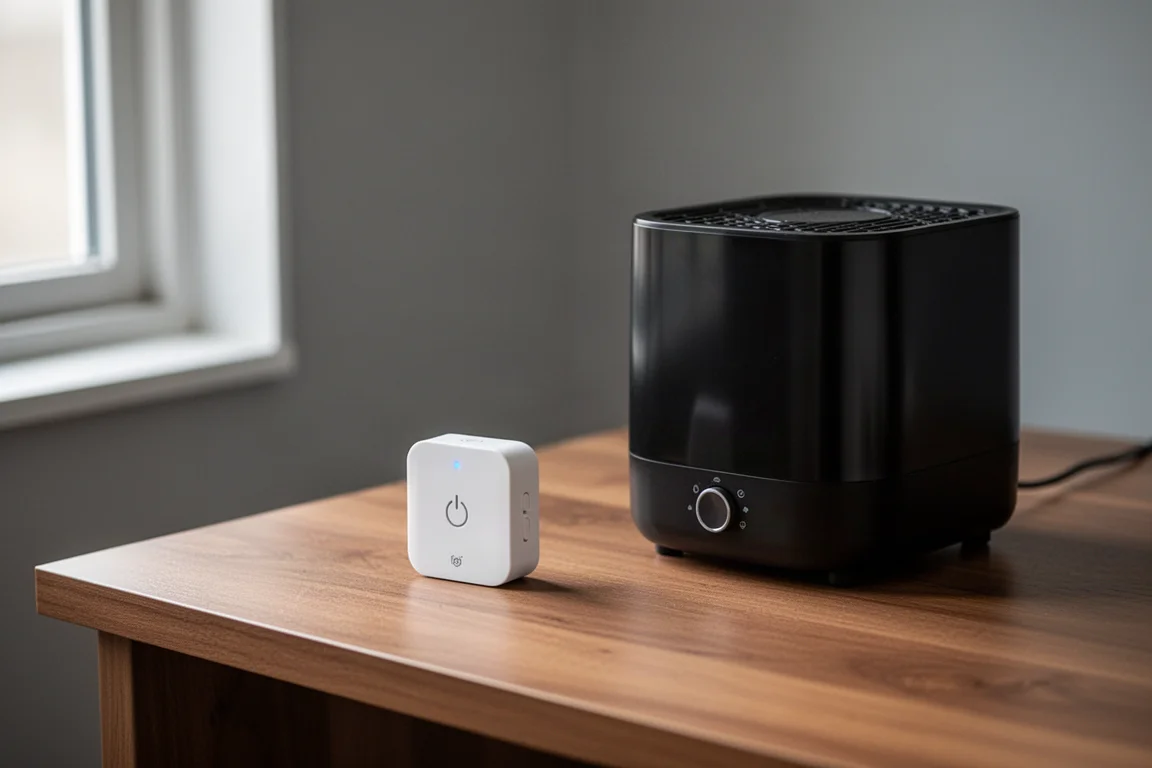
For the test, four Chilodo G plants grown from seed were harvested, each a different phenotype, with large fan leaves trimmed before branches went into each machine. A SensorPush monitor was used to verify each machine’s readings, testing each separately since only one monitor was available. The V Cure’s readings matched its app display closely.
Over one hour inside the V Cure, temperature fluctuated 20 times, ranging from 66.2 to 68 degrees F (19 to 20 degrees C), a swing of less than 2 degrees F but with constant movement. Humidity ranged from 56% to 60% relative humidity over the same period.
The Cool Cure was notably steadier: temperature ranged only from 68.4 to 68.5 degrees F, about a tenth of a degree, with relative humidity between 63% and 65.5%. The remaining branches dried in a converted 4x4 grow tent held around 70 degrees F and 60% relative humidity, monitored through an app that unfortunately crashed when viewing that data. This matters because temperature and humidity changes can affect pressure inside trichomes, which Cannatrol says can rupture trichome heads and potentially reduce terpenes and potency.
Test Results and Smoke Quality
At the seven-day mark, buds from both machines felt uniformly dry and ready for trim, with consistent moisture across all shelves in both units. The tent-dried buds also felt ready, though buds near the top of the tent held slightly more moisture than lower ones, suggesting air circulation in a tent could be improved with a second oscillating fan near the top. All three methods produced flower with good structure, color, and density.
At-home testing measured THC, CBD, moisture content, and water activity. For context: ideal moisture content is 11% to 13%, and ideal water activity is 0.55 to 0.65, the range considered safe from mold risk without becoming overly dry and brittle.
The V Cure samples tested at 19% to 20% THC, with CBD under 2% across all four phenos. Moisture content came in at 7.3% to 9.4%, and water activity at 0.4 across all samples. In short, the V Cure buds were too dry on both measures under its default storage settings.
Cool Cure samples tested at 19% to 24% THC, also under 2% CBD, with moisture content of 10.9% to 13.1% and water activity from 0.4 to 0.6. That landed mostly within the ideal ranges, which is what you want from default settings.
Tent-dried samples came close to the Cool Cure numbers, with one outlier: one pheno tested at just 16% THC, an anomaly that likely warranted a retest. The others tested 20% to 22% THC, with moisture content of 9.2% to 11.8% and water activity from 0.4 to 0.6.
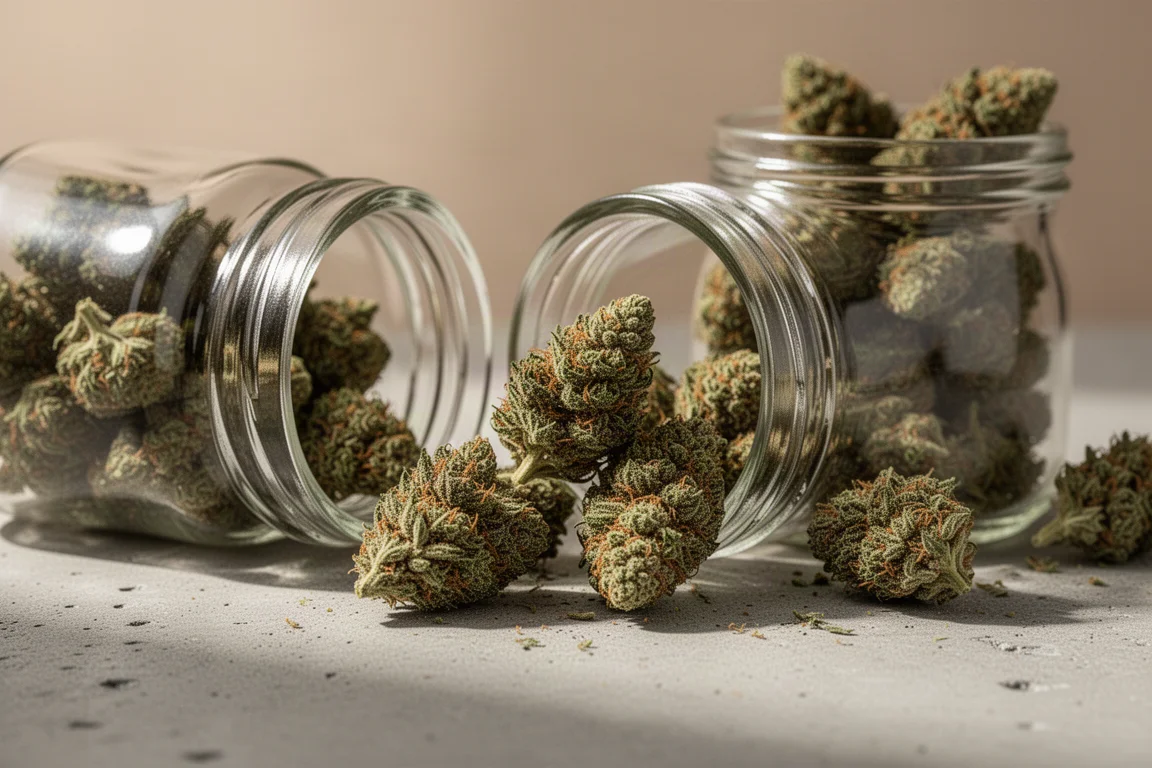
Smoking results were the surprise. All three samples smoked very similarly: none were harsh, all produced white ash, burned at a similar rate, and had essentially the same earthy, citrusy, sweet flavor with fuel on the exhale. Blind, it would be difficult to tell which method produced which sample. The common assumption that machine-dried flower automatically smokes better than tent-dried flower did not hold up here.
Buying Advice
Neither machine made the other method fail, and neither will turn mediocre flower into top-shelf product; quality going into the dry still matters most. The real value of both machines is peace of mind: instead of checking a tent daily and worrying about a humidifier running dry, the machine manages the process. Harvests timed right before a vacation came out perfectly dried with no daily intervention.
Choose the V Cure if you want the larger interior capacity, the privacy glass, full touchscreen control, and the more detailed app with historical logging, and you are willing to watch for environmental swings and adjust settings away from the defaults, which over-dried the buds in testing.
Choose the Cool Cure if you prioritize rock-stable conditions and default settings that landed flower within ideal moisture and water activity ranges, and you can live with the smaller chamber, the stylus-dependent screen, and an app that lacks historical data and does not always feel fully functional. The base C model is a sensible pick if app control does not matter to you. If neither machine fits, a well-controlled tent dry remains hard to beat when you have the equipment to keep the environment stable.
Conclusion
All three drying methods produced quality flower, and the smoke test showed differences far smaller than most growers expect. The Cannatrol Cool Cure delivered the more stable environment and better default settings, which showed up in the moisture and water activity data, while the VivoSun V Cure offers more capacity, a nicer interface, and a more capable app, at a lower price. Both companies should add low-water alerts, and both carry a two-year parts warranty. Whichever route you take, matching the machine to your climate, harvest size, and how much hands-off convenience you want will matter more than the $200 price gap.
Product link
View more details for VivoSun V Cure
This product is mentioned in the review. Check the specifications, options, and compatibility before buying.
View more details for VivoSun V CureFurther reading
Related Reviews
Grow Equipment
AC Infinity Cultivator Kit Review: A Complete 2x4 Grow Tent Setup
A full starter setup with tent, EVO 3 LED grow light, ventilation, nutrients, medium, and even genetics. Here is what the Cultivator Kit includes and who it suits.
Grow Equipment
VivoSun VCure Review: A Dedicated Drying and Curing Box With Real Controls
A close look at the VivoSun VCure: capacity, climate control, recipes, airflow design, and the practical details that matter for home growers.
Grow Equipment
VivoSun Vgrow Smart Box Review: A Compact All-in-One Grow Cabinet
Hands-on first impressions of the VivoSun Vgrow Smart Box, from assembly and app setup to coco prep, nutrient mixing, and dialing in the seedling environment.