Cycling Tyres
Vittoria Corsa Pro Review: A Faster Race Tyre and the All-Weather Control
Vittoria's newest top-end road tyre claims lower rolling resistance, more puncture protection and a lighter build, with a tougher all-weather version alongside it.
Introduction
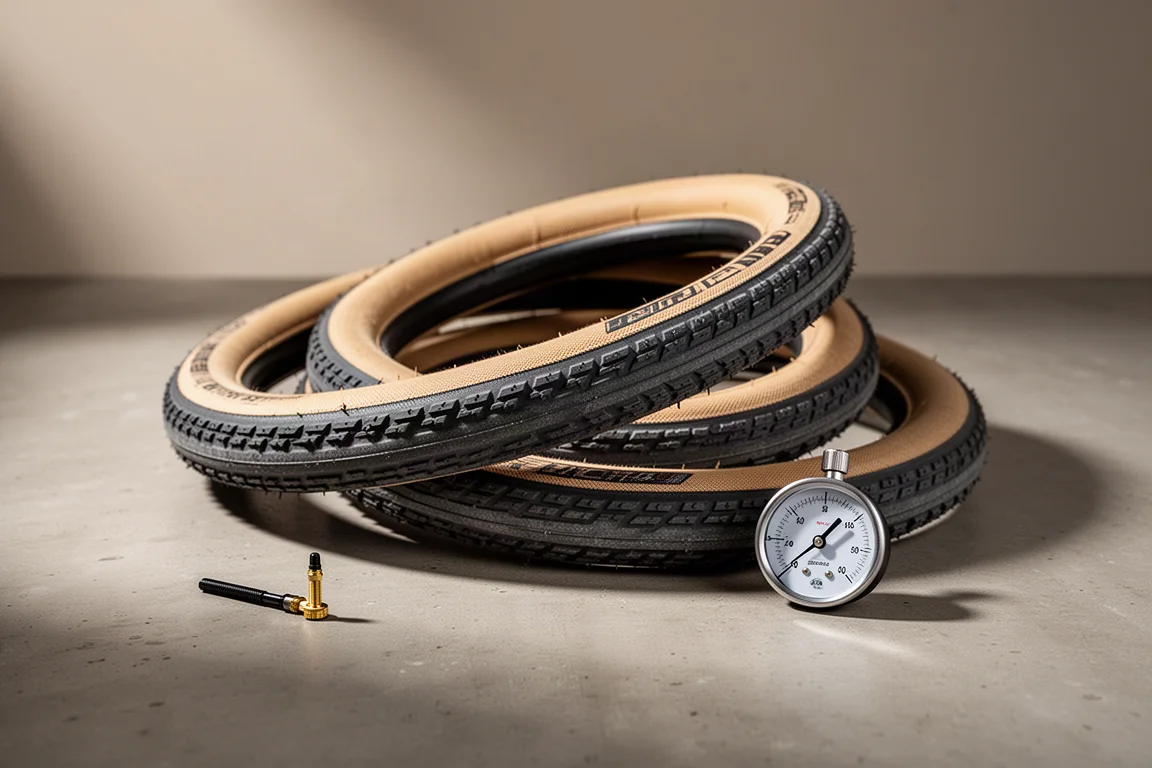
Vittoria has been building top-end race tyres for the world’s fastest riders for 70 years, and the brand says its tyres have taken a large share of World Tour victories as well as 42 Olympic medals at the Tokyo Games. The Corsa Pro is the newest flagship in that line, three years in development and built around an entirely new construction.
Vittoria’s headline claims are straightforward: the Corsa Pro is faster than the tubeless tyre it replaces thanks to lower rolling resistance, it grips better, it resists punctures better, and it is slightly lighter. Before the official launch at the Giro d’Italia, sponsored teams were already racing an unbranded version, which suggests the performance targets were validated under race conditions rather than only in a lab.
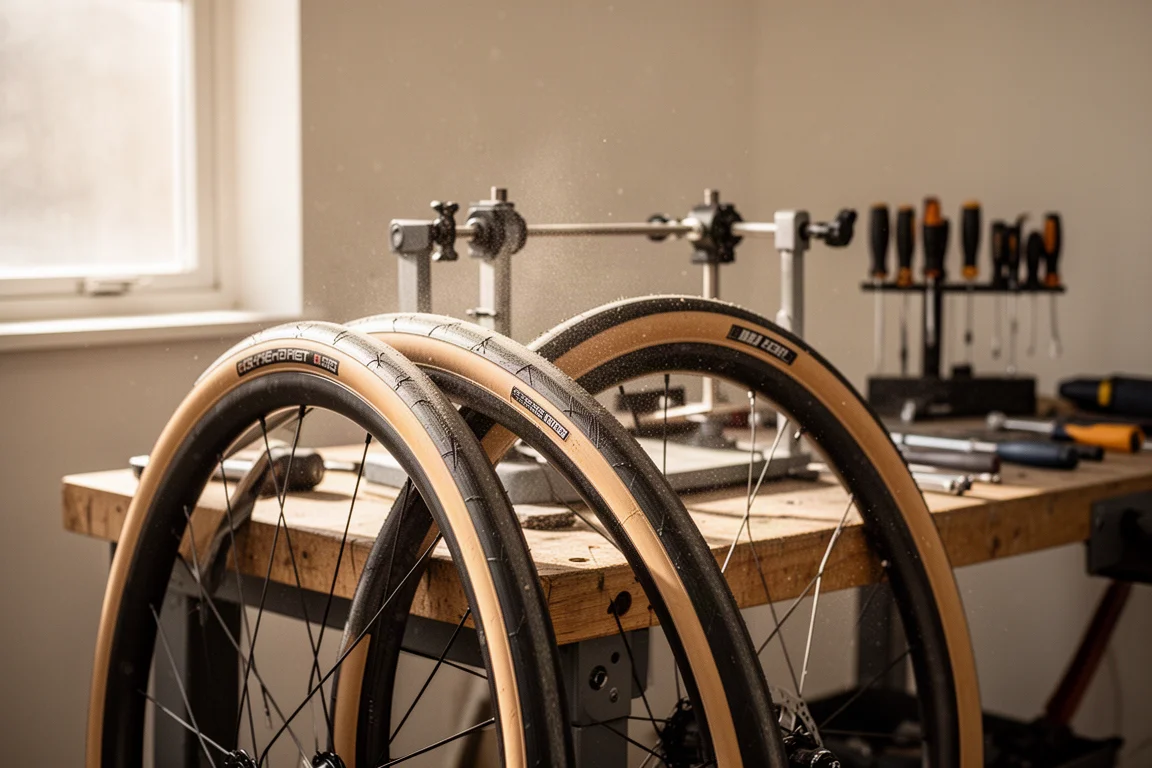
Two versions are worth knowing about. The Corsa Pro is the outright race tyre. The Corsa Pro Control takes the same racing intent and adds durability and puncture protection for riders who want one tyre to cover the whole year.
Vittoria Corsa Pro: What Is New
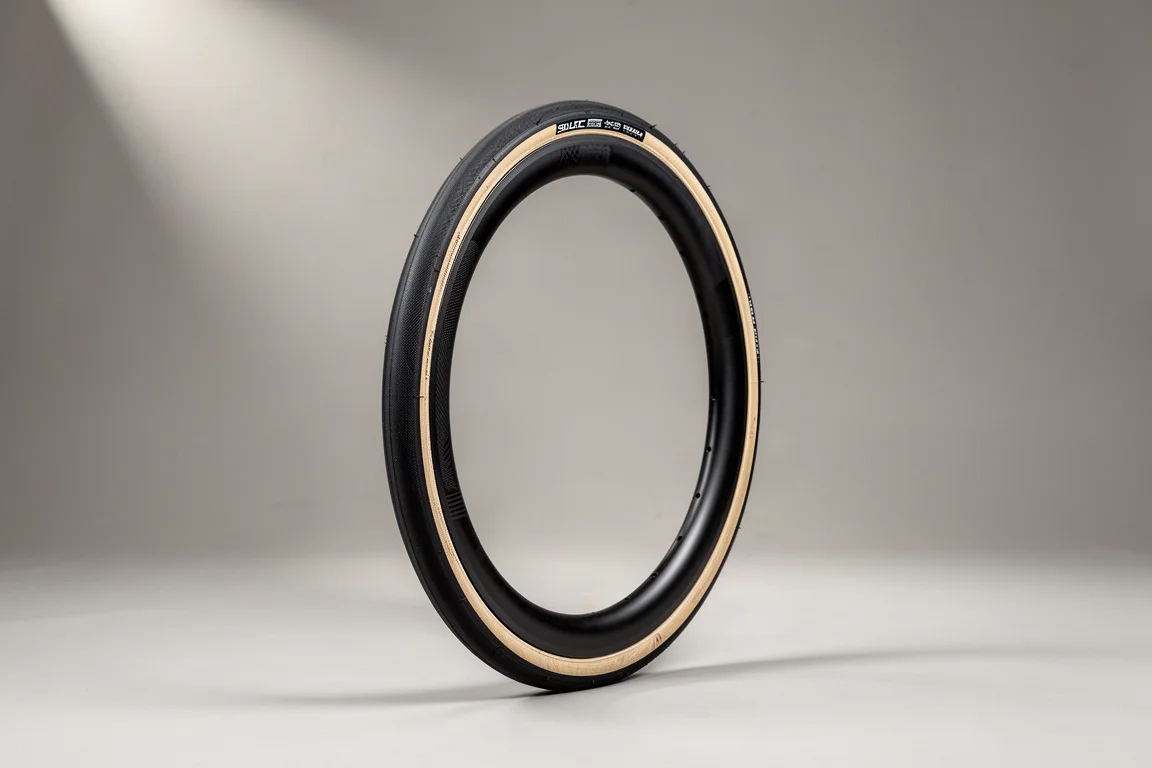
The Corsa Pro keeps the 320 TPI cotton casing of the previous generation, but Vittoria has reworked how that casing is made using a new looming process. The tread is then attached with a new electrical vulcanisation process that bonds the rubber to the casing seamlessly.
That change matters because the previous generation bonded the tread to the casing as a separate step, leaving a slight ridge where the casing could lift away from the tread. Vittoria says the seamless construction is both more supple and more aerodynamic, and it is the main reason the new tyre is claimed to be faster.
On the numbers, Vittoria claims the tubeless version offers 12 percent better rolling resistance, 18 percent better puncture protection and a 4 percent weight saving, with the tubeless version gaining slightly more than the tubular. Sizing runs from 24mm to 32mm in 2mm increments, and for now the range comes with tan sidewalls only.
Corsa Pro Control: The All-Weather Option
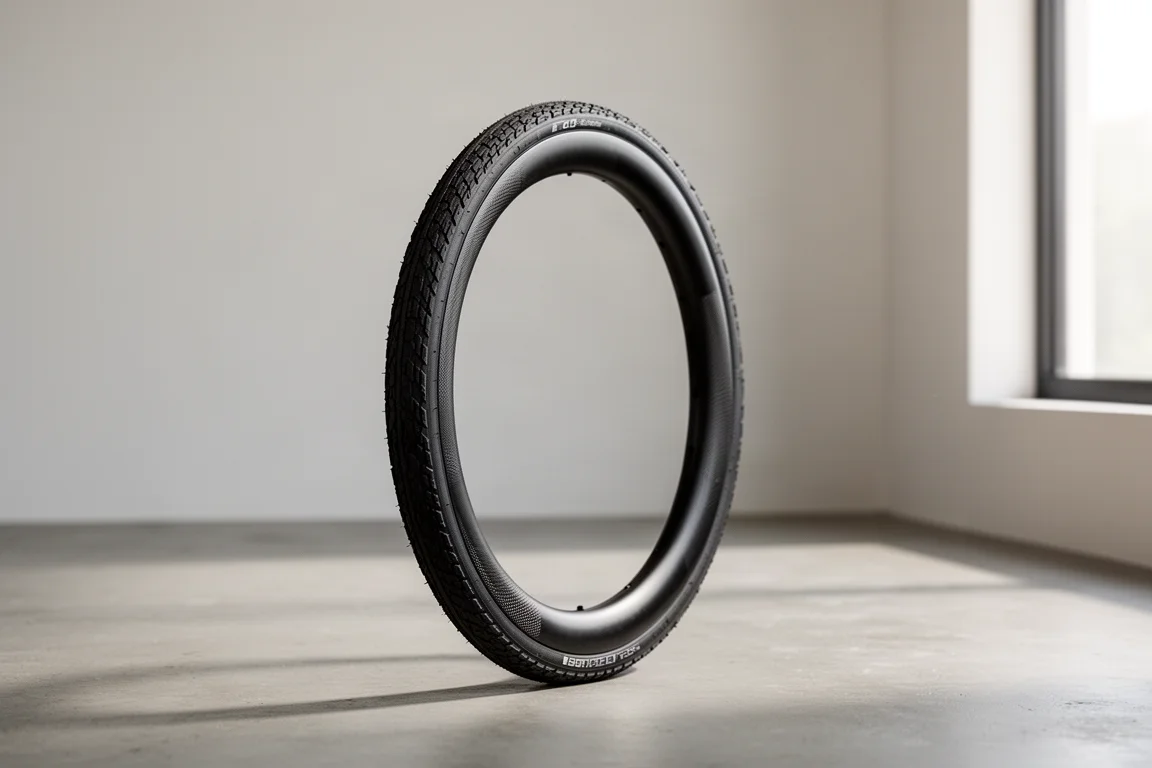
The Corsa Pro Control is the heavier-duty member of the family. It is positioned as a four-season, all-weather performance tyre rather than a dedicated winter tyre, so it keeps a race-tyre feel while adding a more substantial casing and tread.
That extra material is a deliberate trade-off. The Control is a little heavier and a little slower than the standard Corsa Pro, and in return it offers far more puncture protection.
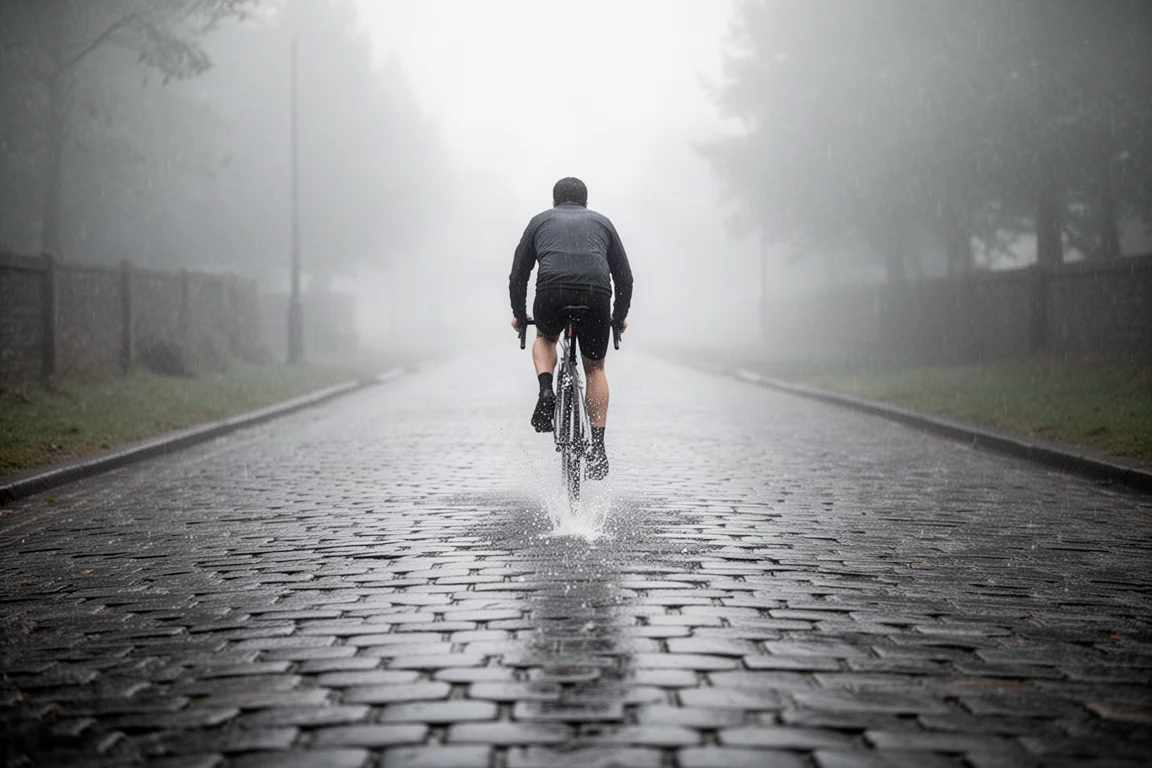
For riders who train and race on the same bike through mixed conditions, that balance is often the more practical choice, which is why the Control sits alongside the faster tyre rather than replacing it.
What Pro Teams Report from the Road
Mechanics at EF Education-EasyPost described the tyre as noticeably fast, with better grip and fewer punctures than the tyres it replaces. Their testing with the team’s performance staff also pointed to 28mm being faster than 25mm, by roughly five to seven watts in their measurements.
At Jumbo-Visma, the feedback centred on durability and confidence. A broad protection belt inside the tyre is credited with the improved puncture resistance, while riders reported more grip in corners and a greater sense of safety. The updated compound also allows lower pressures in bad weather without losing grip or adding resistance, which makes the tyre more versatile across conditions.
Team DSM’s R&D specialist explained the team’s move from tubular to tubeless, with prototypes tested over the winter before riders were convinced. Wind tunnel work confirmed that the seamless construction behaves aerodynamically as intended, and with the team’s wheel setup a 26mm tyre measures true to its stated width. Most sponsored riders at the Giro d’Italia were on 28mm, while a small number of teams were still on tubulars.
Rolling Resistance, Grip and Casing Explained
Rolling resistance comes largely from hysteresis losses. As a tyre deforms at the contact patch and then springs back into shape, some energy is lost, in the same way a dropped ball never returns to the height it started from.
Compound additives are how tyre makers reduce those losses without giving up grip. Silicates improve grip in the tread compound, and Vittoria also incorporates a small amount of graphene into the tread rubber, which is said to lower rolling resistance while improving durability and mileage. Graphene is a two-dimensional material and the tyre is not made from it; only a small quantity is blended into the rubber.
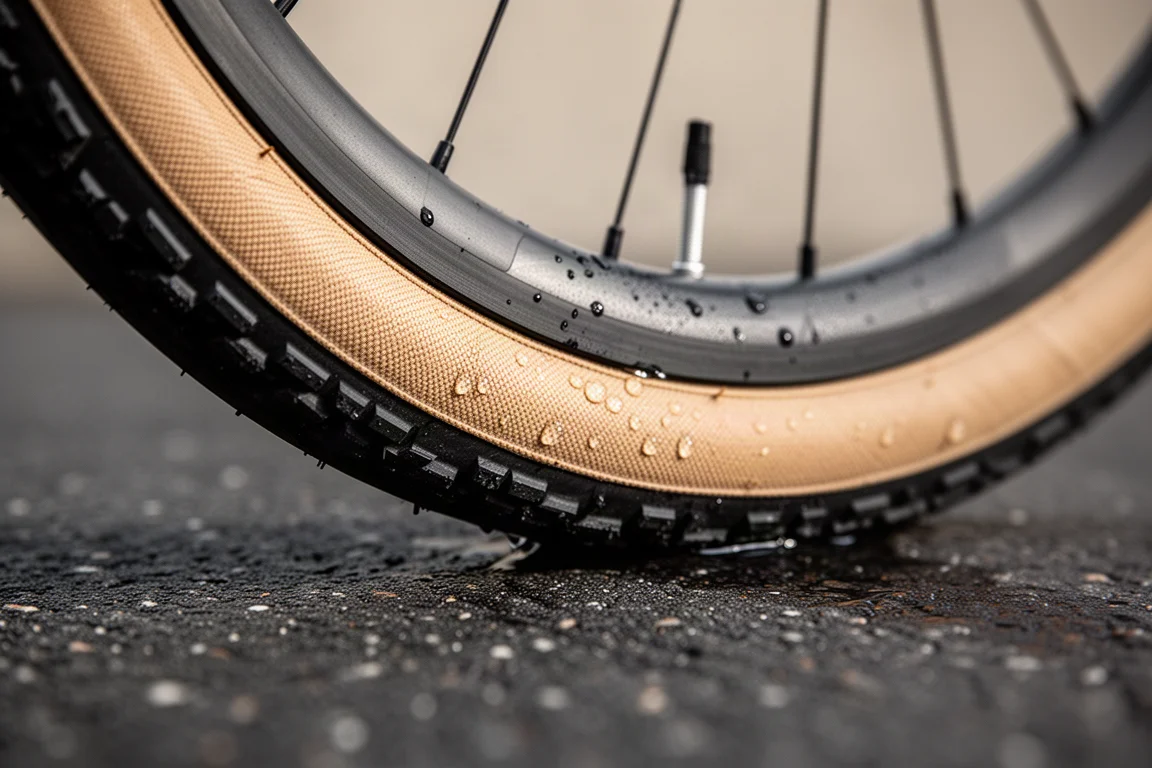
Mechanical grip from tread patterns matters far less on a bike than on a car, because the contact patch is so small. Most of a road tyre’s grip therefore comes from the compound and from how supple the casing is, which is where the 320 TPI cotton casing and the new looming process do their work. The tread pattern itself carries over from the previous generation.
Widths, Pressures and Setup Choices
The Corsa Pro range spans 24mm to 32mm in 2mm steps, so riders can fine-tune width to their rims and their roads. Wider tyres run at lower pressure, which adds grip and comfort, and that is why 28mm has become the default choice for most sponsored riders.
There are exceptions. Team DSM matched 26mm tyres to its wheels because that combination measured and performed best for them, and a few teams continued with tubulars. Tubeless is clearly the dominant setup, and Vittoria also offers a tubular version of the Corsa Pro.
Sidewall choice is limited for now, with tan sidewalls across the range. Pressures are worth experimenting with, particularly on the Control, where the compound is designed to hold grip at lower pressures in wet conditions.
Buying Advice
Choose the Corsa Pro if you want the fastest tyre in the range and you are comfortable with a race-oriented, tan-wall look. It suits riders chasing lower rolling resistance and a supple ride, along with the construction Vittoria developed for its top-level teams.
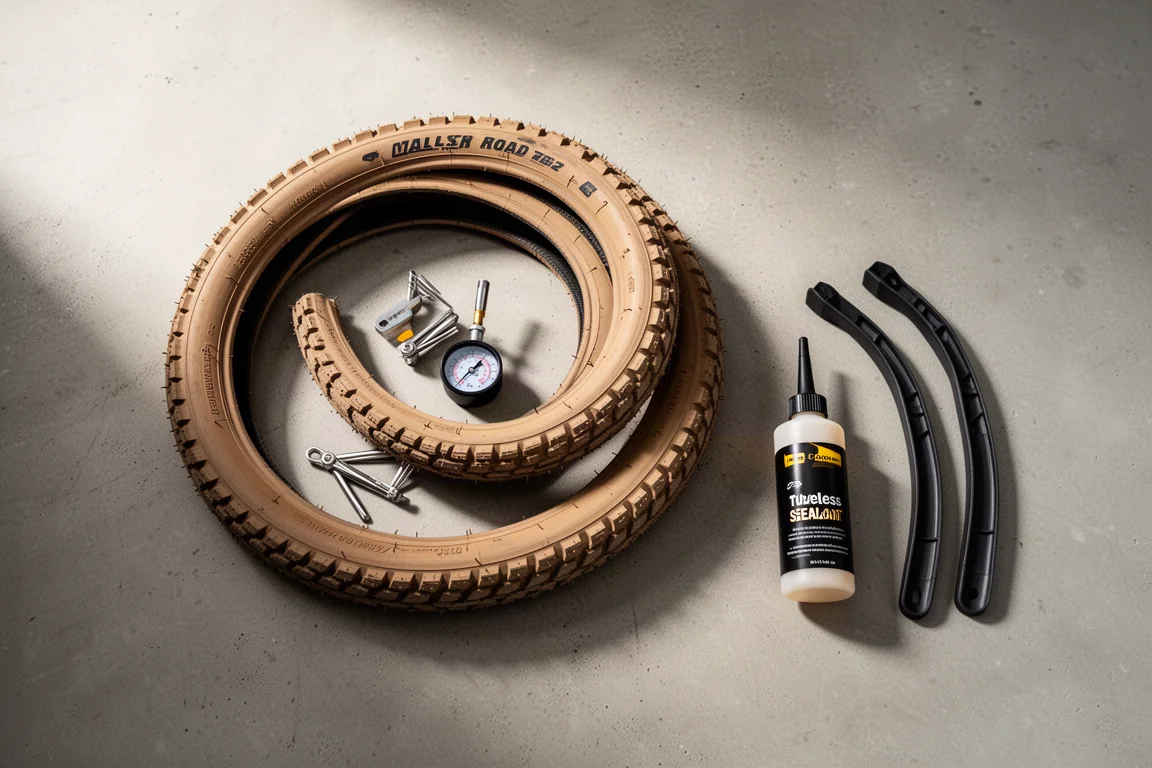
Choose the Corsa Pro Control if you want one tyre for the whole season. It is the better match for rough surfaces, long training blocks and mixed weather, where the extra puncture protection is worth more than the small penalty in speed and weight.
Whichever version you pick, match the width to your rims and your typical road surface, and expect to spend a little time finding your preferred pressure. Riders moving from 25mm to 28mm should notice a difference in comfort and grip as much as in speed.
Conclusion
The Corsa Pro is a genuine step forward for Vittoria’s race range: a new seamless construction, a reworked cotton casing and claims of lower rolling resistance, better puncture protection and less weight than the tyre it replaces. The Corsa Pro Control rounds out the line for riders who want that performance to last through the whole year rather than just race day.
Further reading
Related Reviews

Road Bikes
10 New Road Bikes Worth Watching: Aero, Titanium, Steel and Endurance Standouts
A practical roundup of 10 new road bikes, from aero flagships chasing single-watt gains to titanium, steel and endurance platforms built for real roads.
Saltwater Aquarium Setup
10 Questions About Cycling a Saltwater Aquarium: What You Need to Know
Essential questions and answers for cycling a reef tank or saltwater aquarium, from biome building to light management and bacterial supplements.
Cycling Components
A 20,000-Mile Budget Race Bike Build: Five Parts Worth Knowing
A rim brake race bike assembled from low-cost components and ridden for 20,000 miles. Here is what delivered real speed, what caused problems, and what to weigh before copying the formula.