Room Acoustics
Vicoustic Room Acoustic Treatment: Panels, Bass Traps, and Diffusers Explained
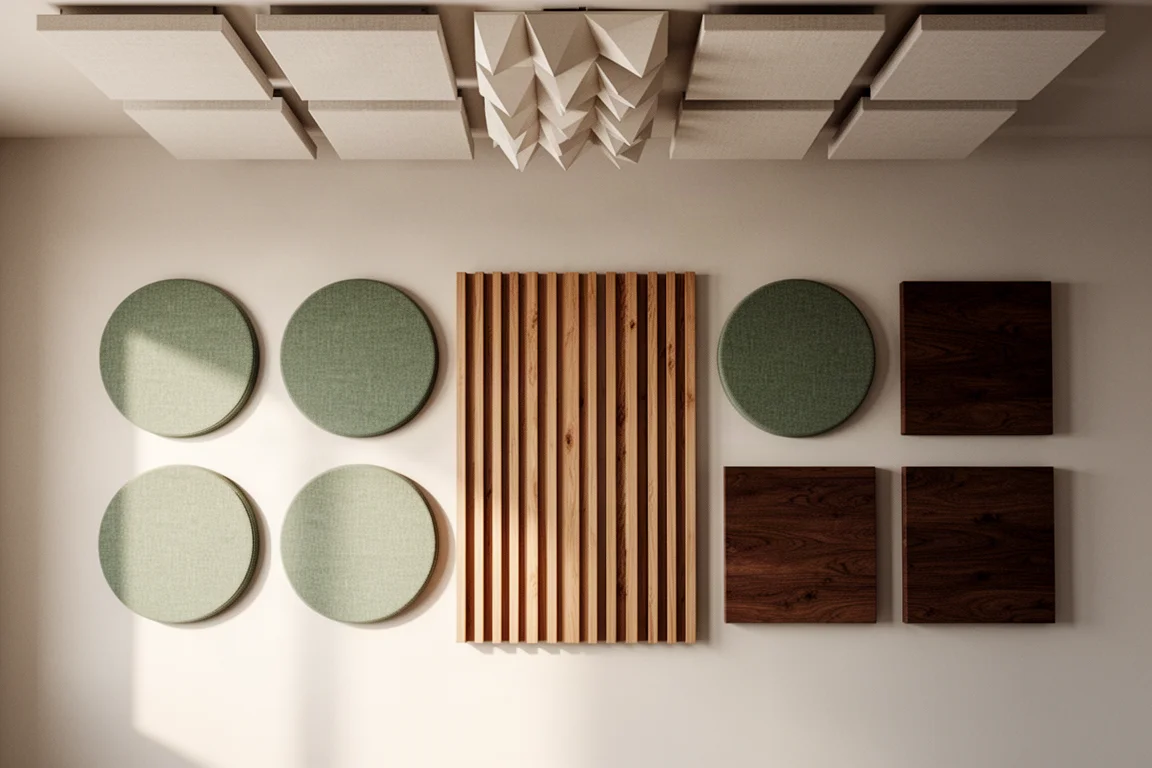
How a complete Vicoustic treatment combines Cinema Round Premium, VicStrip, Super Bass Extreme Ultra VMT, Wavewood Ultralight, and MultiFuser DC3 to control a room's reverb time.
Introduction
Room acoustics decide how much of what your system produces actually reaches your ears. Untreated walls, ceilings, and corners reflect sound back into the room, stretching decay times and blurring detail. A complete Vicoustic installation in a listening room shows both what that treatment looks like and what it achieves: the room’s reverb time fell from roughly one second to a point comfortably inside the 0.3 to 0.6 second window the design was aiming for.
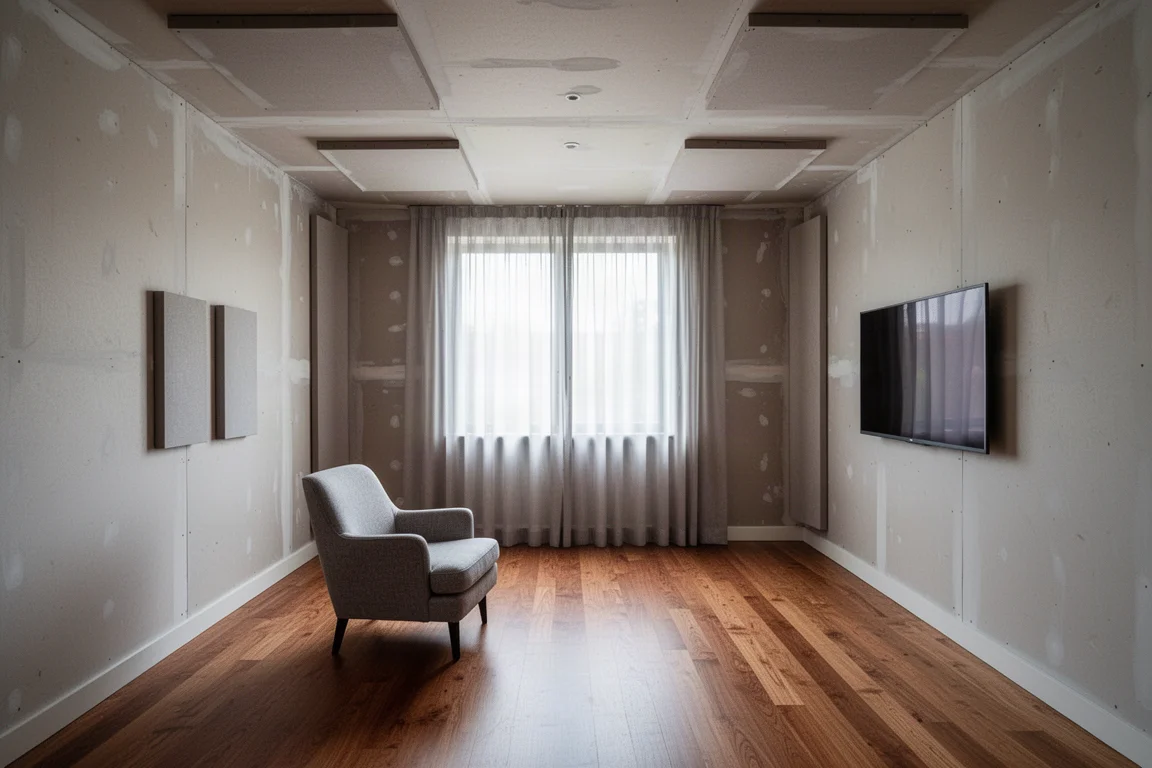
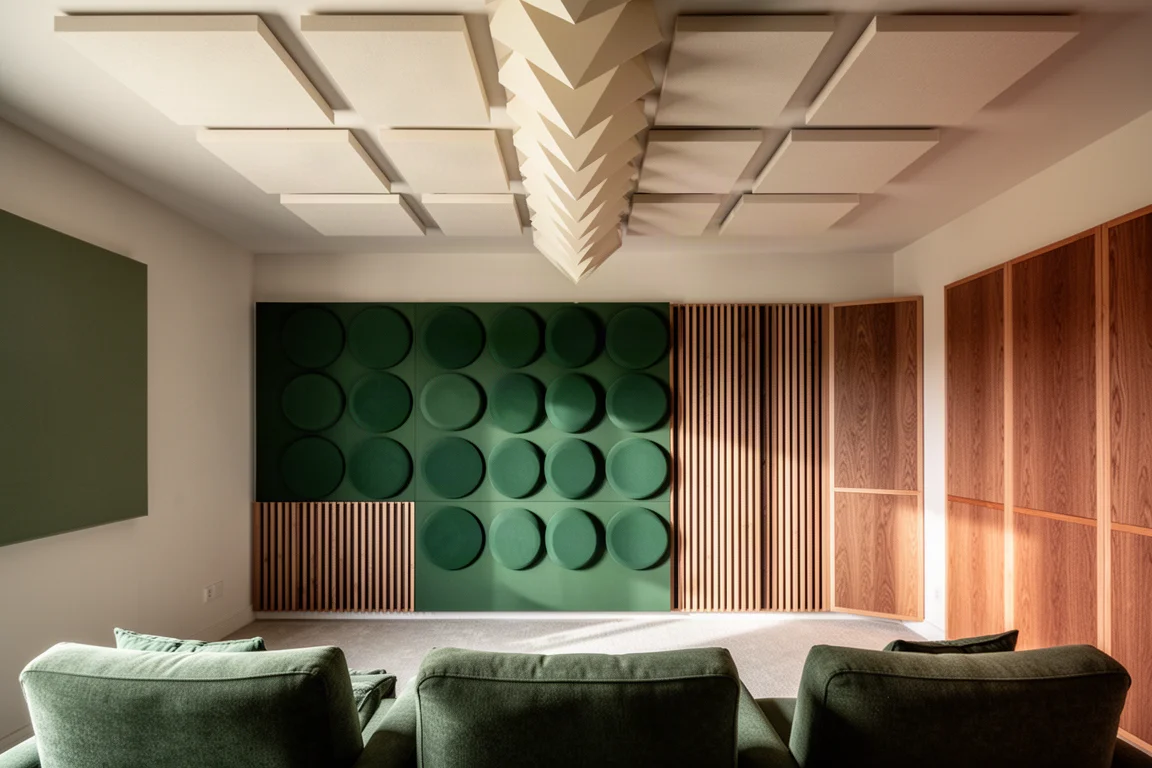
Five Vicoustic product families were used across four surfaces. The front wall took a wooden VicStrip panel flanked by green Cinema Round Premium absorbers. The rear wall and one far corner used Wavewood Ultralight panels. Two front corners received stacked Super Bass Extreme Ultra VMT bass traps. The ceiling carried a long assembly of off-white Cinema Round Premium panels and a diffuser array built from twelve MultiFuser DC3 modules.
How a Full Room Treatment Gets Planned
Vicoustic is a Portuguese acoustic products company, and the planning for this room happened before anyone set foot in it. Room dimensions, photographs, and details of the wall construction were supplied in advance. In this case the walls are gyprock with stone behind, a combination that reflects far more energy than a soft furnished room would.
From that information, Vicoustic produced a proposal setting out what would be installed, where each piece would go, and how the finished room would look. The acoustic decisions, meaning which product goes on which surface and in what quantity, were made by Vicoustic. The room owner chose colours and finishes: white for anything on the ceiling, green for the wall absorbers, and a dark wood tone to sit alongside a green rug.
The stated technical aim was to tame the first reflections that were driving a high reverb time, and most of what went into the room is absorption, meaning sound is taken in rather than reflected back.
Cinema Round Premium: Broad Mid and High Frequency Absorption
Cinema Round Premium is the workhorse absorber in this installation. Four of these circular fabric panels in a musk green finish sit on the front wall, four more in the same finish sit on the rear wall behind the seating position, and two rows of six in off-white cover part of the ceiling.
Their absorption behaviour is unusually broad for a panel of this type. The absorption coefficient begins to rise from around 110 to 150 Hz, reaches 1 at about 300 Hz, and stays at 1 out to 1 kHz. In plain terms, everything above roughly 300 Hz is absorbed rather than returned to the room.
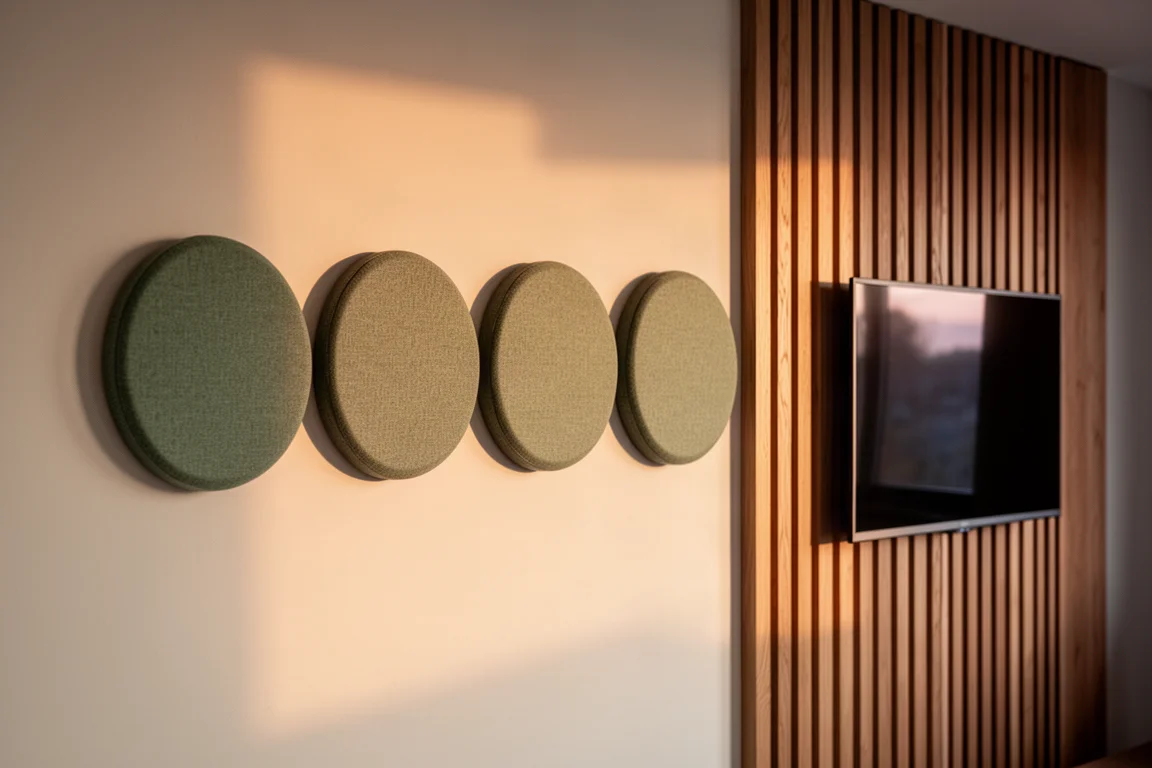
That makes these panels the right tool for first reflection points and for large mid and high frequency surfaces such as a ceiling. They do very little below about 150 Hz, which is why corner bass trapping is a separate part of the plan.
VicStrip: A Wooden Front Wall Panel With Hidden Absorption
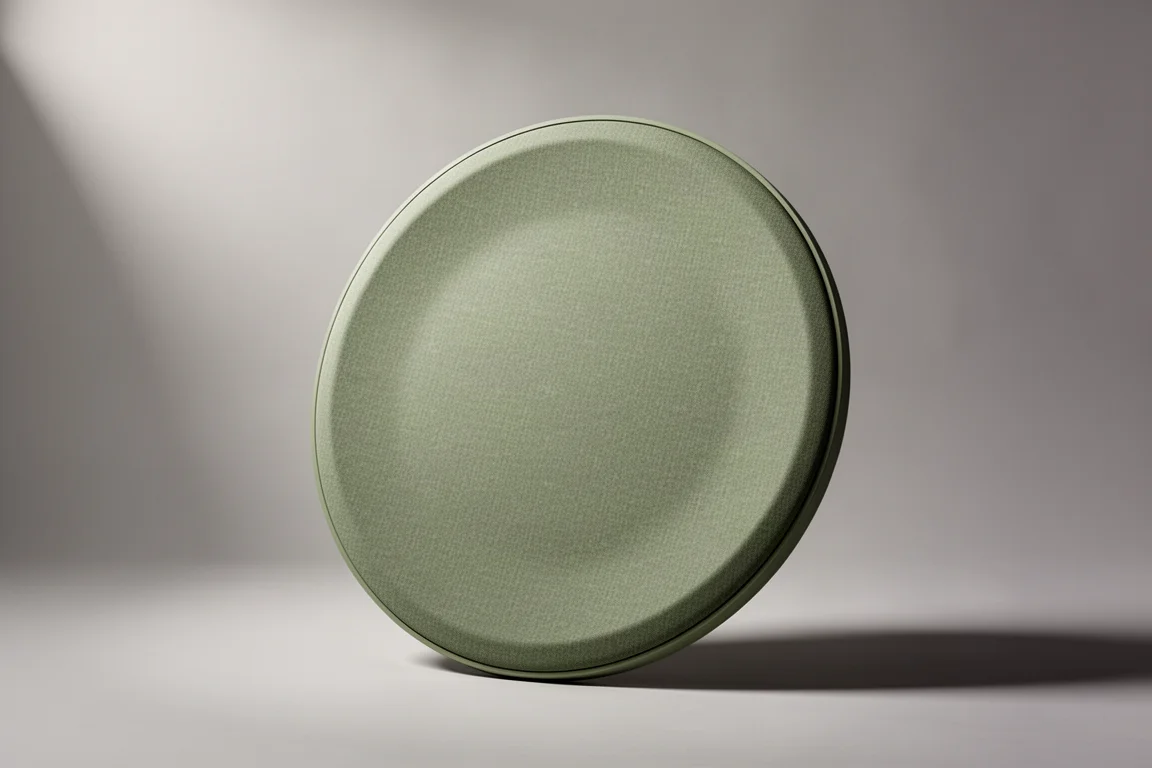
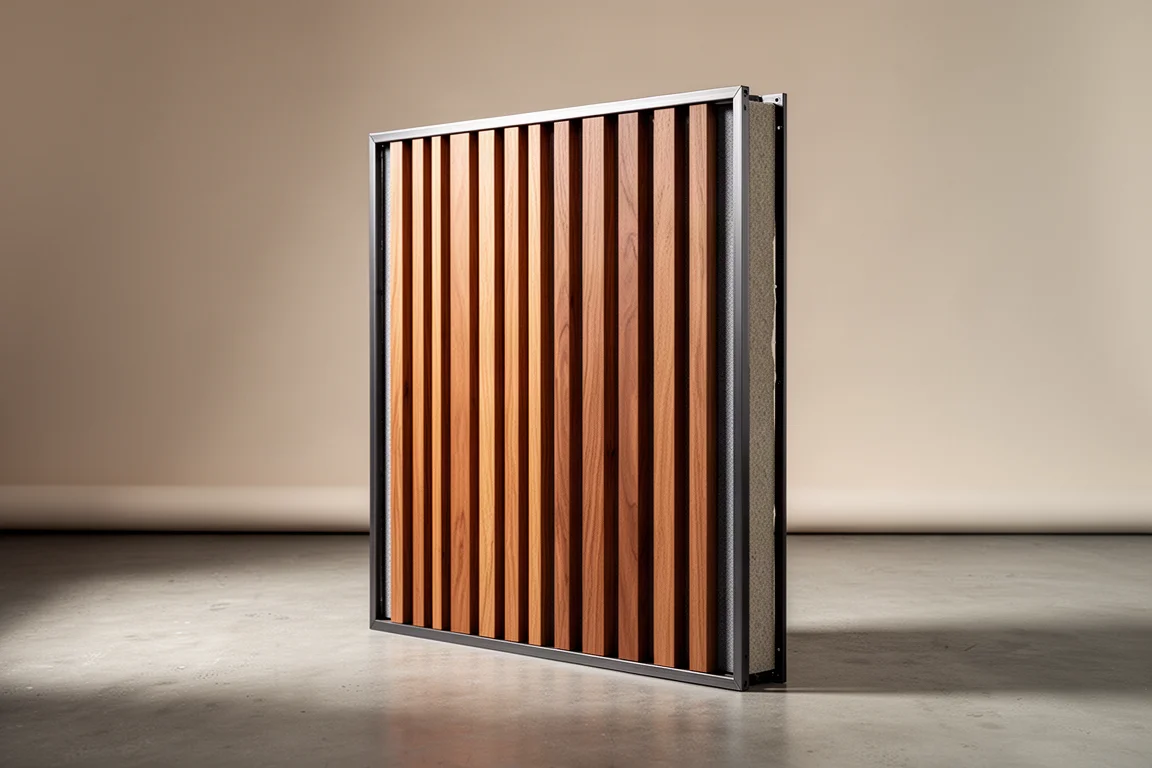
VicStrip is a newer Vicoustic product and the most visually prominent element in the room. It presents as a wooden slat panel behind the television, but the wood is only the front layer. Behind it sit several layers of PET foam, understood to be made from recycled plastic bottles, and an air gap that also contributes to the absorption performance. The whole assembly is mounted in a metal frame.
This installation used a version customised with an additional foam layer for greater low frequency absorption. Like the Cinema Round Premium panels, VicStrip has an absorption coefficient of 1 above 300 Hz.
A block sits behind the wooden strips to carry the television mounting plate, so the screen hangs from the panel rather than from the wall. Fitting this front wall took a team of four about three hours, most of it spent on the complexity of the VicStrip panel and the television mount.
Super Bass Extreme Ultra VMT: Corner Bass Control
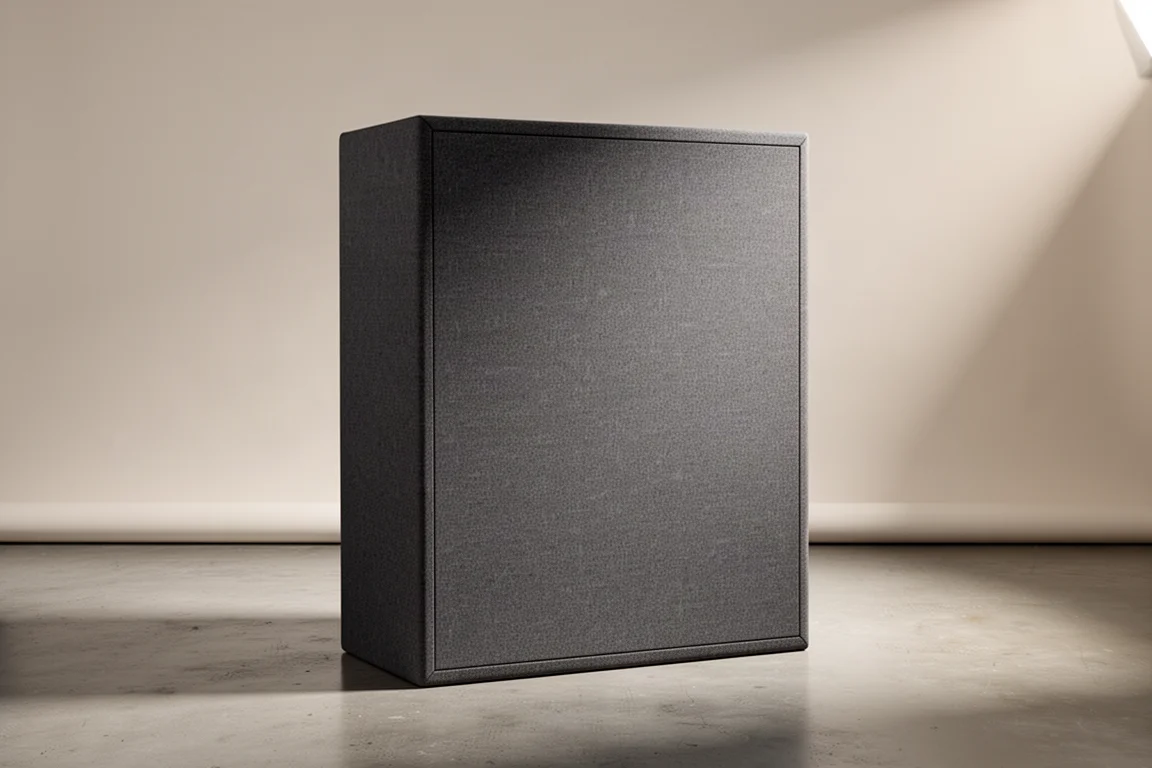
Bass energy collects in corners, and that is where Super Bass Extreme Ultra VMT is designed to work. These are large blocks rather than thin panels, and in this room a stack of four went into each front corner. The usual recommendation is a stack of three; the fourth unit sits on top and is fixed to the wall behind, which keeps the stack stable where occasional earthquakes are a consideration.
The target here is the region around 100 Hz. Vicoustic identifies 100 Hz as a problem area in many rooms, and its calculations for this space flagged it as one too. The result is effectively a bass trap in each front corner.
Wavewood Ultralight: Rear Wall and Corner Reflection Control
Wavewood Ultralight is a wood finish panel, supplied here in a dark wenge tone. Four of them form a square on the rear wall directly behind the seating position, and a second square of four sits high in the far corner above a pellet burner, where it stops reflections from the rear right wall from bouncing back into the room.
Its absorption profile is different from the fabric panels. The coefficient climbs to 1 at around 500 to 600 Hz and then falls away again as frequency rises, so it is not as absorptive at the top end as the green panels. That makes it useful where you want to control midrange reflections without draining all the energy out of the room.
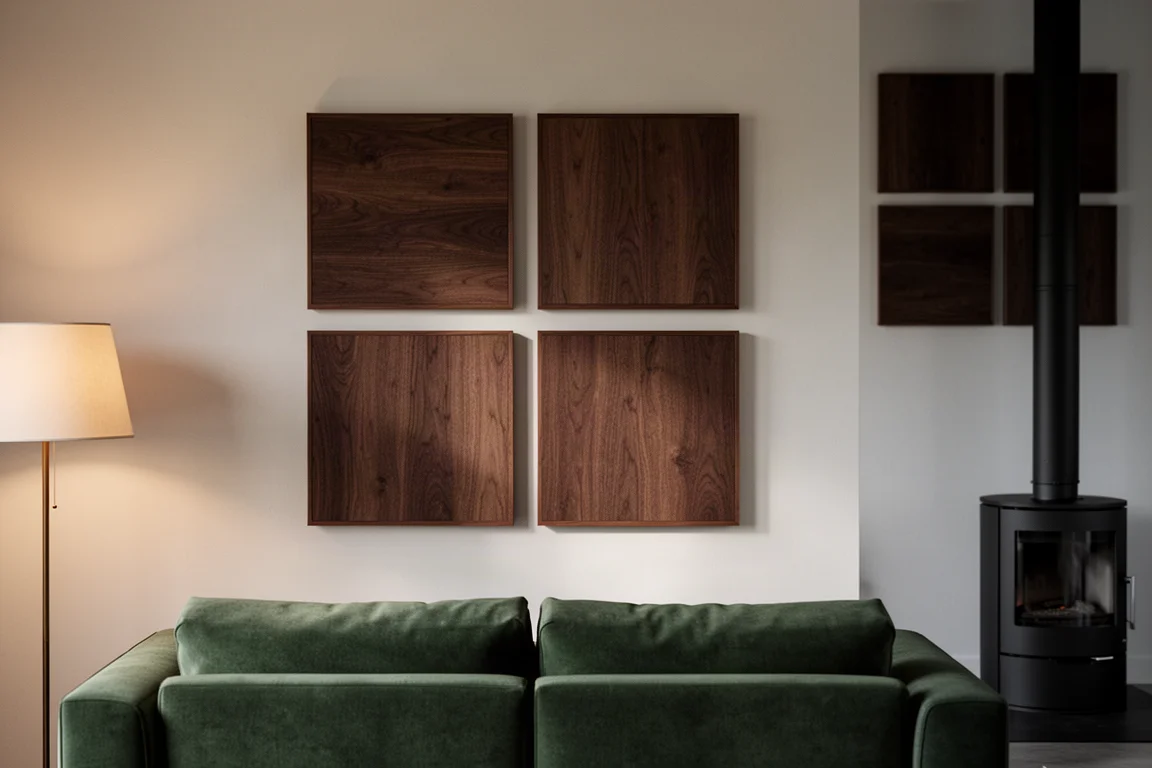
The material contrast is part of the design here: green fabric panels against dark wood on the same wall. It is a look worth considering if the room has to work as a living space as well as a listening space.
MultiFuser DC3: Ceiling Diffusion
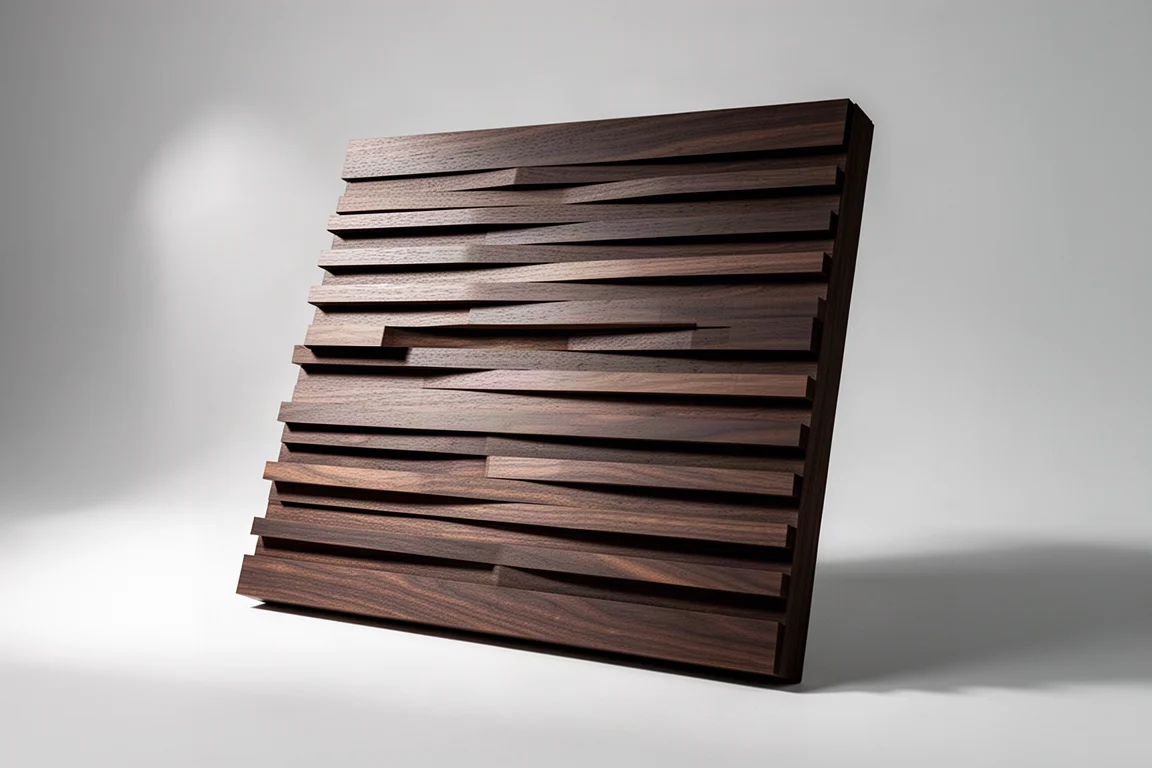
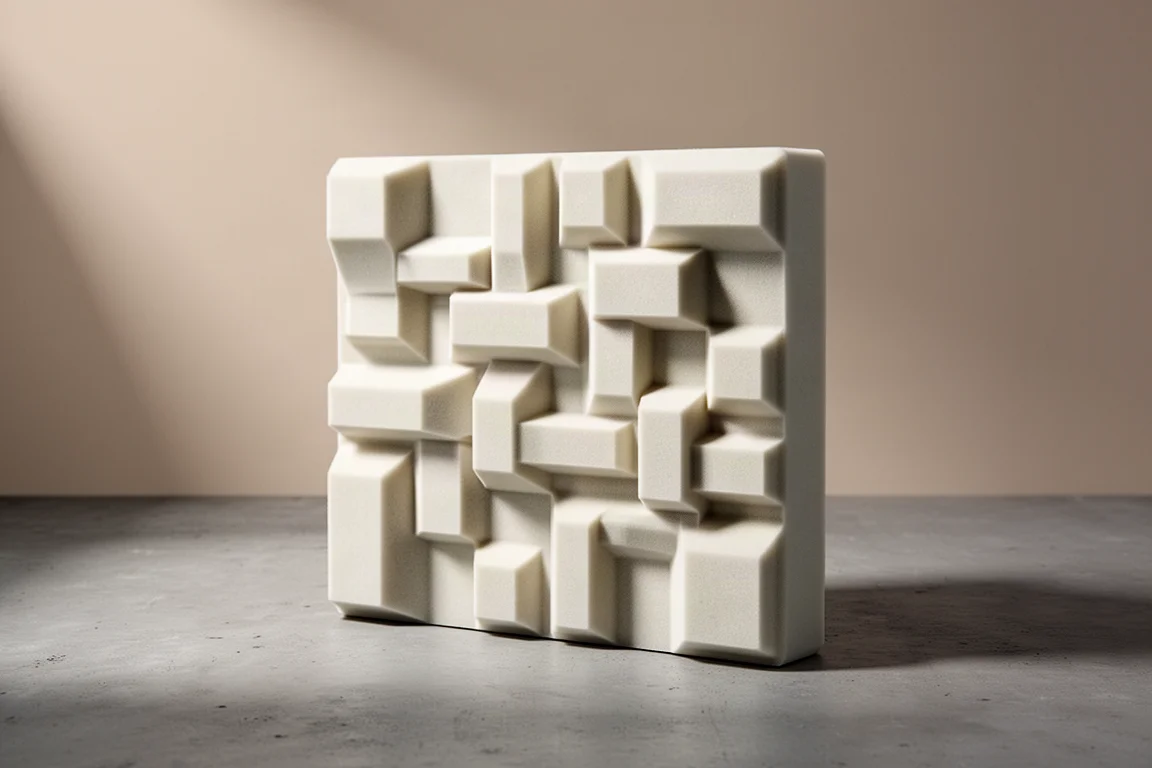
Not every acoustic problem is solved by absorption. The ceiling assembly in this room runs over three metres and combines two jobs. Two rows of six Cinema Round Premium panels in off-white handle absorption, and a large diffuser built from twelve MultiFuser DC3 modules handles scattering.
MultiFuser DC3 is a styrofoam module, and its absorption coefficient is deliberately low, starting at about 0.1, rising to roughly 0.4, and then falling away. That is not what it is for. Its purpose is to spread sound around the room rather than soak it up, and its diffusion coefficient sits at around 0.6 between 100 Hz and 5 kHz.
What the Measurements Showed
The before and after numbers tell the story clearly. Before treatment, the RT60 measurement, which is the time it takes for sound to decay by 60 dB, sat at around one second between 300 Hz and 4 kHz, and in places crept above 1.1 seconds. After the front wall, rear wall, corner, and ceiling work was complete, the same measurement sat entirely within the target band of 0.3 to 0.6 seconds, never dropping below the lower line or rising above the upper one.
A clap test recorded in the same room before and after confirmed what the graph showed. The untreated room returned a long, ringing tail; the treated room cut it short.
Some areas remain untreated. A hallway roughly two metres from the listening position and a staircase at the other end of the room still add a little reverb, and further work there may follow later.
Overall Buying Advice
The product cost for this installation came to roughly 5,000 euros, and that figure does not include fitting. Budget for installation separately: Vicoustic does not normally carry out fit-outs itself. The usual route is to work with a local reseller or distributor, who will either connect you with installers or supply the panels for a self-install.
Two practical points are worth weighing before committing. First, this level of treatment is visually intrusive. Panels cover the front wall, the rear wall, a corner, and a large part of the ceiling, so anyone sharing the space needs to be comfortable with that. Second, planning is everything. Supply accurate room dimensions and details of the wall build-up, and let the layout be designed around the room rather than bought piece by piece.
If the room is shared, start with the surfaces that matter most. Front wall reflections and corner bass build-up usually deliver the largest audible change, and ceiling work can follow once the wall treatment is in place.
Conclusion
The change in this room was not subtle. A reverb time of around one second across the midrange and treble came down to a point inside the 0.3 to 0.6 second window, and the difference in how the room sounded was dramatic.
The broader point is about priorities. Room acoustics colour everything a system reproduces, and a room with poor acoustics holds back even expensive hardware. In a well-treated room, more modest equipment has a far better chance of sounding good. For anyone who has already invested in speakers and electronics, acoustic treatment is the step that lets that investment show up at the listening position.
Further reading
Related Reviews
Acoustic Treatments
Best Vicoustic Acoustic Panels for Home Theater and Audio Rooms
Five Vicoustic acoustic treatments covering absorption, diffusion, hybrid control, and bass trapping, with practical guidance on where each panel belongs.
Hi-Fi Speakers
Revisiting Six Hi-Fi Speakers After a Room Change: What Still Holds Up
A fresh listening room changes the story for six reference speakers, from the Sonus Faber Lumina II to the Bowers & Wilkins 600 Series.