Portable Power Stations
Vetto Mountain 1548Wh Portable Power Station Review: A Budget Backup With a Twist
A 1548Wh LiFePO4 power station with fast charging, UPS functionality, expansion battery support, and optional jump starter capability, tested with a power-hungry CPAP machine.
Introduction
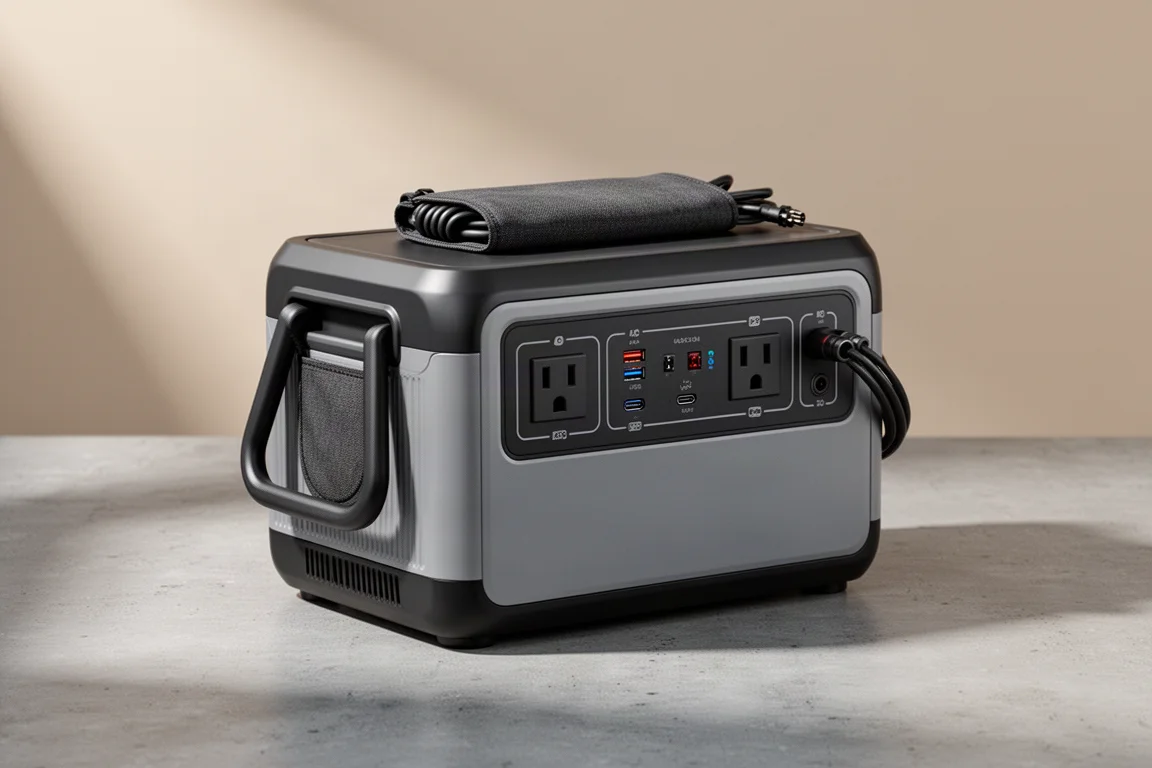
Vetto Mountain has a track record of odd-but-appealing products, and this 1548Wh portable power station fits the pattern. It is a LiFePO4 power station with fast AC charging, UPS functionality, expansion battery support, and an optional jump starter kit. It is not positioned against the top-tier brands like EcoFlow, Anker, or Bluetti, but it offers an unusual combination of features at a price point where those features rarely appear.
The headline price is currently $849, with coupon codes taking it down to roughly $780 for a 1548Wh unit. That is a significant amount of capacity for the money, and it raises the obvious question of whether the compromises matter for how you would actually use it.
The CPAP Test: Three Nights of Sleep
The most requested test for any power station like this is whether it can run a CPAP machine through the night. The unit tested here ran a CPAP with a heated water reservoir, one of the most power-hungry CPAP configurations you can have. Starting at 66% remaining, the machine drew around 28 watts with spikes higher when the humidifier heated up.
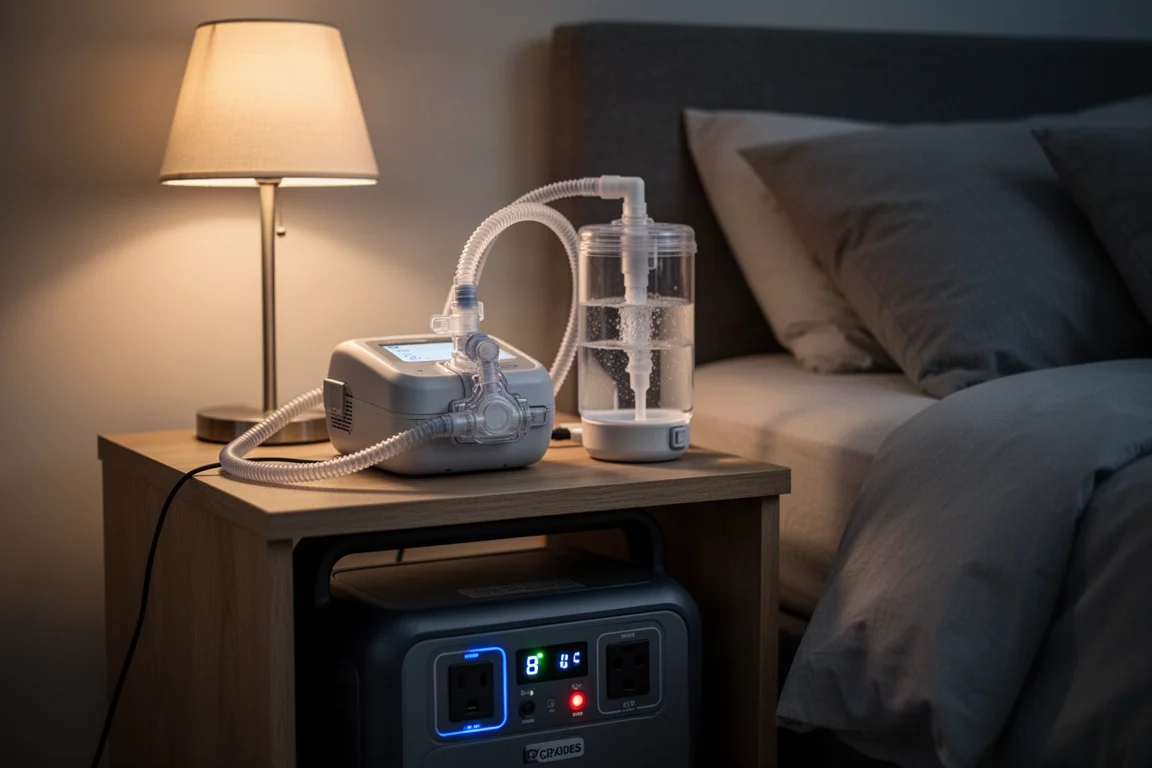
After a full night, with a phone also plugged in, the level had dropped to 35%. That is a steep drop, but the math is straightforward: half of 66 is 33, so with a battery this size you should get roughly three solid nights of CPAP use without recharging, even with a power-hungry setup. If you top it up with solar or AC during the day, that stretch extends considerably.
Ports and Layout
The port selection is thorough for this price class. Along the panel you get AC and DC inputs, solar input, a marine-grade style 12V plug, two 12V barrel outputs, USB-A ports, USB-C ports, and three 110V AC outlets.
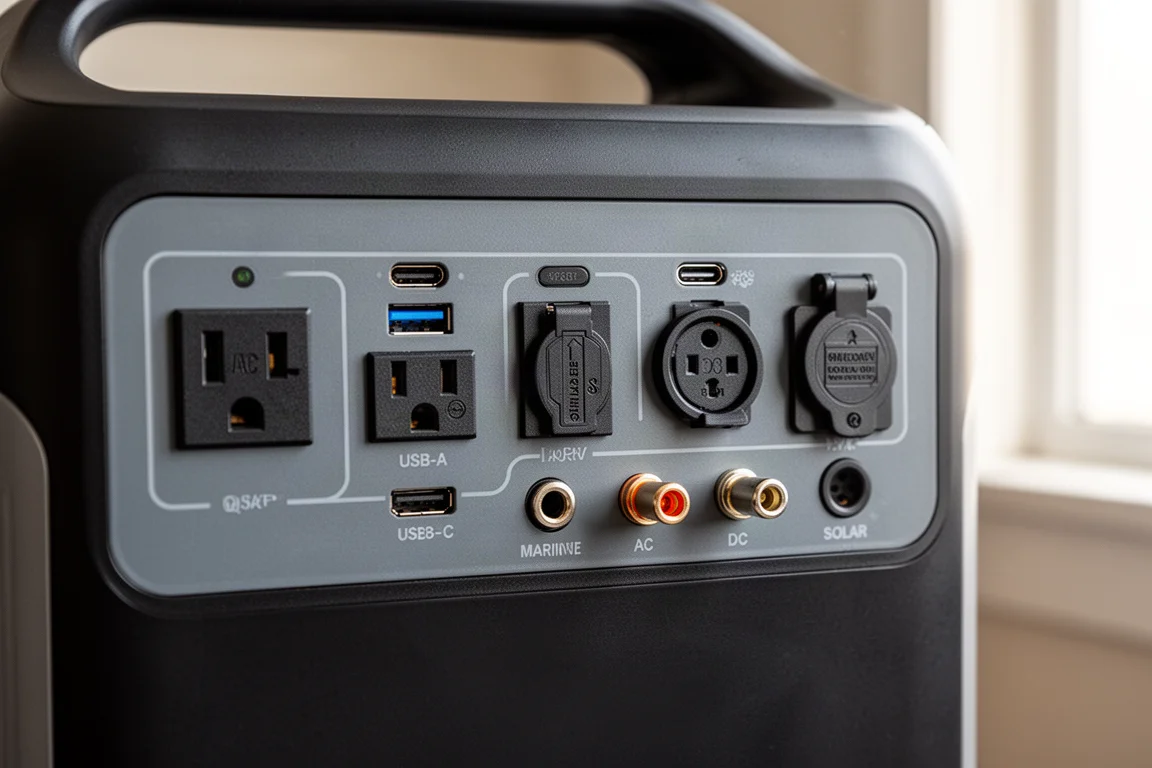
There are also two less common extras. A jump starter port lets you add a separately sold cable kit for jump-starting a vehicle, and a connector beside it accepts an expansion battery. One genuinely welcome design touch: onboard storage for cables, so nothing gets lost between uses.
Battery Chemistry and UPS Function
The 1548Wh pack uses LiFePO4 (LFP) cells rather than lithium-ion. That matters for longevity: LFP batteries deliver far more recharge cycles and do not carry the same thermal failure risk that overstressed lithium-ion cells do. For a power station you expect to cycle regularly, this is the chemistry to look for.
The unit also works as an uninterruptible power supply, with a switchover time under 20 milliseconds. That is fast enough for a computer, a fridge, or a CPAP machine, and it enables pass-through charging. Knowing a CPAP will keep running through a power cut overnight is real peace of mind.
Protection Features and Charging Speed
The internal electronics cover the expected list: overcharge, over-current, short-circuit, over-discharge, high-temperature, and over-voltage protection, plus spark-proofing, reverse polarity, and reverse charge protection. Reverse polarity protection is worth highlighting if you plan to wire solar panels yourself, since incorrect wiring can permanently damage some competing units.
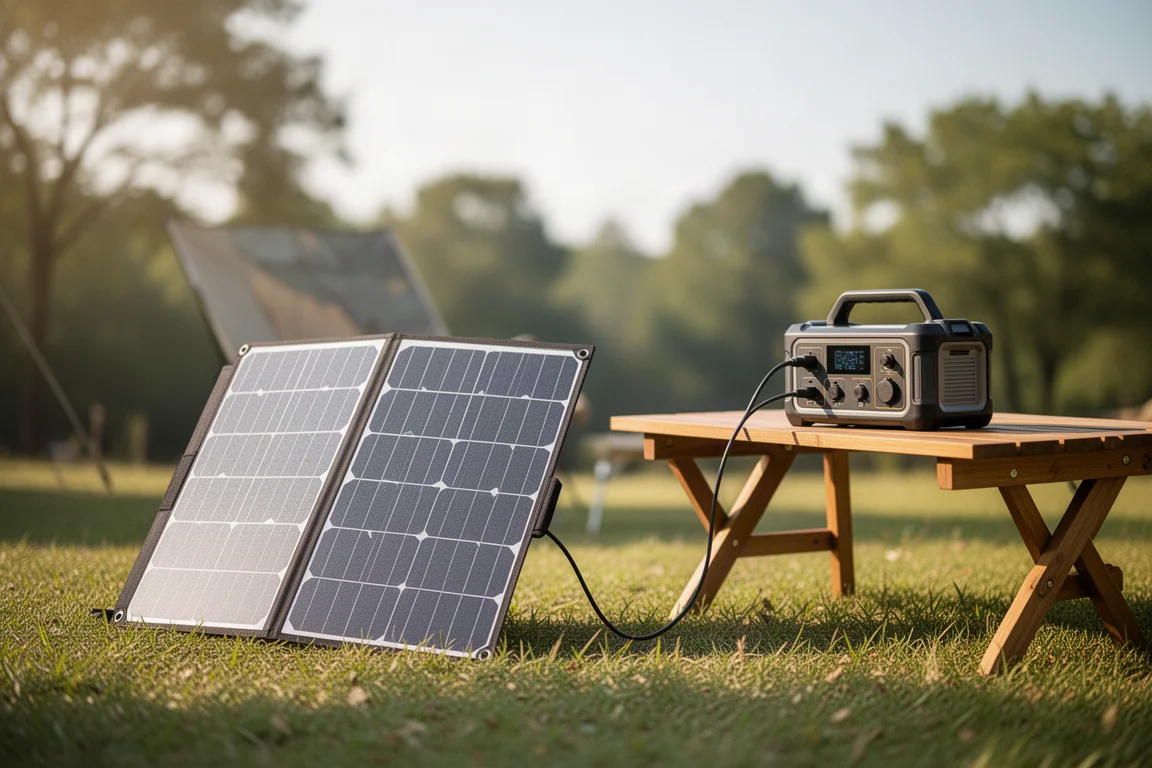
Charging speed is a genuine highlight. From AC alone, the unit charges to full in about an hour. Combine AC input with a 400W solar panel and the DC charger, and total input reaches 2100W, filling the 1548Wh battery in around 45 minutes.
Jump Starter and Expansion Battery
The optional jump starter kit costs about $30 extra and plugs into the dedicated port. This is not something that will live permanently in your car, but as a nice-to-have it is hard to argue with: if you take the station camping and drain your vehicle battery in the middle of nowhere, you have jumper capability with you.
The expansion battery connector serves a different purpose. If you want around 3000Wh of backup power but dread lifting a single heavy unit, you can split the capacity across two boxes. It is more portable, easier to store, and gives you the flexibility of running two smaller units instead of one large one.
Build, Weight, and Onboard Storage
The unit weighs 41.5 pounds and measures 15.6 x 10.5 x 11 inches, which is a reasonably compact footprint for the capacity. Build quality is solid rather than exceptional, and the display is fine without being remarkable. The design gets two real wins over the previous generation: handles moved from the top to the sides, and integrated onboard storage for cables and accessories.
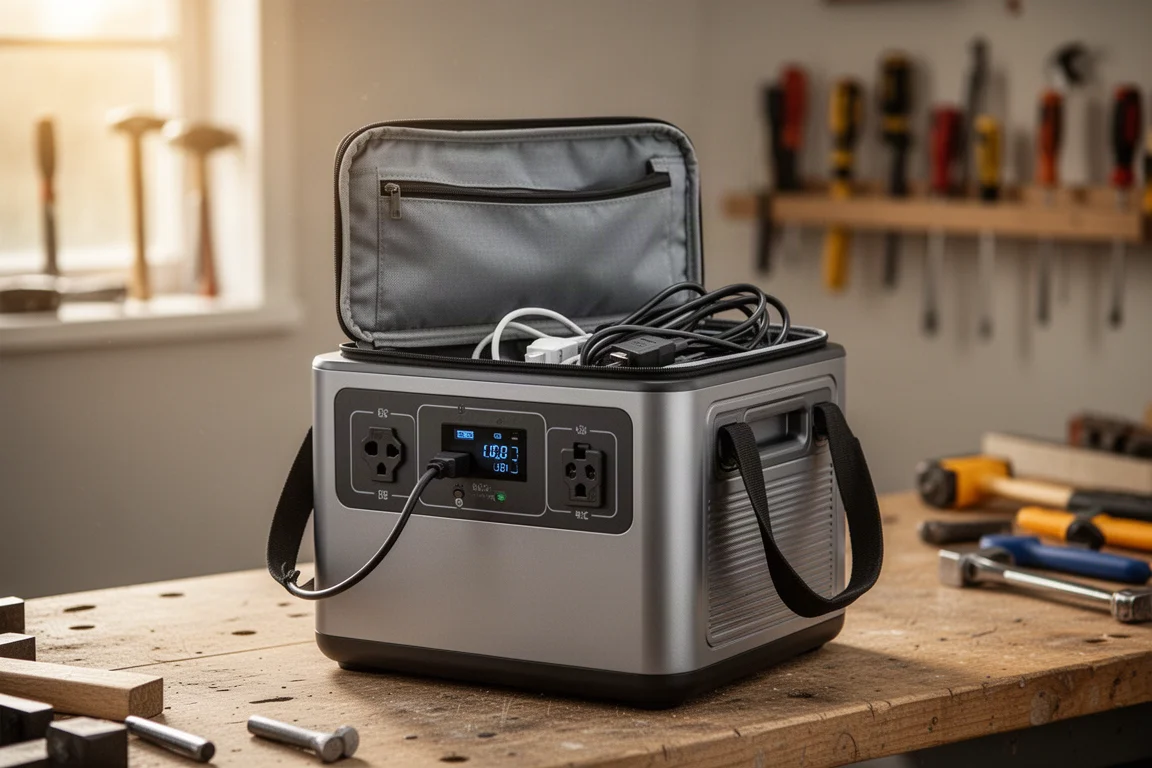
There is also a built-in flashlight on the rear with weak, medium, strong, strobe, and SOS modes. It works adequately, though it is not the most polished implementation of the idea.
Things to Know Before Buying
The solar panels sold by the same company are serviceable but pricey, and better-value third-party panels are easy to find. The included multi-connection charging cable supports XT60, Anderson, DC, and MC4 connections, which covers most panel types.
A practical buying note: purchasing from the manufacturer’s own website carries more risk than buying through an established retailer, since there is no long retail track record to point to for warranty and refund handling. Buying through a marketplace with buyer protection is the cautious route.
Buying Advice
This is a budget-minded power station with genuinely unusual flexibility: UPS functionality, expansion battery support, optional jump starting, and triple-input fast charging at a sub-$800 street price for 1548Wh. It is not on the same level as an EcoFlow, Anker, or Bluetti flagship, and that is not how it should be judged. For someone who values features-per-dollar over brand pedigree, it is an interesting option.
Conclusion
The Vetto Mountain 1548Wh power station earns its place on sheer versatility. Three nights of CPAP runtime without recharging, sub-20-millisecond UPS switchover, 45-minute multi-input charging, and LiFePO4 chemistry are all strong claims at this price. If the quirks of a smaller brand do not put you off and you buy through a protected marketplace, it is a compelling value pick.
Product link
View more details for Vetto Mountain 1548Wh Portable Power Station
This product is mentioned in the review. Check the specifications, options, and compatibility before buying.
View more details for Vetto Mountain 1548Wh Portable Power StationFurther reading
Related Reviews

Portable Power Stations
Anker SOLIX F3000 Review: A Powerful Portable Power Station With a Few Design Quirks
The Anker SOLIX F3000 delivers strong performance, fast charging, and a competitive price, but a few design choices may give you pause.

Portable Power Stations
EcoFlow Delta 3 Series: Five New Power Stations Previewed
EcoFlow expands the Delta 3 lineup with five models, from the compact Classic to the flagship Ultra Plus. Here is what each one offers.
Portable Power Stations
Oscal Power Max 6000 Review: A Large Solar Generator With Real Trade-Offs
A week of off-grid use shows what the Oscal Power Max 6000 handles well, where it falls short, and when a fuel generator still makes more sense.