Portable Power Stations
Oscal Power Max 6000 Review: A Large Solar Generator With Real Trade-Offs
A week of off-grid use shows what the Oscal Power Max 6000 handles well, where it falls short, and when a fuel generator still makes more sense.
Introduction
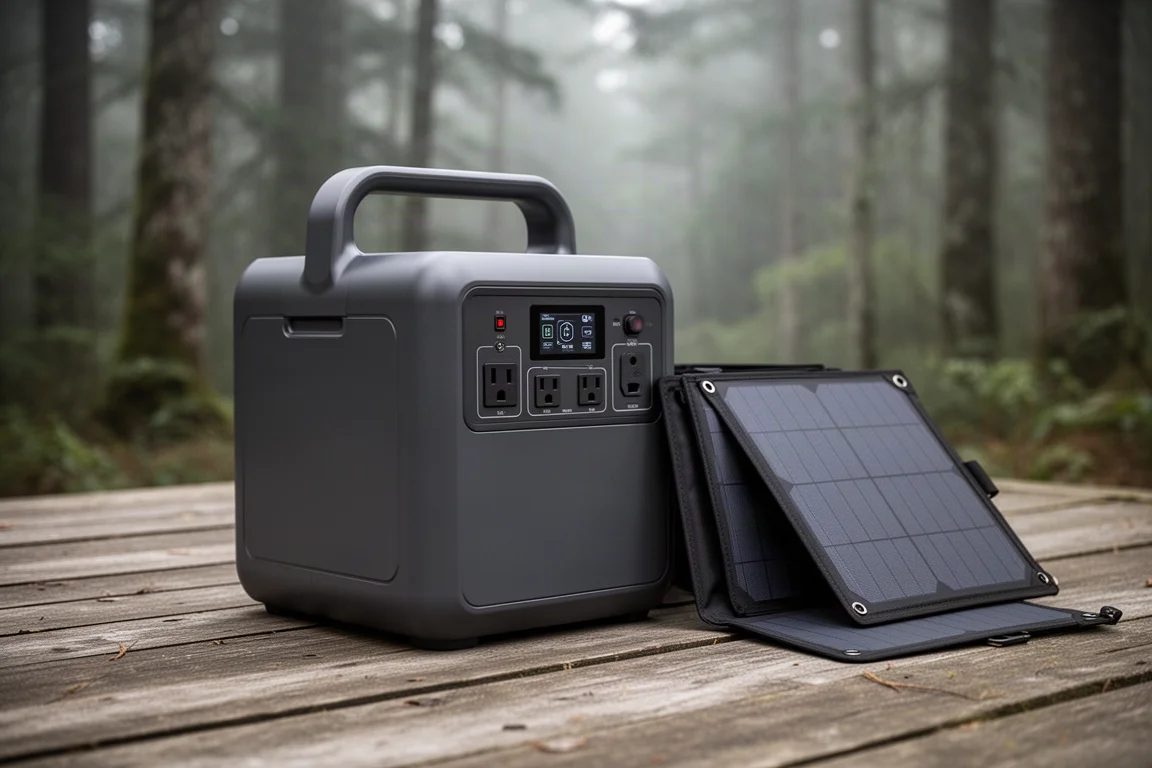
Working from a remote campsite looks simple on paper. A laptop and a phone are easy loads. Add satellite internet, camera batteries, a drone, and a small heater, and the math changes quickly. The Oscal Power Max 6000 is a large solar generator aimed at exactly that mix: enough capacity to keep a mobile office running when there is no hookup within reach.
It was put to work during a week of off-grid camping in a cold, cloudy stretch of national forest, with daytime highs near 54 degrees Fahrenheit and overnight lows around 37. The unit handled the office loads without much drama, but two problems appeared early. The display never delivered usable information, and the AC charging input stopped working on the second night. Both are worth understanding before spending money on any generator in this class.
Who This Solar Generator Is For
This is a power station for van, RV, and car campers who want quiet electricity inside a living space. Because there is no exhaust and no fumes, it can sit indoors while it runs a laptop, a satellite internet terminal, camera batteries, and a drone charger. The fan is audible but modest, so it does not take over a small interior.
It is not a replacement for a fuel generator or for a full RV electrical system. Appliances that produce heat drain capacity very fast, and running an entire RV from a single unit of this size asks for far more headroom than one box can provide.

The strongest case for this category is a light, steady load that runs for hours: internet, computing, and battery top-ups. Buyers who match that profile will get the most from a solar generator, while buyers who want to heat a space or run heavy appliances should look elsewhere.
What It Powers Well in Practice
The load mix during the week was typical for a remote office: a satellite internet terminal, a laptop, camera batteries, and a drone charger. The terminal was the heaviest steady draw. With the terminal, a laptop, and a space heater all connected, output sat around 1,228 watts, which is far beyond what a normal workday requires.
Unplugging the heater made an immediate difference. The unit then reported 39 percent remaining and roughly 11 hours of runtime. That is the useful lesson here: at a full charge, with heat-producing appliances left out of the equation, running a small office was not a concern at all. In a sunnier location it would be less of a concern still.
Charging Options and Solar Input
Charging performance depended heavily on the input used. The 12 volt car charging accessory delivered roughly 110 watts, which is a slow trickle for a battery this size. The standard AC charging cable performed far better, pushing around 1,670 watts, and running both inputs together held consistently above 1,700 watts. In practice, the AC input was the only realistic way to refill the unit in a reasonable amount of time.
The included folding solar panel is a genuinely nice piece of hardware, but the weather decided the outcome. Under heavy cloud and snow, output hovered around 14 watts at a time, nowhere near enough to replace what the office was drawing. Relying on solar alone in winter conditions is not realistic.
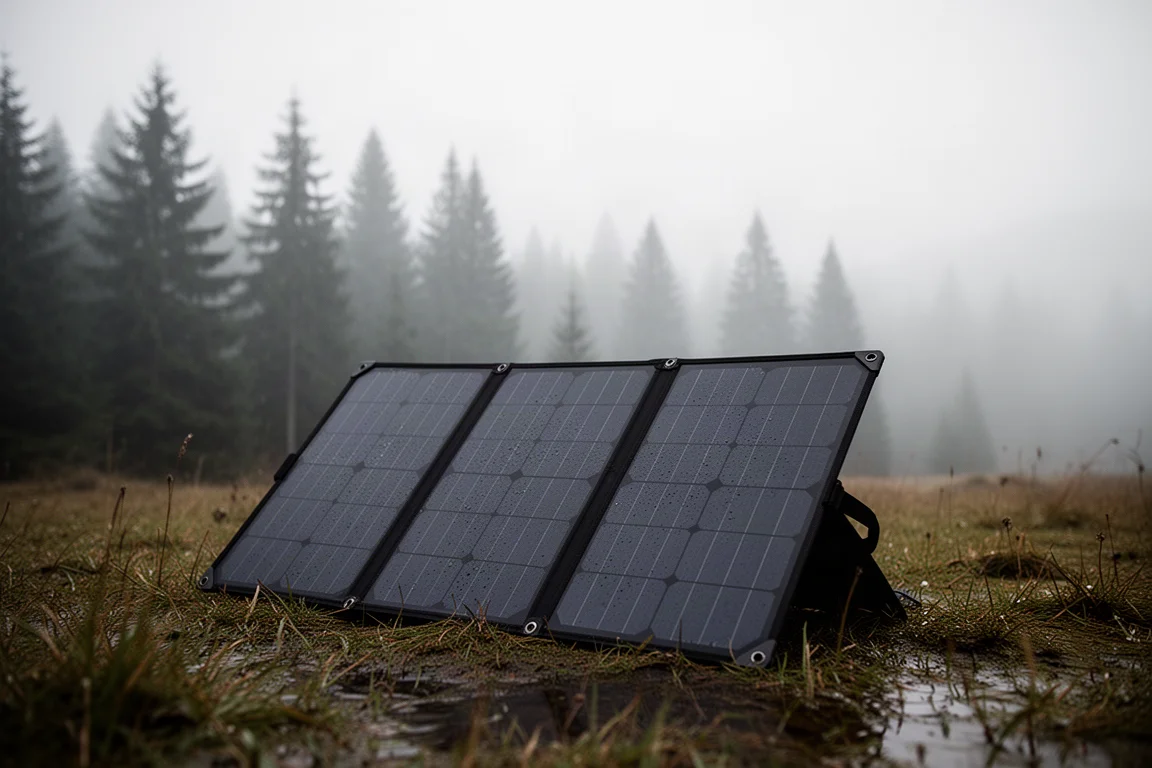
A practical fallback during the week was to charge the power station from the RV’s own generator, which kept it topped up even without sun. That approach works, but it means the solar generator ends up being refilled with gasoline.
Things to Consider Before Buying
High-draw appliances are the first thing to watch. A space heater pulled a large share of the available output, and a microwave drew roughly the same amount. Neither is a realistic long-term load for a unit like this, and both will empty a battery quickly.
Whole-RV power is also a stretch. Plugging the RV into the unit through a standard connection drew about 368 watts, which is actually less than the space heater, but adding appliances on top of that would burn through capacity fast. If the goal is constant power for an entire RV, a solar generator of this size is not the right tool.
Display, Monitoring, and Charging Reliability
The display never provided reliable information. Remaining capacity, estimated runtime, and recharge time were either inaccurate or impossible to read. At one point the screen showed 39 percent remaining after about 45 minutes of use, with no clear way to confirm whether that figure meant anything. A single blinking indicator was the only charging feedback available, and its meaning was never clear.
Charging behavior also became inconsistent. On the second night the standard AC input stopped charging the unit entirely, despite the cable being seated correctly and repeated attempts to reconnect. The car charging accessory showed around 105 watts of input without actually adding charge.
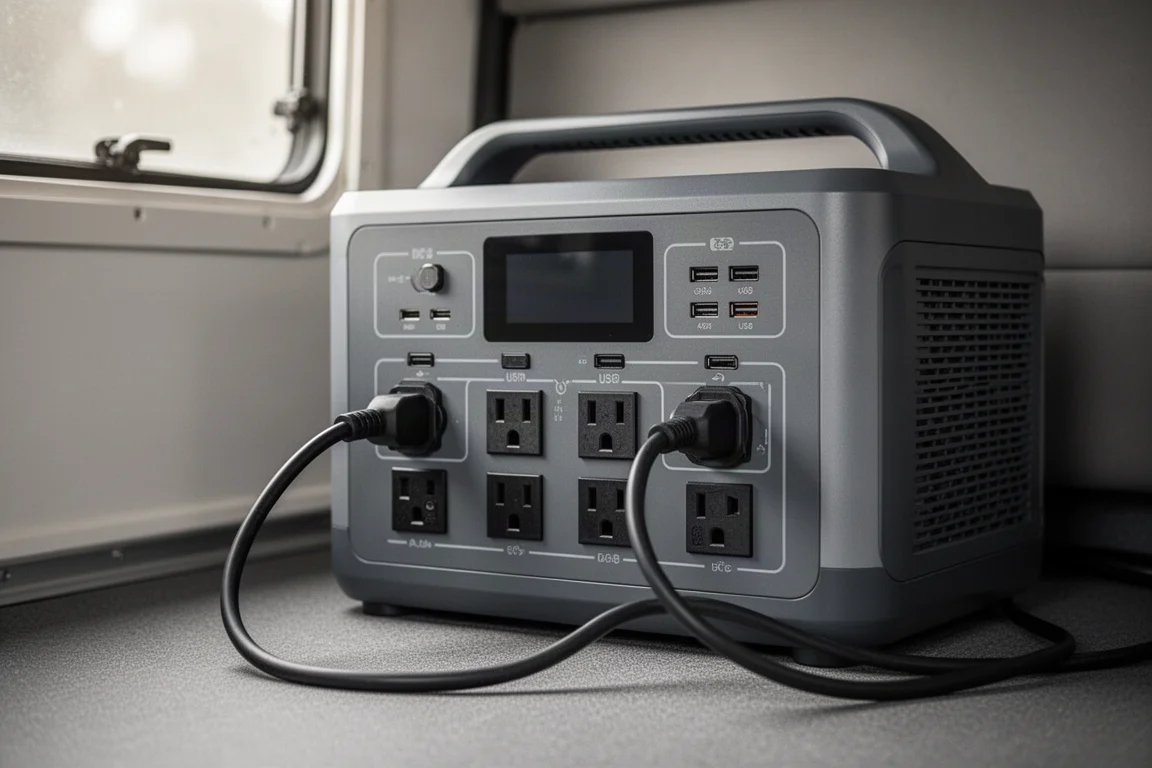
For a device that is meant to be the power source for everything else, unreliable monitoring and unpredictable charging are serious problems. Capacity figures you cannot trust make it hard to plan a workday, let alone a week off-grid.
When a Fuel Generator Makes More Sense
If you need constant, predictable power, especially for an entire RV or for heating, gasoline remains the stronger option. Solar generators are quiet, produce no exhaust, and can run indoors, which is a genuine advantage. Those strengths only matter, though, if the unit charges when you need it and reports its state honestly.
Cold and cloudy conditions also work against solar input, and this week was a clear example: snow, heavy cloud, and very little yield from the panel. Anyone planning to lean on solar charging should think carefully about the climate they will be camping in.
Buying Advice
There is a real difference between an inexpensive product and a product that is made cheaply, and this unit sits on the wrong side of that line. A large solar generator is a significant purchase, so it can be tempting to save money on a lesser-known model. The trade-off showed up here as a display that never worked and a charging input that failed within days.
If your priority is running a small office on the road, the category itself makes sense. A unit at full charge, with heat-producing appliances left out, will comfortably cover a satellite terminal, a laptop, batteries, and a drone. If you are shopping for that job, plan on spending more for a model with dependable monitoring and charging rather than chasing the lowest price.

One more practical note in favor of the category: generators like this are quiet enough to live with inside a camper, with only modest fan noise and no fumes. That convenience is worth having, provided the hardware underneath it works as advertised.
Conclusion
The Oscal Power Max 6000 shows both sides of the large solar generator category. It runs a mobile office quietly and without fumes, and at a full charge it handled satellite internet, laptop charging, and battery top-ups without trouble. It also stumbled on the fundamentals: an unusable display and an AC charging input that stopped working on the second night.
If you want quiet power for light electronics, the concept is sound, but this particular unit is hard to recommend. Spend the money on a model you can trust, or choose a fuel generator if you need constant power for a full RV.
Product link
View more details for Oscal Power Max 6000
This product is mentioned in the review. Check the specifications, options, and compatibility before buying.
View more details for Oscal Power Max 6000Further reading
Related Reviews

Portable Power Stations
Anker SOLIX F3000 Review: A Powerful Portable Power Station With a Few Design Quirks
The Anker SOLIX F3000 delivers strong performance, fast charging, and a competitive price, but a few design choices may give you pause.

Portable Power Stations
EcoFlow Delta 3 Series: Five New Power Stations Previewed
EcoFlow expands the Delta 3 lineup with five models, from the compact Classic to the flagship Ultra Plus. Here is what each one offers.
Portable Power Stations
Portable Power Stations for Car Camping: Bluetti EB70S, EB55, and EcoFlow River Pro
A practical look at three portable power stations for weekend car camping, from running a 12 volt fridge to recharging by wall power, car socket, or solar.