Backpacking Tents
Vango Nyx 200 Review: An Affordable Two-Person Tent for New Campers
A practical look at the Vango Nyx 200, a budget two-person backpacking tent with a waterproof bathtub groundsheet, a sturdy pole structure, and a snug but usable interior.
Introduction
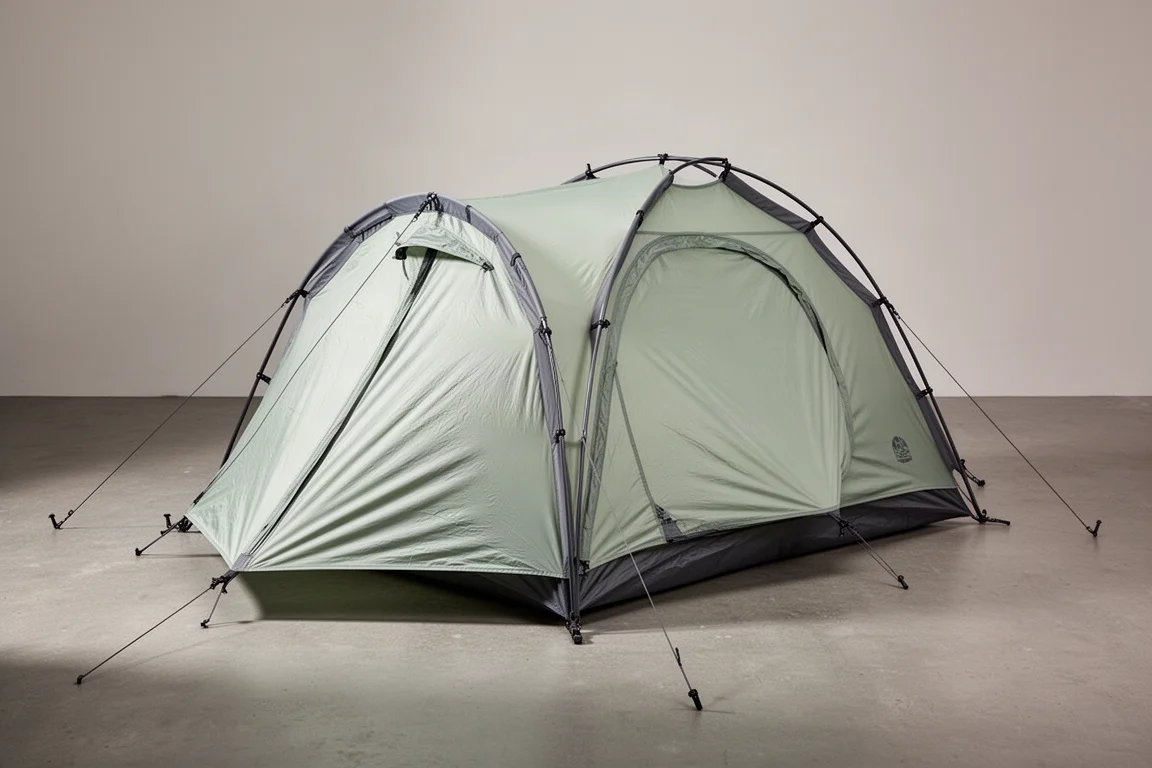
The Vango Nyx 200 is a two-person backpacking tent that retails at around £50, which places it among the most accessible ways to start sleeping outdoors. Vango is a long-established name in outdoor equipment, and this model sits at the entry level of the range: a mid-season, double-skin design built for people who are just beginning to spend nights outside.
At 2.17 kg it is not the lightest shelter available, but it is a fair weight for a two-person tent at this price. The design is conventional rather than experimental, which is usually a good sign in a first tent, because there is very little here that requires prior experience to understand.
Who This Tent Is For
This tent suits new backpackers, casual campers, and anyone assembling a first kit who would rather put money into sleeping insulation or a rucksack. It is intended for late spring through mid-autumn conditions, so it fits campsite weekends, day-walk bases, and summer backpacking trips rather than winter use.
It also makes sense for a solo camper who wants extra room, since two people will find it snug once mats, sleeping bags, and packs are inside. If you are covering long distances and counting every gram, lighter options will appeal more. If you want a dependable, low-cost shelter to learn with, this one fits the brief.
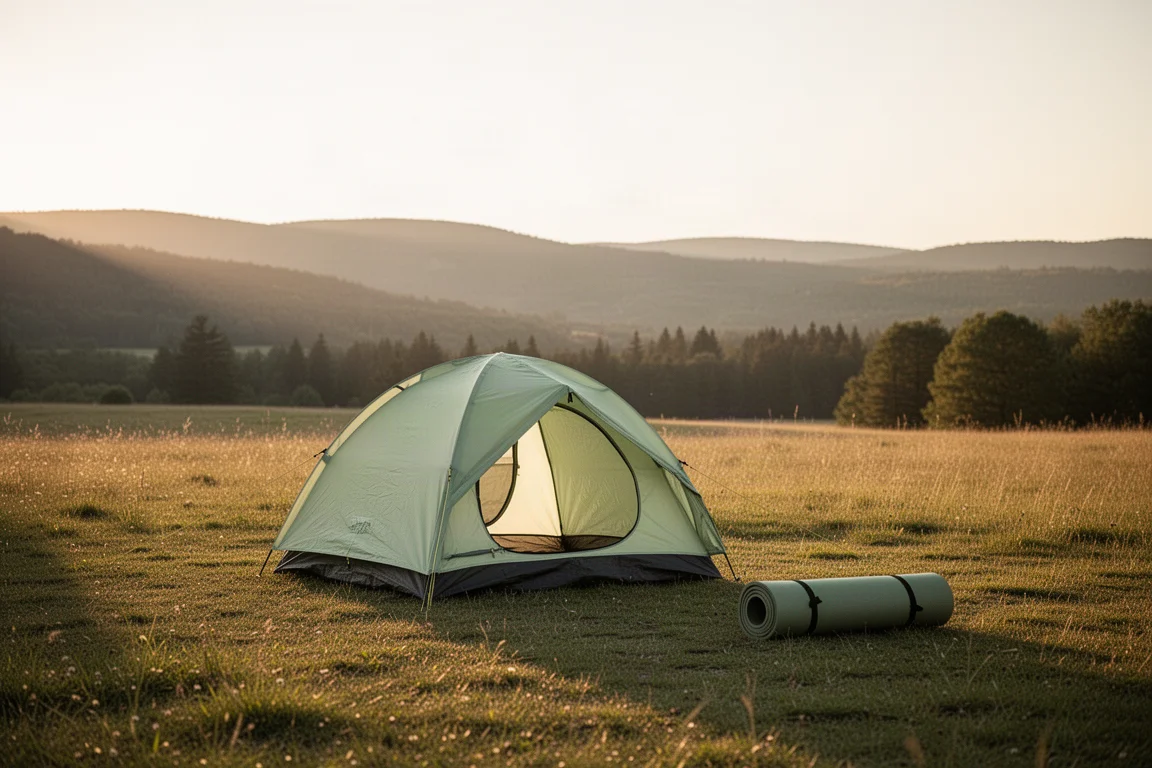
It is worth thinking about how you will actually use it. For campsite weekends and short summer trips the layout is more than adequate, and the low price leaves room in the budget for better pegs, a lighter carry bag, or warmer sleeping insulation.
Main Strengths
Packed Weight and Packability
At 2.17 kg the Nyx 200 is manageable for two-person use, particularly if you split the load. The carry bag has a top zip for easy access, and while it is bulky rather than tightly compressed, it does the job. Dividing the shelter between two packs is straightforward, and the poles, pegs, and fabric can be separated to balance weight.
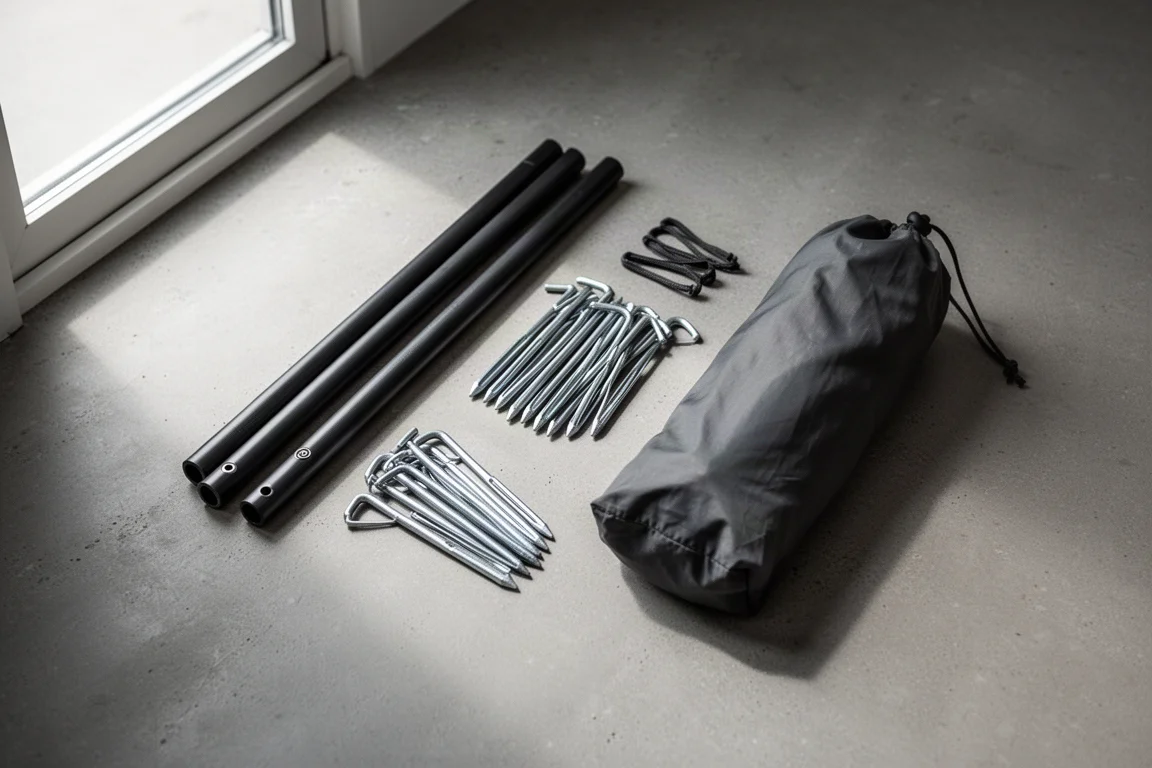
The components can also be moved into dry bags, a common approach for anyone trying to reduce packed size further. The carry bag itself is made from the same heavier material as the groundsheet, so swapping it out is an easy weight saving if that matters to you.
Weather Protection and Fabric
The fly sheet is rated at a 3,000 mm hydrostatic head with a 70 denier weave, a reasonable combination at this price. The denier figure relates to the density of the weave and, in practical terms, to how well the fabric resists snags from rocks, brambles, and rough ground, which in turn affects how long the tent lasts when it is looked after.
The seams are not taped, but the stitching quality is good and there is plenty of overlap along the joins. As with any waterproof fabric, performance depends on care: keeping the fly clean, dry, and properly tensioned helps it stay water repellent over time.
The groundsheet is where the real protection sits. It uses a polyethylene fabric with a 10,000 mm hydrostatic head and a bathtub design, meaning the floor curves up at the edges so groundwater cannot seep in. Because the groundsheet presses against damp ground under body weight for hours at a time, that higher rating makes sense.
Interior Comfort and Ventilation
The inner pitches first, and once the fly is on, the interior is comfortable for its class. At around 5 ft 7 in you can sit up almost fully in the front section, and there is enough width at the widest point to move without your arms brushing the walls.
Two sleeping mats and two sleeping bags fit side by side, although you will likely touch the sides when both places are occupied. Lengthwise there is a little room beyond the end of a standard mat. Inside there are two side pockets, a toggle for hanging a lantern, side vents, and a rear vent to improve airflow and reduce condensation. The inner door is partly mesh, which helps on warmer nights.
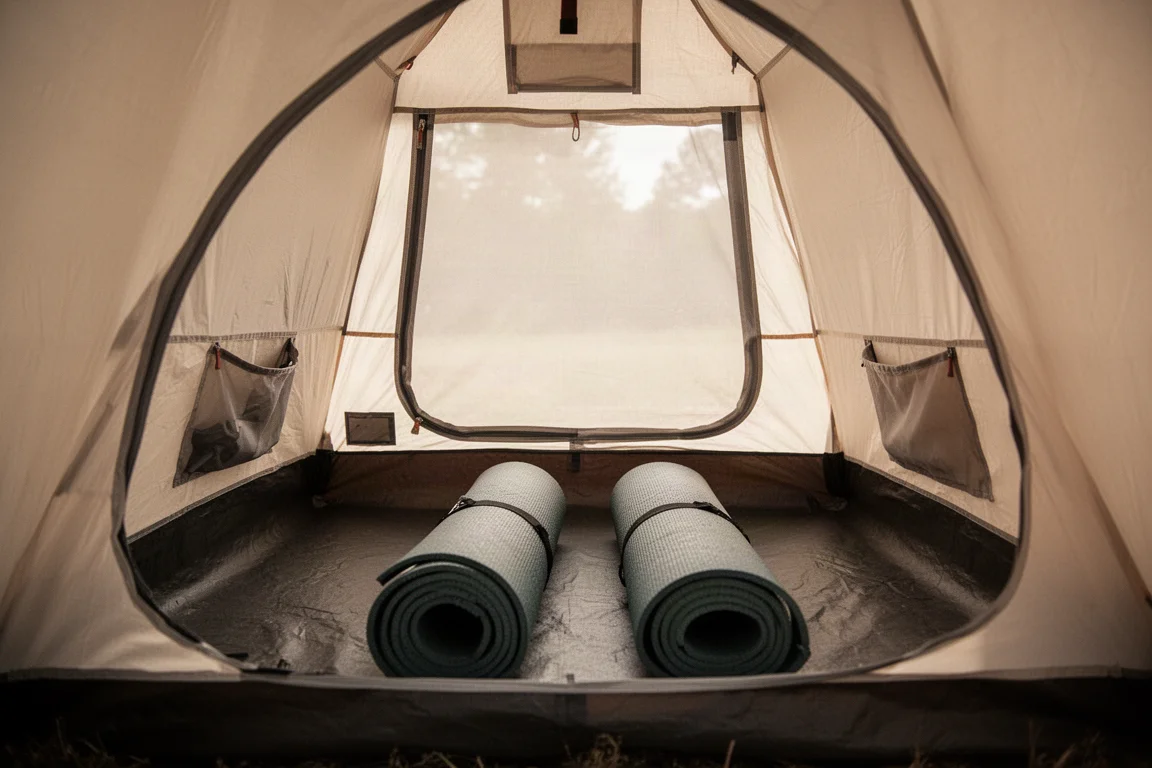
In practice this is a snug two-person tent and a genuinely comfortable one-person tent, which is exactly the trade-off to expect from a budget design at this size.
Things to Consider Before Buying
The Poles and Pegs
The poles are fiberglass and simple to assemble, with enough flex to work with the wind rather than against it. They are also noticeably heavy. Threading them through the sleeves and clipping them into the metal toggles at the base produces a strong, secure structure, but it takes some force, and the long pole in particular is fiddly to seat.
The supplied pegs bend easily under pressure. Upgrading to a stronger set is one of the cheapest and most worthwhile improvements you can make, and it also helps the tent hold up better in wind and rain.
The Porch Space
The tent has a front porch, and the door has a rain sleeve over the zip plus elastic toggles to hold it rolled back. The porch itself is small. There is roughly a foot of space between the outer and the inner at the front, and it is not covered by a roof, so it offers limited shelter for wet gear.
That means boots, waterproofs, cooking equipment, and a rucksack are harder to keep outside the sleeping area than they would be with a deeper, roofed porch. The toggles are also quite elastic, so wrapping the door around them twice helps keep it secure.
The structure is reassuringly solid once pitched. The inner has five pegging points and the fly adds more, so the tent stays planted in wind, at the cost of a heavier peg bag.
Buying Advice
For around £50, the Vango Nyx 200 delivers the fundamentals: a double-skin design, a genuinely protective groundsheet, a strong pole structure, and enough interior space for two people to sleep. Its compromises are the ones you would expect at this price, including heavier poles, basic pegs, a shallow porch, and a snug two-person layout once kit is inside.
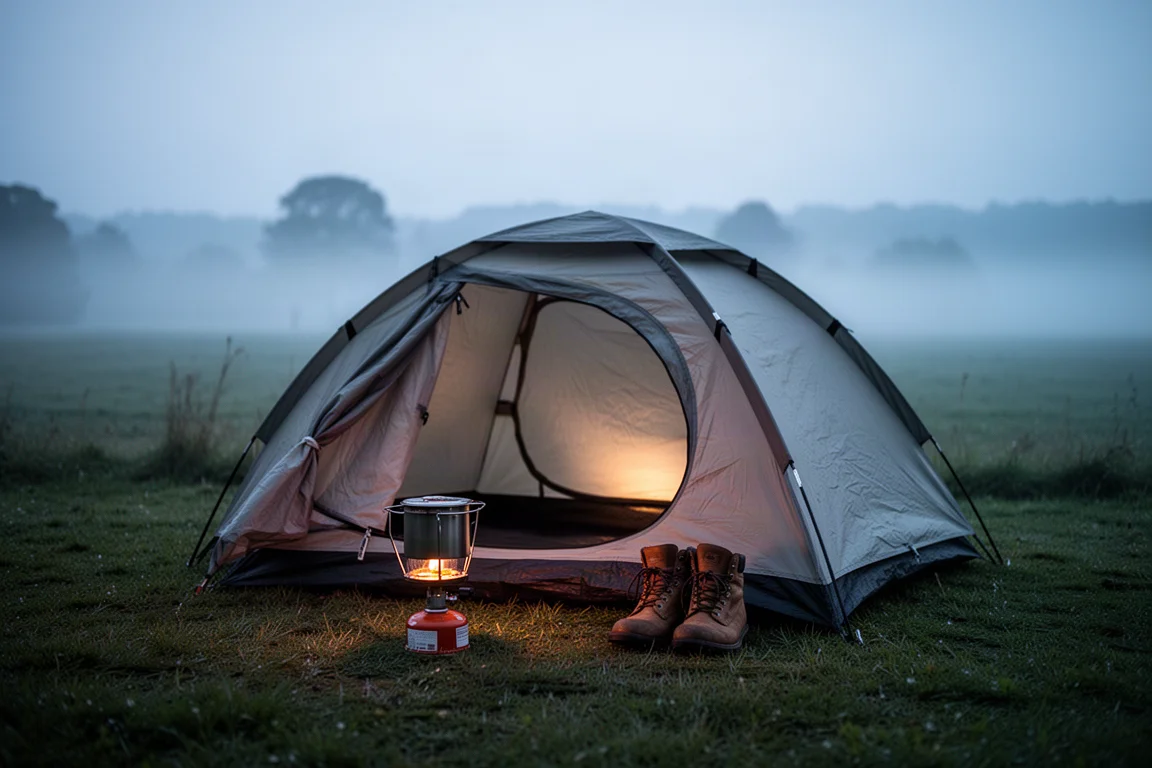
Setting it up the first time takes a little practice, mainly because the poles need firm pressure to seat into their toggles. After that the process is quick, and the generous number of pegging points means it stays put in wind.
If you are new to camping or backpacking, this is a low-risk way to start. Pair it with a better set of pegs, split the load between two packs, and keep the fly tensioned properly, and it will serve well through the milder half of the year. If low weight or generous living space are your priorities, plan to spend more.
Conclusion
The Vango Nyx 200 is a straightforward, honest entry-level tent that gets the important things right. It is not the lightest or the roomiest option available, but at this price it covers the essentials and gives new campers a dependable place to start.
Product link
View more details for Vango Nyx 200
This product is mentioned in the review. Check the specifications, options, and compatibility before buying.
View more details for Vango Nyx 200Further reading
Related Reviews
Backpacking Tents
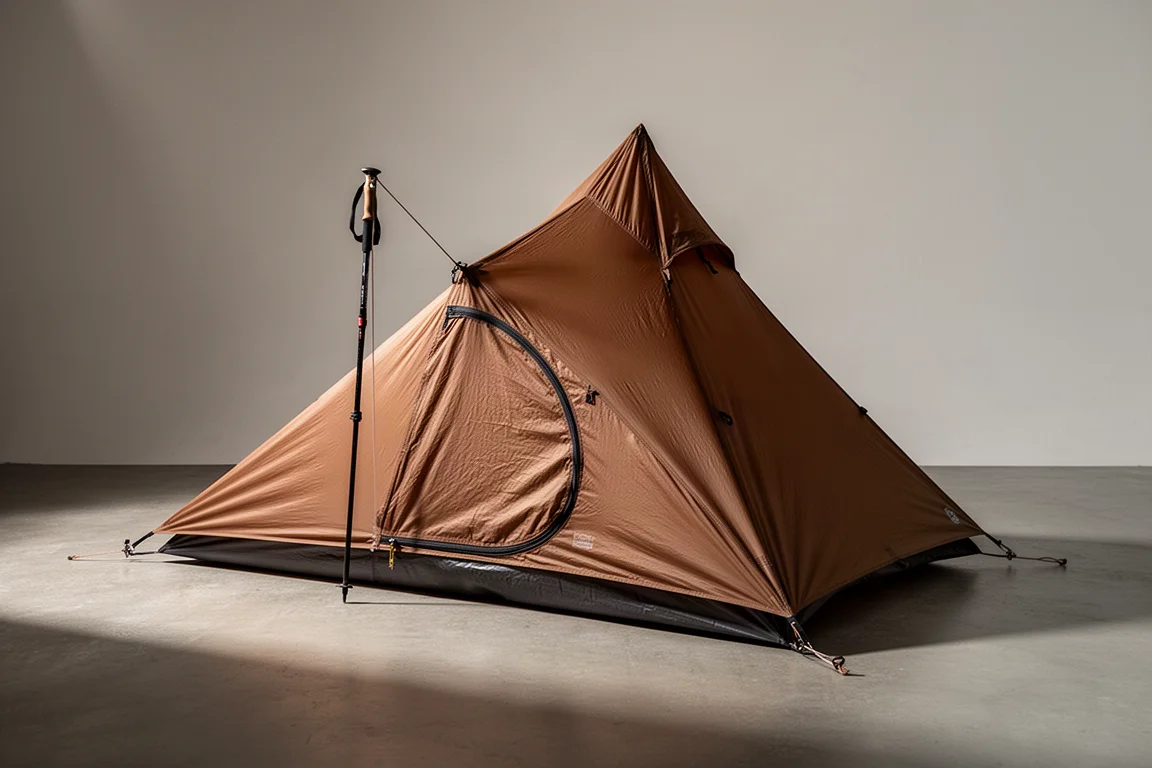
3F UL Lanchan Pro 1 Review: A 1 lb 8 oz Single-Wall Trekking Pole Tent
A practical look at the 3F UL Lanchan Pro 1, a single-wall trekking pole shelter with a 1 lb 8 oz weight, 20D silnylon fabrics, and a roomy 90 x 31 x 49 inch interior.
Backpacking Tents
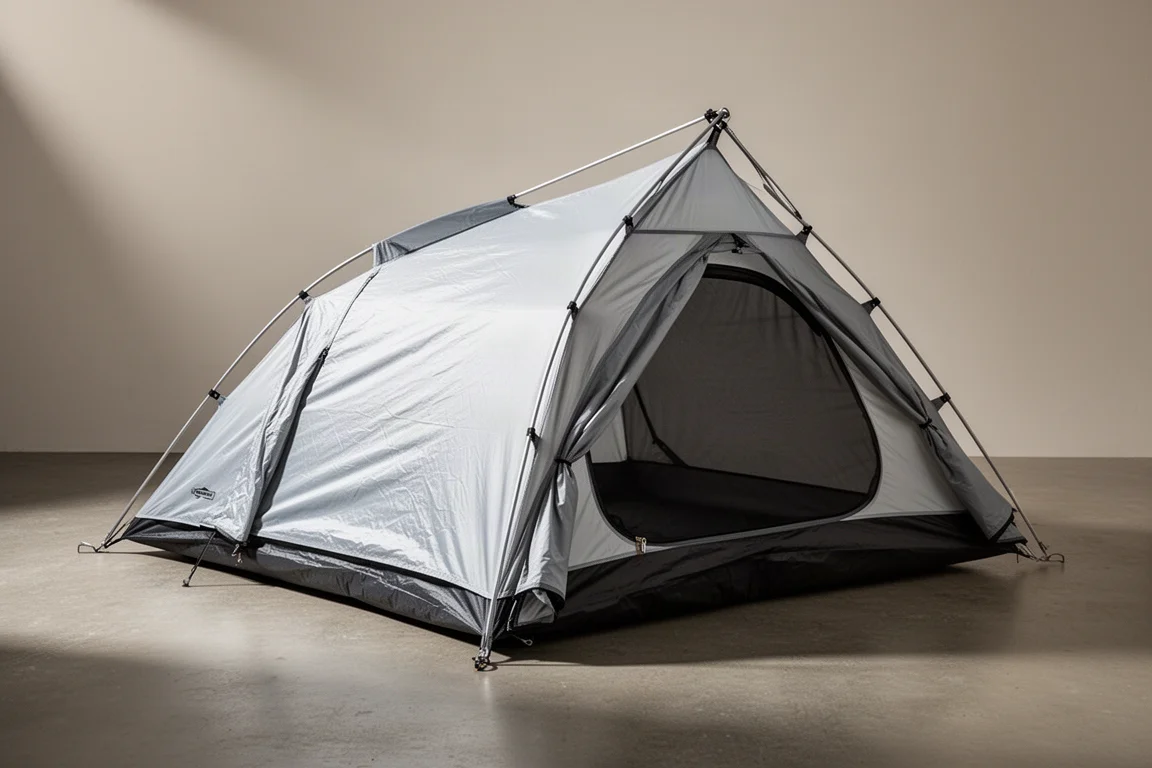
3F UL Taiji 2-Person Tent: A Convertible Backpacking Shelter Worth a Closer Look
A practical look at the 3F UL Taiji two-person tent, covering its materials, true two-person interior, fly-first pitching, and the seasonal inner swap that lets one shelter cover more of the year.
Backpacking Tents
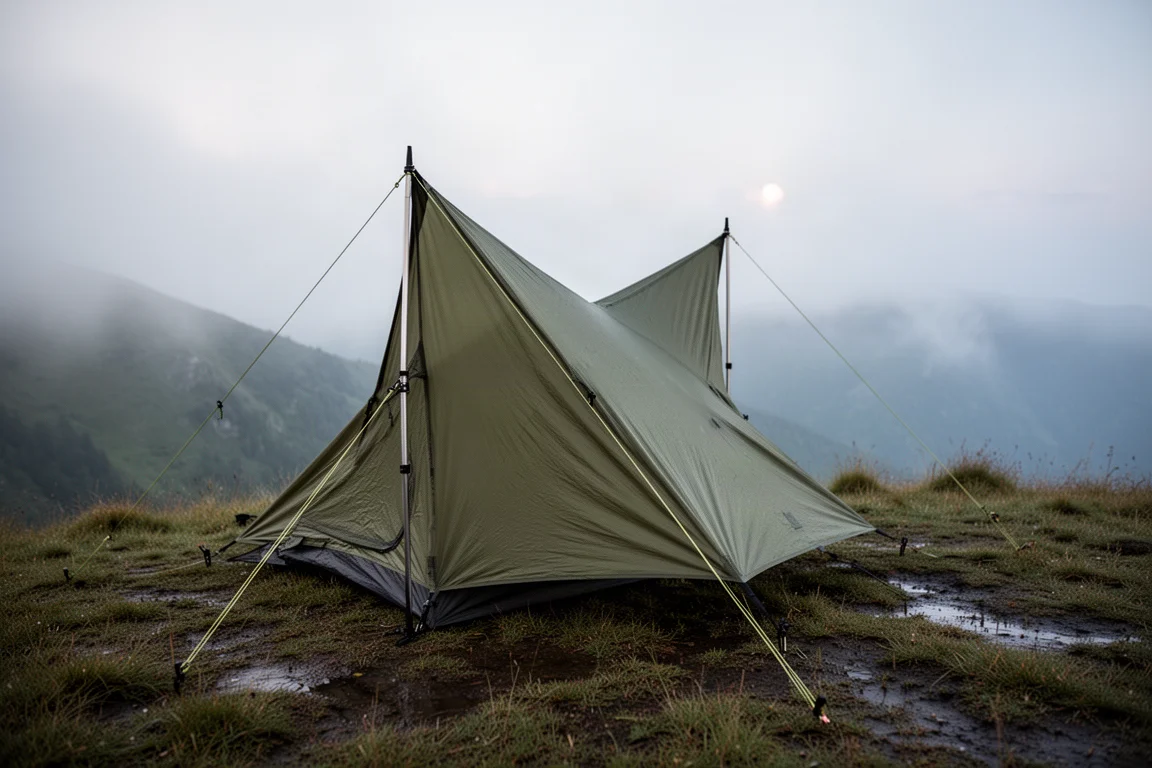
3FUL Lanshan Twoerson Pro Review: A Light Trekking Pole Shelter That Struggled in Rain
A two-person trekking pole shelter with a 2026 redesign, pitched with sticks and put through a night of steady rain. Here is what worked, what did not, and what to check before buying.