Road Bikes
Van Rysel RCR Pro vs Van Rysel RCR: Does Half the Price Mean Half the Performance?
A back-to-back comparison of the top-of-the-range Van Rysel RCR Pro and the entry-level Van Rysel RCR, covering weight, specification, gearing and real ride data from the same course.
Introduction
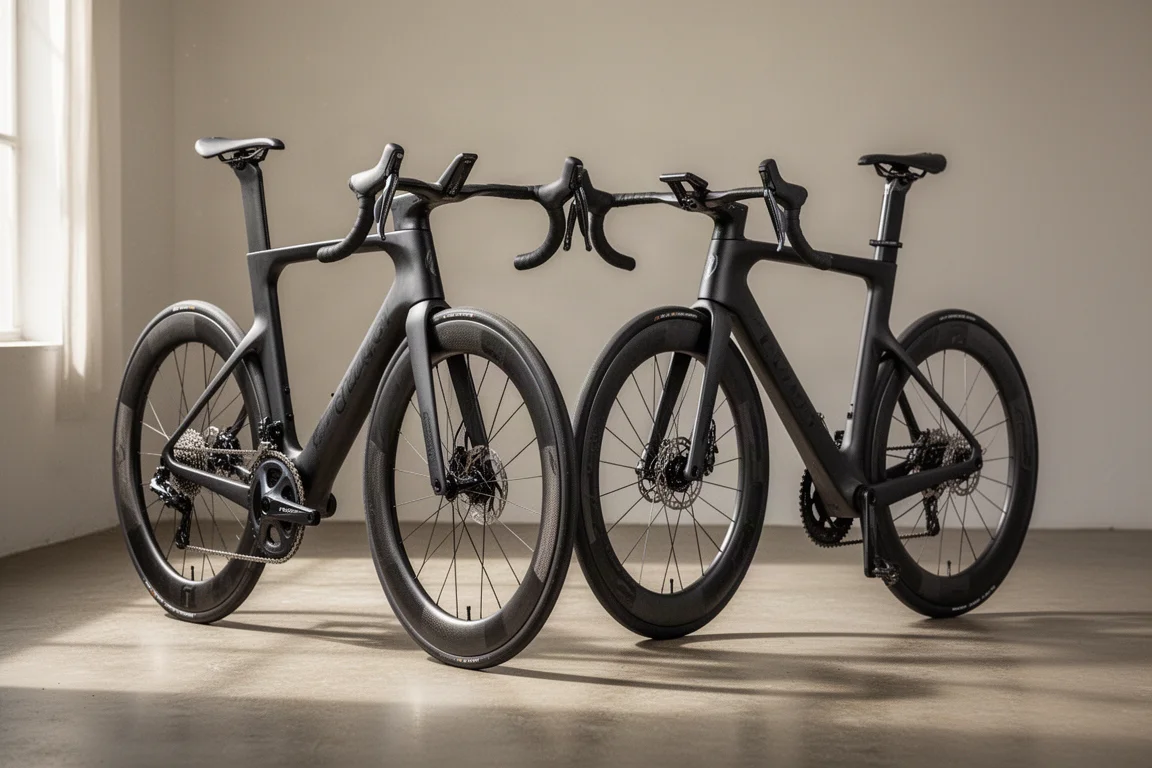
Two carbon aero race bikes from the same family, separated by a price gap of roughly two to one. The Van Rysel RCR Pro sits at the top of the range, built with the kind of components a professional race team would use. The Van Rysel RCR is the most affordable model in the same lineup, and it is still a carbon fibre aerodynamic race bike with the same silhouette and the same overall design language.
That raises the obvious question: does paying half as much mean getting half the performance? To find out, both bikes were ridden back to back on the same course, on the same day, at the same effort, and both were weighed on the same scales.
What Separates the Two Bikes
At a glance, the two frames are genuinely hard to tell apart. They share the same aerodynamic profiles and the same tube shapes, so the silhouette is effectively identical. The difference sits underneath the paint, in the carbon fibre layup, which changes the frame weight and shapes how the complete bike is built up.
Most of the money, however, goes into the parts bolted to that frame: the groupset, the wheels, the saddle and the cockpit. Those components account for the bulk of the weight gap and a good part of the ride character as well.

Both bikes remain proper race machines. They are stiff, quick handling and clearly built for speed rather than all day comfort. It is also worth appreciating how strong the entry point of this range is: a modern entry-level race bike arrives with carbon wheels, a wireless electronic groupset and race-ready geometry, which is a very different proposition from the entry bikes of twenty years ago.
Van Rysel RCR Pro: Top of the Range
The RCR Pro is the flagship of the range. It runs Shimano’s top-tier Dura-Ace Di2 groupset, a top-level carbon saddle with carbon rails, and Van Rysel’s own one-piece carbon handlebar and stem. That cockpit is not only lighter and sleeker than a two-piece setup, it is also narrow, measuring 36 cm across the hoods, which puts the rider into a more compact and more aerodynamic shape on the bike.
Gearing is race focused, with 52/36 chainrings. The claimed frame weight is 790 g, and the complete bike came in at 7.2 kg on the scales.
Van Rysel RCR: The Entry Point to the Range
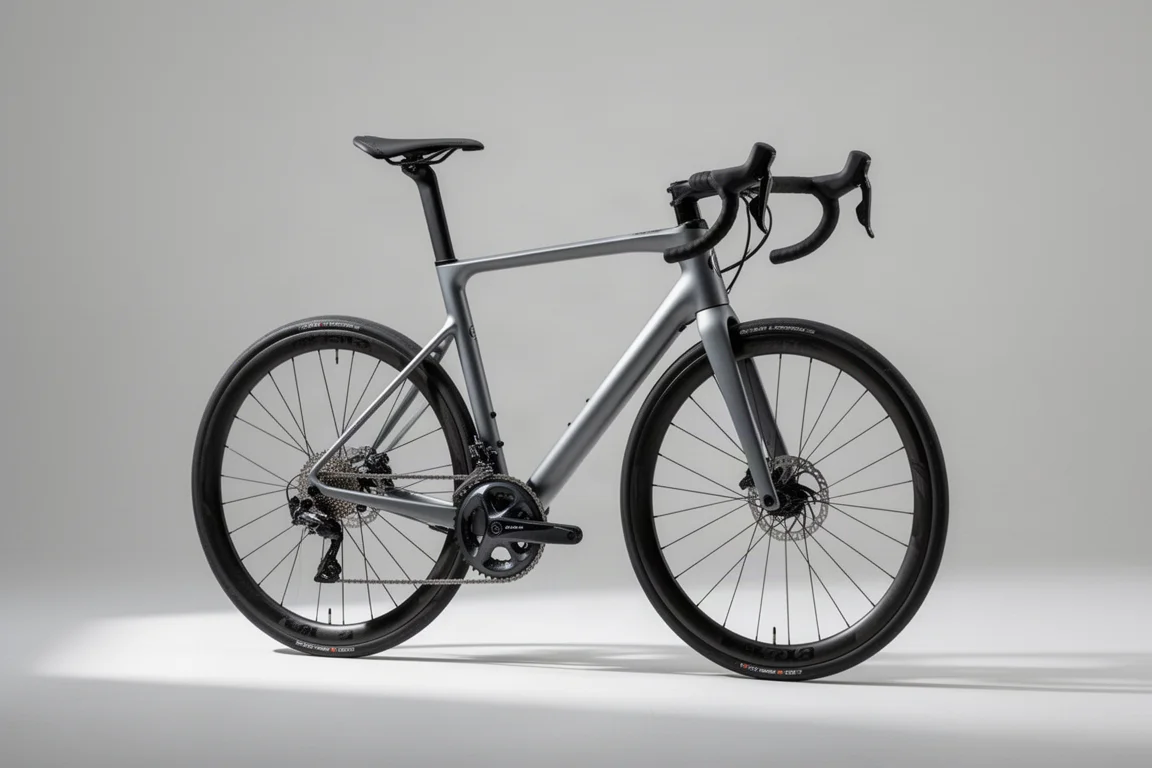
The standard RCR uses SRAM’s third-tier wireless groupset, Rival AXS. It is a well-regarded setup, and it brings a genuine hidden benefit: a wider gear range than the race-focused gearing of the Pro, which makes steep climbs noticeably easier.
Elsewhere, the carbon wheels sit lower in the range and are therefore heavier, the saddle does without carbon rails, and the carbon handlebar is paired with an alloy stem and semi-external cable routing rather than a one-piece cockpit. The bar is also considerably wider, which is less aerodynamic but arguably friendlier for general riding. The claimed frame weight is 840 g, and the complete bike is around 1 kg heavier than the Pro.
Weight on the Scales: Where the Money Goes
On the same scales, the Pro weighed 7.2 kg while the entry RCR came in about 1 kg heavier. Whether that matters depends entirely on how you ride. For a weight-focused rider, a kilo is a significant number. For everyone else, it is a fairly modest gap given the size of the price difference.
Only a small part of that kilo comes from the frame. The claimed difference between the two frames is just 50 g, 790 g versus 840 g, which is a narrow margin by the standards of this category. In many ranges the gap between an entry race frame and a top-end one can stretch to around 200 g, so this particular pair is unusually close. The rest of the weight saving comes from the higher-grade components on the Pro.
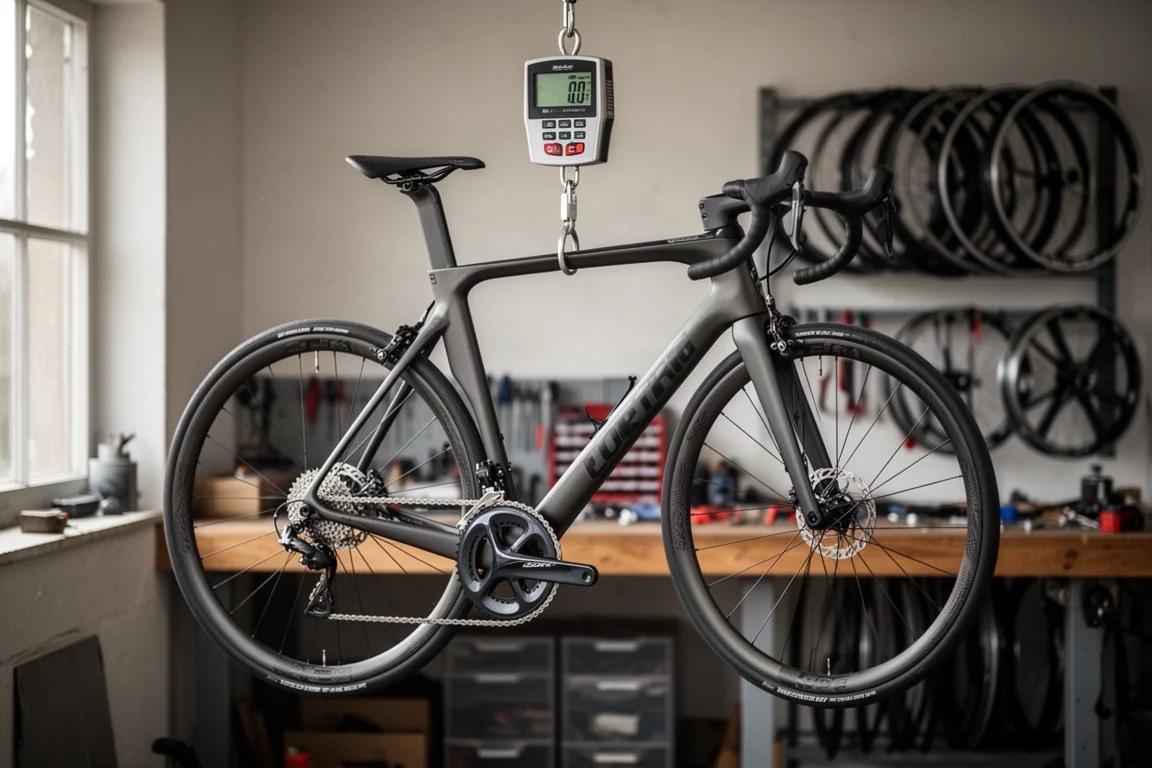
The practical takeaway is that the frame is not where most of the money is going. Buyers are paying primarily for the finishing kit, and that is also where the biggest performance differences appear.
Components and Gearing: Two Different Priorities
The two bikes are clearly tailored to different riders. On the opening climb of the test course, the Pro’s 52/36 gearing kept the chain in the big ring the whole way, but right on the limit of dropping to the small ring. The RCR’s lower gearing, with smaller chainrings and a larger cassette, made it easier to stay in the big ring for the entire climb, which is a meaningful difference for riders working at a more modest fitness level.
Shift ergonomics are another point of difference. The Di2 levers felt nicer to use than this generation of SRAM Rival levers. Against that, the RCR’s conventional alloy stem is easy to swap for a longer or shorter option, which is not possible with the Pro’s one-piece cockpit. Each bike is a considered package rather than a simple good-versus-better pairing.
Ride Test: Time, Speed and Feel
The test course was chosen to be representative: a steady climb to start, a fast descent, and rolling roads to finish. Both bikes were ridden on the same day, back to back, at the same effort and power level.
The entry RCR recorded 31 minutes and 3 seconds at an average speed of 27.7 km/h. The Pro recorded 29 minutes and 34 seconds at an average speed of 29.1 km/h. The more expensive bike is quicker, which will surprise few people, but the margin is interesting given how much extra it costs.

The likely explanation is aerodynamics, and specifically the cockpit. The narrow 36 cm bar on the Pro puts the rider into a more compact and therefore more aerodynamic position, and that appears to be the single biggest contributor. Wheels and tyres may account for a small remainder: both bikes run high-quality rubber from different brands, and small differences in rolling resistance and wheel behaviour are plausible. Both bikes were tested exactly as they come from the shop, with their own wheels and tyres, which is the fairest way to compare what a buyer actually gets.
Comfort and Handling on Real Roads
Both are stiff race bikes, and neither is especially smooth. Even so, there is a subtle difference. The Pro rounded off rough road surfaces a little better, feeling slightly more compliant, while the RCR felt a touch harder and harsher over the same bumps. A combination of frame, cockpit, saddle, wheels and tyres appears to give the Pro a small edge in ride comfort.
It is worth being clear about the scale of that difference: it is very small, and it is the kind of thing you would mainly notice when riding both bikes back to back on the same road. Both bikes were run on 28 mm tyres, inflated to the pressures recommended by the SRAM pressure app, so the comparison is a fair one.
Overall Buying Advice
If speed and time are not your main motivation, the entry RCR is a fantastic option. It is genuinely enjoyable to ride, it handles beautifully, it looks the part, and with a few considered changes it could be brought close to the pace of the top-end bike for far less money. It delivers everything most riders could reasonably want from a race bike.
If you want the best ride experience the range can offer, and you are racing or chasing personal bests, the Pro justifies itself through its lighter build, narrower cockpit and smoother manners. It is a better bike, but it is not twice the bike.
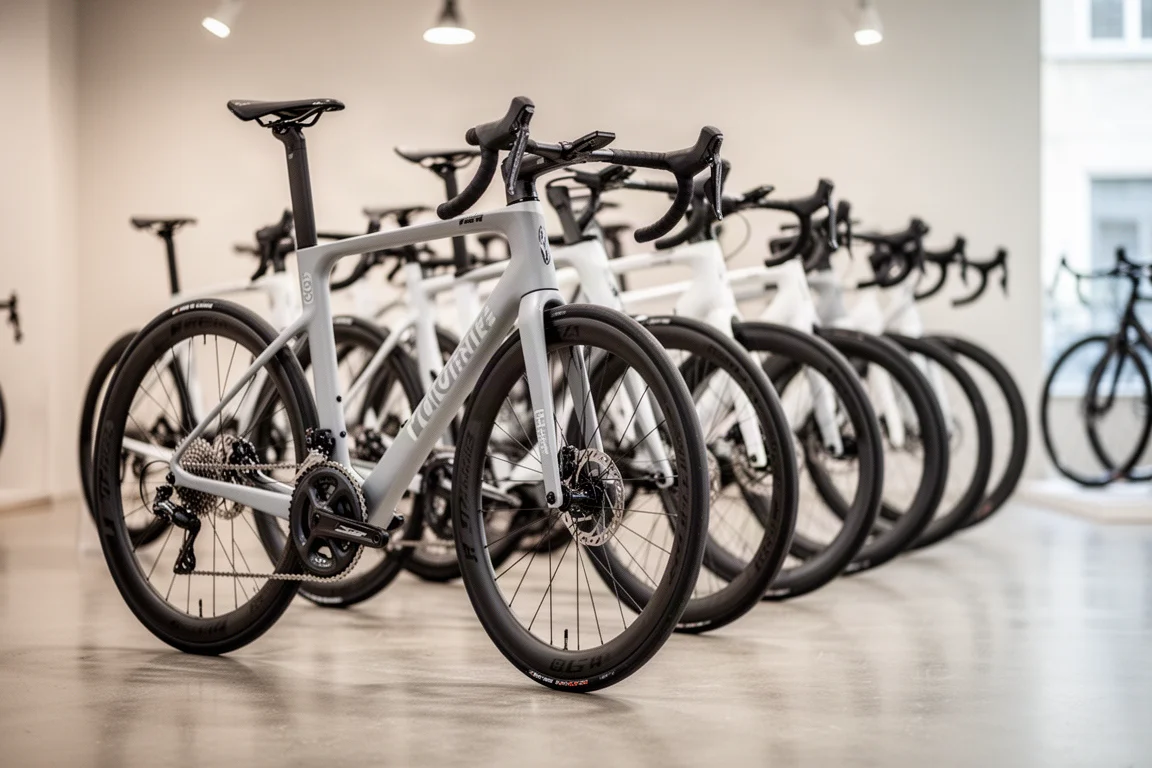
For most buyers, the real sweet spot sits between the two. A mid-range model that pairs the pro-level frame and its better carbon fibre with an Ultegra Di2 groupset offers the strongest balance of frame quality, components and cost in this lineup. That is the version worth prioritising if your budget stretches beyond the entry bike but does not reach the flagship.
Conclusion
The entry Van Rysel RCR is a very good race bike, and the RCR Pro is a genuinely faster one. The gap between them is real but modest: around 1 kg on the scales, roughly a minute and a half over a representative test loop, and a small edge in comfort on rough surfaces.
If you want the best, buy the top model. If you want excellent value and a bike that is enormous fun to ride, the entry model will not disappoint. If you want the smartest use of your money, look at the mid-range option that carries the better frame with a more attainable groupset.
Further reading
Related Reviews
Road Bikes
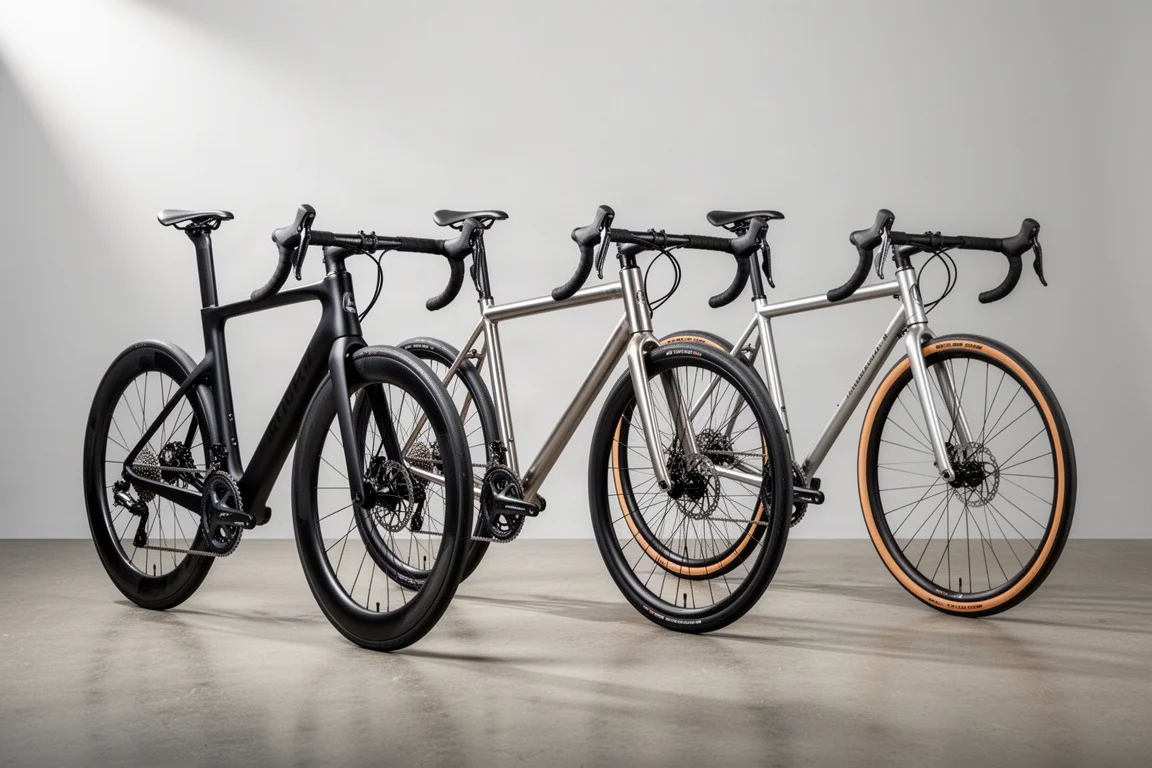
10 New Road Bikes Worth Watching: Aero, Titanium, Steel and Endurance Standouts
A practical roundup of 10 new road bikes, from aero flagships chasing single-watt gains to titanium, steel and endurance platforms built for real roads.
Road Bikes
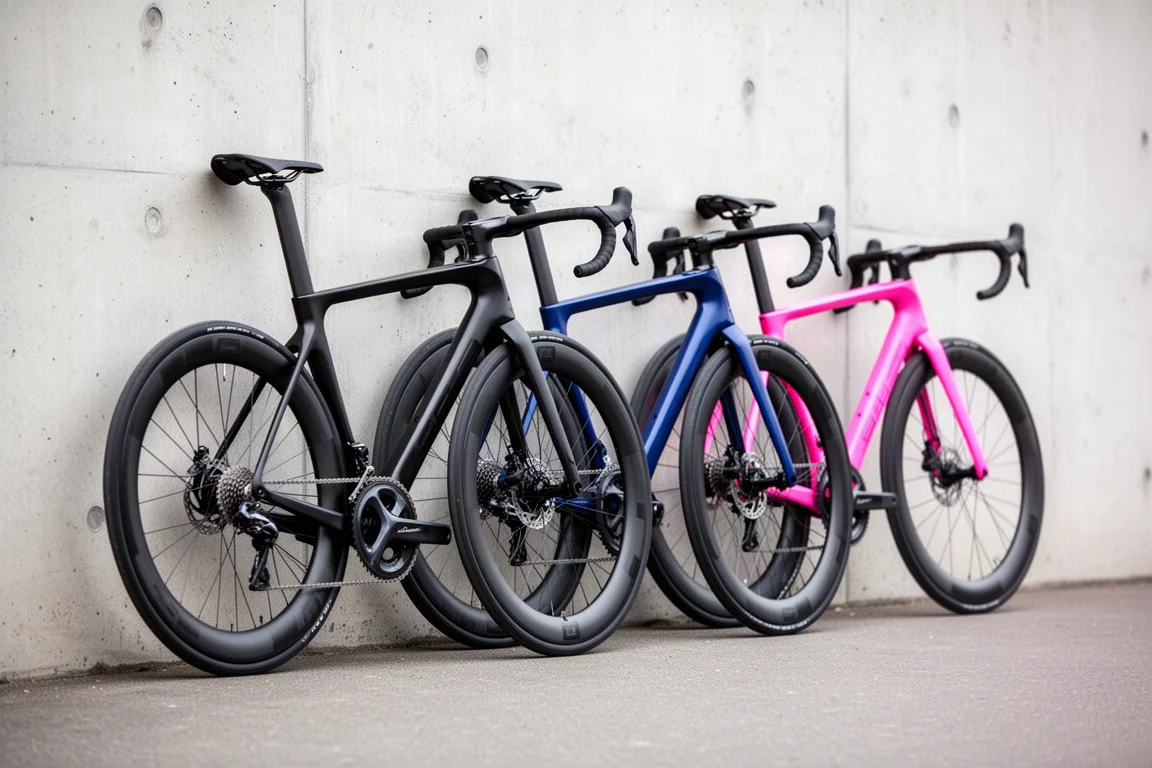
2026 Tour de France Road Bikes: Six Race Machines Worth a Closer Look
Six race bikes from the 2026 Tour de France grid, reviewed for paint, silhouette, wheels and the specification details that matter to buyers.
Road Bikes
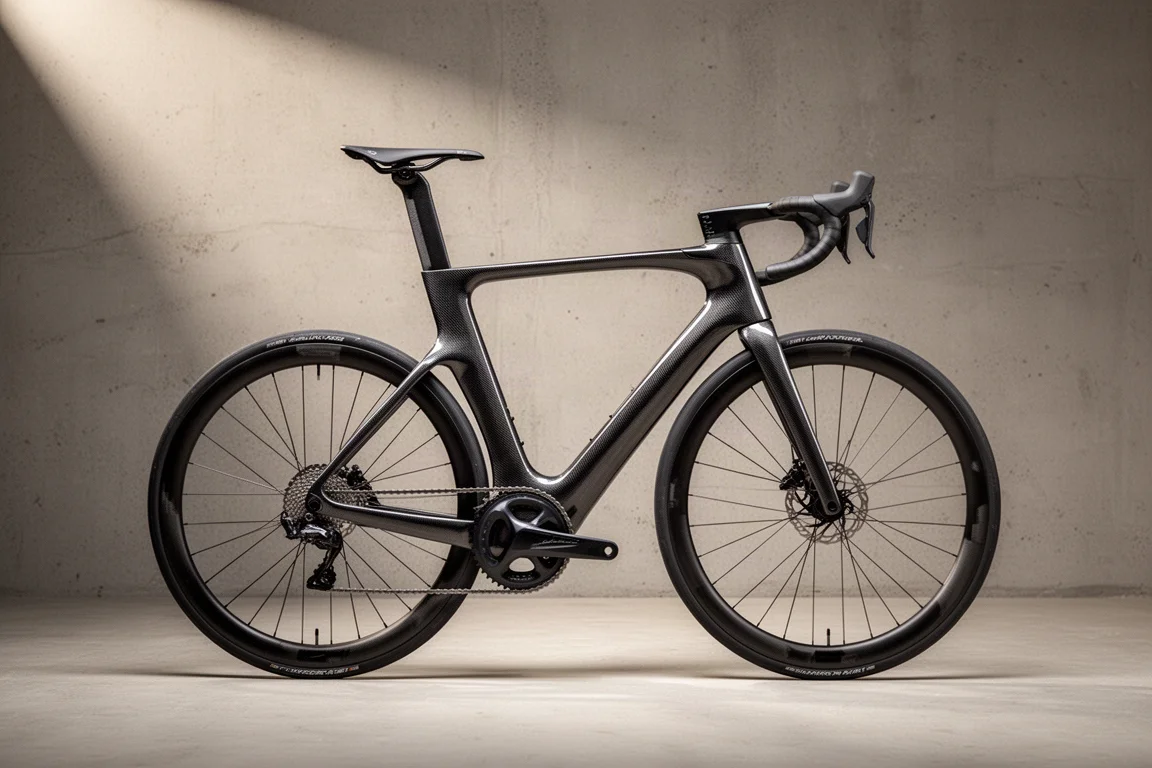
3T Strada Italia Review: A Radical Aero Road Bike That Rides Smooth
A made in Italy carbon aero road bike with a deep head tube, wide tire clearance and a genuinely comfortable ride. Here is what to know before buying.