Road Bikes
Van Rysel RCR-F Review: An Aero Race Bike With Room for 32mm Tires
A practical look at the Van Rysel RCR-F, the aero race bike prepared for the cobbles of Paris-Roubaix, and what its setup means for riders buying a fast road platform.
Introduction
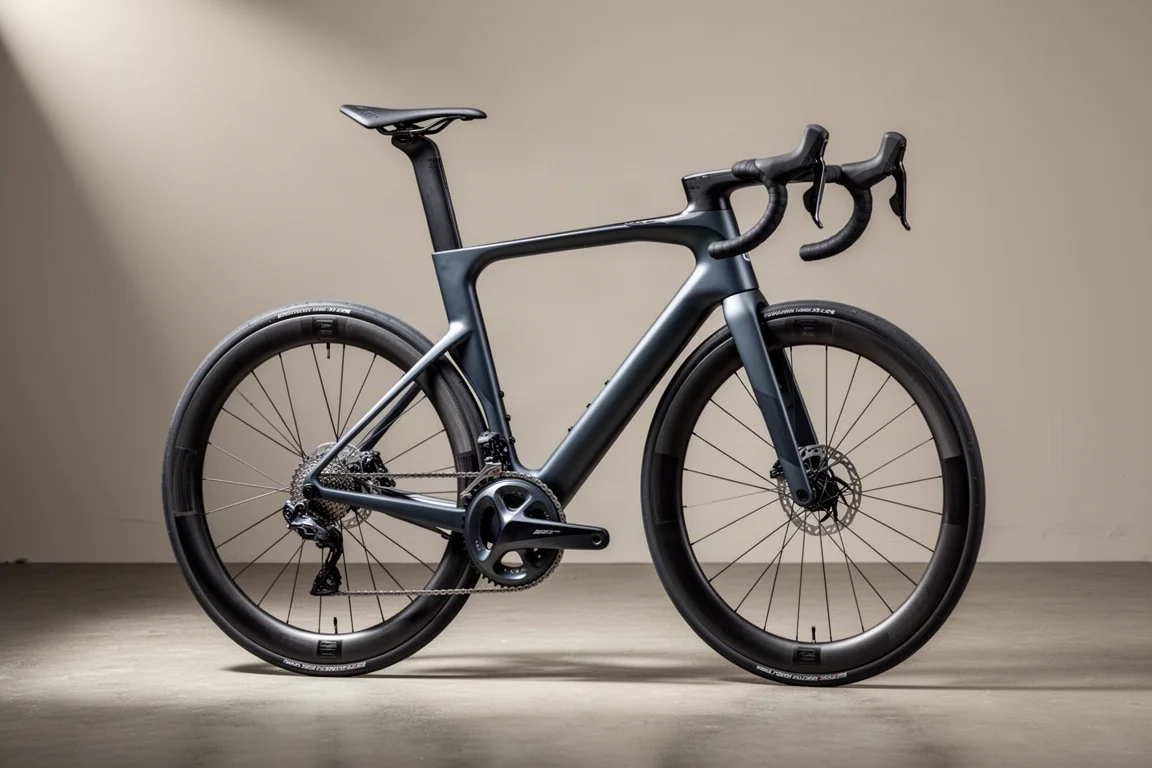
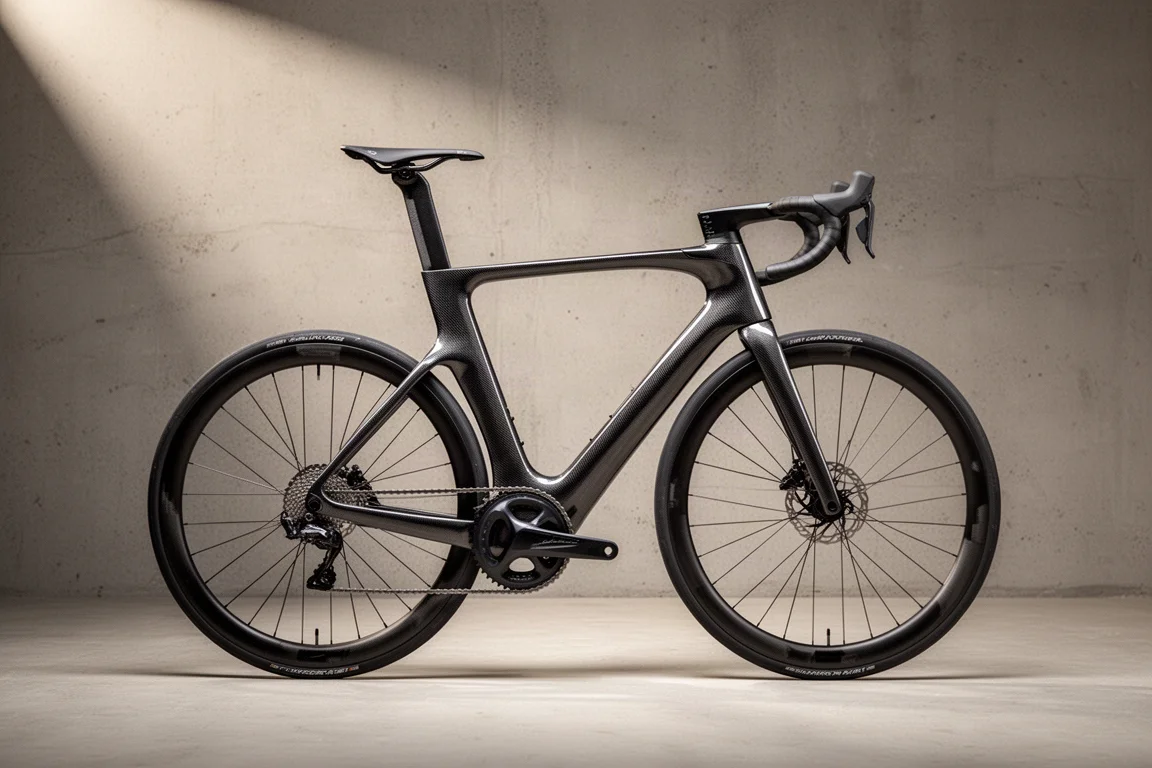
The Van Rysel RCR-F is the aero race bike the team brought to the cobbles of Paris-Roubaix, and the way it was prepared says as much about the platform as any specification sheet. It pairs a heavily sculpted down tube and an integrated front end with something less usual on a full aero machine: clearance for 32mm tires.

Those two priorities pull against each other on a race like Paris-Roubaix. Riders want minimal drag on the long, fast approaches to each sector, and they also want enough rubber and compliance to stay upright and stay fresh across the stones. The RCR-F is Van Rysel’s answer to both demands, and the team’s build choices show how far the balance has shifted toward wider tires.
Who the Van Rysel RCR-F Is For
This is a bike for riders who race or ride fast in groups and want aero efficiency without being locked into narrow rubber. It also suits riders who follow race technology closely and want a platform that reflects how professional setups have moved: tubeless tires, lower pressures, and wider internal rim widths.
It is a race-focused machine rather than a comfort-first all-rounder. Riders whose main priority is a relaxed, upright position, or who rarely ride at sustained higher speeds, will get less from what this bike is designed to do well.
Aero Design and the Integrated Front End
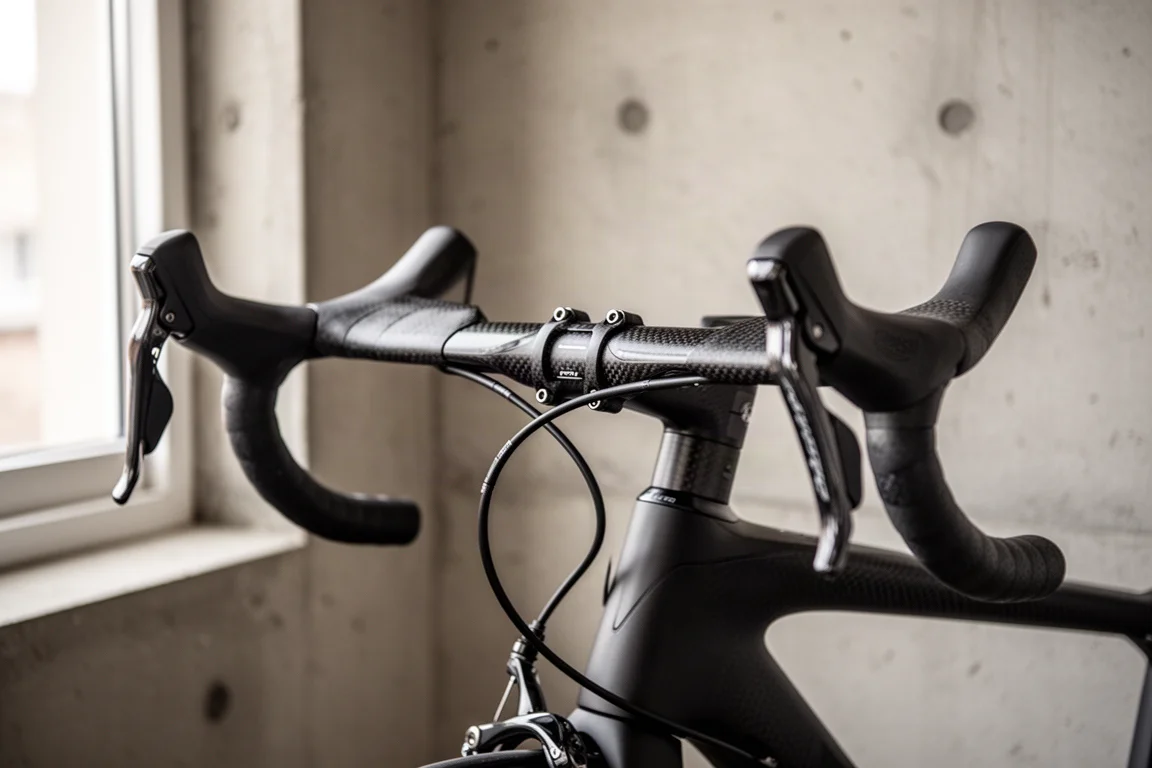
The down tube is massively sculpted, and the front end is just as heavily worked. Van Rysel developed a handlebar specifically for this bike, and part of the drop section is 3D printed to sharpen the aerodynamic profile. That is a detail aimed squarely at sprinters, who gain the most from the last few watts of drag reduction at high speed.

Narrower bars are part of the same story. Riders who began their careers on 42cm centre handlebars now race on considerably narrower setups, and the RCR-F’s one-piece front end is built around that thinking. The result is a cockpit that keeps the aero advantage intact rather than letting a conventional bar and stem undo it.
Cobble-Ready Details and Tire Clearance
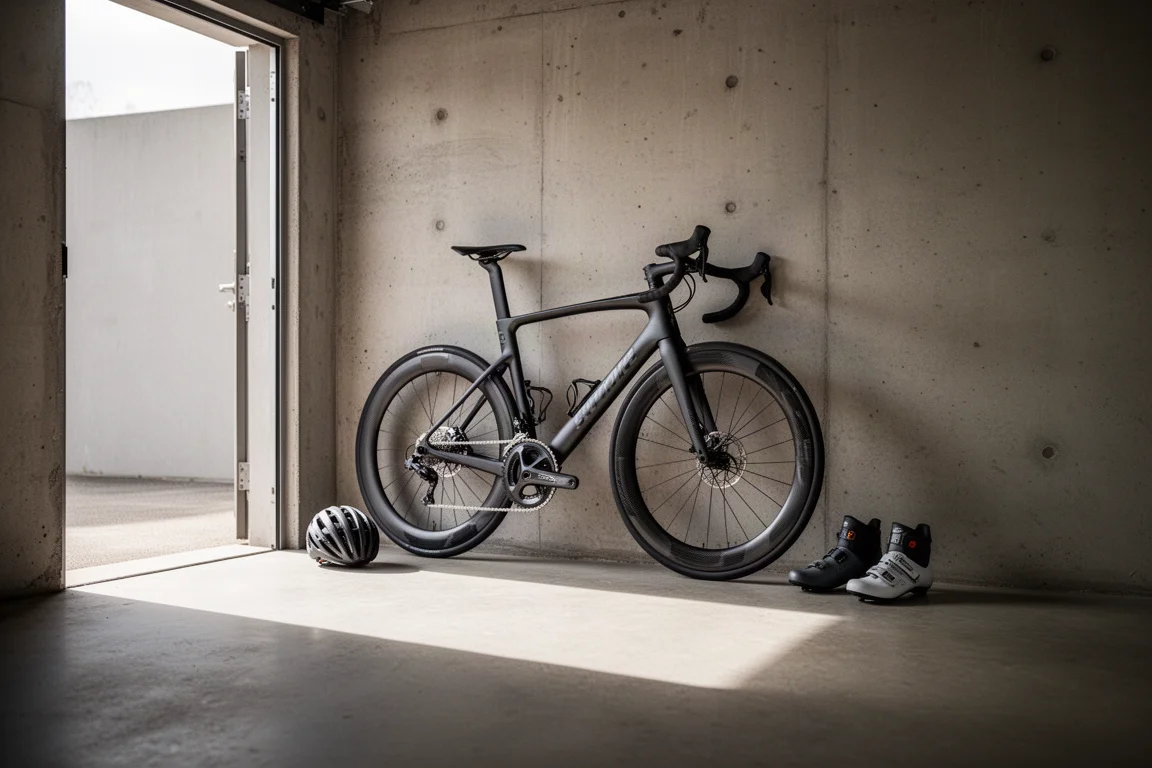
The team’s mechanics make a clear distinction between this bike and a standard road setup. Where 28mm tires are the norm, the RCR-F runs 32mm for the cobbles, with pressures around 3 to 3.5 bar. No tire inserts are used. The bar tape is thicker than usual at 3mm, with a layer of gel underneath to take the edge off the vibration.
Drivetrain choices shift too. The team fits a 56-tooth outer chainring and a 44-tooth inner ring, compared with 53 and 46 in earlier seasons, while the cassette stays at 11-34. Wheel selection is split between the aero wheelset and an all-road wheelset with a wider internal rim. The wider trend is long running: the maximum used to be 27mm tubulars, and now it is tubeless at 32mm, with some teams going as far as 35mm.
Stiffness, Speed, and Race-Day Character
Van Rysel says the frame has been made stiffer, which matters because this race often ends in a small bunch finish where a fast, direct bike counts. Speeds in this part of the calendar have climbed steadily, with winning moves in the classics running around 45 km/h and these races regularly seeing closer to 50 km/h.
Riding the cobbles is a different discipline from riding smooth tarmac. Line choice becomes everything, and the racing line is often not the one you can take. You pick whatever looks relatively clear and commit to it, and cornering on the stones is a genuine gamble rather than a calculated move.
The finish adds another layer. The race ends on the velodrome in Roubaix, a steeply banked track where riders arrive after hours of punishment and still have to sprint. A bike that stays stiff and efficient at that point is doing exactly what it was built for.
Things to Consider Before Buying
The build used for testing is a good illustration of the trade-off. It carried a 26mm Continental Aero front tire, which saves meaningful watts but is not really suited to rough surfaces. The frame’s stated limit is 32mm, so riders who want maximum comfort on broken roads should plan around that ceiling rather than assume there is more room.
Because the cockpit is developed specifically for this bike and part of the drops is 3D printed, there is less scope for easy aftermarket swaps than on a conventional front end. Fit matters more than usual here, so it is worth confirming reach and bar width before committing. Aero gains of this kind are also most relevant to riders who spend real time at higher speeds.
Buying Advice
If you race, or ride fast in a group and want the option of wider tires, the RCR-F is a coherent package. The sensible approach is to set it up for the roads you actually ride. The team runs 32mm for the cobbles because grip and composure matter more than the last few watts there, while a narrower aero tire is the faster choice on smooth tarmac at the cost of comfort and rough-surface confidence.
Check the front end carefully before buying, since the integrated bar is central to the design and not easily changed later. Riders who want a simple, comfortable endurance bike with straightforward component swaps should look elsewhere. Riders who want a fast race platform that still accepts wide rubber will find the RCR-F makes a clear case for itself.
Conclusion
The Van Rysel RCR-F is a full aero race bike that refuses to treat wide tires as an afterthought. Its sculpted tubes and purpose-built front end target speed, while the 32mm clearance and the team’s cobble setup show that Van Rysel understands where road racing has gone. For the right rider, that combination is genuinely useful rather than a marketing line.
Product link
View more details for Van Rysel RCR-F
This product is mentioned in the review. Check the specifications, options, and compatibility before buying.
View more details for Van Rysel RCR-FFurther reading
Related Reviews

Road Bikes
10 New Road Bikes Worth Watching: Aero, Titanium, Steel and Endurance Standouts
A practical roundup of 10 new road bikes, from aero flagships chasing single-watt gains to titanium, steel and endurance platforms built for real roads.
Road Bikes
2026 Tour de France Road Bikes: Six Race Machines Worth a Closer Look
Six race bikes from the 2026 Tour de France grid, reviewed for paint, silhouette, wheels and the specification details that matter to buyers.
Road Bikes
3T Strada Italia Review: A Radical Aero Road Bike That Rides Smooth
A made in Italy carbon aero road bike with a deep head tube, wide tire clearance and a genuinely comfortable ride. Here is what to know before buying.