Road Bikes
Van Rysel RCR-F Review: A World Tour Aero Race Bike Without the Flagship Price
A close look at the Van Rysel RCR-F, a World Tour level aero race bike with a top-grade carbon frame, deep Swiss Side wheels and a price that undercuts most flagship rivals.
Introduction
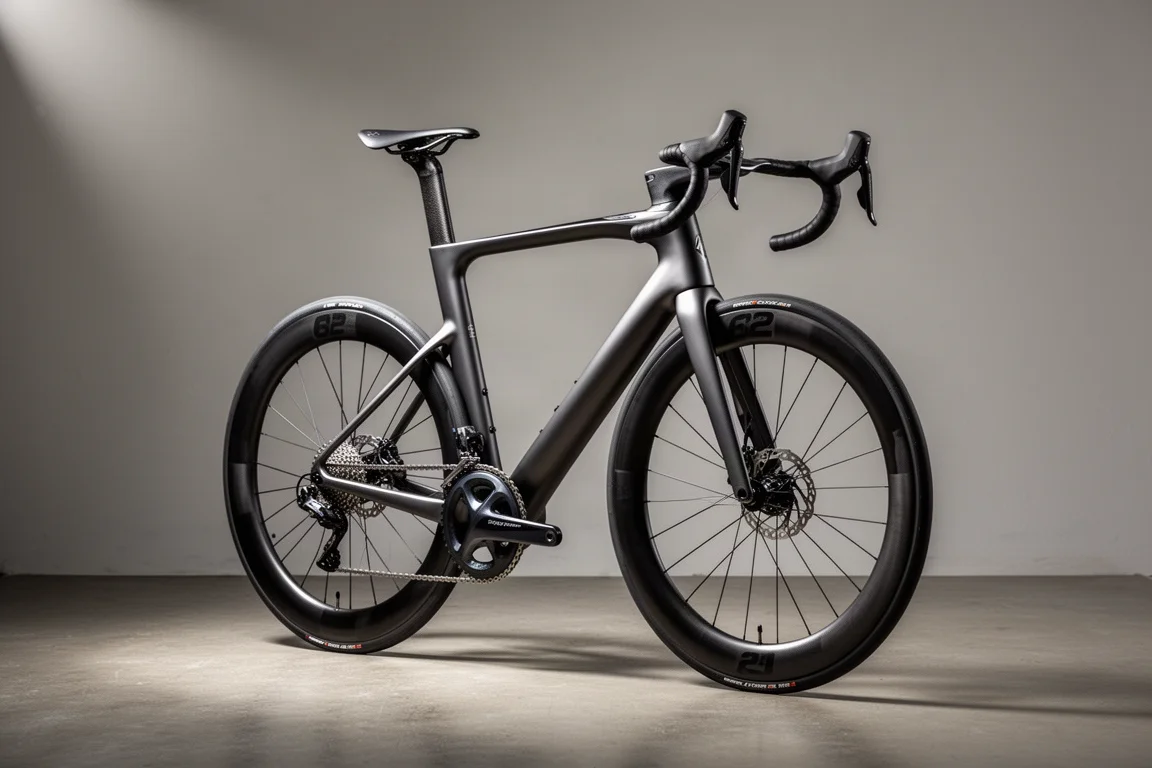
The Van Rysel RCR-F is the dedicated aero race bike from Decathlon’s in-house brand, and it arrives with a very specific set of numbers attached. The head tube is claimed to be 7 percent stiffer than the standard RCR, the frame is said to be 13.6 watts faster at 45 km/h, and the design work involved engineers with a Formula 1 background. It has already been raced at World Tour level in AG2R Decathlon colours, and the build covered here is close enough to team specification that the same package is available to buy.

What makes the RCR-F interesting is not only the performance story but the price positioning. At around €9,500 it is not a cheap bike, and it is not the most expensive option in its class either. It lands in the middle of a market where several comparable race bikes carry noticeably higher price tags, and a few newer arrivals undercut it by a wide margin.
Who This Bike Is For
This is a race bike for riders who want to ride as fast as possible. As a dedicated aero platform, it trades a little weight for aerodynamic efficiency, and while those gains are small in absolute terms, they matter to riders chasing results. Experienced racers tend to choose between aero and lightweight models based on the races they enter. For a mountain stage, a lighter bike such as the RCR Pro makes more sense. For a flat criterium, the RCR-F is the obvious pick. For a hilly road race, the RCR-F still works well, and both bikes can handle all of those situations.
The geometry is long and low, and it suits flexible, strong riders. Six sizes run from XXS to XL, and the fit window is the main thing to check before ordering. The XXS frame has a 382 mm reach, which will limit how well the bike fits a large proportion of riders, especially since reach is usually the measurement that decides whether a frame works for you. As a point of reference, the smaller size of a Pinarello Dogma F has a reach of 351.5 mm.
Frame, Build and Specification
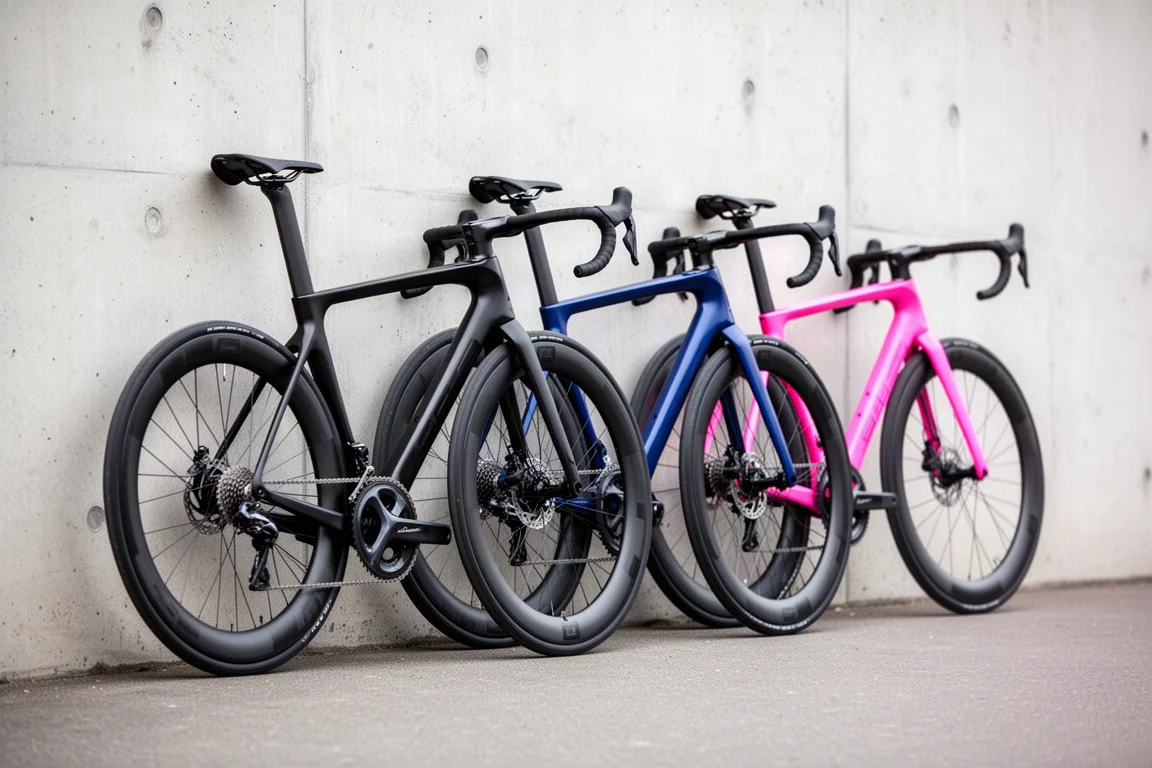
The frame is full carbon and uses the highest grade of carbon fibre the brand produces. Unlike the earlier RCR range, which split into a Pro model with a premium layup and a standard model with a lower grade, the RCR-F only comes in the top-end layup, whether you choose a 105, Ultegra or Dura-Ace build. The bottom bracket is press fit, and the test build runs Shimano Dura-Ace Di2 with hydraulic brakes, a 160 mm rotor at the front and 140 mm at the rear. Crank length scales with frame size, and the small frame comes with 170 mm cranks.
The cockpit is a one-piece carbon handlebar, labelled 42 cm but heavily flared at 12 degrees, so it measures roughly 36 cm across the highest points once the shifters are fitted. The seat post is proprietary, carbon and aero shaped. Wheels come from Swiss Side at 62 mm deep, fitted with Continental GP5000 S tubeless-ready tyres. They are supplied with tubes installed, and a kit is included for riders who want to convert to tubeless.
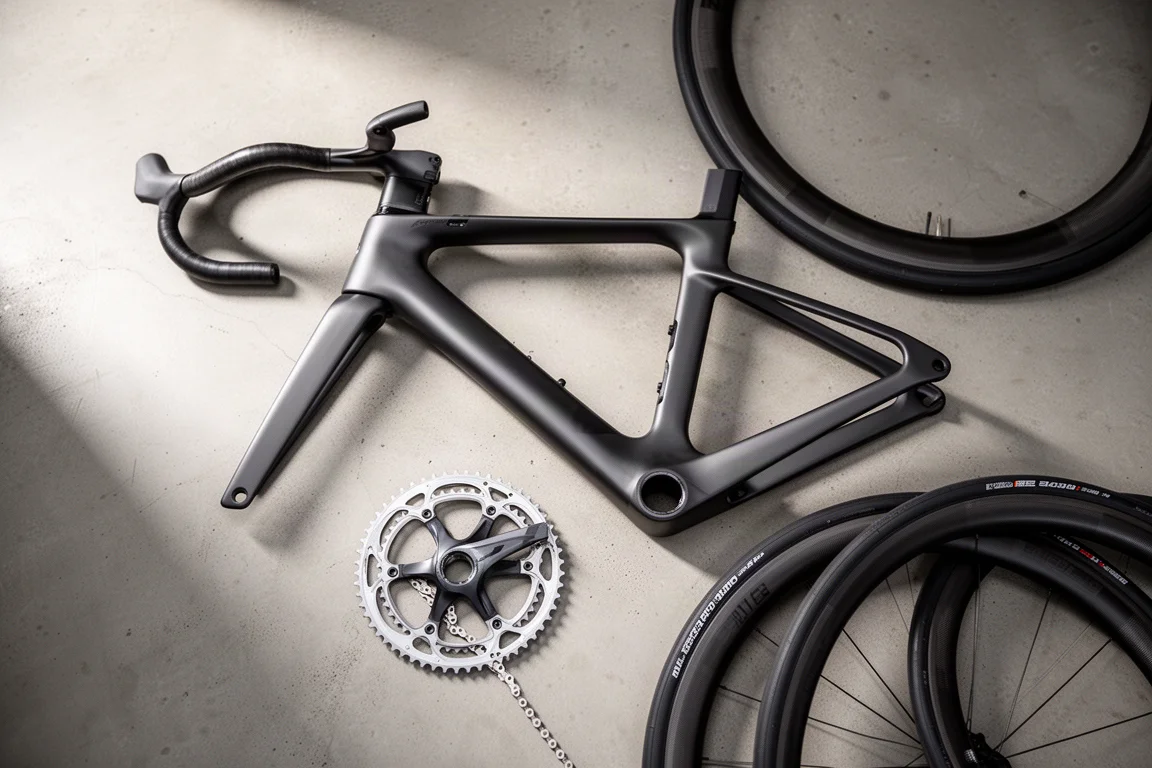
Weight is another headline figure. As delivered, with no pedals, bottle cages or computer mount, the bike weighs 7.54 kg. Paint choice affects that number. The full raw carbon finish is the lightest option and can save up to 60 g on the larger sizes, and even the standard finish applies paint to only part of the frame to keep weight down. The claimed aero advantage over the standard RCR is 13.6 watts at 45 km/h, with 2.7 of those watts attributed to the handlebar alone.
Main Strengths
On the road, the RCR-F is genuinely quick. It feels fast and nimble on the flats, it climbs well, and it is light and agile enough that you could ride it almost anywhere, from mountain roads to descents. Despite deep wheels and substantial tube profiles, it handles crosswinds far better than its shape suggests. The one-piece bar is well executed too. The flared drops feel good even for riders who are not usually fans of flare, and Dura-Ace Di2 delivers the crisp, precise shifting the groupset is known for.
There is also a practical detail worth noting. The frame is designed without a steering lock, which means the bars can turn fully at low speed. That matters more than it sounds, because aero bikes with steering locks have caused riders to topple over in car parks when the bars stop turning.
Things to Consider Before Buying
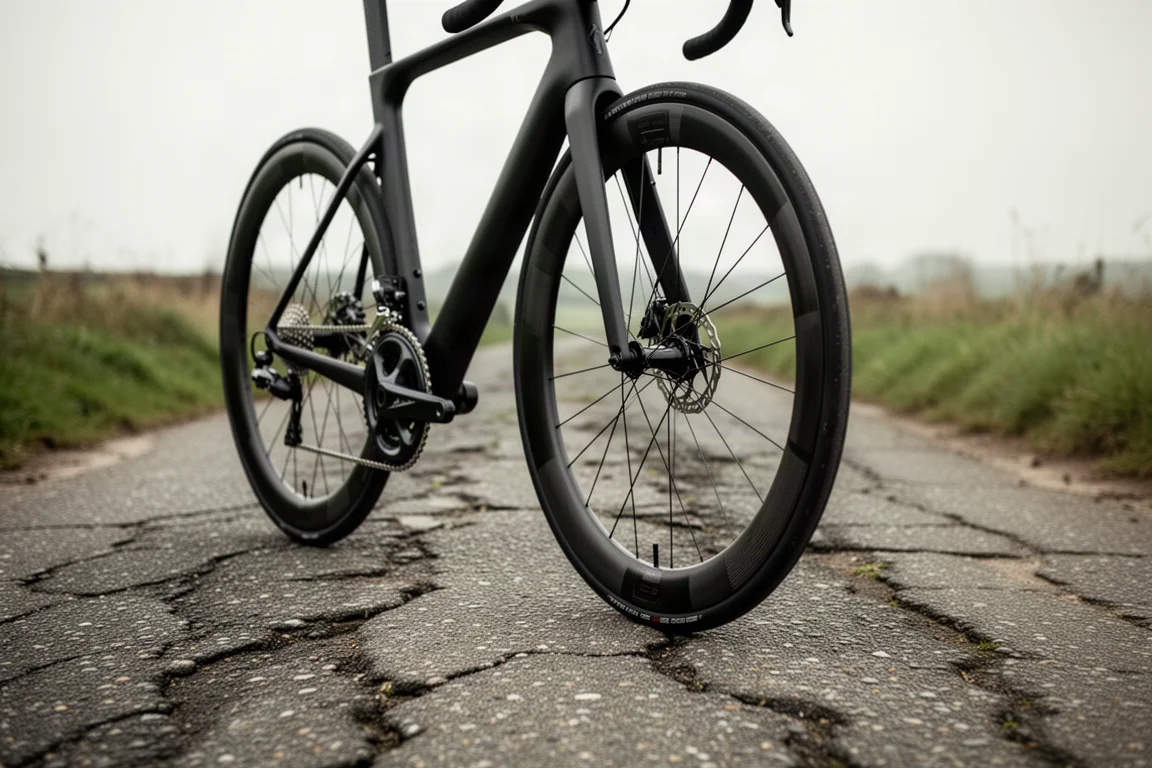
Ride quality is the biggest trade-off. The frame is harsh by modern standards, and the very large tube profiles and one-piece cockpit transmit a fair amount of vibration. On rough, potholed surfaces the bike is not buttery smooth, even though it remains entirely rideable and reasonably comfortable overall.
The riding position is uncompromising. It is long and aggressive, which feels superb on the flat but less pleasant on long climbs. The shifters also come set at a noticeably downward angle, which puts the wrist in an awkward position and would likely cause discomfort over long distances. Most riders would want to adjust that before riding seriously.
Livability is limited in the way you would expect from a fully integrated race bike. The bar and stem are integrated, cables are routed internally, and the brakes are hydraulic, so maintenance is best left to an experienced mechanic. Travel is manageable: removing the seat post takes one bolt and a small retainer widget, and the bolt is covered by a rubber cap. The top cap is the one part that feels awkward, because it uses a screw that has to be reached from underneath at an angle, and it is easy to imagine that thread being damaged over time. Sizing is the other consideration, since the smallest frame does not go small enough for many riders.
Buying Advice
At around €9,500, the RCR-F sits in the same territory as the standard RCR and comfortably below several flagship race bikes. For context, comparable top-end machines are listed at £14,699 for a Scott Foil Ultimate, £12,000 for a Specialized Tarmac SL8, £12,500 for a Cannondale SuperSix Evo Lab71, £12,500 for a Cervélo S5 and £9,749 for a Canyon Aeroad CFR. On that measure, the Van Rysel is not the most expensive way into this level of performance.
It is also worth being clear that cheaper race bikes with strong specifications have appeared recently from brands such as Boardman and Cube, so the value argument is not as one-sided as it once was. The RCR-F still makes sense for riders who want a proven World Tour aero platform and who fit the geometry, particularly if the alternative is a flagship bike costing several thousand more.
Before committing, check two things carefully. First, whether the smallest available size actually fits you, since the reach figures are long. Second, whether you are comfortable with an aggressive aero position and a firm ride, because the bike rewards speed rather than comfort. If both answers are yes, the RCR-F delivers a fast, capable race bike at a price that undercuts most of its direct competition.
Conclusion
The Van Rysel RCR-F is a proper race bike. It is fast, nimble and rewarding on the flat, it climbs better than its bulk suggests, and it carries genuine World Tour pedigree at a price that sits below most flagship aero bikes. The trade-offs are clear and predictable: a firm ride, an aggressive long position, limited home maintenance, and a size range that will not suit every rider. Riders who match the geometry and prioritise speed will find a lot to like here.
Product link
View more details for Van Rysel RCR-F
This product is mentioned in the review. Check the specifications, options, and compatibility before buying.
View more details for Van Rysel RCR-FFurther reading
Related Reviews

Road Bikes
10 New Road Bikes Worth Watching: Aero, Titanium, Steel and Endurance Standouts
A practical roundup of 10 new road bikes, from aero flagships chasing single-watt gains to titanium, steel and endurance platforms built for real roads.
Road Bikes
2026 Tour de France Road Bikes: Six Race Machines Worth a Closer Look
Six race bikes from the 2026 Tour de France grid, reviewed for paint, silhouette, wheels and the specification details that matter to buyers.
Road Bikes
3T Strada Italia Review: A Radical Aero Road Bike That Rides Smooth
A made in Italy carbon aero road bike with a deep head tube, wide tire clearance and a genuinely comfortable ride. Here is what to know before buying.