Camping Shelters
US GI Industries Bivvy Tent A2C vs Katoma IBNS: Two Bug Net Shelters Compared
A side-by-side look at two near-identical bug net shelters, covering materials, packed size, price, and one frame specification claim that does not hold up.
Introduction
Bug net shelters sit in a useful gap between a bivvy and a full tent. They are light, they breathe well, and they are designed to be pitched under a tarp, placed on a cot, or used on their own with the right add-ons. The trade is interior space, because these are confined shelters by design.
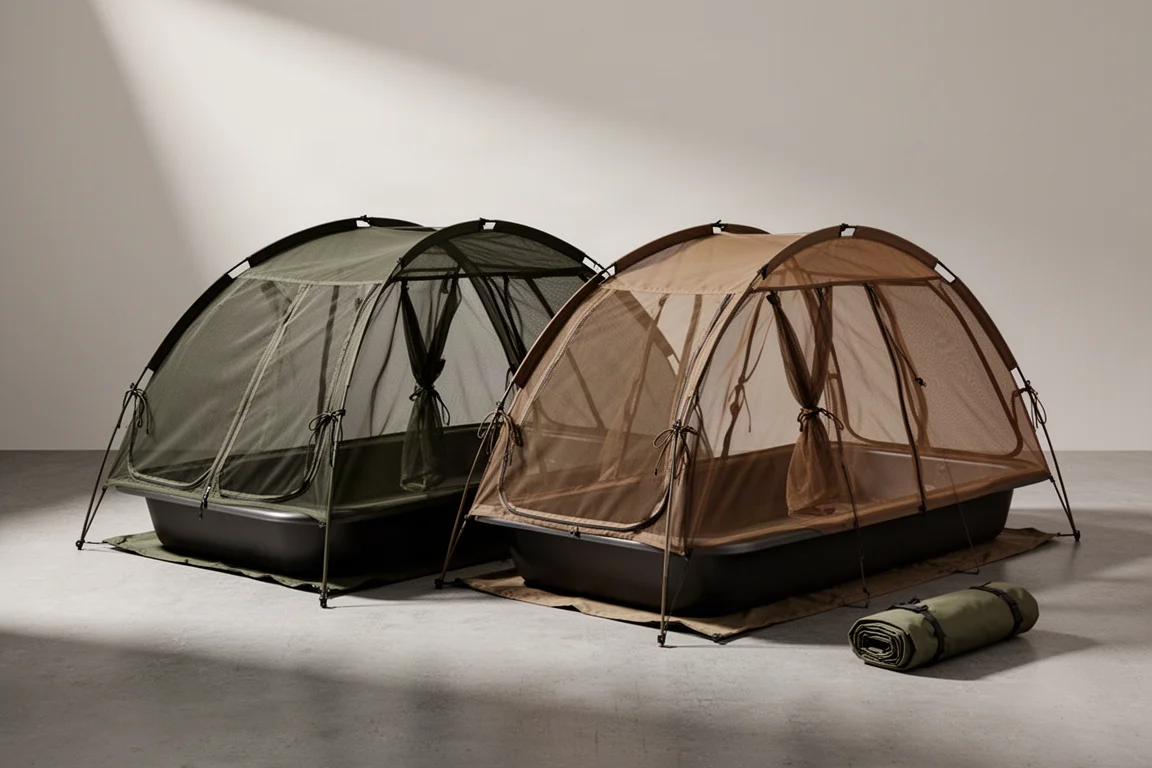
Two products in this category look almost identical on paper, and in practice they are close enough that the differences come down to materials, packed size, and how accurately the specification sheet describes what is actually in the bag. This comparison sets the US GI Industries Bivvy Tent A2C Bug Net Shelter and the Katoma IBNS Instant Setup Tent side by side.
What Both Bug Net Shelters Share
Both shelters are bug inners rather than freestanding tents. Neither behaves like a bivvy and neither behaves like a conventional tent. Each stands 26 inches tall inside and is sized for users under 6 feet 3 inches.
The layouts match closely. Both have two doors that can be tied back and stowed out of the way, a bathtub floor, and extensive mesh panelling. Ventilation and bug protection are effectively the same on either shelter. Both also need to be staked out to lie flat, because the wire frame has a tendency to curl up when it is not under tension.
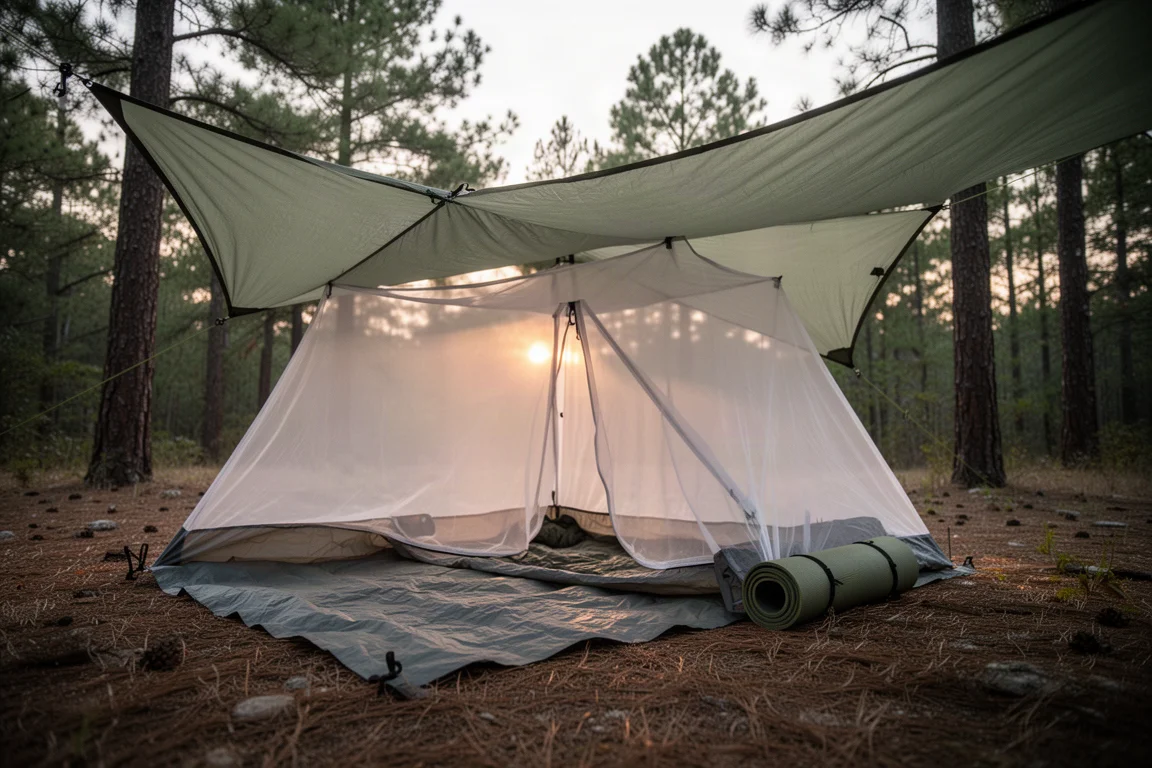
Setup and breakdown follow the same sequence on both: unfold, stake out the back, stake out the front, and the frame settles into shape. If you can pitch one of these, you can pitch the other without reading any instructions.
US GI Industries Bivvy Tent A2C Bug Net Shelter
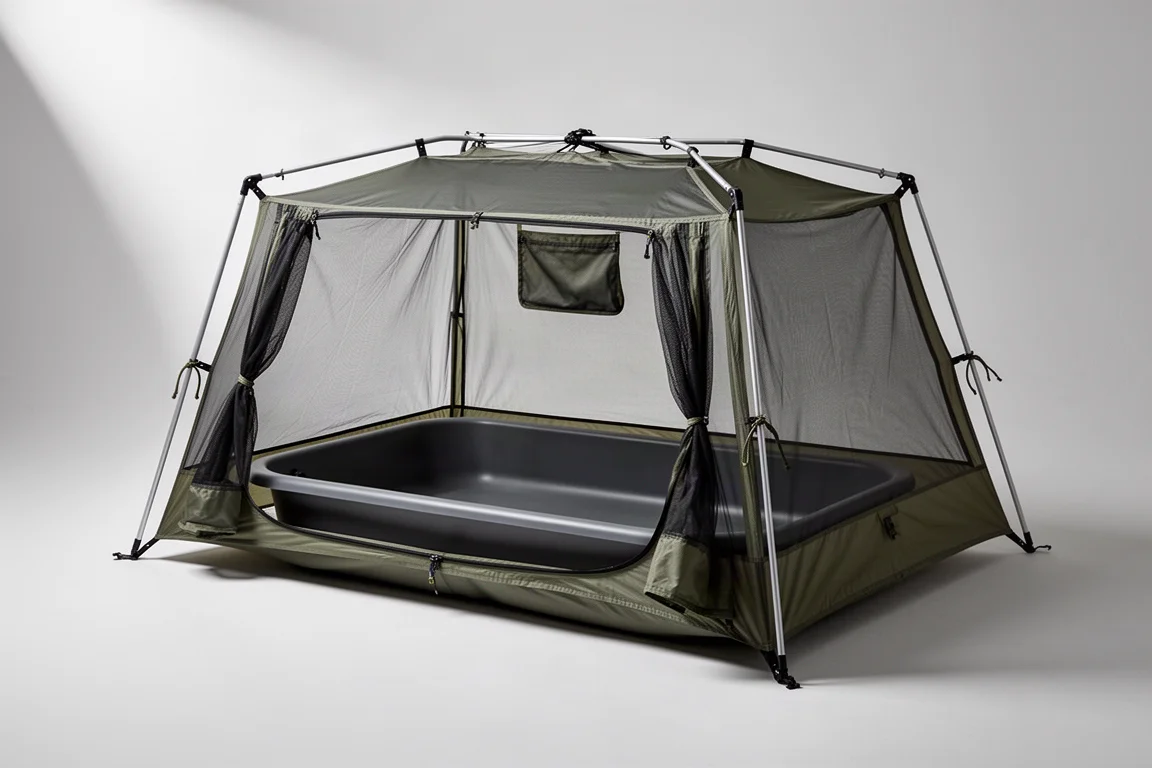
The US GI Industries shelter arrives in a storage bag with grab handles at the top and a single zipper. Inside there are four plastic stakes, setup and breakdown instructions printed on the inside of the bag, and the shelter itself held by a compression strap that is sewn directly to the fabric.
Packed, it measures roughly 18 inches long and about 2 and a half inches thick, and it weighs 2.2 lb. The body is made from 210 denier polyester ripstop rather than nylon. It is offered in Dark Earth, a coyote tone, and OD Green, and it sells for around $70.
Compared with the Katoma shelter, this one does not include clips to attach a fly and convert it into a tent, and it cannot be connected to a cot. Its interior pocket sits on the left-hand side, and the zippers are slightly different. Those are the only meaningful layout differences between the two.
Katoma IBNS Instant Setup Tent
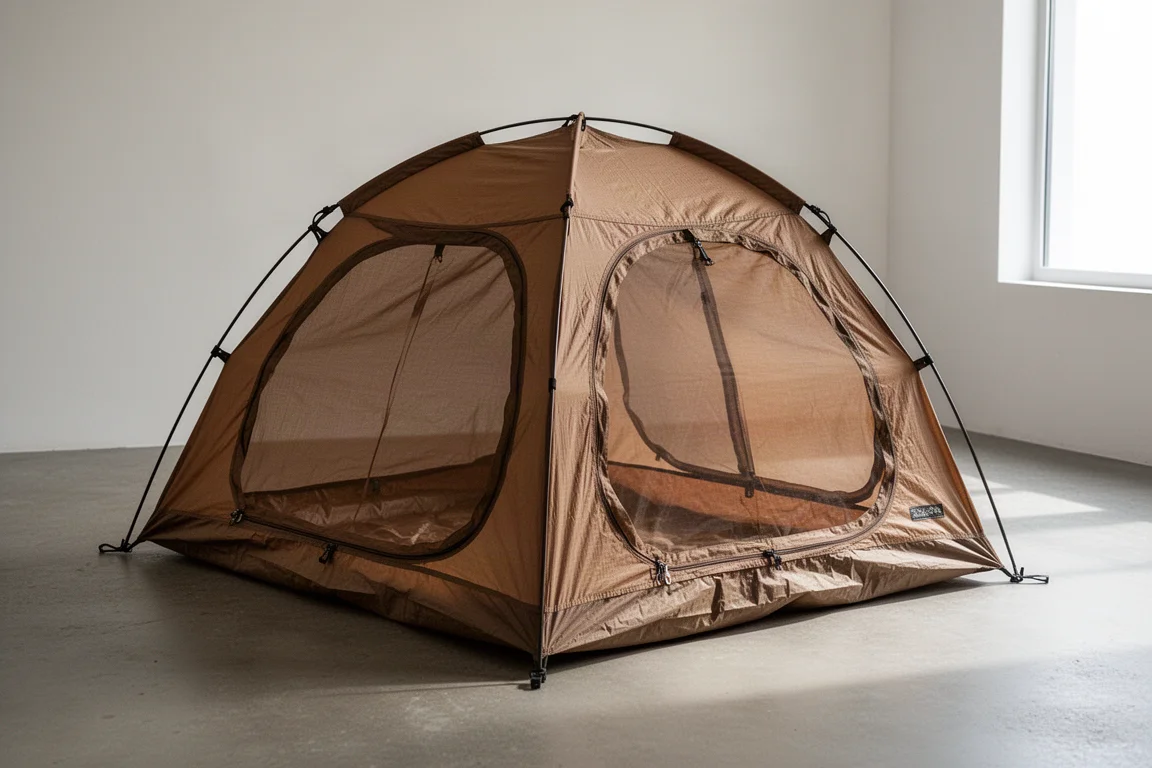
The Katoma IBNS uses a 20 denier no-see-um mesh body and a 75 denier nylon ripstop floor. The poles are fiberglass. Packed, it measures 13 inches by 13 inches and roughly 3 inches thick, and it weighs 2 lb.
Retail pricing is $175, with the shelter selling for around $140 at the time of writing. Clips connect the pole to a fly so the inner can be turned into a tent, and the shelter is designed to connect to a cot. The interior pocket is centred at the head end.
Handling both side by side, the Katoma materials feel noticeably nicer. The nylon has a softer, more refined hand than the polyester on the US GI shelter, and even the storage bag feels better made.
Materials and Build Quality
The material choice explains most of the weight difference. The Katoma uses nylon, which is stronger and lighter. The US GI shelter uses polyester, which is heavier and not quite as strong. That is why the US GI shelter comes in at 2.2 lb against the Katoma’s 2 lb, despite the two being almost the same size when pitched.
On the frame side, both use fiberglass poles. That is normal for shelters in this price band and it is not a problem in itself, provided the poles are described accurately and handled with a little care.
Packed Size and Portability
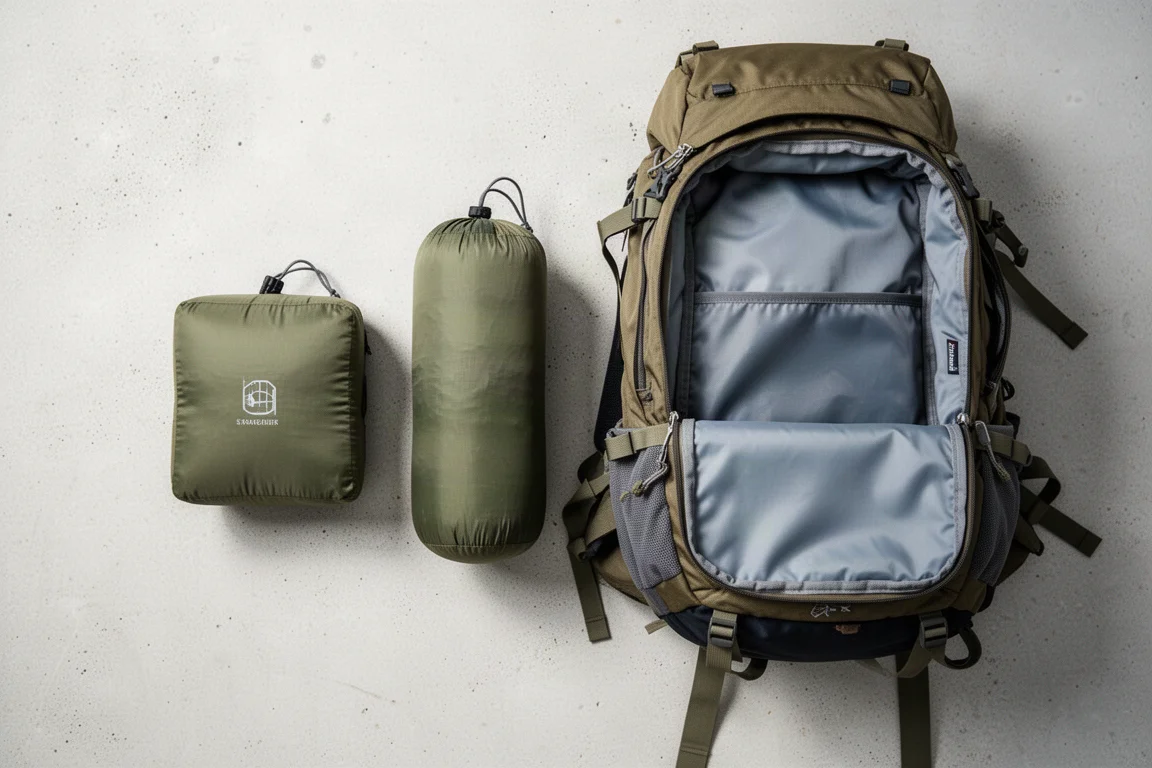
Packed size is the most practical difference between the two. The Katoma packs into a 13 by 13 inch bundle about 3 inches thick, which slides into most backpacks without a fight. The US GI shelter packs into a long, wide, thin shape around 18 inches across. It is slimmer but considerably longer, and fitting an 18 inch disc inside a pack can be awkward unless the pack is generously sized.
If you carry your shelter inside a backpack rather than strapped to the outside, that length is the detail worth weighing before you buy. It is not a defect, but it does change how the shelter fits into a normal packing routine.
The Frame Material Claim
US GI Industries states that this shelter’s frame is made from PVC-coated stainless steel and that it is stronger than fiberglass. The frame is fiberglass. There is no stainless steel component in the poles, and fiberglass is a material that splinters easily and needs care when handled.
This is a specification problem rather than a cosmetic one. Frame material is exactly the kind of detail a buyer should be able to trust, and when it does not hold up, the low price stops looking like the whole story. The shelter itself is functionally close to the Katoma, but the description of what it is made from is not accurate.
Interior Space and Ventilation
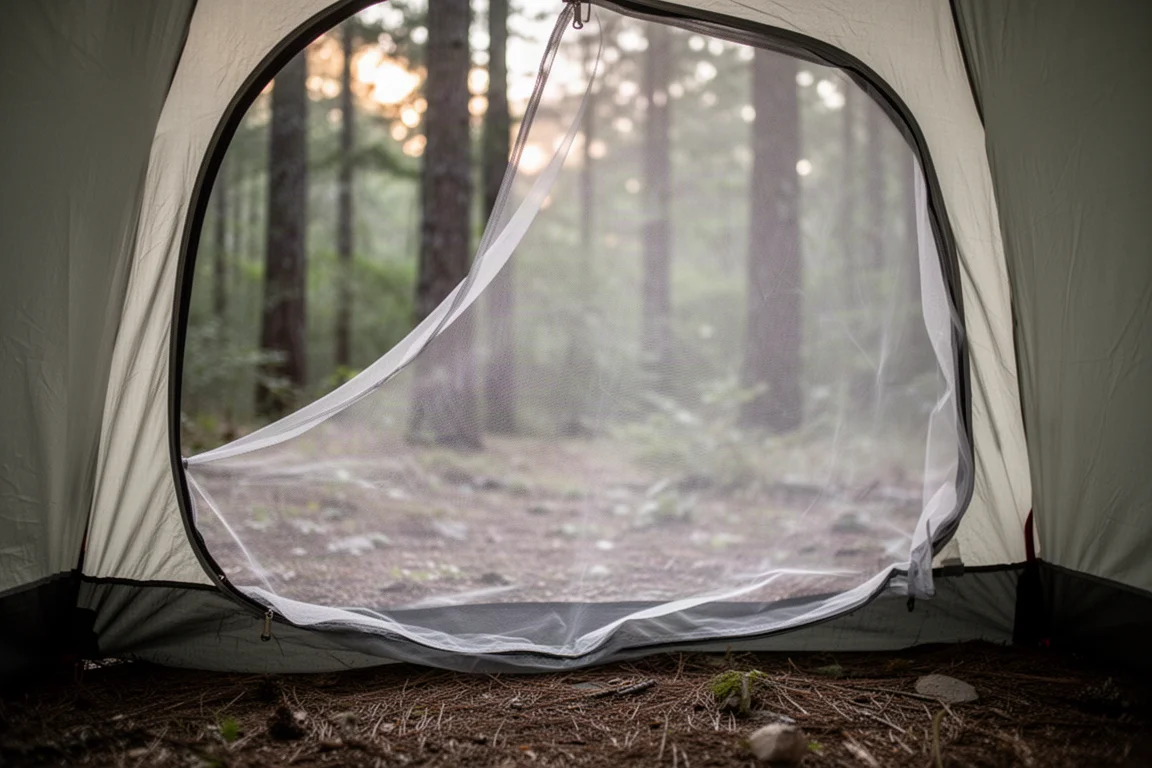
Inside, both shelters are a confined space. They stand 26 inches tall and are sized for users under 6 feet 3 inches, so the interior feels tight rather than roomy. Two doors help, because you can open the side away from the weather and keep the other closed.
Bathtub floors and full mesh walls keep ventilation strong and bugs outside, which is exactly what a shelter like this is for. If you dislike enclosed sleeping spaces, this whole category will feel restrictive. If you value airflow and low weight, it will feel right.
Tent Stakes and Setup
Neither shelter ships with decent stakes. Both include cheap plastic pegs that are worth replacing with better-quality hardware before the first trip. The stakes are the weakest part of both kits, and upgrading them is inexpensive.
Setup and breakdown are otherwise identical between the two, and both rely on being staked out to hold their shape properly. Neither is a pop-up shelter that stands on its own without pegging.
Buying Advice
If the goal is to get into a bug inner shelter for the lowest possible cost, the US GI Industries Bivvy Tent A2C delivers the shape and the basic function for around $70. The obstacle is the frame specification. A manufacturer that misdescribes the material in its own poles is a manufacturer whose remaining specification details are hard to take at face value.
The Katoma IBNS costs more, and it justifies the gap on the details that matter day to day. It is lighter at 2 lb, packs into a much more backpack-friendly bundle, uses nylon instead of polyester, can be connected to a cot, and includes clips that let it be paired with a fly to work as a tent. Those are practical advantages rather than marketing ones.
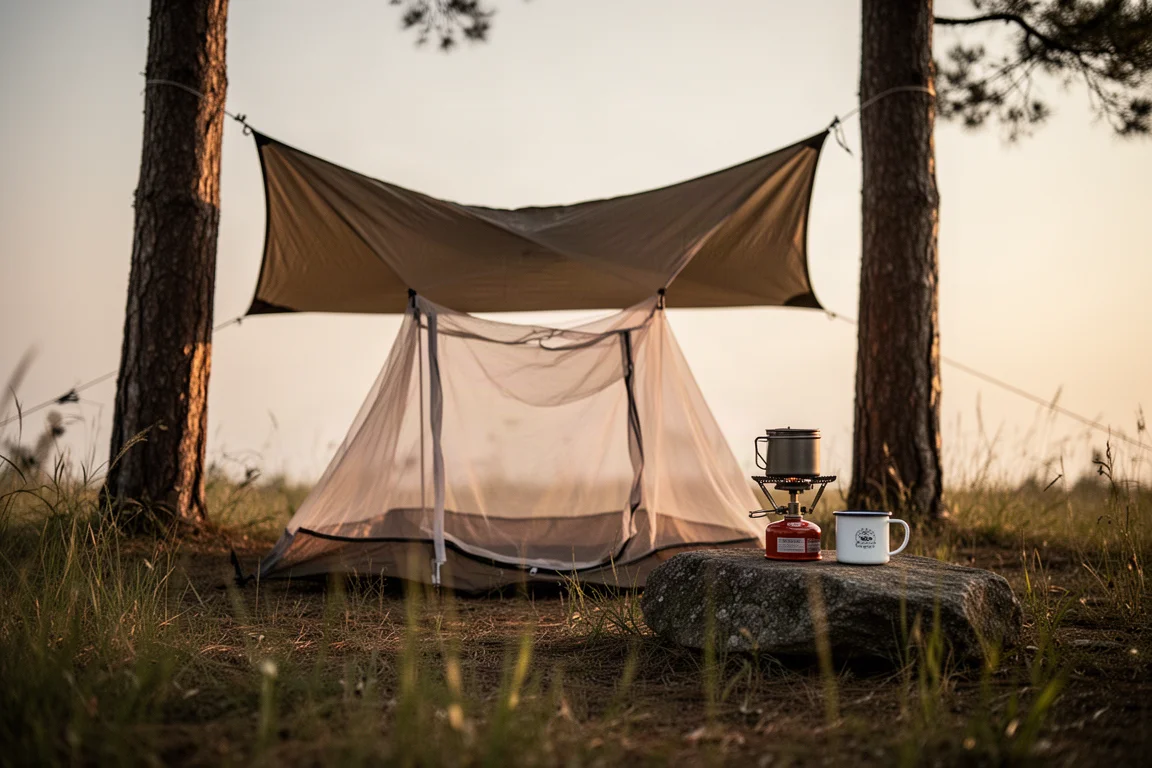
If neither shape suits you, this category is broader than these two products. A larger bug inner pitched under a generously sized tarp is a flexible alternative, as long as the tarp is big enough to keep blowing rain off the mesh.
Conclusion
These two shelters occupy the same niche and share the same basic design, so the decision comes down to materials, packed size, and whether you can trust the specification sheet in front of you.
The Katoma IBNS is the stronger package overall. It is lighter, packs smaller, uses nylon, and supports cot connection and fly clips. The US GI Industries Bivvy Tent A2C matches it closely in shape and costs far less, but its frame is fiberglass while the product description says otherwise. For buyers who care about accurate specifications, that difference is the one that decides it.
Further reading
Related Reviews
Camping Shelters
Alps Mountaineering Stealth 1 Bivy Review: A Waterproof Claim That Does Not Hold Up
The Alps Mountaineering Stealth 1 Bivy carries a 2,000 mm hydrostatic head rating and a waterproof claim, but sustained rain exposure and build quality concerns make it difficult to recommend.
Camping Shelters
AquaQuest Safari Hybrid 20 ft x 13 ft Tarp Review: Two Years Under a Very Large Roof
A long-term look at the AquaQuest Safari Hybrid 20 x 13 tarp, covering build quality, weather protection, setup realities, and who should buy one.
Camping Shelters
Backcountry Light Mesa 3 Hot Tent and Floor SL Tarp Review
A practical look at the Backcountry Light Mesa 3 four-season hot tent and its optional Floor SL Tarp, covering materials, stove jack design, packed weight, pricing, and the trade-offs to weigh before buying.