Camping Shelters
Backcountry Light Mesa 3 Hot Tent and Floor SL Tarp Review
A practical look at the Backcountry Light Mesa 3 four-season hot tent and its optional Floor SL Tarp, covering materials, stove jack design, packed weight, pricing, and the trade-offs to weigh before buying.
Introduction
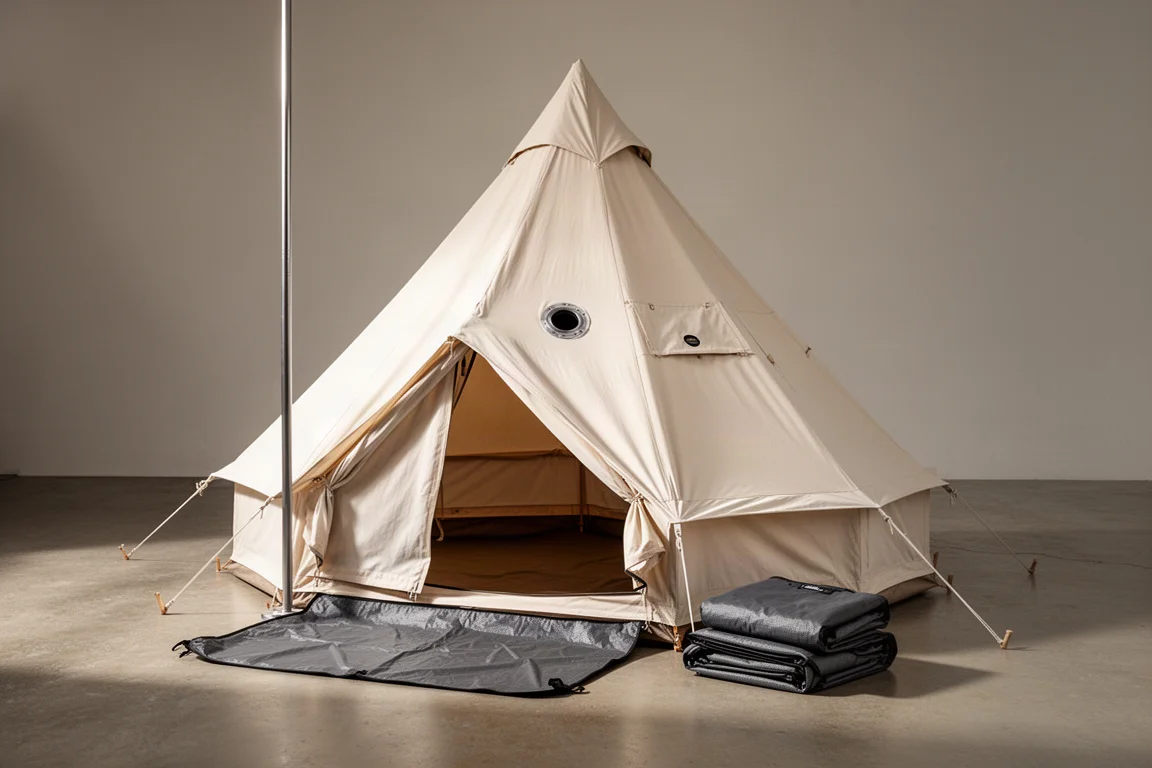
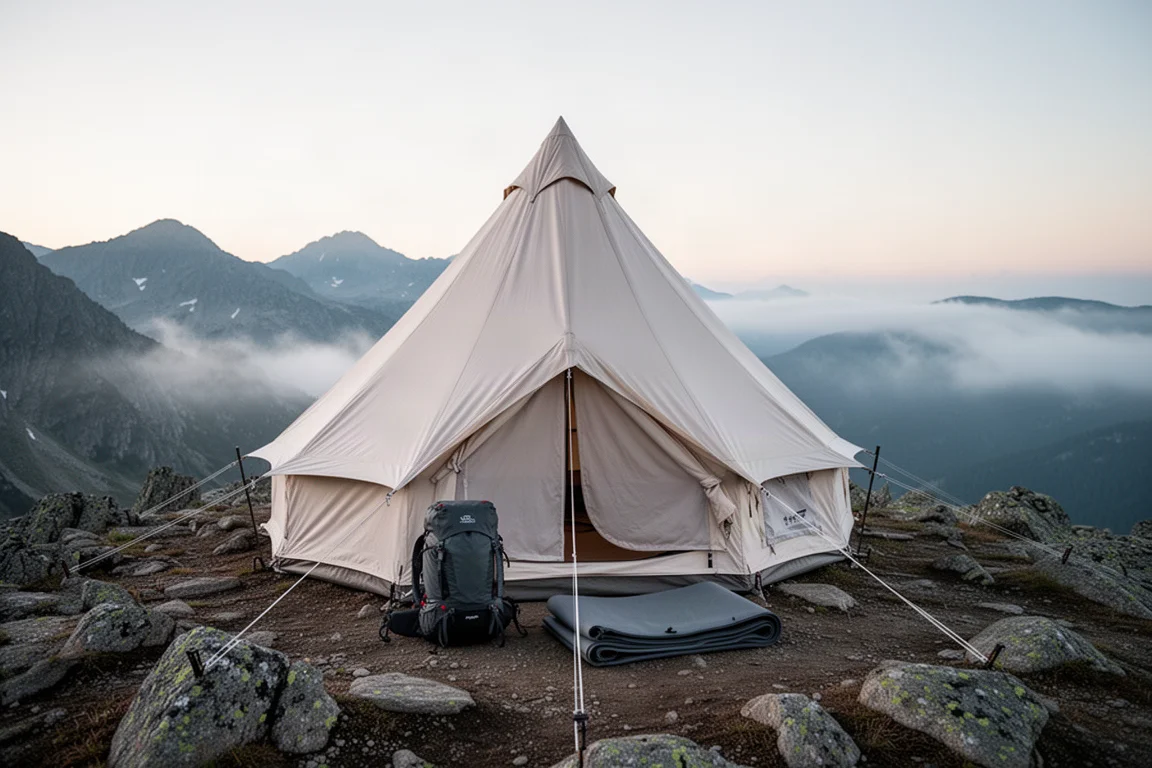
Backcountry Light is a veteran-owned company based in Colorado, and the Mesa 3 is its four-season tipi-style hot tent, sized for three to four people without a stove and two to three with one. It is built around a center pole, a full snow skirt, and a removable stove jack, and the company also offers an optional Floor SL Tarp that doubles as a ground sheet.
The floor is the more interesting half of the story. It is designed first as a floor, with a zippered cutout that opens space for a wood stove, and it can also be pitched as a tarp. As a floor it makes sense. As a tarp, the shape and the small number of included guy lines work against it, and a square or rectangular tarp will generally offer more coverage and versatility.
What to Look For in a Four-Season Hot Tent
Cold-weather shelters live or die on a few practical details. Fabric and waterproofing come first: a four-season tent needs a shell that can handle sustained rain and snow, and it needs published waterproofing figures so buyers know what they are getting. Stove compatibility matters just as much, which means a properly reinforced stove jack with a cover you can close when the stove is not in use.
Ventilation is the next consideration. A single closable vent that you can reach and adjust from outside is far more useful than a vent placed so high that most people cannot touch it. Guy-out points, a full snow skirt, and a mix of stake types for soft and hard ground all affect how stable the shelter feels when the weather turns.
Weight and interior height round out the list. Tipi-style shelters concentrate their height at the center pole, so the usable standing area is much smaller than the peak measurement suggests. Finally, consider whether the floor attaches to the tent. A floor that cannot be clipped in leaves gaps at the edges, and gaps mean insects and drafts.
Backcountry Light Mesa 3 Hot Tent: Materials, Size, and Weight
The Mesa 3 uses 40 denier ripstop silnylon for both the tent body and the matching floor. Silnylon is light and packable, and it also stretches, especially once it gets wet. That means the shelter will need re-tensioning over time, and adjustable stake-out points would make that job easier than the fixed ones used here. The company does not publish a hydrostatic head rating for the tent, so the exact waterproofing performance is not documented.
Setup dimensions are 6 feet 3 inches at the peak with a 10 by 10 foot footprint. Packed, the tent measures about 18.5 by 6 inches. The tent body weighs 3 pounds 5 ounces, the center pole 15 ounces, the titanium stake set 4.4 ounces, and the aluminum stake set 5.4 ounces. As a complete system with the floor, the kit comes to roughly 7.5 pounds, which is a reasonable split between two people and heavy for one.
That weight math matters more than the headline number. Two people splitting the shelter, pole, stakes, and floor are each carrying well under 4 pounds, while a solo camper carries the whole 7.5 pound system before adding a sleeping bag, a pad, and food.
Backcountry Light Mesa 3 Hot Tent: Setup, Features, and Living Space
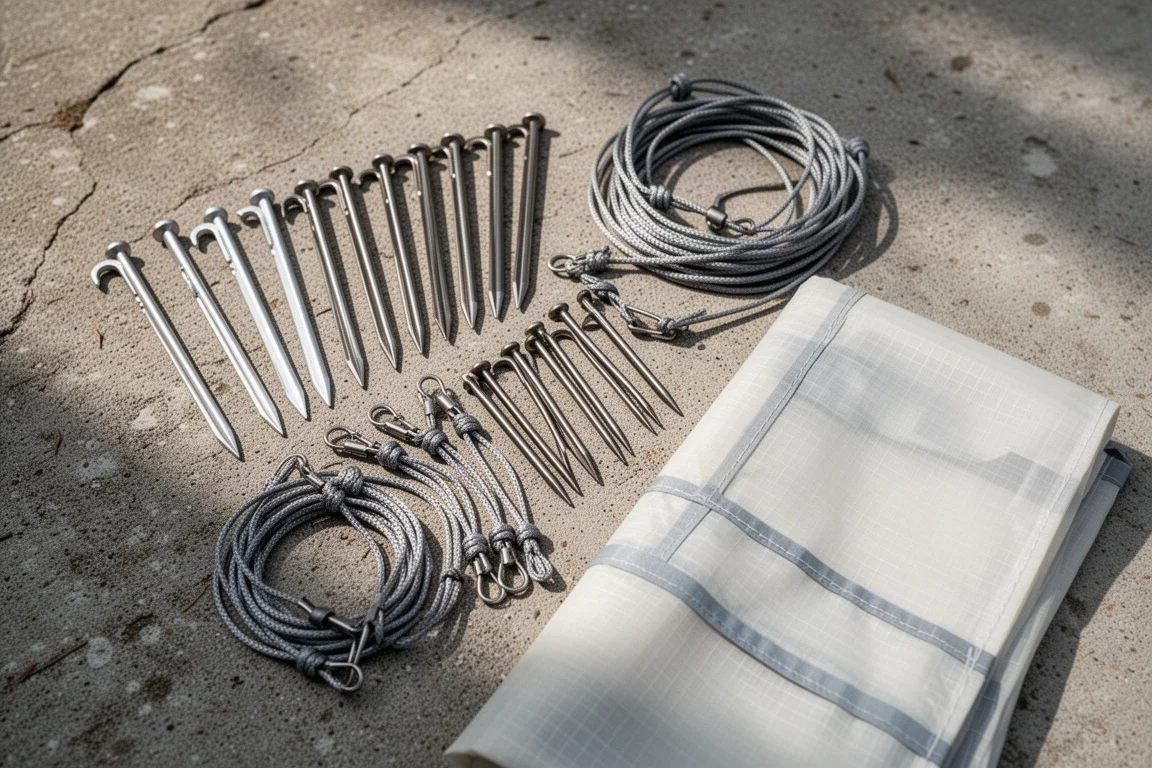
The center pole ships without shock cord, so it assembles piece by piece. It is fully adjustable, letting you extend or shorten it with a push-stud, and both the top of the tent and the floor have reinforced sections where the pole meets them. Eight guy lines with metal hardware are included, along with twelve aluminum stakes for soft ground and twelve titanium stakes for hard ground, so the same shelter works across different terrain and seasons.
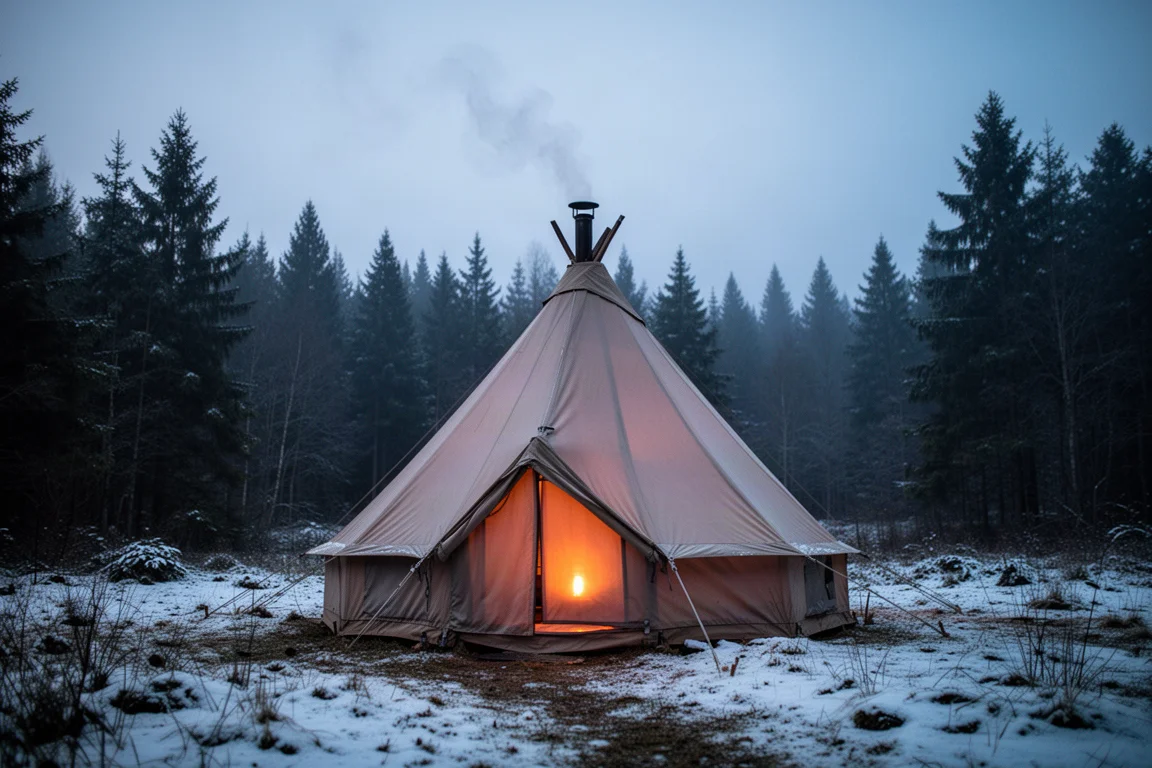
The feature set is what you would want from a hot tent. A snow skirt runs all the way around the base. The stove jack has a zippered cover that opens to expose the jack, and the jack itself is removable if it ever needs replacing. There is a single vent that can be closed and is reachable from outside. The door has a storm flap over the zipper, and guy-out points continue around the body.
Two things are worth knowing before you buy. First, the stake-out points on the tent body are not adjustable, which adds friction to setup and to re-tensioning a silnylon shelter that has stretched in the rain. Second, the peak height of 6 feet 3 inches is measured at the very top. The walls slope inward, so standing room is limited to the center, and anyone around 5 feet 4 inches will not be able to stand upright.
Construction quality is a clear strength. Seams are clean, the seam tape is well applied, and there are no loose threads across the components.
Backcountry Light Floor SL Tarp: A Purpose-Built Floor
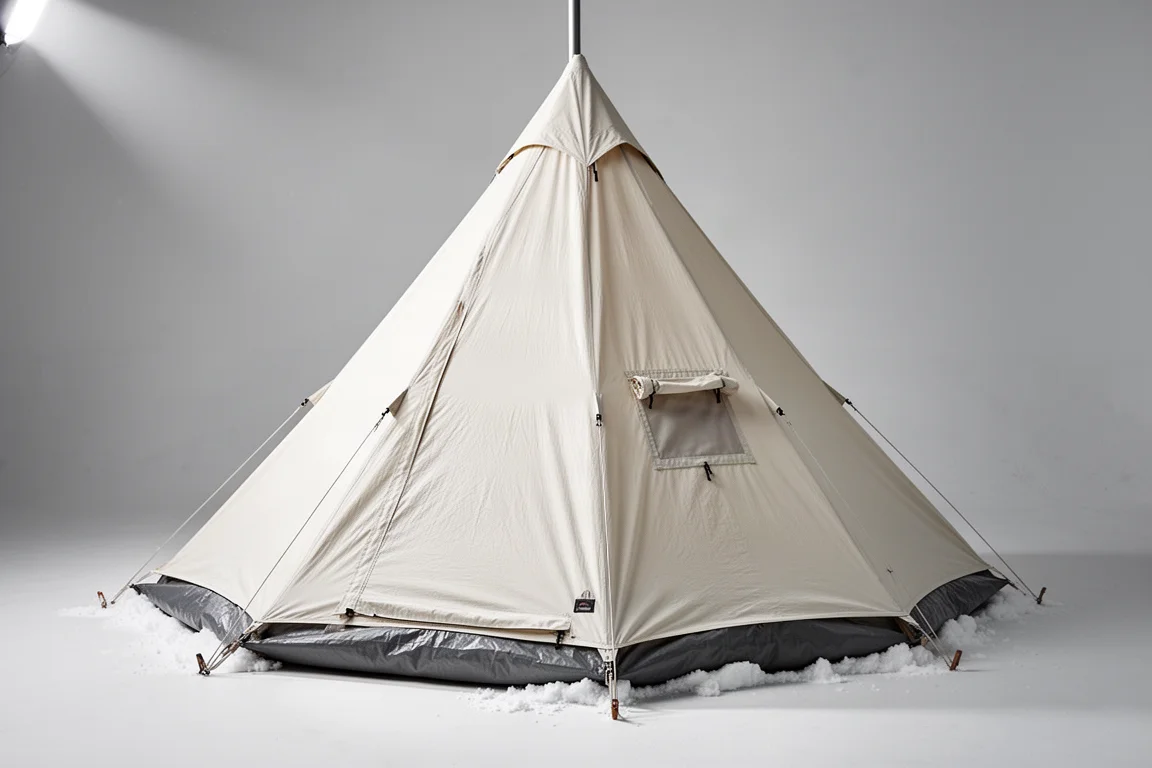
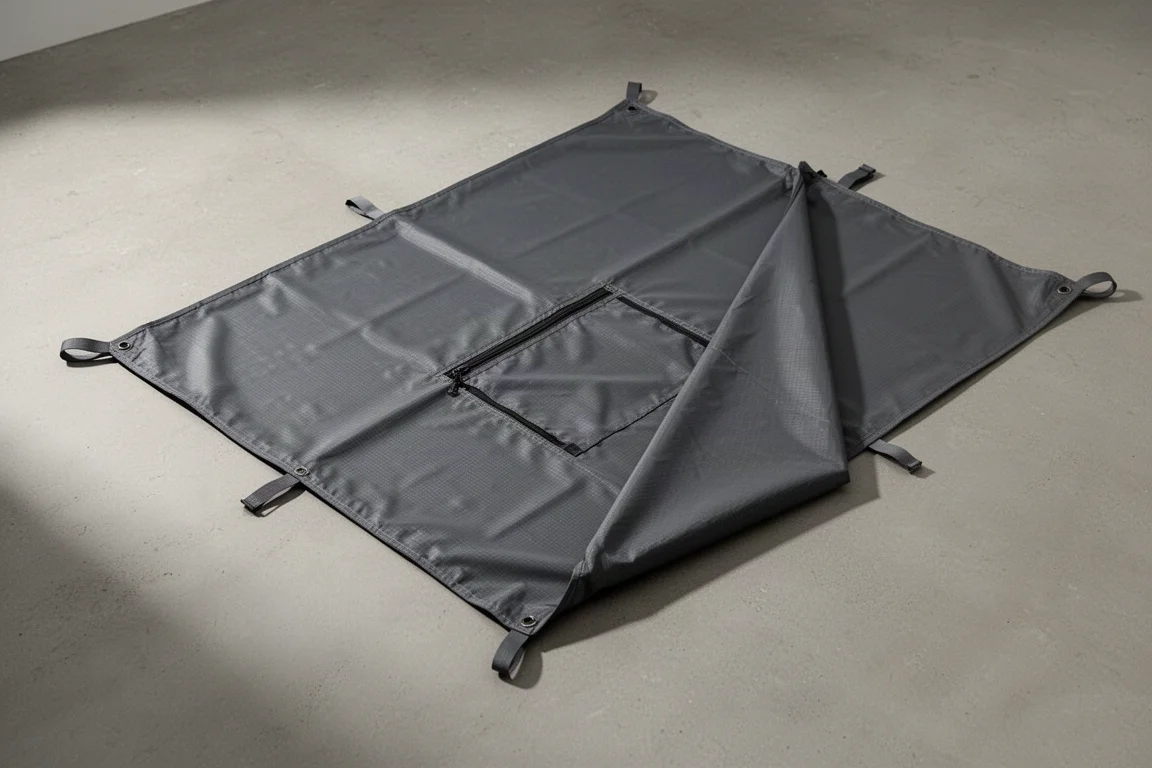
The Floor SL Tarp ships in a storage bag with a grab handle and a drawstring top, secured by a compression strap. Inside are eight aluminum stakes and two guy lines, and the sheet itself has eight stake-out points. Packed, it measures about 9.5 by 4 inches and weighs 1 pound 8 ounces. Like the tent, it is made from 40 denier ripstop silnylon.
The standout feature is the zippered section that opens to clear floor space for a wood stove, which is exactly what a hot tent floor needs to do. That detail makes the accessory a logical companion to the Mesa 3.
The trade-offs show up in the details. There is no way to attach the floor to the tent, so exposed sections of ground remain around the perimeter and insects are still a concern. The two included guy lines are not enough to pitch most tarps, and the sheet’s shape does not lend itself to tarp use the way a square or rectangular tarp would.
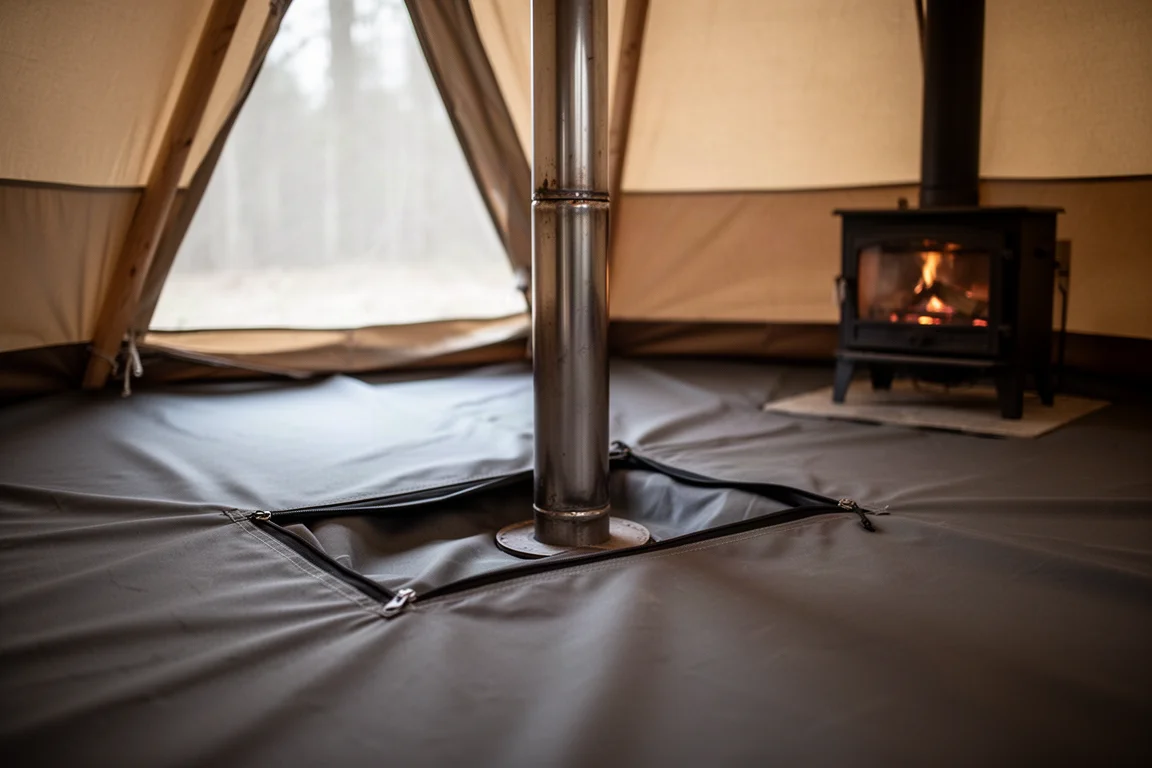
Documentation is thin here as well. The company’s product page shows only a couple of images, one of which shows the floor in use with the material pulled back for a stove, and published dimensions for the floor are not available. Anyone buying it as a tarp rather than a floor should ask for more detail before ordering.
Pricing and Value of the Full System
The Mesa 3 costs $393 with the center pole and stake sets included. The Floor SL Tarp adds $59 when bought alongside the tent, or $80 on its own, and the tent and floor together come to $452. That puts a complete four-season hot tent system under $500, with both aluminum and titanium stakes, eight guy lines, and an adjustable pole in the box.
Value depends on how you carry it. For two people who want to run a stove on cold trips, the package price is competitive with what a comparable shelter and floor combination tends to cost. For a solo camper, the 7.5 pound total weight is a bigger obstacle than the price.
Buying Advice: Who This System Suits
This system makes the most sense for campers who plan to run a wood stove in cold weather and who usually travel as a pair. The stove jack, the snow skirt, the removable jack cover, and the two stake sets all point to that use case, and splitting the load between two packs solves the weight question.
Consider the height first. If you are taller than roughly 5 feet 4 inches, plan on hunching except at the very center, and if you are close to 6 feet, the sloped walls will be noticeable. Also plan for maintenance: silnylon moves when it gets wet, and the fixed stake-out points make re-tensioning more fiddly than it needs to be.
Buyers who want the floor should decide early whether they need it as a floor or as a tarp. Bundled with the tent it costs $59 and gives you ground protection plus the stove cutout, which is a sensible pairing. As a standalone tarp, the shape and the two guy lines limit what it can do.
Conclusion
The Mesa 3 is a well-made four-season hot tent from a veteran-owned American company, with clean construction, a removable stove jack, a closable vent you can actually reach, and a complete stake and guy line kit. The optional Floor SL Tarp is a smart companion as a floor, thanks to its zippered stove cutout, even though it is not the tarp its name suggests.
The main reservations are practical rather than structural: fixed stake-out points on the tent body, limited published detail around waterproofing and floor dimensions, interior height that concentrates at the center pole, and a 7.5 pound total system weight that only makes sense when the load is shared. Buyers who match the shelter to two-person, stove-equipped cold-weather trips will find a lot to like here.
Further reading
Related Reviews
Camping Shelters
Alps Mountaineering Stealth 1 Bivy Review: A Waterproof Claim That Does Not Hold Up
The Alps Mountaineering Stealth 1 Bivy carries a 2,000 mm hydrostatic head rating and a waterproof claim, but sustained rain exposure and build quality concerns make it difficult to recommend.
Camping Shelters
AquaQuest Safari Hybrid 20 ft x 13 ft Tarp Review: Two Years Under a Very Large Roof
A long-term look at the AquaQuest Safari Hybrid 20 x 13 tarp, covering build quality, weather protection, setup realities, and who should buy one.
Camping Shelters
DD Hammocks Erakko Tarp Review: A Compact 8.2 ft Shelter for Short Stops
A detailed look at the DD Hammocks Erakko tarp: a small, light 8.2 ft square shelter with a 3,000 mm waterproof rating and nine tie-out points, plus the build and value questions worth checking first.