Fountain Pen Inks
Three Underrated Blue Fountain Pen Inks Worth a Second Look
Monteverde Capri Blue, Sailor Blue, and Pilot Blue are basic blues that quietly outperform their reputation. Here is what makes each one special.
Introduction
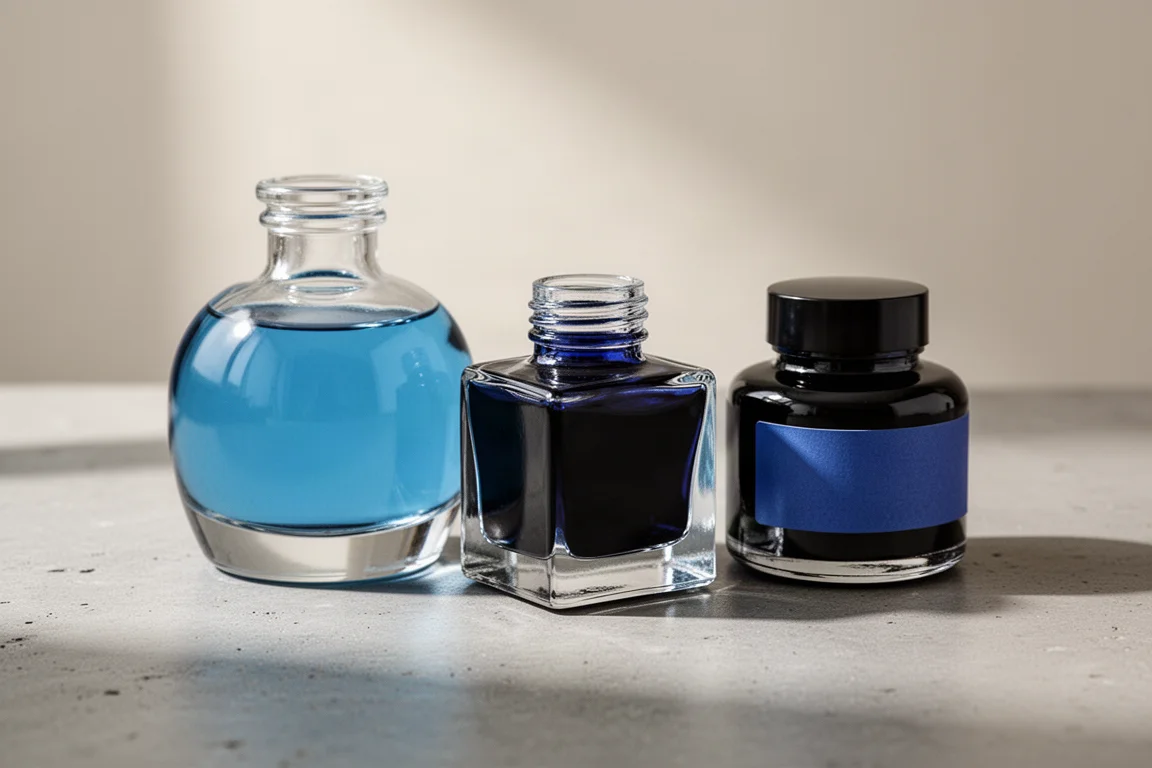
Blue is probably the most common color in any ink collection, which is exactly why some genuinely excellent blue inks get overlooked. Three bottles in particular tend to fly under the conversation: Monteverde Capri Blue, plain Sailor Blue, and plain Pilot Blue. None of them are flashy special editions, yet each one does something that makes it worth a permanent spot on the shelf. All three are wet, dependable writers that are safe in pens and versatile across work, journaling, and everyday use.
Monteverde Capri Blue
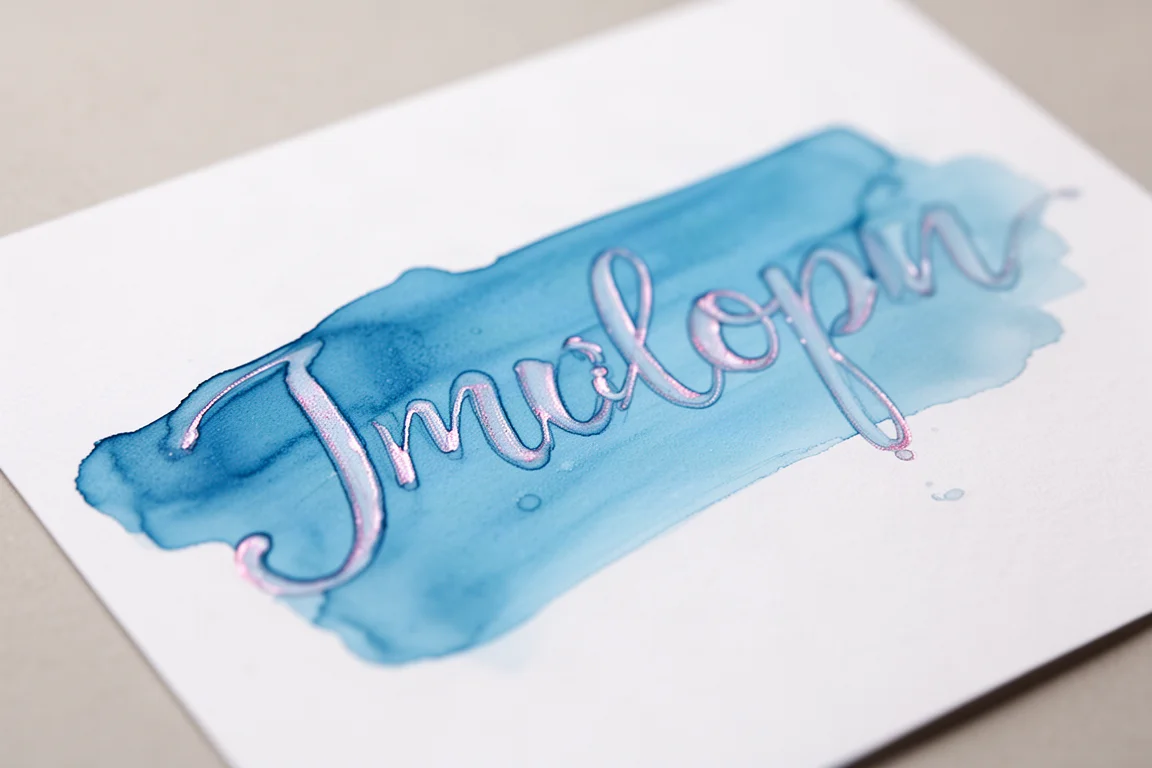
Monteverde Capri Blue is one of those inks that hardly ever gets mentioned, yet it belongs in any conversation about favorite blues. It is a lighter, brighter blue that jumps off the page in whatever pen you put it in. In spirit it sits in the same family as Pilot Iroshizuku Kon-peki, only less turquoise: this is firmly a blue ink, not a teal or turquoise one.
It comes in large 90 ml (three ounce) bottles, with smaller 30 ml bottles available as well. On paper it behaves well and writes wet, and under the right conditions it develops a faint pinkish sheen, usually appearing around the edges of letters. That sheen needs the right pen and paper to show: a wetter nib or wet paper such as Tomoe River will bring it out. Shading is present but modest, less pronounced than Sailor Blue. One thing to keep in mind is that it dries a little slower than the other two picks, though heavy swatches were the only spots that stayed wet in testing. In a wet writer it makes the ink window pop and delivers a happy, summery blue every time.
Sailor Blue
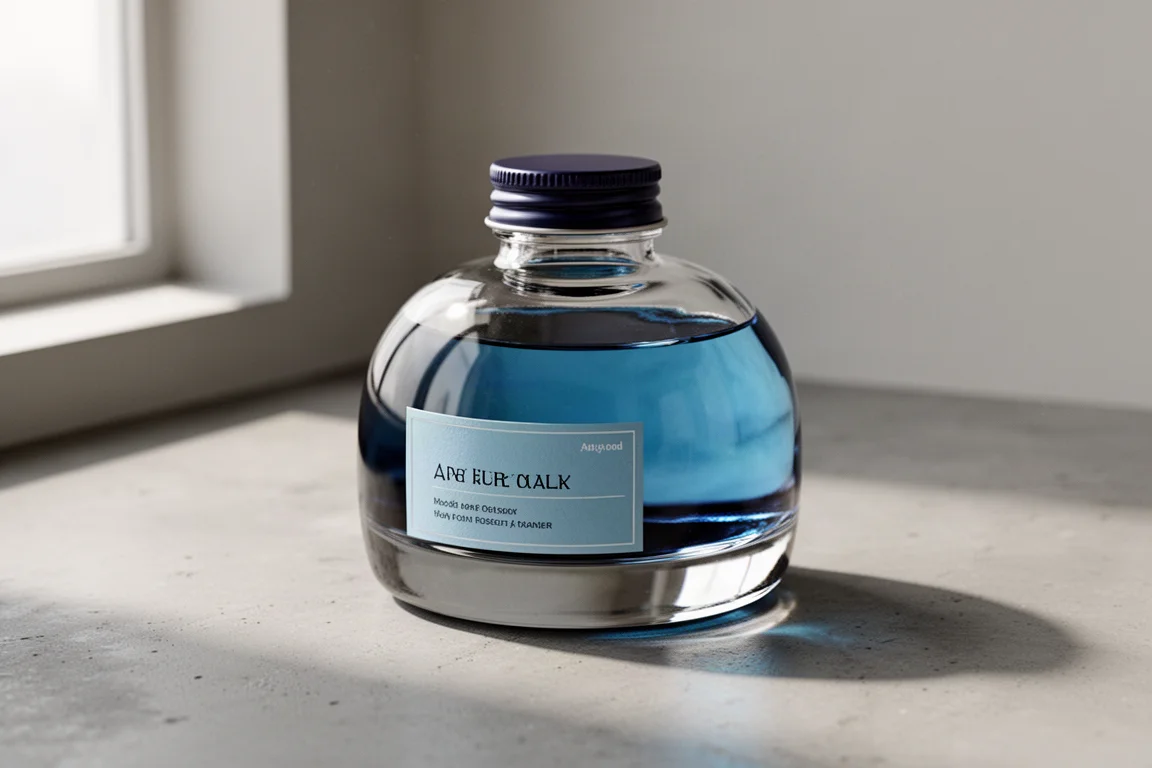
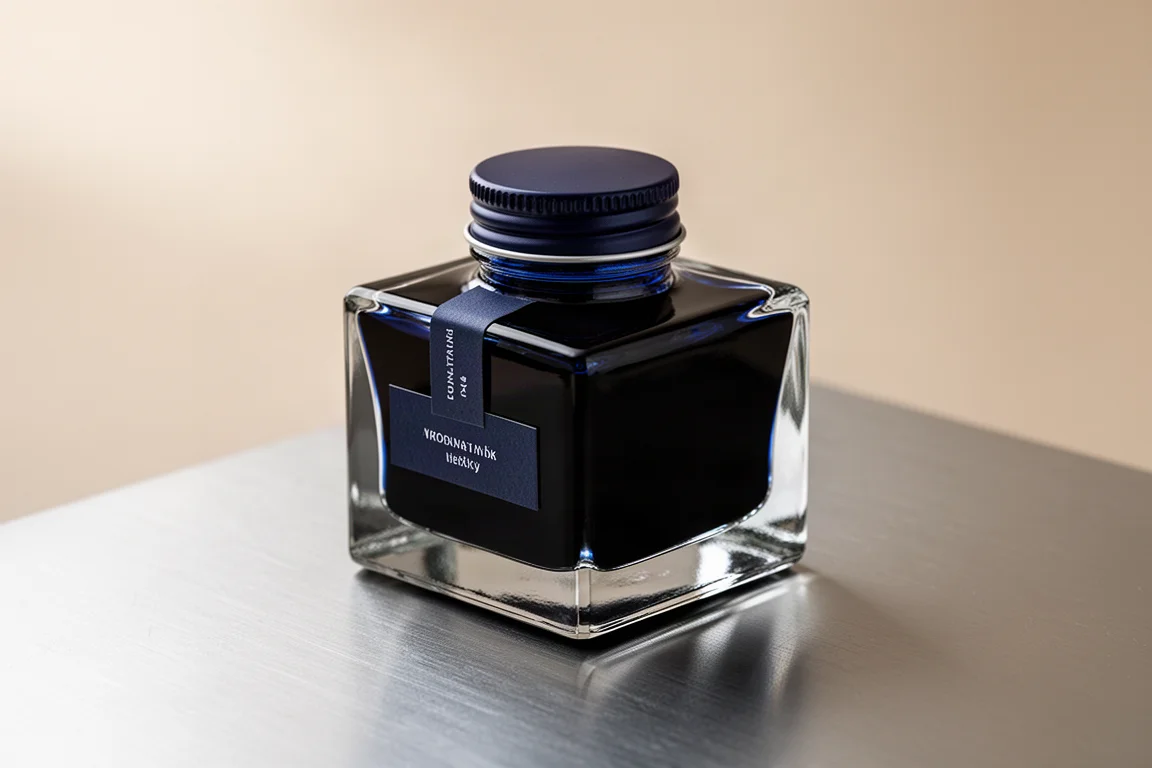
Sailor Blue, formerly known as Sailor Gentle Blue and now part of the standard lineup alongside blue-black and black, might be the most interesting all-around basic blue on the market. A basic blue here means the company’s plain blue ink, in the same category as Pelikan 4001 Royal Blue or Waterman Serenity Blue. At around $12.50 for 50 ml, it is affordable, and it comes in Sailor’s attractive square glass bottle.
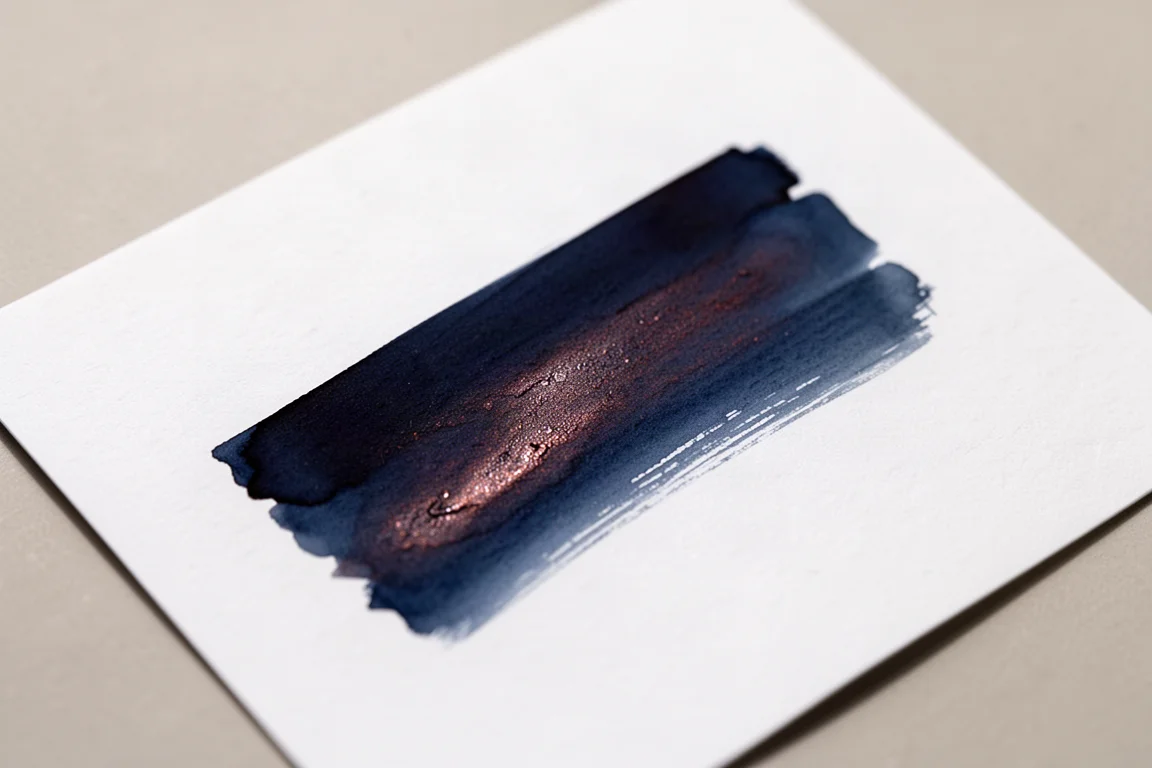
Despite the basic label, it is far from ordinary. It is noticeably darker than most run-of-the-mill blues, it shades beautifully, and as it dries it develops a bronzy reddish sheen that shows up on nearly every pen and paper combination tested, including plain office and copy paper. That versatility is the real selling point: it works for business, it shades for the shading fans, it sheens for the sheen fans, and it adds interest to a personal journal. On Rhodia 80 GSM paper the shading can approach blue-black territory in the darkest applications. Dependable, affordable, and quietly multi-talented, it is a mystery that more people do not keep a bottle around.
Pilot Blue
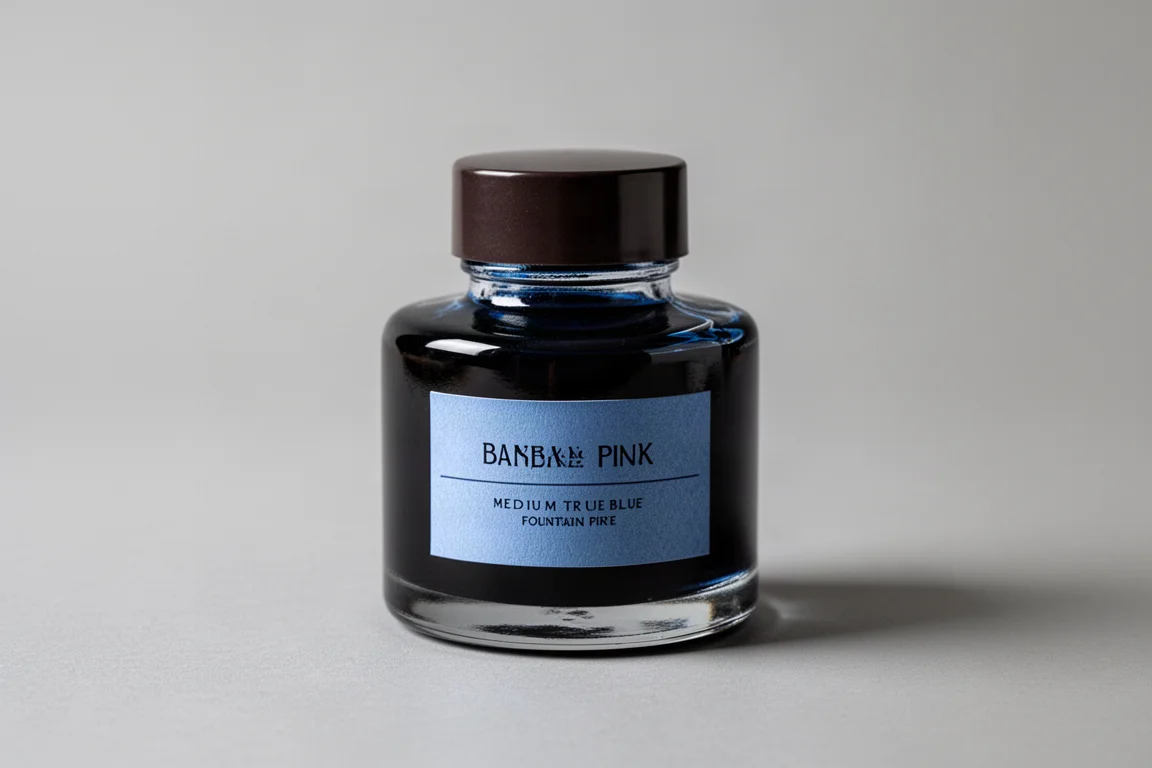
Pilot Blue is the third pick, an ink many people acquire almost by accident as a bonus or side purchase with a pen, which is exactly how it landed here. It comes in a 70 ml bottle, and it is worth knowing that Namiki Blue is the same exact ink sold under a different name.
Compared with the other two, Pilot Blue is probably the closest to a true basic blue, but it is lighter in color than a typical basic blue and noticeably less purple. This is a true blue, not a purple-leaning one. It is still perfectly business appropriate, yet it also sits in that calming shade of blue that works just as well for personal writing. It dries the fastest of the three, has only a hint of pink sheen at heavy application edges, and shows minimal shading, landing as a mostly flat but beautiful color. Like everything from Pilot, it is dependable and hard to go wrong with.
How the Three Compare
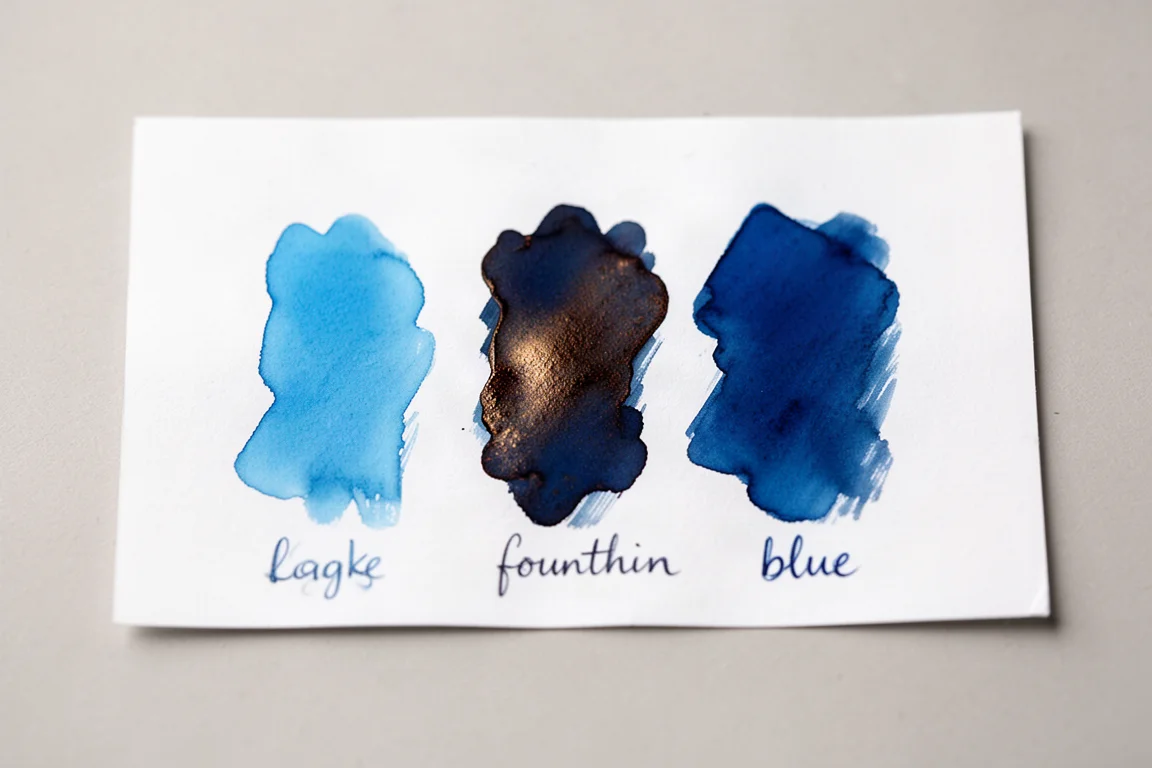
Side by side, the differences become clear. Pilot Blue is the lightest and bluest of the three and dries fastest, with just a hint of pink sheen at the edges of heavy strokes. Sailor Blue is the darkest, with the strongest shading and that signature bronzy red sheen that appears on almost any paper. Monteverde Capri Blue pops the most off the page with its bright tone and conditional pinkish sheen, though it is the slowest to dry of the group.
All three are wet writers, which means they feel great in the pen and pose no risk to your pens. Each one is dependable across a wide range of situations, from office documents to personal journals.
Buying Advice
If you want a cheerful, eye-catching blue that flatters wet nibs, Monteverde Capri Blue is the standout, and the large 90 ml bottle offers excellent value. If you want one ink that does a bit of everything, shading for journaling, sheen for interest, and enough dignity for the office, Sailor Blue at around $12.50 for 50 ml is hard to beat. If you simply need a solid, calming, true blue to round out a collection, Pilot Blue is the dependable choice, and Namiki Blue is an identical alternative. Honorable mention: Pilot Iroshizuku Asagao was considered for this list, but with Iroshizuku inks being widely praised already, it did not quite fit the underrated category.
Conclusion
Everybody needs a good basic blue in the collection, and these three prove that basic does not have to mean boring. Monteverde Capri Blue brings brightness and a rare pinkish sheen, Sailor Blue delivers shading and a bronzy sheen on nearly any paper, and Pilot Blue offers calm, dependable simplicity. Any of them would be a rewarding first blue or a worthy addition to a crowded shelf.
Further reading
Related Reviews
Fountain Pen Inks
Six Fountain Pen Day Ink Picks Worth a Second Look
From a true sepia to a soft Delft blue, these six inks cover browns, greens, oranges, and blues with shading worth watching.
Fountain Pen Inks
Pelikan Edelstein Golden Lapis Review: A Deep Blue Ink Loaded With Golden Shimmer
Pelikan's 2024 Ink of the Year delivers a true medium blue with an enormous amount of gold shimmer, with a few practical trade-offs to weigh before buying.
Fountain Pen Inks
Kittywink Pot Ink Samples: 23 Shades Swatched and Reviewed
A full first look at 23 Kittywink Pot fountain pen inks, from muted greens and smoky browns to dual-shading purples, swatched and compared on paper.