Audio Accessories
Two Affordable Audio Upgrades That Genuinely Change What You Hear
A practical look at jitter, mains noise, and speaker resonance, plus two low-cost upgrades that address real problems without the audiophile price tag.
Introduction
Audio accessories attract more argument than almost any other part of a hi-fi system. Cables, power conditioners, reclockers, and isolation feet each have their believers, their sceptics, and a room full of people ready to argue about it. The useful middle ground is simpler than either camp suggests. Some of these products address measurable problems such as jitter, electrical noise, or structural resonance. Others mostly address expectation. Both can change what you hear.
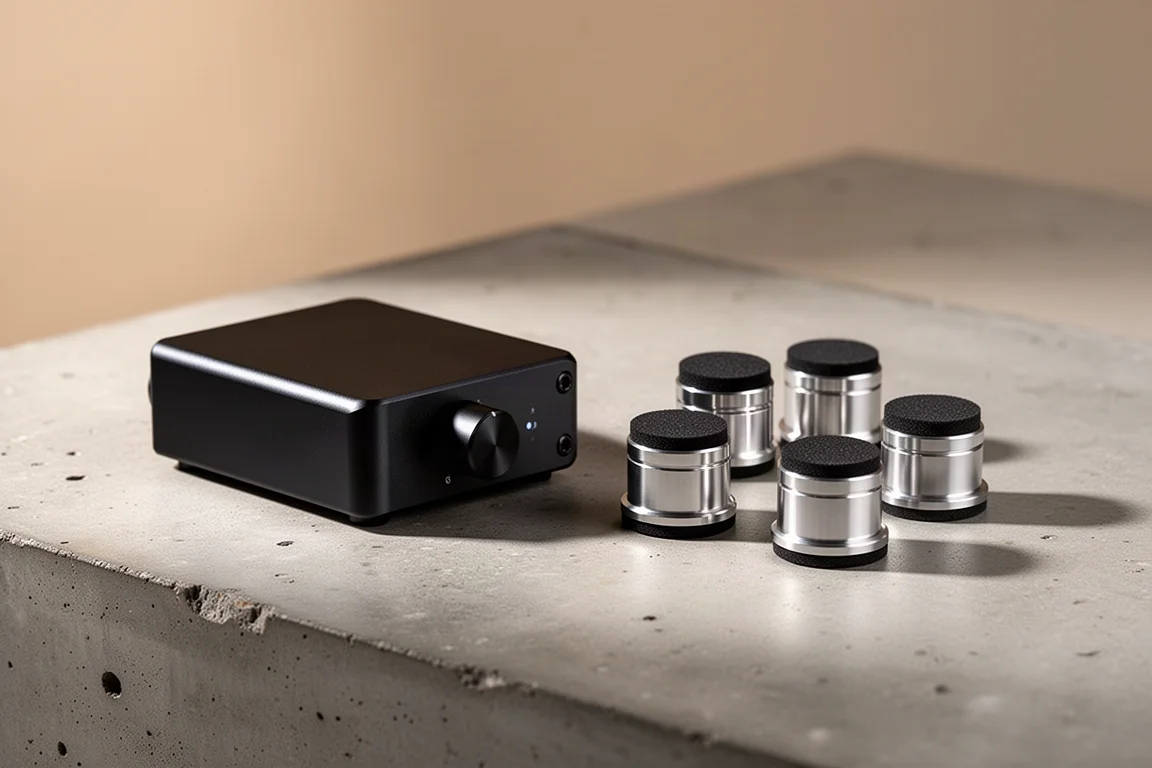
The practical approach is to spend small, test at home, and keep only what makes a genuine difference in your own room. Two products stand out as low-risk starting points: the SMSL 100, a compact USB converter that costs around $60, and ISOAcoustics speaker isolation stands, which tackle vibration at its source.
What Actually Matters in Audio Accessories
Cables have resistance, impedance, and capacitance. In a speaker system, capacitors and inductors are the components that block certain frequencies in a crossover. In most homes, cable runs are short enough that capacitance and inductance have an effect that is difficult or impossible to measure. A twist tie would probably pass a multimeter test.
But cables also behave like antennas. They pick up noise, and noise affects how the signal is heard. In one system, hours spent chasing a persistent hum through different outlets, power conditioners, and phono grounding cables came to nothing until a single RCA cable was swapped and the hum disappeared. Speaker cables pick up noise as well. That is the real case for decent shielding rather than exotic construction.
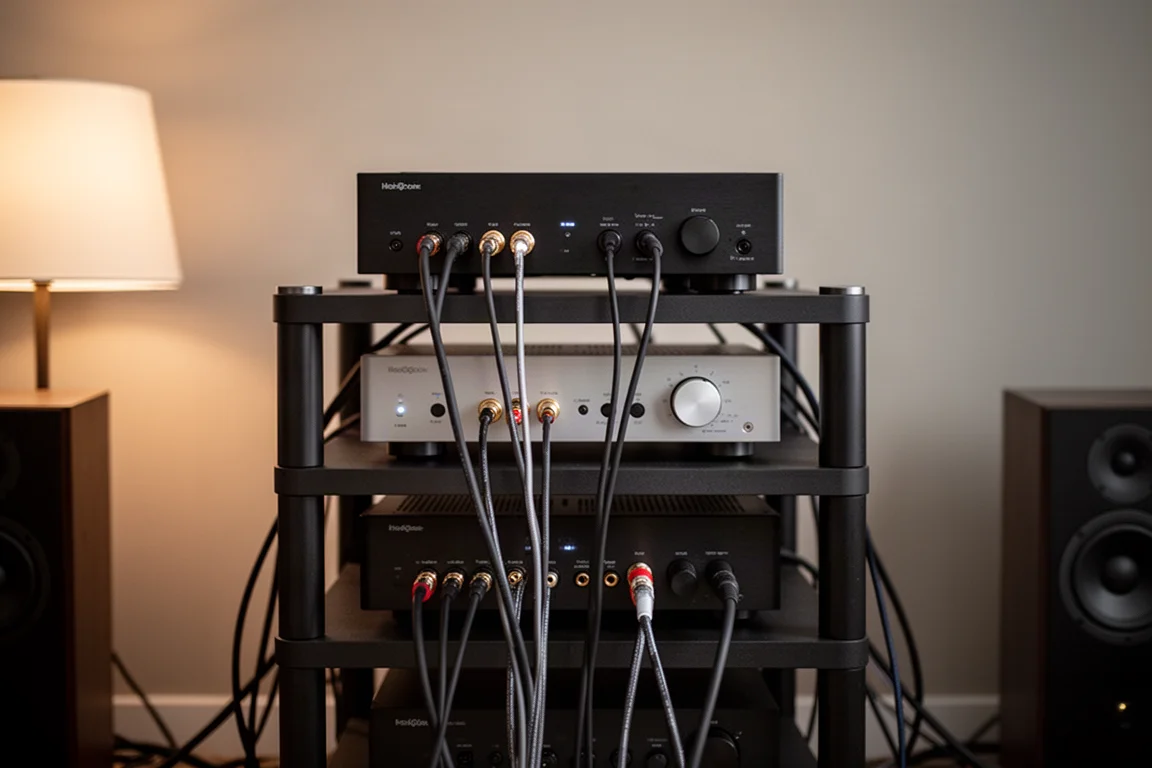
The pattern repeats across the category: real mechanisms, exaggerated claims, and prices that range from sensible to absurd. Where the mechanism is genuine, a modestly priced version often captures most of the benefit.
Best Budget Reclocker Alternative: SMSL 100
Jitter is a real and measurable problem in digital audio. A reclocker sits between two digital components and reduces it. The catch is price. Some reclockers sell for $6,000, and even $600 is a lot to spend on the job.
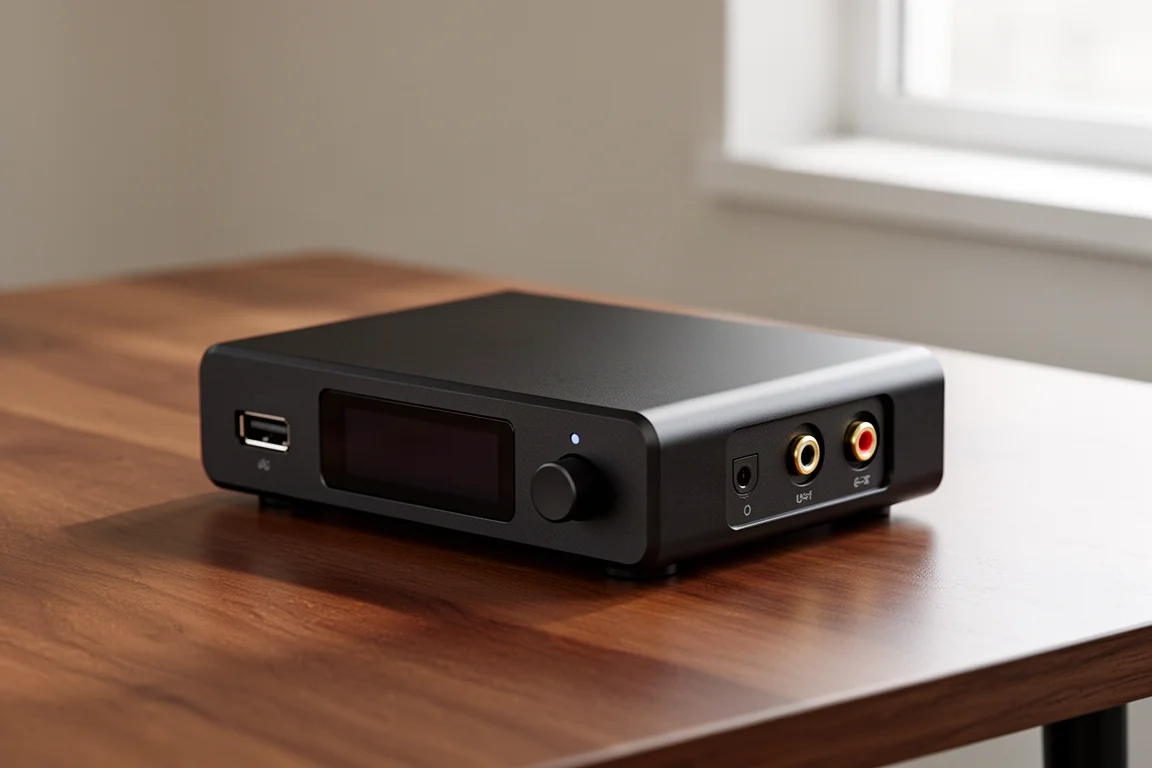
The SMSL 100 costs around $60 and is not even marketed as a reclocker. It accepts a USB signal and converts it to optical, coaxial, or I2S output. Inside, a processor performs a degree of reclocking along the way. Paired with a WiiM Ultra as the source, the result is more audible low-level detail.
Whether that improvement is measurable or partly expectation is a fair question, and at this price it barely matters. The same money buys far less useful things.
Best Speaker Upgrade: ISOAcoustics Isolation Stands
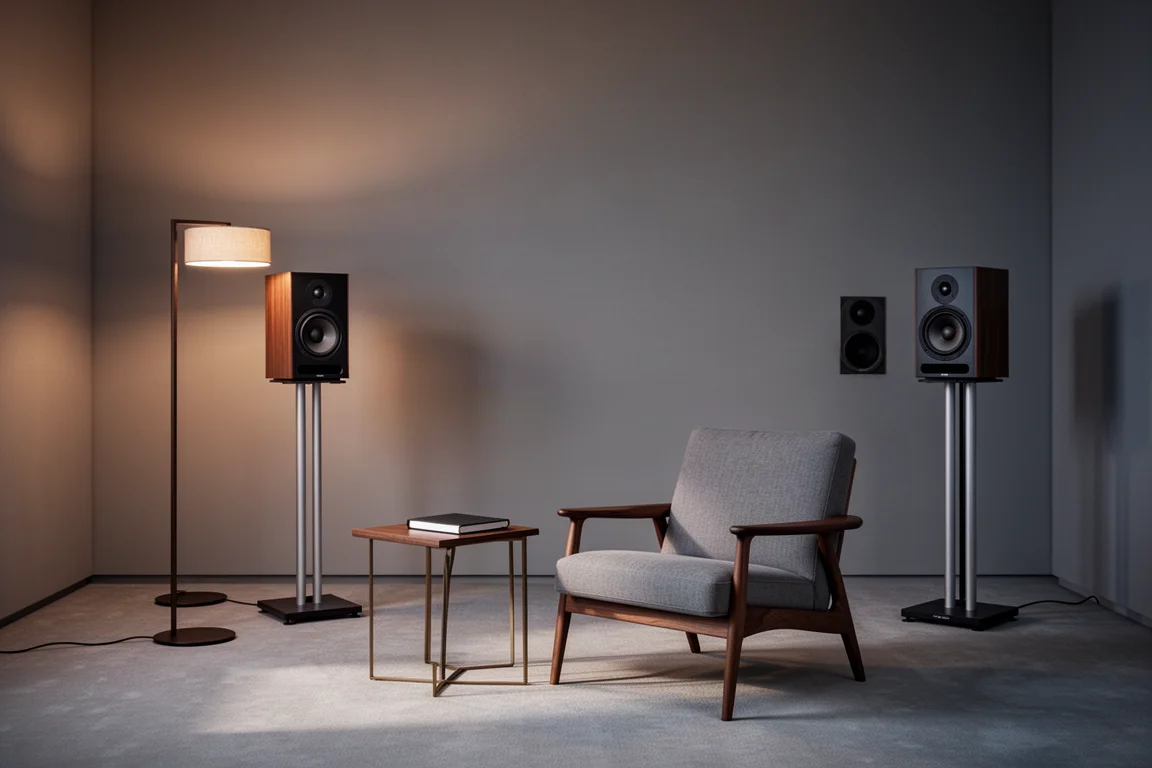
Resonant frequency is not an abstract idea. It is the reason a bridge can visibly flex in wind, and it is why one specific note can make a component buzz. A pair of ELAC Debut speakers produced distortion in the upper mid-range at a single frequency. The culprit turned out to be a metal binding post on the back that was not screwed down fully, resonating at exactly that note.
Tracking down that kind of problem is straightforward. A free online tone generator can be swept slowly upward until the offending frequency appears, then a hand placed on the stand or cabinet will reveal whether the vibration is coming from there.
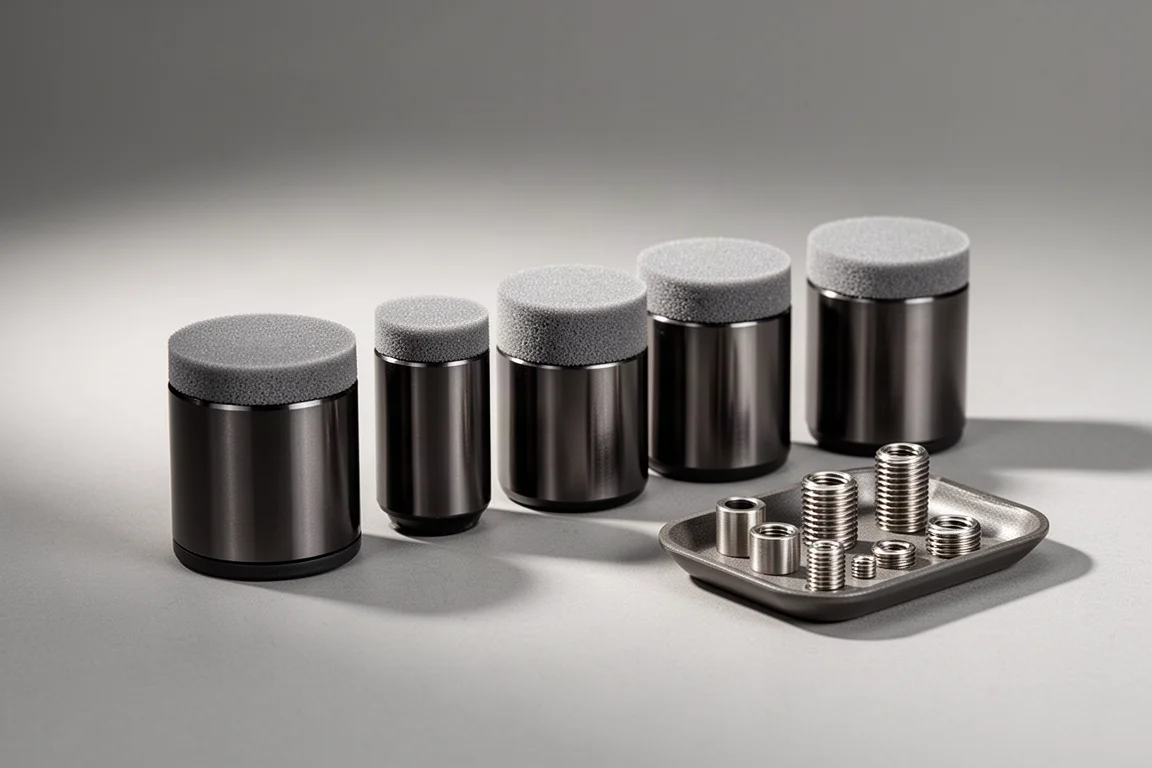
ISOAcoustics isolation stands address the mechanical side of the problem by decoupling the speaker from whatever it sits on. They arrive as a kit with a range of threaded inserts: one end screws into the isolating foot, the other into the speaker. The stands are used on bookshelf speakers and on Q Acoustics 3000C floorstanders, where they screw into the base of the cabinet.
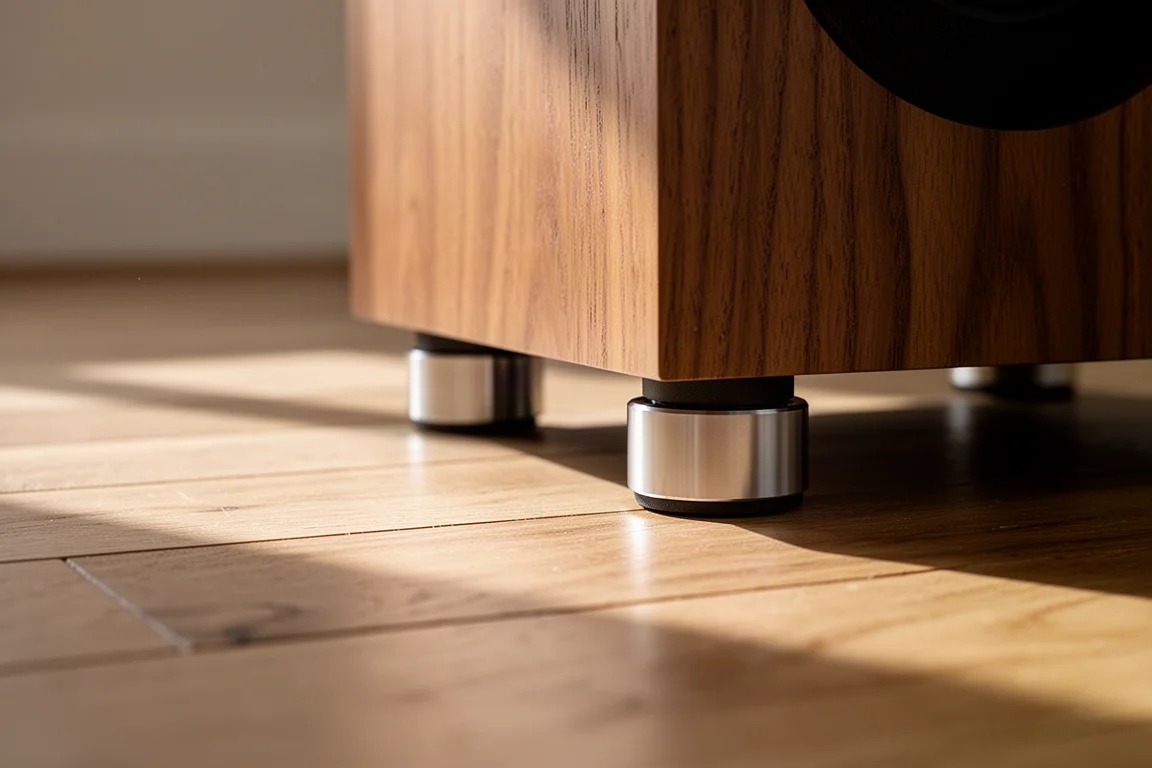
They are expensive for what looks like a simple accessory, but they are built well, and the improvement carries across a room. This is the rare tweak that becomes something you would not want to remove.
Cables and Power Conditioning: Where the Gains Really Sit
Power conditioning starts from a claim that is partly true. Mains power carries noise, and that noise can mask detail. Measuring it is easier than arguing about it. A line EMI meter plugged into a wall outlet gives both an audible indication and a numeric readout of the interference present. Walking around a house with one is revealing. A kitchen outlet went off the scale because the refrigerator was pushing noise back into the line.
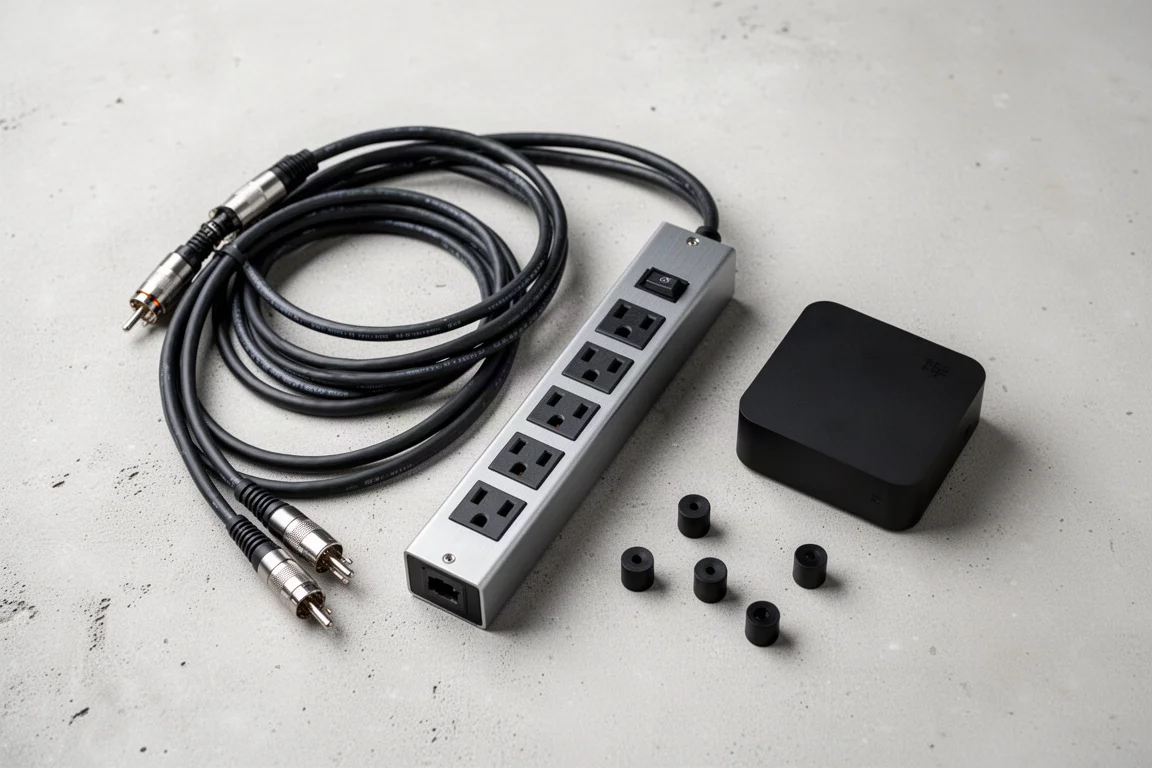
Plugging a power conditioner into that outlet reduced the reading. A pro-audio power filter that cost about $60 reduced it to the same level as a conditioner priced closer to $400. Whether that reduction is audible in a given system is a separate question, but a $60 metal power strip that can be screwed into a rack is inexpensive insurance. Those filters now sell for closer to $100.
At the more committed end, a dedicated line run from the breaker box to the listening room was described as the best $400 ever spent on a system. Listeners on older power lines also report that their systems sound worse during the day than at night, when industrial activity feeds more noise back into the grid.
Cables deserve the same framing. Shielding matters because cables act as antennas. Exotic materials and geometry mostly do not. A well-shielded pair in the $25 range covers the realistic case.
How to Test an Upgrade in Your Own Room
Testing is the part most people skip, and it is the reason debates about accessories never resolve. A few habits make the process far more reliable.
Change one thing at a time. The hum that survived outlet swaps, power conditioners, and grounding changes was only found once a single RCA cable was replaced in isolation.
Use a tone generator to locate specific problems. Sweep slowly upward until the anomaly appears, then place a hand on the stand, cabinet, or component to see whether the vibration stops. That identifies the source in seconds.
Listen at the same volume, with the same tracks, and give each change enough time to be judged honestly. Expectation is a real factor in perception, and it cuts both ways: it can create a difference that is not there, and it can just as easily hide one that is.
Placebo, Expectation, and Why It Still Counts
The placebo effect is not a trick. Sugar pills have reduced pain, improved symptoms in Parkinson’s disease, and produced measurable immune responses. If a listener expects a component to improve the sound and then genuinely enjoys the system more, that outcome is not nothing.
The honest position is to accept the effect rather than pretend it does not exist. If a $60 accessory makes music more enjoyable and the return policy is generous, the mechanism behind the improvement matters less than the result. The same logic argues against spending $6,000 to reach it.
Buying Advice: Start Small, Trust Your Ears
Everything discussed here has a low-cost entry point and a return policy. That combination is what makes trying these upgrades reasonable rather than risky.
Buy the cheap version first. A $60 USB converter, a roughly $60 power filter, a set of isolation stands, and a well-shielded pair of interconnects cover the realistic cases without a large outlay. If a difference shows up, keep it. If not, send it back.
Do not buy on the promise of a specification. Buy on what happens in the room, with your speakers, on your power. Contempt prior to investigation keeps people ignorant of changes that might genuinely improve their system, and enthusiasm prior to investigation empties a wallet just as reliably.
Conclusion
The accessories debate is not really about physics or about gullibility. It is a debate about price. Cables pick up noise, jitter is measurable, mains power carries interference, and speaker cabinets resonate. Each of those mechanisms can be addressed for a modest sum.
The SMSL 100 handles the digital side for around $60, and ISOAcoustics isolation stands handle the mechanical side with hardware built to last. Start there, test at home, and keep only what earns its place in your system.
Further reading
Related Reviews
Audio Accessories
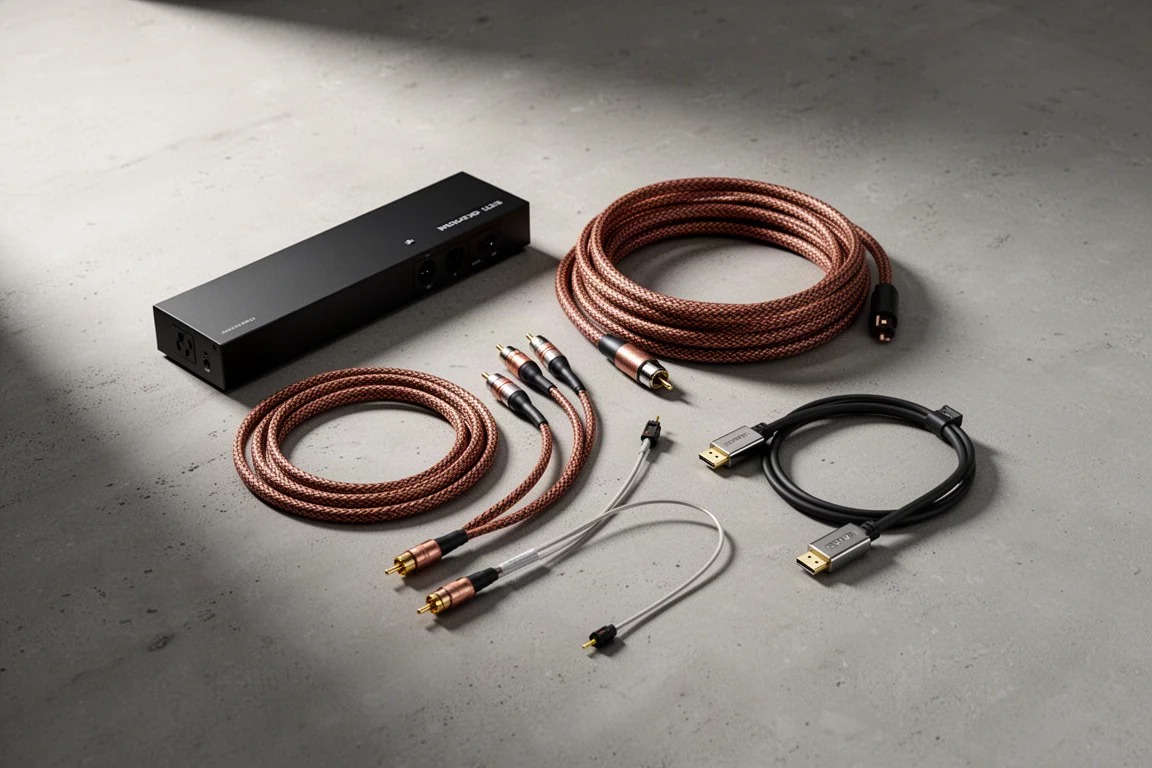
Audio Cables and Power Conditioners: A Three-Tier Buying Guide
A practical, tiered look at audio cables and power conditioners, from budget basics to the point where spending more stops making sense.
Audio Accessories
Cheap Speaker Stands Worth Buying: Four Affordable Options for Better Sound
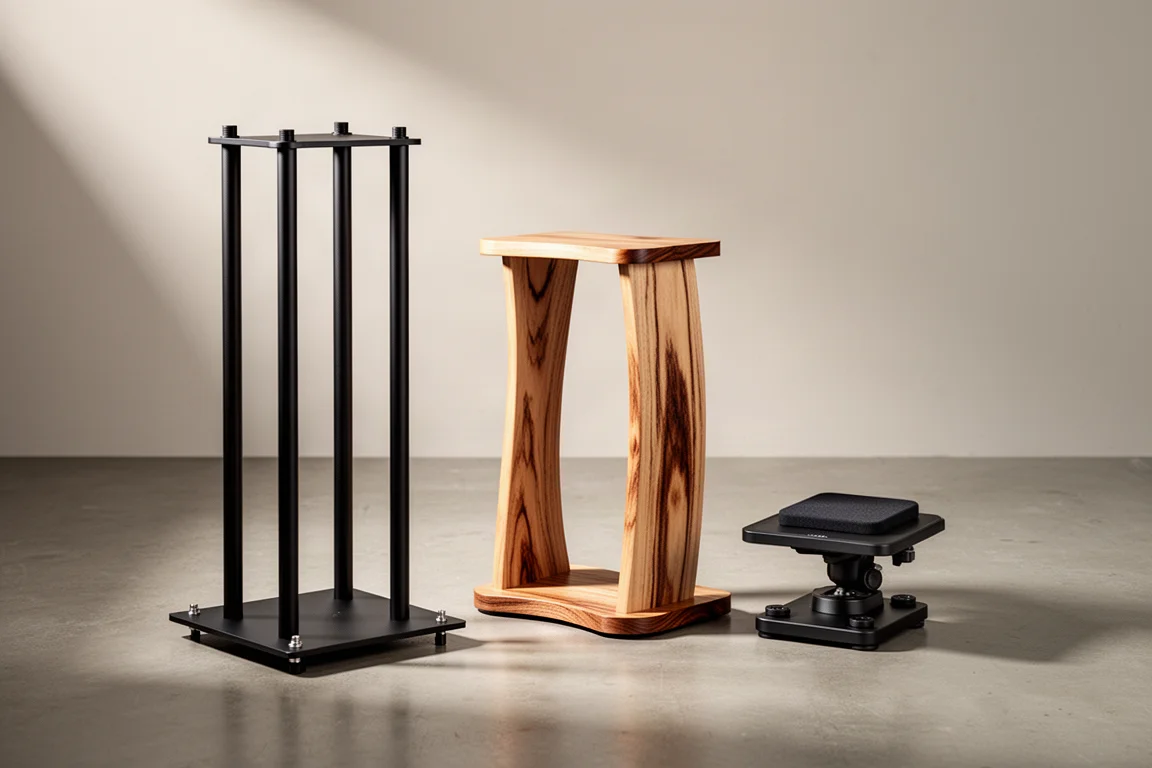
Four affordable speaker stands, from heavy fillable steel columns to wooden designs and desktop isolation platforms, with the trade-offs that matter before you buy.
Audio Accessories
Fosi Audio LC30 vs Duke Audio V3 Pro: Two Speaker and Amplifier Switchers Compared
Two affordable switchers that let you compare amplifiers and speakers in real time, with VU meters, remotes, and clear differences in features.