Audio Accessories
Fosi Audio LC30 vs Duke Audio V3 Pro: Two Speaker and Amplifier Switchers Compared
Two affordable switchers that let you compare amplifiers and speakers in real time, with VU meters, remotes, and clear differences in features.
Introduction
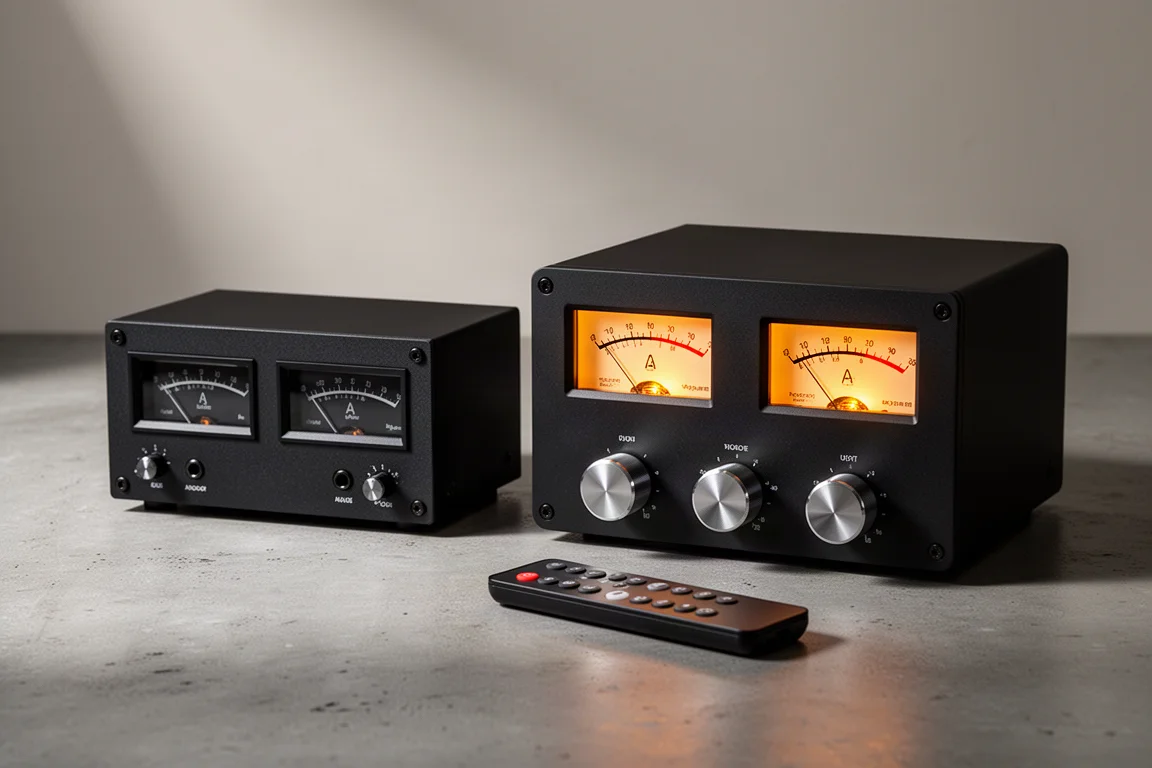
A switcher is one of the least glamorous purchases in this hobby and one of the most useful. It sits between your amplifiers and your speakers and lets you move between them with a button press, so a comparison that would normally take ten minutes of cable swapping takes a second. The Fosi Audio LC30 and the Duke Audio V3 Pro both do this job, both add a pair of moving VU meters to the front panel, and both run from a 5-volt USB-C supply. They land at nearly the same price, yet they are built for slightly different priorities. This guide walks through what each one does well and where each one asks for a compromise.
Why a Switcher Is Worth Owning
The main case for a switcher is comparison. Written descriptions of how an amplifier or a speaker sounds can only take you so far, because every component has its own flavor and the only way to know whether you prefer it is to hear it next to what you already own. With a switcher in the chain, you can buy a new amplifier or a new pair of speakers, listen to it against your current gear, and reach your own conclusion. Because most audio gear is sold with a return policy, that kind of home audition is realistic rather than theoretical, and the cost of the switcher is small next to the cost of keeping a component you do not actually enjoy.
There is a second, quieter benefit. Many listeners keep more than one amplifier or more than one pair of speakers on purpose: a pair that flatters acoustic and orchestral recordings, another that suits rock, metal, or grunge, or a tube amplifier that only comes out for certain sessions. A switcher makes those choices a button press instead of a rewiring job, and it works just as well when a two-channel system shares a room with a home theater setup.
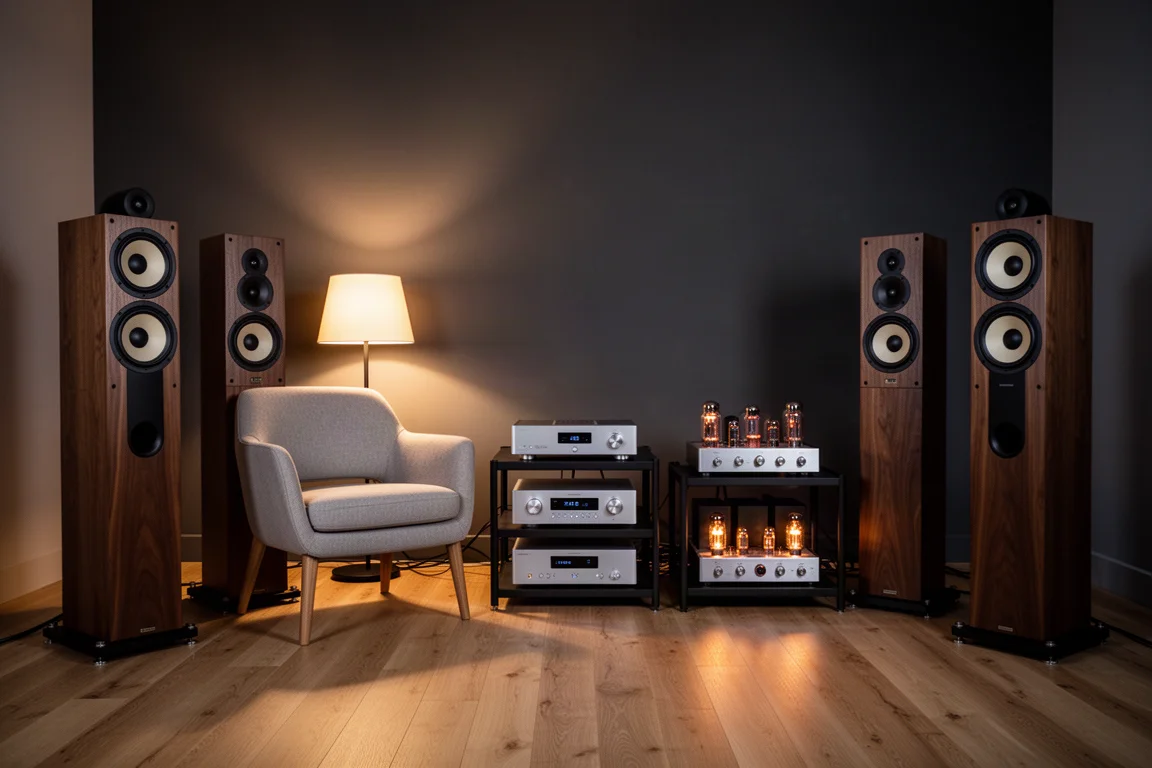
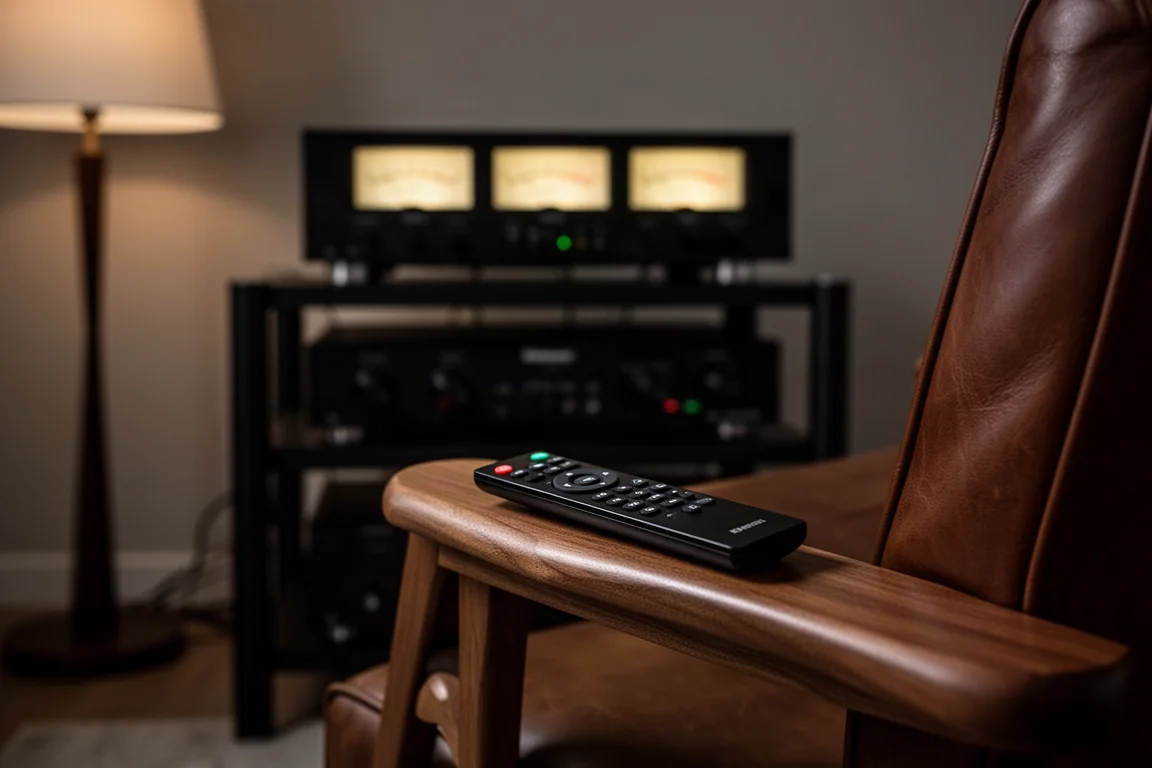
Convenience matters here too. The switching happens at the rack, but with a remote in hand it happens from the listening seat, which is where you actually want to be when you are judging a difference. Both of the units below include a remote, and both keep the signal path short and simple.
The meters are the other reason these products get recommended so often. A small, affordable amplifier does not add much visual interest to a room. Two illuminated VU meters moving with the music do, and on a dim evening that alone can justify the purchase.
Fosi Audio LC30: Compact and Well Built
The LC30 is the smaller and the more restrained of the two. It is available with yellow VU meters or with black VU meters, and the black version is the more subdued choice if the meters are going to sit in a dim room. Build quality is a genuine strength: the unit feels dense and solid for its size, and the layout is tidy enough to sit on a desk or a shelf without drawing attention to the cabling behind it.
Power comes from a 5-volt supply over USB-C, which means a phone charger and a USB-C cable are all you need. A remote control is included for switching from the listening position. What the LC30 does not offer is a gain knob or a sensitivity knob, and it does not appear to support running two pairs of speakers at the same time.
Pricing is straightforward: $149 for the yellow meter version and $159 for the black meter version. In direct listening comparisons between the two switchers, no audible difference showed up, which means the decision comes down to features and layout rather than sound.
Duke Audio V3 Pro: More Features, More Flexibility
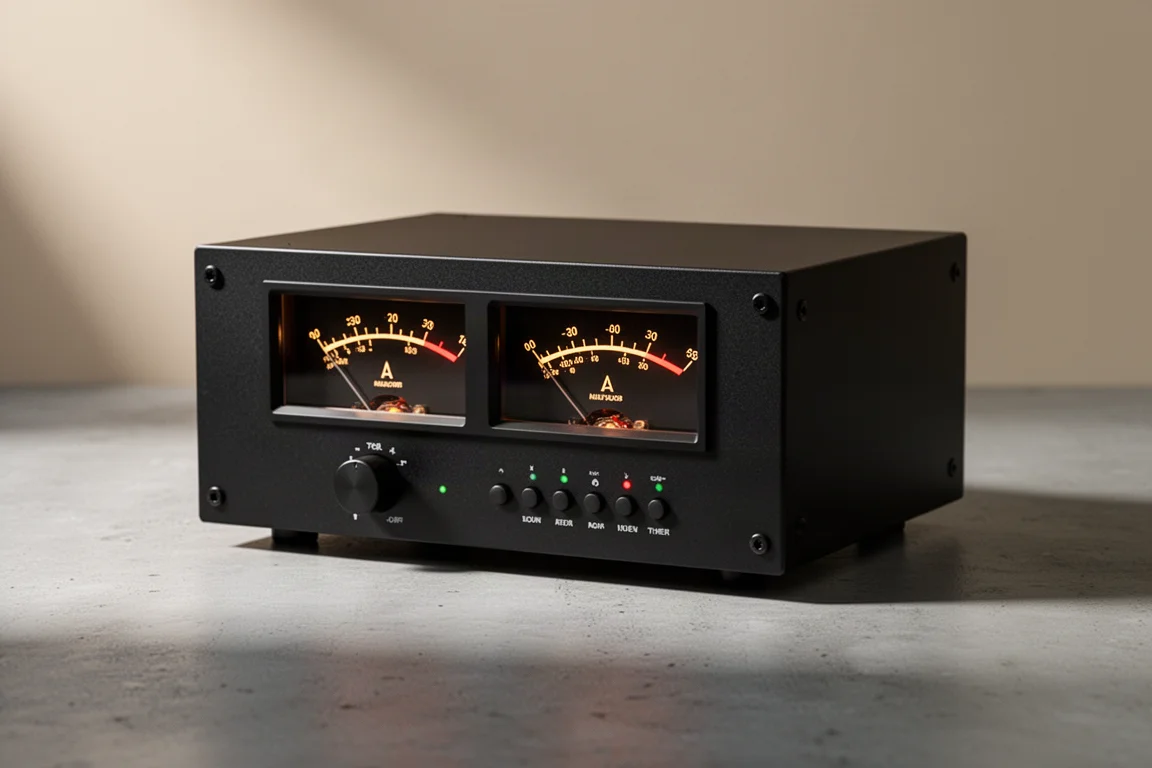
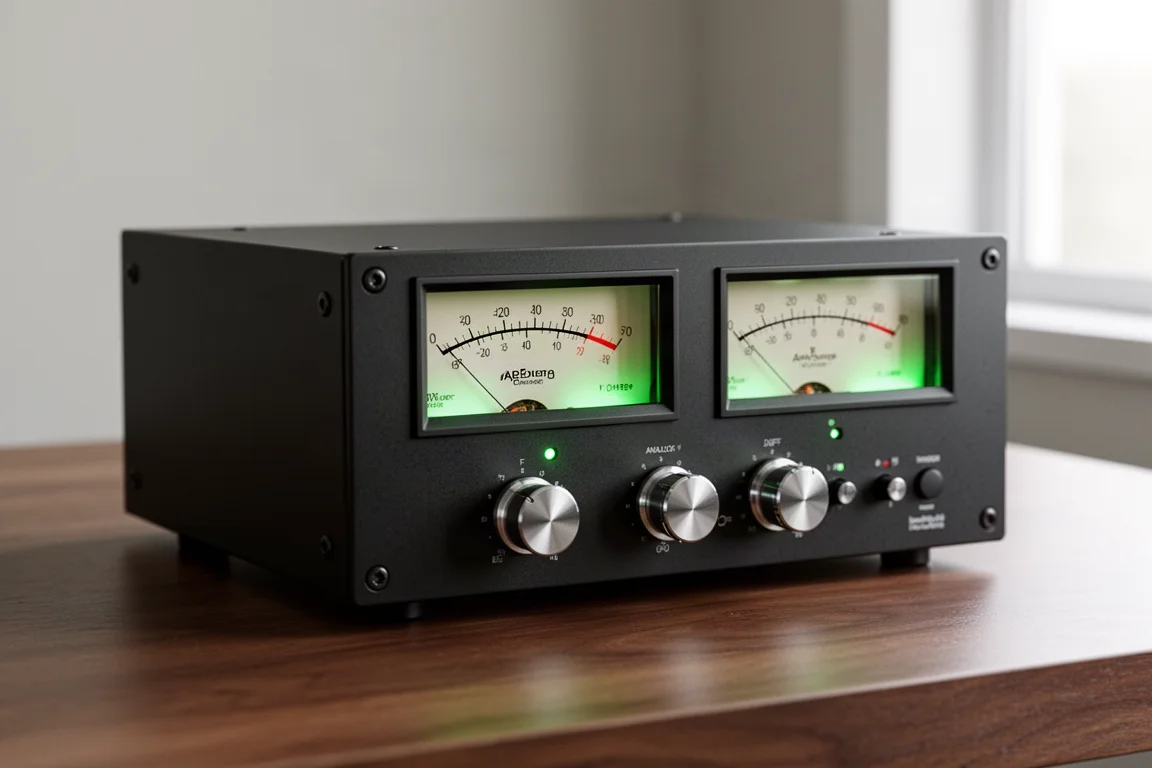
The Duke Audio V3 Pro is the larger chassis, and the extra size buys real estate on the back panel where the speaker connections live. It is the more capable of the two on paper. Three dials sit on the front, all with detents, and the gain and sensitivity controls both have a 12 o’clock detent so you can return to a known starting point. Power transmission is rated up to 350 watts, which is worth noting if you run demanding speakers, since some earlier switchers have been capped around the 100-watt mark.
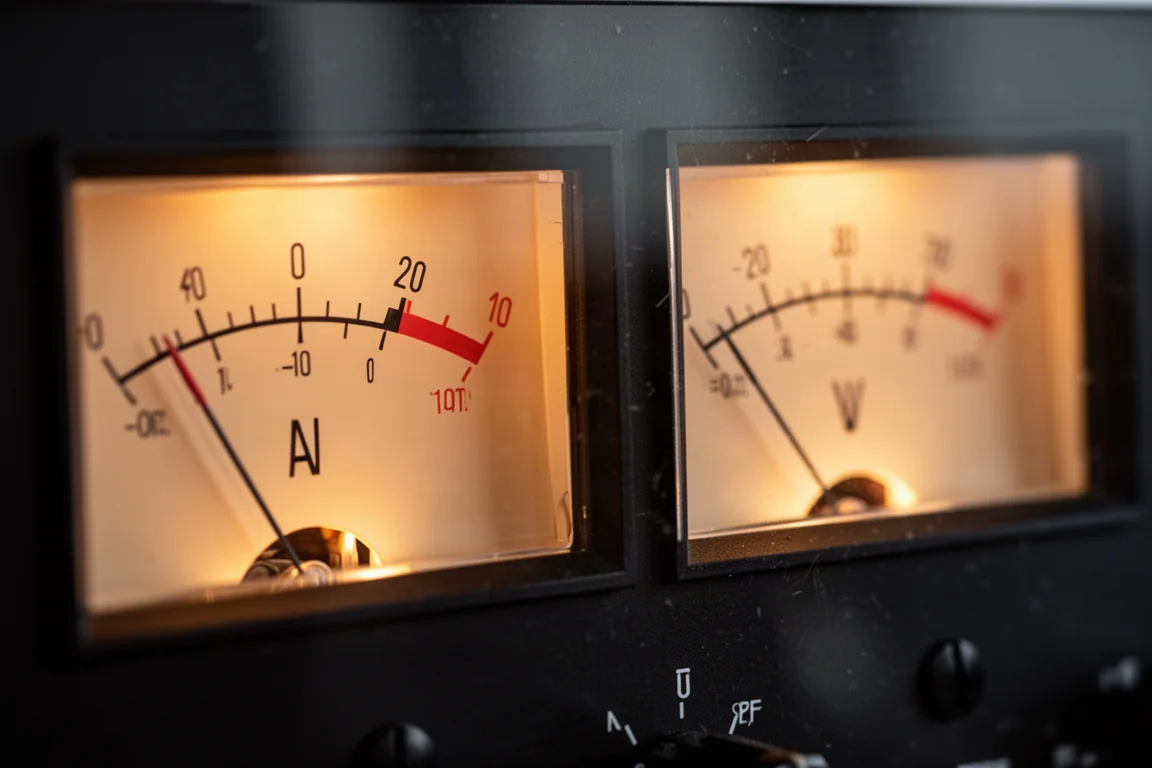
The front panel also controls the backlight color, so the meters can be set to green, red, or another shade depending on the room. A microphone on the back lets the meters respond to whatever is happening in the room without any connection to the system at all, which turns the unit into a standalone meter display, and the microphone can be switched off from the front panel when you do not want it. Switching is handled by relays that land with a solid clunk, and the metal knobs come off easily if you want to reposition them.
The remote covers more ground than the Fosi unit’s: backlight color, backlight intensity, lights off, amplifier selection, speaker selection, and microphone on or off. It can also run both speakers at once from a single amplifier, which is convenient if your amplifier has only one set of speaker outputs, though it is the kind of thing worth doing with some care. A 5-volt wall adapter and a USB-C cable are included, and the cable runs a little over three feet. The V3 Pro is priced at $159, with stock shipping from Amazon.
How the Two Switchers Compare
Both units switch between amplifiers and speakers, both use 5-volt USB-C power, and both put analog VU meters on the front. The differences are in the details:
- The Fosi Audio LC30 is smaller and feels denser in the hand, while the Duke Audio V3 Pro is larger and gives you more room at the back for connections.
- The LC30 comes in yellow or black meter versions, while the V3 Pro offers a wider set of backlight colors.
- The V3 Pro adds gain and sensitivity knobs, a built-in microphone mode, and the option to drive two pairs of speakers from one amplifier.
- The V3 Pro carries a 350-watt power transmission rating, while the LC30’s rating is not published in the same terms.
- No audible difference between the two turned up in listening comparisons.
What to Know Before You Buy
The VU meters on both units are usable as an approximate power indication, but they are not calibrated out of the box. There is a span on the meter face, and you have to dial in the gain and sensitivity settings yourself so that a given needle position corresponds to the point where your speakers begin to clip. Neither unit offers a preset power range in the way more advanced amplifiers do, so treating the meters as a rough visual guide is more honest than treating them as instrumentation.
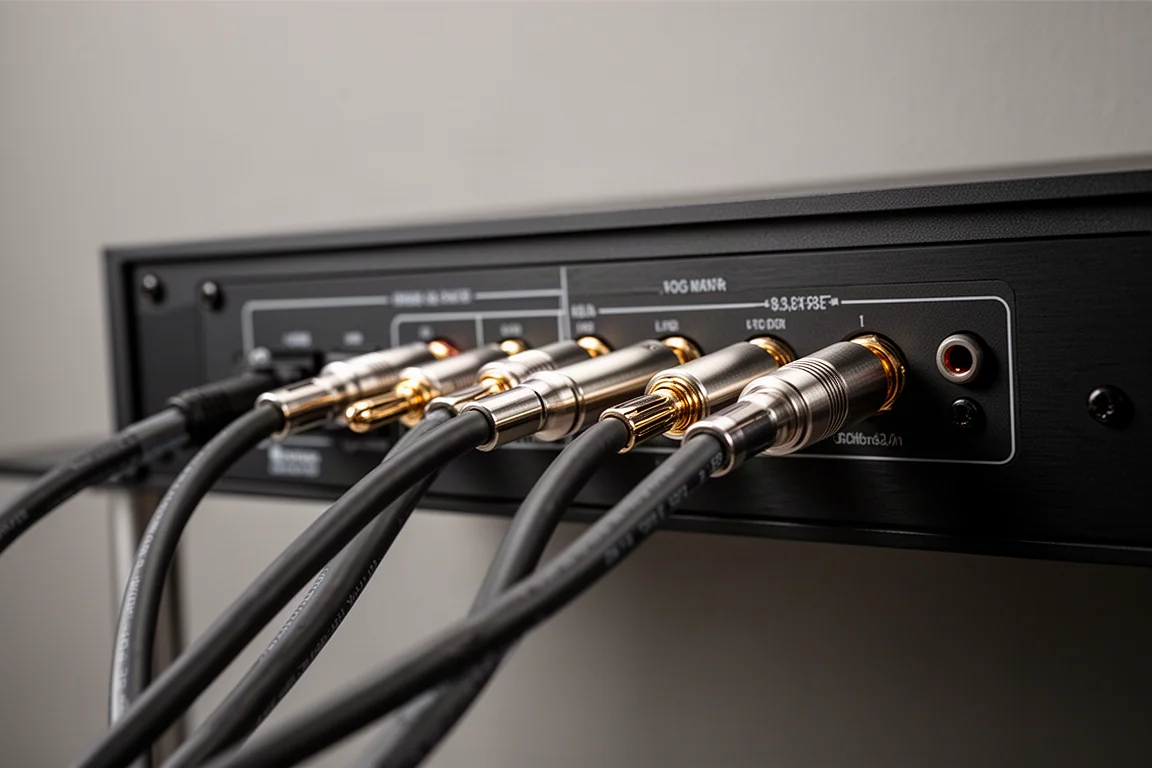
Power delivery is shared ground: both run on 5 volts over USB-C, so a spare phone charger works. The Duke Audio V3 Pro includes its own wall adapter and a USB-C cable that is a little over three feet long, which is short enough to matter if your rack sits far from an outlet.
Setup, Power Handling, and Day-to-Day Use
Setup is about as simple as audio gear gets. Speaker cables in, amplifier connections in, 5 volts in, and the unit is ready. The V3 Pro’s larger back panel makes that job a little more comfortable, particularly if you are using banana plugs and thick cable.
Power handling is the specification to check against your own system. The Duke Audio V3 Pro is rated for up to 350 watts of power transmission, which covers most domestic amplifiers and speakers comfortably. The Fosi Audio LC30 does not publish a comparable figure, so if you run very high-powered amplification it is worth confirming the details before you commit.
One more practical note applies to the V3 Pro. Its remote can run two pairs of speakers at the same time from a single amplifier, which is handy when an amplifier has only one set of outputs. Driving two pairs of speakers simultaneously changes the load the amplifier sees, so it is a feature to use thoughtfully rather than by default.
Buying Advice: Choosing Between the Two
Pick the Fosi Audio LC30 if you want the smallest footprint, the tidier look, and the lower entry price. The black meter version at $159 is the more discreet of the two finishes, and the yellow version at $149 is the more playful one. The LC30 also suits anyone who wants switching and meters without extra controls to think about, since there is no gain or sensitivity adjustment to set up.
Pick the Duke Audio V3 Pro if flexibility matters more than size. The gain and sensitivity knobs, the microphone mode that lets the meters move with nothing connected, the adjustable backlight color, and the option to run two pairs of speakers from one amplifier all add capability, and the 350-watt power transmission rating gives it more headroom for demanding systems. It costs $159 and ships from Amazon.
Either way, both units are comfortable recommendations. They make comparing amplifiers and speakers a real-time exercise, they keep more than one system ready to use, and they add a bit of visual life to a small setup. If you have ever wondered whether a new amplifier is actually better than the one you already own, a switcher is the cheapest way to find out for yourself.
Conclusion
The Fosi Audio LC30 and the Duke Audio V3 Pro solve the same problem in two different ways. The LC30 wins on size, build feel, and price, with a simpler feature set. The Duke Audio V3 Pro wins on capability, with calibration controls, a microphone mode, color options, a higher power rating, and the ability to feed two pairs of speakers from a single amplifier. Neither one sounded different from the other, so the decision comes down to which set of features matches your rack.
Further reading
Related Reviews
Audio Accessories
Audio Cables and Power Conditioners: A Three-Tier Buying Guide
A practical, tiered look at audio cables and power conditioners, from budget basics to the point where spending more stops making sense.
Audio Accessories
Cheap Speaker Stands Worth Buying: Four Affordable Options for Better Sound
Four affordable speaker stands, from heavy fillable steel columns to wooden designs and desktop isolation platforms, with the trade-offs that matter before you buy.
Audio Accessories
Isolation Devices Compared 2026: Toughnut, IsoAcoustics, Stack Audio and Ungoy
A measurement-led comparison of six audio isolation devices, covering Toughnut Audio cones, IsoAcoustics pucks and RIA footers, Stack Audio 100 and EQ, and a ball-bearing design.