Aquarium Equipment
Tunze Turbelle Nanostream 6025 and Nanostream Rock Review: Compact Reef Flow Without the Clutter
A practical look at Tunze's Turbelle Nanostream 6025 AC propeller pump and the Nanostream Rock fascia that hides it inside the aquascape.
Introduction
Flow is one of the most important factors in coral health. Corals depend on water current to bring nutrients within reach and to carry waste away, and in a tank without adequate movement they will not thrive. Choosing the pump that provides that flow comes down to a handful of practical questions: how large the tank is, how much flow the corals in it actually need, where the pump has to sit, how compact and unobtrusive it is, how easily it can be aimed, how reliable it is, and whether it fits the budget.
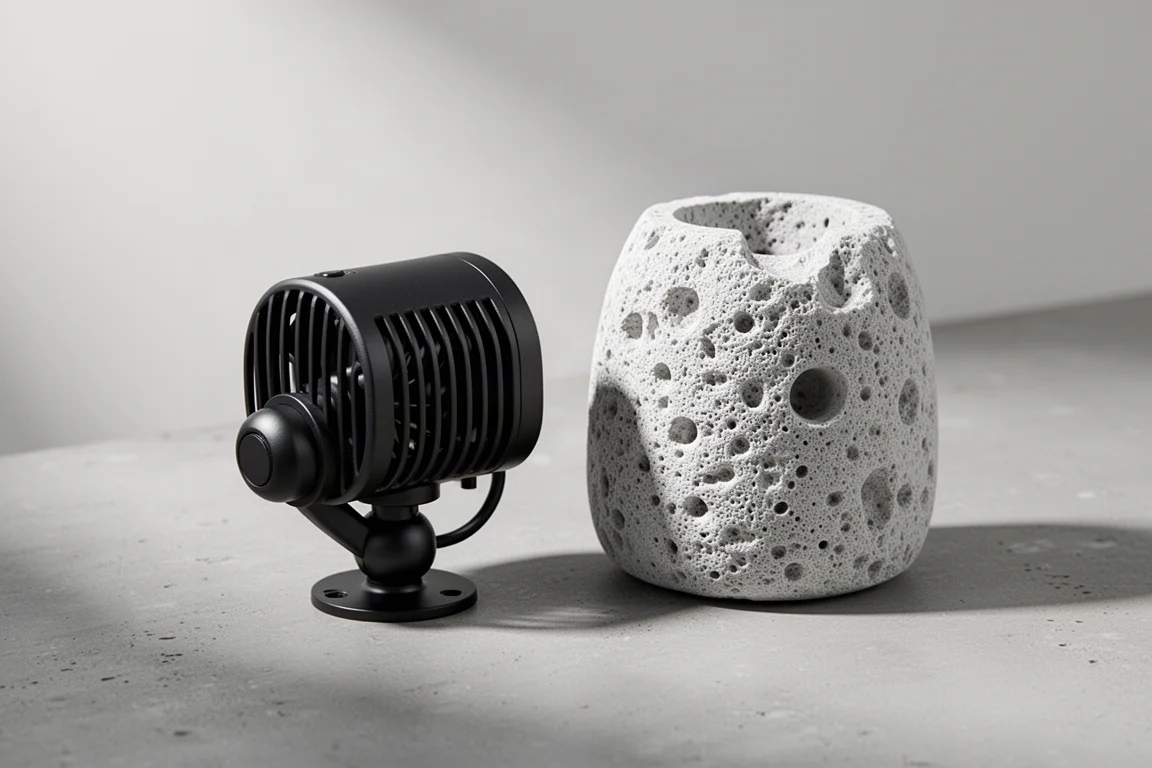
Tunze’s Turbelle Nanostream 6025 is a small, affordable AC propeller pump that answers those questions with more capability than its ratings suggest. Paired with the Nanostream Rock, a porous fascia that conceals the pump inside the aquascape, it becomes a way to add targeted flow without adding visible hardware to the display. This article covers both parts of that pairing.
Why Flow Matters in a Reef Aquarium
Nutrient delivery and waste removal both depend on water movement, which makes flow a foundation of coral health rather than an optional extra. In practice the goal is not simply a big number: the water has to move where the corals are, and it has to do so without blasting a single spot in the tank.
A useful framework for choosing a pump includes tank size and dimensions, the flow needs of the corals being kept, the mounting locations available, how much visual space a pump takes up, how precisely it can be aimed, long-term reliability, and price.
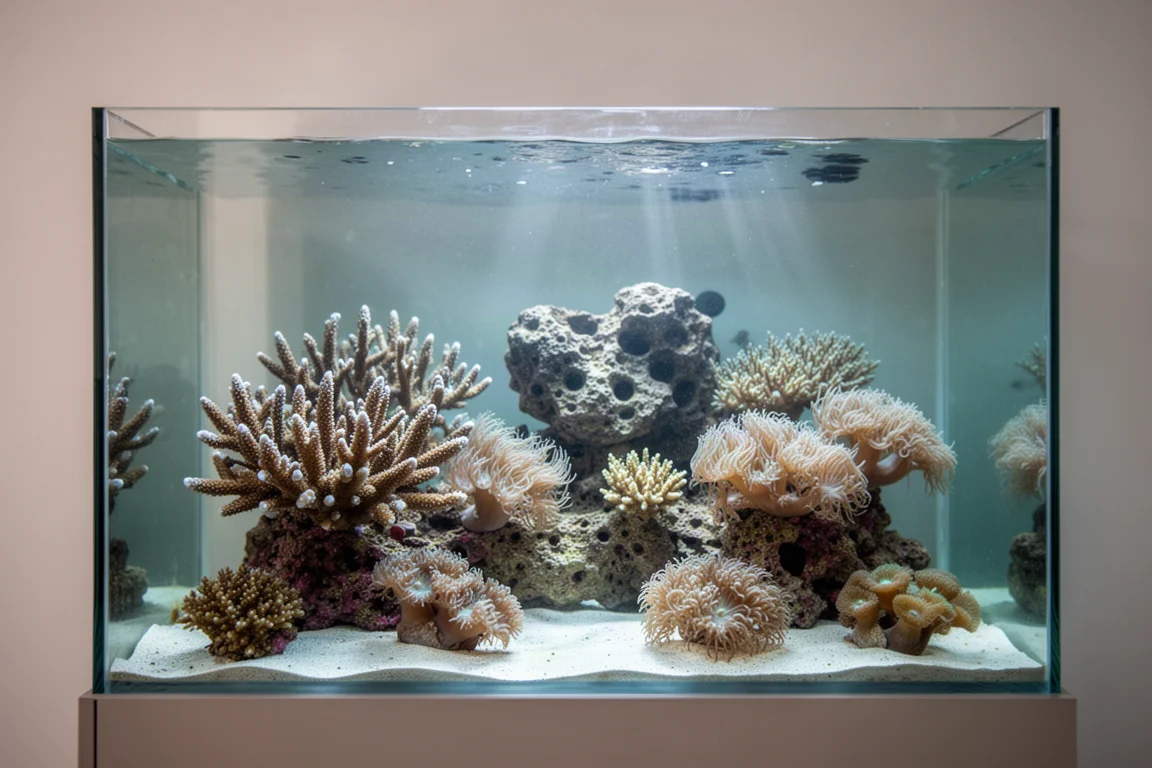
The Nanostream 6025 is interesting because it addresses several of those points at once. It is compact at roughly 2.7 inches in diameter, it mounts magnetically, and it can be pointed almost anywhere, yet it still produces enough directional flow to be useful in tanks far larger than its size implies.
Mounting locations matter as much as raw output. Some aquascapes only allow a pump to be placed at an awkward angle, and being able to redirect the nozzle from that position is often the difference between a healthy, well-circulated system and one with persistent dead spots.
Tunze Turbelle Nanostream 6025: Compact AC Flow Pump
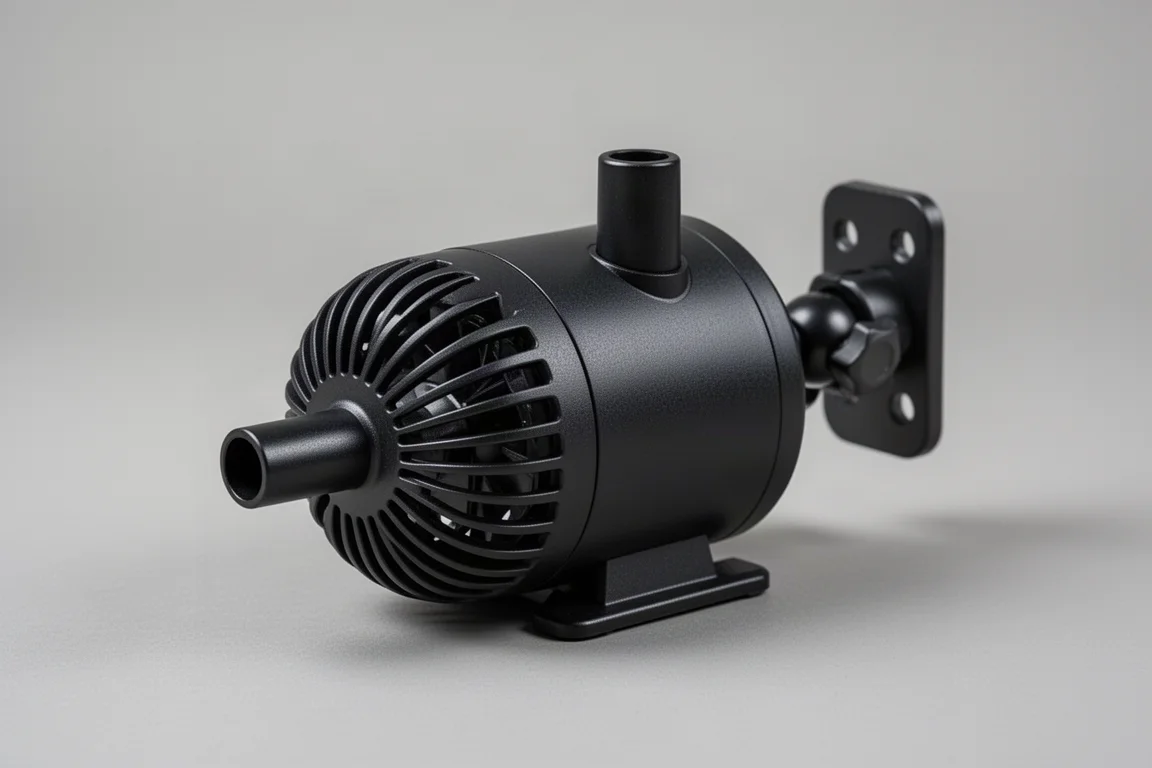
The 6025 is rated at 740 gallons per hour and consumes only five watts. Its body measures about 2.7 inches in diameter, with roughly 3.4 inches from the back of the pump to the front of the nozzle. Those figures put it firmly in miniature territory, and on paper the flow rating looks modest, but the pump’s real-world performance is better than the number suggests.
In the box you get the 6025 pump itself, a ball joint magnetic mount, a guard, the instructions, and a quality control card.
The mount is one of the pump’s strongest assets. The magnets are strong, and because they are sealed the pump can be mounted in places such as an overflow. The ball joint bracket adds a great deal of articulation, so the nozzle can be pointed wherever flow is needed, and mounting on the back panel instead of the side panel keeps the magnet assembly out of view. That flexibility also makes the 6025 a strong candidate for delivering flow behind rock work, where a conventional powerhead would be difficult to position usefully.
Flow Pattern and Mounting Flexibility
The 6025 produces a narrow cone of flow, which is exactly why a 740 gallon per hour rating goes further here than expected. The pump can move water across a six-foot-long aquarium while still generating randomized movement at the opposite end, which is unusual for a pump rated below 1,000 gallons per hour.
Close to the nozzle the stream is strong and turbulent, a pattern that suits high flow SPS systems. Further out the cone spreads and softens, and that is where soft corals and LPS tend to be happiest.
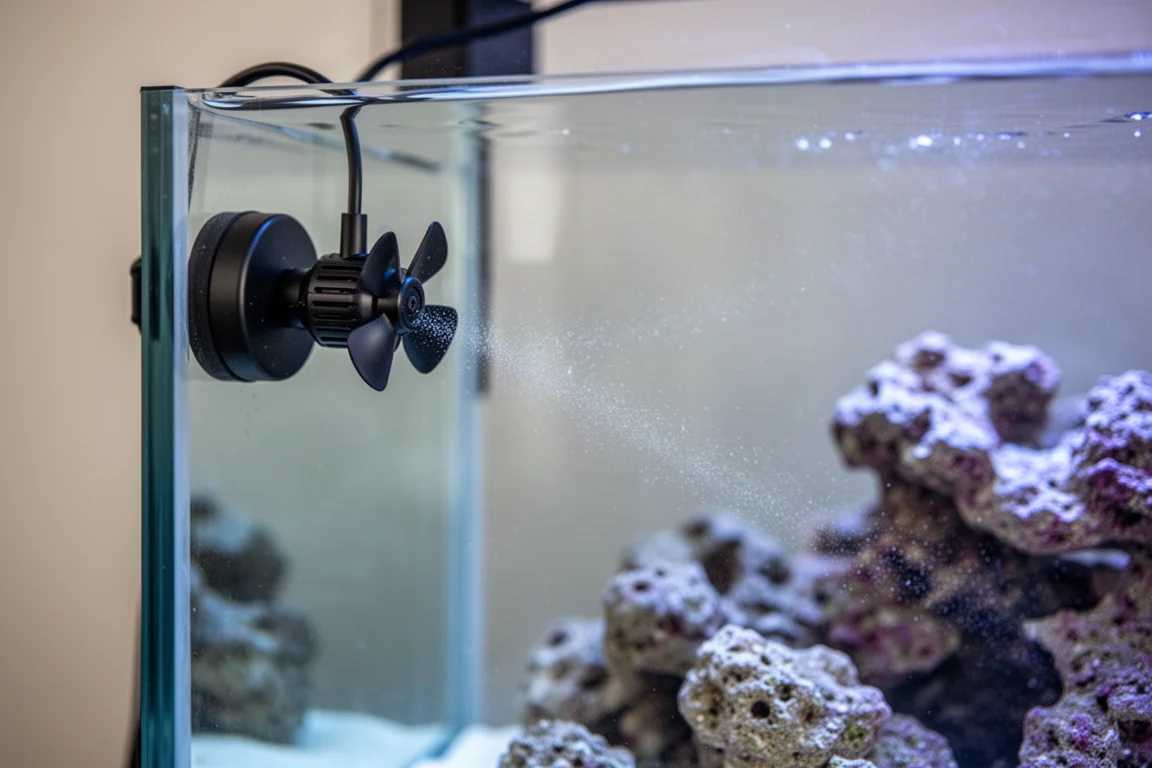
The flow can be adapted further by aiming it. Pointing the nozzle at an adjacent wall, a rock structure, the water surface, or into the output of another pump disperses some of the velocity and creates more chaotic, randomized movement. That is a practical way to make the same pump work for softer corals and LPS without changing equipment.
Because the ball joint mount holds its position and the sealed magnets allow mounting almost anywhere, the pump can be angled to suit the tank rather than forcing the aquascape to suit the pump. In tanks with only one usable mounting location set at a harsh angle, that difference is significant.
Tunze Nanostream Rock: Hiding the Pump in Plain Sight
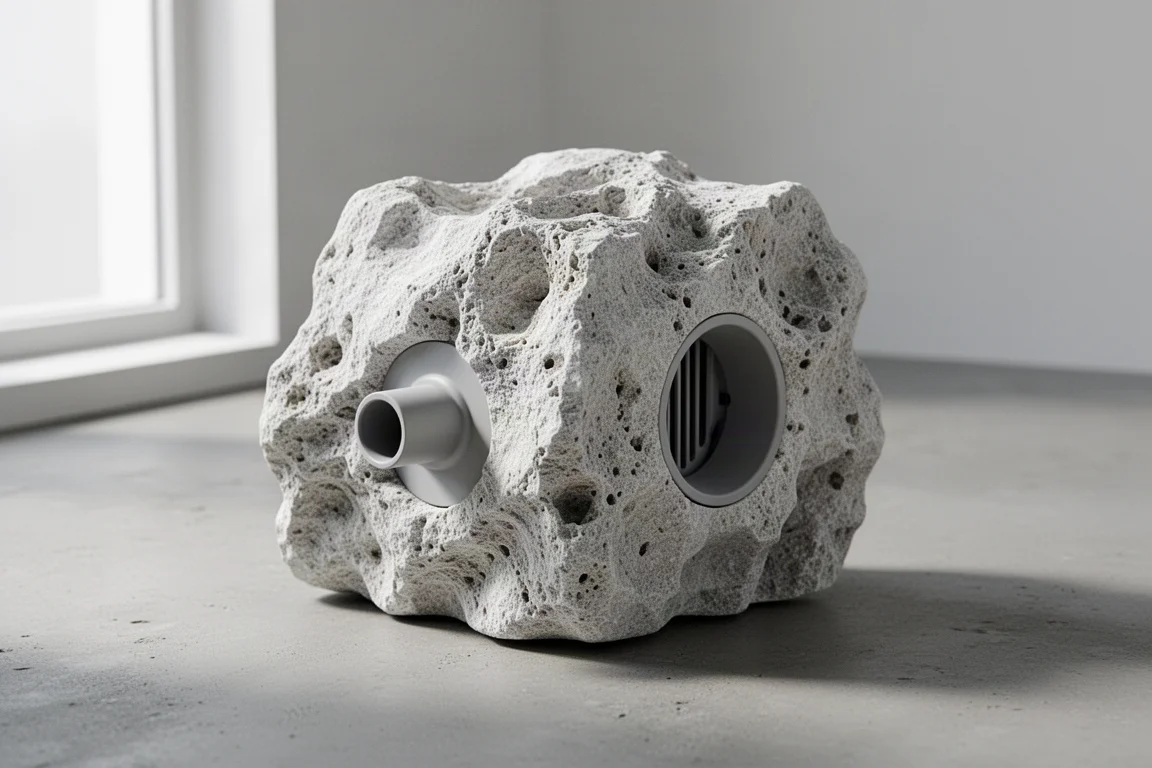
The Nanostream Rock is a fascia made from the same porous material as Tunze’s coral racks, with a look and feel that comes very close to natural dry rock. It lets a Nanostream pump be masked and hidden instead of sitting in plain view.
Installation is simple. The nozzle of the pump slides snugly into a ring inside the rock, and enough of a lip remains to attach the guard if you prefer to use it.
The fascia is designed to sit on the bottom of the aquarium or among the rock work, which makes it possible to sneak a pump into a spot that would otherwise be an eyesore. It arrives white, but like any rock in a reef tank it will be covered by the same biofilm and coralline algae as the surrounding structure and blend in seamlessly over time.
It also works as rock first and hiding place second. Frags can be mounted to it in the same way as to any other piece of rock, including zoas, star polyps, cyphastrea, mushrooms, and even SPS. The flow leaving the pump is narrow enough that it is unlikely to interrupt corals growing around the outlet, and corals are generally good at growing with the flow around them.
Maintenance and Long-Term Reliability
Maintenance on these pumps is simple. A periodic bath in a citric acid pump cleaner followed by a gentle wipe covers routine care. For a more thorough clean, the cover comes off easily and the impeller pulls straight out.
Tunze has a long-standing reputation for building pumps that last for years, and that reputation is backed by a solid warranty and strong customer service. Those qualities carry more weight with a pump that runs continuously than with equipment that is only used occasionally.
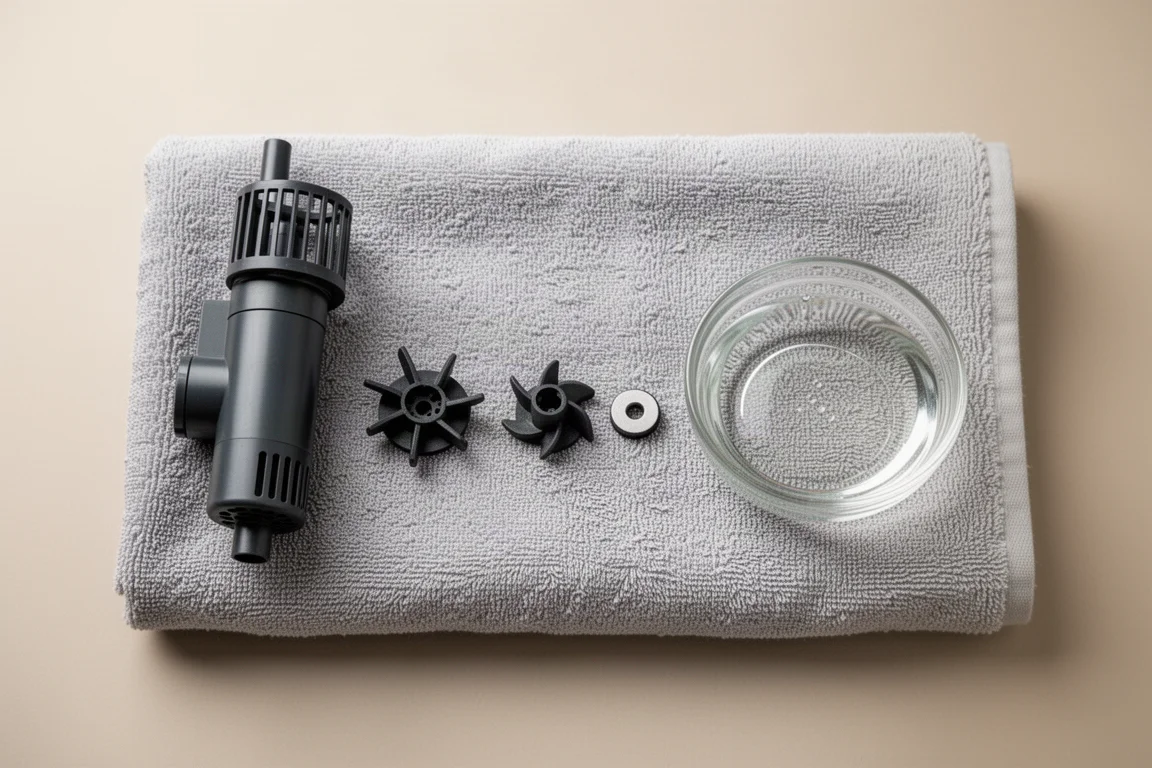
How often a pump needs cleaning depends on the system, but keeping to a regular schedule is the simplest way to protect both flow output and pump life.
Simple maintenance and a manufacturer known for durable hardware make the 6025 an easy pump to live with over the long term, which matters when the pump is doing constant work behind an aquascape where it is rarely seen.
What to Consider Before Buying
The 6025 is rated below 1,000 gallons per hour, and reef keepers used to larger pumps may read that as a limitation. In a compact system it is not, but flow needs scale with tank size and coral type, so it is worth matching the pump to the system rather than assuming one unit covers everything.
The narrow cone of flow is useful for reaching across a tank, but it also means aiming matters. A pump pointed carelessly can leave dead spots, so plan where the flow should land before mounting it.
The Nanostream Rock is a concealment accessory rather than a flow upgrade. It occupies space in the aquascape where it sits, so it suits layouts that can accommodate an extra rock shape. It also hides the pump but not the maintenance schedule, so the pump still needs to be reachable for periodic cleaning.
Finally, the Turbelle Nanostream line includes a range of pumps in different sizes and designs, so the 6025 is one option within a family rather than the only choice available.
Overall Buying Advice
The right decision starts with the tank rather than the product. Match the pump to tank size, the demands of the corals being kept, the mounting points that are actually available, and how much visible hardware is acceptable in the display.
The 6025 makes the most sense for reef keepers who want a compact, aimable pump that punches above its rating and can be positioned behind rock work or high on the back panel. The Nanostream Rock is worth adding when the goal is to make the flow source disappear into the aquascape. If the system needs more flow than a single 6025 provides, the wider Nanostream lineup offers larger options that follow the same mounting approach.
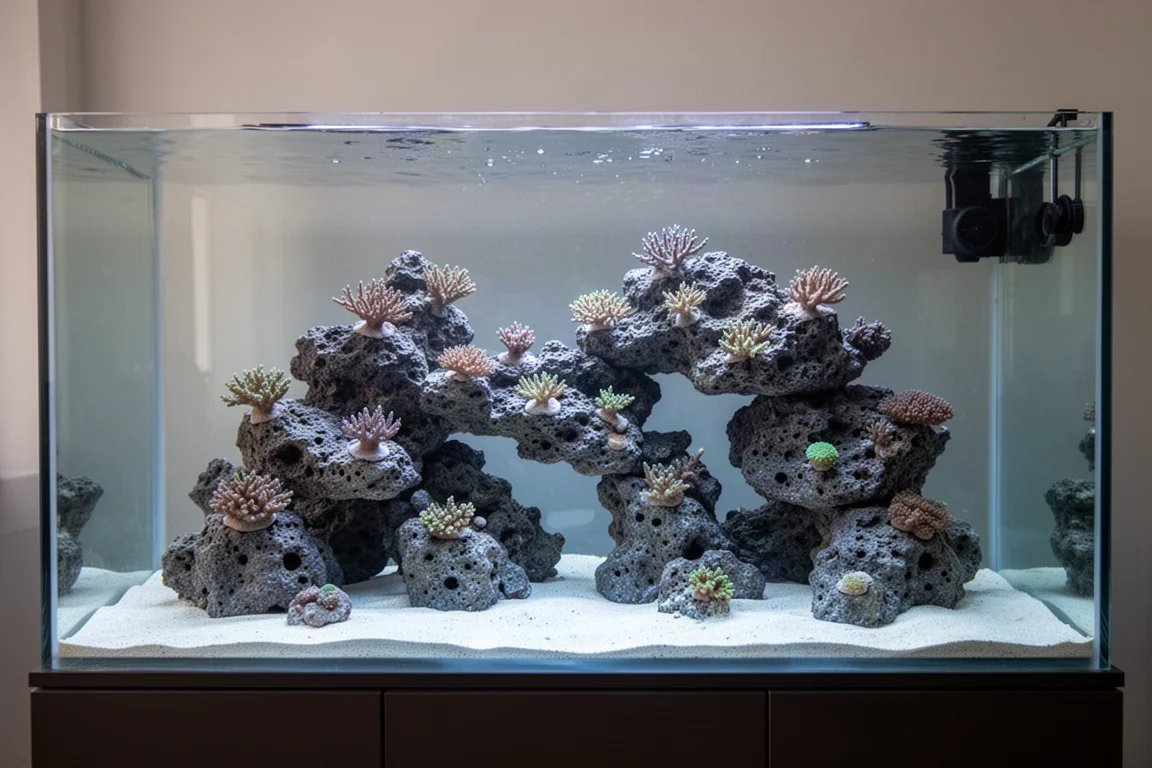
A practical approach is to choose the pump for the flow the tank needs, then decide whether the Rock fascia earns its place in the layout. Where visible equipment is a real concern, it usually does, and the ability to mount frags to it means the space is never wasted.
Conclusion
The Turbelle Nanostream 6025 remains a popular choice for good reason. It is small, affordable, easy to aim, and produces more usable flow than its 740 gallon per hour rating implies, all while consuming five watts. The Nanostream Rock extends that appeal by letting the pump vanish into the aquascape instead of competing with it.
Flow is essential to coral health, and equipment that delivers it without dominating the display is worth considering carefully. For reef keepers who value directional, adaptable flow and a clean-looking tank, this pairing is a sensible place to look.
Further reading
Related Reviews
Aquarium Equipment
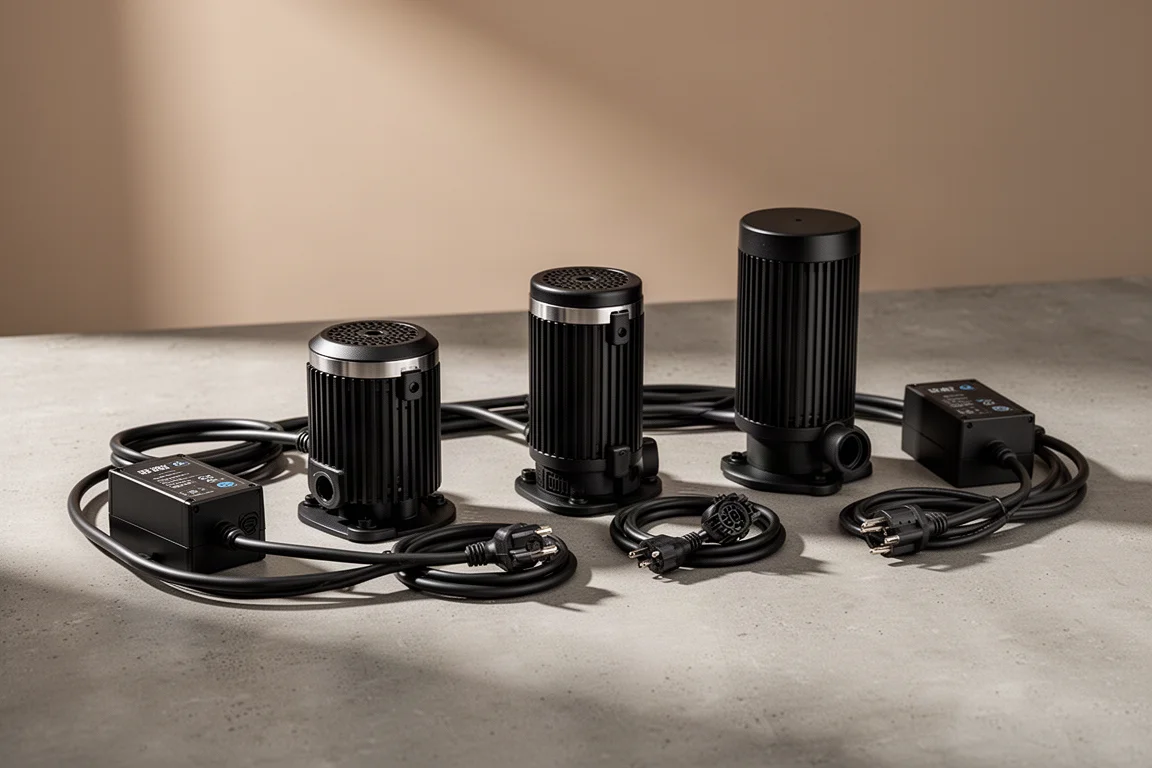
Abyzz Professional DC Pumps: A100, A200, and A400 Reviewed
A closer look at three German-made DC return pumps built for large reef systems, with titanium internals, fine flow control, and a 10-year warranty.
Aquarium Equipment
AdaptiveReef Controller Accessories: Three Tactile Upgrades for Your Reef Controller
A practical look at three AdaptiveReef add-ons that put physical switches, at-a-glance status lights, and a loud alarm within arm's reach of your reef tank.
Aquarium Equipment
Adaptive Reef Controller Boards: Basic vs Deluxe for Cleaner Aquarium Gear
A practical look at the Adaptive Reef Basic and Deluxe controller boards, what each one includes, and how to choose the right size for your tank gear.