Aquarium Equipment
Tunze Coral Rack Review: A Frag Rack That Blends Into the Aquascape
A closer look at the Tunze Coral Rack, its two sizes, waterproof magnetic mounting, frag plug fit, and the aquascaping uses that set it apart.

Introduction
A coral frag rack has one job: hold new coral safely while it settles into the tank. The trouble is that most racks look like equipment. Clear acrylic arms clipped to the glass do the job, but they rarely disappear into the display, and for reefers chasing a natural slice-of-the-ocean look, that visibility is a real drawback.
The Tunze Coral Rack approaches the same problem from a different direction. Instead of clear plastic, it uses a rough, porous ceramic body that closely resembles dry reef rock, fixed to the glass with a magnetic mount. The result is a frag rack that reads as part of the aquascape rather than an accessory hanging off the side of the tank.
Who This Product Is For
This rack suits reefers who want more coral real estate without rebuilding their rockwork. If a display is already packed and there is nowhere obvious to place a new frag, a magnetic rack adds space instantly, and it can be repositioned later if a different spot turns out to be better for the coral.
It also fits anyone who dislikes the look of conventional frag racks. The ceramic body is textured like dry rock, so it is designed to blend into the scape rather than stand out. Over time it will pick up biofilm and coralline algae, which is exactly the kind of ageing that makes a rack look more natural, not less.

There is a third group that may find this interesting: pico and nano reef keepers. One or several of these racks could work as a floating scape in a small tank, particularly for aquarists who favour negative space layouts and prefer to keep rockwork from touching the bottom of the tank.
Main Strengths
The defining strength is the material. The racks are rough and porous, and each one is handmade, so no two are identical. That matters if you plan to use more than one in the same scape, since repeated identical shapes tend to look artificial over time.
The magnetic mounts are strong, and both the internal and external magnets are waterproof. That combination makes placement flexible, including directly on an overflow. The mounts are rated to hold firmly on glass up to 15 mm thick, just over half an inch, and to support between 1.8 and 4.4 pounds depending on glass thickness.
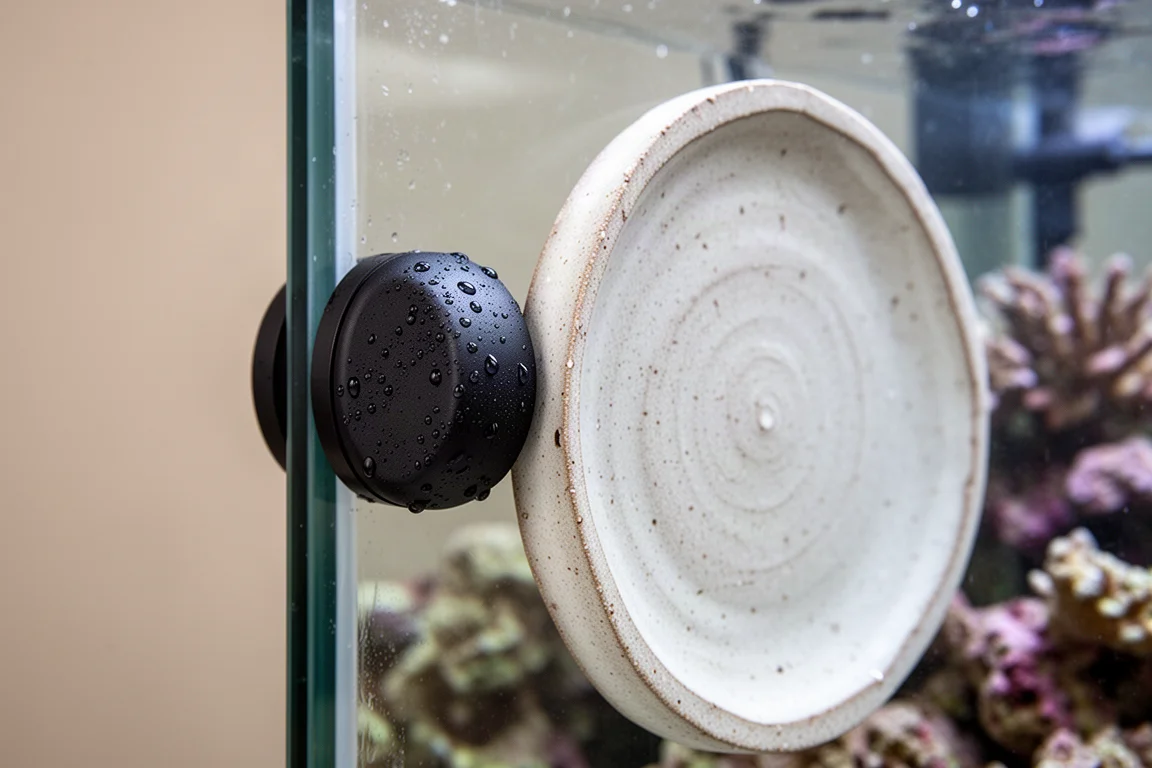
Because the surface behaves much like live rock, corals can be mounted anywhere on the rack, not only in the plug holes. That opens up a genuinely useful farming approach: let encrusting corals spread across the ceramic, and once the plugs are covered, cut them out, drop in empty plugs, and let the coral grow back over the top. Rinse and repeat.
Sizing and Frag Plug Fit
The rack comes in two sizes. The nano measures roughly 7 inches long, 5 inches high and 3 inches wide, with holes for six frag plugs. The long version measures roughly 9.5 inches long, 5.5 inches high and almost 4 inches wide, with holes for eight plugs.
Both accept plugs with a crown diameter of up to 0.9 inches and a stem diameter of up to 0.43 inches, which covers the standard frag plugs most reefers already have on hand.
Using the Rack as Part of the Aquascape
Because the rack looks like rock, it can be treated like rock. The simplest use is as added real estate in a crowded tank, a way to bring in a new coral without moving existing pieces or disturbing the current structure. If a placement does not work out, the rack can simply be lifted and moved.

The more ambitious use is as a scape element in its own right. In a pico or nano tank, one or more racks can create a floating structure that leaves open space beneath it. That style of aquascaping keeps rockwork off the bottom of the tank and can look striking in a small volume of water.
Things to Consider Before Buying
This is not the rack to choose if the goal is maximum frag density in the smallest possible footprint. A traditional slim acrylic rack packs more plugs into less space, and for some setups that efficiency matters far more than appearance.
It is also worth checking your glass thickness and the weight you intend to support before buying. The magnet rating changes with glass thickness, ranging from 1.8 pounds up to 4.4 pounds, so a heavily loaded rack on thicker glass is worth thinking through in advance.
Finally, the plug holes are sized for standard frag plugs. Unusually large crowns or thick stems will not seat properly, though those corals can still be fixed directly to the porous surface instead.
Buying Advice
Choose the size based on how much space you actually need and how much room the tank has. The nano’s six plug holes suit a smaller display or a targeted addition, while the long version’s eight holes make more sense for a busy tank or for anyone planning to use the rack as part of the aquascape itself.

Think about placement before you buy as well. A rack on the front glass will be seen constantly, while one tucked into a corner or mounted on an overflow does far more to blend in. Because the magnets are waterproof and the rack is easy to reposition, you can experiment with a few spots without committing to any of them.
Conclusion
The Tunze Coral Rack makes the most sense for reefers who care about how their tank looks as much as how it functions. It offers a way to add coral space, hold frags safely, or even build a small floating scape, all while looking like rock rather than equipment. If you want the densest possible frag storage, a conventional acrylic rack remains the more practical choice. If you want something that quietly disappears into the display, this is a well-considered option.
Product link
View more details for Tunze Coral Rack
This product is mentioned in the review. Check the specifications, options, and compatibility before buying.
View more details for Tunze Coral RackFurther reading
Related Reviews

Aquarium Equipment
Abyzz Professional DC Pumps: A100, A200, and A400 Reviewed
A closer look at three German-made DC return pumps built for large reef systems, with titanium internals, fine flow control, and a 10-year warranty.

Aquarium Equipment
AdaptiveReef Controller Accessories: Three Tactile Upgrades for Your Reef Controller
A practical look at three AdaptiveReef add-ons that put physical switches, at-a-glance status lights, and a loud alarm within arm's reach of your reef tank.

Aquarium Equipment
Adaptive Reef Controller Boards: Basic vs Deluxe for Cleaner Aquarium Gear
A practical look at the Adaptive Reef Basic and Deluxe controller boards, what each one includes, and how to choose the right size for your tank gear.