Isolation Platforms
Tuff Nut Audio GP3 Platform Review: A Handcrafted Isolation Platform Built Around Three Jobs
A close look at the GP3 Platform from Tuff Nut Audio, its layered maple and aluminum construction, its measured effect on vibration and RF noise, and the systems where it earns its place.
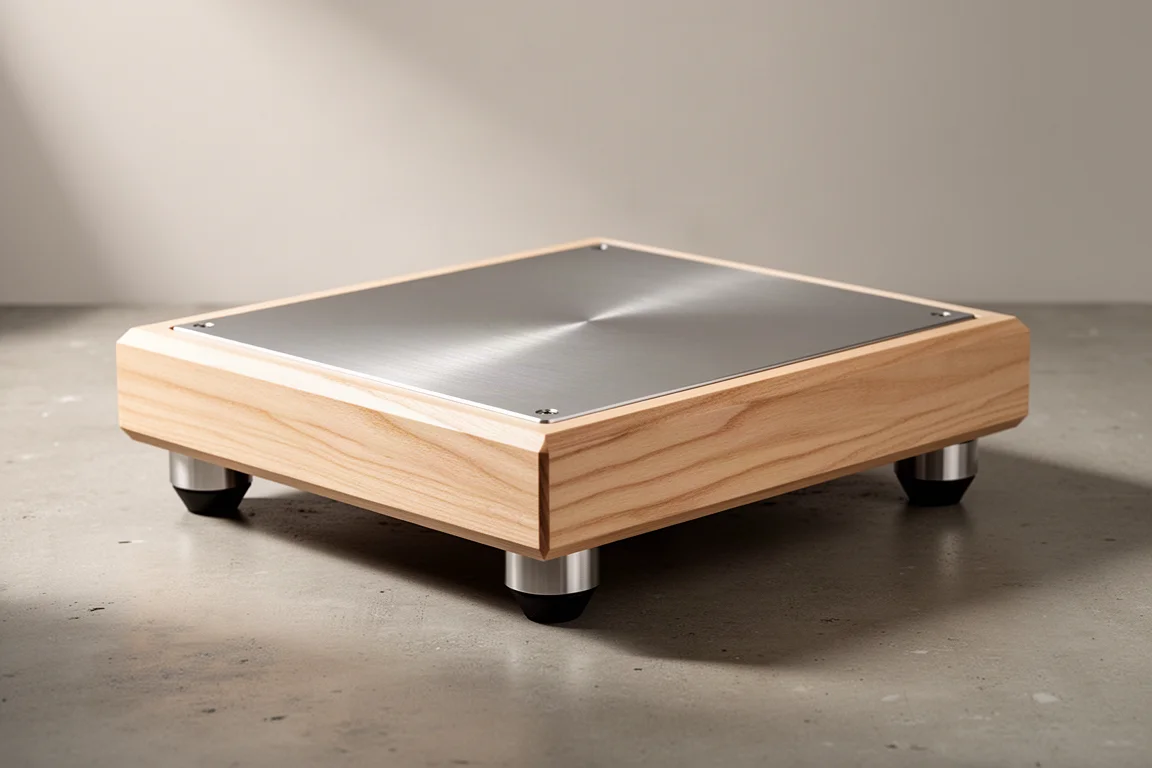
Introduction
An isolation platform has a hard job convincing anyone it belongs in a system. It does not make sound, it does not add features, and for a long time the category has carried a reputation for being more about feeling than hearing. The GP3 Platform from Tuff Nut Audio is a more interesting proposition, because it makes a specific engineering argument: that a cone or a footer only solves part of the problem, while a properly layered platform solves three.
Tuff Nut Audio frames this as the three Ds. First, disrupt the seismic vibration arriving from the floor and the rack. Second, deflect airborne energy before it reaches the component. Third, dissipate the vibration generated inside the component itself. A traditional isolation cone addresses mainly the first. The GP3 attempts all three in one piece of furniture-grade hardware.
This article looks at what is actually inside the platform, where it makes the most sense in a system, and what a buyer should realistically expect.
Who This Platform Is For
The clearest case is a turntable. A phono cartridge is a vibration sensor by design; reading microscopic movement is its entire job. Any outside vibration that reaches it, whether from the floor, the speakers, or the rack, gets read as part of the music. That is noise injected directly into the most sensitive point in the chain, and it is the reason a platform can matter more here than almost anywhere else.
Tube equipment is the second strong case. Tubes are microphonic, which is easy enough to confirm: tap one lightly with no music playing and you will hear it through the speakers. Every vibration that reaches a tube amplifier, preamplifier, or integrated amplifier has a path into the signal, so airborne deflection and internal dissipation both have real work to do.

CD players and other mechanical transports are the third. One owner with a CD player that skipped intermittently tried isolation cones under it, and the skipping stopped. The player stayed, the problem did not.
If your system is built around a DAC or a streamer, the vibration argument is weaker. There is still a mechanical benefit to be had, but it will not be as pronounced as it is under a turntable, a tube stage, or a disc transport. Where a platform like this can still earn its place under digital gear is the electrical side, which we will come to.
Main Strengths
The GP3 is not a slab of wood with feet. What sets it apart is how consistently the design follows the physics it claims to address, and how much of that reasoning is visible in the materials rather than in the marketing copy.
Inside the Stack: Alternating Hard and Soft Layers
Under the surface is a stack rather than a solid block. On top sits a quarter-inch treated aluminum plate. Below it is a composite rubber pad, then a layer of dense low-profile rib rubber laid in a parquet pattern and bonded to a cork and rubber substrate. Three further layers of sound and vibration absorbing material sit below that, before you reach the maple.
The point is not the layer count. It is the alternation between hard, stiff layers and soft, lossy ones. Every time vibration crosses from a hard layer into a soft one, part of the energy reflects off the boundary because the materials do not match, and part is sheared inside the soft layer and converted to heat. A single rubber layer knocks down one band of frequencies. A stack of mismatched layers targets a wide range of them. That is the mechanism a single rubber foot or a single cone physically cannot replicate.
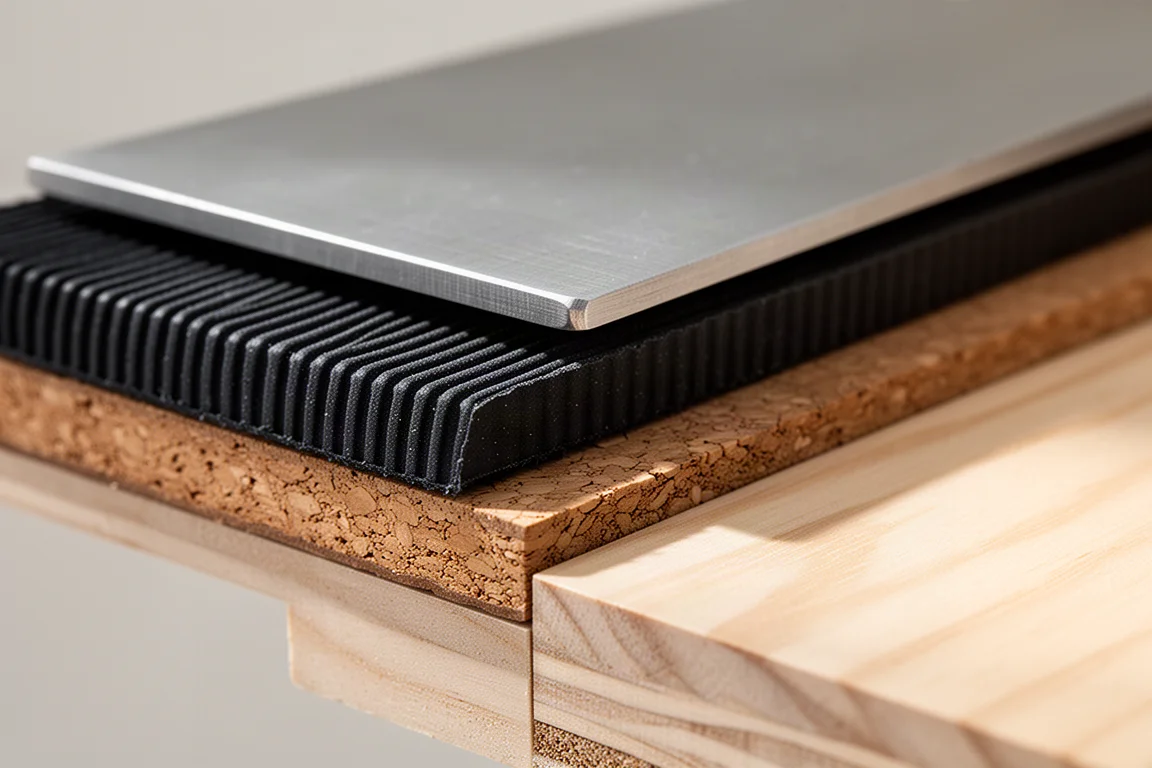
The feet follow the same logic. A heavy stainless barrel sits on shock-absorbing rubber cones, and every point where hardware meets maple is isolated with a rubber washer. Nothing goes metal straight into wood.
Real-World Uses: Turntables, Tube Gear, and CD Players
The pattern across use cases is consistent. Gear with a mechanical or microphonic element benefits most, and the benefit scales with how sensitive that element is. A turntable sits at the top of the list, tube gear follows closely, and a CD player or transport rounds out the practical cases.
Under a turntable in particular, the platform was found to change the presentation enough that the shift was comparable to a component-level upgrade, opening up the soundstage and letting a solo cello recording sound closer to the instrument in the room. That is a strong claim, and it rests on listening rather than on a measurement.
The Aluminum Plate and RF Rejection
The aluminum plate is doing two jobs. Damping is the obvious one. The less obvious one is shielding. Aluminum is used for high-end component chassis precisely because it rejects RF and EMI, and a grounded aluminum plate behaves in a similar way, draining interference to ground instead of letting it sit and radiate into the gear above it.
An independent designer in Quebec tested this directly. With the plate ungrounded, an oscilloscope showed a large RF oscillation riding on the surface. Grounding the plate flattened it. On an analyzer, grounding dropped the picked-up noise across the band by roughly 6 to 18 dB, which on that scale is between two and eight times lower depending on frequency. Sitting a preamplifier on the grounded plate instead of a wood table cut the 60 Hz line, the wall power hum, by about 21 dB, more than ten times lower.
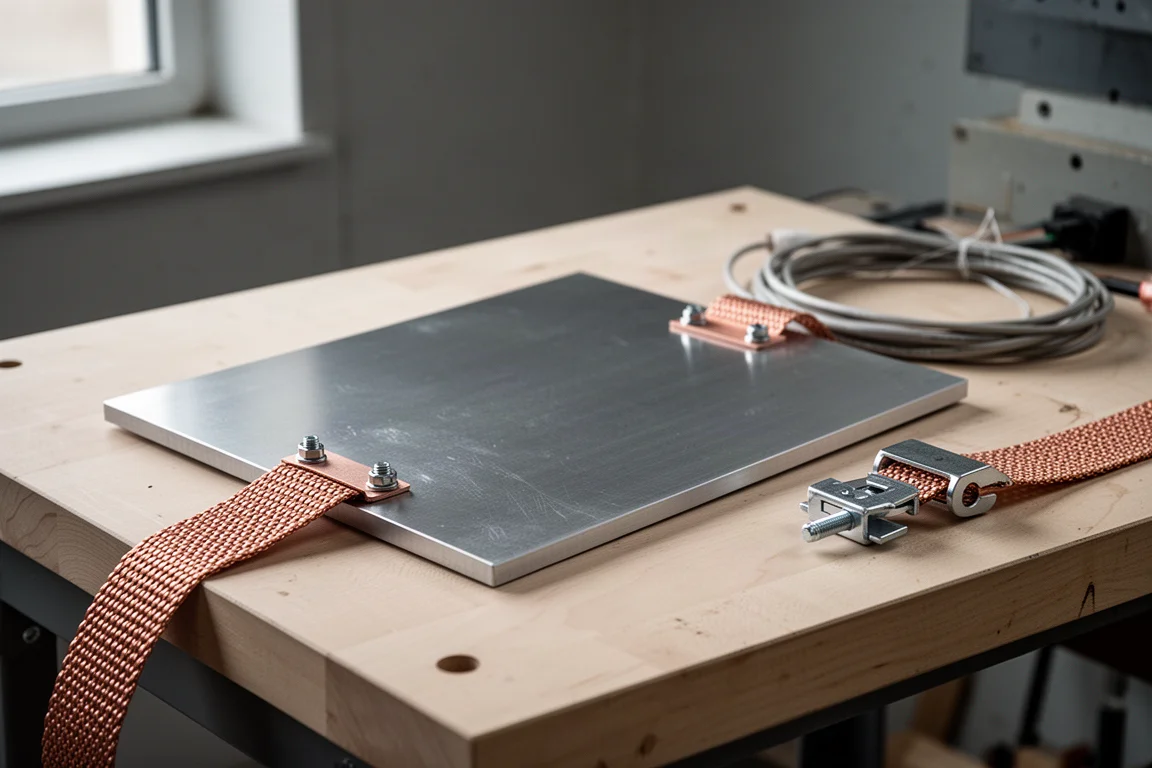
The grounding hardware reflects the same thinking. A round wire is fine at low frequencies, but RF responds to inductance rather than resistance, so the platform uses a wide flat woven copper strap, which has far less inductance and drains RF more effectively.
Materials and Handcrafted Build
Maple is not a decorative choice. It sits near the top of the Janka hardness scale and is a diffuse porous wood, which gives a denser, smoother surface. A hard, smooth surface deflects airborne energy rather than soaking it up, which is the second D built into the raw material.
The grain orientation matters too. Vibration travels about four times more efficiently along the grain than against it, so the maple runs one way and the end grain is capped with a rail running perpendicular before it touches the frame. Energy racing along the grain hits a wall and has to fight cross grain to continue. The angled bevels are similarly functional: they deflect airborne sound energy down and away from the components, an approach borrowed from narrow-baffle speaker design.
There is also a more advanced version built around roasted torrefied maple and a pure copper plate. Copper is roughly 60 percent more conductive than aluminum and about three times denser, which means a mid-size platform can place something like 15 to 16 pounds right at the bearing surface. Mass is inertia, so a heavier plate makes the whole assembly harder to excite in the first place. Torrefied maple has moisture removed, which makes it more dimensionally stable across seasons, the kind of property that matters under a turntable over years of use.
Every platform is built by hand by a single master craftsman, and each one ships in a custom-built crate. Custom requests are handled too: one customer needed a platform to fit a turntable sitting on a wall-mounted steel rack, and the feet were relocated to make it work.
Things to Consider Before Buying
Two things deserve a straight answer before you buy.
First, the vibration figures come from a test rig that was co-developed with the brand. The rig simply shakes and measures, and everything is compared against a butcher block baseline, so the relative differences between a cone and the platform are meaningful. Even so, treat the numbers as directional rather than as independent laboratory data.
Second, the electrical results come from a single test on a single piece of equipment, run by an independent designer. The measurements are real, but how much of that translates into your room depends on your environment and your gear. A system with dirty power, high RF levels, or a high-gain phono or tube stage is likely to hear a meaningful drop in the noise floor. A system that already runs electrically quiet, in a quiet environment, will hear less.
The same realism applies to vibration. Under a turntable, a tube amplifier, or a CD player, the difference is straightforward to hear. Under a DAC or a streamer, expect a smaller change from the mechanical side, with the electrical benefit doing more of the work.
Buying Advice
The honest framing is that a cone gets you most of the way on structural vibration for a fraction of the cost. What a platform adds is the part a cone cannot provide: broadband control across the frequency range and rejection of airborne energy. That is the difference you are paying for.
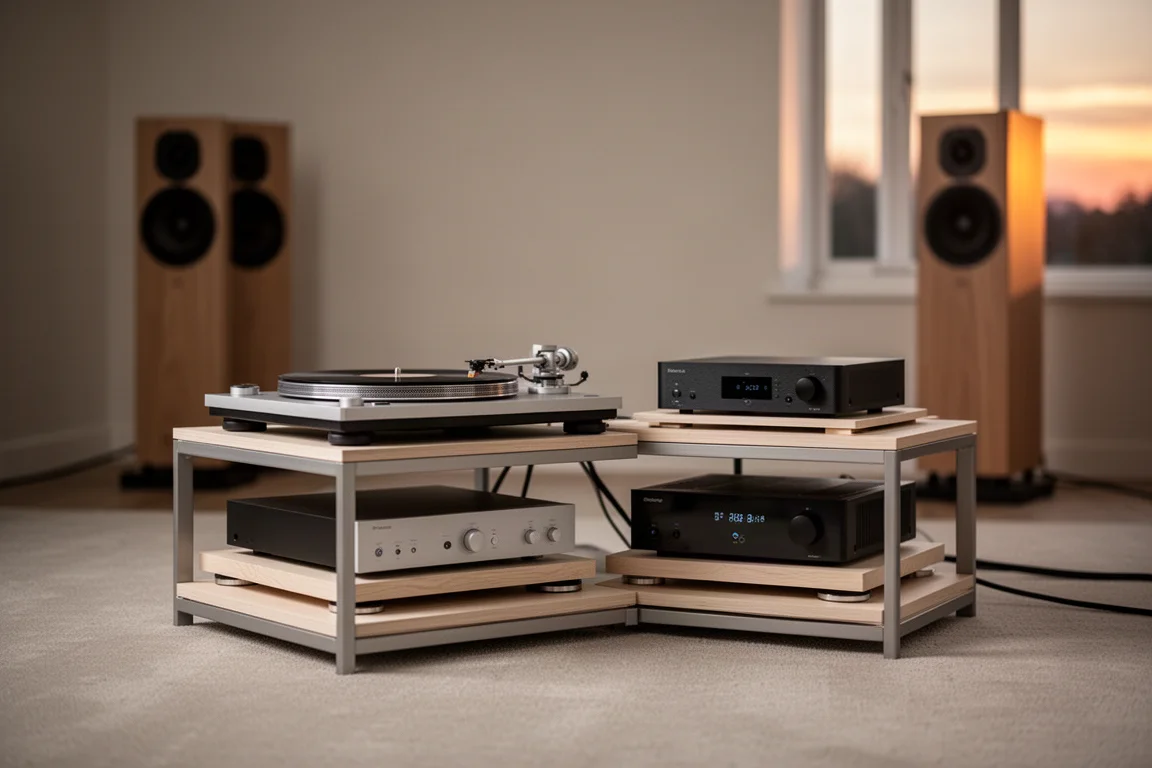
On value, a platform is a one-time purchase. The gear above it will change; the platform will not. It is made to outlast the components sitting on it, and in that sense the cost spreads across every upgrade that follows. Under a turntable, a tube amplifier, or a mechanical disc player, the GP3 is easy to justify. Under digital-only gear, buy it for the electrical side and keep expectations calibrated.
If your priority is maximum performance and your environment has a genuine RF or EMI problem, the torrefied maple and copper plate version is the more capable build. It attacks both mechanisms at once with a better conductor and a heavier, more stable platform. Note that this version has not been compared head to head against the aluminum plate model on a test bench, so the case for it rests on material properties and on listening rather than on measured side-by-side data.
Conclusion
The GP3 Platform makes a specific, well-reasoned case for itself. The three Ds are not a slogan; they map onto visible design decisions, from the grain orientation of the maple to the alternating layers of the internal stack to the grounded aluminum plate. It is the rare accessory where the inside explains the outside.
For a turntable, a tube stage, or a mechanical transport, this is a considered purchase with a clear mechanism behind it. For digital gear in an electrically quiet room, it is a smaller, more situational upgrade. Either way, the platform is built to stay in the system long after the components around it have been replaced.
Product link
View more details for Tuff Nut Audio GP3 Platform
This product is mentioned in the review. Check the specifications, options, and compatibility before buying.
View more details for Tuff Nut Audio GP3 PlatformFurther reading
Related Reviews
Audio Power Supplies
AIYIMA 48V 5.2A Power Supply Review: More Headroom, One Audible Catch
A higher-voltage supply for the AIYIMA A07 that adds low-end weight and a fuller bottom end, but also brings an audible tone around 1,600 to 1,700 Hz at higher volume settings.
Audio Cables
AudioQuest NRG Z3 Review: A Premium Power Cable in a Level-Matched Blind Test
The AudioQuest NRG Z3 is a heavy-duty AC power cable at a premium price. Here is what a level-matched blind comparison revealed about its bass, treble, and midrange character.

Hi-Fi Accessories
Best Hi-Fi Accessories for Summer: Five Upgrades That Improve What You Hear
A free room-measuring app, a genuinely quiet fan, a serious Bluetooth speaker, and two vinyl essentials that make summer listening better.