Sharpening
Tsushima Japanese Natural Stone: A Splash-and-Go Finisher Put to the Test on a Kotetu 150mm R2 Petty
A hard, glassy Japanese natural stone from Tsushima Island used as a finishing stone on a 150mm R2 petty, with impressions on feedback, polish, and who it suits.
Introduction
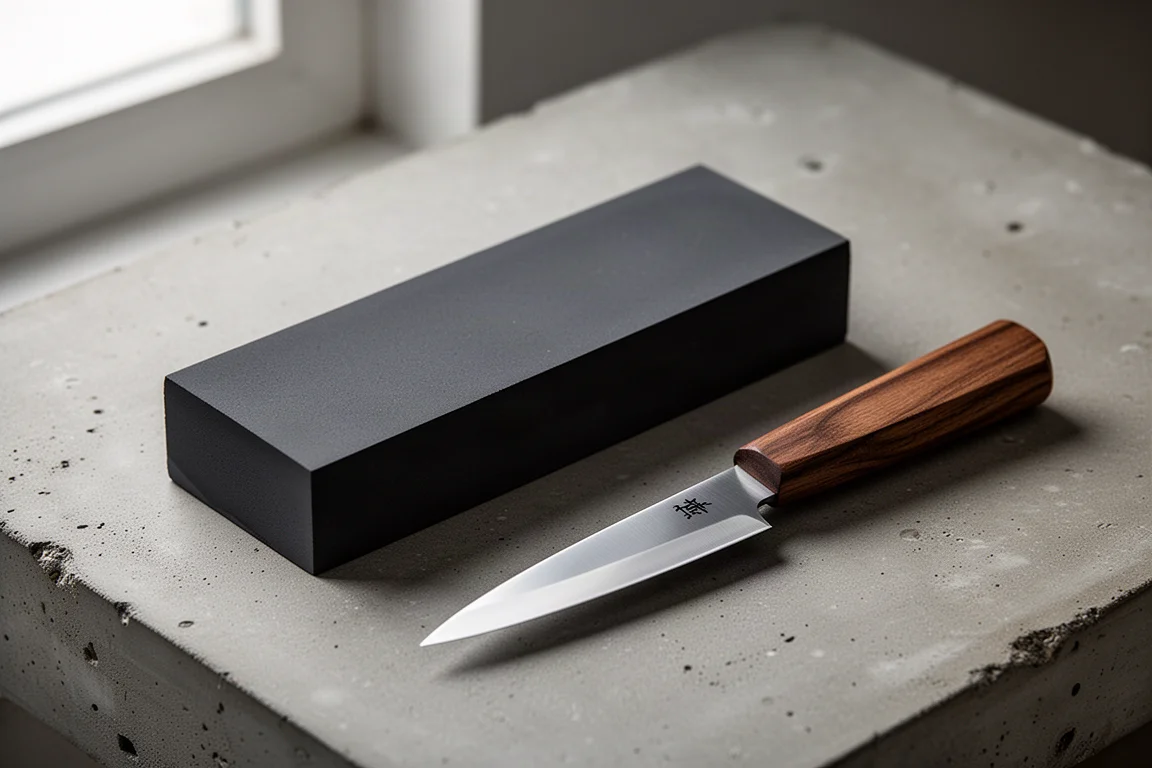
Sharpening accessories are not a category we cover often, but this one earned a closer look. The Tsushima Japanese Natural Stone, in its Ocean variety, arrived as a splash-and-go finishing stone and was put straight to work refreshing the edge on a Kotetu 150mm R2 petty. What followed was a genuinely pleasant session at the stones, with some clear takeaways about who this type of natural stone is for and who should pass.
About the Tsushima Japanese Natural Stone
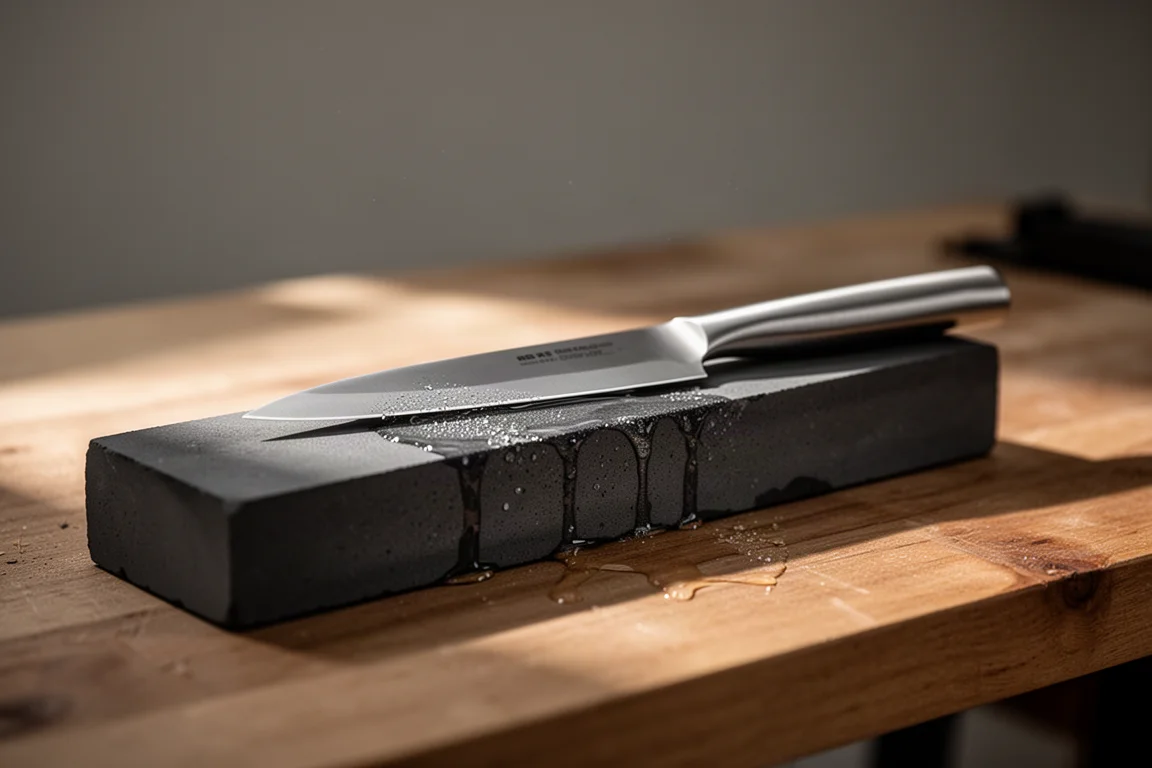
The name describes exactly where the stone comes from: it was mined from Asakasa Bay near Nagasaki, off Tsushima Island. This is the Ocean variety, not the coarser, browner Mountain variety with holes in its surface. The stone is often called a Suchiman nagura, and while some sharpening purists argue that means it is not a whetstone, the word nagura simply refers to correcting, so a correcting stone can describe many things, from flattening plates to bench stones like this one.
For its size, it is quite affordable for a Japanese natural stone. The stone arrived in a nice textured box with branding stamped in both Japanese and English, though presentation may vary between units since stamp placement differs from piece to piece. All five facets are sealed with cashew lacquer to prevent cracking and support longevity. It is a hard stone, best used for pre-polish or finishing polish, with a grit estimated anywhere between 4,000 and 6,000.
First Impressions of the Tsushima Stone
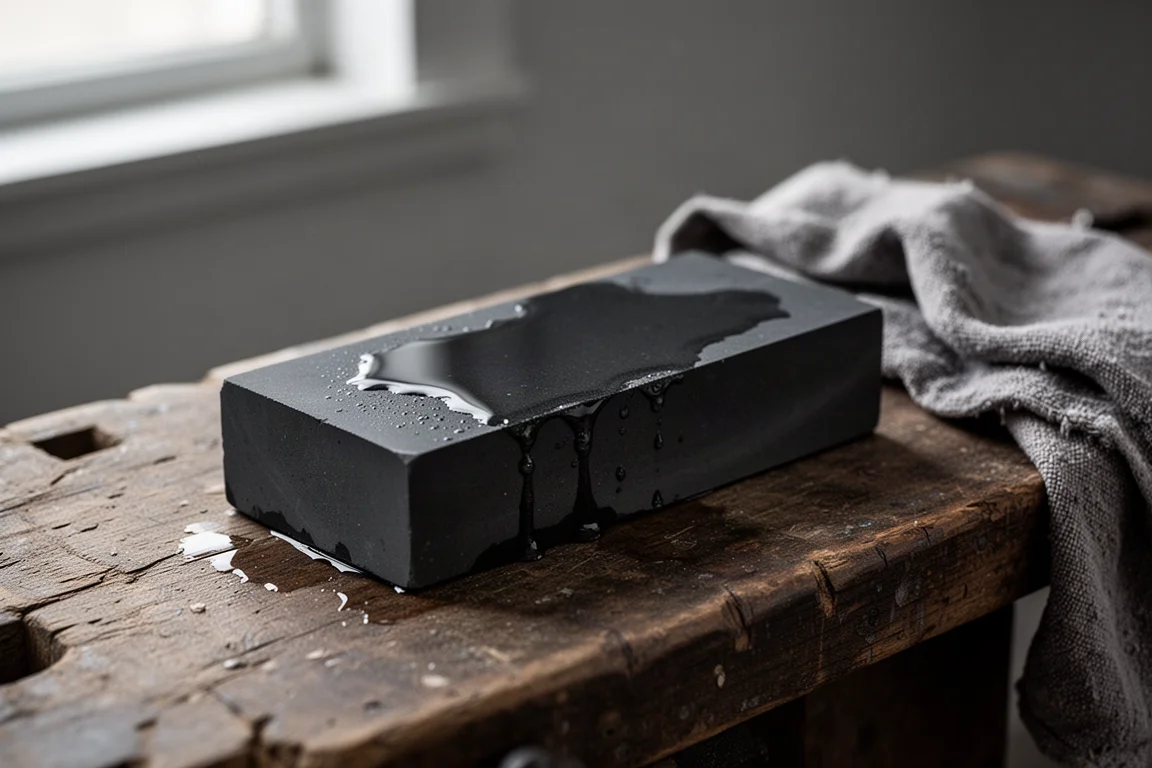
The first thing that stood out was how pitch black the stone becomes when properly loaded with water. It does not produce much slurry on its own, which was left unassisted deliberately to see how the stone behaved over a single session. The feeling in use is super hard and glassy, and the feedback is consistent in a way that makes longer finishing sessions genuinely enjoyable.
One caution applies immediately: this is not a stone for a dull knife. It wants a knife that already has a proper 1,000 to 3,000 grit edge underneath it before it does any work.
Sharpening Results on the Kotetu 150mm R2 Petty
For this test, the petty was first brought back to a 1,000 grit edge on a glass plate, then progressed to the Tsushima Ocean stone as the finishing step. The stone did not cut extremely fast, which is expected of a hard finishing stone at this grit range, but the result was a very nice mirror polish and a refined, sharp edge.
At its thickness, the stone should last a very long time, likely longer than most owners will ever use it. A follow-up experiment worth trying is using a handheld nagura to raise slurry and see how that changes the journey and the final result.
Things to Consider Before Buying
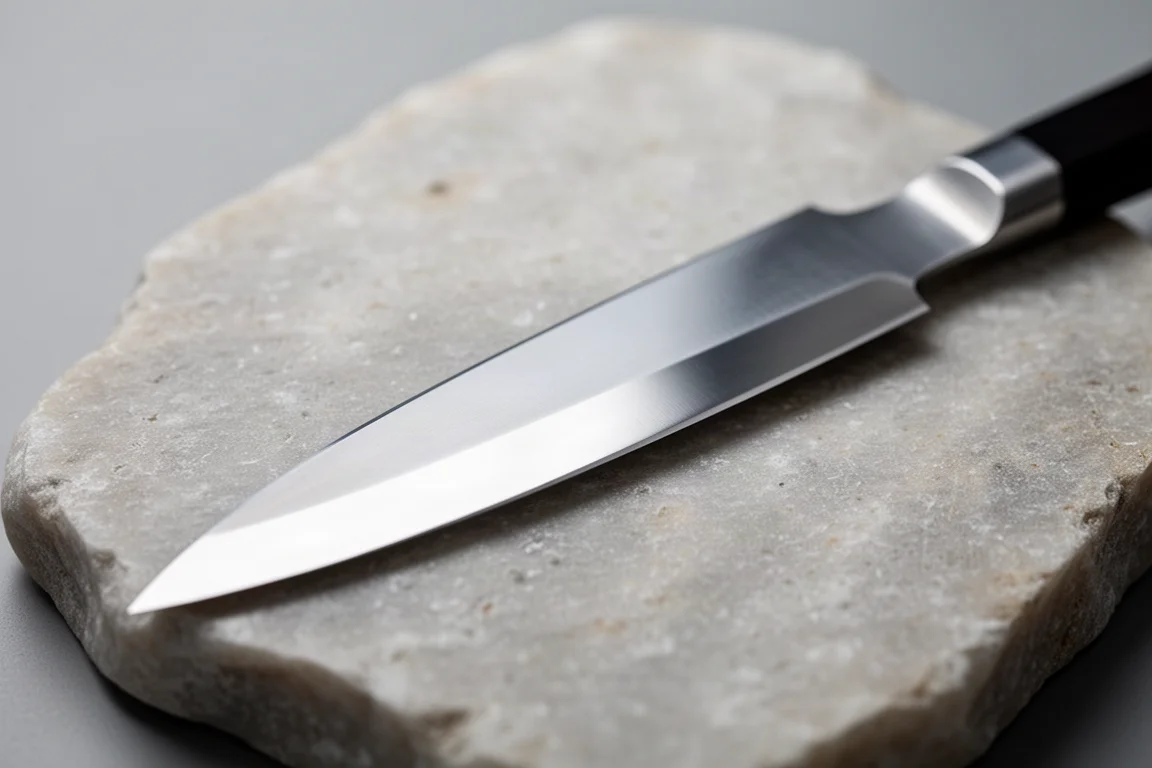
The single largest issue with any Japanese natural stone is that it is natural, so consistency from one stone to the next is never guaranteed. Stones from different mines are sometimes labeled improperly and may not be what they are advertised as. Do your research, enjoy the process, and avoid spending heavily on natural stones until you know what you are looking for.
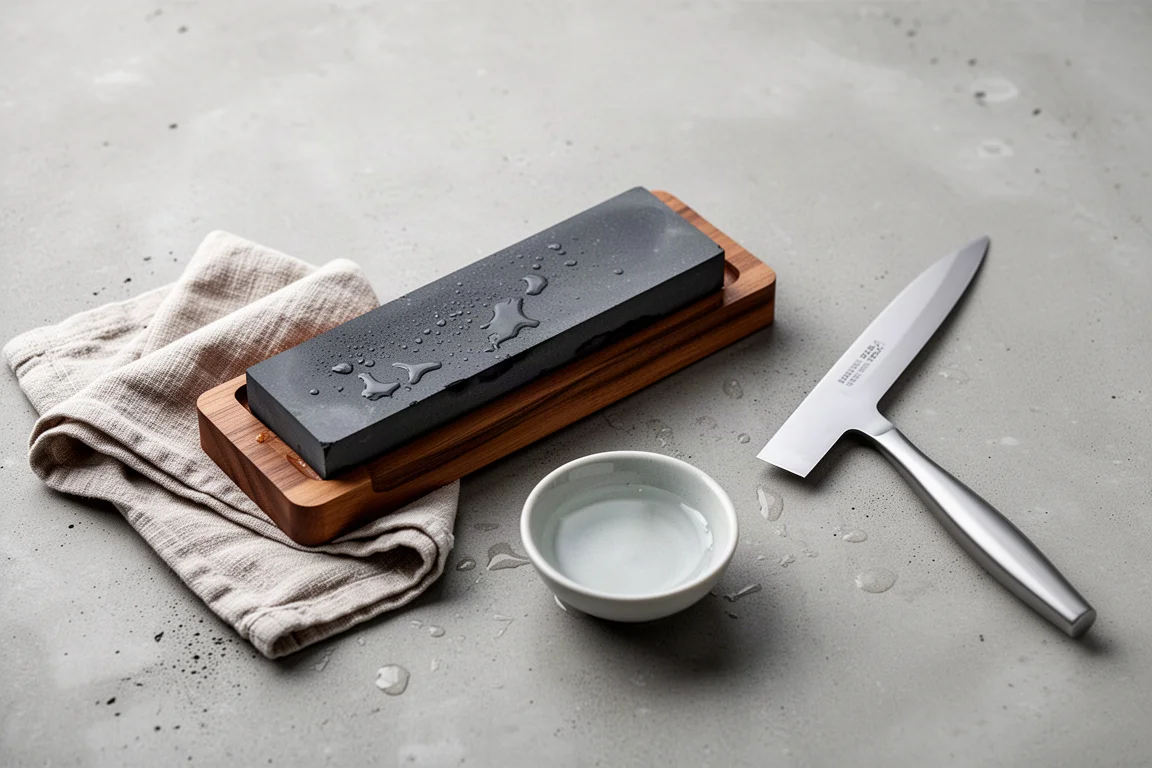
This stone is ideal for super polished edges and definitely not suitable for a kasumi finish, as it is simply too hard. Impressions can also shift depending on final price, so it is worth checking current availability and cost before committing. One small but telling detail: the ink stamp on the stone survived its first full use without washing away.
Who Should Consider This Stone
This is a medium-to-high grit stone, leaning closer to the medium end of that range, and it rewards patience. It suits anyone who already owns coarse and mid-range stones, enjoys a splash-and-go workflow, and wants a hard, consistent finisher for polished edges on kitchen knives.
Conclusion
The Tsushima Japanese Natural Stone in the Ocean variety delivers glassy, consistent feedback, a lovely mirror polish, and impressive longevity for an affordable natural stone. Pair it with a knife that already carries a 1,000 to 3,000 grit edge, and it makes a satisfying final step in a sharpening progression. Skip it if you chase kasumi finishes or need fast stock removal, but as a finishing stone, it is an easy recommendation for the right sharpener.
Product link
View more details for Tsushima Japanese Natural Stone (Ocean variety)
This product is mentioned in the review. Check the specifications, options, and compatibility before buying.
View more details for Tsushima Japanese Natural Stone (Ocean variety)Further reading
Related Reviews
Everyday Carry
Building the Perfect EDC Toolkit: 9 Essentials Worth Packing
From the Knafs Tool Burrito to Loctite 248, here are the gear maintenance essentials that make a compact EDC toolkit genuinely useful.
Tools
Best Torx Screwdrivers for Knife Maintenance: OEM, Craftsman, Snap-On and Vera Compared
A practical comparison of Torx screwdrivers for knife service, covering a T5-T10 OEM set plus Craftsman, Snap-On and Vera single drivers.
Knife Sharpening
Essential Sharpening Stones: A Grit-by-Grit Guide to Building Your Setup
From coarse repair stones to mirror-polishing superfines, a practical look at the whetstones worth owning and which grits every sharpener actually needs.