Aquarium Supplements
Tropic Marin Carbon Dosing Guide: Five Products and How to Choose
A practical look at Tropic Marin's carbon dosing range, from Plus-NP to Reef Actif, and how to match each product to the phosphate level in your reef tank.
Introduction
Carbon dosing is usually introduced as a nutrient export method: add a carbon source, let bacteria multiply, and watch nitrate and phosphate fall. That is only half of what is happening. Coral polyps need phosphate, but they are not good at pulling dissolved phosphate out of the water column. What they handle well is phosphate delivered as undissolved particles, the sort that spreads across a reef when fish waste drifts down onto the coral.
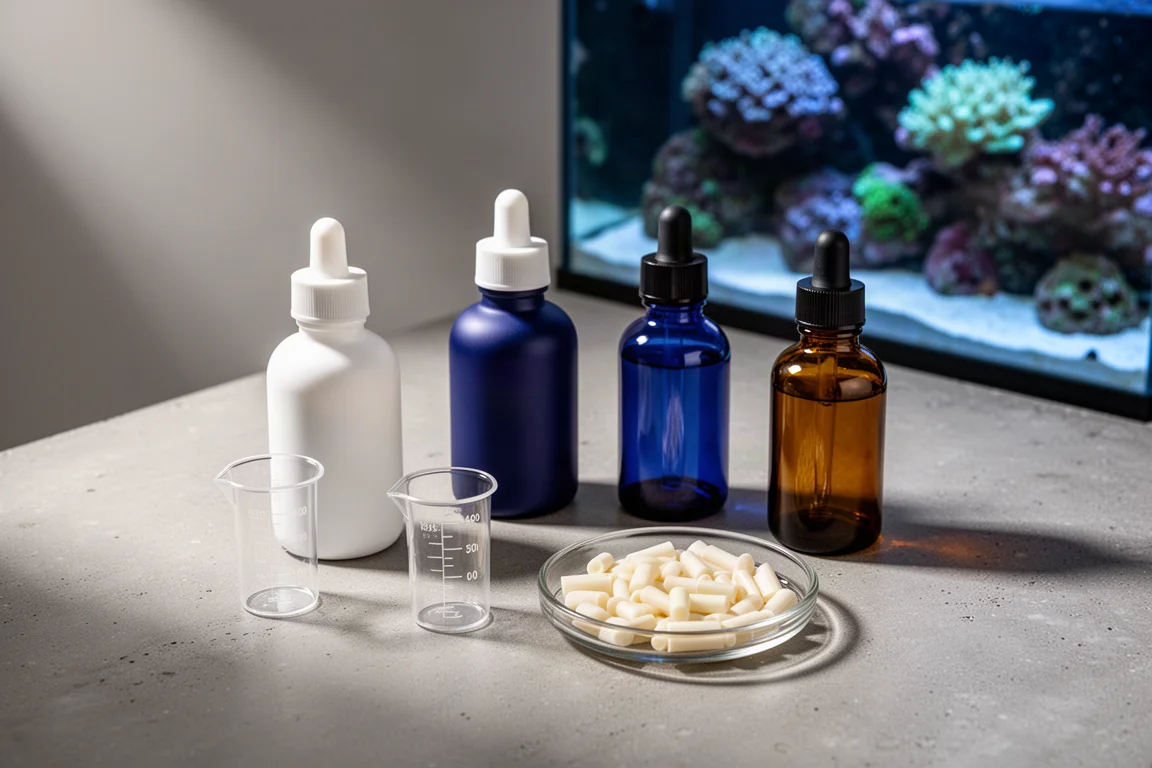
A carbon source feeds bacteria that can take dissolved phosphate out of the water, and those bacteria become a particle the coral can actually eat. The water column loses phosphate, and the coral gains it. Tropic Marin builds a small family of products around that idea, each aimed at a different phosphate situation. This guide walks through what each one does and when it makes sense.
How Carbon Dosing Works
On a reef, dissolved phosphate in the water is very low. The nitrate to phosphate ratio there sits close to 1:1, or 2:1, and only stretches to perhaps 3:1 or 4:1 at most. A much higher ratio borrowed from open-water algae studies does not describe a coral reef, so it is not a useful target for a reef tank.
Corals get their nitrogen from urea and ammonium, not from nitrate. That is why nitrate tends to accumulate in an aquarium: the coral polyps have no real use for it. Phosphate is the opposite problem. It is essential, and the supply route is the difficult part.
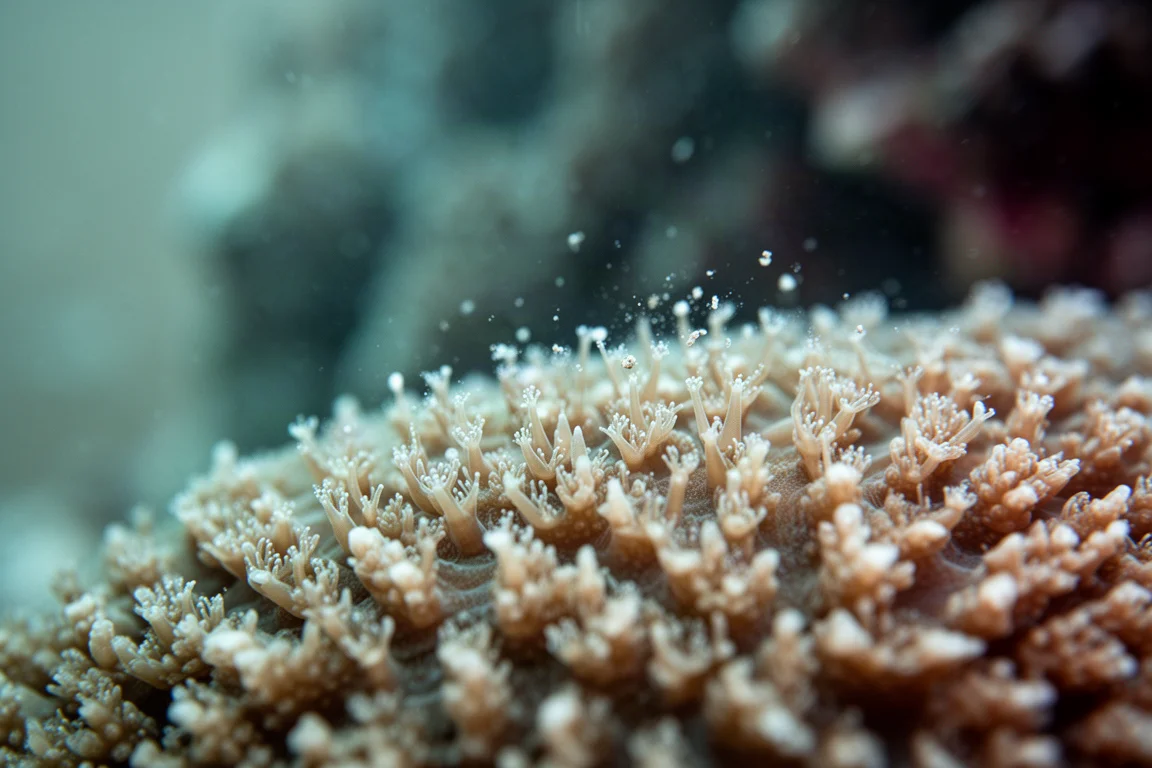
That is where carbon dosing earns its place. Beneficial bacteria have the mechanism to take up dissolved phosphate, and once they have it, they become a form of particulate phosphate that corals can consume. Phosphate is not absorbed into a media pad and thrown away. It is converted into food.
The carbon source matters. Short carbon chains, the kind found in vodka, vinegar, or sugar, feed a very broad range of bacteria, including the ones that cause problems in a tank. Longer carbon chains favor the beneficial bacteria that can break them down, while many of the undesirable organisms lack that ability. Choosing a longer-chain source lowers the odds of fueling something unwanted.
How the Tropic Marin Carbon Dosing Line Fits Together
The system is organized around a target phosphate range rather than a single dial where more product simply means less phosphate. The practical window runs from roughly 0.05 ppm at the low end to about 0.15 ppm at the top, with some tanks running a little higher without trouble. Where your tank sits in that window decides which product you reach for.
Below the range, you add phosphate and nitrogen compounds. Inside the range, you run carbon dosing that also replenishes a measured amount of both. Above the range, you run carbon dosing on its own to bring phosphate down, then switch once it lands near 0.1 ppm. Two further products, the pellets and Reef Actif, sit outside that progression and can be used at any phosphate level.
Tropic Marin Plus-NP: For Tanks Below the Target Range
Plus-NP is the entry point for a tank whose phosphate has fallen under the target range. It supplies nitrogen compounds and phosphate, along with a small amount of carbon dosing to get the bacterial process moving. The nitrogen here is urea and ammonium rather than nitrate, which is the form corals actually use.
Phosphate responds quickly enough to see on a test kit. The nitrogen side shows up more slowly, as nitrate may begin to appear once those compounds have cycled through the system. That makes Plus-NP a reasonable fit for a tank with low phosphate and nitrate you are already happy with, since it will not push nitrate up right away. From the low end, the aim is to climb toward about 0.1 ppm before changing anything, so the later carbon dosing has room to work.
Tropic Marin NP-Bacto-Balance: Holding Phosphate Steady
NP-Bacto-Balance combines carbon dosing with a measured addition of nitrogen and phosphate, designed to hold phosphate inside the target window instead of pushing it there. It is not a tool for correcting a nitrate to phosphate ratio, and it does not balance nutrients independently of what the tank is doing.
What it does is keep phosphate available to bacteria, and therefore to corals, without the risk of stripping a tank down to nothing. Because every system imports and exports nutrients at its own rate, levels can still drift up or down, and testing stays part of the routine. For a tank already sitting where you want it, a modest dose is the low-risk way to add the coral-feeding side of carbon dosing without disturbing existing numbers.
Most long-term carbon dosers settle here once phosphate is stable, adjusting only as feeding and filtration change over time.
Tropic Marin Elimi-NP: Bringing Phosphate Down
Elimi-NP is NP-Bacto-Balance without the NP. It is carbon dosing alone, with no nitrogen or phosphate added, intended for tanks running above the target range. The bacteria take up dissolved phosphate, the coral eats the bacteria, and the water column phosphate reading falls as a result.
Because there is nothing added back, this is the product where an aggressive dose can pull nutrients down further than intended. The sensible approach is to use it to bring an elevated reading into range, then move across to NP-Bacto-Balance once phosphate reaches roughly 0.1 ppm.

Tropic Marin NP-Bacto-Pellets: Gentle, Automatic Carbon Dosing
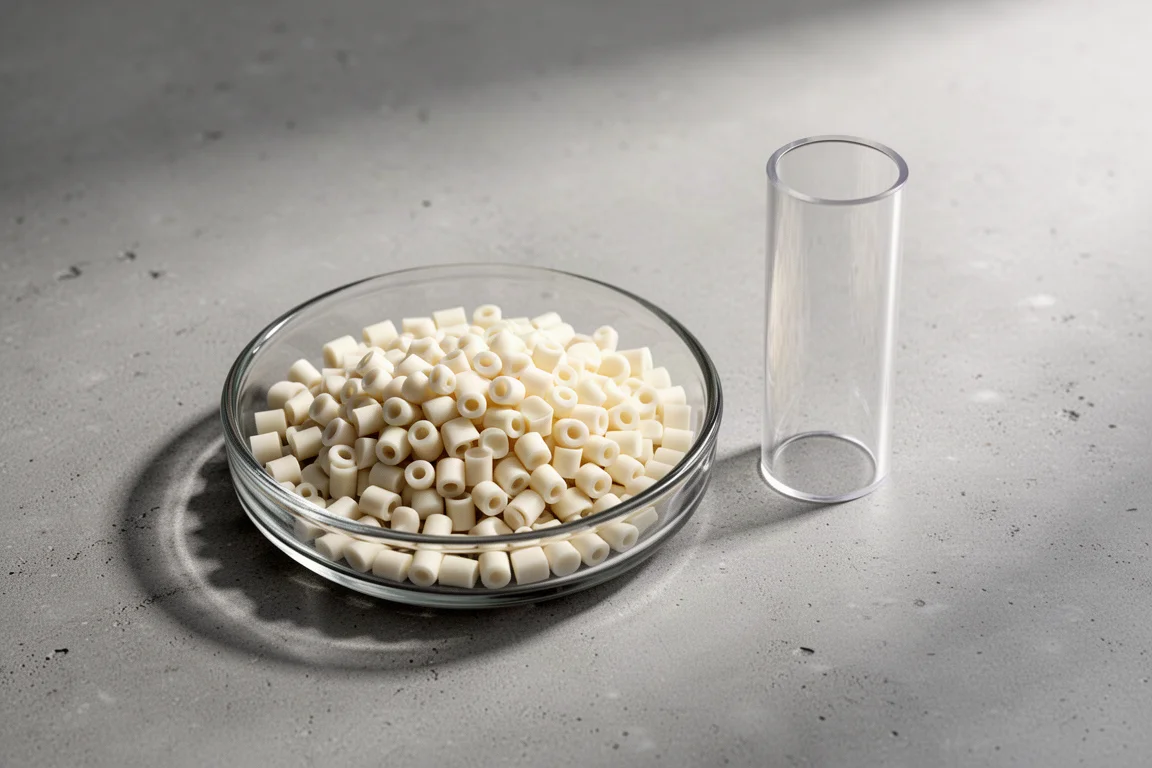
The pellets take a different route. They are a polymer medium used in a fluidized bed reactor, where bacteria colonize the surface and consume the polymer slowly. The result is continuous, gentle carbon dosing that is set once and left alone, rather than a daily dose measured from a bottle.
Flow is the key adjustment, and it runs opposite to most reactor media. You do not want maximum flow. You want the minimum flow that keeps every pellet moving, right down to the bottom of the bed, so the water stays in contact with the polymer long enough for bacteria to take up nutrients. Pellets that sit still can congeal; if the bottom of the bed settles, break the clumps apart by shaking the reactor or pull those pellets out.
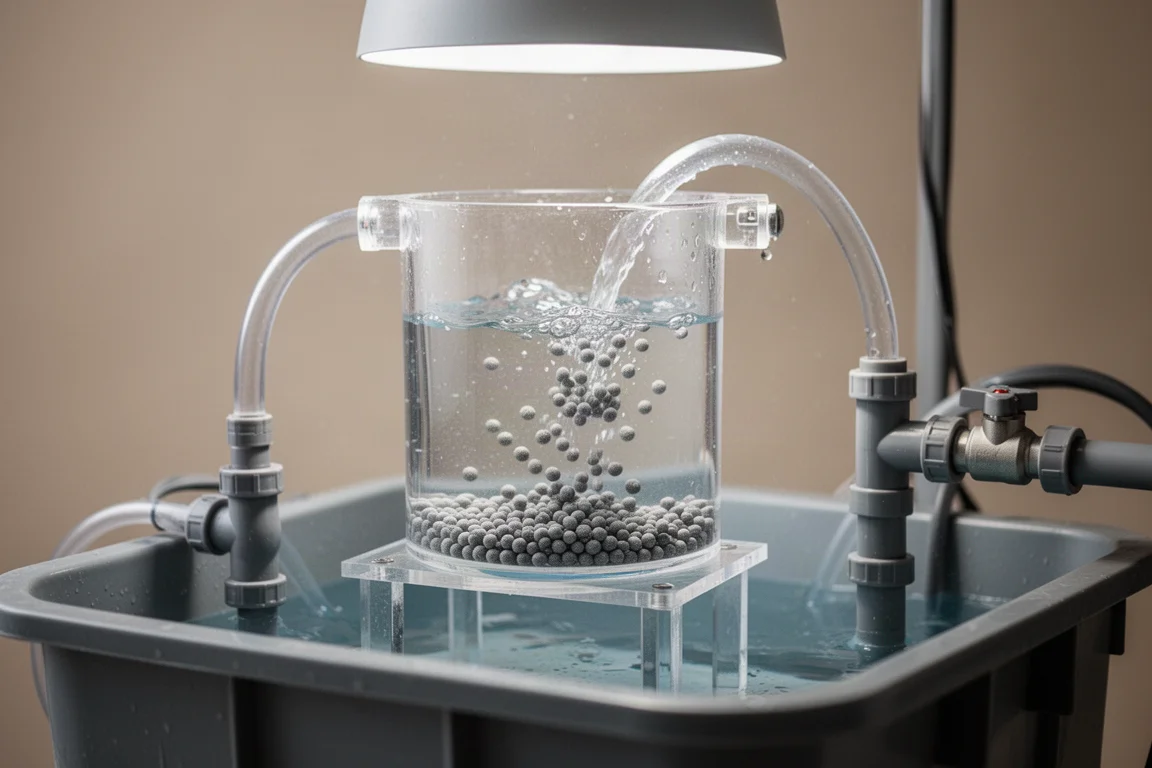
Because the polymer is consumed over time, expect to top up the reactor every six to eight months, and check the flow periodically as tubing collects a film. The usual downside of a pellet reactor is the extra pump, and it is not always necessary: fed from a manifold port or a valved branch off the return, with the outlet draining into the sump, the reactor runs on flow the system already produces. Pellets can be used at any phosphate level and alongside the other products, and they rarely drive nutrients to zero the way an aggressive liquid dose can.
Tropic Marin Reef Actif: Long-Chain Marine Polymers
Reef Actif is a separate form of carbon dosing built on long-chain marine polymers, the same type of material that originates from seaweed in the ocean. It is gentle and slow acting, and it is not tied to a phosphate threshold. You can run it at any phosphate level, together with the pellets, and continue using Plus-NP or Elimi-NP to nudge phosphate up or down as needed.
The same polymers are already present in Tropic Marin Bio-Actif salt, which means regular water changes with that salt deliver a low-level, continuous form of gentle carbon dosing. If you use a different salt, dose Reef Actif directly into the tank as directed rather than mixing it into your water change container, where its behavior is less predictable.
Nitrate and Phosphate Troubleshooting
Two questions come up constantly, and both have simple answers worth trying before you change products.
If phosphate looks good but nitrate keeps climbing, remember that corals are not consuming nitrate for their nitrogen. Water changes are the direct fix: two 20 percent changes remove a substantial share of the nitrate, and then it is worth reviewing how much you feed, since any food that goes uneaten ends up as nitrate. Dialing feeding back slightly often explains the difference.
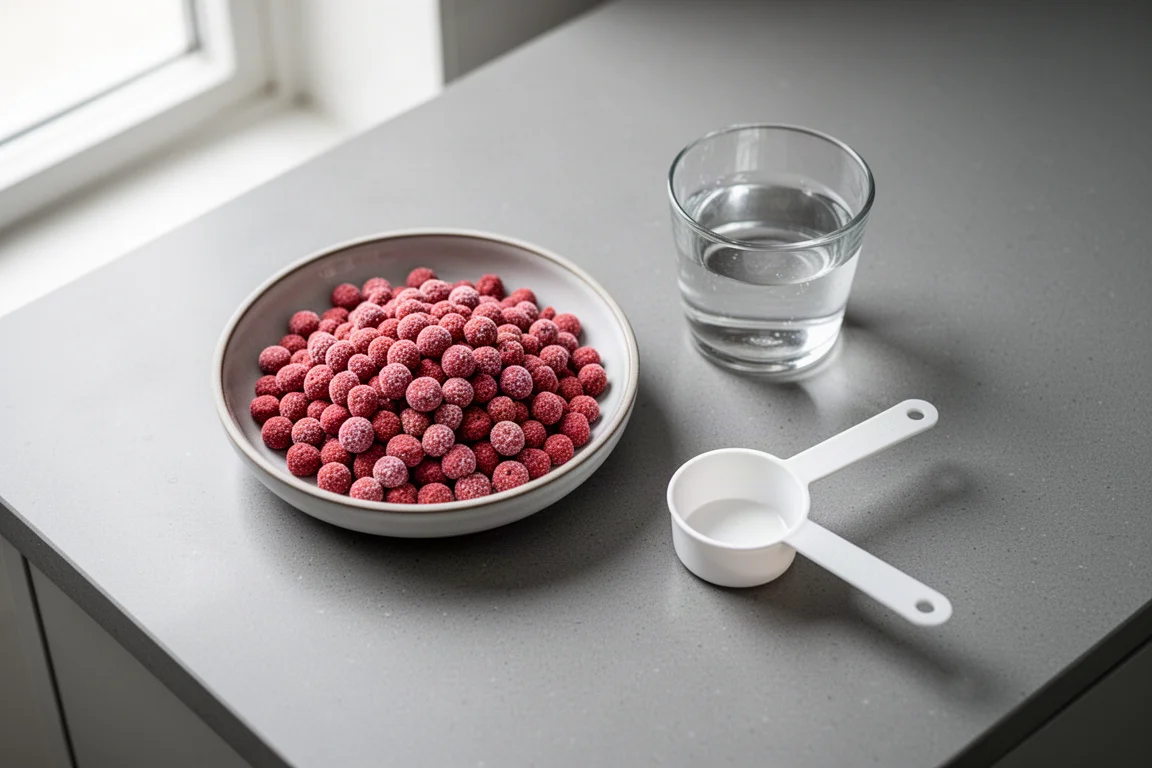
If phosphate is the stubborn number, look at what you are feeding. Phosphate is a common preservative, and when it appears among the first three or four ingredients on a food label, that import may simply outweigh your export. Frozen foods deserve a closer look as well, particularly whether the protein figure is listed by dry weight or wet weight, because that number changes considerably once the food is hydrated.
Conclusion
Carbon dosing is worth thinking about less as a way to fight algae and more as a way to move phosphate into a form corals can use. Lower nutrient readings are a side effect of that process, not the whole point. Tropic Marin’s range maps neatly onto that idea: Plus-NP for tanks below the target range, NP-Bacto-Balance for holding steady, Elimi-NP for bringing elevated phosphate down, and the pellets or Reef Actif for gentle, continuous dosing at any level. Test as you go, keep an eye on import and export, and the system largely looks after itself.
Further reading
Related Reviews
Aquarium Supplements
Brightwell NeoPhos and NeoNitro Review: Precise Nutrient Control for Low Nutrient Reef Tanks
A practical look at Brightwell NeoPhos and NeoNitro, two concentrated supplements for reef keepers who cannot keep phosphate and nitrate above zero.
Aquarium Supplements
Nyos Absolute Aminos Review: Broader Coral Nutrition in One Daily Dose
Nyos Absolute Aminos packs nearly 40 ingredients into a shelf-stable coral nutrition supplement built for coloration, polyp extension, tissue health, and recovery.
Aquarium Supplements
Tropic Marin All-For-Reef vs Carbo-Calcium: Choosing a One-Part Calcium and Alkalinity Solution
A practical comparison of Tropic Marin's two one-part calcium formate solutions, covering trace elements, cost, dosing behaviour, and the trade-offs worth knowing before you buy.