Aquarium Supplements
Tropic Marin All-For-Reef vs Carbo-Calcium: Choosing a One-Part Calcium and Alkalinity Solution
A practical comparison of Tropic Marin's two one-part calcium formate solutions, covering trace elements, cost, dosing behaviour, and the trade-offs worth knowing before you buy.

Introduction
Keeping calcium and alkalinity stable is one of the few tasks in reef keeping that never really goes away. Corals consume both continuously, and the method you choose decides how much of your week goes into testing, mixing, and adjusting.
Tropic Marin offers two one-part options built on calcium formate: All-For-Reef and Carbo-Calcium. Both are dosed as a single liquid from a single container, but they are aimed at slightly different setups. All-For-Reef includes trace elements. Carbo-Calcium is the calcium formate on its own, with nothing added.
This guide walks through what each one does, where it fits, and the trade-offs worth understanding before you settle into a dosing routine.
What One-Part Calcium Formate Dosing Actually Does
One-part dosing is exactly what the name suggests. There is one container, one liquid, and one dosing pump, and the daily adjustment is a single number rather than two or three.
Calcium formate works differently from soda ash or hydroxide additives. Rather than pushing pH upward as it enters the water, it relies on bacteria in the tank to break the formate down into carbonated alkalinity. That bacterial step means the result is not instant. The conversion generally plays out somewhere between an hour and a day, so the figure on a test kit lags behind the dose you just added.
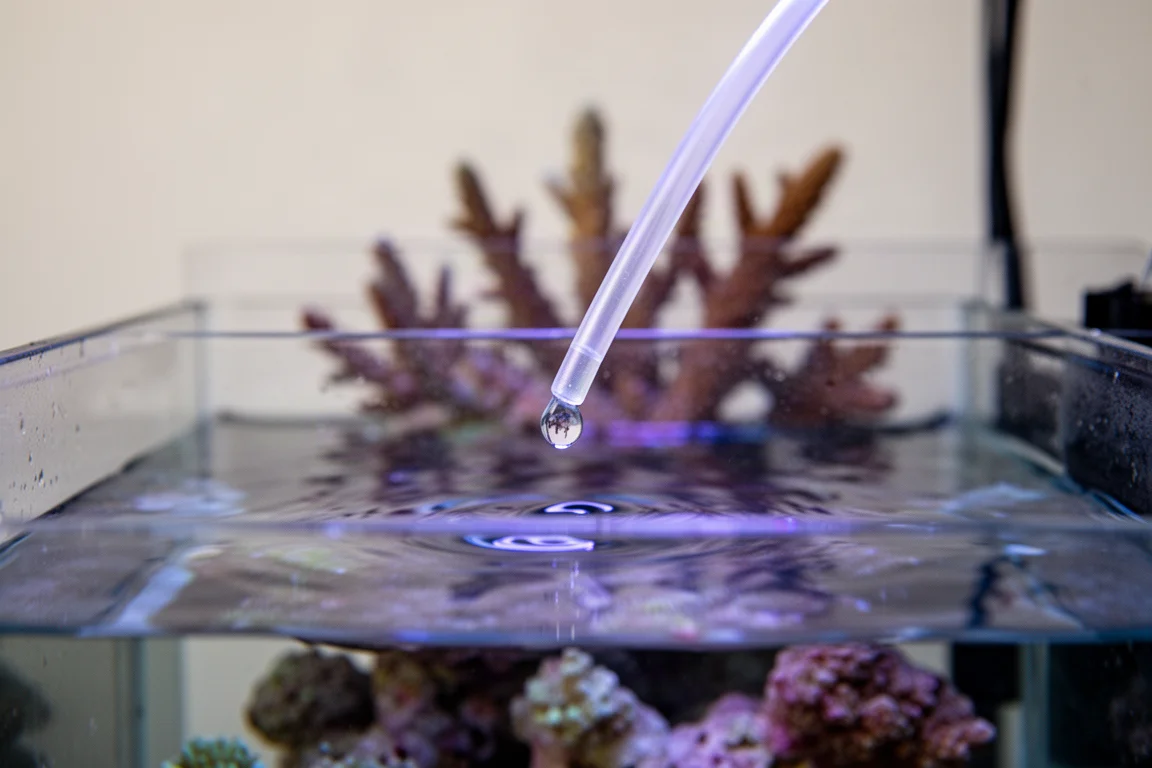
What the process gives back is chemistry with no leftovers. Calcium formate leaves no residual sodium or chloride behind, so it does not slowly drive salinity upward the way two-part systems can in tanks with few water changes. For reefers whose water change schedule is lighter than they would like, that is a genuine advantage.
Because calcium formate does not elevate pH, it also avoids the sharp pH spike that a large dose of lime water can produce. That makes it more forgiving in some respects, although accurate and consistent dosing still matters, and the caveats described further down are worth reading before you start.
Tropic Marin All-For-Reef: What It Offers
All-For-Reef is the complete version of the calcium formate approach. It supplies calcium, alkalinity, and trace elements together in one solution, and it comes in both a powder and a ready-made liquid form.
The appeal is straightforward. If you want trace elements included in the additive you already dose, this is the version that delivers them without a second bottle or a second pump. Because the solution is more concentrated than lime water, the container next to your tank can be considerably smaller, and the daily routine stays a single measurement.
Cost is where the trade-offs begin. This is not the cheapest route to stable calcium and alkalinity. The liquid form is convenient, but you are paying to ship water, while the powder is much cheaper per dose and mixes up at home. Even in powder form it is not the lowest-cost option available, and it does not raise pH.
Tropic Marin All-For-Reef: Where It Works Best
All-For-Reef suits tanks where simplicity and completeness matter more than trimming the last bit off consumable costs. It is also a good match for reefers who do limited or irregular water changes, since there is no sodium or chloride residue accumulating in the system over time.
You may hear that calcium formate is not intended for very high demand tanks. A densely stocked mixed reef is a fair picture of the ceiling. A tank of that type ran on All-For-Reef for around two years as an in-office reference, which makes it a useful guide to where the method comfortably reaches. Beyond that level of demand, other approaches start to make more sense.

Tropic Marin Carbo-Calcium: What It Offers
Carbo-Calcium is the same calcium formate chemistry without the trace elements. What you get is calcium and alkalinity in a single concentrated solution, dosed through one pump from one container.
That narrower focus is the point. Reefers who already dose trace elements separately, or who prefer to control them independently, can keep that part of their routine exactly as it is and use Carbo-Calcium purely for calcium and alkalinity.
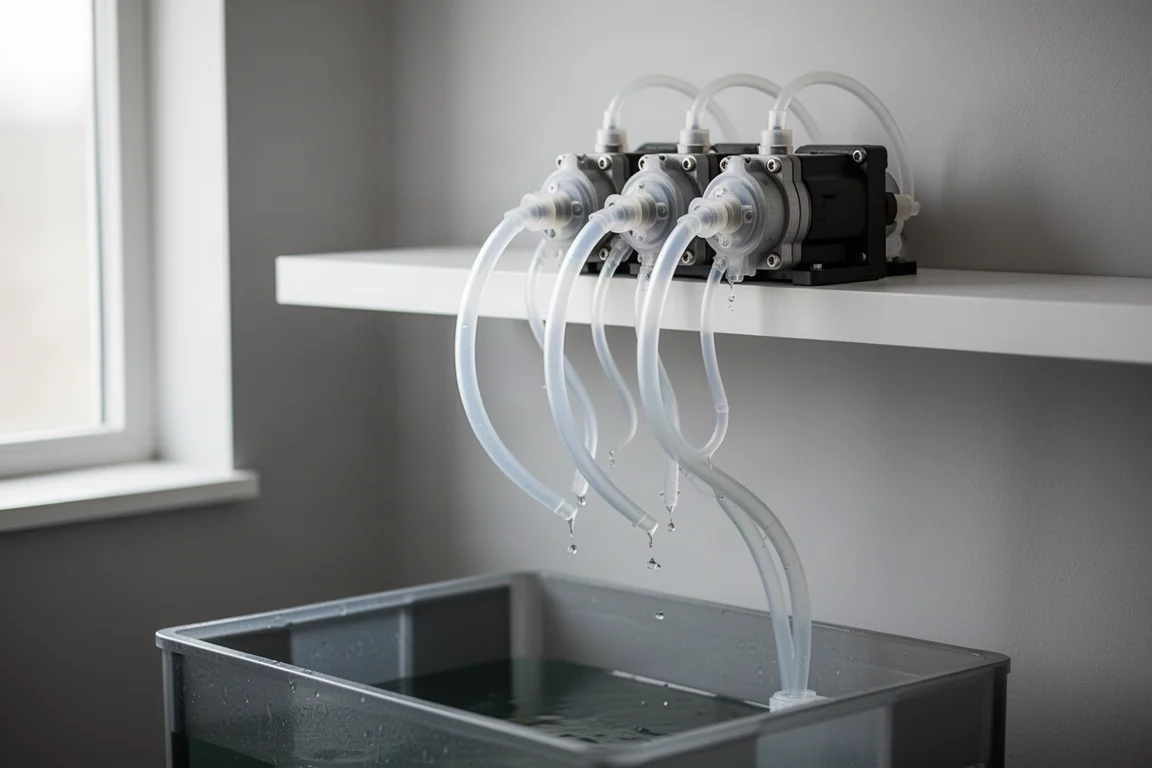
Like All-For-Reef, the concentrated form keeps the footprint small. The difference between the two products is not how they are dosed, but what else comes along with the dose, and that is a question of which parts of your routine you want combined and which you want to keep separate.
Tropic Marin Carbo-Calcium: Where It Works Best
Limited water changes are where this solution shines most. With no residual sodium or chloride, the overall balance of tank chemistry is not disturbed even when the water change schedule slips.
There are two things to plan for. First, the alkalinity response is not immediate, so results take patience rather than an instant test reading. Second, accurate and consistent dosing genuinely matters. Overdosing calcium formate is less predictable than overdosing a typical two-part or lime water solution. There is no pH spike to deal with, but a heavy overdose can eventually produce high alkalinity, and the bacteria consuming the formate can strip oxygen from the water, which is bad news for fish. Dosing by feel is not the right way to run it.

How One-Part Dosing Compares to Other Approaches
Calcium formate is one option among several, and knowing where the alternatives sit makes the choice clearer.
Lime water, or Kalkwasser, is the cheapest method both to set up and to run, and it has the largest pH effect of any of these approaches, with the added simplicity of one additive in one solution. Its limits are physical: it is dilute, so it needs a reservoir that may be around a tenth of the tank volume, and it only works if the tank evaporates enough water to dose against. Two-part systems, by contrast, are the most adjustable option and can be dosed by hand, and commercial versions typically deliver a moderate pH boost, roughly half that of hydroxide-based methods. Their drawback is residue: sodium and chloride accumulate over time and push salinity up in tanks that rarely get water changes.

Calcium reactors run at very low ongoing cost but carry a high upfront one, since the reactor itself, the CO2 supply, a regulator, a continuous duty dosing pump, and a pH controller or monitor all have to be bought before the first dose. They suit large, established, high demand SPS systems, and even then they can take a few years to pay for themselves. They also do not reliably deliver trace elements, and some media carry elevated phosphate.
Calcium formate sits between those poles. It is more concentrated than lime water, leaves no salinity residue, avoids pH swings, and runs from a single pump. In exchange it offers no pH benefit, a slower bacterial route to alkalinity, and a higher consumable cost than the cheapest methods.
Choosing Between the Two Tropic Marin Options
The decision between All-For-Reef and Carbo-Calcium comes down to whether you want trace elements in the same bottle.
All-For-Reef is the simpler choice for reefers who want one additive handling calcium, alkalinity, and trace elements together. Carbo-Calcium is the better fit for those who already dose trace elements on their own schedule or who prefer to keep that variable separate.
Tank size affects cost more than it affects chemistry. On a small tank, the difference between a liquid and a powder is a couple of dollars either way and rarely worth optimising. On a larger system, the dry form is much cheaper per dose and the savings become meaningful, even though neither version is the cheapest method overall.

If pH is your primary concern and the tank sits below the 8.2 to 8.3 range, note that calcium formate will not move it. Hydroxide-based methods have more than double the pH-raising effect of soda ash two-part solutions. Calcium formate is a tool for stability, not for lifting pH.
Whichever you choose, the routine is the same: dose a consistent amount, follow alkalinity over time rather than reacting to a single reading, and adjust gradually as coral growth increases demand.
Conclusion
All-For-Reef and Carbo-Calcium share the same core advantage: calcium and alkalinity from one container and one pump, with no sodium or chloride residue to worry about in a tank that sees fewer water changes. The difference between them is trace elements. All-For-Reef includes them. Carbo-Calcium leaves them to you.
Both are convenient rather than cheap, and neither raises pH. For reefers who want simplicity and are willing to trade some cost and a delayed alkalinity response for it, either one is a sensible and well-understood way to keep calcium and alkalinity steady.
Further reading
Related Reviews
Aquarium Supplements
Brightwell NeoPhos and NeoNitro Review: Precise Nutrient Control for Low Nutrient Reef Tanks
A practical look at Brightwell NeoPhos and NeoNitro, two concentrated supplements for reef keepers who cannot keep phosphate and nitrate above zero.
Aquarium Supplements
Nyos Absolute Aminos Review: Broader Coral Nutrition in One Daily Dose
Nyos Absolute Aminos packs nearly 40 ingredients into a shelf-stable coral nutrition supplement built for coloration, polyp extension, tissue health, and recovery.

Aquarium Supplements
Tropic Marin Carbon Dosing Guide: Five Products and How to Choose
A practical look at Tropic Marin's carbon dosing range, from Plus-NP to Reef Actif, and how to match each product to the phosphate level in your reef tank.