Aquarium Supplements
Brightwell NeoPhos and NeoNitro Review: Precise Nutrient Control for Low Nutrient Reef Tanks
A practical look at Brightwell NeoPhos and NeoNitro, two concentrated supplements for reef keepers who cannot keep phosphate and nitrate above zero.
Introduction
Filtration in modern reef tanks has become efficient enough that nitrate and phosphate sometimes sit at or near zero, whether that is the goal or simply a side effect of the equipment in use. Brightwell NeoPhos and NeoNitro exist for exactly that situation: aquariums where nutrient levels have fallen too low to support the growth and coloration their owners are hoping for.
Both are targeted additives designed to replenish and maintain minimum nitrate and phosphate levels in a calculable, controlled way. They are not general purpose products, and they are not for every tank. This guide covers what each one does, how the dosing works, and which aquarists realistically need them.
Why Low Nutrient Reef Tanks Need Targeted Additives
A complete lack of nitrate and phosphate can hold back coral growth and coloration, because the zooxanthellae living inside coral tissue rely on those nutrients for photosynthesis. Maintaining a base level of each is part of keeping a reef healthy rather than starving it.
The usual workaround is adding more fish and feeding larger or more frequent meals. That can help, but it is difficult to steer. One reading tends to climb while the other stays flat, and for anyone deliberately running an ultra low nutrient system, it is not a controllable way to raise either number.
An imbalance between nitrate and phosphate can also invite nuisance bacterial and algal blooms such as cyanobacteria or dinoflagellates. Evening out the two values can help desirable organisms, including the ornamental and utilitarian algae grown in a refugium, outcompete them.
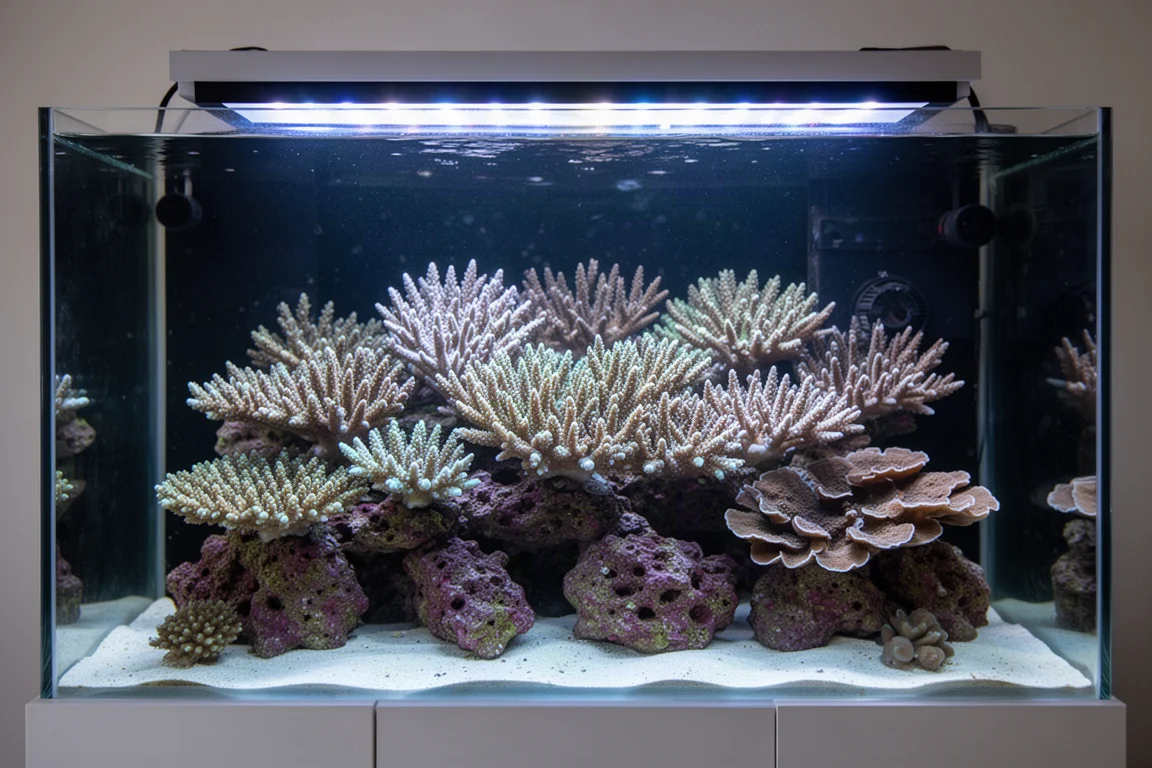
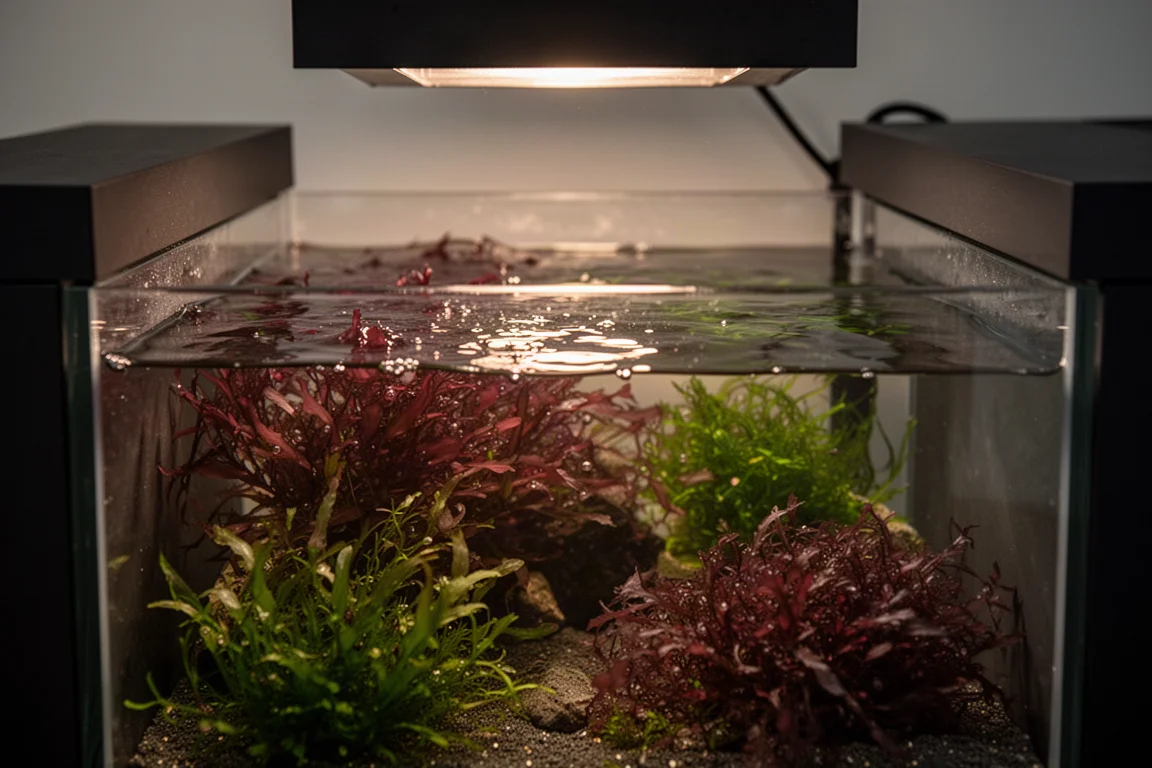
Marine planted tanks built around ornamental macro algae run into the same problem from a different direction. Keeping enough nitrate and phosphate in the water for those plants is often not feasible without a dedicated additive.
Brightwell NeoPhos: Controlled Phosphate Support
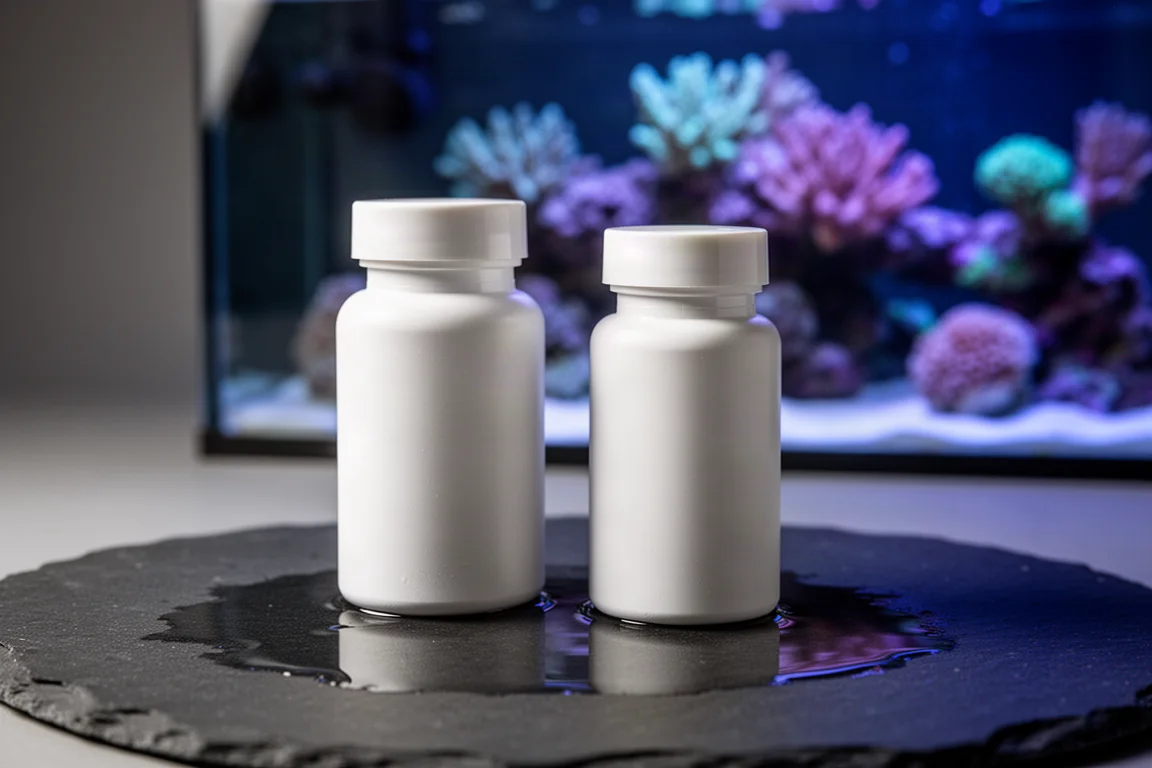
NeoPhos is a phosphate supplement formulated for marine aquariums. The bottle carries a stronger formula marking, and one milliliter raises the phosphate level in one gallon of water by 0.25 ppm.
That number is what makes the product manageable. Because the response is predictable, you can work out how much to add from your own test kit reading and the level you want to reach, rather than guessing from a fixed schedule.
The formula is a proprietary blend of phosphorus salts selected for reef use, which is the point of choosing a marine-specific supplement over a generic alternative. It is aimed at aquarists who already know their phosphate is critically low and want a precise way to bring it back up.

Brightwell NeoNitro: Controlled Nitrate Support
NeoNitro does the equivalent job for nitrate. Its bottle is also marked with a stronger formula, and one milliliter raises the nitrate level in one gallon of water by 7.5 ppm.
Nitrate is frequently the harder half of the equation in a low nutrient tank. Feeding and livestock adjustments often move phosphate while nitrate stays flat, which leaves aquarists with one nutrient restored and the other still bottomed out. A dedicated additive removes that guesswork.
Like NeoPhos, NeoNitro uses a proprietary blend of nitrogen salts chosen specifically for marine environments, so the addition is tailored to a reef system rather than adapted from a freshwater product.
Dosing Accuracy and Calculation
Both supplements ship with thorough dosing instructions that take your test kit readings into account, so the amount you add is based on measured values rather than a generic schedule.
Because the calculation takes a moment, it helps to keep a smartphone or calculator within reach and work through the equation printed on the bottle. For aquarists trying to hold nutrients at very specific levels, that level of detail is exactly what makes the products usable.
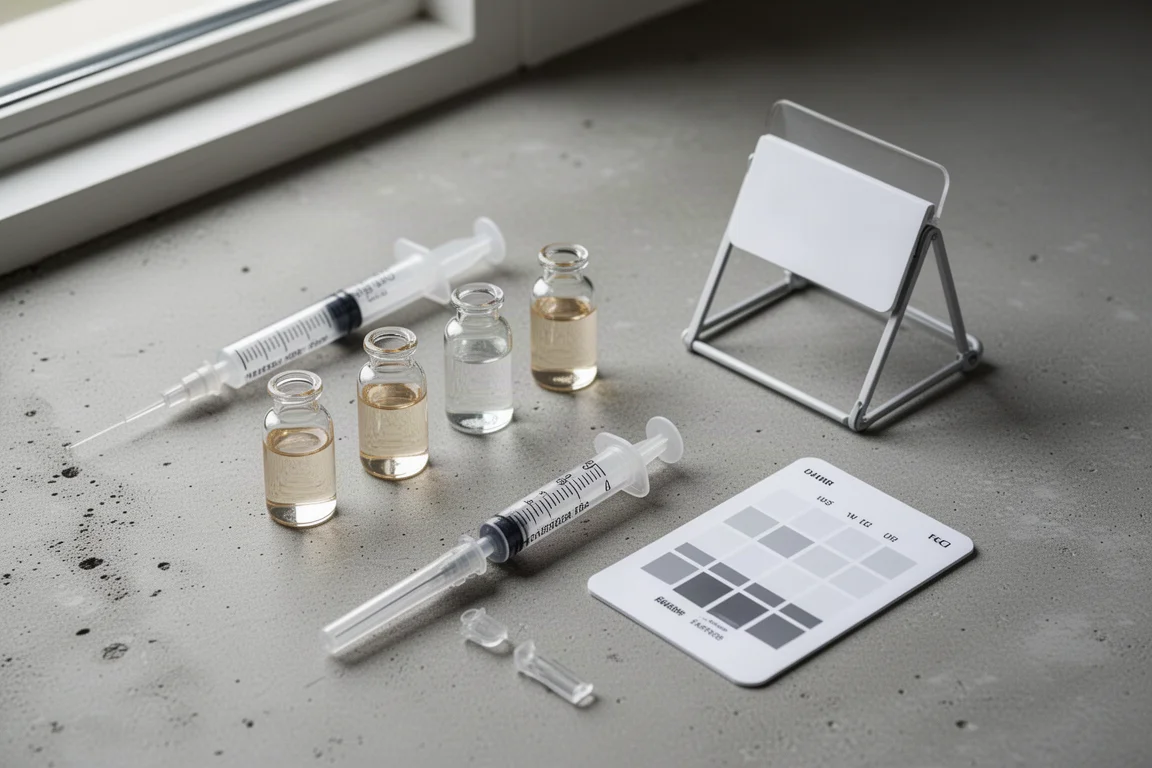
The results are worth verifying rather than assuming. Dosing, retesting and adjusting is a slower loop than simply pouring in a set amount, but it is the loop that keeps a low nutrient system stable.
Safety Notes Before You Dose
Read the instructions before dosing, even if you have used the product previously, since formulas can change over time. These are concentrated supplements, and it is easy to overshoot if you skip the calculation and estimate instead.
Both bottles hold 500 mL of liquid. Given how little a single dose requires, one bottle covers a very large number of doses, which also means an accidental overdose has plenty of concentrate behind it. Measure carefully and stay within the recommended figures.
How NeoPhos and NeoNitro Work Together
The two products are intended to be used as a pair, because nitrate and phosphate influence each other and correcting only one can leave the tank out of balance.
Brightwell also includes instructions for using NeoPhos and NeoNitro alongside Reef BioFuel and Catalyst when maintaining an ultra low nutrient system. If you are planning to start one and have not settled on a carbon dosing method yet, that documentation makes it possible to treat the brand as a complete system rather than assembling a routine from several sources.
There is a practical reason to keep both on hand rather than only one. If you correct phosphate but leave nitrate at zero, or the reverse, you have not really solved the underlying problem that low nutrient conditions created.
Who These Supplements Are For
These are specialist products, and plenty of reef tanks will never need them. Aquariums that keep nitrate and phosphate comfortably above zero have no reason to dose either one.
NeoPhos and NeoNitro are aimed at advanced aquarists with very specific requirements. That includes anyone running an intentionally ultra low nutrient system who cannot keep either reading above zero, and anyone maintaining a more specialized marine tank focused on ornamental marine plants where those nutrients are difficult to sustain without help. If your readings are not critically low, adding these will not improve anything.
Buying Advice for Low Nutrient Systems
If your test kits consistently read zero for phosphate or nitrate and your corals or macro algae are not performing the way you expect, a dedicated additive is a far more controllable answer than adding livestock or increasing feeding.

Match the purchase to the problem. Start with whichever nutrient is actually depleted, follow the dosing equation exactly rather than approximating, and retest before adjusting again. Because both formulas are concentrated and the bottles are 500 mL, a single purchase is a long term supply rather than a short experiment.
Conclusion
Brightwell NeoPhos and NeoNitro give reef keepers a calculable way to bring nitrate and phosphate back to a baseline level instead of relying on indirect adjustments that rarely move both numbers evenly. The dosing is precise, the instructions are built around real test kit readings, and the marine-specific salt blends are matched to reef and planted marine systems.
They are not universal additives, and they are not meant to be dosed casually. For aquarists with a genuinely nutrient-depleted tank and a clear target in mind, they offer control that is difficult to find elsewhere.
Further reading
Related Reviews
Aquarium Supplements
Nyos Absolute Aminos Review: Broader Coral Nutrition in One Daily Dose
Nyos Absolute Aminos packs nearly 40 ingredients into a shelf-stable coral nutrition supplement built for coloration, polyp extension, tissue health, and recovery.

Aquarium Supplements
Tropic Marin All-For-Reef vs Carbo-Calcium: Choosing a One-Part Calcium and Alkalinity Solution
A practical comparison of Tropic Marin's two one-part calcium formate solutions, covering trace elements, cost, dosing behaviour, and the trade-offs worth knowing before you buy.
Aquarium Supplements
Tropic Marin Carbon Dosing Guide: Five Products and How to Choose
A practical look at Tropic Marin's carbon dosing range, from Plus-NP to Reef Actif, and how to match each product to the phosphate level in your reef tank.