Floorstanding Speakers
Triangle Borea BR09 Review: A Lively Three-Way Tower With Forgiving Placement
A close look at Triangle's flagship Borea tower: five drivers, forgiving placement, lively dynamics, and the amplifier matching that gets the best from it.
Introduction
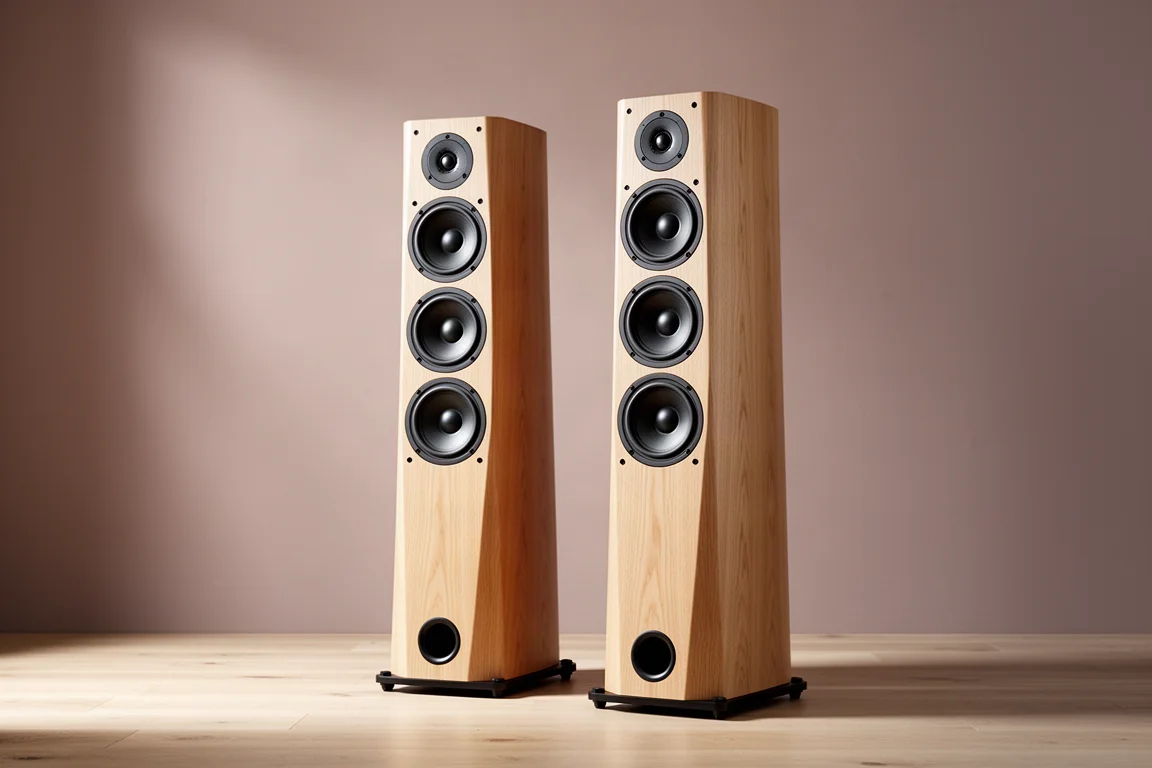
The Triangle Borea BR09 is the flagship tower in Triangle’s entry-level Borea range, and it argues its case on more than sound alone. It is a true three-way design with five drivers, a front-facing port, and a reported frequency response of 35 Hz to 22 kHz. Sensitivity is rated at 92 dB with a nominal impedance of 8 ohms, which makes it reasonably easy to drive, although it can dip below 4 ohms. At roughly $1,800 per pair it lands in a crowded part of the market, so the real question is whether it does enough on performance to earn a place on a shortlist. On the evidence, it does, with a few caveats worth knowing before you commit.
Who This Speaker Is For
This is a floorstander for listeners who care how their system looks in a living space as much as how it sounds. Triangle offers design-friendly finish options across the Borea line, and the BR09 is the most visually substantial expression of that approach. It also suits anyone with placement constraints. With the cabinets just six inches from the front wall, the response stayed surprisingly linear and was not dramatically different from the response with the speakers pulled out 18 to 24 inches. There were minor differences here and there, but placement does not transform this speaker the way it does with some rivals.
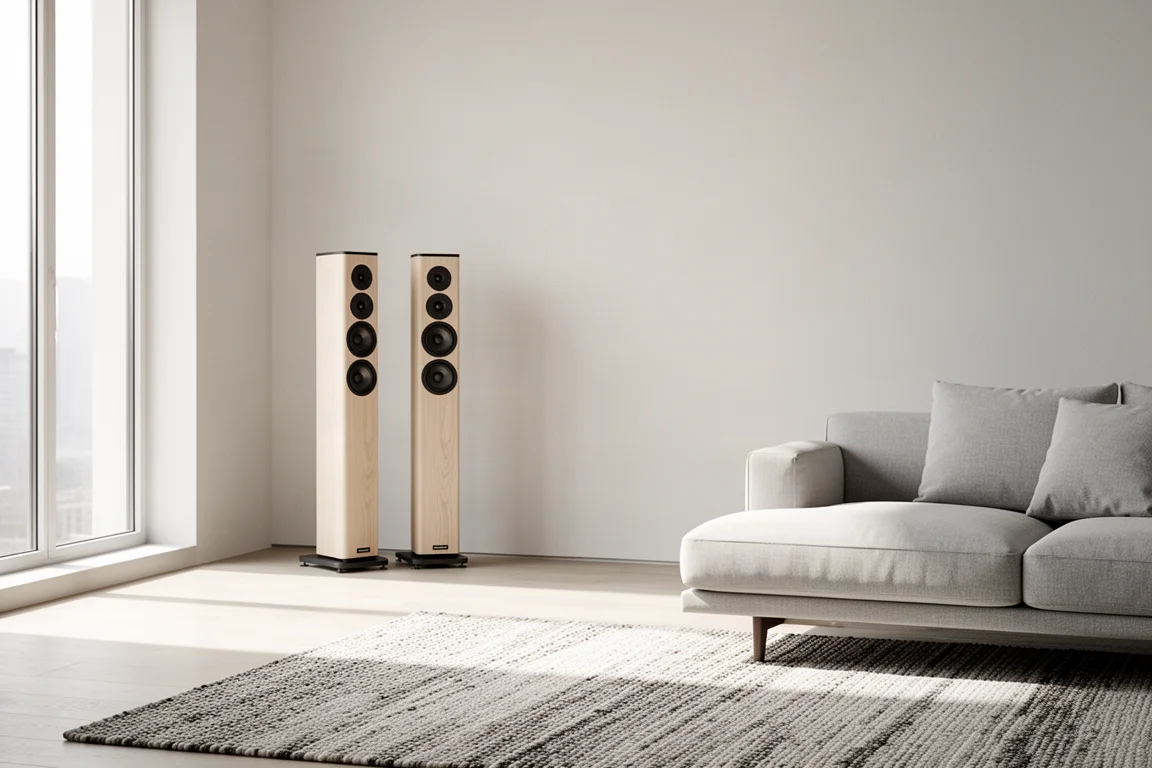
It is equally well suited to mixed music and film use. The BR09 works as an anchor for a 3.1, 5.1, or larger surround system, and the bass presence may be enough that some listeners can skip a subwoofer. If you want a tower that behaves predictably in an ordinary room and looks the part while doing it, this one belongs on the list.
Design and Placement Flexibility
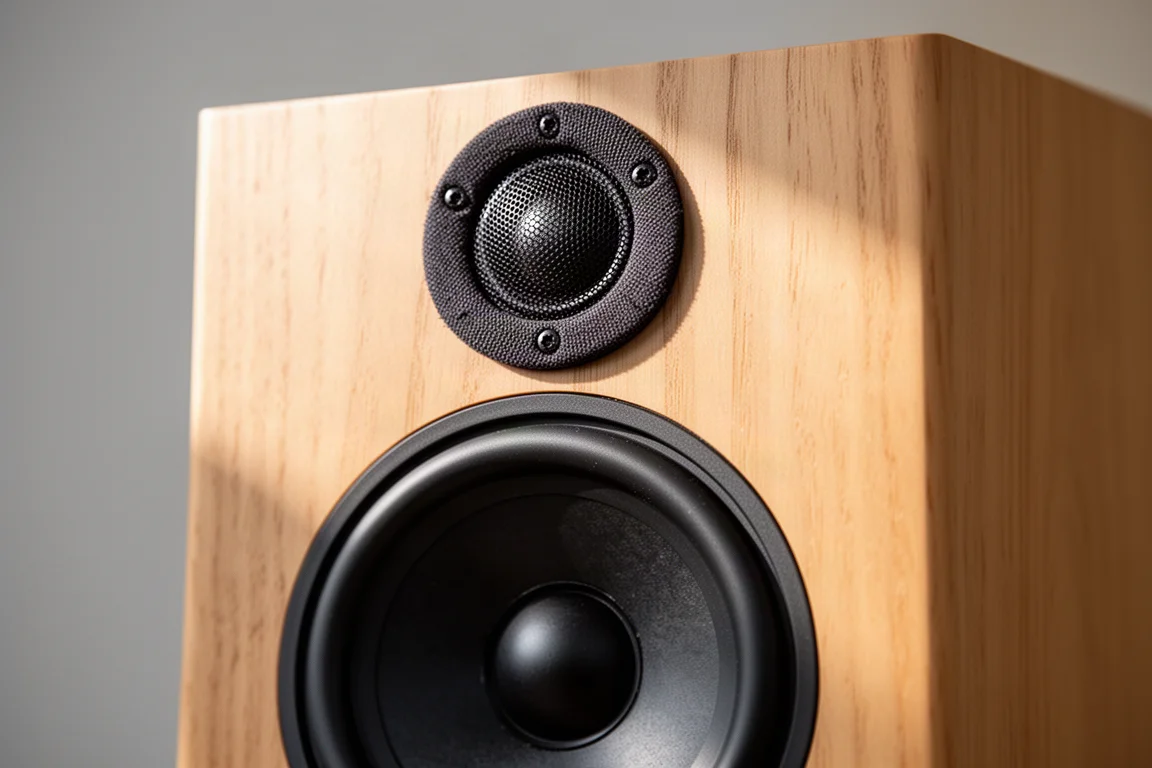
The driver complement is generous for the money: a one-inch silk dome tweeter, a six-inch midrange, and three six-inch bass drivers, all supported by a front-facing port. A front port is a practical detail in rooms where the cabinets end up close to a wall, and it fits the speaker’s generally accommodating character.
Pointed straight ahead, the BR09 performs well. Angling the cabinets inward slightly elevates the treble response and improves the center image, which adds perceived detail and can make the presentation sound a touch brighter or livelier. That is a free tuning option rather than a correction. On the build side, the cabinet contributes some liveliness to the sound, which suggests bracing and damping are not as extensive in places as they could be. It does not alter the timbre of instruments or voices; it tends to accentuate certain elements in the midrange, which can actually help intelligibility at lower volumes.
Sound Character and Measurements
The BR09 measures respectably. It is not ruler flat, but it stays within a range most listeners would consider well behaved. Bass was solid down to 40 Hz before rolling off, reaching roughly 10 dB below reference near 30 Hz in the room used for listening, which is likely a room effect rather than a limit of the speaker. There is a dip where the bass crosses over to the midrange, and it is somewhat audible: bass can sound slightly boosted as it emerges from the midrange. A slight treble lift around 10 kHz is present regardless of placement, although toe-in can nudge it in either direction.
The overall character is not neutral. It is best described as plucky: not bright or aggressive, but clearly a speaker with its own flavor. The 92 dB sensitivity shows up as excellent dynamic contrast at all volumes, with bass that feels snappier and more responsive than some rivals at modest volumes or with less powerful amplifiers. A touch of midrange presence gives double bass and kick drums extra weight, adding body to well recorded material.
Midrange intelligibility is a genuine strength. Vocals in music and dialogue in films came through with more contrast than expected, helped by the fact that the response does not roll off in the middle of the vocal range. Treble extension and air are strong, and the speaker stops short of becoming brittle or harsh even at high volumes. Soundstage width and depth are good, with a strong center image once toed in, although the edges of instruments can encroach on one another rather than staying laser focused.
Home Theater and Amplifier Matching
Amplifier choice matters more here than with many speakers at this price. The BR09 was a great match with an Onkyo RZ50, the Audiolab 6000A Play, and the Audiolab 9000A. A Yamaha A4A can work but is not the best pairing, because that receiver prefers loads of 6 ohms and above while the BR09 dips below 4 ohms; stepping up to a model rated for 4-ohm speakers is the better route. The Rotel S14 produced a muffled and uninvolving result with these speakers, so an audition with your own amplification is worthwhile if you can arrange one.
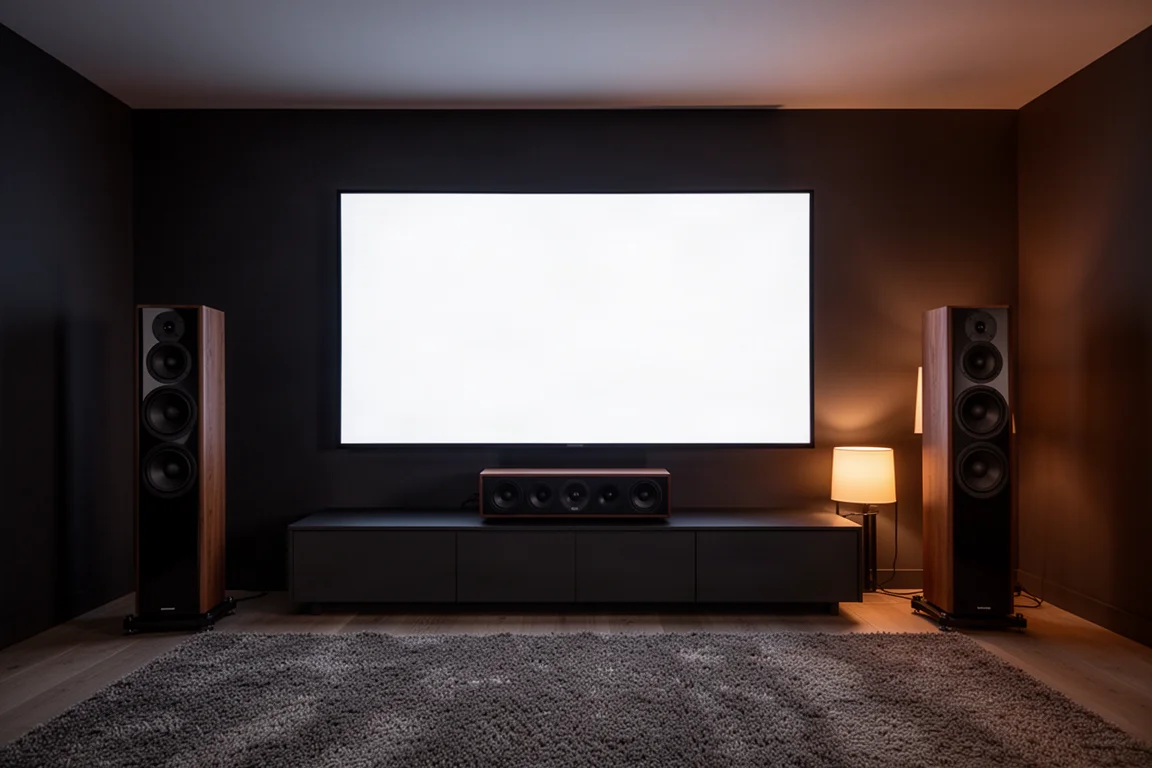
In a surround system the BR09 makes a strong front-stage anchor. The matching center channel pairs well, and dialogue through it had good presence, with intelligibility improving further once manual or automatic tuning was applied. Crossing the center over above 50 Hz is advisable to avoid boxy or megaphone-like effects near its limits. Some listeners may find a phantom center works well enough that a dedicated center channel is not an immediate priority.
How It Compares to Other Tower Speakers
Against the Polk R700, the Polk is the better speaker overall. It plays deeper, stays more linear through the low end and midrange, and its treble is unlikely to bother anyone. The Triangle is brighter than the Polk, although not bright or forward in absolute terms, and on some recordings it will expose compression or sibilance more readily. Where the BR09 pulls ahead is placement flexibility and the range of finish options.
The Focal Chora 826 is a closer contest. Both share similar tendencies, with the Focal coming across as slightly more lively, dynamic, and forward. Focal keeps an edge on detail and separation, but the gap is not night and day, and preference is likely to come down to taste.
The Sonus Faber Lumina V is the better-built speaker and the more striking object, with stronger texture, detail retrieval, and separation. It also costs more than a thousand dollars extra, which makes that comparison less about capability and more about budget. From the upper midrange through the treble, the two behave and sound broadly alike. The Q Acoustics Concept 50 and the Polk R700 both offer stronger soundstage capabilities, while the BR09 stays competitive across the rest of the board.
Things to Consider Before Buying
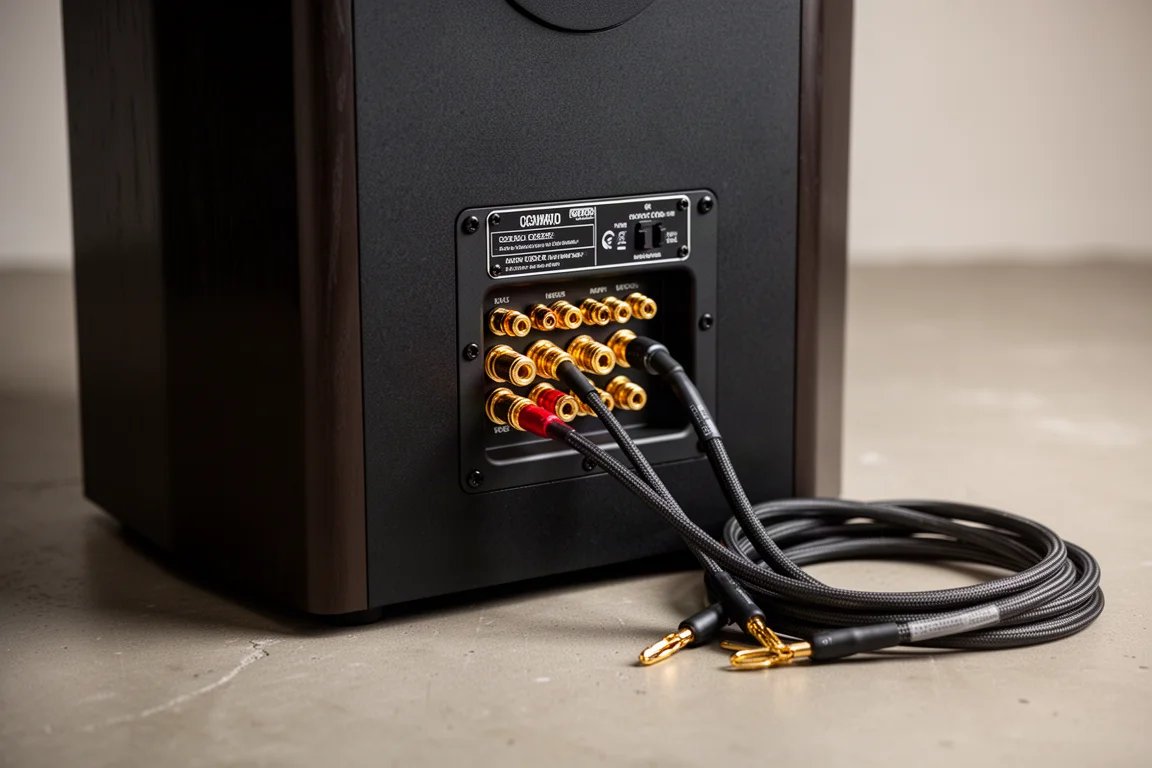
The binding posts were finicky with some cable terminations. Banana plugs that fit other speakers were difficult to seat here, which is unusual. The crossover plate on the rear also arrived loose and needed tightening, though that may be an isolated case rather than a production issue. It is still worth checking on arrival.
Tonally, the mild treble lift around 10 kHz and the dip at the bass-to-midrange crossover are audible enough that listeners who prefer a strictly neutral presentation should hear the speaker first. The BR09 is also not a full-range design, so deep bass in a large room will still benefit from a subwoofer. And the cabinet liveliness means the speaker adds a little of its own character rather than disappearing entirely.
Buying Advice
The BR09 rewards sensible pairing more than most speakers at this price. Choose an amplifier or receiver rated for 4-ohm loads, and lean toward the models that were clearly comfortable driving it. Position the cabinets pointed straight ahead to begin with, then experiment with a slight toe-in: it lifts the treble a touch and sharpens the center image, which many listeners will prefer.
If you are drawn to the Borea line mainly for value and flexibility, it is worth considering the smaller models too. The range starts at a little over $200 for a pair of bookshelf speakers, and for listeners who plan to run a subwoofer, a bookshelf model may deliver most of what they need. For anyone who wants a full tower and cannot accommodate stands, the BR09 is the obvious pick. Either way, budget for an amplifier that handles the speaker’s impedance dip and you will hear the design at its best.
Conclusion
The Triangle Borea BR09 is not the most neutral tower at its price, and it will not win every comparison on raw resolution. What it does offer is a distinctive, lively, dynamically capable sound, unusually forgiving placement, and a level of finish quality few rivals match. At around $1,800 per pair it earns a recommendation for listeners who want a stylish, adaptable floorstander that is genuinely enjoyable with both music and film.
Product link
View more details for Triangle Borea BR09
This product is mentioned in the review. Check the specifications, options, and compatibility before buying.
View more details for Triangle Borea BR09Further reading
Related Reviews
Floorstanding Speakers
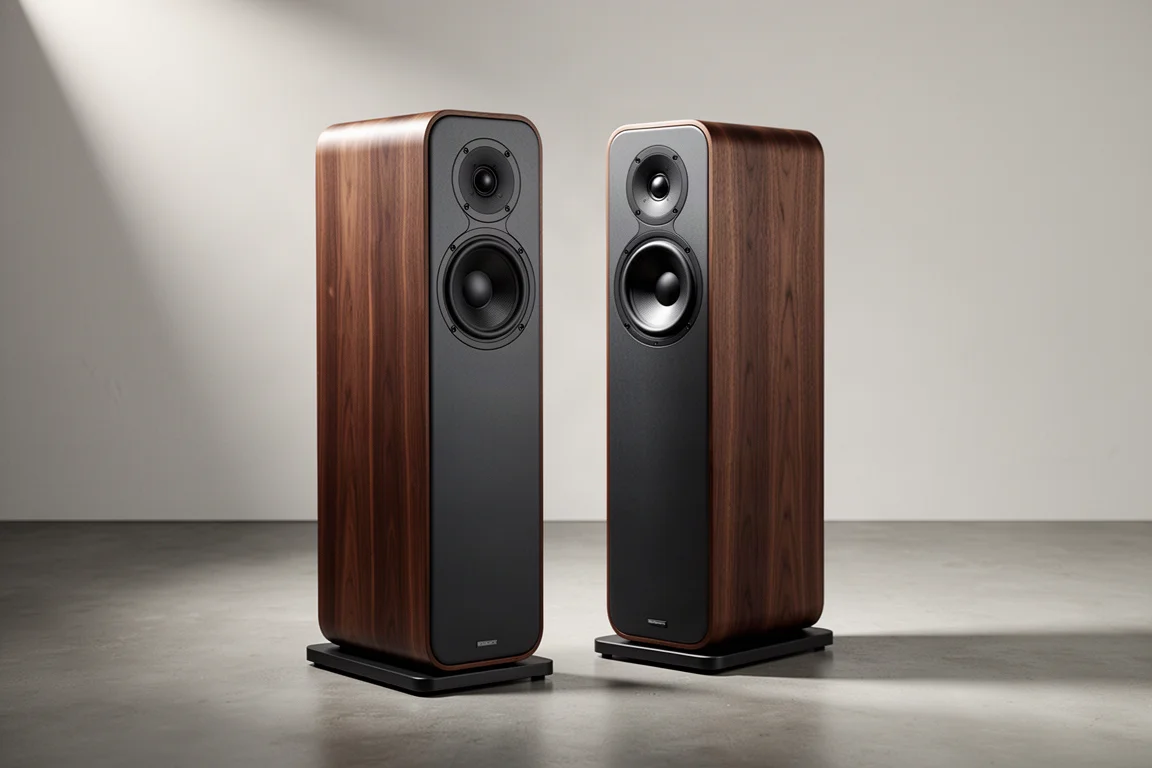
Acoustic Energy AE109 Mark II Review: A Refined Floorstander at £699
The Acoustic Energy AE109 Mark II is a slim, warm sounding floorstander that delivers clarity, midrange body and strong imaging in small to medium rooms.
Floorstanding Speakers
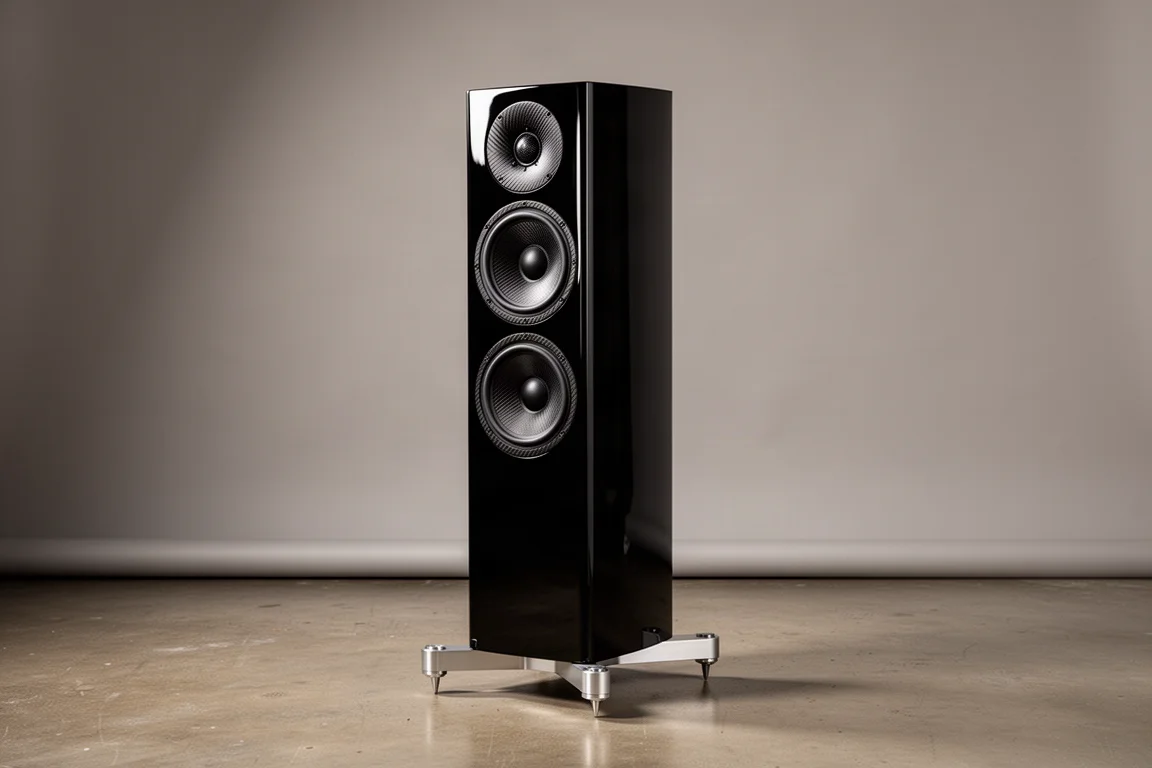
Acoustic Energy AE509 Review: A Slim Floorstander With Deep, Defined Bass
A practical look at the Acoustic Energy AE509, a slim floorstanding speaker with carbon fibre drivers, deep and well-defined bass, and an easy-going character that rewards careful system matching.
Floorstanding Speakers
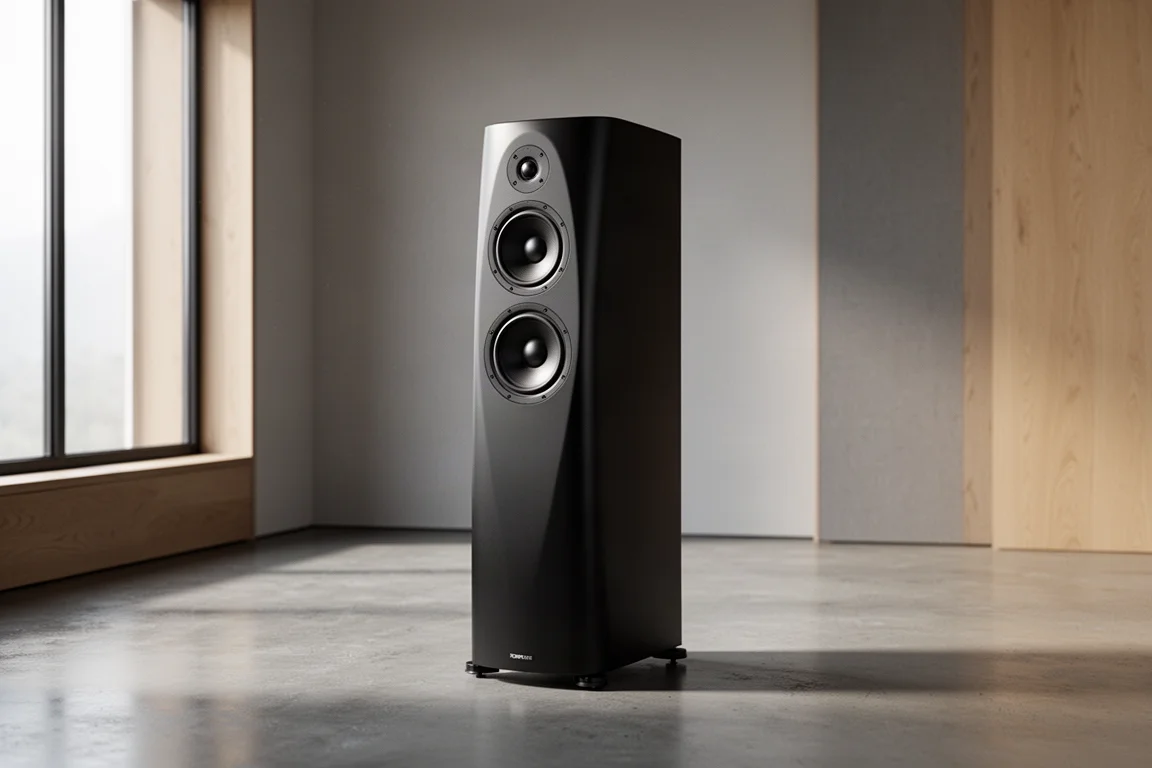
Arendal 1528 Tower 8 Review: Reference Neutrality With Real Demands
A close look at the Arendal 1528 Tower 8, a nearly five-foot, 200-pound floorstander that rewards generous space, serious power, and high listening levels with reference-grade neutrality.