Cycling Gear
Trek Madone vs TI Raleigh: What 45 Years of Race Bike Design Actually Changes
A 2025 Trek Madone, a limited edition TI Raleigh steel racer, and the Favero Assioma Pro RS pedals used to put real numbers on the gap between them.
Introduction
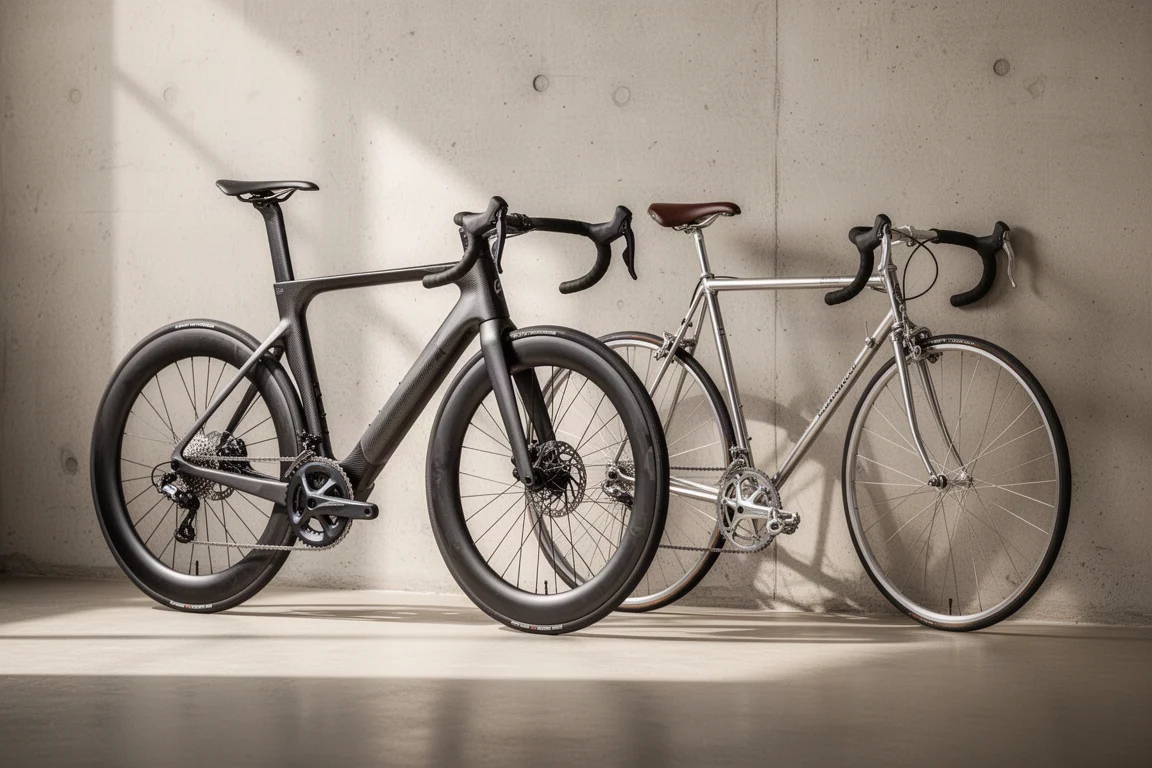
Two road bikes built 45 years apart share almost nothing except the thread in the pedal hole. The TI Raleigh is a limited edition steel machine that honors the bike ridden to victory in the 1980 Tour de France. The 2025 Trek Madone is the opposite: carbon fiber frame, wheels and handlebars, disc brakes, and gearing that needs electricity to shift.
That gap is what makes the comparison interesting. Modern bikes have traded rim brakes for discs, widened their tires considerably, and gained extra mounting points along the way. So the question is not which bike is prettier. It is what four and a half decades of development actually changed for the person turning the pedals.
To answer that with numbers rather than impressions, both bikes were fitted with the Favero Assioma Pro RS, a pedal-based power meter that records at the same accuracy on either machine. The result is a set of real-world tests and a clear picture of where modern design earns its keep.
How This Comparison Was Measured
The testing was kept deliberately simple and as fair as conditions allowed without a wind tunnel.
Three efforts shaped the results. The first was a flat test on a 10 kilometer loop, ridden at a steady target of 250 watts on both bikes. The day was chosen for still conditions and traffic-free roads, so nothing pushed the rider along or held them up. The second was a hill climb of roughly one kilometer at an average gradient of 10 percent. The third was a sprint, judged on feel rather than data, since the goal was simply to find out what sprinting a 1980s race bike is like.
Power was recorded to within plus or minus 1 percent, the figure the pedals are rated to. Every result still deserves a pinch of salt, because this was real riding on real roads rather than a controlled laboratory.
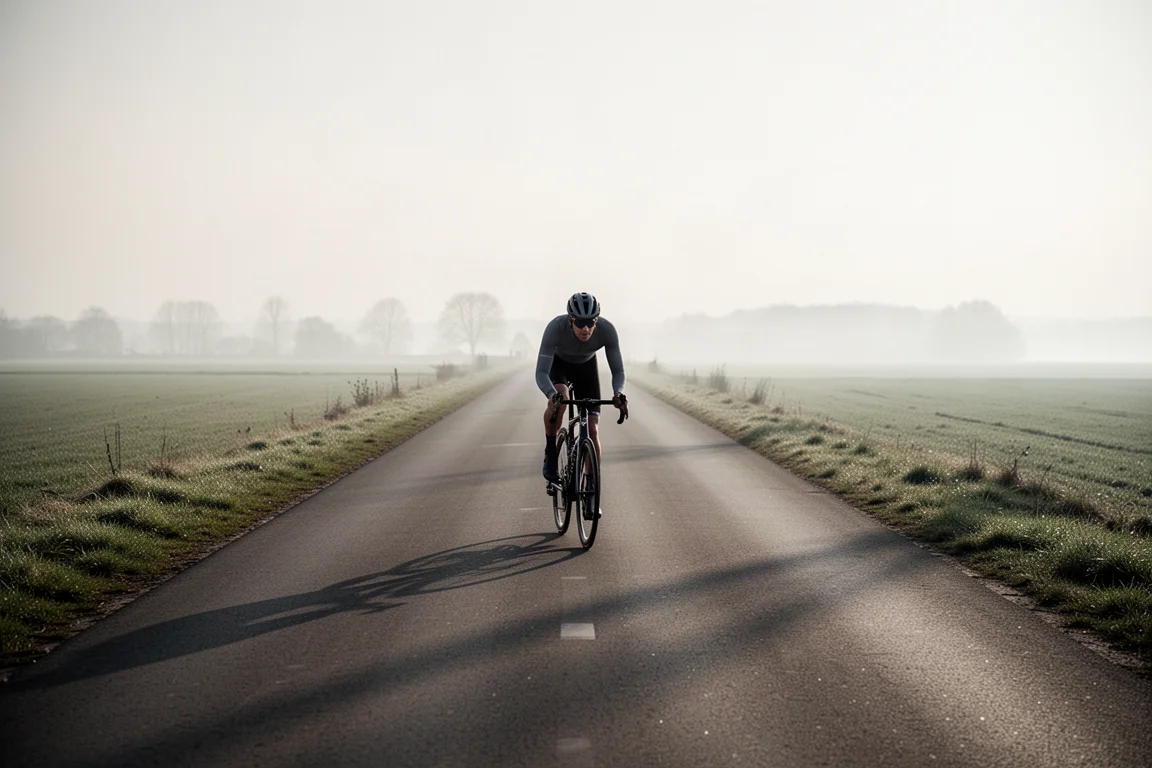
The value of pedal-based measurement here is that the same meter moved from one bike to the other in minutes. That means the power numbers describe the same rider on the same day under the same conditions, so the differences that show up belong to the bikes and not to the equipment measuring them.
Trek Madone 2025: The Modern Race Bike
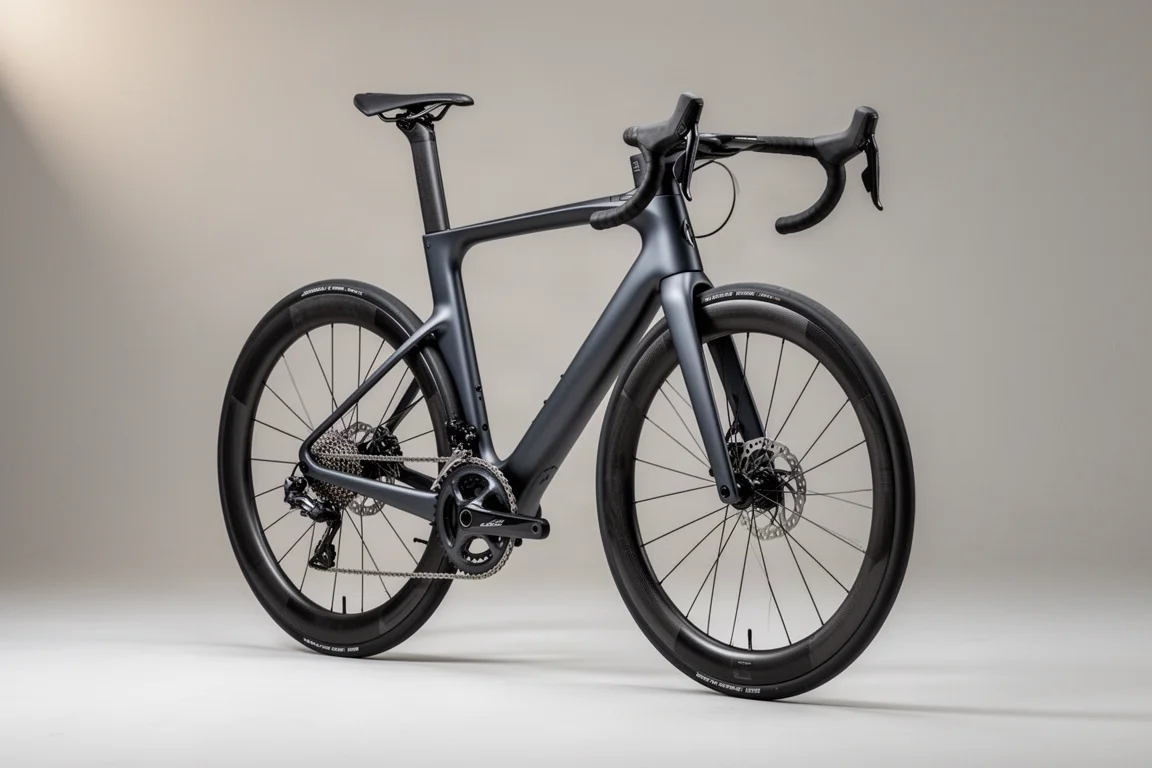
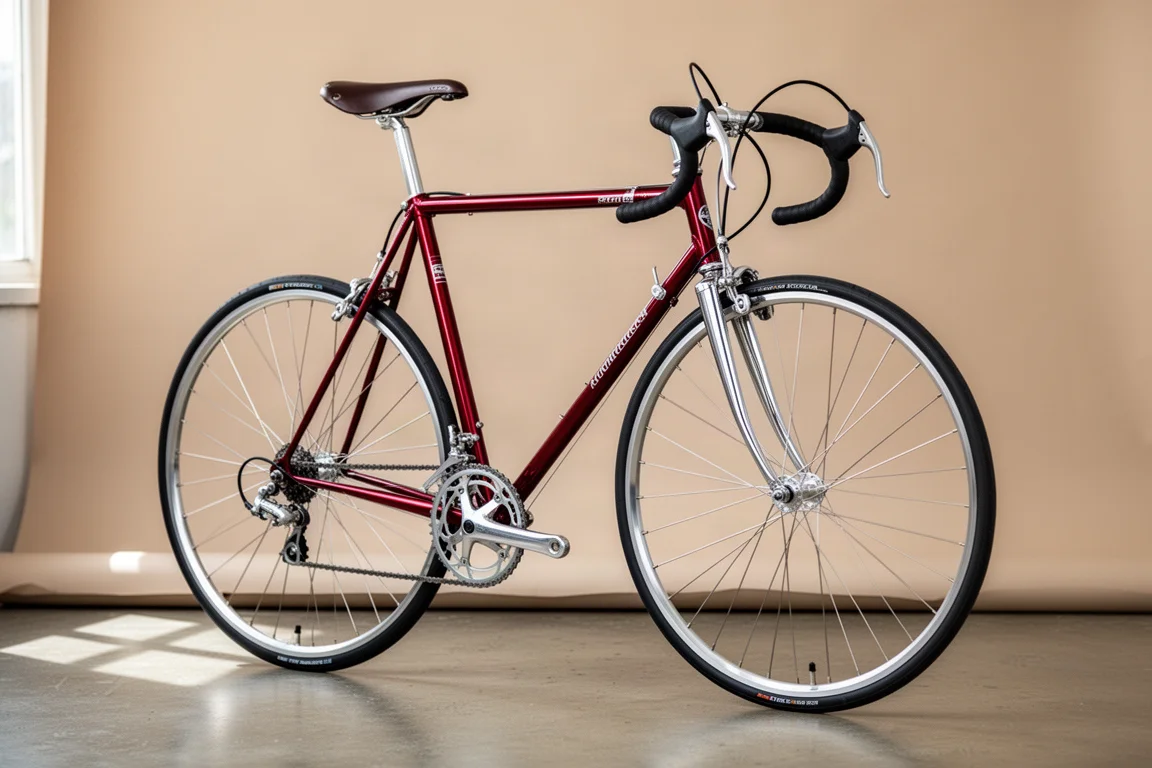
The 2025 Madone is a full carbon construction: carbon frame, carbon wheels, carbon handlebars, disc brakes, and electronic 12 speed gearing with a wide range. This particular build is not the lightest Madone available, and the wheels are not the lightest option either, but it still weighed in at 8.45 kg on the scales. The tires are 28 mm.
The design story is consolidation. Trek previously split its race range between an aerodynamic model and a lighter climbing model. This generation brings those two jobs together in one frame, with noticeably skinnier tubes than the previous aero machine and a profile closer to a climbing bike. The claim is that it is as aerodynamic as the older aero model, though that figure was quoted with aero bottle cages fitted.
On the road, the differences are not subtle. The frame manages to feel stiffer under power while filtering far more road vibration, so hands and saddle are spared the constant chatter of rough tarmac. Power transfer through the bottom bracket feels more direct. The cockpit is chunkier than the classic alternative, and the hoods are considerably more comfortable over long stretches. Cornering confidence is high, which matters more than any single number.
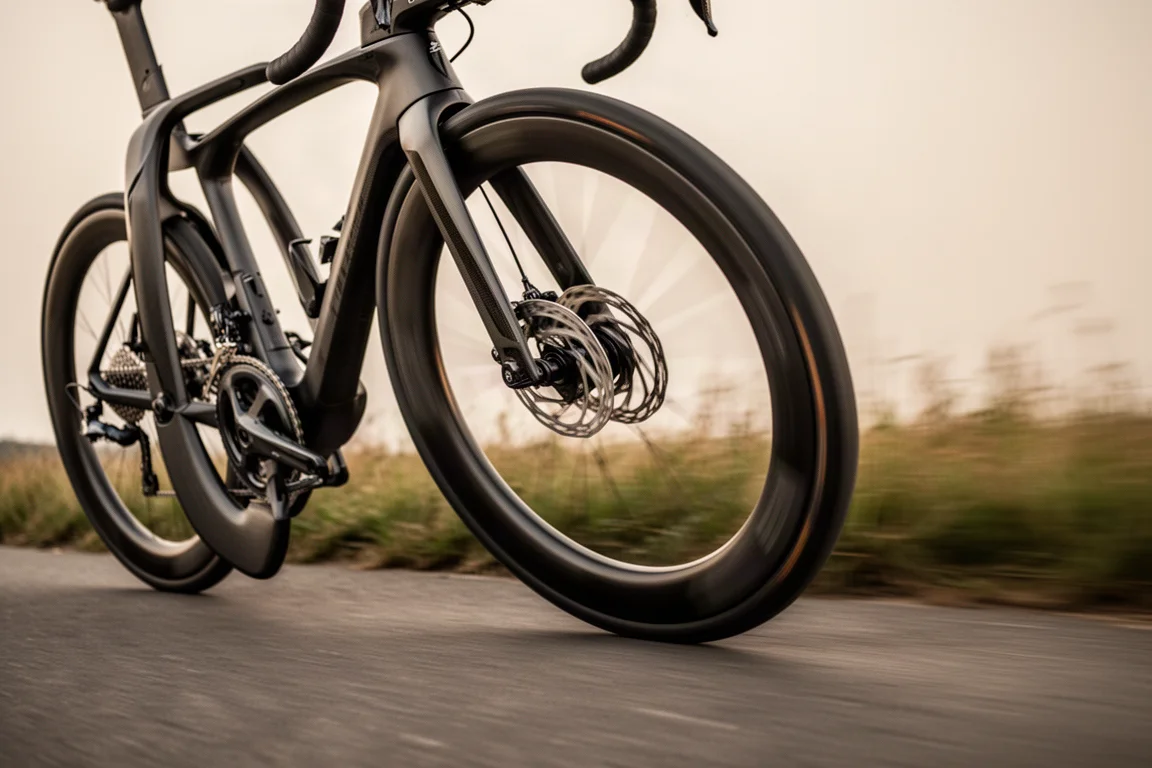
Where it really separates itself is ease of use. Gear changes happen without moving a hand from the bars, the range covers steep gradients comfortably, and the geometry lets a rider settle in and work hard without fighting the bike. It is the sort of machine that lets you ride to your potential on a flat, a climb, or a sprint.
TI Raleigh: The 1980 Steel Racer
The TI Raleigh is a limited edition tribute to the bike that won the 1980 Tour de France, and it is a genuinely handsome object. The frame is built from Reynolds 753 steel tubing, drawn so thin that the tubes had to be silver brazed at a lower temperature to avoid damaging the walls. That was state of the art at the time.
Everything else is period correct. Rim brakes replace discs, the gears are shifted by levers on the down tube, and the tires are 23 mm, which was a fairly generous width in its day. On the scales it weighed 9.8 kg.
Riding it is a different discipline. The indexed shifting works beautifully and each gear can be felt as it engages, which is genuinely satisfying. The catch is that changing gear means taking a hand off the bars, and the gear range runs out quickly on a 10 percent gradient. The bars are very narrow and the hoods are far less comfortable than a modern cockpit. None of that makes it a bad bike. It makes it an involving one. A ride on the Raleigh feels like an event rather than a session, and that is exactly the appeal.
Favero Assioma Pro RS: Power Data on Any Bike
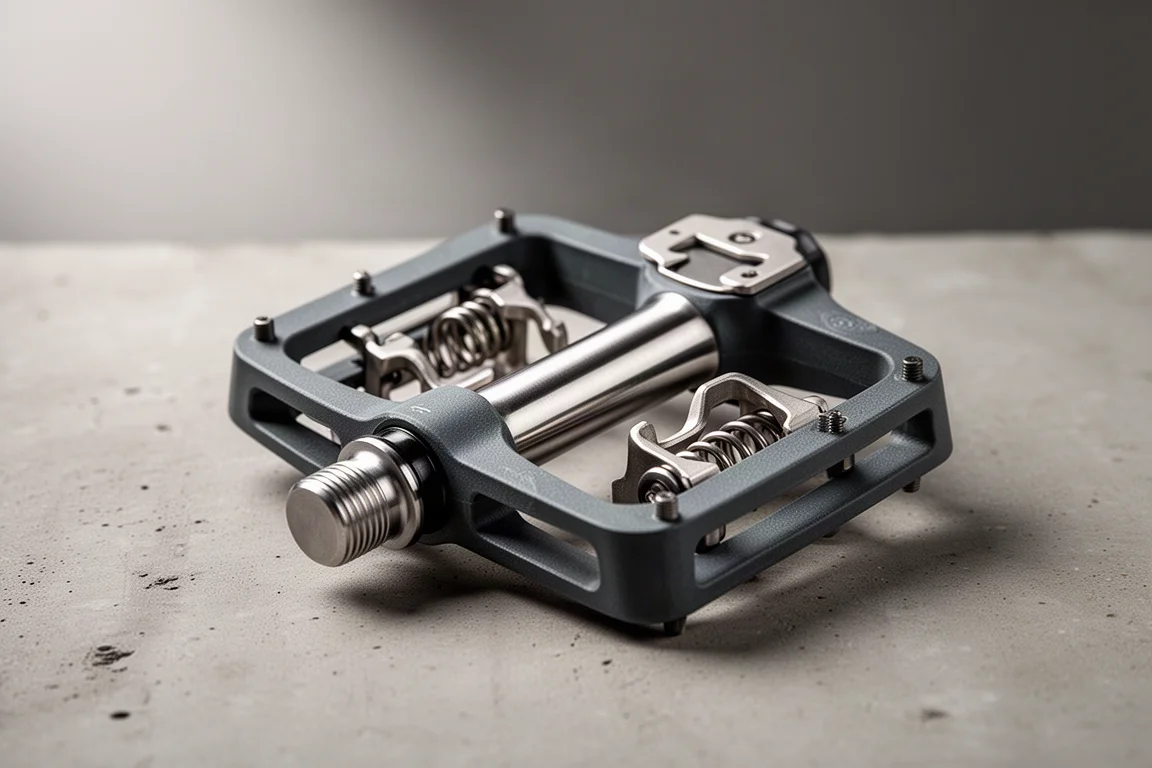
The Assioma Pro RS is a pedal-based power meter, and the design decision that defines it is where the electronics live. Batteries, strain gauges and gyroscopes are all housed inside the stainless steel axle. There are no external pods to knock against a curb or damage in a clumsy moment, which makes these pedals far easier to live with than pod-based designs.
They are claimed to be the lightest power meter pedals available, at 123.5 grams per pedal. Accuracy is rated at plus or minus 1 percent. They are fully compatible with Shimano cleats, so no cleat change is needed. Dual-sided and single-sided versions are offered, and there is an upgrade path from single-sided to dual-sided later.
Two details matter for how a bike feels. The stack height, the distance between the pedal axle and the cleat, is 10.5 mm, which is low for a power meter pedal. The Q factor is 53 mm, the same as a standard SPD-SL pedal. Together they mean the pedals do not change the way a bike rides, which is why they can be used for a fair comparison between two very different machines.
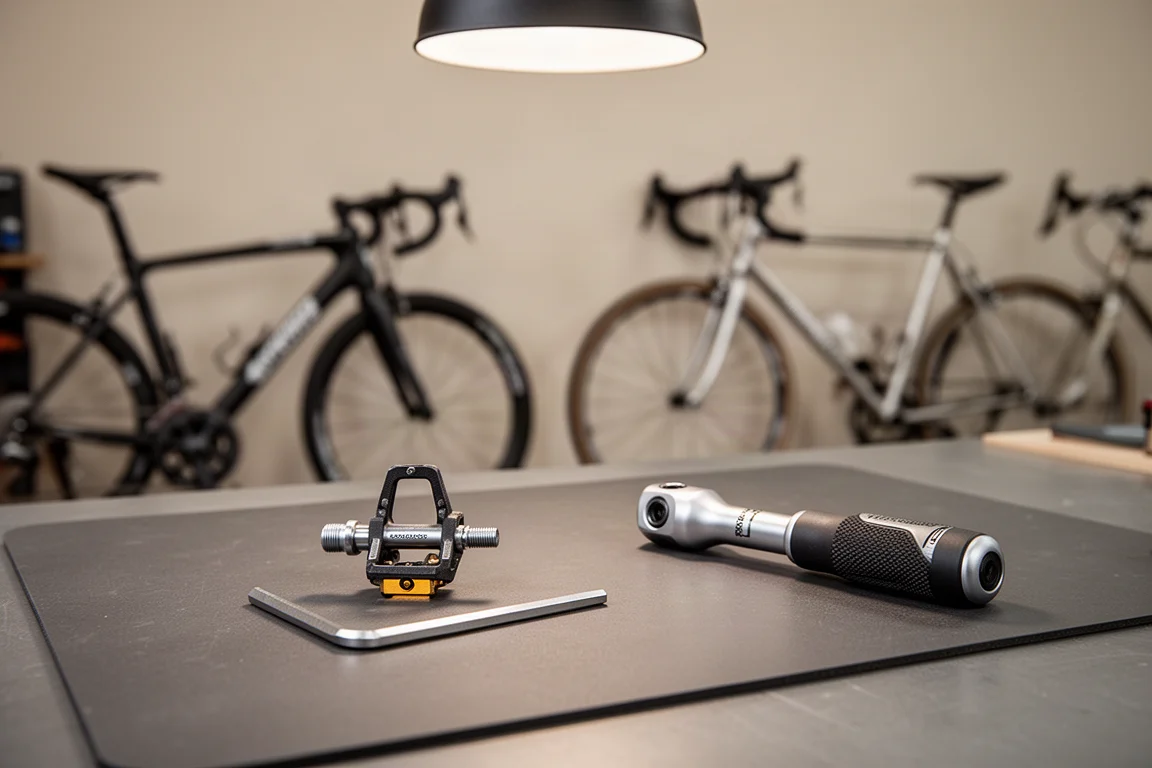
Practicality is the other strength. The pedal bodies come off with an Allen key and no proprietary tools, so the same axles can be fitted with Pro MX SPD bodies for mountain bike or gravel use. Because pedal threads are the one standard that has not changed in 45 years, the same set can move between a vintage steel frame, a modern race bike and a gravel bike in minutes.
What the Numbers Actually Show
On the flat loop, the Raleigh completed the 10 kilometers in 17 minutes 30 seconds. The Madone was 26 seconds faster at a comparable power output. To ride the Raleigh at the same speed would have required roughly 15 to 20 watts more.
On the hill climb, the gap nearly vanished. The Raleigh took 3 minutes 27 seconds, and the Madone was only two seconds quicker despite being ridden at lower power. Average cadence on the steel bike was eight revolutions per minute lower for the effort. The sprint was not measured, but it made the design differences obvious: the modern bike felt both stiffer and more compliant, translated power through the bottom bracket more effectively, and removed road vibration that the steel frame passed straight through.
The broader lesson is worth repeating. Roughly 80 percent of air resistance comes from the rider’s body rather than the bike. Riders on far lesser machines get dropped by stronger legs and bigger lungs all the time. If the goal is simply to go faster, more training will do more than a new frame. What the last four decades delivered is not a dramatic speed advantage so much as comfort, smoother power delivery, and controls that keep both hands on the bars.
Buying Advice: Which Bike Fits Your Riding
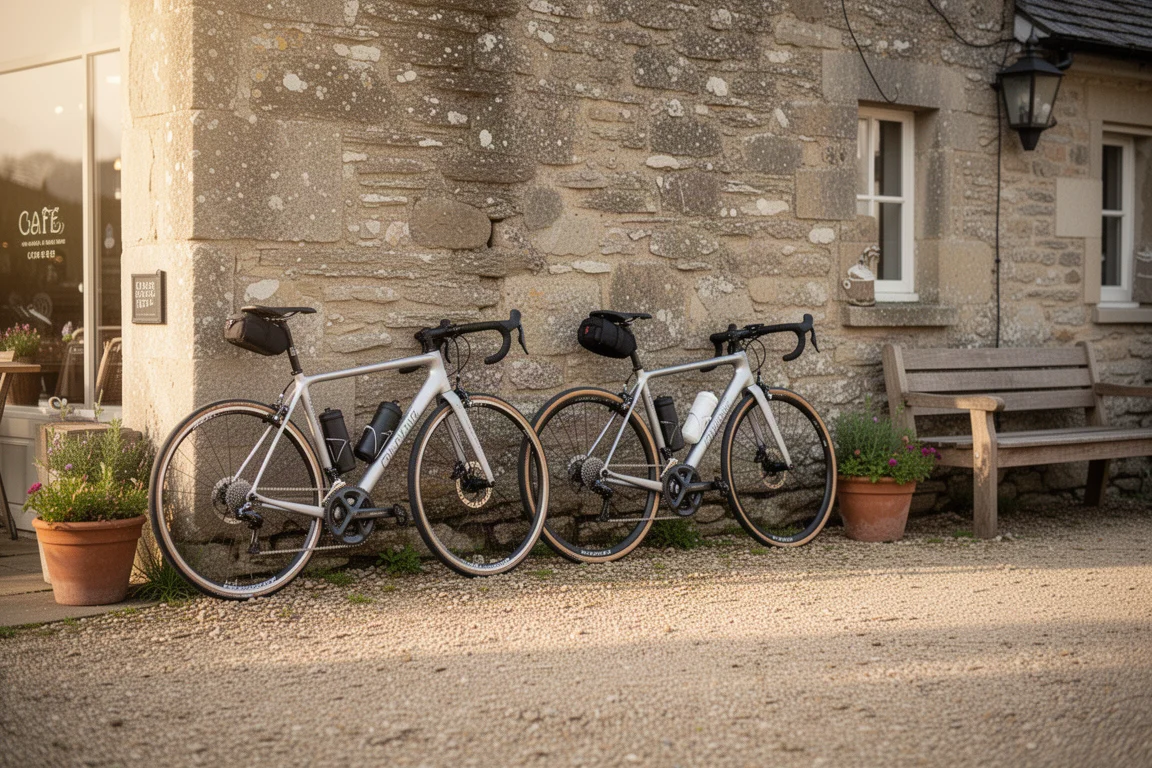
The modern race bike is the practical choice for most riders. It is faster in absolute terms, but the real gains are in comfort and usability: disc brakes, a wide 12 speed range, and shifters that let you change gear without leaving the hoods or the drops. If you want one bike that can handle a fast group ride, a steep climb and a long day out, that is where the money goes.
The steel Raleigh is a different purchase entirely. It is a limited edition, it is beautiful, and it delivers a ride that feels like an occasion. It suits collectors and riders who want a Sunday bike with real character. It is not the bike to choose if you are chasing personal bests on a 10 percent gradient, and down-tube shifters will never match the convenience of integrated controls.
The power meter pedals are the one item here that makes sense for almost any serious rider. They work on any bike with standard pedal threads, they do not alter the ride, and they are accurate enough to compare efforts across different machines. For riders who own more than one bike and want consistent training data from all of them, they are the smartest purchase of the three.
Conclusion
Forty-five years of development did not turn cycling into a different sport, but it did change what a race bike feels like to live with. The Trek Madone is faster, far more comfortable, and much easier to operate at speed. The TI Raleigh is slower and more demanding, and all the more memorable for it. Between them, the Favero Assioma Pro RS is the neutral instrument that made the comparison possible, and it stays useful long after the novelty of riding a 1980s race bike wears off.
Further reading
Related Reviews
Cycling Gear
8 Cycling Products Riders Keep Coming Back To
Eight cycling components and accessories with clear strengths, honest trade-offs and long-standing reputations among riders and mechanics.
Cycling Gear
Aero Helmets and Bottle Setups Tested: Six Options Ranked by Measured Watt Savings
Wind tunnel data on six aero helmets and bottle setups, with real watt savings, practical trade-offs, and guidance on what is worth buying first.
Cycling Gear
Aero Road Bikes and Fast Tires Worth Watching in 2026
Four aero road bikes and one fast road tire, with the real strengths, the open questions, and what to check before you buy.