Cycling
Trek Boone vs Trek Checkpoint: Cyclocross or Gravel, Which One Fits You?
Two drop-bar off-road bikes from Trek compared on the same cyclocross course, with the tyre clearance and geometry differences that actually matter.
Introduction
Cyclocross and gravel bikes share the same basic shape: drop handlebars, knobby tyres, and a frame that began life as a road bike before it learned to handle dirt. That similarity is exactly why the comparison keeps coming back, the same way the apple versus android argument never quite ends. Trek’s Boone and Trek’s Checkpoint sit on opposite sides of that divide, and riding them on the same cyclocross course shows where the two designs genuinely differ.
The Boone is a cyclocross race bike built around World Cup level racing. The Checkpoint is a gravel bike built around long distances, rough roads, and carrying luggage. Both are versatile, and both are a lot of fun off road, but the way each one is put together points to very different priorities.
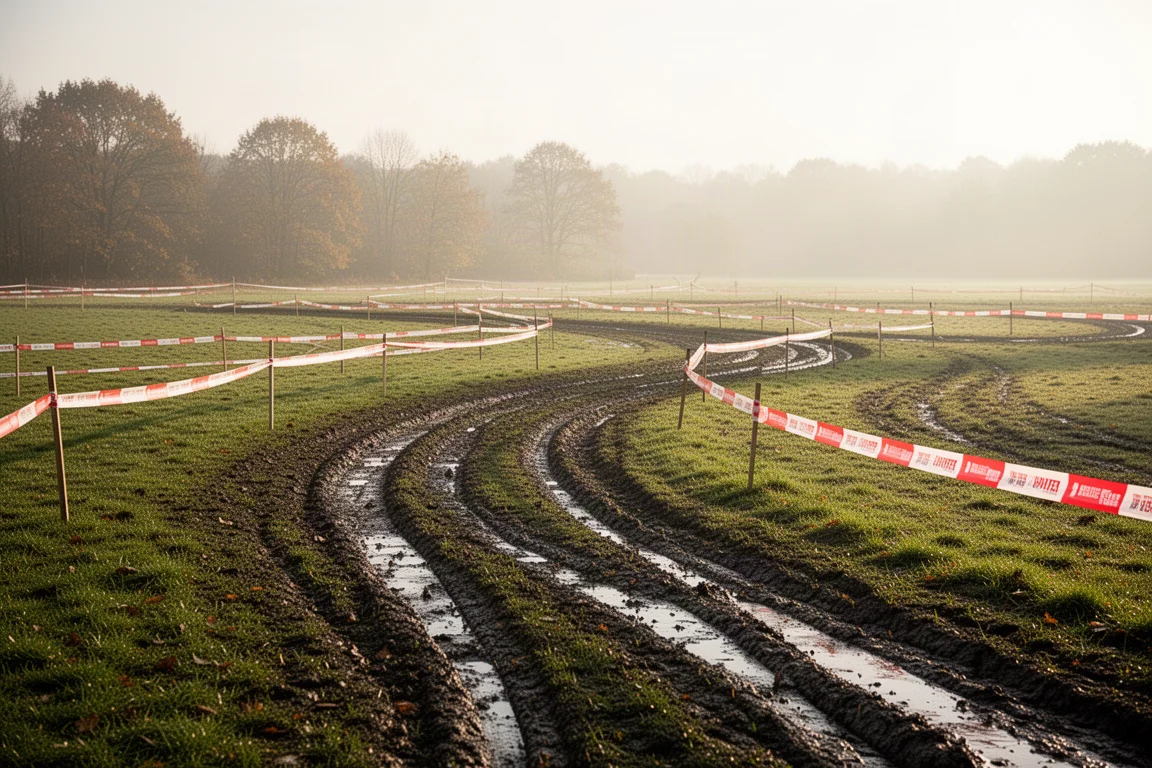
Some riders already own one of these bikes and wonder whether swapping makes sense. Others are buying their first drop-bar off-road bike and want to know which one suits them. Either way, the differences worth understanding are tyre clearance and frame geometry, because those are the parts you cannot easily change later.
Where the Two Designs Diverge
Cyclocross racing can be traced back to 1902, when road bikes were still a new idea and tarmac had only just been invented. Riders had always taken bikes off road, but cyclocross turned that into a race, and the fastest machines for the job were lightly modified road bikes. Over the decades the bikes changed: smaller gears that could still be pedalled below 10 mph, wider and grippier tyres, and greater mud clearance. Everything was optimised for tight, twisty riding through muddy fields and woodland.
Gravel arrived much later, crystallising around 2008 in the US Midwest, far from tight corners and soft mud. Gravel grinders were about big miles on rough gravel roads with loose corners spaced far apart. Cyclocross bikes were used at first, then modified for ever wider tyres to gain comfort and control, and eventually bikes were designed specifically for the job. Comfort over long distances and the ability to carry gear became paramount, along with speed through loose corners when it counted.
That history explains the shape of each bike today, and why the two designs are easier to tell apart once you know what to look for.
Trek Boone: The Cyclocross Race Bike
The Boone is Trek’s cyclocross race bike, a machine that has been ridden at the front of World Cup races. It is responsive, agile, and wants to go fast in the dirt. Its natural habitat is a tight, twisty, muddy course rather than a long straight gravel road.
Compliance is part of the design. The Boone uses IsoSpeed decouplers at the seat tube junction and at the head tube, which increase frame compliance for both comfort and speed. That is a meaningful detail on rough ground, where a frame that absorbs chatter lets you stay on the power instead of absorbing the hits yourself.
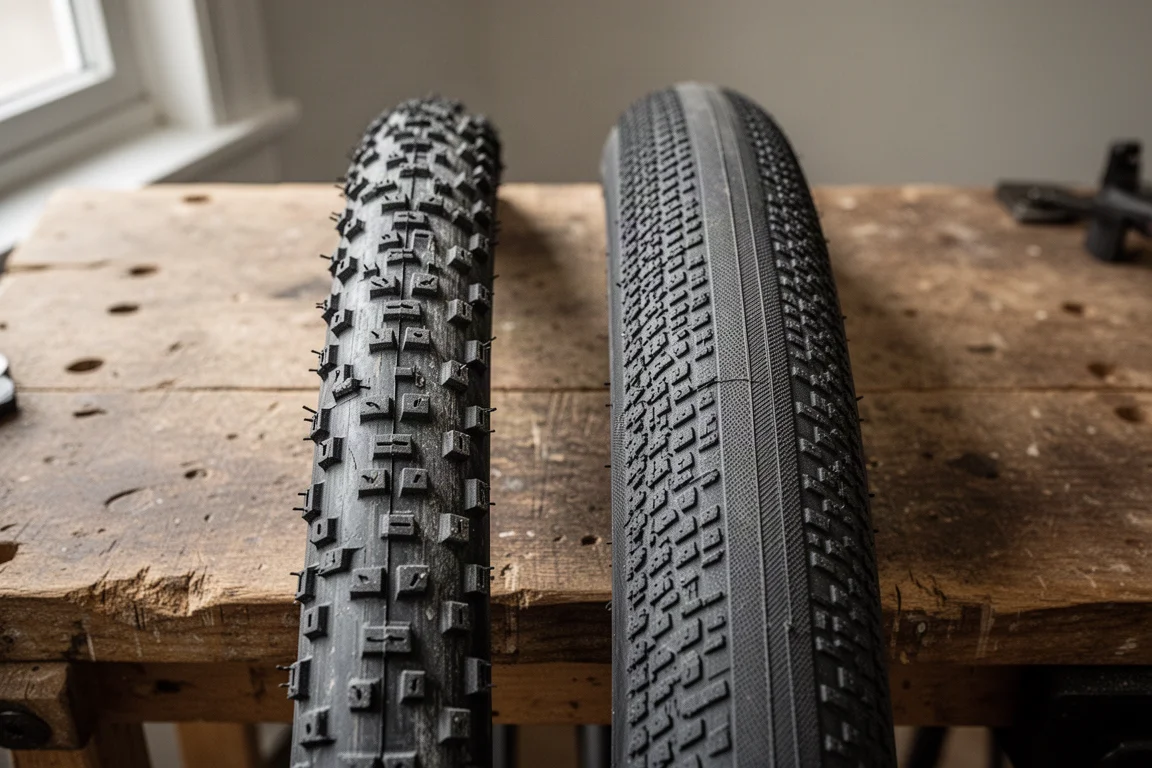
Tyre clearance is the clearest limitation. Trek states that the Boone accepts tyres up to 38 mm wide, a deliberately safety conscious figure. That is generous for a cyclocross bike, where racing rules cap tyre width at 33 mm, but it cannot approach what the Checkpoint takes. Stick to the UCI limit of 33 mm and the Boone does not really enjoy rocks.
It is worth noting that Trek also says the Boone, along with the aluminium Crockett, is used for road and all-road gravel riding. The bike is not locked to a cyclocross course, but its reason for existing is cyclocross, and Trek took a no compromise approach to that goal. The compromises show up elsewhere, in tyre clearance, in storage, and in geometry honed for tight, twisty, muddy terrain.
Trek Checkpoint: The Gravel All-Rounder
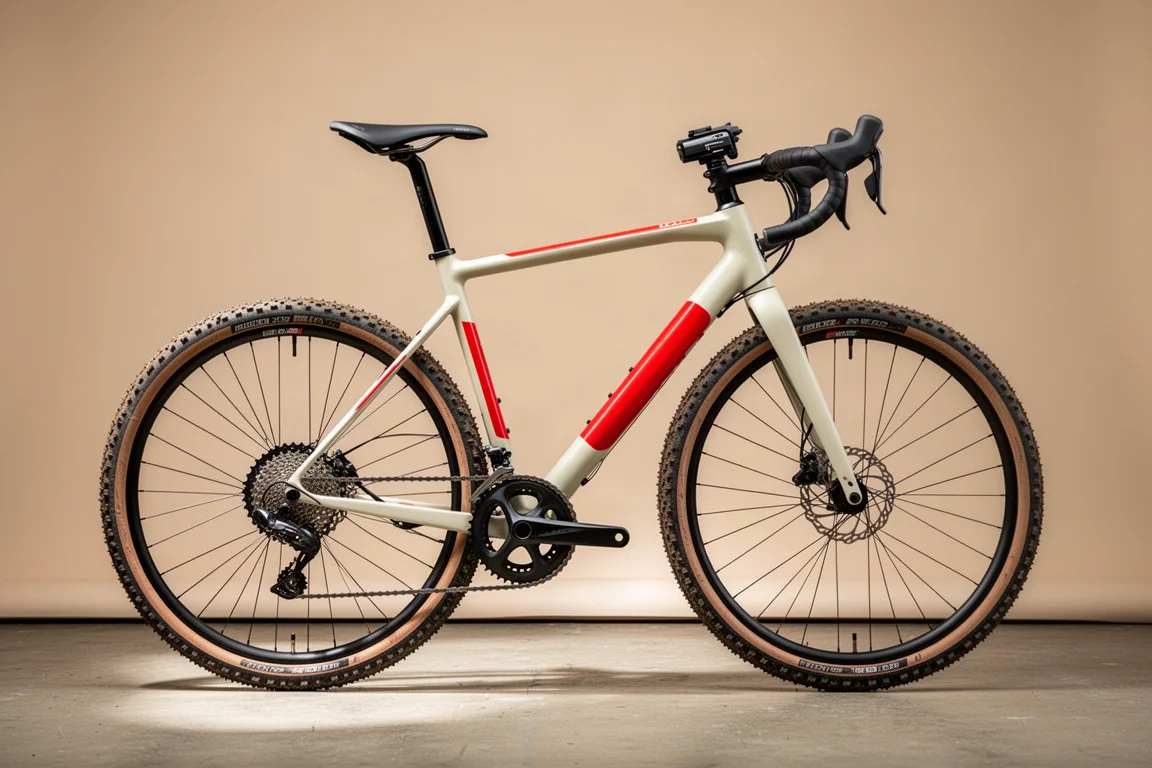
The Checkpoint takes the opposite approach. It is covered in mounting bosses, on the fork, on the frame, and even inside the frame, so you can carry a large amount of luggage on self-supported rides.
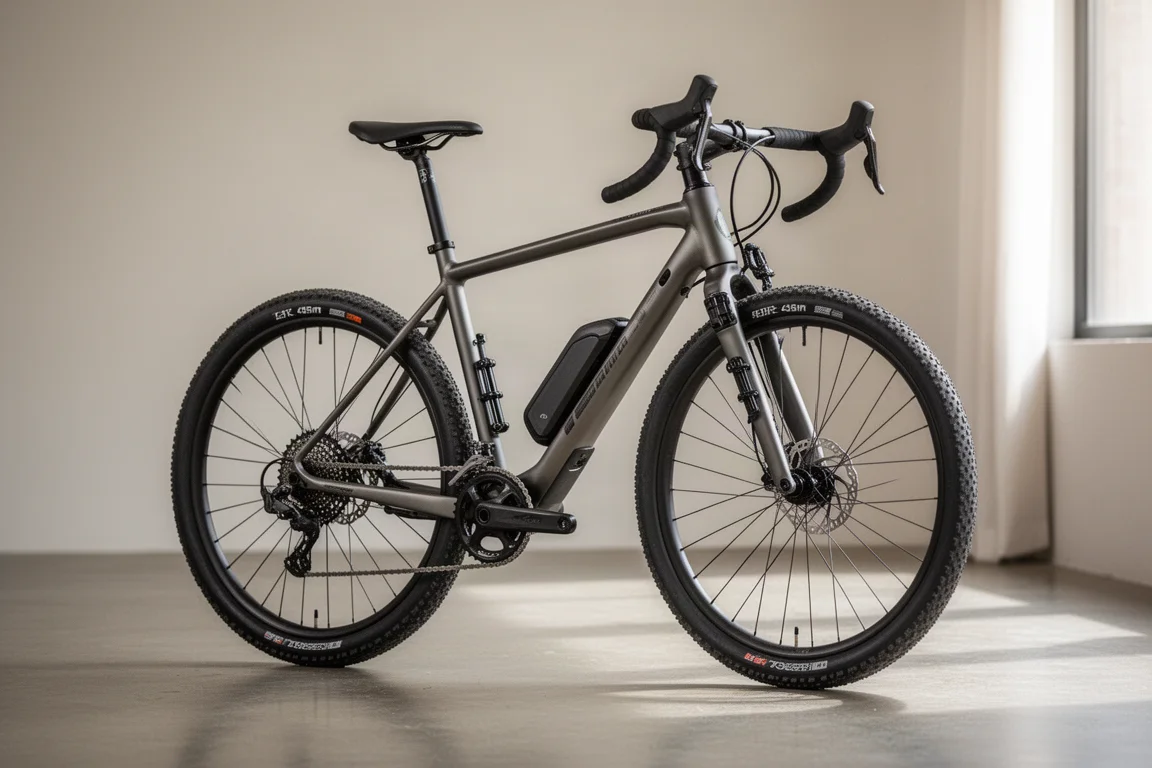
Tyre clearance is where it pulls ahead. The Checkpoint fits 45 mm tyres with acres of mud clearance to spare. Fit smaller diameter 650b wheels and you can go wider still. There is no racing regulation limiting you here.
The Checkpoint also has a wider range of gears for inching up steep climbs when the bike is loaded, a situation a cyclocross racer rarely plans for, since running can be faster than grinding. Gear ratios can be swapped on either bike, so that particular difference is not permanent.
Geometry is the deeper distinction. The Checkpoint’s bottom bracket sits 8 mm lower than the Boone’s, which lowers the centre of gravity and improves stability. The frame is also longer, which helps at higher speeds and when conditions get fast and loose. To keep your position on the bike unchanged while preserving agile rather than merely stable handling, Trek specifies a slightly shorter stem. IsoSpeed decouplers appear here too, at the seat tube junction and at the head tube, raising compliance further.
Finally, the Checkpoint can take road tyres as well as cyclocross tyres. If you do fit cyclocross tyres, you need to be mindful of that lower bottom bracket on tight, twisty courses.
What a Back-to-Back Course Comparison Showed
Riding both bikes on the same cyclocross course produced a small but telling gap. The Boone completed a hot lap in 6 minutes 25 seconds. The Checkpoint took 6 minutes 31 seconds, six seconds slower. Across a race, six seconds per lap adds up to nearly a minute, and clawing that back would require a fair amount of extra power.
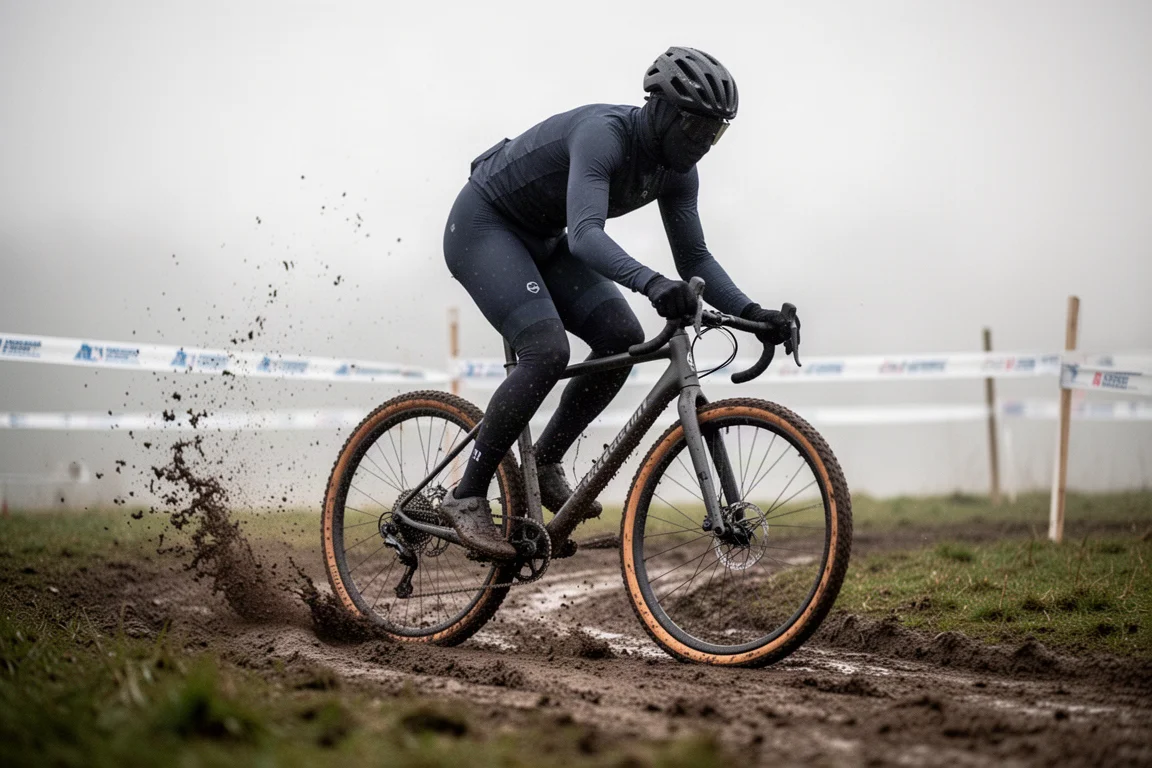
The lower bottom bracket on the Checkpoint was noticeable in a practical way: the pedal kissed the dirt a few times through corners. Combined with less grippy file-tread tyres, it was harder to lean the bike far over.
Tyres are the complicating factor in any comparison like this. The Boone ran 32 mm cyclocross tyres while the Checkpoint ran 40 mm file-tread gravel tyres, which are designed for completely different conditions. Tyre width matters more as terrain gets rougher, and wider tyres roll more smoothly over bumpy ground, roots, and rocks.
Fitting cyclocross tyres to the Checkpoint did not simply turn it into a cyclocross bike. That lap lost 14 seconds after a front end washout in a fast corner, though once back up to speed the pace tracked closely to the standard Checkpoint. The larger file-tread tyres may well have offset the less aggressive tread. On a dry course, the differences between the two bikes stayed subtle.
Which Bike Should You Buy?
The Checkpoint is the more versatile choice for most riders. It carries more luggage, takes much wider tyres, and can be ridden virtually anywhere. On some cyclocross courses it could even be faster, as long as racing regulations do not apply to you.
The Boone makes sense if you race cyclocross, or if your off-road drop-bar riding looks like woods, fields, and mud rather than endless gravel roads and 200 mile epics. For tight, twisty, muddy terrain its attributes are close to ideal, and Trek continues to invest in both the bike and the sport as a whole.
Six seconds a lap is the honest measure of the gap on a cyclocross course, and it may be entirely irrelevant to how you actually ride. The differences that persist are tyre clearance and frame geometry, the same two factors that separate a road bike from a gravel bike. They are subtle, but their effect is not small.
Conclusion
Both bikes are a lot of fun and both remain highly versatile. Choose the Checkpoint if you want one drop-bar bike that handles mixed terrain, carries luggage, and accepts wide tyres. Choose the Boone if cyclocross racing or muddy, twisty trails are the point, and accept the narrower tyre clearance and the geometry that follows from it.
Further reading
Related Reviews
Cycling
2026 Bike of the Year and the Cycling Gear Worth Watching
A drop bar roundup for 2026 covering the Ridley Kanzo Fast 2.0, Shimano Dura-Ace Di2 R9300, Trek Checkpoint ALR Gen 3, Specialized Tarmac SL9, Garmin Fenix 9 and Insta360 X6.
Cycling
Best All-Road Bikes 2026: Six Versatile Endurance Road Bikes Worth Considering
A practical look at six all-road and endurance road bikes, from lightweight carbon speed machines to steel all-rounders and comfort-focused mile eaters.
Cycling
Best All-Road Bikes 2026: 8 Endurance Bikes for Road and Light Gravel
Eight all-road bikes that blur the line between endurance road and light gravel, compared on tire clearance, ride character, practicality, and value.