Stationery
Traveler's Company Traveler's Notebook Review: An Analog System That Grows With You
A five-year user's look at the Traveler's Notebook ecosystem, from the leather cover and MD paper refills to the inserts and accessories that make it endlessly customizable.
Introduction
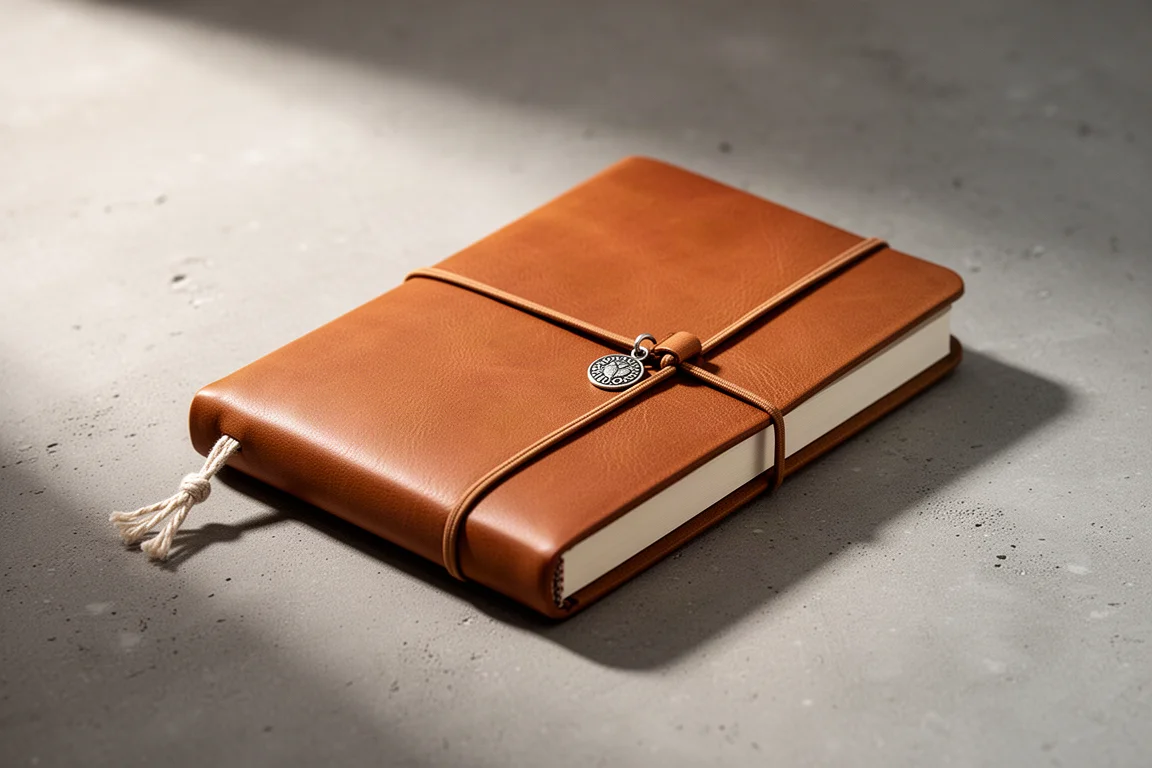
Some notebooks are consumables. The Traveler’s Company Traveler’s Notebook is closer to a system: a leather or suede shell, a steady stream of paper refills, and a deep catalog of inserts and accessories that scale to almost any writing, planning, or documenting need. It is the notebook line its long-time users tend to stick with for years, and after spending about five years with both the regular size and the passport size, it is easy to see why.
The core appeal is the ecosystem. One cover, endlessly refilled and reconfigured. The regular size has served as a daily driver for work and productivity, while the smaller passport size lives in a camera bag for on-the-fly note-taking. Both formats earn their keep, and both covers age beautifully with use.
What’s In The Box
Everything starts with the shell: a simple, highly functional leather or suede cover that looks equally at home in a boardroom or a cafe. Unboxing a new regular size cover in camel leather reveals a cardboard quad-fold sleeve secured by a spare notebook elastic, a linen pouch, care instructions, and an alternate colored green closure elastic. The cover itself has an instantly soft touch that will smooth out and develop a patina over time, much like the well-used passport size cover many owners have carried for half a decade.
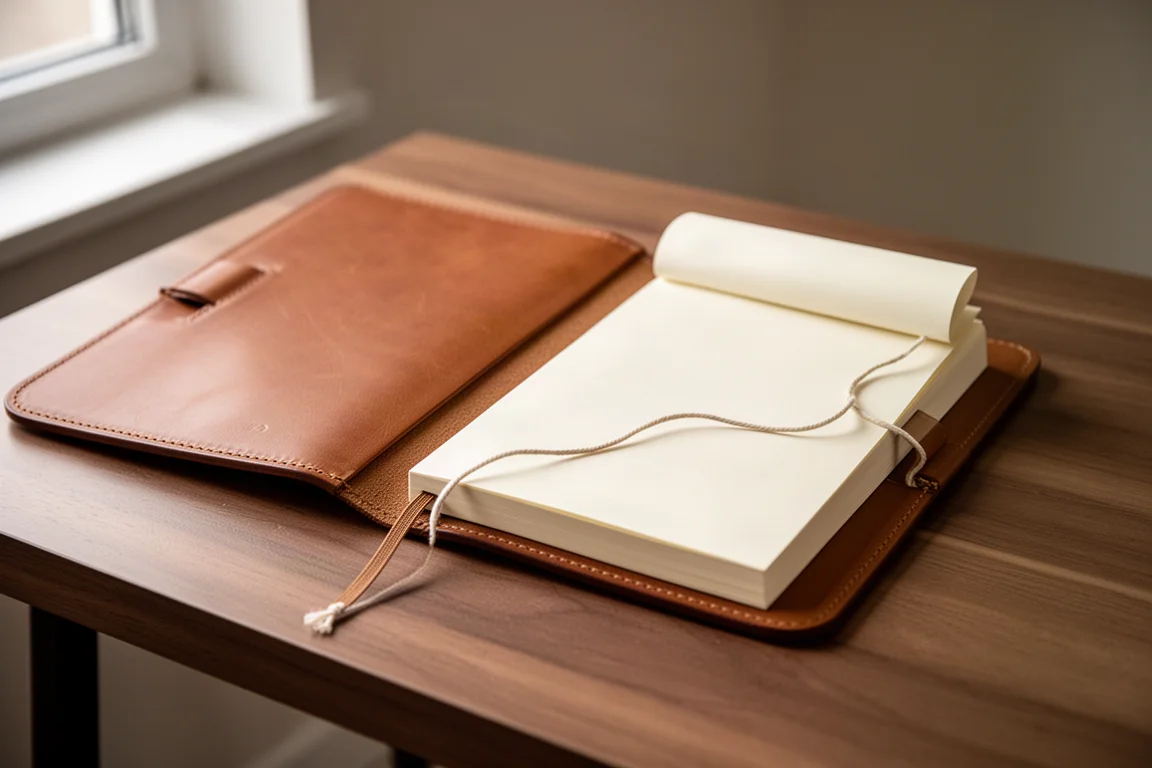
The anatomy of the cover is worth understanding before setup. A string serves as a page marker, and a spine elastic anchors all the inserts. Both are secured to a pewter compression lock disc. A looped closure elastic is knotted and threaded through a central hole on the back cover, wrapping around the closed notebook to keep it from opening up inside a bag. Optional additional anchoring elastics, sold separately, let you daisy-chain multiple notebooks and inserts.
The MD Paper Refills
Each cover ships with one starter notebook refill featuring blank MD paper. This paper is the quiet star of the system. It works well with virtually all writing and drawing instruments, and its balanced cotton blend makes it genuinely fountain pen friendly, mitigating bleeding and feathering where lesser papers struggle.
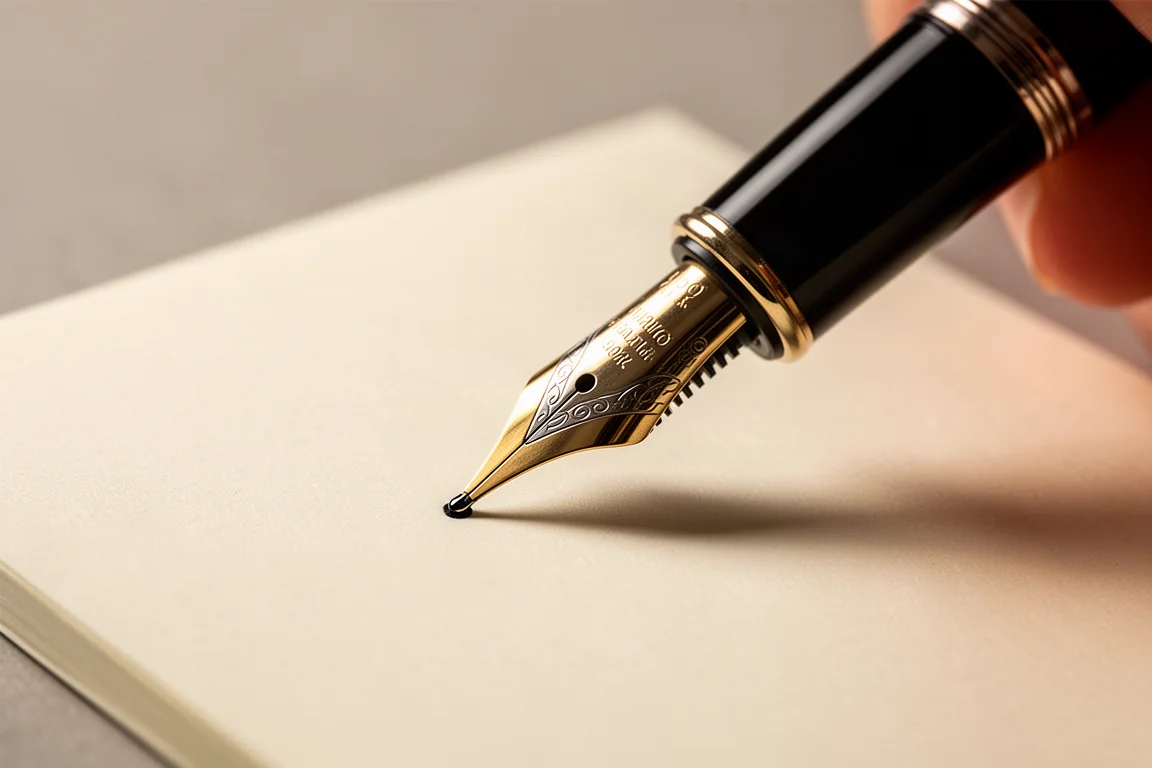
Refills get replaced constantly, which is exactly the point. The paper is the consumable; the leather cover is the keeper that breaks in and improves over years of daily handling.
Making It Your Own: Inserts and Accessories
This is where the system shines. Beyond plain notebooks, Traveler’s Company offers inserts in blank, line, grid, calendar, and various colored papers, so a designer or engineer can pair a grid notebook for diagrams with a plain one for everyday notes and a craft notebook for travel scrapbooking.
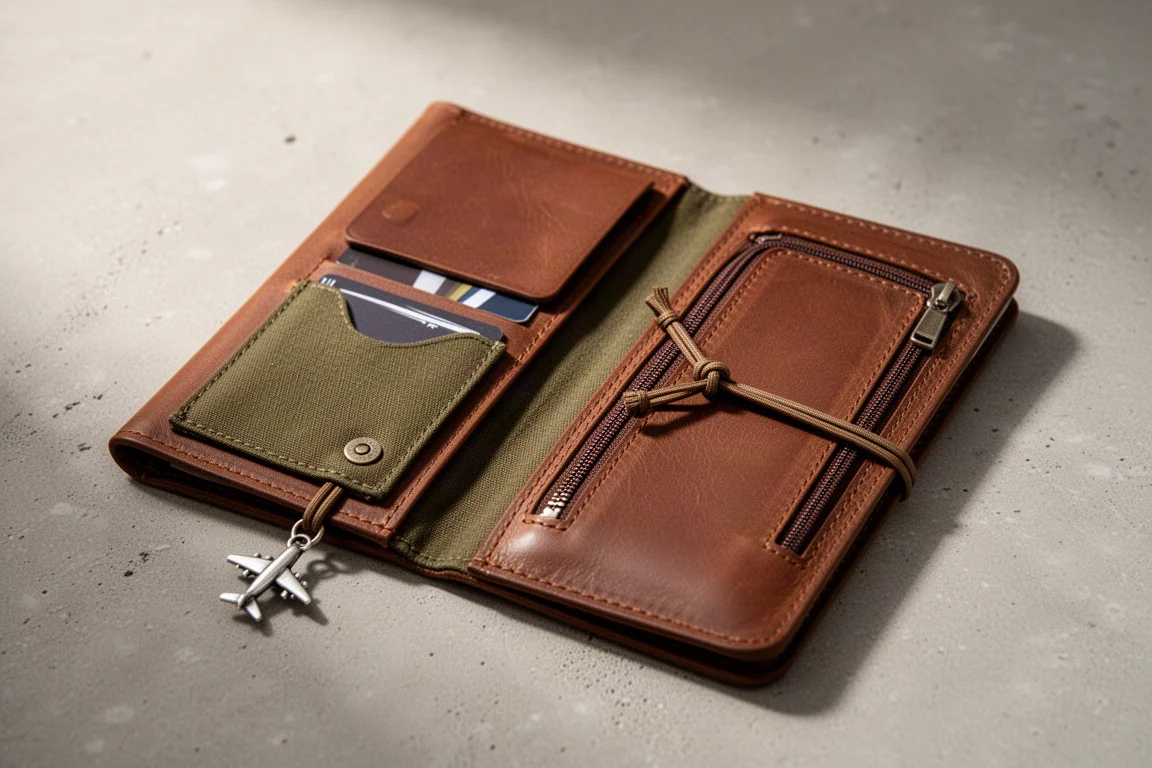
Permanent mainstays worth considering include a cotton multi-pocket insert, such as a special edition olive brown cotton zipper pocket insert with a large flap pocket and three card slots on one side and a secure zipper pocket on the other. A pewter charm threaded onto the closure elastic is a small but satisfying personalization, available as camera or airplane designs.
Other useful accessories include a sticky note caddy in various sizes for keeping track of pages across setups, a clear plastic zipper pocket sleeve for transparent storage and quick access, brass airplane punch-out paper clips that sit below the cover edge so they do not snag when the notebook is closed, a brass ruler for process maps and workflow diagrams, and even a tiny set of pencil crayons. Traveler’s also makes its own pen clip and a brass and wood fine tip ballpoint pen, though third-party options like a pen clip from the Japanese brand The Superior Labor can clip two fountain pens to the front cover for those who need multiple inks or nib sizes.
One practical recommendation: limit the total number of combined inserts to four. Beyond that, the cover struggles to provide complete edge-to-edge coverage when everything is closed and secured.
Multi-Refill Setups
Carrying two refills is straightforward. Start with one notebook in the normal setup with its central page tucked into the cover’s spine elastic. Take a separately purchased anchoring elastic, stretch it over the back half of the first notebook’s central page, and close that notebook. The anchoring elastic now sits on its spine. Then open the second refill to its central page and slide the front half through the anchoring elastic against the first notebook’s spine. Two separate, securely anchored refills, one cover.
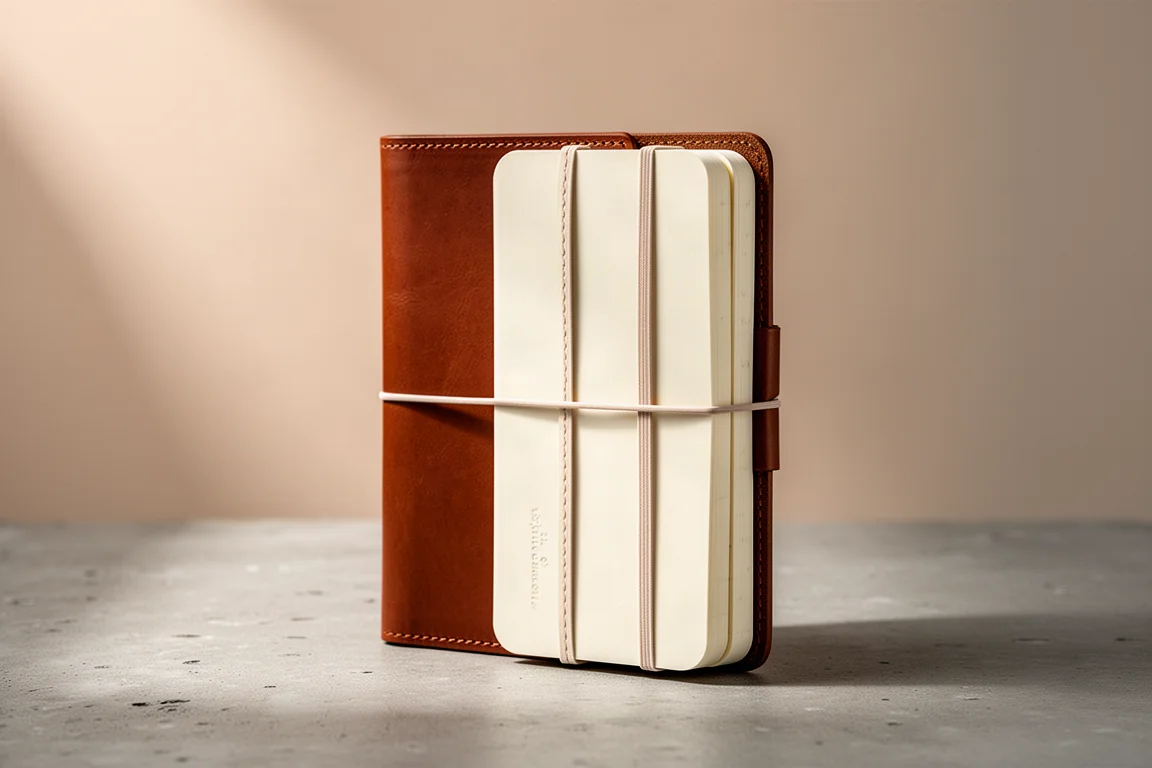
Three refills take one more step. First anchor two refills together at their central pages with an anchoring elastic, then slide the entire flat assembly into the cover’s spine elastic so one complete notebook sits on each side. The exposed spine elastic between the two existing notebooks then takes the third refill, fed through at its central page. Even with three notebooks plus a zipper sleeve, four inserts total, the leather cover still completely protects the contents when the closure elastic is wrapped around.
Understanding the Product Lineup
With so many options, the naming system helps. Standard staple products available all the time carry a three-digit code: lined refills are 001, grid refills are 002, and blank refills, the most frequently reordered, are 003. The clear plastic zipper pouch is 008 and the sticky note caddy is 022. The code is printed clearly on the packaging, so reordering is mistake-proof.
Special editions do not carry a three-digit number. These include store-exclusive refills available only at the Tokyo Station store or the Narita International Airport store, which adds a bit of collector appeal for travelers passing through Japan.
Buying Advice
The Traveler’s Notebook makes sense for anyone committed to handwritten note-taking or journaling who wants a single cover that lasts years while the paper inside turns over endlessly. Choose suede if you prefer a soft, supple feel from day one; choose leather if you want a structurally stiffer shell that will still patina over time. Start with one blank refill and add inserts only as your actual workflow demands them, keeping the four-insert limit in mind.
Conclusion
Few analog systems offer this balance of simplicity and expandability. The cover is understated and durable, the MD paper is friendly to nearly every pen type, and the insert catalog lets the notebook evolve alongside your needs. For anyone who prefers the brain-to-hand-to-paper experience, it is a setup that is easy to recommend and even easier to keep using.
Product link
View more details for Traveler's Company Traveler's Notebook
This product is mentioned in the review. Check the specifications, options, and compatibility before buying.
View more details for Traveler's Company Traveler's NotebookFurther reading
Related Reviews
Stationery
Musgrave Pencils Review: Four Classic Pencils from Tennessee's Last Pencil Factory
We put four Musgrave pencils to paper, from the classic Harvest to the Unigraph 1200 drawing pencil, to see what a century-old Tennessee workshop can still do.
Stationery
Fountain Pen Tiers Explained: From Starter Pens to Luxury Grails
A practical overview of the different levels of fountain pens and inks, from a sub-$20 starter setup to Italian piston fillers and retractable gold-nib everyday carries.
Stationery
HP Premium 32 lb Copy Paper Review: A Fountain Pen Friendly Everyday Printer Paper
A heavy, smooth 120 GSM copy paper that handles fountain pens far better than standard printer stock, with only minor trade-offs in shading and sheen.