Camp Cookware
Trangia Mess Tin 10 Review: Small and Large Tins Plus the Roll Top Cover
A practical look at the Trangia Mess Tin 10 in both sizes and the optional roll top cover, covering weight, capacity, heat source compatibility, and value.
Introduction
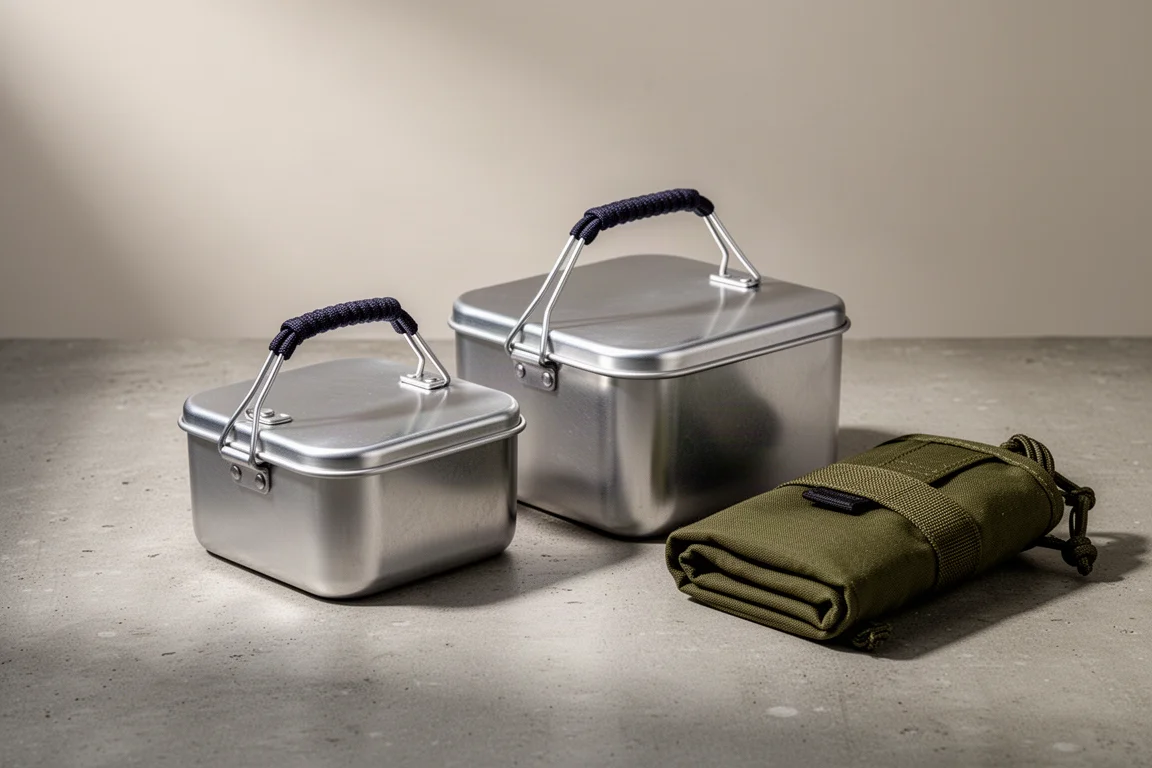
The Trangia Mess Tin 10 is one of those pieces of camp cookware that does very little and does it well. It is a shallow aluminum tin with a lid, an insulated handle, and a nonstick interior, sold in two sizes: a small 0.75-liter version and a large 1.3-liter version. An optional polycotton roll top cover keeps the tin packed and protected.
Both sizes are inexpensive, both are light, and both accept a wide range of heat sources. The interesting part is that they suit different trips, and choosing between them comes down to capacity and the stove you plan to use. This review covers dimensions, weights, capacities, real-world cooking behavior, and the trade-offs worth knowing before you buy.
What the Trangia Mess Tin 10 Offers
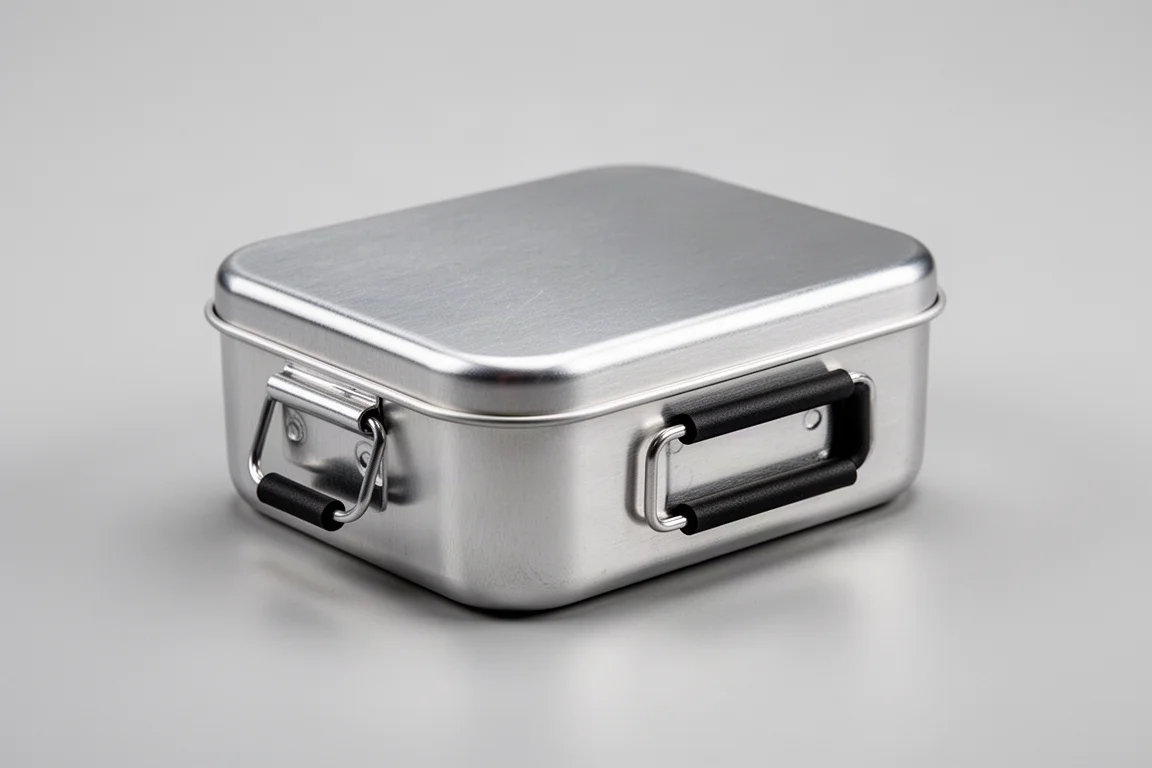
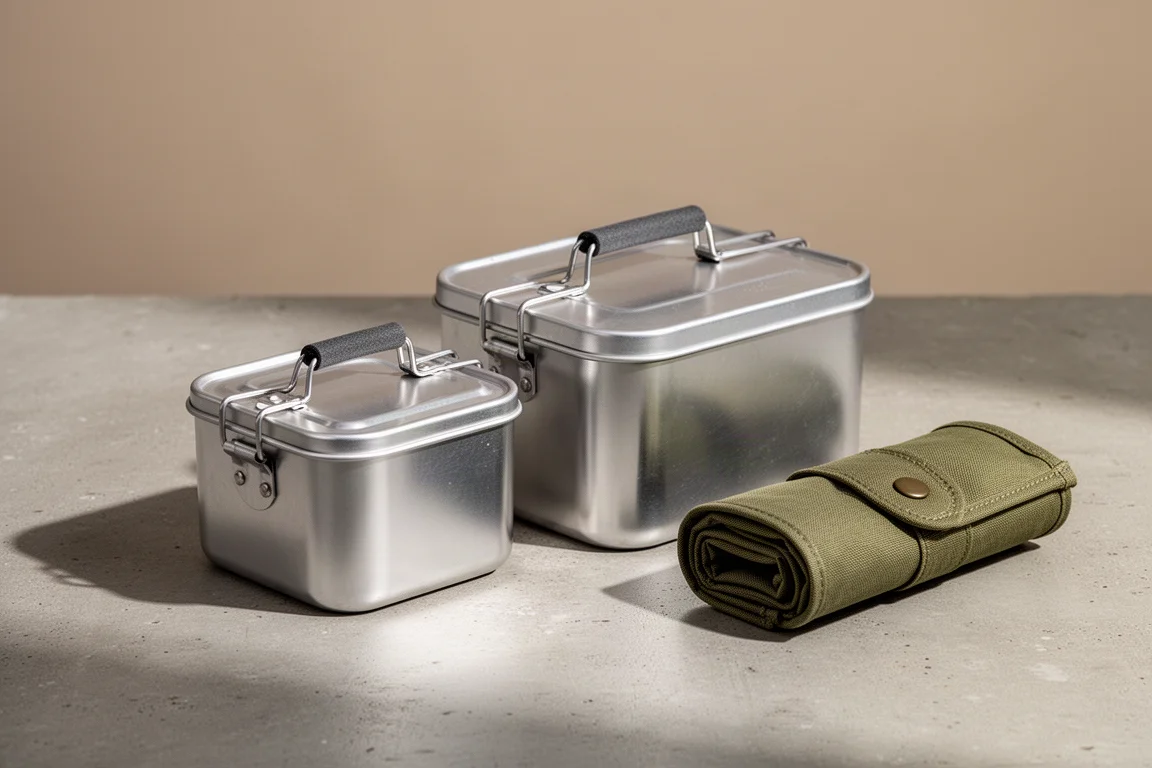
Both tins share the same basic design: an aluminum body, a lid that fits snugly, and a 5-inch handle wrapped in an insulator. The handle does not lock, and it does not need to. The insulator sleeve means you can lift the tin off a hot stove or out of a fire without reaching for a separate pot gripper.
The small Mess Tin 10 measures 6.5 inches long, 3.5 inches wide, and 2 inches deep. It holds 0.75 liters and weighs 5.7 ounces with the lid. The large version measures 8 inches long, 5 inches wide, and 2.75 inches deep. It holds 1.3 liters and weighs 9.2 ounces with the lid, which is remarkably light for the volume.
Removing the lid takes a moment of technique rather than force. Rocking it side to side is the easiest way to break the seal, and the fit stays secure in a pack. Inside, there are no measurement markings at all. Just the body, the lid, and the handle.
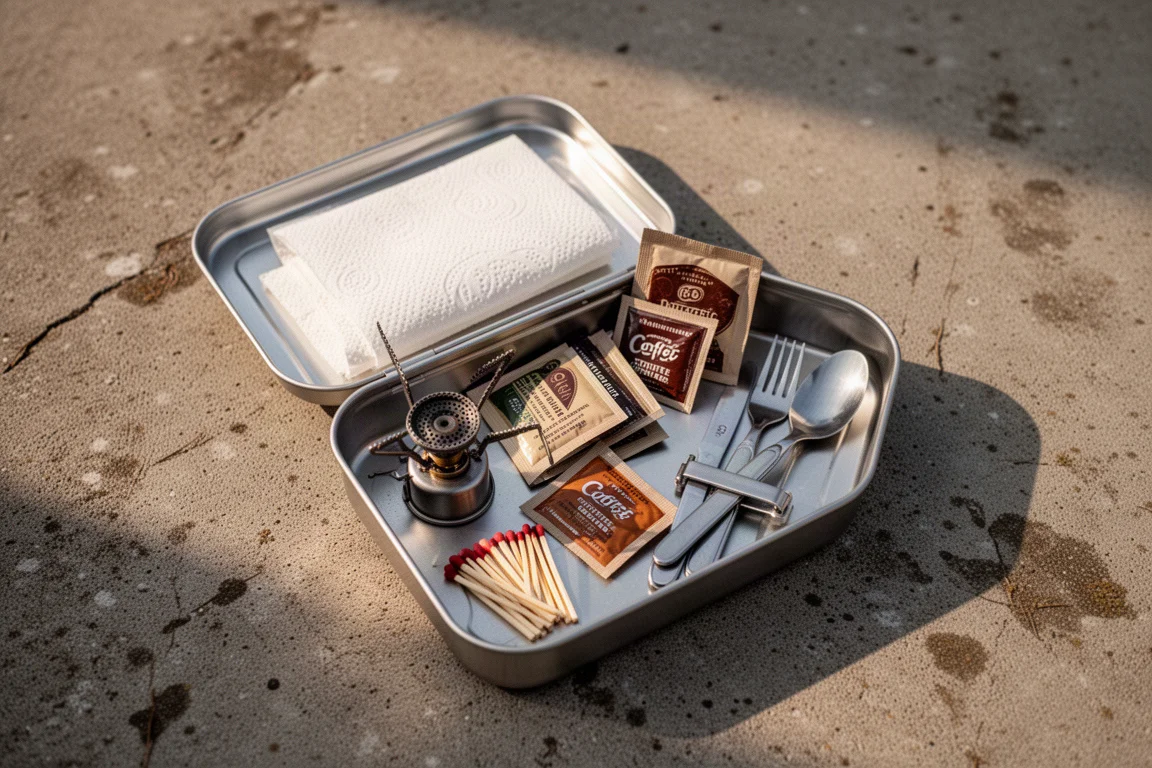
Heat source compatibility is broad. Both tins work with alcohol stoves, gas and canister burners, open fires, and solid fuel. Trangia also offers versions without handles and handles in black or red, along with accessories such as cases, handle covers, and the roll top covers discussed below.
Small or Large: Two Capacities, Two Use Cases
The small tin is the more flexible of the two. It works well on an alcohol stove and equally well on a canister stove, and it is capable of bringing its contents to a full boil.
The large tin is a different proposition. Its base has far more surface area than a small alcohol burner can heat effectively. With an alcohol stove, the center of the large tin will boil while the sides and corners stay behind. For that reason, the large size makes most sense with a canister stove that has a wide burner head, or over an open fire. On a fire, the extra surface area stops being a weakness and starts being the point.
Capacity matters just as much. A 0.75-liter tin is enough for a solo meal, a hot drink, or a small boil. A 1.3-liter tin handles larger portions and more ambitious camp cooking, at the cost of a little more pack space.
Trangia Mess Tin 10 in Real Use: Strengths and Trade-Offs
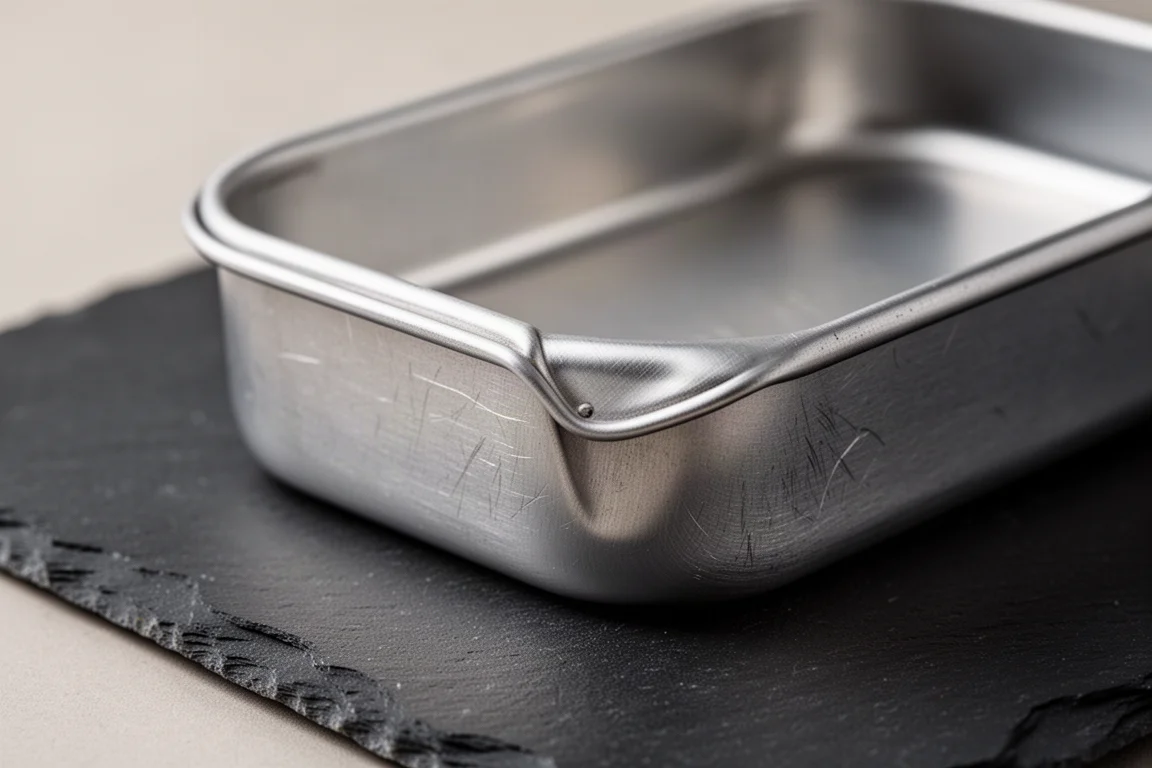
Durability is the first thing that stands out. After months of regular use, both tins show only light scratches and a small amount of staining in the interior corners. Nothing about that wear affects how they cook.
The weight is the second. A fully loaded kit, tin included, adds almost nothing to a pack, which makes these easy to justify on day trips as well as overnighters. Their compact footprint also makes them simple to slot into a chest rig, and that is part of why they are a familiar item in European military kit.
Versatility is the third. The tins can be kitted out for backpacking, bushcraft, or vehicle-based travel, and the two sizes let you match the cookware to the trip rather than the other way around. The nonstick interior has also held up well in practice, releasing food without the scrubbing that usually follows camp cooking.
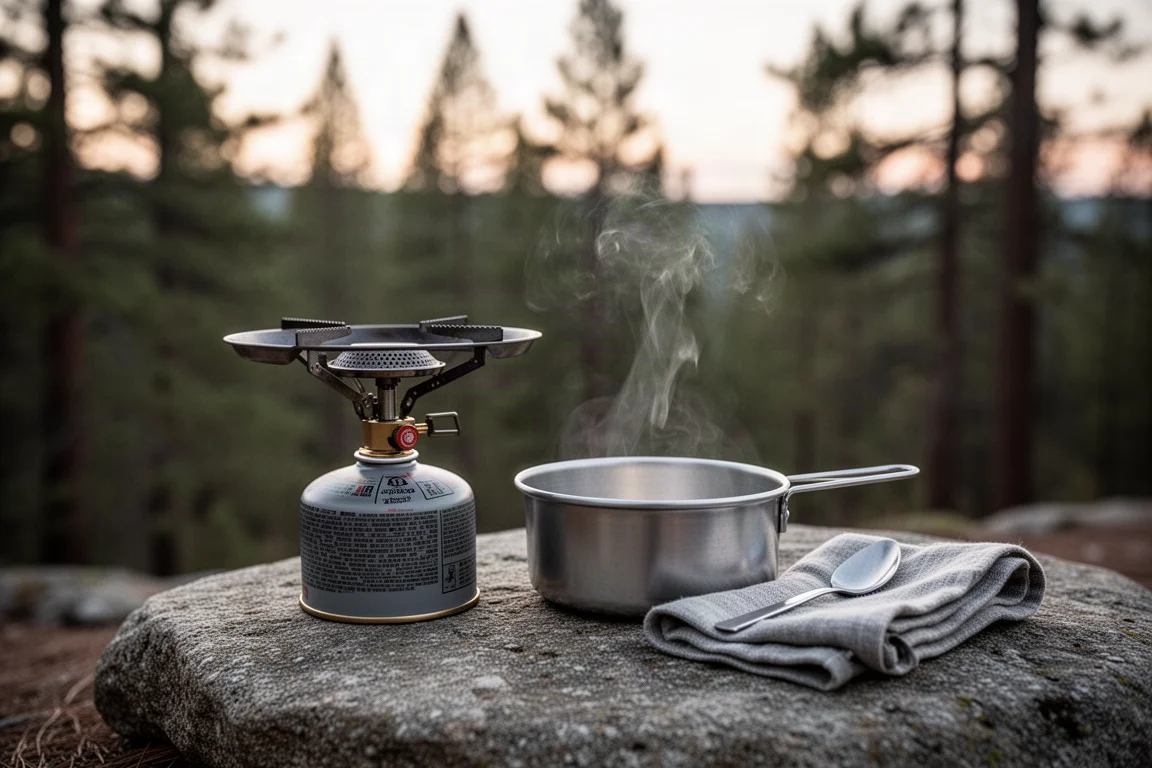
The lids deserve a mention of their own. They stay on securely in transit yet come off easily when you want them to, which is a small thing that matters every single time you use the tin.
There are a few points to weigh up. The edges are not sharp enough to cut, but running a finger along them reveals a slight jaggedness that could be finished more cleanly. The tins are compact for their capacity but still somewhat bulky in shape, and because the bodies are aluminum, scratching over time is inevitable. None of that changes how they perform, and it gives the tins a well-used character.
Trangia Roll Top Cover: A Simple Protective Layer
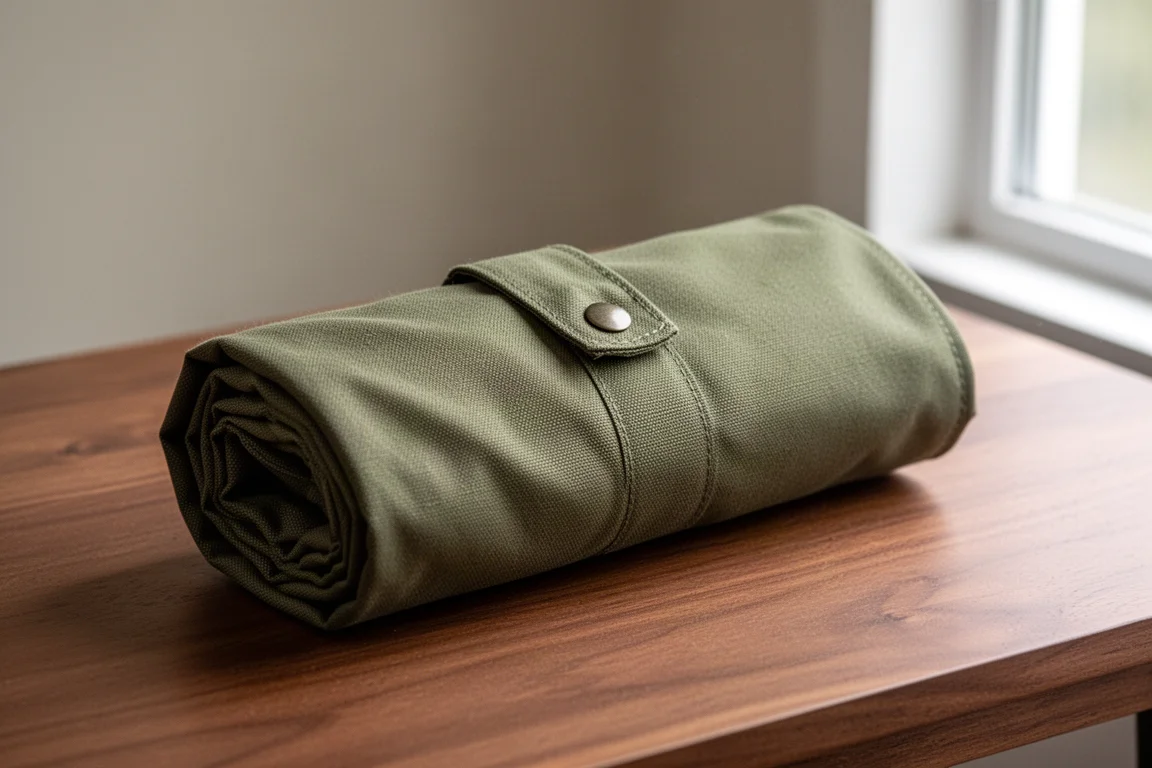
The roll top cover is exactly what it sounds like. It is a polycotton pouch, 65 percent polyester and 35 percent cotton, with a roll top closure and a snap. Undo the snap, unroll the top, and the tin slides out.
The cover comes in two sizes and two colors, green and black. The small version weighs 1.9 ounces and the large version 2.7 ounces, so neither adds meaningful weight to a kit. Its only real feature is the roll top and the snap, and that simplicity is the appeal. It keeps a tin closed, contained, and protected inside a pack.
What to Consider Before Buying
The main decision is capacity. A 0.75-liter tin suits solo trips and ultralight setups. A 1.3-liter tin suits more involved cooking and larger meals, but it needs a heat source that can cover its base.
The second consideration is your stove. If you rely on a small alcohol burner, the small tin is the better match. If you carry a canister stove with a wide head, or you cook over a fire, the large tin becomes far more capable.
It is also worth setting expectations on finish. These are inexpensive aluminum tins, and the edges, the surface, and the interior will pick up marks with use. That wear is cosmetic rather than functional.
Finally, note that there are no measurement markings. If you like to measure water or portions precisely in the pot, you will want a separate measuring cup.
Building a Kit for Different Trips
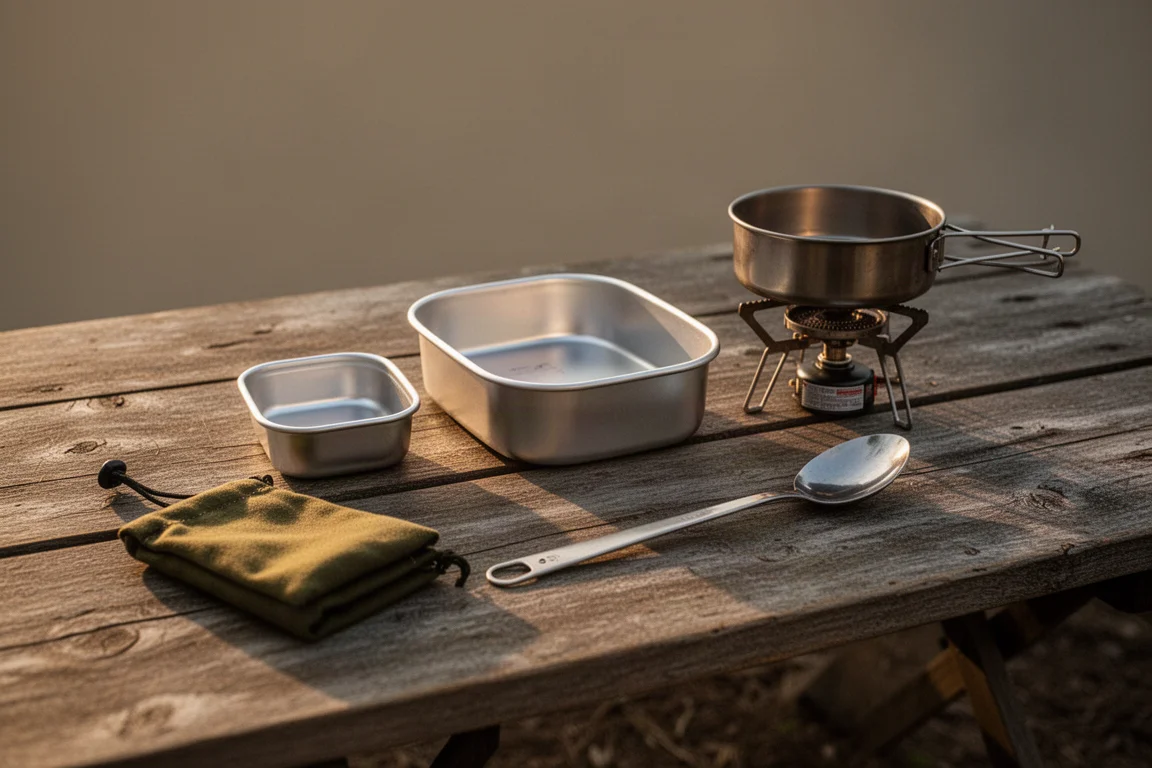
The two sizes are less of an either-or choice than a way of matching cookware to the trip. For ultralight backpacking, the small tin paired with an alcohol stove and a folded foil windscreen covers boiling water and simple meals.
For bushcraft and fire cooking, the large tin makes better use of a wide heat source and can handle a bigger meal. For overland and vehicle-based travel, where weight matters less and cooking ambitions are higher, the large tin is the natural pick. Some users carry both and choose between them based on the day.
Because both tins are compact and light, packing the wrong one is not a costly mistake. The kits are small enough that carrying a spare size rarely feels like a burden.
Buying Advice: Value for Money
Value is where these tins are hardest to argue with. The small size costs around $12 and the large size around $9, while the covers run about $15 for the small and $18 for the large. Buying both tins and both covers together still costs very little.
Set that against the price of a single camping pot, and the value case is clear. The Mess Tin 10 gives you a functional, adaptable cook system for roughly the price of one dedicated piece of cookware. Add the durability, the low weight, and the broad heat source compatibility, and the small drawbacks fade into the background.
Conclusion
The Trangia Mess Tin 10 is simple, light, easy to clean, and easy to adapt to whatever trip you have planned. The small size is the versatile all-rounder for alcohol and canister stoves, while the large size rewards a wide burner head or an open fire. The roll top cover is a modest but useful addition that keeps a tin packed and protected.
For anyone building a lightweight camp kitchen on a tight budget, both the tins and the covers are easy to recommend.
Further reading
Related Reviews
Camp Cookware
Trangia Mess Tin and Roll Top Cover Review: Lightweight Camp Cookware for Very Little Money
A practical look at the Trangia Mess Tin in small and large sizes, plus the roll top cover, covering capacity, weight, heat source matching, and overall value.
Camp Cookware
Sea to Summit Frontier Ultra 1.2L Review: A Ceramic-Coated Camp Pot Worth the Extra Weight
A 210 g ceramic-coated camp pot that boils, fries, and simmers, plus the one handle quirk to know about before you buy.
Camp Cookware
Stanley Wildfare Go 8-Piece Cook Set Review: A Sub-One-Pound Camp Kitchen
A close look at Stanley's eight-piece backpacking cook set, from its smart nesting design and stainless steel pot to the slick bowls and loose lid you should know about first.