Cycling
Tour de France Team Bikes: Five Pro Builds Worth a Closer Look
Five professional race bikes from the Tour de France peloton, from aero road machines to a custom time trial build, with the setup details that actually matter.
Introduction
The most interesting bikes at a Grand Tour are rarely the ones sitting on a showroom floor. They are the ones parked at team hotels, assembled around a specific rider, a specific parcours, and a specific set of race days.
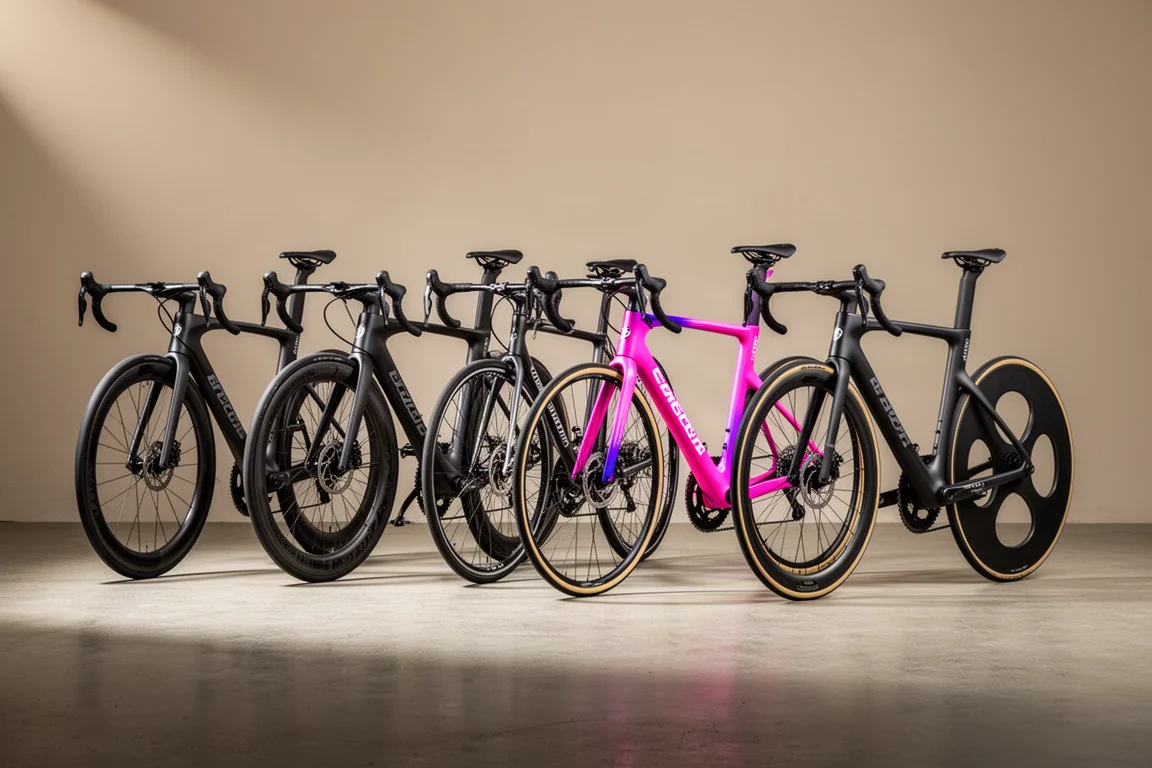
This roundup looks at five machines that stood out during the 2022 Tour de France. Two are aero road bikes built for fast, flat opening stages. One is a pure breakaway tool with an unusually aggressive position. One is a striking team collaboration build. And one is a time trial bike that mixes older frame technology with genuinely forward-looking custom parts.
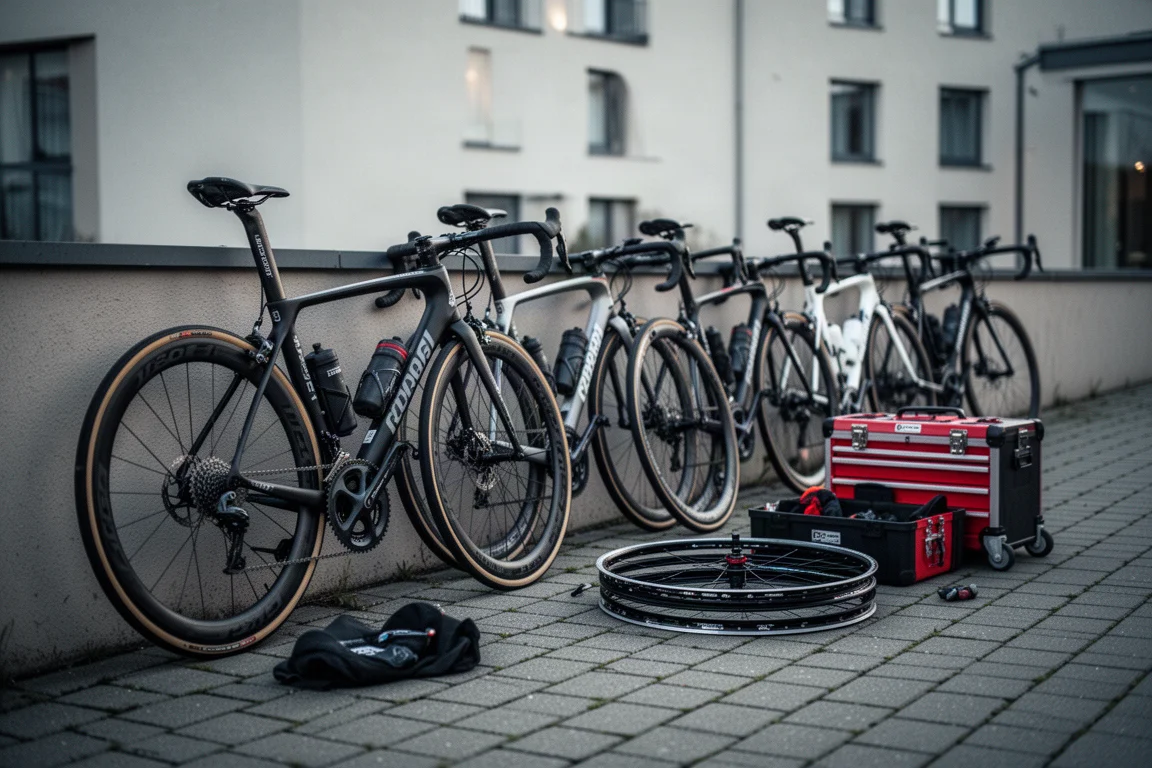
None of these are budget purchases, and none are sold in exactly this specification. What makes them worth studying is the reasoning behind each choice: chainring sizes, cockpit dimensions, wheel depth, and the small custom touches that separate a race bike from a stock build.
Pinarello Dogma F
Pinarello’s Dogma F is the Italian brand’s all-round racing platform, and this one was built for Geraint Thomas of Ineos Grenadiers. It is a dedicated aero road bike, but it is also light enough to work as a general-purpose race machine rather than a flat-course specialist.
The build is almost entirely Shimano. Thomas ran the latest 12-speed Dura-Ace R9200 Di2 groupset with one notable exception: an older 11-speed R9100 crankset. That is a common sight in the peloton when a rider prefers to stay on a power meter he already trusts. Gearing is race-focused, with an 11-34T cassette paired to a 54T outer chainring.
Shimano’s R9200 C50 carbon wheels carry Continental GP 5000 S TR tires set up tubeless. Up front there is a MOST Talon integrated handlebar, long and narrow but not as extreme as some setups seen in the same race. Thomas also stays with a longer-profile saddle, a shape that has become rarer as shorter saddles have taken over the peloton.
Frame details are where the Dogma F separates itself. There is Pinarello’s signature wavy fork, a down tube that narrows into an aero foil section before flaring out to shield the bottles from the wind, and wavy seat stays that the brand says add comfort and compliance. A small yellow stripe on the frame references Thomas’s 2018 Tour de France victory.
Ridley Noah Fast
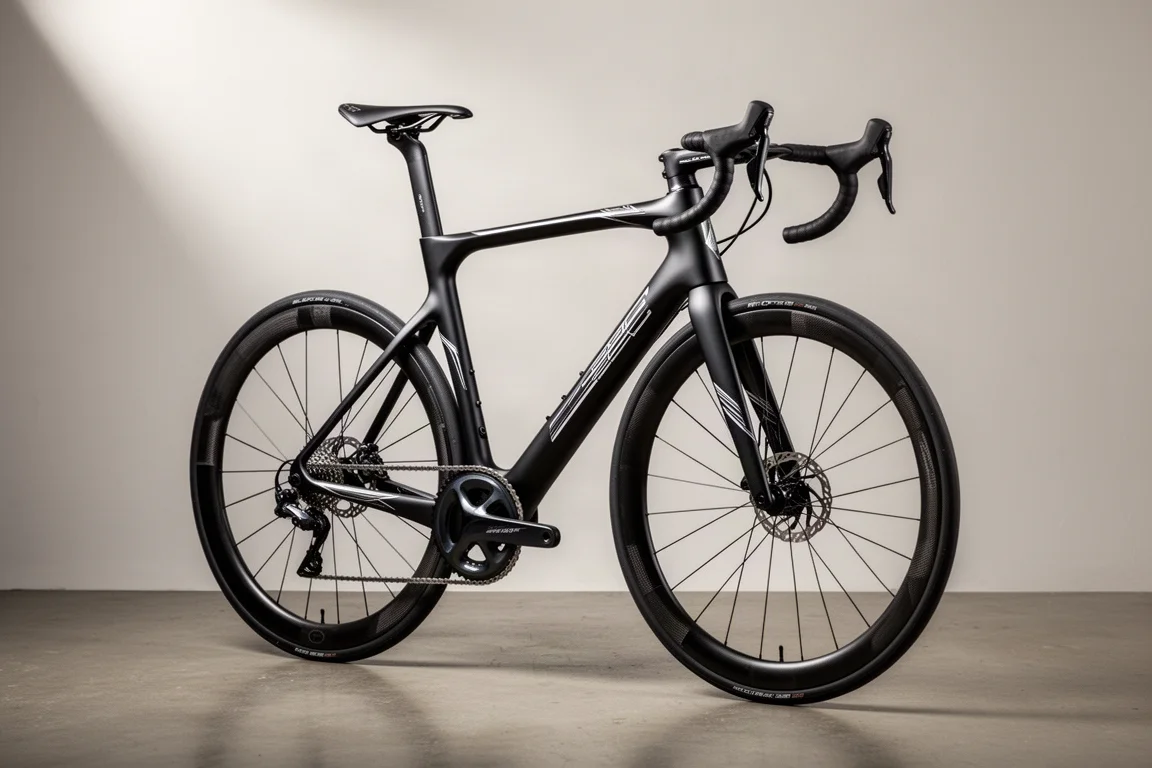
The Noah Fast is Ridley’s full aero road bike, heavier than the Helium Disc but faster in the flat, fast conditions that open a Grand Tour. This one was built for Caleb Ewan of Lotto Soudal, a sprinter whose setup reflects a very specific job.
Wheels are DT Swiss ARC 1100 62 carbon, fitted with Vittoria Corsa tires in 28mm. The cockpit is an integrated Deda unit set up aggressively, with a 14cm stem and a 38cm handlebar width. It is one of the narrower, more committed front ends in this group.
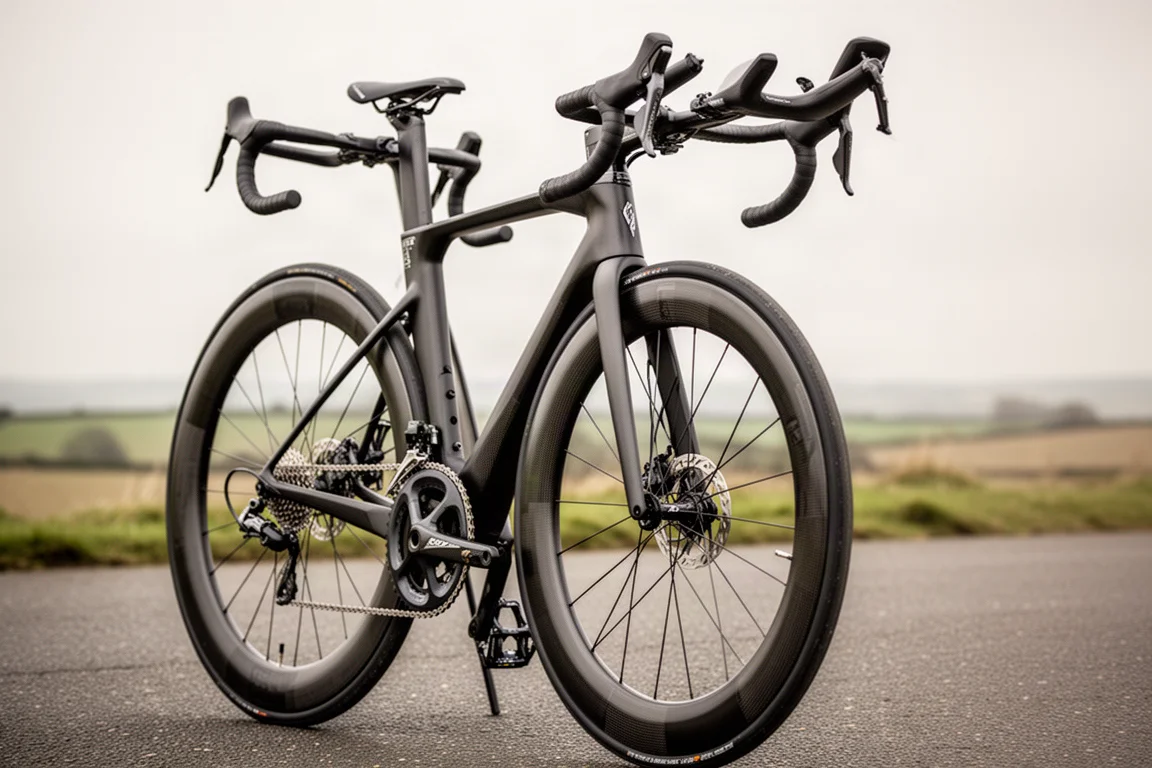
The drivetrain is Shimano’s 12-speed R9200 with 54/42T chainrings, plus the matching R9200-P power meter. Look Keo Blade carbon pedals, a C-Bear ceramic bottom bracket, and Tacx carbon bottle cages complete the build. A cut piece of old latex inner tube covers the timing chip on the fork, a neat field-expedient detail that says a lot about how race mechanics solve small problems.
Weight came in at 7.8kg, which is reasonable given the deep wheels, tubeless tires, and aero frame.
Cube Litening Team Edition
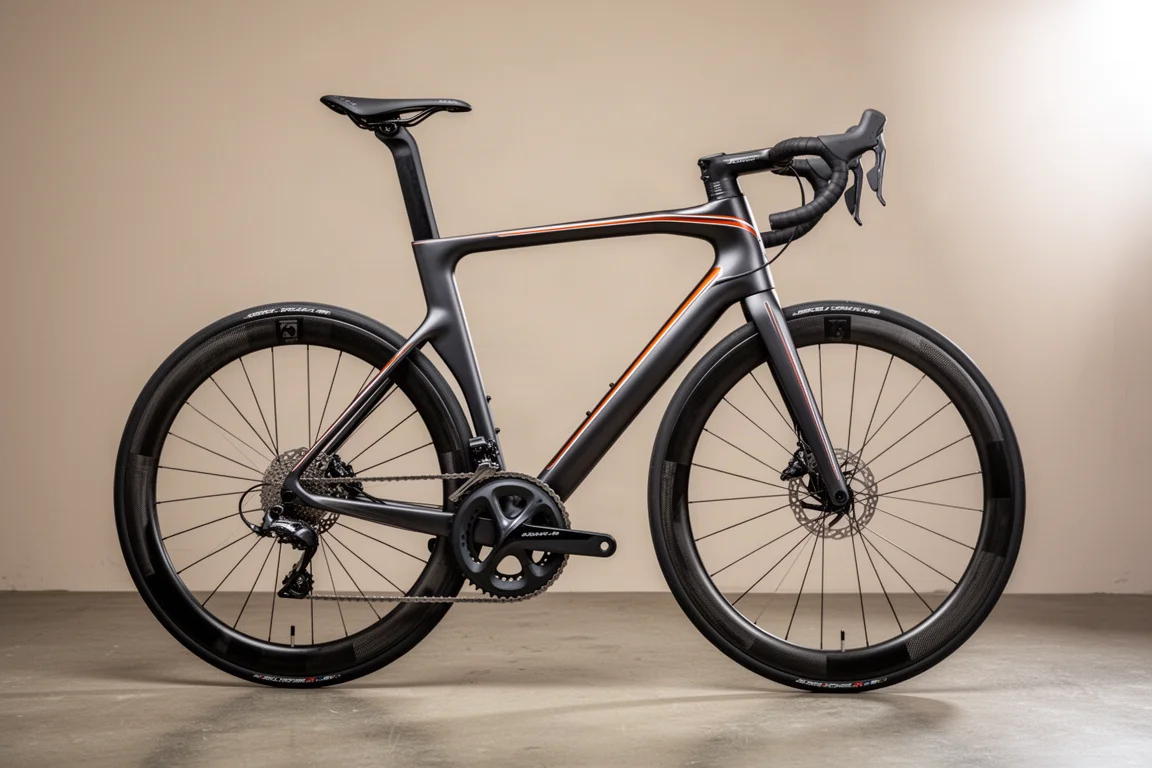
Taco van der Hoorn’s Litening Team Edition is the aero road bike built for Intermarché-Wanty-Gobert, and it carries one of the most aggressive positions in this group. Van der Hoorn is tall and rides a 56cm frame with a large saddle-to-bar drop, a long stem, narrow bars, lever hoods set low on the drops, and the drops turned in to help him hold a narrow, aerodynamic shape.
The drivetrain is Dura-Ace R9200 12-speed, again with an older R9100 11-speed crankset, and unusually large 56/44T chainrings. That gearing suits the flat Danish opening stages, and it would likely shrink once the race moved back into France. A CeramicSpeed OSPW Aero rear derailleur cage runs a special edition cover carrying the Danish flag.
Wheels are Newmen carbon units with Continental GP 5000 S TR tubeless-ready tires. Notably, the team runs them with sealant only and no tubeless inserts. The mechanics’ reasoning is practical: inserts absorb sealant, which means adding more of it, which adds weight, so a simpler setup makes more sense over a three-week race.
Smaller details include Elite Vico carbon bottle cages, a Prologo Dimension carbon saddle, and Look Keo Blade carbon pedals. Total weight was 7.87kg. As a breakaway specialist, van der Hoorn is exactly the kind of rider this build is shaped around.
Cannondale SystemSix
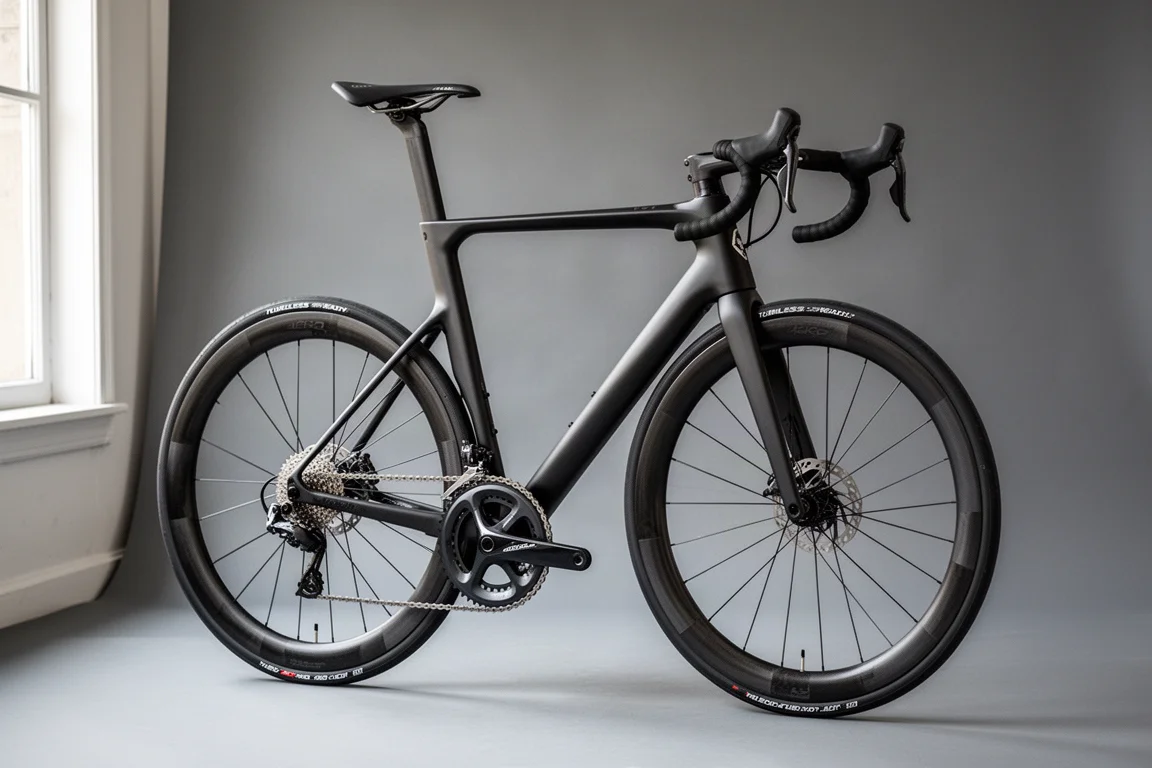
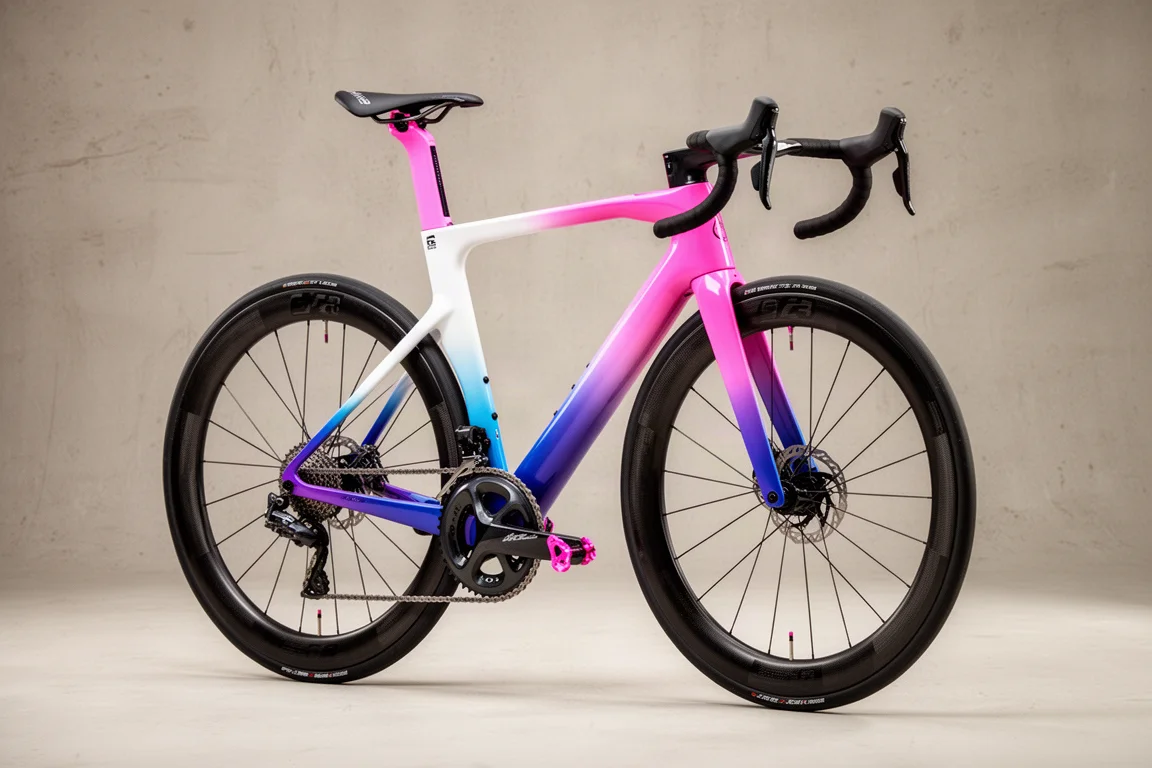
Alberto Bettiol’s SystemSix is a few years old as a frame, but the paint makes it one of the most eye-catching bikes in the peloton. EF Education-EasyPost worked with Palace on a new team livery, swapping last year’s ducks for dragons, and laid a pink-to-white-to-blue-to-purple fade across the frame.
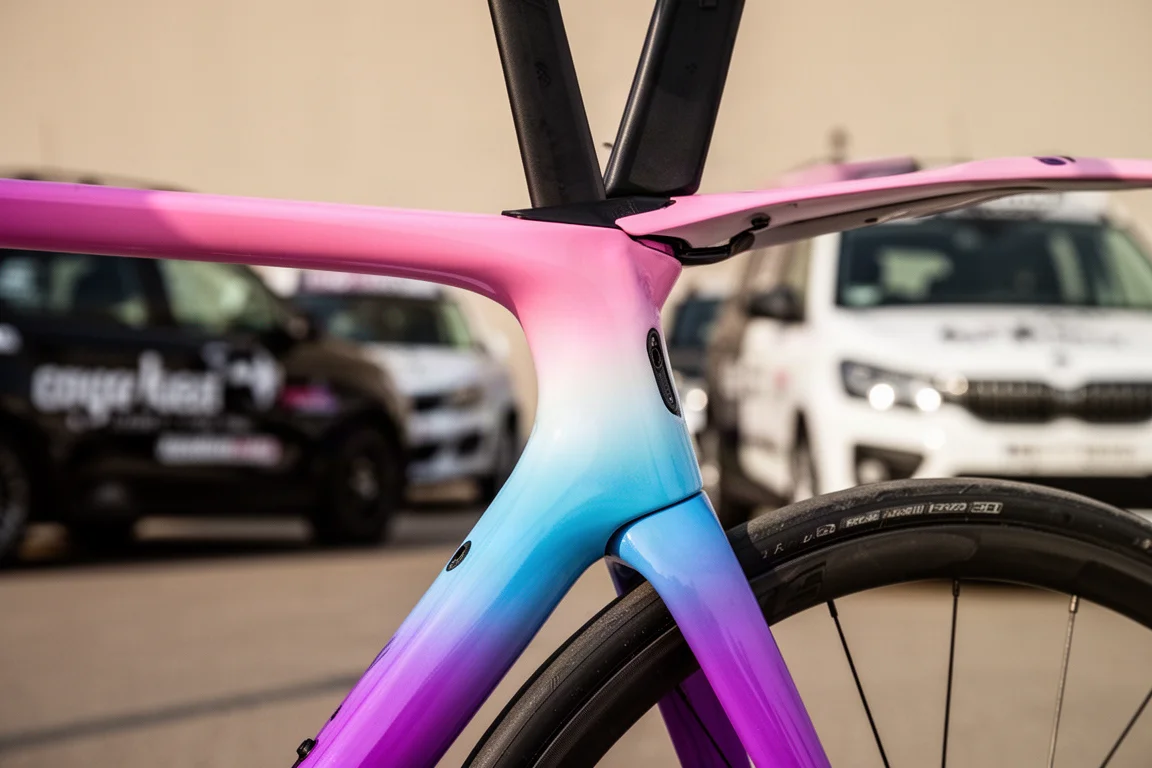
The build underneath is a straightforward team-issue package: Vision Metron wheels, a Vision Metron 5D handlebar, FSA carbon cranks, and a Shimano Dura-Ace R9200 groupset with 54/40T chainrings. Wahoo Speedplay Aero pedals handle the contact points.
One unusual choice is the absence of a power meter. The team says Bettiol prefers to race on feel, and he does not use a power meter on every training ride either, which is rare at this level of racing.
Finishing details include a Prologo Scratch M5 carbon saddle, Elite Leggero carbon bottle cages, and Vittoria Corsa tires in 700x28c set up tubeless. Anodized pink tubeless valves and a pink-themed Wahoo Elemnt Bolt computer tie the whole build together. Weight came in at 8.16kg.
Giant Trinity Advanced SL
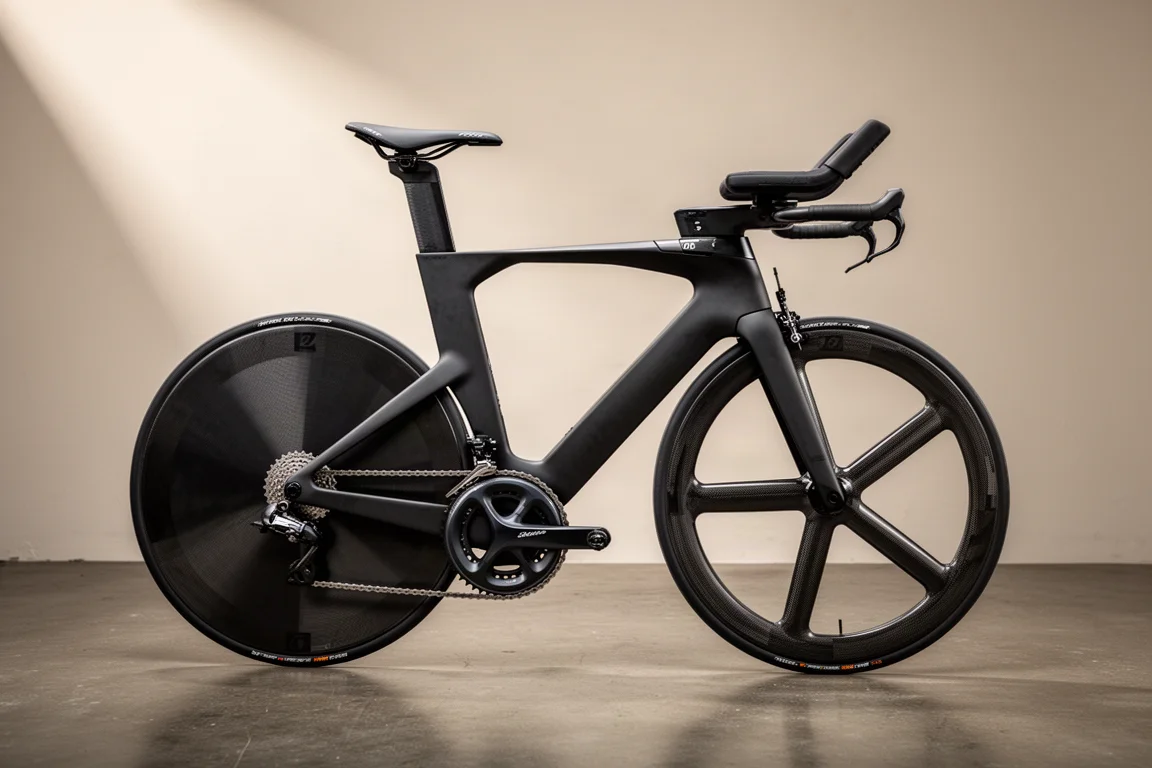
This Giant Trinity Advanced SL is the time trial bike of Team BikeExchange-Jayco, and it belonged to Luke Durbridge, a former Australian national time trial champion. It is a large frame with a huge saddle height and relatively little saddle-to-bar drop.
The most interesting part is the cockpit. Durbridge runs custom 3D-printed titanium extensions from Sync Ergonomics, made specifically for him in the exact shape and angle he prefers. Beyond a small aerodynamic advantage over round ski poles, they offer more surface area for distributing weight across the forearms. Small finger grips allow a slightly higher hand position without losing a secure hold, and Di2 sprint shifters sit between the shifters so he can change gear without leaving the extensions. The Sync armrests are high-sided and hold the position firmly for the duration of a time trial.
The drivetrain is the older 11-speed R9100 groupset rather than the newer 12-speed version, most likely a matter of supply. Chainrings are large at 56/44T. Wheels come from Cadex, Giant’s sister brand, with a four-spoke carbon front wheel and a solid rear disc. That setup is heavier than a spoked alternative, but it offers a real aerodynamic advantage on a flat course.
The brakes are a rarity now: hidden rim brakes, with a v-brake tucked behind the fork at the front and an integrated V-brake under the bottom bracket at the rear. Tires are Vittoria Corsa Speed tubeless in 700x25c, one of the fastest options for this kind of effort. The complete bike weighed 9.44kg, which is expected for a full-carbon disc-wheel time trial setup and matters little on flat ground.
Buying Advice
Looking across these five builds, a few patterns are worth carrying into any purchase decision.
The first is gearing. Several riders here run chainrings far larger than what most stock bikes ship with, up to 56T on the road bikes in this group. Those choices are driven by flat, fast stages and by the ability to hold a big gear at race speed. Most riders do not need that, and a standard compact or semi-compact setup will be more usable almost everywhere else.
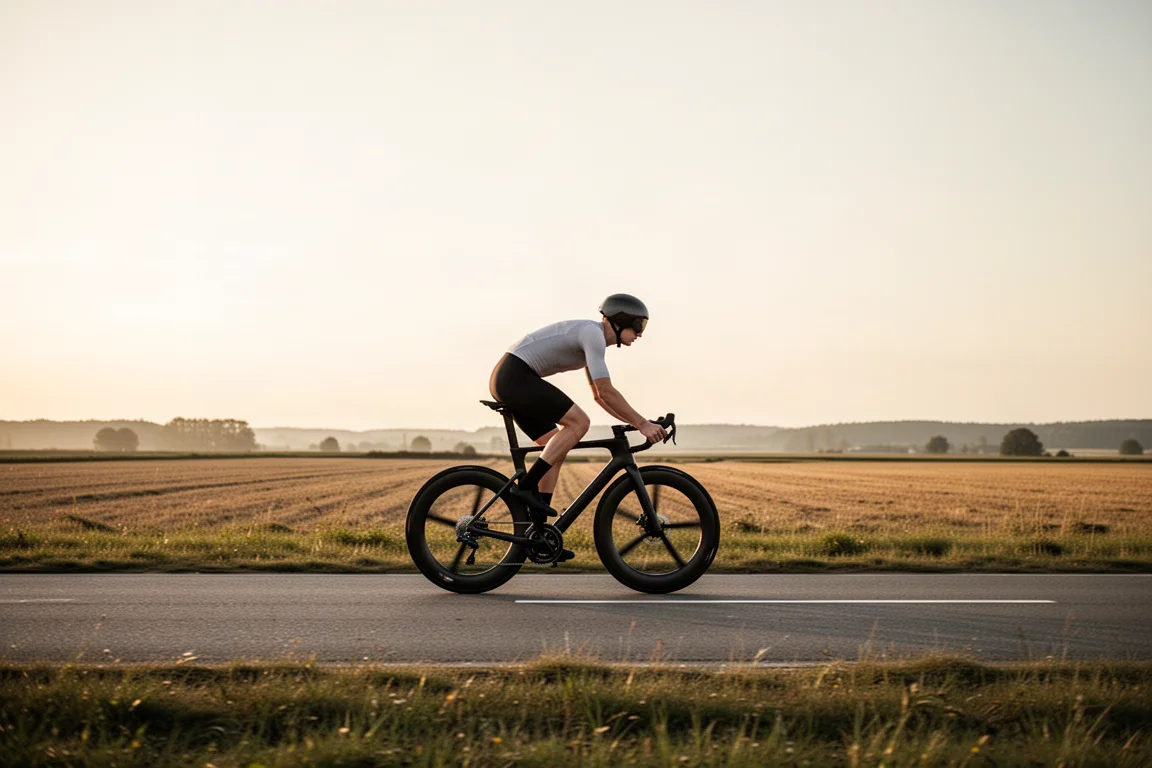
The second is wheels. Deep-section carbon wheels appear on nearly every build here, and they make a measurable difference on flat terrain. They also add weight and cost, and they can make a bike feel less lively on climbs. Matching wheel depth to the terrain you actually ride matters far more than chasing the deepest option available.
The third is fit. Van der Hoorn’s narrow bars and long stem, Ewan’s 38cm bar, and Durbridge’s custom extensions all point to the same conclusion: position dominates. A frame that fits you well will outperform a more expensive frame that does not.
Finally, notice how many of these bikes mix component generations. Older cranksets sit alongside the newest groupsets, and one bike carries no power meter at all. Choosing what genuinely helps your riding is more useful than insisting on a perfectly matched top-tier spec sheet.
Conclusion
These are five very different answers to the same question. The Dogma F and the Noah Fast chase all-round aero speed with heavy Shimano component suites. The Litening Team Edition prioritizes an extreme position for breakaway riding. The SystemSix shows how much a frame’s identity can change with paint and a collaboration. The Trinity Advanced SL proves that a slightly older frame can still be one of the most interesting bikes in the race when the cockpit is built around the rider.
For anyone shopping for a race bike, the takeaway is not to copy these builds. It is to copy the reasoning: pick gearing for your terrain, wheel depth for your roads, and a position you can actually hold for hours.
Further reading
Related Reviews
Cycling
2026 Bike of the Year and the Cycling Gear Worth Watching
A drop bar roundup for 2026 covering the Ridley Kanzo Fast 2.0, Shimano Dura-Ace Di2 R9300, Trek Checkpoint ALR Gen 3, Specialized Tarmac SL9, Garmin Fenix 9 and Insta360 X6.
Cycling
Best All-Road Bikes 2026: Six Versatile Endurance Road Bikes Worth Considering
A practical look at six all-road and endurance road bikes, from lightweight carbon speed machines to steel all-rounders and comfort-focused mile eaters.
Cycling
Best All-Road Bikes 2026: 8 Endurance Bikes for Road and Light Gravel
Eight all-road bikes that blur the line between endurance road and light gravel, compared on tire clearance, ride character, practicality, and value.