Road Bikes
Tour de France Race Bikes: Five Pro Machines Worth Watching
A closer look at five pro-level road bikes built for the sport's biggest race, from aero-focused speed machines to a record-chasing all-rounder.
Introduction
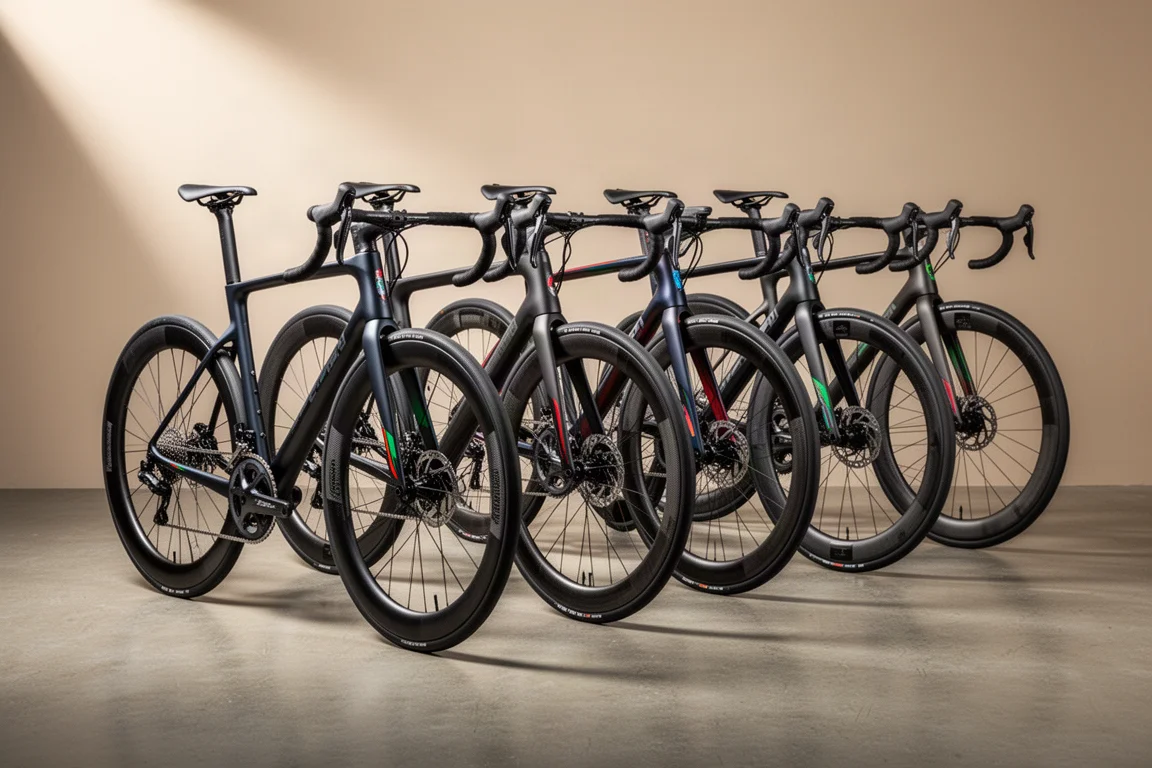
The biggest race of the year brings out the fastest, most expensive and most carefully considered bikes in the professional peloton. Teams spend months refining frames, wheels and component choices, and the machines that roll out for the Tour de France are usually the clearest picture of where road bike design is heading.
This guide looks at five pro-level bikes that deserve your attention. Each has a distinct personality, a distinct build, and a distinct set of reasons why riders choose it.
Canyon Aeroad
The latest Canyon Aeroad is still something of a mystery. It has already been raced to victories at Milano-Sanremo and Paris-Bay, two races that demand very different qualities, which suggests a broadly capable platform rather than a single-trick design.
Only one part of the update has been confirmed: a revised seat post clamp arrangement. Beyond that, much of the design remains closely held. There are hints, though. The current model officially clears tires up to 30 mm, and at Paris-Bay a quick bike change mid-race pointed to a rider finishing on 32 mm rubber, which suggests wider clearance on this updated frame.
The build is straightforward and premium: a 12-speed Shimano Dura-Ace Di2 groupset paired with Shimano’s top-spec wheels.
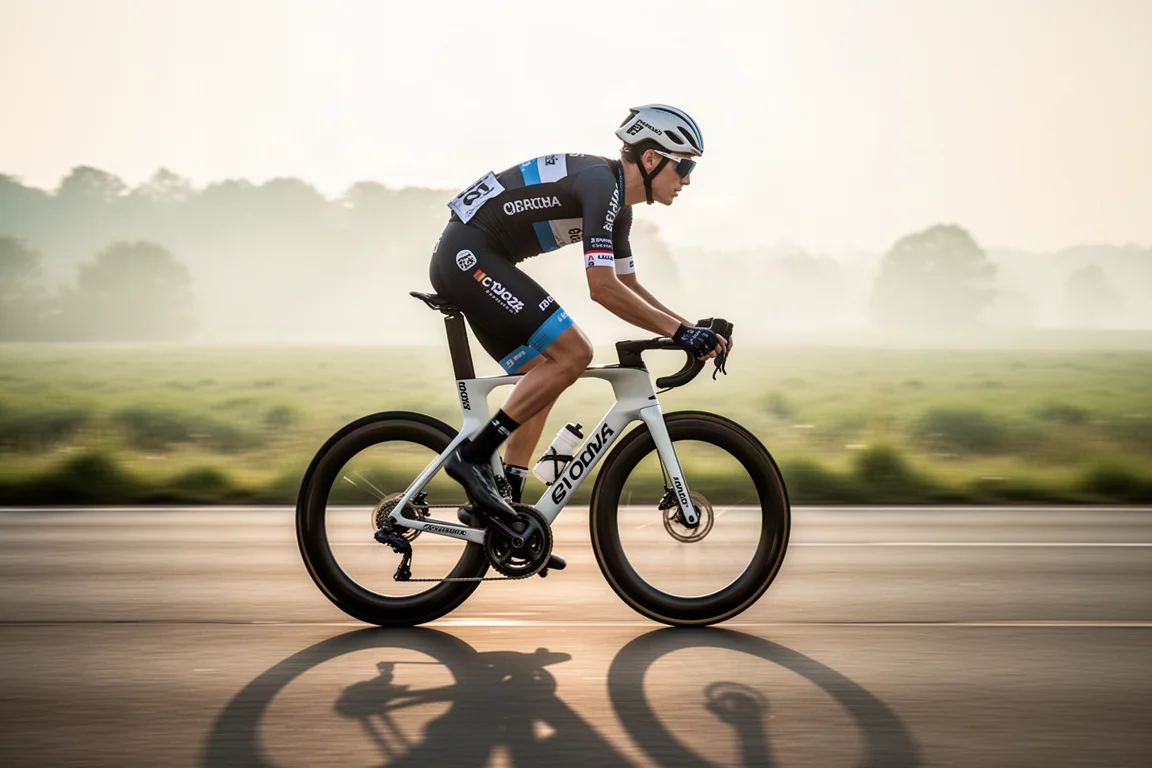
For riders who value a proven all-round race platform, the updated Aeroad is worth tracking closely as more detail emerges.
Cervélo S5
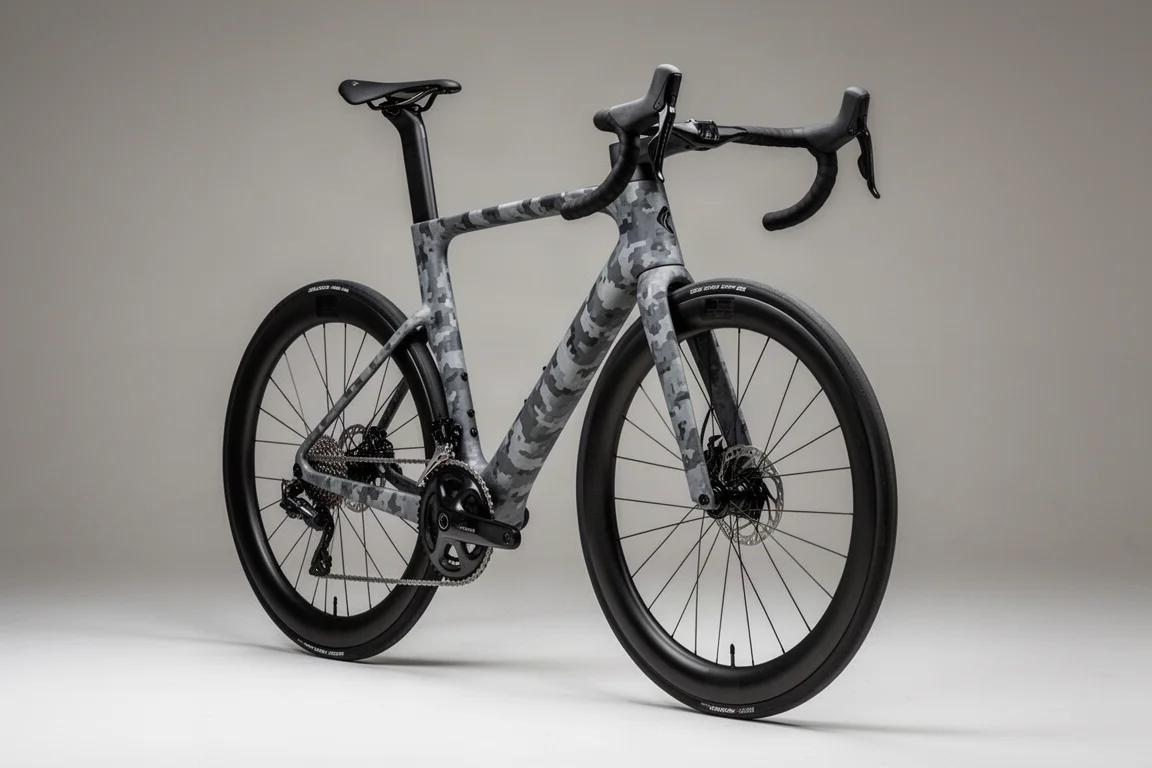
The Cervélo S5 carries serious pedigree. It is the bike of the reigning Tour de France champion as well as last year’s green jersey winner, so it will be very visible again this season.
The S5 is unapologetically aero. Cervélo claims a 65 gram reduction in aerodynamic drag versus the previous generation, which by the numbers works out to roughly 8.45 watts at 48 km/h, all else being equal. Much of that comes from updated tube profiles, including a deeper head tube and bottom bracket area, plus more aggressive shaping on the trailing edges.
The fork has a new aero nose that protrudes forward of the head tube to manage airflow, and the front derailleur mount is now removable, opening the door to a cleaner one-by drivetrain setup. At Paris-Bay, most riders from both the men’s and women’s squads ran one-by, and the same setup has appeared at key summit finishes and flat stages elsewhere in the season.
It is not all about drag. Clearance for 34 mm tires means the S5 can be set up as a relatively comfortable machine, which matters over a three-week race. The team’s bikes are finished with saddles drawn from a wide Italian range, with riders free to pick what suits them.
Colnago V4RS
For anyone likely to be contesting overall victory, the Colnago V4RS is the bike to know. It was designed as a fully integrated system and originally shipped with the CC01 integrated bar. The rider now uses an aero bar and matching stem instead.
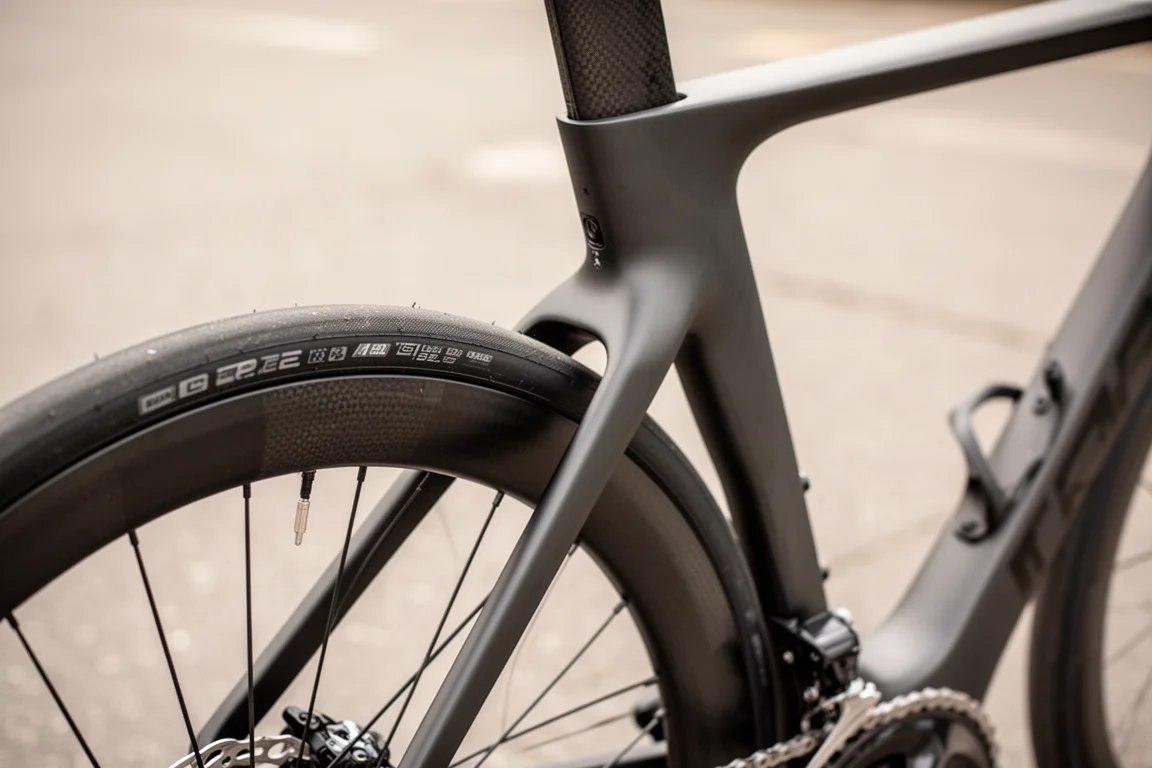
Aerodynamically, Colnago focused on the frame’s frontal area with a new head tube design. An oversized top bearing allows fully internal cable routing while smoothing the profile into a more hourglass shape than the earlier version. That change also lets the V4RS run a standard round steerer instead of the D-shaped steerer used previously.
Colnago says the head tube has been made more compliant, which points to a deliberate effort to balance front-end stiffness with ride feel. A lighter fork integrates into the front end and allows tire clearance up to 32 mm, a width that has already been put to use in hard races this season. Most road stages are run on 28 mm tires from a Continental GP5000 S TR model, and given the time invested in equipment choices, a tubeless setup looks likely for lower rolling resistance.
Wheels come from Enve: the SES 4.5 for the majority of stages, with the deeper 6.7 available for the fastest days and the SES 3.4 for the mountains. A full Shimano Dura-Ace groupset marks a major shift for the team, which previously used Campagnolo.
This is a bike built to be competitive on every kind of stage, not just the ones that decide the general classification.
BMC TeamMachine
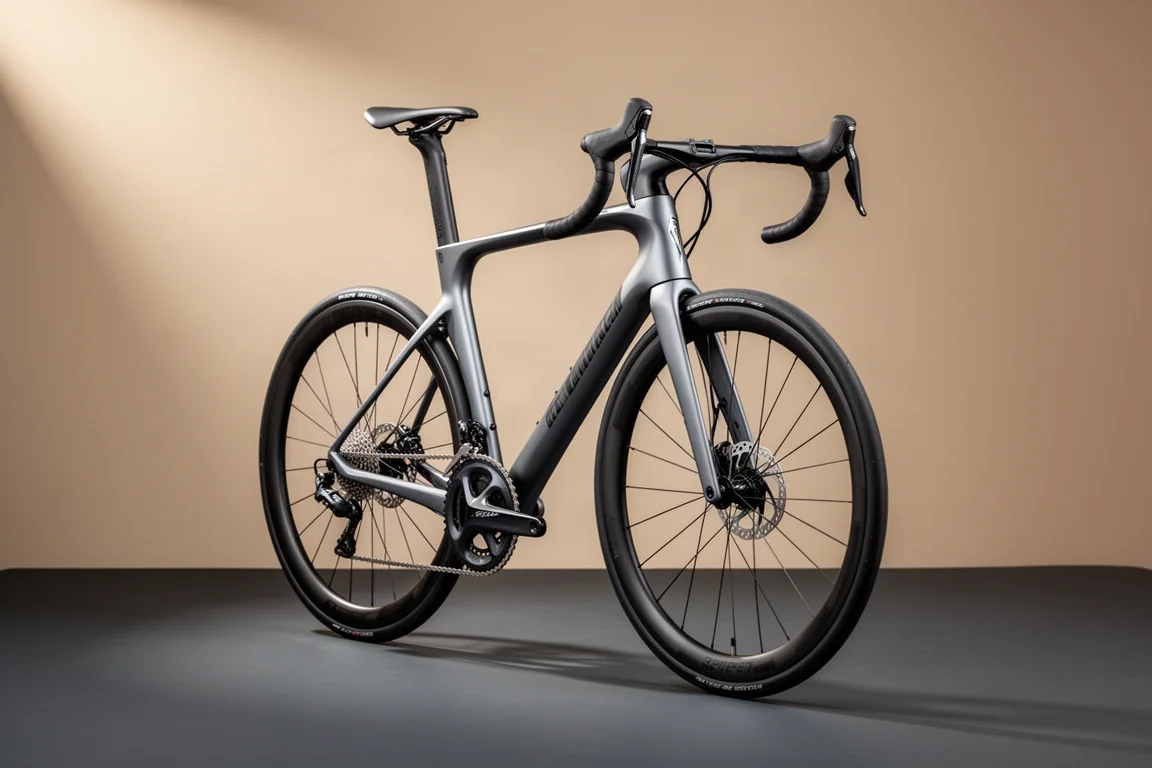
The BMC TeamMachine has been around for a few years, but this aero race rig has been treated to a brand new Campagnolo Super Record Wireless groupset, which makes the team one to watch.
The new groupset has several notable features, most visibly the removal of the thumb shifter. Campagnolo has also followed SRAM’s approach by reducing chainring size and relying on a 10-tooth cog for top-end gearing. Whether riders will use larger chainrings that are not available to the public remains an open question, though there is precedent from other brands in the early days of wireless groupsets. In practice, riders may simply continue with existing cranksets running 12-speed 53/39 chainrings, a choice a few riders have already made in the pre-Tour races.
The Italian brand has also moved to a fully wireless system with no rim brake option anywhere in the range. The bike itself goes well beyond the groupset. The TeamMachine has clever aero touches, including integrated aerodynamic bottle cages that accept standard bottles, solving the real-world problem of carrying fluids without spoiling the frame’s aerodynamics or practicality.
Cable routing is fully hidden through an integrated front end, the head tube is very slim to help it slip through the air, and the frame uses angular tube shapes with seat stays tucked well down at the rear. Wheels also come from Campagnolo, and power data is provided by a power meter.
Wilier Filante SLR
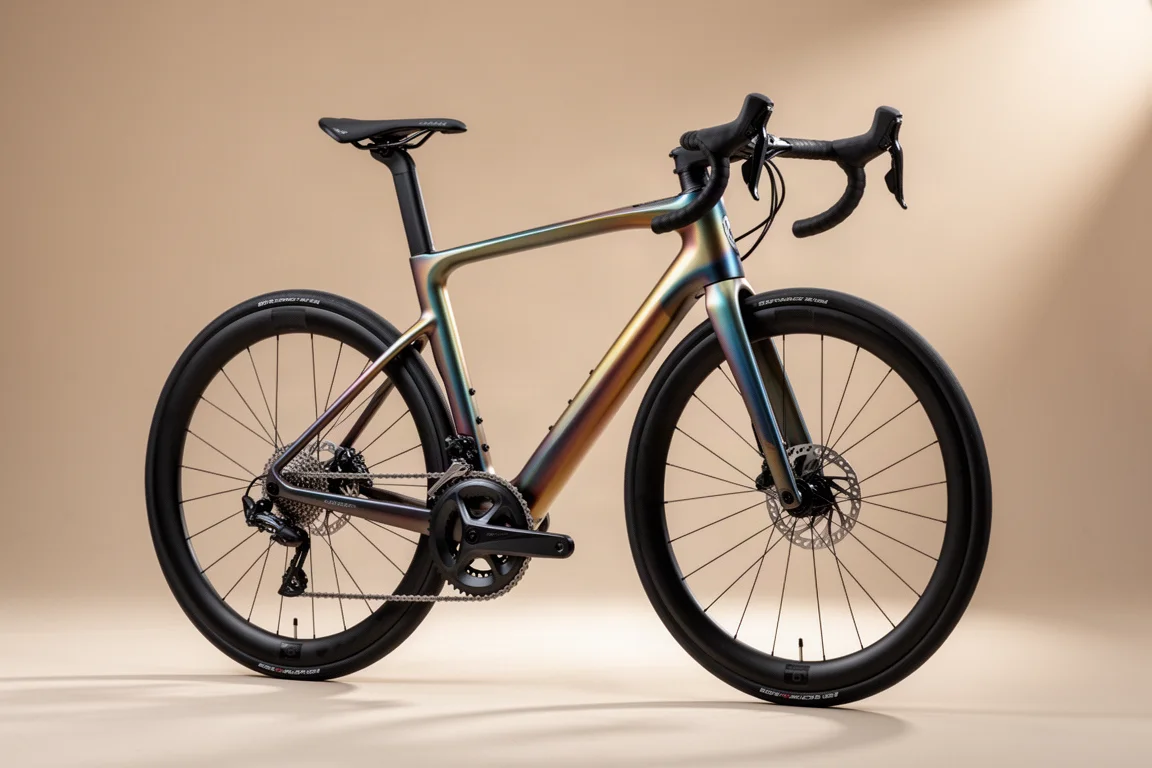
The Wilier Filante SLR is one of the most striking bikes in the peloton, with soft lines and a paint job that makes it easy on the eye. It is also the bike that could end up in the history books this season.
If the rider wins just one more stage, he will surpass the all-time record for Tour de France stage victories. With this set to be his final Grand Tour, a record-breaking win would be a fitting way to close out a career built around this race.
Wilier made no specific aerodynamic claims when the Filante SLR was released. The only promise was that it is very fast in both the wind tunnel and the real world. A dominant victory on the final stage of this year’s Giro d’Italia suggests that is more than marketing talk.
The build is interesting. The team had been sponsored for years by a French wheel brand, then select riders started appearing on HED Vanquish RC Pro hoops mid-season. The reason for the switch is not entirely clear, but the team now seems to take a split approach, using HED wheels in some stages and the French brand in others. Tires are Vittoria Corsa Speed across all stages, with riders on a mix of tubulars and tubeless.
The Shimano Dura-Ace 12-speed Di2 groupset brings electronic shifting and hydraulic disc brakes, now the standard across the pro peloton. The team buys in its own Shimano groupsets, which leaves room for the mechanics to fit upgrades such as an SLF Motion oversized pulley wheel system. As well as looking purposeful, these are said to reduce drivetrain friction, which could matter in a sprint to the line.
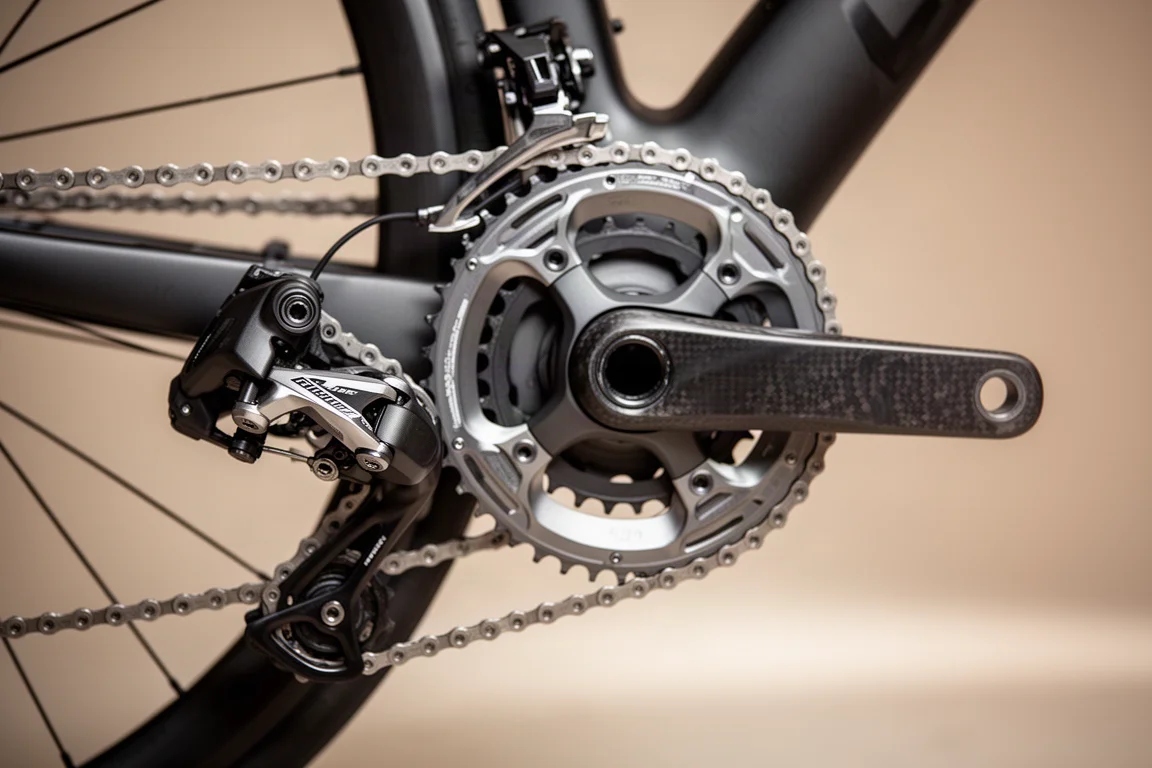
Add in the paint job and the Filante SLR makes a strong claim to being one of the best-looking bikes in the professional peloton.
Buying Advice
The five bikes here share a common thread: they are all built around a frame the team believes can win, and everything bolted to that frame is chosen to support a specific racing goal. The differences are worth understanding because they map onto the way real riders use a road bike.
The Canyon Aeroad is the option to watch if you want an all-round race platform and you are comfortable waiting for more detail to emerge. Wider tire clearance appears likely, and the Dura-Ace Di2 build is a proven top-tier setup.
The Cervélo S5 is the aero specialist. Its claimed drag savings are meaningful at high speed, the one-by option gives it a cleaner frontal profile, and 34 mm clearance makes it more versatile than its racing image suggests.
The Colnago V4RS leans into integration and front-end feel. With 32 mm clearance, Enve wheels across three depths, and a full Dura-Ace groupset, it is designed to be competitive everywhere on the route.
The BMC TeamMachine stands out for its Campagnolo Super Record Wireless groupset and genuinely clever aero details, especially the integrated bottle cages that keep usable bottles and clean airflow at the same time.
The Wilier Filante SLR is the one to pick if you care about how a bike looks as much as how it races, without giving up real-world speed. Its mixed wheel approach and Dura-Ace Di2 build show a team willing to test equipment rather than accept defaults.
Conclusion
Pro race bikes are often the clearest signal of where road bike design is heading, and this group shows the direction clearly: wider tire clearance, integration everywhere, electronic shifting as standard, and more willingness to experiment with one-by drivetrains and drivetrain friction upgrades.
Each of the five machines here has a clear identity. Choose based on the kind of riding you actually do, and the differences between them stop being trivia and start being useful.
Further reading
Related Reviews
Road Bikes
10 New Road Bikes Worth Watching: Aero, Titanium, Steel and Endurance Standouts
A practical roundup of 10 new road bikes, from aero flagships chasing single-watt gains to titanium, steel and endurance platforms built for real roads.
Road Bikes
2026 Tour de France Road Bikes: Six Race Machines Worth a Closer Look
Six race bikes from the 2026 Tour de France grid, reviewed for paint, silhouette, wheels and the specification details that matter to buyers.
Road Bikes
3T Strada Italia Review: A Radical Aero Road Bike That Rides Smooth
A made in Italy carbon aero road bike with a deep head tube, wide tire clearance and a genuinely comfortable ride. Here is what to know before buying.