Cycling
Tour de France Pro Bikes: Five Standout Builds Worth a Closer Look
A close look at five pro-level road bikes from the 2024 Grand Depart, covering custom paint, cockpit measurements, drivetrain choices and recorded build weights.
Introduction
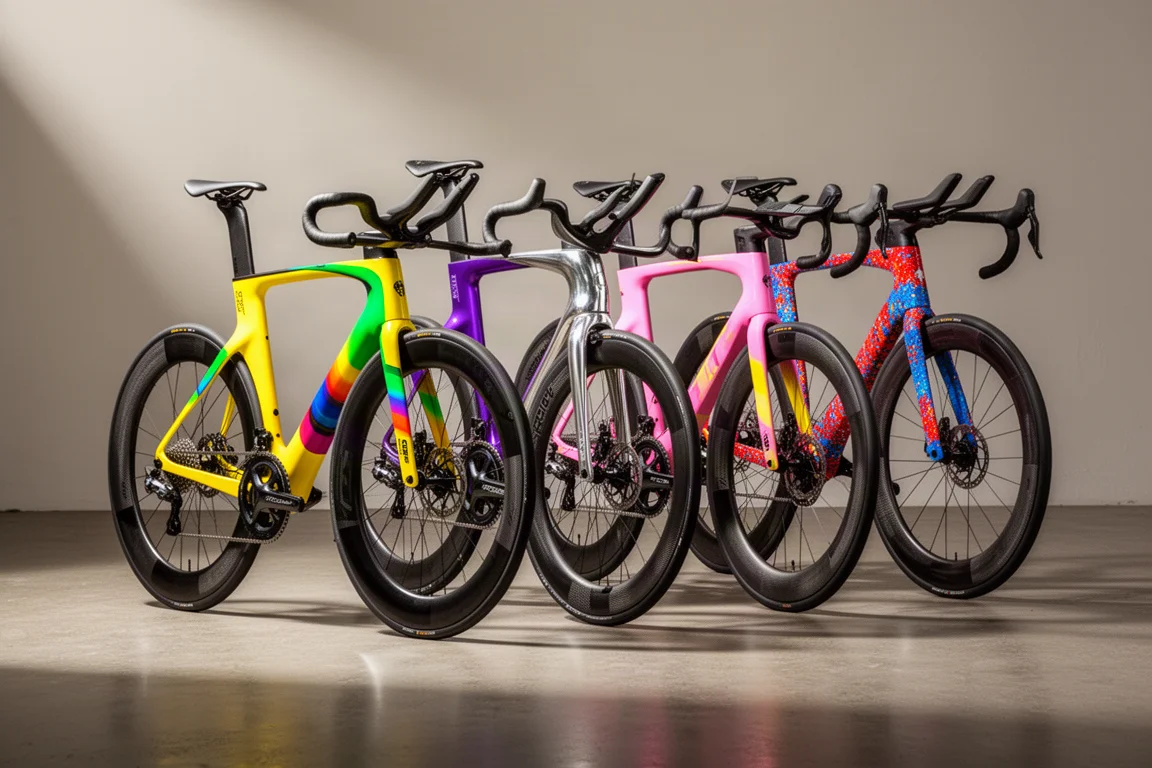
A Grand Depart turns the team paddock into a rolling equipment exhibition, and the 2024 edition in Florence was no exception. Custom paint schemes, narrow cockpits, oversized chainrings and carefully chosen tires all showed up, and the most interesting differences between builds often come down to small, deliberate decisions rather than headline specifications.
This roundup covers five road bikes that stood out: the Wilier Filante SLR, the Specialized Tarmac SL8, the Cannondale SuperSix EVO LAB71, the Van Rysel RCR Pro and the Factor Ostro VAM. Each entry covers the frame, the cockpit measurements, the drivetrain and the recorded build weight, so you can see how a modern pro-level aero road bike is actually put together.
What These Pro Bikes Have in Common
Look across the group and a few patterns emerge. Most of these bikes run a 12-speed Shimano Dura-Ace groupset, and every one pairs large chainrings with a wide-range cassette. Ratios such as 54/42, 55/42 and 54/40 up front with 11-34 out back are now normal, and tighter cassette options have become rare in the pro peloton.
Cockpits have narrowed and lengthened at the same time. Bar widths across this group sit between 36 cm and roughly 38.5 cm, matched to stems of 120 mm or more. Tire widths cluster around 28 mm, with several builds using tubeless or open tubular cotton constructions rather than standard clinchers.
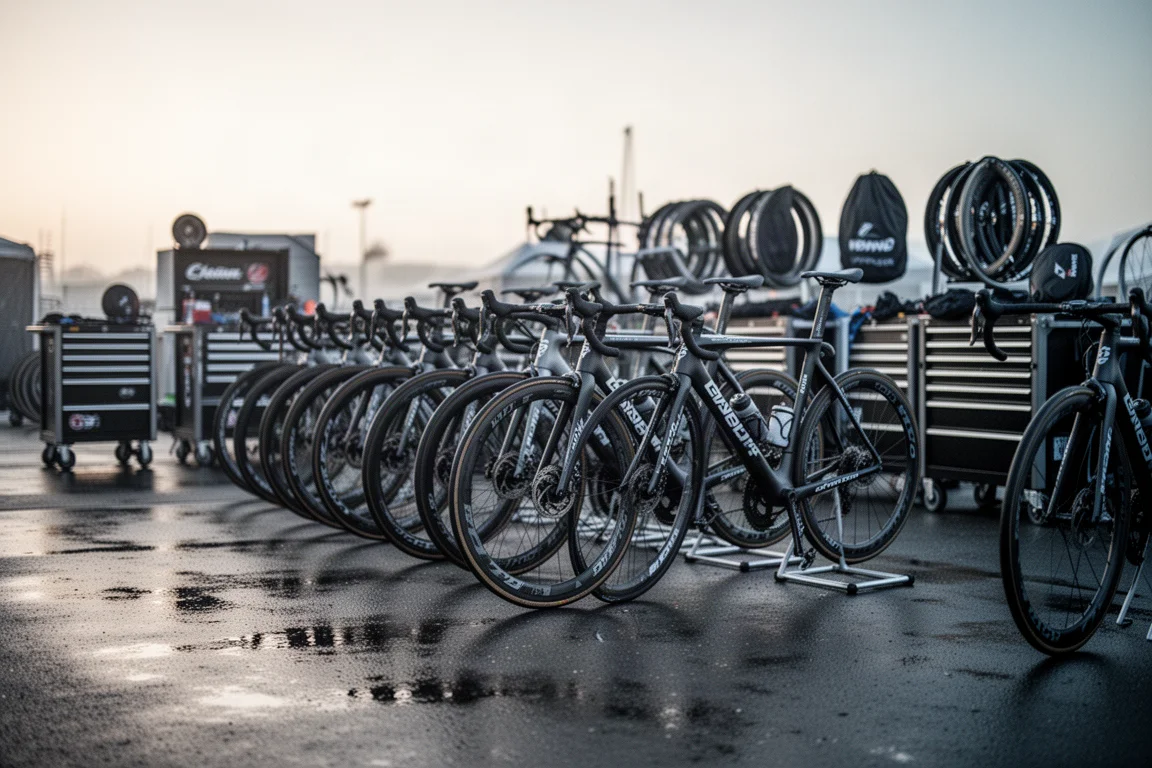
Recorded weights land between 7.0 kg and 7.74 kg. None of these bikes is trying to be a pure climbing specialist, and most teams keep a lighter platform available for mountain stages. What matters more here is how each build balances aerodynamics, rider position and reliability.
Wilier Filante SLR: Mark Cavendish’s Record-Chasing Build
The Filante SLR frame carries over from the previous season, but the paint is new and personal. Yellow marks time spent in the Tour’s yellow jersey, green marks two green jersey wins, and rainbow banding commemorates a Road World Championship title won in Copenhagen in 2011. Wilier says this finish will be available to buy until the end of the year, though no pricing has been announced.
The frame itself is an all-round aero platform, less aggressive in shape than some dedicated aero road bikes and closer in spirit to a modern all-rounder. The build runs Vision Metron 60L wheels, a change from the previous season, wrapped in 28c Vittoria Corsa Pro TLR tires that measure just over 28 mm on these rims. The cockpit is a Vision Metron bar at roughly 385 mm centre to centre with a 120 mm stem, a shift from the wider bar and longer stem used previously.
The drivetrain is Shimano Dura-Ace 12-speed, but with 11-speed Dura-Ace R9100 chainrings in a 55/42 pairing and an 11-34 cassette. There is no oversized pulley wheel system on this build and no sprint shifter. Pedals come from Shimano rather than the previous supplier. Recorded weight is 7.65 kg, roughly 100 g lighter than the equivalent build from the year before.
Specialized Tarmac SL8: Remco Evenepoel’s Custom Build
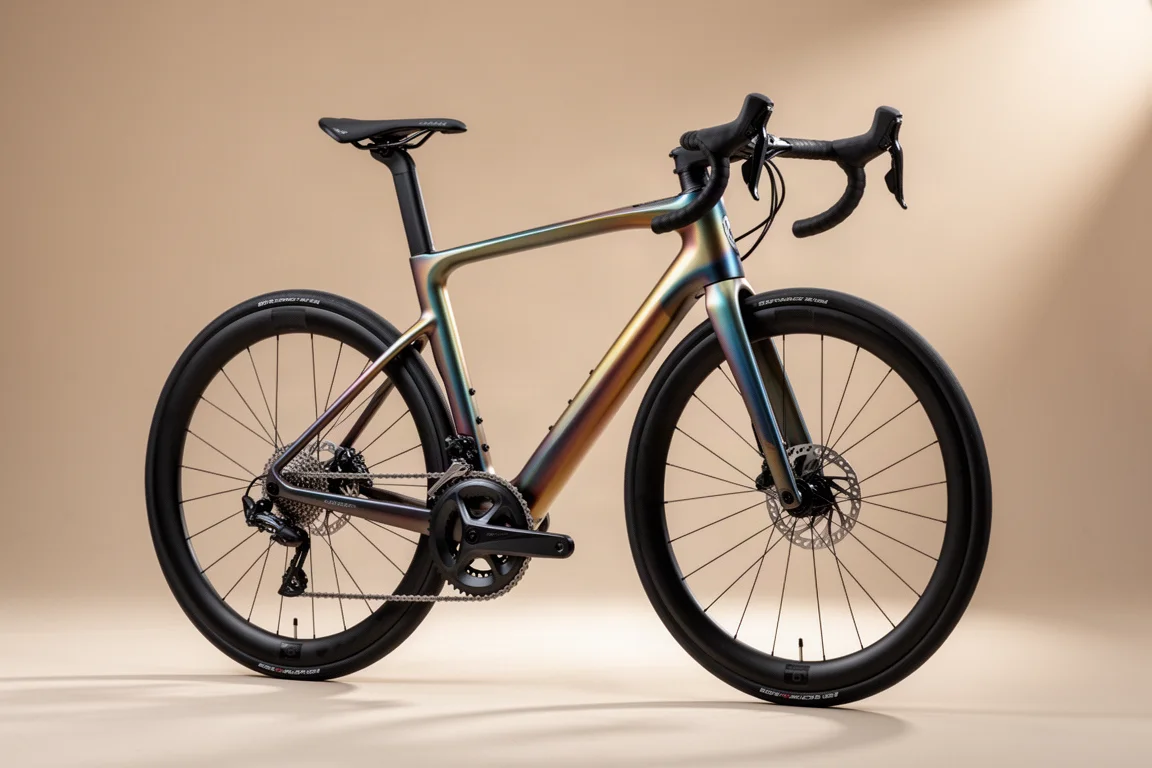
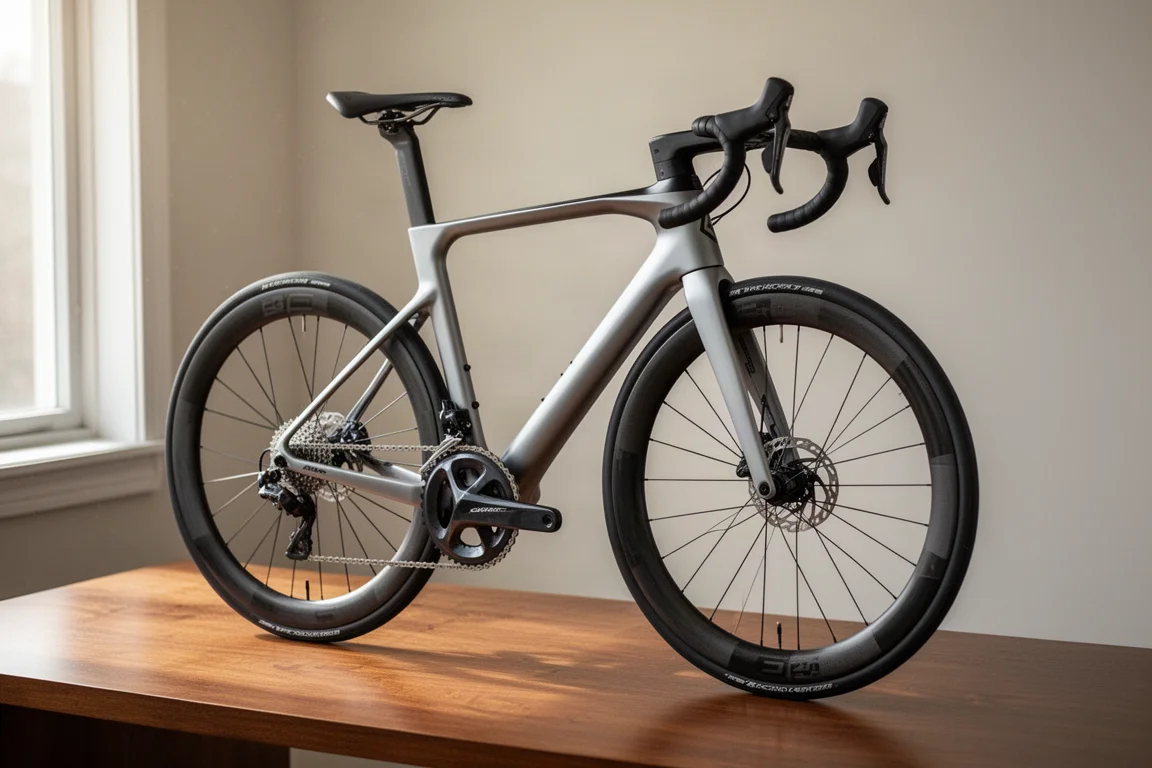
This Tarmac SL8 wears one of the more unusual paint schemes in the paddock. Purple flip tones sit around the bottom bracket and echo the team’s other bikes, while a silver chrome finish covers the end of the top tube, the seat tube and the seat stays. The front end stays largely black, and the rider’s name and the team wolf symbol sit on the top tube.
The SL8 has been in use since the previous World Championships and claims a 685 g frame weight in size medium. Its shape borrows the front end of an older aero model, the middle section of the Tarmac line and a bottom bracket area inspired by a lightweight climbing frame. The extended nose on the head tube drew most of the attention at launch, and it reads better in person with the cockpit slammed down.
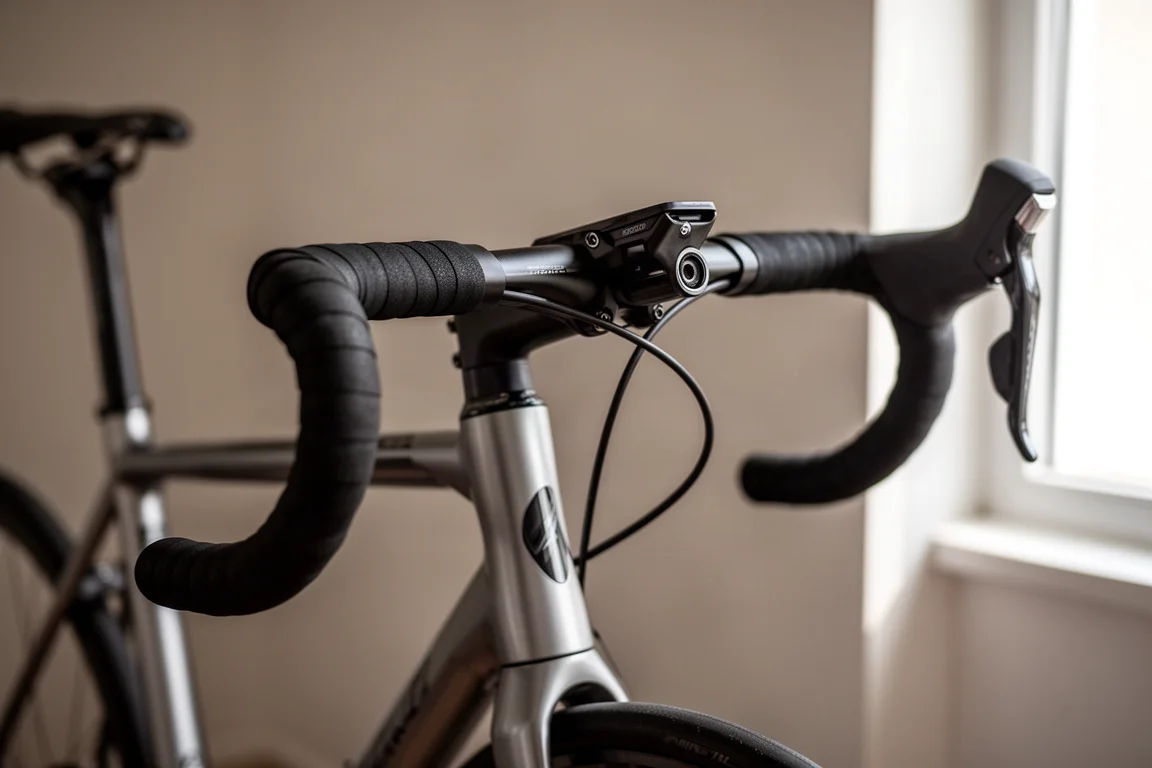
The cockpit here is genuinely narrow: 36 cm centre to centre with a 120 mm stem. The seat post is zero offset and positioned well forward, paired with a 3D printed power saddle. The drivetrain is Shimano Dura-Ace 12-speed with 54/42 chainrings and an 11-34 cassette, and this particular build has no power meter, which suggests it may be a spare. Wheels are Roval Rapide CLX Team, using the same rims as the previous generation with updated, lighter hubs. Tires are Specialized Turbo Cotton, an open tubular cotton design first released in 2014 and still in use a decade later. Recorded weight is 7.0 kg.
Cannondale SuperSix EVO LAB71: Neilson Powless’s Team Build
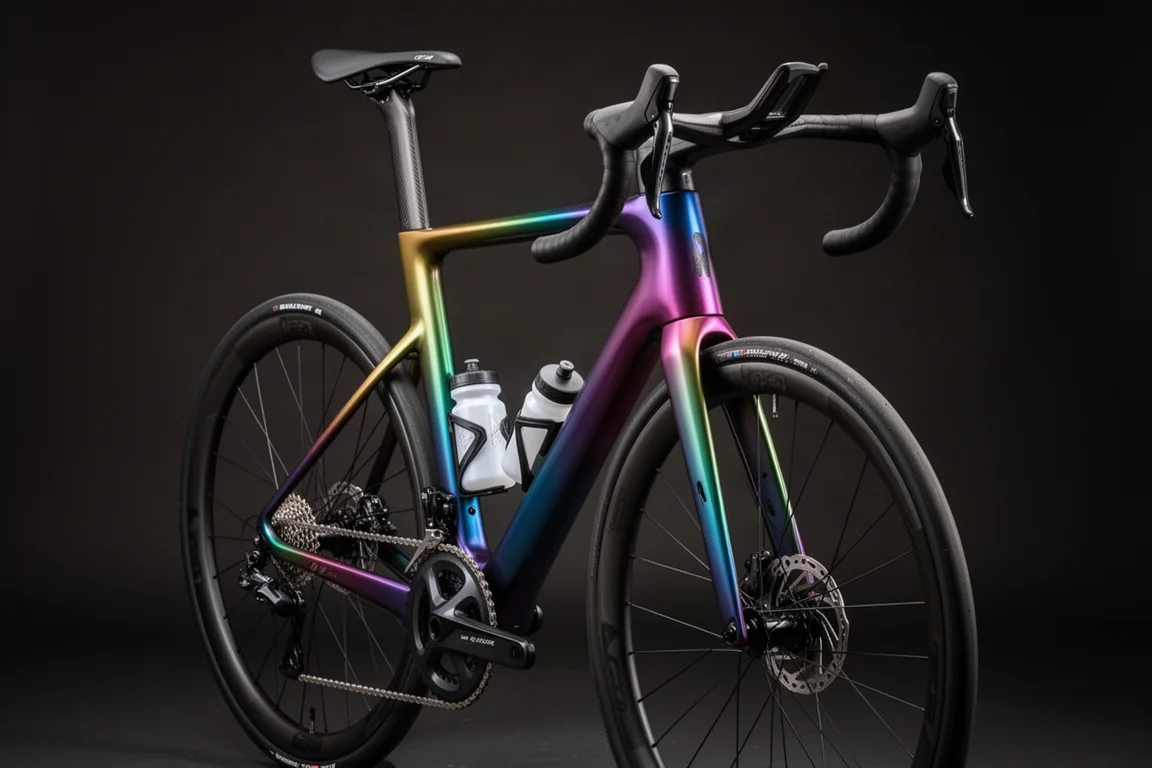
The paint on this one is a straightforward team scheme, with the team’s pink mixed with yellow, and it suits the race perfectly. Underneath sits the LAB71 frame set, the top tier version of the SuperSix EVO and the lightest and most expensive variant Cannondale makes. The step up from the Hi-MOD version saves roughly 40 g in total and adds about $1,500 to the cost, with the LAB71 frame set priced at about $6,000 or €6,000 against roughly $4,500 for the Hi-MOD.
Cannondale claims a 770 g frame weight for a LAB71 in size 56. The design pairs a deep-section carbon fork and truncated aero foil tube sections with a dramatically slimmed rear end, and the seat tube and seat post are so thin side to side that there is no longer room for a Di2 battery in the usual place. Instead it sits inside the bottom bracket area, which Cannondale says helps lower the weight balance of the bike.
Wheels are Vision Metron 60 SL tubeless units with Vittoria Corsa Pro tubeless tires in 28c, measuring 28.8 mm, finished with pink anodised valves. The drivetrain is Shimano Dura-Ace 12-speed paired with an FSA Powerbox power meter and 54/40 FSA chainrings. Pedals are Wahoo Speedplay Aero, and the brake pads are a non-standard green set. Up top there is a Prologo Nago Evo saddle with carbon rails, a 3D printed race number holder and a Wahoo Elemnt Roam computer, with a cockpit measuring around 37 cm at the bar and a 120 mm stem. Recorded weight is 7.74 kg.
Van Rysel RCR Pro: The Value Pick
Van Rysel is owned by Decathlon, and this bike is one of the most affordable in the pro peloton at around €9,000 for a complete build. That is still a serious sum, but in the context of Tour-level equipment it is a notably accessible figure. The frame is entirely new and was developed by Van Rysel with a French aerospace partner, and its silhouette is close to that of the Specialized Tarmac SL7, which is hardly a bad reference point given how many races that design won.
Van Rysel claims a 790 g weight for a painted size medium frame with a 380 g fork, and a complete bike around 6.8 kg. That frame figure is a little heavier than the top-tier version of the Specialized Tarmac SL8, but it remains competitive for the category.
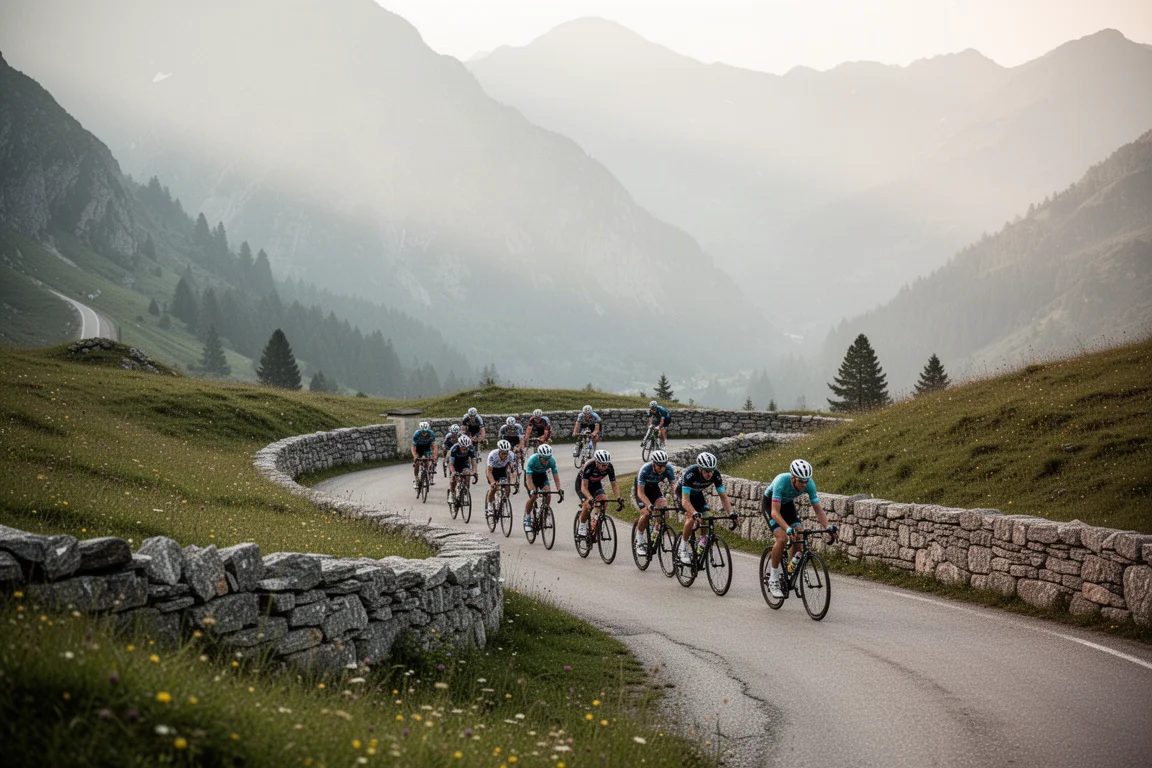
The team runs Swiss Side wheels wrapped in Continental GP5000 S TR tires, and the drivetrain is the latest Shimano Dura-Ace Di2 R9200 with 54/40 chainrings and an 11-34 cassette. Pedals are the newer Look Keo Blade with a flat underbody. Up front there is a bespoke integrated handlebar developed with Deda, with a flat-topped stem and an aero foil bar profile, matched to a 36 cm bar and a 120 mm stem. Finishing touches include a Fizik Argo carbon saddle and Elite Leggero carbon bottle cages. Recorded weight with pedals, cages and a computer mount is 7.45 kg, which is above the claimed complete build figure, as is common once real components are bolted on.
Factor Ostro VAM: Stevie Williams’s Aero Build
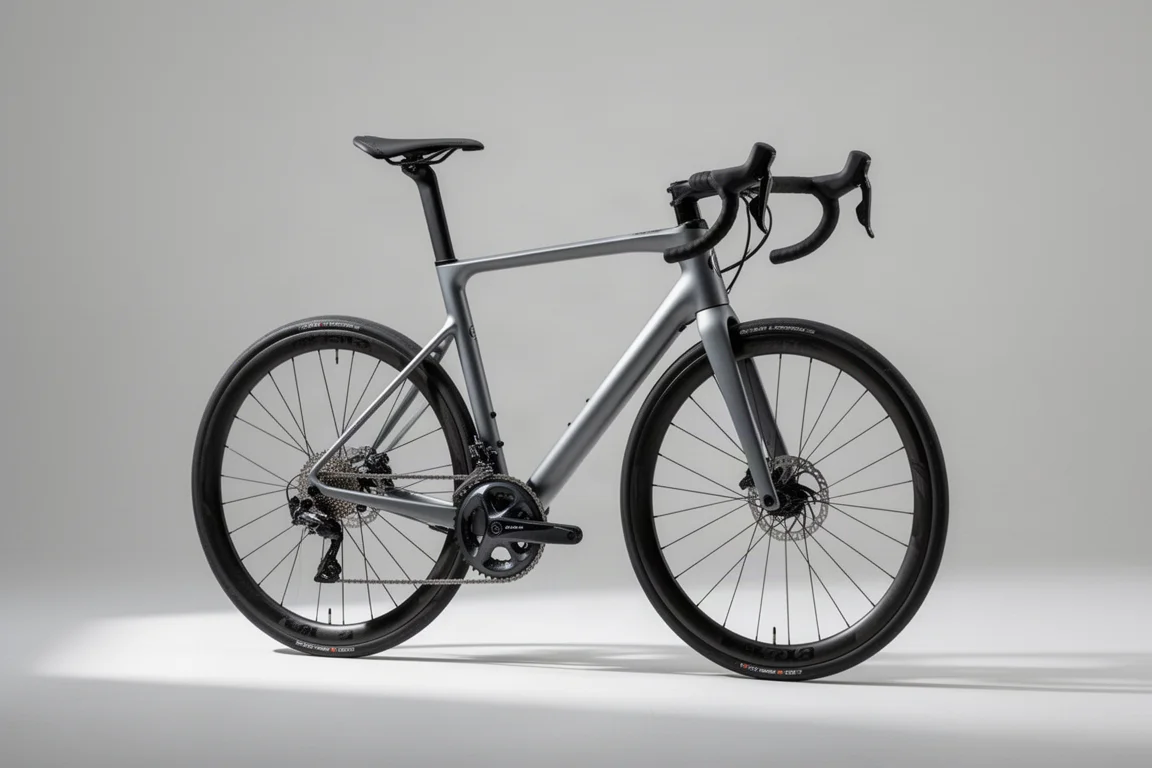
This is the second generation Ostro VAM, released earlier in the year. Factor claims it is 7 watts faster at 48 km/h and 267.8 g lighter as a frame set. The head tube takes on a more hourglass shape and is noticeably thinner between the headset bearings, the fork chord length has grown deeper, and the tube profiles have been redesigned to be thinner and longer rather than wide and truncated. From behind, the seat tube and seat stays are extremely slim.
The paint is a Tour-specific scheme, with splattered red and blue intended to reference French cultural history, and most riders on the team are running it. Factor also claims this frame is more aerodynamic than the Specialized Tarmac SL8 and the S5, both of which are well respected in this category, so it is an ambitious claim.
The drivetrain is Shimano Dura-Ace Di2 R9200 with an FSA Powerbox power meter, FSA carbon cranks and chainrings in 54/42, paired with an 11-30 cassette and Shimano Dura-Ace pedals. Wheels are Black Inc 48/58, with a 48 mm rim up front and a 58 mm rim at the rear, CeramicSpeed hub bearings, carbon spokes and a claimed 1,270 g wheelset weight. Tires are Continental GP5000 S TR in 28c. The seat post clamp has been repositioned so a standard Allen key works, and there is a 3D printed race number holder, a Selle Italia SLR carbon saddle and Elite Leggero carbon bottle cages. Recorded weight is 7.535 kg, and lighter builds are possible with a different saddle and shallower wheels.
Overall Buying Advice
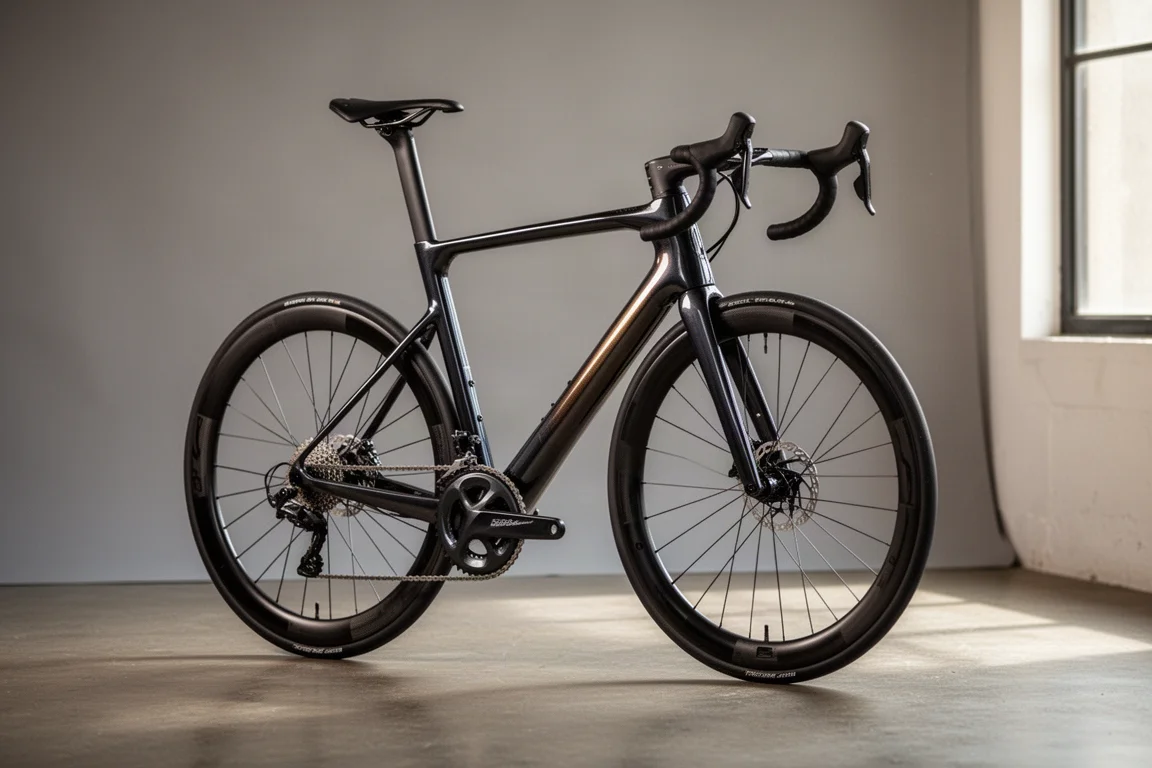
Pro builds are not consumer specifications, and it is worth separating what actually transfers to a bike you can buy. Tire width is the clearest example: 28 mm is the working standard across this group, with several riders on tubeless or cotton open tubular casings for ride quality rather than outright puncture resistance. Cockpit dimensions are the second useful signal, since narrow bars paired with longer stems are now common at this level and many brands offer narrower sizes than they did a few years ago.
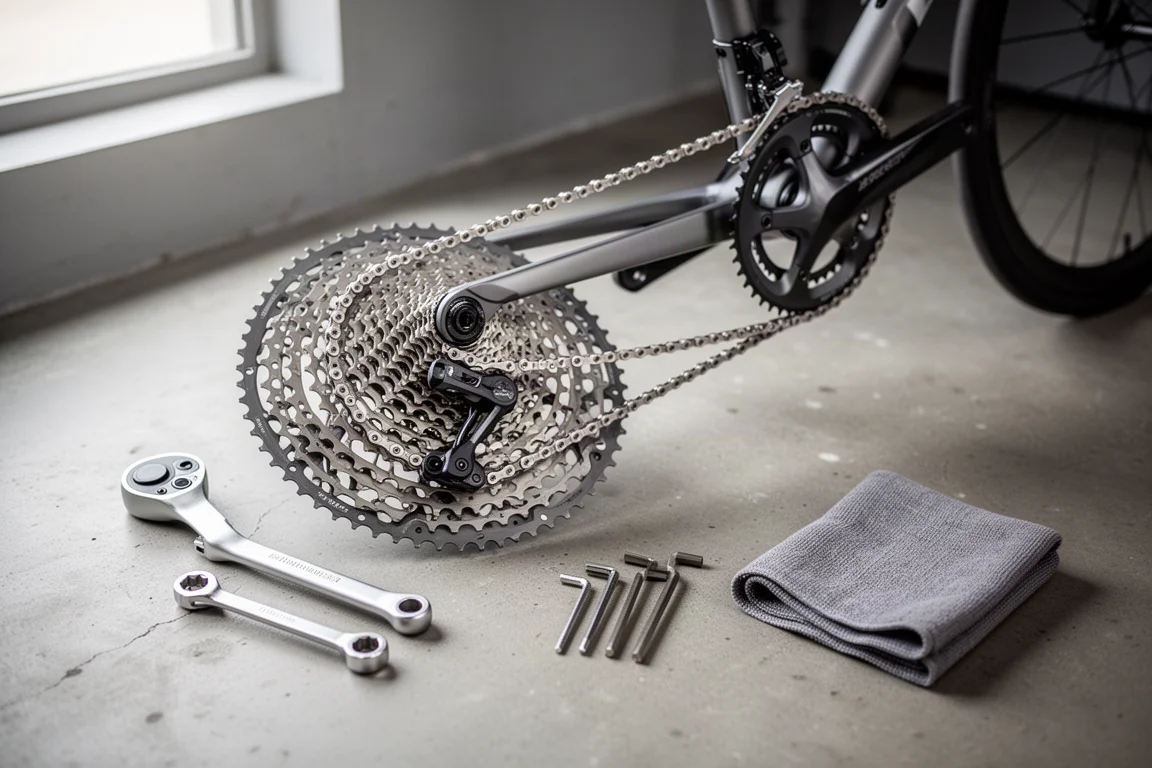
Gearing is the third thing to study. Large chainrings with wide-range cassettes have replaced tighter blocks almost everywhere, because riders would rather keep a low climbing gear than save a few grams. If you are choosing between similar aero road bikes, that combination is usually a better guide to real-world usability than a claimed frame weight.
Frame tiers matter too, but the returns diminish quickly. Cannondale’s LAB71 sits above the Hi-MOD version for roughly 40 g of saving and about $1,500, and that pattern repeats across the category. Wheels, tires and fit will change how a bike feels far more than the top frame tier will. Where a limited or commemorative finish is on offer, such as the Wilier career tribute scheme available until the end of the year, treat it as a personal preference rather than a performance upgrade.
Conclusion
The 2024 Grand Depart builds show a category that has settled into a clear formula: aero frames with slimmed rear ends, narrow and long cockpits, 28 mm tires, big chainrings and wide cassettes, and recorded weights clustering between 7.0 kg and 7.74 kg. Within that formula the five bikes here differentiate on price, paint and small engineering decisions.
The Van Rysel RCR Pro is the value story, the Wilier Filante SLR carries the most personal finish, the Specialized Tarmac SL8 posts the lightest recorded build, the Cannondale SuperSix EVO LAB71 shows what a top frame tier costs, and the Factor Ostro VAM makes the boldest aerodynamic claims. Which one appeals most depends on whether you are drawn to price, provenance or the engineering detail.
Further reading
Related Reviews
Cycling
2026 Bike of the Year and the Cycling Gear Worth Watching
A drop bar roundup for 2026 covering the Ridley Kanzo Fast 2.0, Shimano Dura-Ace Di2 R9300, Trek Checkpoint ALR Gen 3, Specialized Tarmac SL9, Garmin Fenix 9 and Insta360 X6.
Cycling
Best All-Road Bikes 2026: Six Versatile Endurance Road Bikes Worth Considering
A practical look at six all-road and endurance road bikes, from lightweight carbon speed machines to steel all-rounders and comfort-focused mile eaters.
Cycling
Best All-Road Bikes 2026: 8 Endurance Bikes for Road and Light Gravel
Eight all-road bikes that blur the line between endurance road and light gravel, compared on tire clearance, ride character, practicality, and value.