Headphone Amplifiers
Topping A90D Review: A Discrete Headphone Amp and Preamp That Earns Its Price
A close look at the Topping A90D, a discrete headphone amplifier and preamp with a remote-controlled stepped volume control, a ground lift switch and serious power output.
Introduction
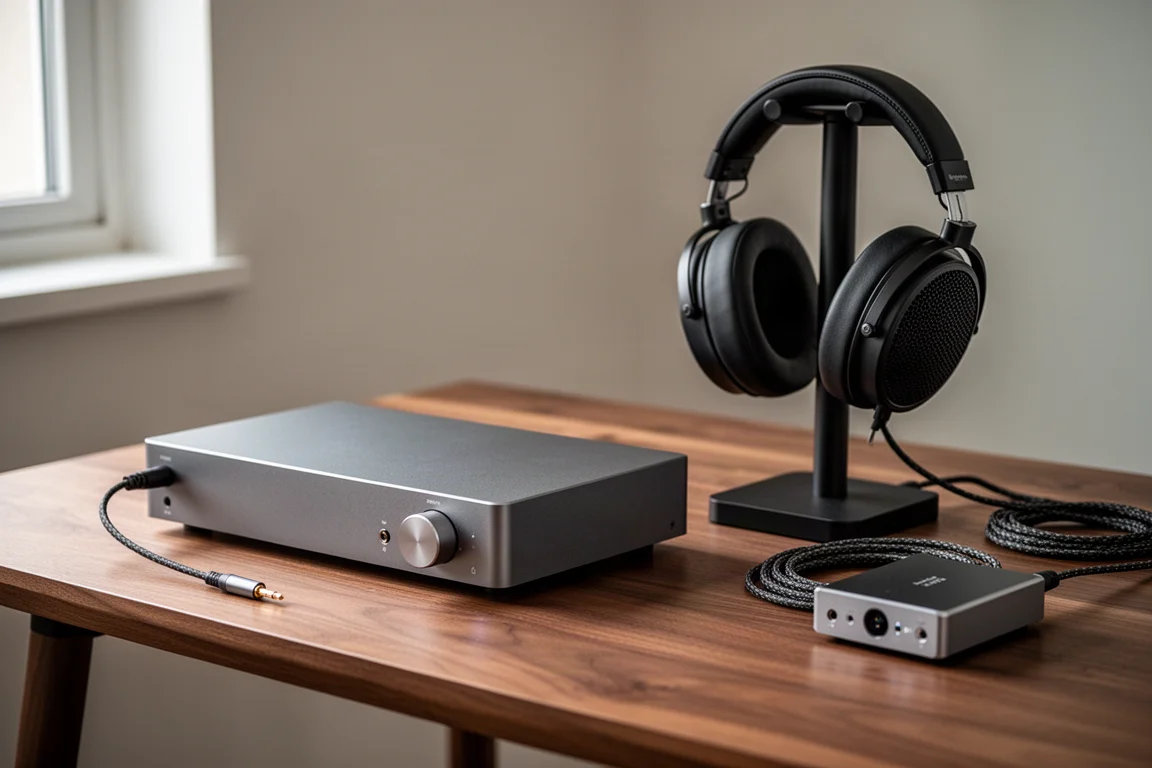
The Topping A90D is a discrete headphone amplifier and preamplifier priced at around $600. It is built to do two jobs at once: drive a pair of headphones with authority, and act as a proper line preamp for a small two-channel system. That dual role is what separates it from most desktop headphone amplifiers in the same price range.
The “D” in the model name stands for discrete. Rather than leaning entirely on op-amp based circuitry, the A90D uses discrete parts, which is a more traditional and generally more expensive way to build an amplifier. The brief is straightforward: keep the signal path clean, keep the noise low, and provide enough power for demanding headphones.
Who This Product Is For
This amplifier makes the most sense for listeners who want one box to handle both headphone listening and system control. In a desk setup, the headphone output covers private listening while the preamp output can feed powered speakers or a small power amplifier in the same room. Because the preamp stage and the headphone stage can run at the same time, there is no need to unplug anything when switching between the two.
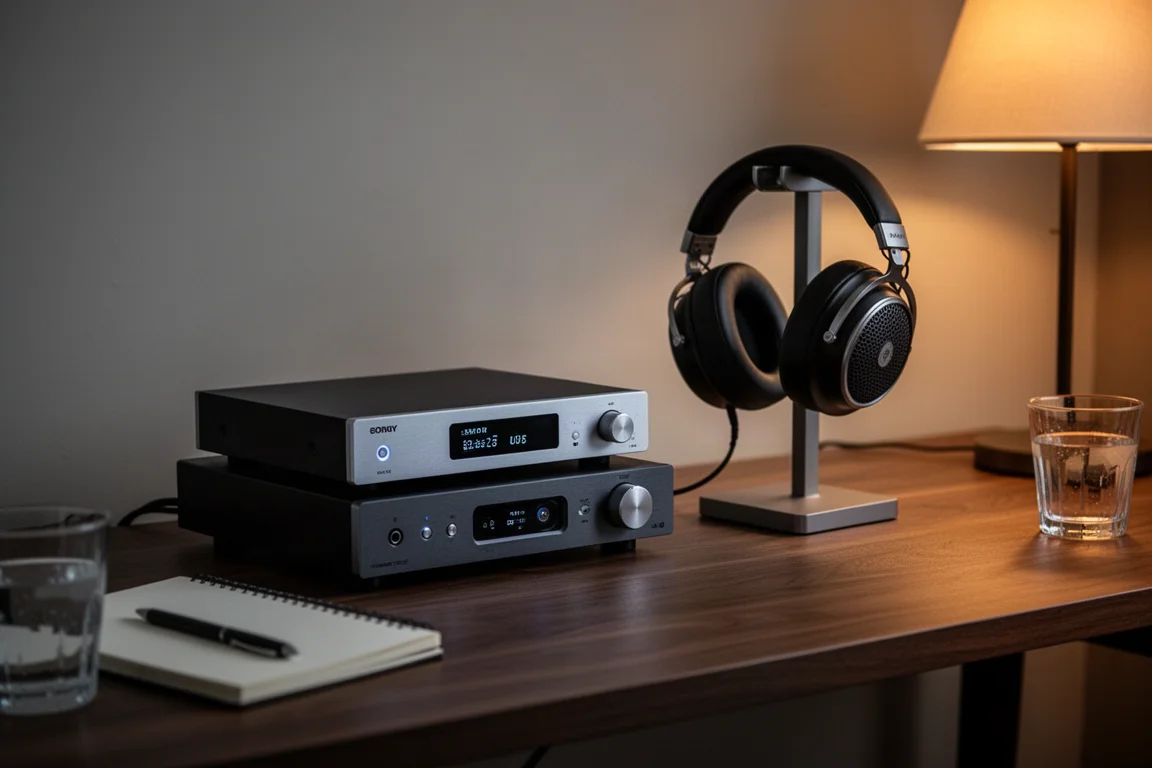
It also suits headphone owners with harder to drive models. Planar magnetic headphones in particular benefit from an amplifier that delivers current without strain, and the A90D has power in reserve for exactly that situation.
On the other hand, this is not the right choice if you need to switch between several analog sources. There are only two analog inputs, one balanced and one single-ended, so a system with a turntable, a tape deck and a disc player will need an external switch box or a preamp with more inputs.
Main Strengths
The A90D justifies its price in three specific areas: a discrete amplifier section, a remote-controlled volume system that behaves like a genuine preamp, and a power output figure that exceeds most of its competition.
Discrete Amplifier Design
The amplifier uses discrete components rather than a circuit built entirely around op-amps. In practice that approach tends to produce a cleaner, more controlled presentation, and it is one of the reasons the A90D sounds as composed as it does. The layout is still board based rather than a hand-wired point-to-point circuit, but the transistor based approach is closer to traditional high-end amplifier building than the chip-based designs common at this price.
Remote Control and Stepped Volume
A remote control is included, and it operates the volume along with the rest of the functions. That matters more than it might appear. A headphone amplifier with a remote becomes a genuine preamp, because you can adjust the level from across the room without leaving your seat. The volume control itself is a stepped ladder relay design, a high quality implementation rather than a simple potentiometer. The front panel shows the volume as a large plain number that is readable from the other side of the room.
Power Output
Topping rates the A90D at 9.8 watts into 16 ohms. That is a substantial figure for a headphone amplifier, and more than the majority of two-channel amplifiers deliver into a comparable load. In use, that headroom translates into a sense of ease: dynamic passages arrive without compression, and lower sensitivity headphones never feel as though they are running out of room.
Design Details and Connectivity
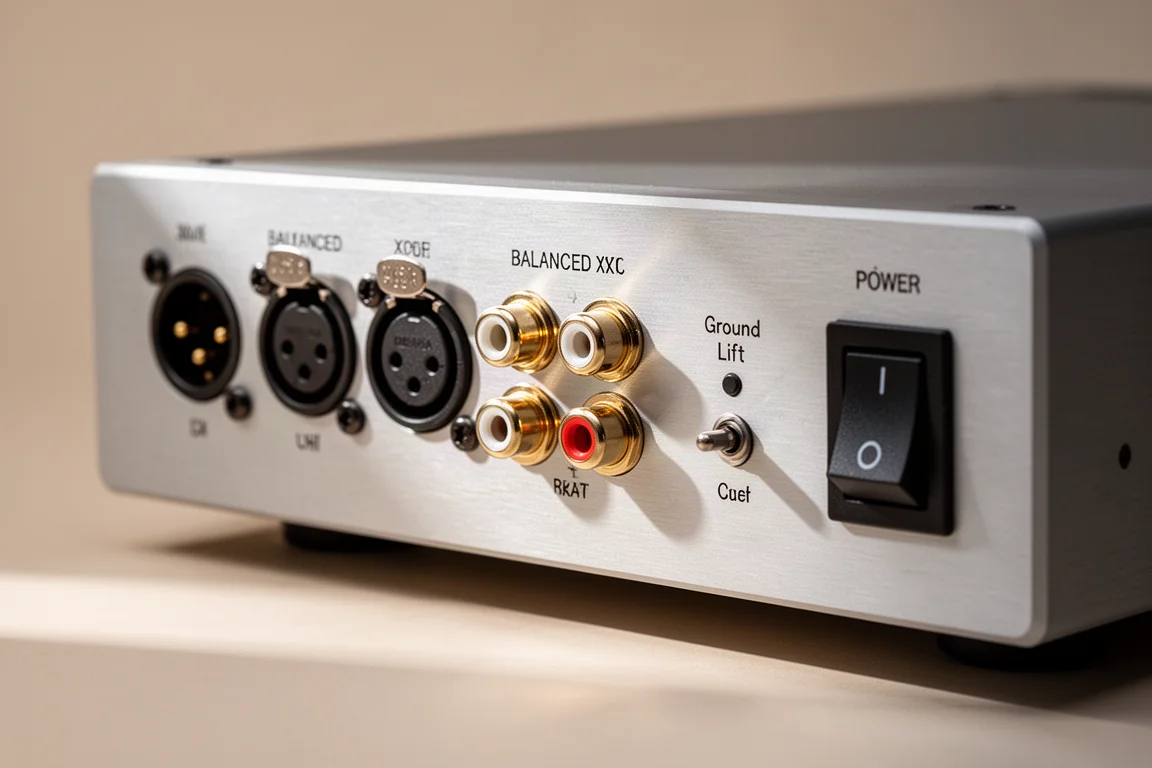
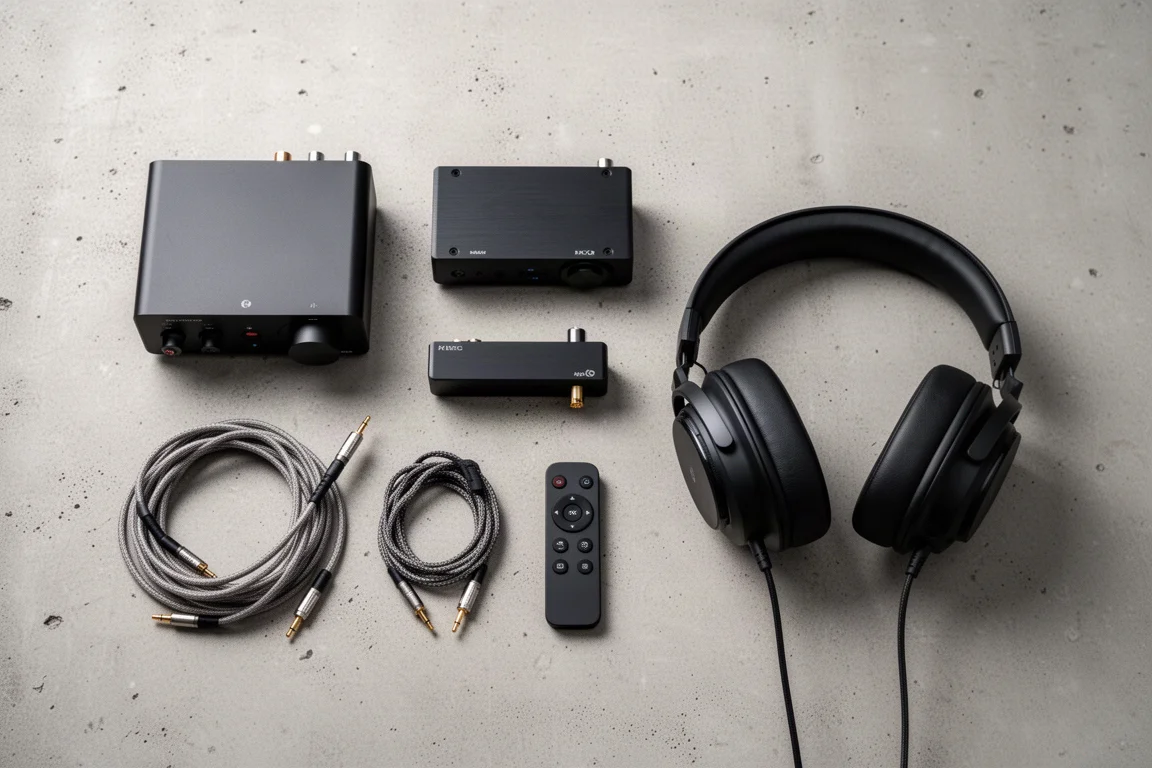
The rear panel covers the essentials for a desktop or small room system. There is a balanced XLR input and a single-ended RCA input, plus balanced XLR and RCA outputs for feeding a power amplifier or powered speakers. A ground lift switch is provided for troubleshooting hum, and the power supply is internal, so there is no external brick to hide behind the desk. A master power switch sits on the back panel.
The front panel has separate selection for the headphone amplifier and the preamp, along with input selection for RCA, XLR and an EXT position. The EXT interface is an expansion port intended for firmware updates and possible future accessories, which gives the amplifier a longer useful life than a fixed design.
Sound Quality: What the A90D Does Well
Tonally, the A90D is neutral. It does not add warmth or soften edges. Instead it behaves like a magnifying glass held up to the recording: small details, room ambience and low level information come through clearly, and the bass stays tight and well defined.
There is a very slight lift at the bottom and at the top of the range, which gives the sound a subtle V-shaped character. It is small enough that it never feels like coloration, but it does add a touch of energy at both extremes. Instrument separation is a particular strength, and it is the main reason the A90D sounds larger than its physical footprint suggests. Voices and instruments occupy clearly defined positions, and busy mixes stay organized.
The amplifier also responds well to the headphones connected to it. A planar magnetic pair such as the HiFiMan Edition XS benefits from the available current, and the Meze 109 Pro comes across as more alive with the extra power on tap. Even a high impedance dynamic model like the Sennheiser Drop HD6XX sounds at its best here. None of these headphones are difficult to drive in absolute terms, but the A90D gives each of them more room to perform.
Things To Consider Before Buying
The most important limitation is input count. Used as a preamp, the A90D offers one balanced and one single-ended analog input. A practical workaround is to feed it from a DAC that handles all the digital switching and keep the second input for a phono stage or another analog source. That arrangement works well, but it does require planning before you buy.
Price is the second consideration. At $600, the A90D is not an inexpensive amplifier, and it sits well above the entry level. The counterargument is that it replaces two components, a headphone amplifier and a remote-controlled preamp, and it performs both roles to a high standard.
It is also worth noting that the A90D is an amplifier rather than a complete source. You will need a separate DAC or an analog source with a balanced output to make the most of the balanced input and output.
Buying Advice
The A90D makes sense if you want one component that covers headphone listening and system control, and if your headphones benefit from extra power. If your budget is tighter and you only need a balanced headphone output, the Geshelli Labs E2 at $230 is a strong alternative with a warmer, more characterful presentation centred on the lower mid-range and bass, though it does not match the A90D for bass tightness or instrument separation. If the A90D fits your budget, it delivers value across both of its roles.
For a desk setup, the pairing that works best is a DAC with a balanced output handling all the digital switching, the A90D handling volume and output, and a single analog source on the RCA input. That combination keeps the system simple while still giving you a remote-controlled preamp with a genuinely good headphone stage.
Conclusion
The Topping A90D is one of the better headphone amplifiers available around $600, and it earns that price by being two useful components in one chassis. Its discrete amplifier section, stepped ladder relay volume control, included remote, internal power supply, ground lift switch and 9.8 watt power rating into 16 ohms add up to a component that is easy to live with and hard to outgrow. The main caveats are the limited analog input count and the fact that you will still need a separate DAC. For listeners who want a clean, neutral and powerful amplifier with real preamp functionality, the A90D is a confident recommendation.
Product link
View more details for Topping A90D
This product is mentioned in the review. Check the specifications, options, and compatibility before buying.
View more details for Topping A90DFurther reading
Related Reviews
Headphone Amplifiers
Creative Labs Sound Blaster X5 Review: A Flexible USB DAC and Headphone Amp
The Sound Blaster X5 pairs a fully balanced dual-DAC headphone amp with DSP, mixing, recording, and console audio in one compact USB-powered enclosure.
Headphone Amplifiers
Fosi Audio K5 Review: A Tiny Budget DAC Amp for Travel, Gaming, and Hotel Listening
A compact USB-C DAC amp with tone controls, optical and coaxial inputs, and a clean mid-forward sound that suits efficient headphones and IEMs.
Headphone Amplifiers
Fosi Audio SK01 Review: A Tiny Headphone Amp That Doubles as a Three-Band EQ
A compact $72 audio box with treble, mid-range, and bass controls, a loudness button, and a capable headphone stage. Here is where it earns its place.