Headphone Amplifiers
Fosi Audio K5 Review: A Tiny Budget DAC Amp for Travel, Gaming, and Hotel Listening
A compact USB-C DAC amp with tone controls, optical and coaxial inputs, and a clean mid-forward sound that suits efficient headphones and IEMs.
Introduction
Some evenings call for nothing more than a quiet room, a pair of headphones, and music loud enough to push the rest of the day out of the way. A laptop headphone jack rarely delivers that feeling, and a dongle DAC can turn into a small pile of adapters. The Fosi Audio K5 offers another route: a desktop-style DAC and headphone amplifier that fits in a back pocket, runs from a single USB-C connection, and costs about as much as an inexpensive pair of in-ear monitors.
This review covers what the K5 does, which listeners it suits, where it performs well, and the headphone pairings that make the most sense.
What the Fosi Audio K5 Actually Is
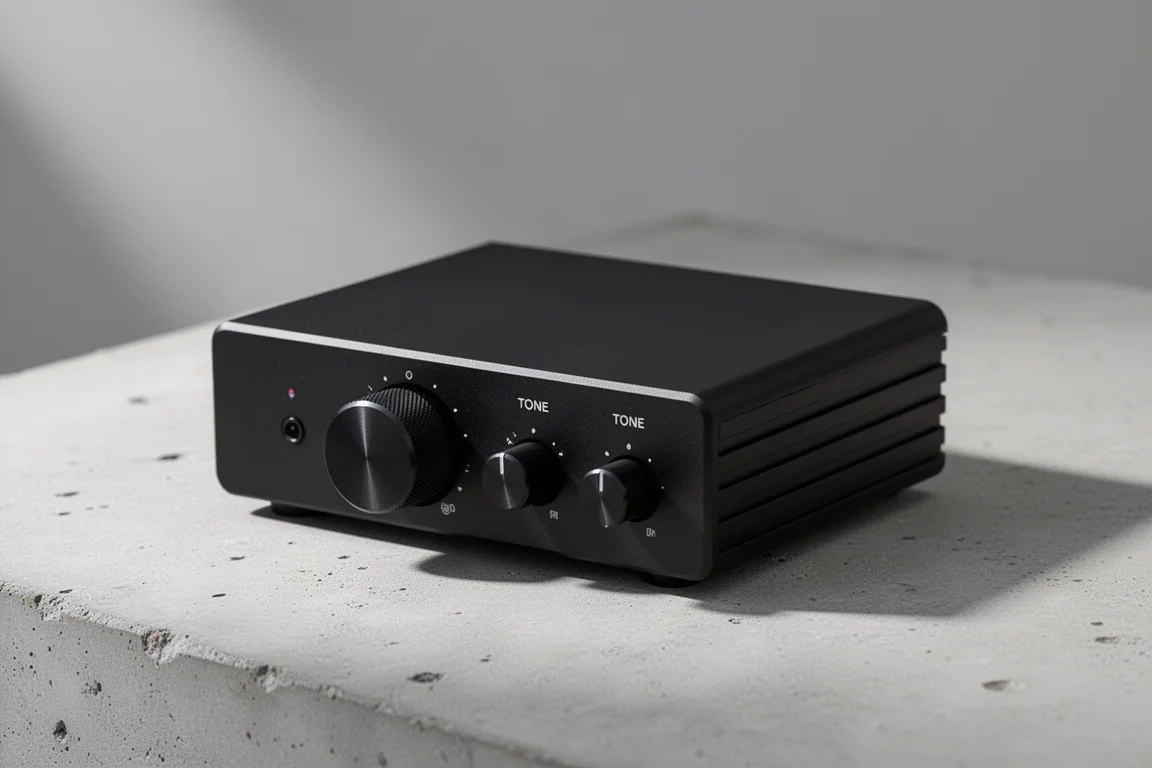
The K5 is a compact DAC and headphone amplifier, roughly the footprint of a deck and a half of cards and small enough to slip into a back pocket. The front panel carries a volume control, treble and bass tone controls, a microphone input, and a headphone output, which means it can double as a gaming DAC amp for a headset with a mic.
The rear panel is just as straightforward: a 5V USB-C input that carries both power and data, an optical input, a coaxial input, and an analog output. Because it accepts optical and coaxial sources and offers an analog out, it can also serve as a standalone DAC or a preamp feeding a larger system.
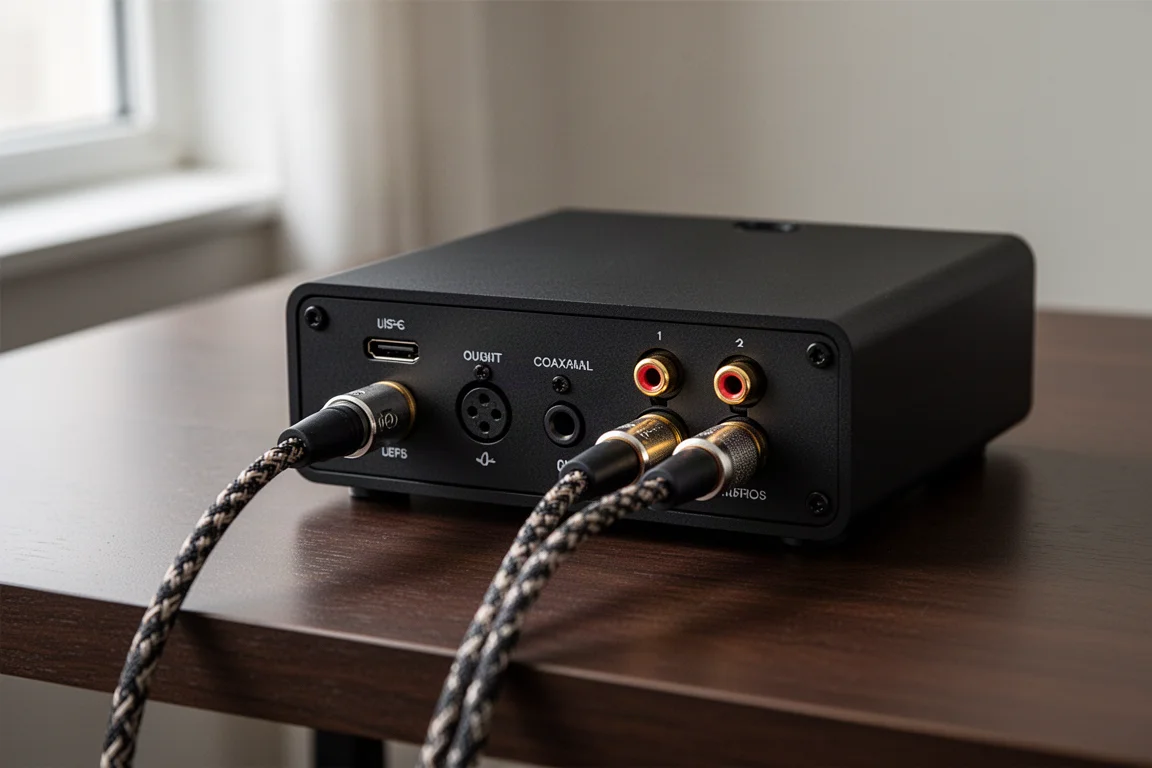
That combination of size and connections is the core of the pitch. It is a desk-friendly device that travels easily and can be moved between a laptop, a game console, and a home audio setup without extra hardware.
Who the Fosi Audio K5 Is For
The clearest audience is someone who games on a budget and wants better sound than a motherboard output provides, while keeping microphone support in the same box. The tone controls let you nudge bass and treble to taste, which is useful for game audio and films where dialogue clarity matters.
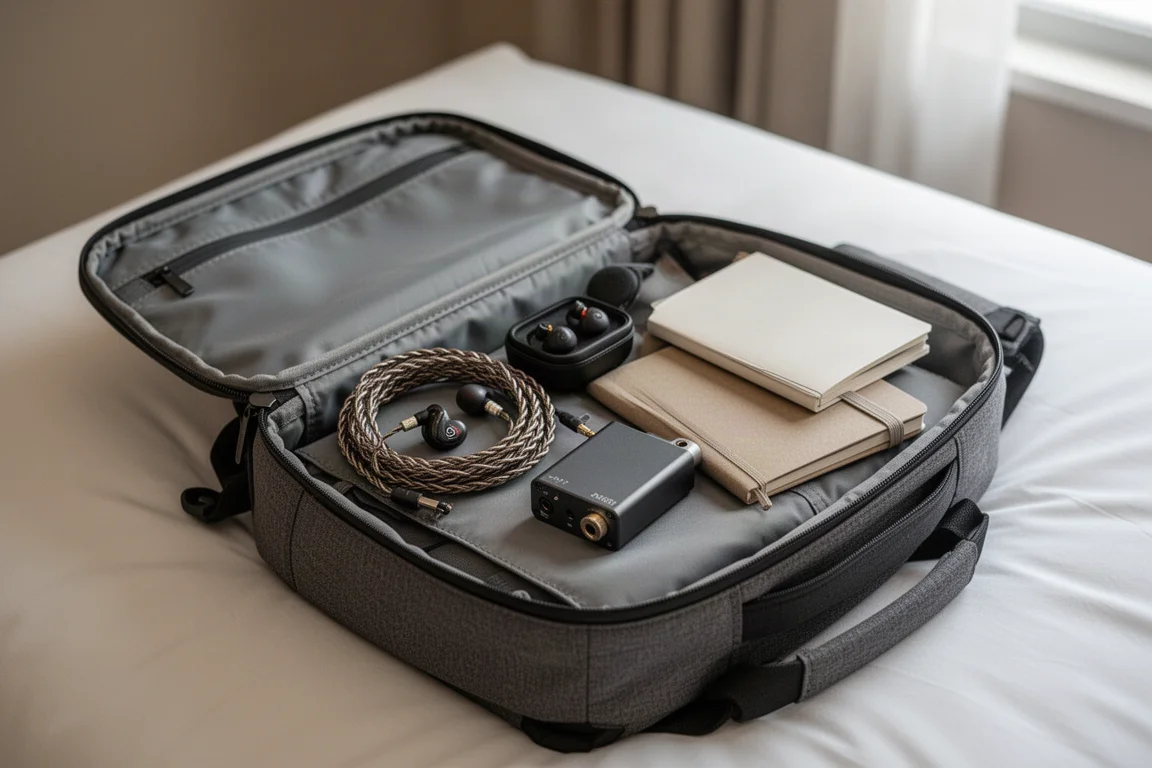
It also suits travellers. A laptop with USB-C is usually the only thing needed: plug the K5 in, connect headphones, and the setup works in a hotel room at night for music, films, or games. That is a simpler arrangement than carrying a phone dongle and a chain of adapters.
Finally, it makes sense for anyone building a first proper headphone setup on a tight budget. The K5 plus an inexpensive pair of headphones covers a lot of ground for a small outlay.
Main Strengths and Sound Character
The K5 leans toward a reference-style presentation with a mid-forward tilt. It does not add much colour of its own, and vocals come through clearly, which is exactly what game chat, dialogue, and acoustic material benefit from. Bass and treble controls are there for listeners who want a little more lift at the extremes, and turning both up adds the extra weight and sparkle that rock, metal, and grunge tend to want.
Power is rated at one watt into a 16 ohm load, and the noise floor is very low. With sensitive in-ear monitors, pausing playback and turning the volume to maximum produced no audible hiss. The volume taper is unusually long, with the first half of the range arriving gradually, which is a genuine advantage for IEMs because there is no gain switch to fall back on. Small adjustments stay small instead of jumping straight to an uncomfortable level.
The soundstage also came as a pleasant surprise with in-ear monitors, which often feel narrow. The K5 gave those pairings a noticeably more open feel than expected at this price.
Headphone Pairing Notes
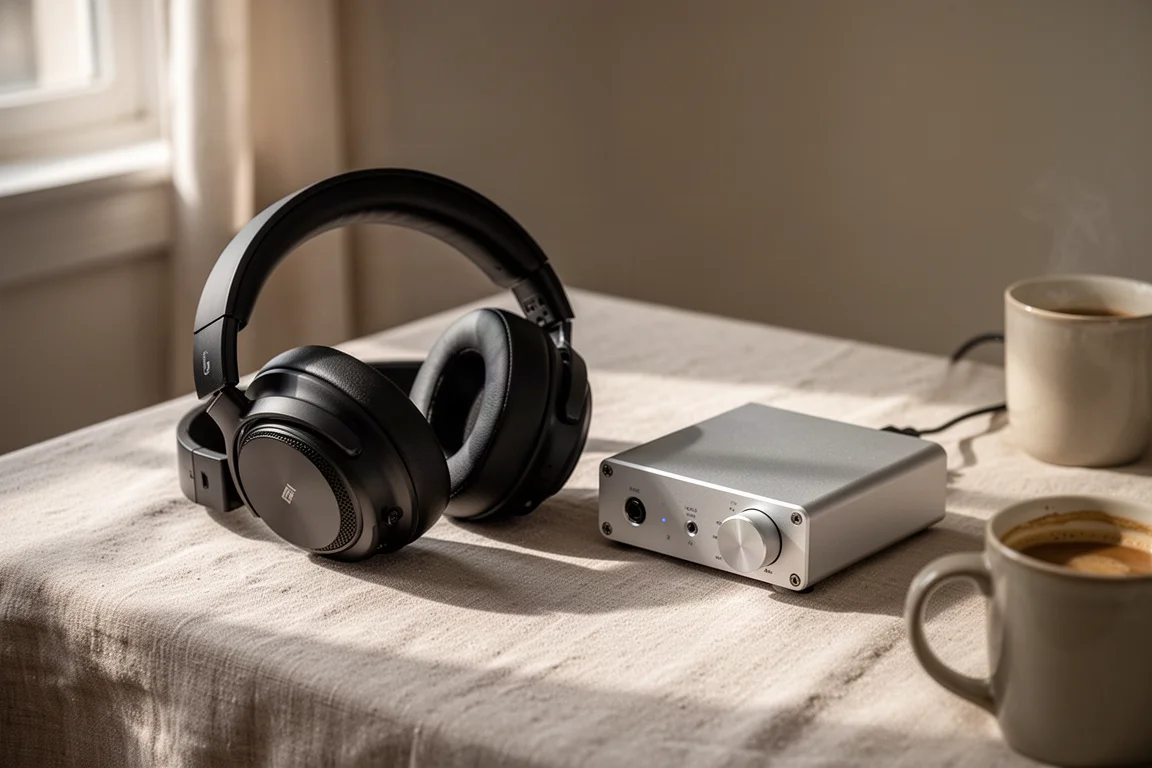
The K5 is selective about what it drives well. The Sennheiser HD 58X sounded exactly as it should, with the dynamics and body that make that headphone enjoyable. The 7Hz Legato was arguably the best match of the group, with a wide stage and no noise. The HiFiMan Edition XS also sounded excellent and did not feel short of power, which is more than the modest rating might suggest. The Sennheiser HD 6XX was part of the testing group as well.
The difficult load was the Dan Clark Aeon Closed RT, a 13 ohm headphone that is hard to drive. Through the K5 it came across as echoey in the vocal region with limited dynamics, so it is not a natural partner. Warm-leaning headphones and models with a pronounced V-shaped response tend to fare best, and a bright pair can be tamed with the treble control.
Things to Consider Before Buying
The main caveat is expectation setting. This is not an amplifier that drives every headphone well, and results vary widely depending on what you plug in. If you own a demanding planar magnetic headphone, the K5 may not be the right match.
There is also no low or high gain switch, so the long volume taper is doing a lot of work for sensitive IEMs. That works well in practice, but listeners who like a gain option should note its absence.
Tonally, the K5 is neutral and clean rather than characterful. That is a strength for gaming and dialogue, but anyone looking for a warm, thick, or coloured sound will need to choose headphones that supply that character themselves. Getting the best out of it depends on pairing the right headphone, which is true of most budget audio gear.
None of these points make the K5 a poor purchase. They simply define the situations where it shines, and those situations are common ones.
Buying Advice
The K5 lists at around $80 and has been available with a coupon that brings it to roughly $72. At that price, the value argument rests on the feature set: microphone input, tone controls, optical and coaxial inputs, an analog output, and a footprint small enough for a backpack.
Pairing it sensibly matters more than the amplifier alone. The 7Hz Legato costs about $100, so the K5 and Legato together come to roughly $170, which is a strong entry point for a travel or desktop setup. The Sennheiser HD 58X at around $170 is another pairing that worked particularly well. Both options keep the total spend low while playing to the K5’s strengths.
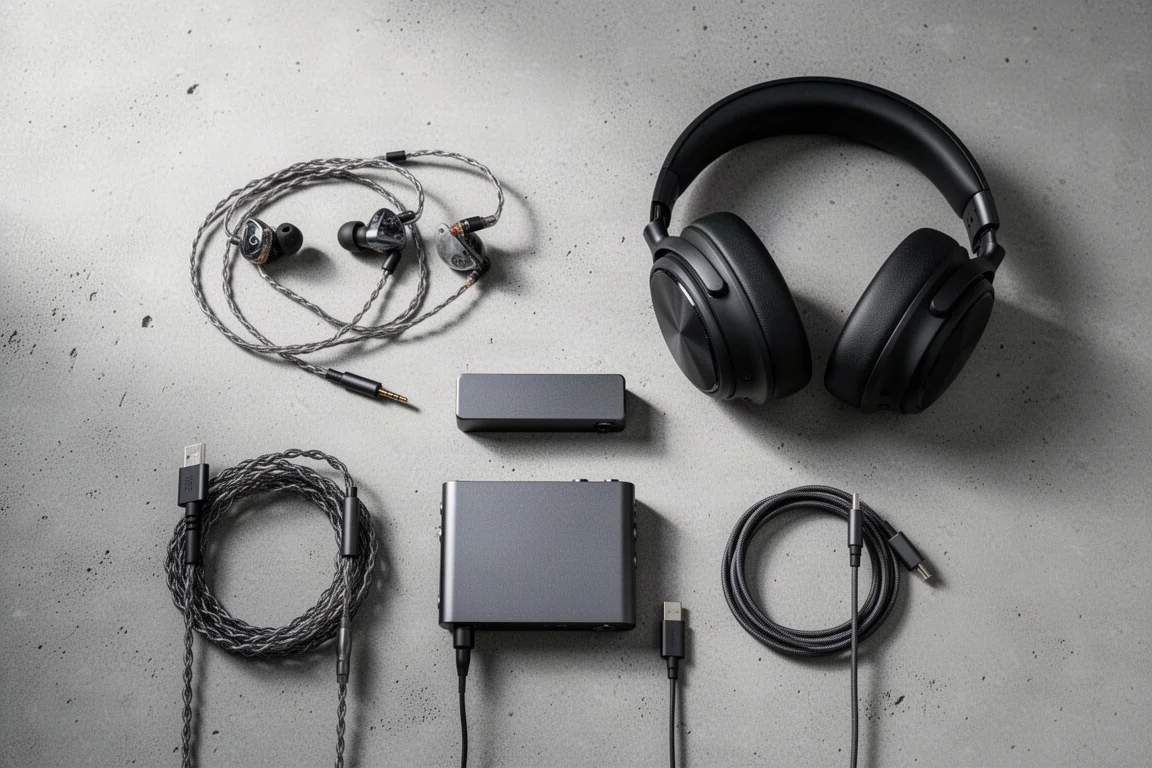
For a first gaming setup or a second system that lives in a bag, the K5 does not ask for much. Choose efficient headphones, keep the tone controls in reserve, and it will do its job quietly and consistently.
Conclusion
The Fosi Audio K5 is a small, inexpensive DAC amp with a clean, mid-forward sound, a very low noise floor, and a useful set of inputs and outputs. It is at its best with efficient headphones and IEMs, particularly warmer or V-shaped models, and it makes an easy travel companion for a USB-C laptop. Keep expectations aligned with the price and the pairing, and it delivers a lot for the money.
Product link
View more details for Fosi Audio K5
This product is mentioned in the review. Check the specifications, options, and compatibility before buying.
View more details for Fosi Audio K5Further reading
Related Reviews
Headphone Amplifiers
Creative Labs Sound Blaster X5 Review: A Flexible USB DAC and Headphone Amp
The Sound Blaster X5 pairs a fully balanced dual-DAC headphone amp with DSP, mixing, recording, and console audio in one compact USB-powered enclosure.
Headphone Amplifiers
Fosi Audio SK01 Review: A Tiny Headphone Amp That Doubles as a Three-Band EQ
A compact $72 audio box with treble, mid-range, and bass controls, a loudness button, and a capable headphone stage. Here is where it earns its place.
Headphone Amplifiers
Fosi Audio SK2 Review: A Compact $99 DAC and Headphone Amp That Opens the Door to Hi-Fi
A tiny desktop DAC, preamp, and headphone amplifier with USB and optical inputs, a balanced 4.4mm output, and a price that makes entry-level hi-fi genuinely approachable.