Headphone Amplifiers
Creative Labs Sound Blaster X5 Review: A Flexible USB DAC and Headphone Amp
The Sound Blaster X5 pairs a fully balanced dual-DAC headphone amp with DSP, mixing, recording, and console audio in one compact USB-powered enclosure.
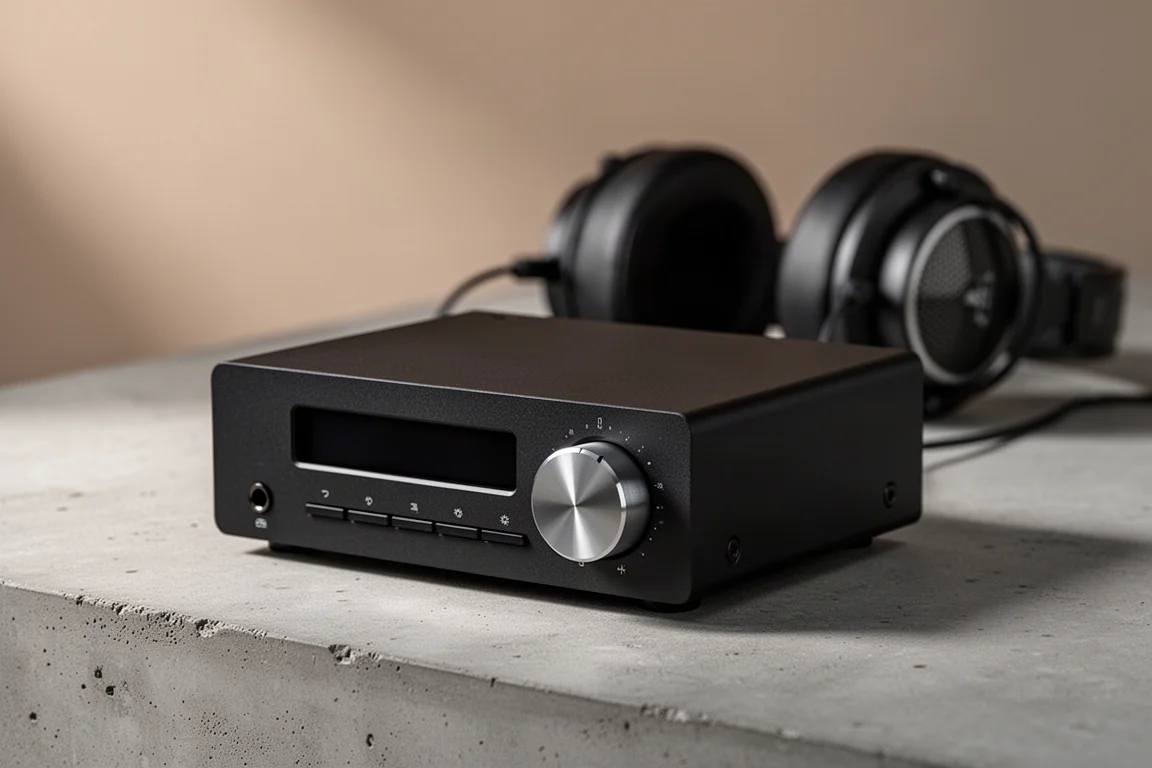
Introduction
The Sound Blaster X5 resists a tidy label. Creative positions it as a high-resolution external USB DAC and sound card with a fully balanced headphone amplifier aimed at audio enthusiasts, and every part of that description holds up. What makes the product unusual is how much else sits alongside it: DSP effects, a mixer, recording features, Bluetooth playback, and console connectivity all live in the same compact chassis.
That breadth is the X5’s defining characteristic. It is best understood as a USB headphone amplifier with a substantial feature set attached, rather than as a single-purpose desktop DAC.
What the Sound Blaster X5 Actually Is
At its core, the X5 is an external USB DAC and headphone amplifier. It runs dual 32-bit, 384 kHz Cirrus Logic CS43198 DACs with 130 dB of dynamic range and a rated -115 dB total harmonic distortion plus noise figure. Amplification comes from a fully balanced Xamp headphone stage, and the unit can drive headphones from 16 ohms all the way up to 600 ohms through either its balanced or unbalanced outputs.
Support extends to customizable DSP EQ functions, ASIO 2.2 playback and recording over USB, TOSLINK S/PDIF input and output, DoP 128, and DSD 256.
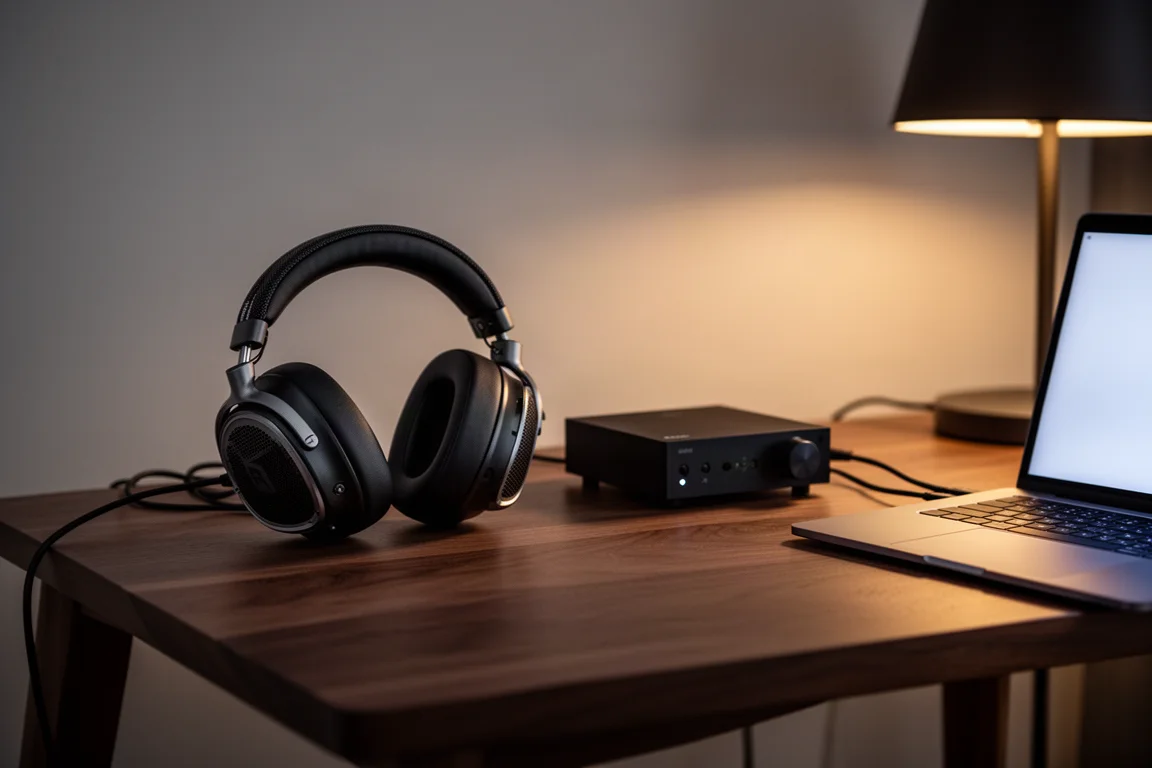
The DAC stage uses a differential layout. One CS43198 converter is dedicated to the left channel and a second to the right, and each feeds its own dedicated amplifier. That arrangement virtually eliminates crosstalk in the architecture and preserves signal purity, which is most apparent through the 4.4 mm balanced headphone output.
Who This Product Is For
The X5 makes the most sense for listeners who want a single desktop box rather than a stack of separate components. If you split your time between music, games, and voice recording, the unit covers all three without a cable swap.
It is a less obvious choice for anyone chasing a reference-grade dedicated headphone preamplifier. The X5 is capable in that role, but its strength lies in breadth rather than in outperforming specialized hardware.
Design and Build Quality
The chassis is light and made of plastic, with an aluminium volume knob. Despite the material choice, it does not read as a cheap build. The finish and assembly hold up, and the plastic keeps the unit light enough to move around easily.
Power comes from the USB connection. There is no external power supply and no way to add one. That design decision keeps the footprint small and makes the X5 portable, but it also means the quality of your USB port and host device has a direct effect on headphone performance and sound quality. Connecting the unit to a low-powered USB device is not advisable.
Illuminated controls are limited to the power, mute, and Bluetooth buttons. The remaining labels rely on gold lettering, which is genuinely difficult to read in low light. White lettering would be a welcome change in a future revision.
Connectivity and Control
The front panel carries a Bluetooth receiver, a 3.5 mm microphone input, the volume control, and a 3.5 mm headphone output that is TRS compliant, so a headset with an inline microphone works through the single jack. There is also a 4.4 mm balanced headphone output. Alongside those are microphone mute and gain controls, a display toggle, a direct and DSP mode button, a headphone or speaker output switch, three selectable EQ modes, and a switch between Mac or PC and a console such as a PlayStation 4 or PlayStation 5.
The rear panel adds single-ended RCA line in and line out, TOSLINK optical input and output, a USB connector that handles both power and data, and a USB-A host audio port for connecting USB speakers, headsets, or microphones.
Software, DSP and Gaming Features
The desktop application for Mac and Windows expands the feature set considerably, and optional extension modules add tools such as Crystal Voice and Scout mode. Sound mode adjusts headphone and speaker output independently, while a set of gaming-oriented EQ presets is available for players who want them. The Acoustic Engine section offers surround processing, a crystallizer, bass enhancement, a smart volume option that minimizes abrupt changes in level, and a dialogue enhancer, each with its own gain.
The equalizer ships with default music, movies, and gaming settings, and any adjustment switches the profile to onboard until it is reverted. Crystal Voice provides dynamic noise reduction, smart volume, selectable voice-over DSPs, and a microphone equalizer with eleven presets. Direct mode delivers the best headphone sound quality by bypassing processing. Scout mode is aimed at games, lifting cues such as footsteps, speech, and weapon sounds. The mixer is more interesting than it first appears: each input’s left and right balance can be set independently, which is useful when monitoring a microphone or a line source.
Playback settings cover headphone or speaker selection, microphone quality per input, and sampling and bit rate choices. The mobile app for iOS and Android connects over Bluetooth and provides the equalizer, Direct mode, and the mixer for quick adjustments away from the computer.
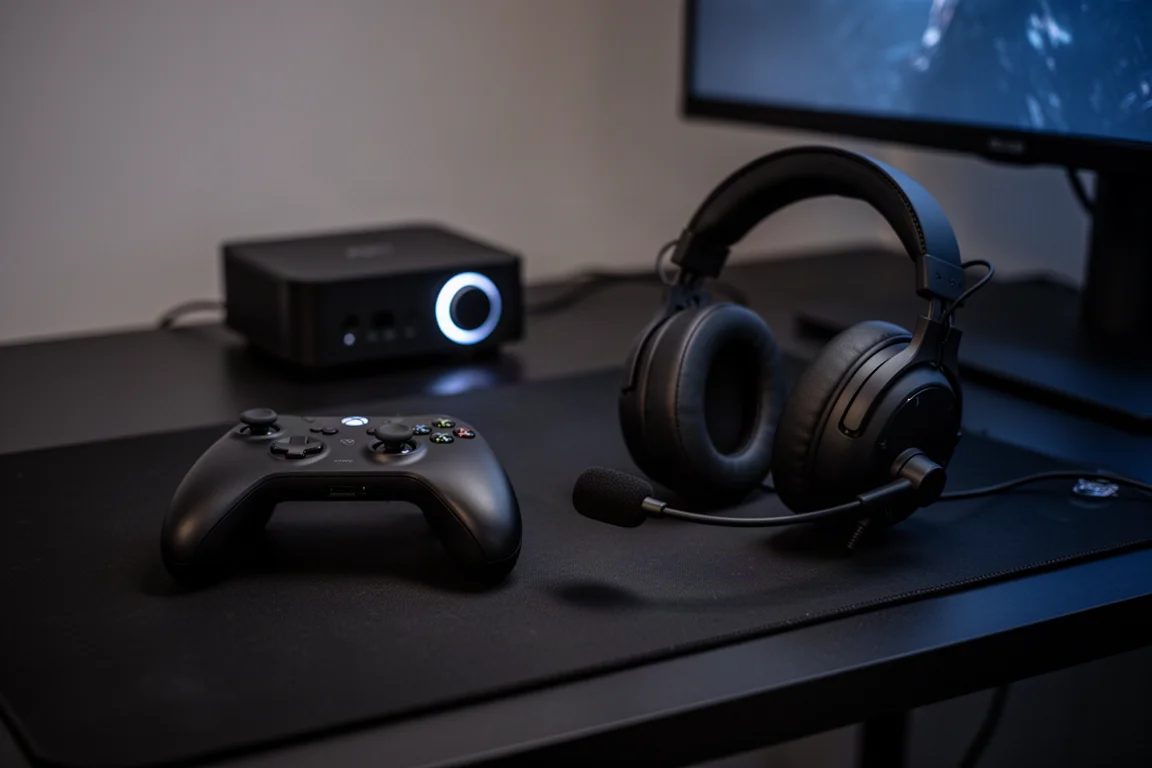
Console owners will appreciate the integration. A PlayStation 4, PlayStation 5, or Nintendo Switch can be connected, and USB headphones, microphones, and similar accessories can be routed through the unit to expand a gaming setup.
Measurements: Frequency Response and Noise
Line out measurements show a ruler-flat frequency response, with a noise floor that rises toward lower frequencies and a visible spike at 2 kHz. The unbalanced 3.5 mm headphone output stays essentially flat at 16, 33, 150, and 600 ohm loads; at very low levels some noise appears in the upper frequencies, though it is not really audible. The balanced output is also flat across those same loads, with characteristic spikes at 2, 3, 4, 5, and 6 kHz and a rising low-frequency noise floor that improves somewhat as impedance increases. Those spikes are worth putting in context, since similar behavior appears in other amplifiers such as the Monoprice Monolith THX AAA headphone amp and the Oppo UDP-205, so they do not point to a fundamental engineering flaw in this design.
Listening Impressions
Listening tests used a 16-inch MacBook Pro connected over USB-C, with Roon handling source material, and two headphones: the Focal Clear MG at 55 ohms and the Oppo PM2 planar magnetic at 32 ohms. Neither is especially difficult to drive. Comparisons were made against a Monoprice Monolith headphone amp and DAC with THX AAA amplification, an Oppo UDP-205 universal player, and an Anthem AVM 90, all through their headphone outputs.
The X5 performed better than its broad feature list might suggest. Bass was tight and punchy, with decent texture on bass instruments. Midrange clarity and timbre were solid, the top end carried ample detail, and the sound never became fatiguing across listening sessions.
Against the comparison gear, one difference stood out: bass dynamics were a touch reserved. The Oppo UDP-205 and Anthem AVM 90 headphone outputs delivered more punch and articulation through the Focal Clear MG, and the lack of a dedicated power supply in the X5 is a plausible explanation. The UDP-205 and Anthem also produced a slightly cleaner overall reproduction, verified by running one ear cup from each device with level matching. The gap is subtle, but it is consistent enough to matter for listeners who want a truly reference-grade headphone preamp. For everyone else, the X5 remains a strong performer with minor limitations.
Main Strengths
- A large amount of technology and flexibility in a single enclosure.
- Fully balanced dual-DAC architecture with a dedicated converter and amplifier per channel.
- Bus powered, so no external supply is needed and the unit stays portable.
- Solid performance as a headphone preamp for music and entertainment.
- Good integration with gaming consoles, including USB headphones and microphones.
- Desktop and mobile apps that unlock EQ, mixing, recording, and DSP features.
Things to Consider Before Buying
- It is a jack of all trades rather than the best in any single category.
- The plastic case limits the sense of prestige a product like this could carry.
- Gold lettering on the non-illuminated controls is hard to read in low light.
- Bluetooth recording is SBC only, which may matter for some workflows.
- The USB power source has an outsized effect on the listening experience, so a well-powered port or host device is essential.
Buying Advice
Deciding on the X5 comes down to which features matter most. Someone who wants a capable headphone amplifier with plenty of flexibility for the money will find a lot to like. Someone who wants an all-in-one desktop solution with mixing and recording tools gets those in the same box. A gamer who wants one unit to handle audio, recording, and mixing can build a whole setup around it.
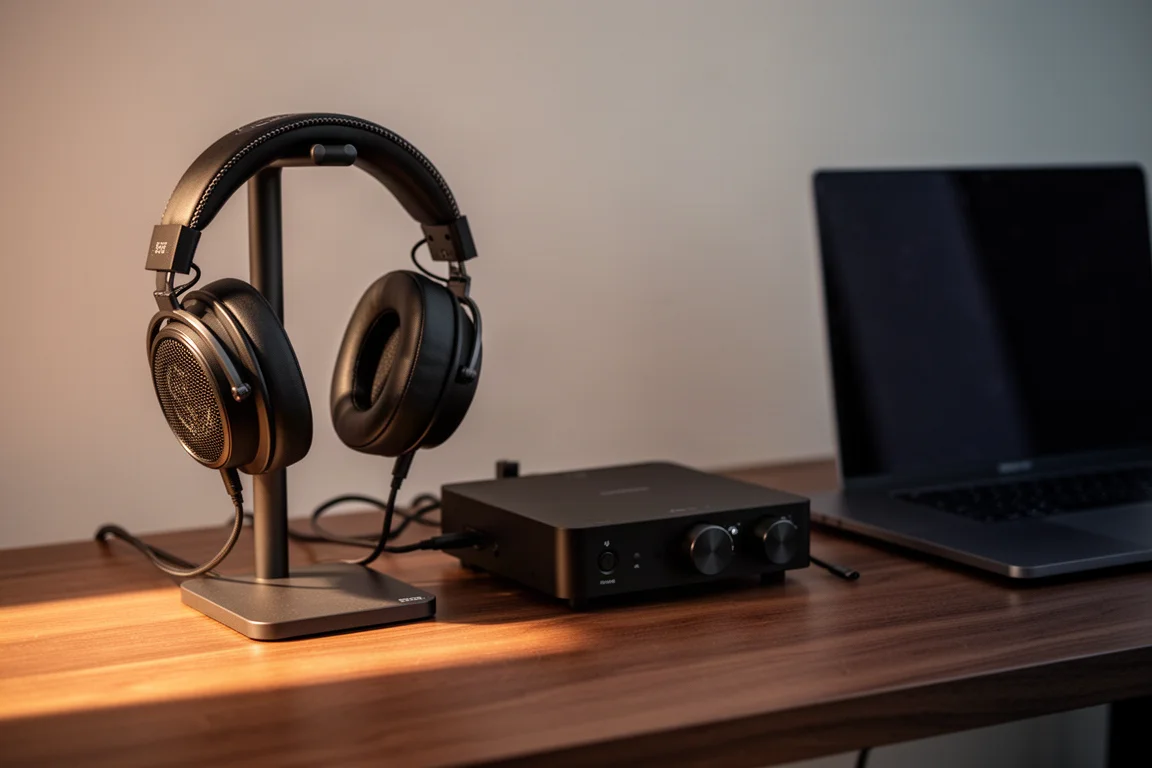
The most useful exercise is to list your own priorities and compare them against the X5’s feature set. If balanced headphone output, DSP flexibility, and console support rank highly, the match is strong. If absolute reference-grade headphone amplification is the goal, a dedicated preamp is the more direct route.
Conclusion
The Sound Blaster X5 packs an unusual amount of functionality into one compact, USB-powered enclosure. Its balanced dual-DAC design and broad connectivity give it appeal across music listening, gaming, and recording, and the desktop and mobile apps make most of those features genuinely usable. It is a jack of all trades rather than a specialist, and the plastic chassis and low-light legibility are fair criticisms. For listeners who value versatility and want a good-sounding headphone amp alongside mixing and DSP tools, the X5 deserves a serious look.
Product link
View more details for Creative Labs Sound Blaster X5
This product is mentioned in the review. Check the specifications, options, and compatibility before buying.
View more details for Creative Labs Sound Blaster X5Further reading
Related Reviews
Headphone Amplifiers
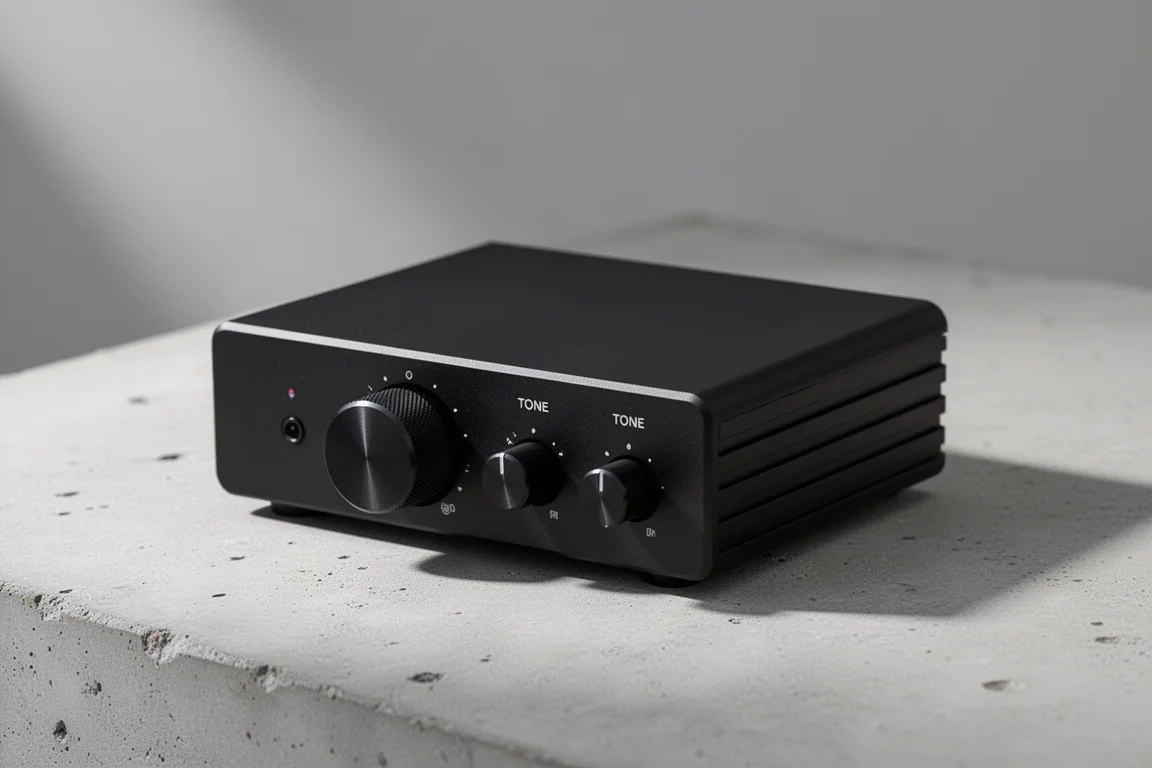
Fosi Audio K5 Review: A Tiny Budget DAC Amp for Travel, Gaming, and Hotel Listening
A compact USB-C DAC amp with tone controls, optical and coaxial inputs, and a clean mid-forward sound that suits efficient headphones and IEMs.
Headphone Amplifiers
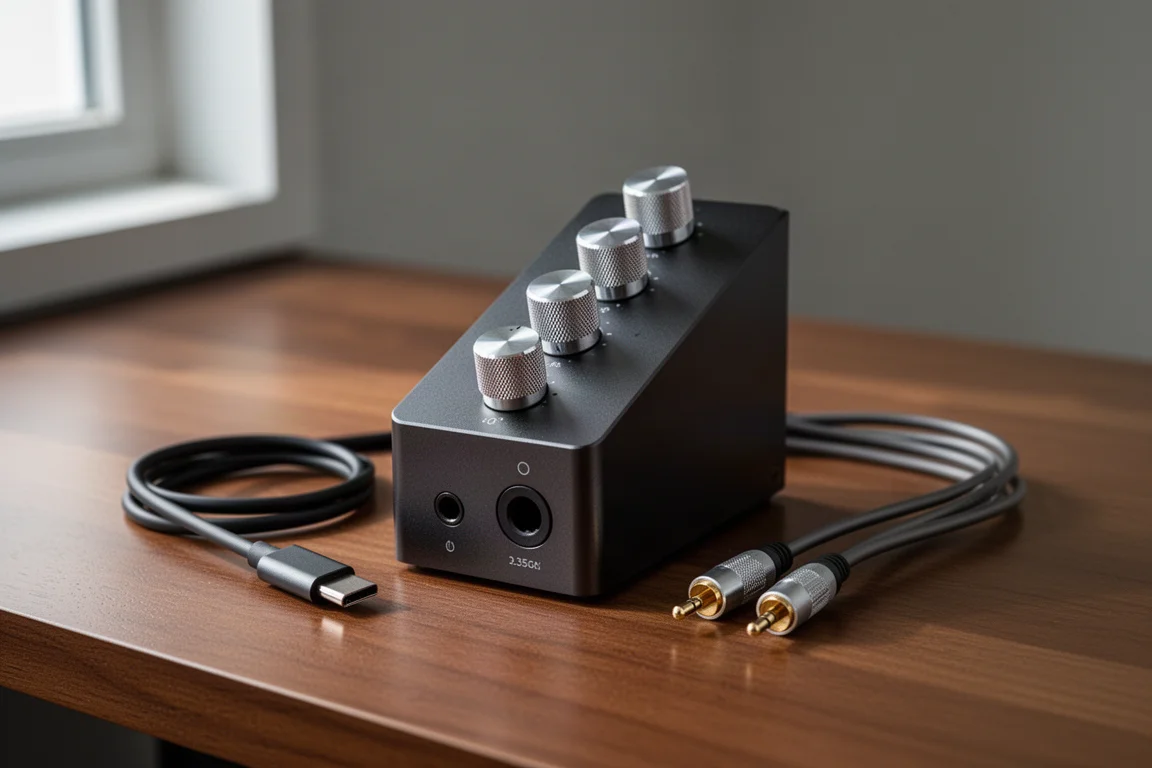
Fosi Audio SK01 Review: A Tiny Headphone Amp That Doubles as a Three-Band EQ
A compact $72 audio box with treble, mid-range, and bass controls, a loudness button, and a capable headphone stage. Here is where it earns its place.
Headphone Amplifiers
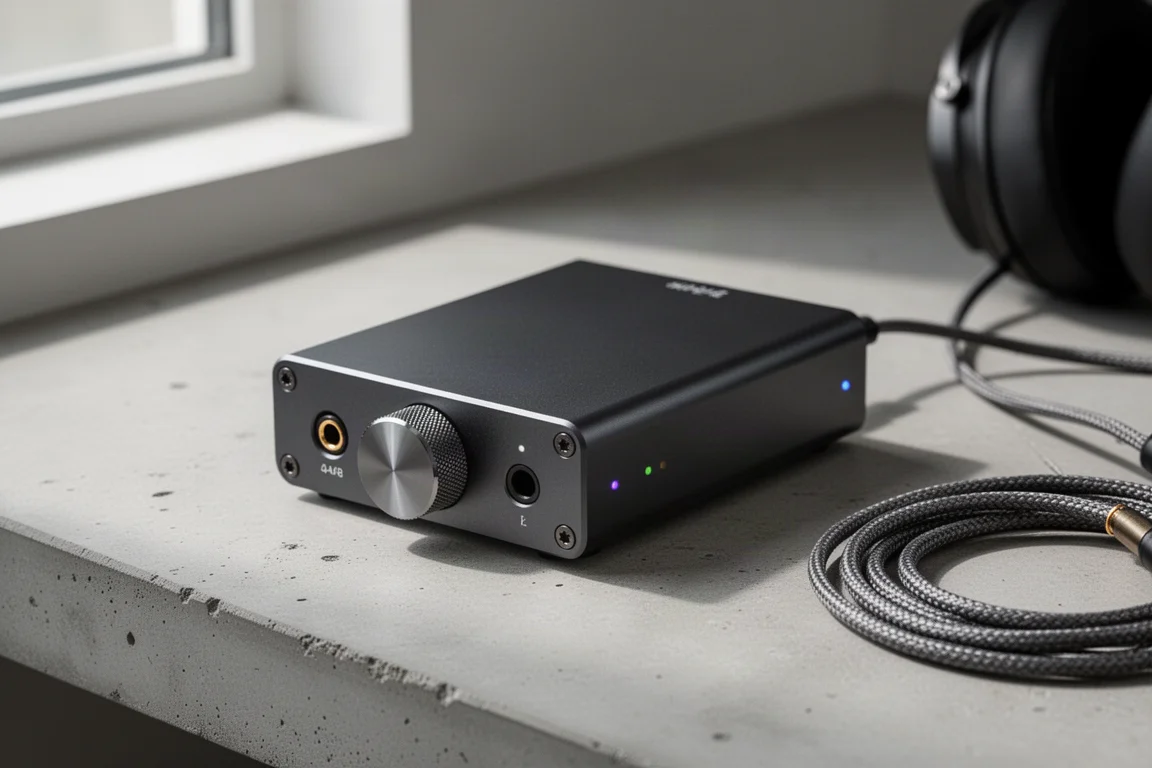
Fosi Audio SK2 Review: A Compact $99 DAC and Headphone Amp That Opens the Door to Hi-Fi
A tiny desktop DAC, preamp, and headphone amplifier with USB and optical inputs, a balanced 4.4mm output, and a price that makes entry-level hi-fi genuinely approachable.