Stationery
Tombow Zoom 505MF vs Uni-ball One P: Two Cap-Style Multi-Pens, Eight Years Apart
A side-by-side look at two 5,000-yen class cap-style multi-pens: the 2018 Tombow Zoom 505MF and the 2026 Uni-ball One P three-color ballpoint.
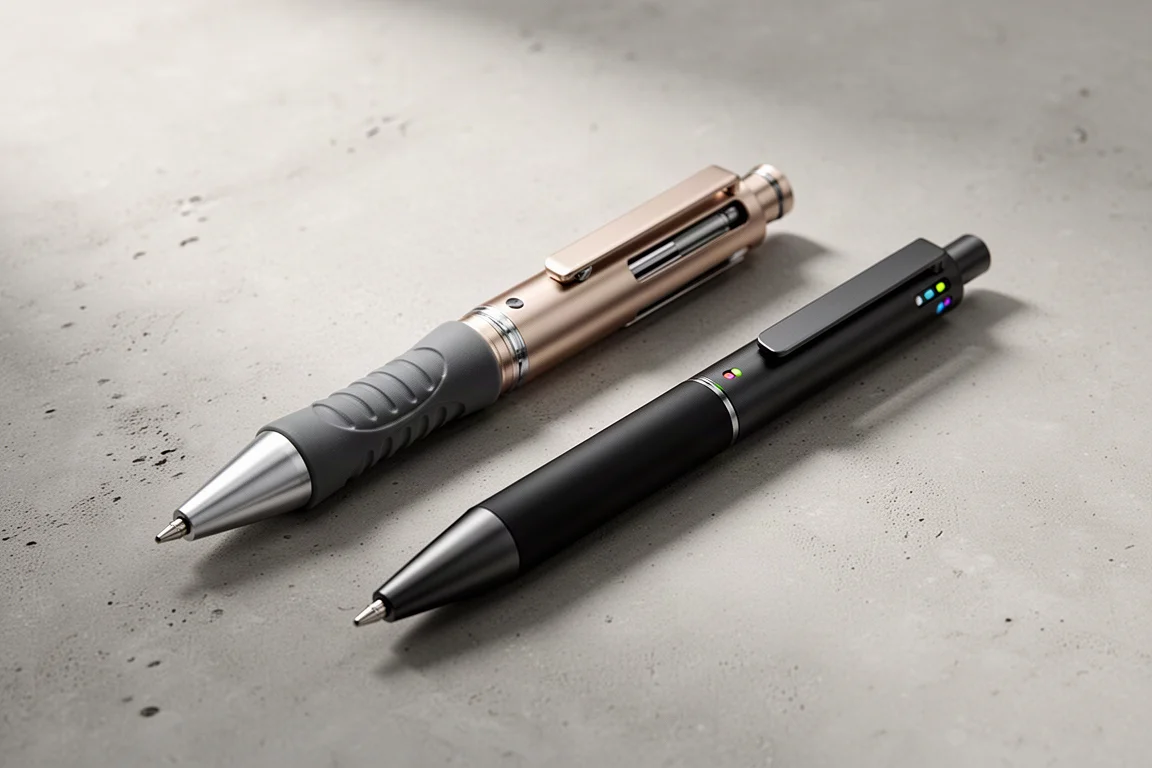
Introduction
Few comparisons in stationery are as revealing as two pens from the same price class released eight years apart. The Tombow Zoom 505MF arrived in March 2018 as a cap-style multi-pen built on a beloved 1980s design, while the Uni-ball One P three-color ballpoint landed in June 2026 with magnetic caps and next-generation water-based ink. Both sell for the same 5,000 yen excluding tax, both use caps and twist-action mechanisms, and both write with almost zero tip wobble. What changed in those eight years says a lot about what we now expect from a premium everyday pen.
Two Caps, Two Philosophies
The Zoom brand was launched by Tombow in 1986, with the classic era split into the Zoom Original, Zoom Light, and Zoom In lines. The 505 series debuted in the first generation of the Original line, and its thick body and rubber grip were bold for the time. The 505MF, released in 2018, built on that design, with “MF” likely standing for Multi-Function. Most of the old Zoom series has since been discontinued.
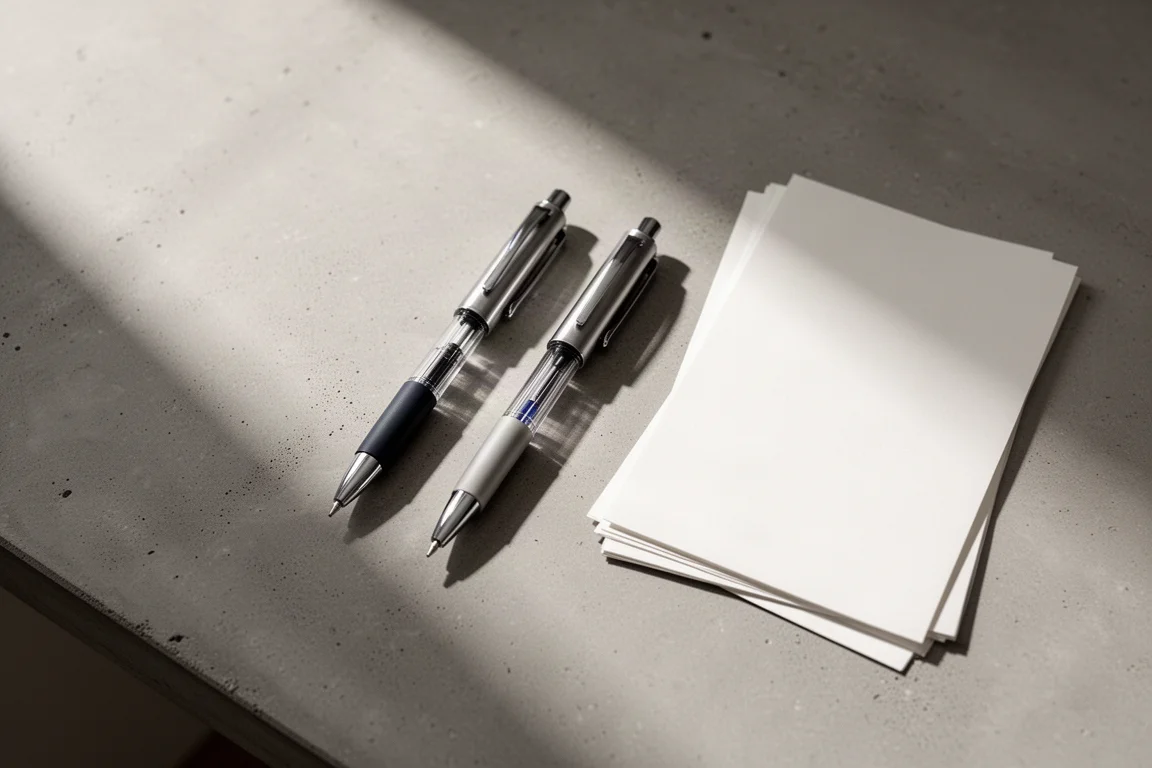
The Uni-ball One P series, from Mitsubishi Pencil, launched in February 2025 as single-color ballpoints at several price points. A year later, three-color versions were added to three models, and the top-tier Signature model drew attention precisely because a cap-style multi-pen is such a rarity. Despite the size difference, the two pens give a remarkably similar impression thanks to their cap-first designs.
Tombow Zoom 505MF: Built Around the Grip
The 505MF’s body and cap are aluminum, while the grip is brass, pushing weight toward the tip and creating a low center of gravity despite the pen’s size. The characteristic rubber grip of the 505 series is contoured to fit the fingers, and rubber is also used on the center ring, making it very comfortable to hold. It is a 2+1 type: 0.7 mm black and red oil-based ballpoint refills plus a 0.5 mm mechanical pencil. It shipped in silver, black, and Prussian blue, at 5,000 yen excluding tax.
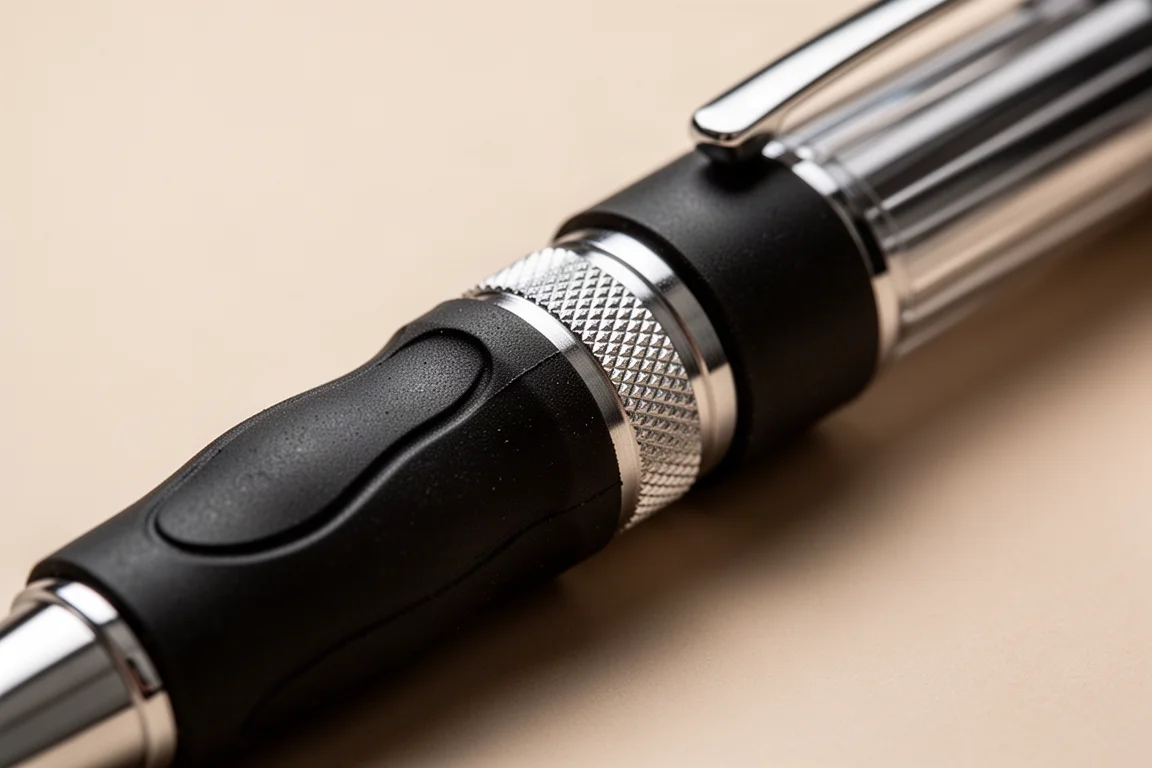
Its signature trait is the cap style: at first glance it looks like a simple ballpoint pen, and the design still holds up eight years on. The tip extends via twist-action and locks with a substantial click when out, though it does not lock when retracted. The mechanical pencil can be knocked like a standalone pencil, even with the cap posted. There are no color indicators at all, a bold simplicity that suits black, red, and a pencil you can identify by feel. The snap-fit cap can be applied even with the tip extended, so you can uncap and write immediately.
Uni-ball One P: Modern Refinement
The Uni-ball One P three-color ballpoint uses water-based ink developed specifically for the series, with cushioning ingredients that give it an elastic, springy character. It was released in matte black and silver, with the black model carrying 0.5 mm refills and the silver 0.3 mm. The body mixes metal parts with resin for a balanced, premium feel that is not overly formal, also at 5,000 yen excluding tax.
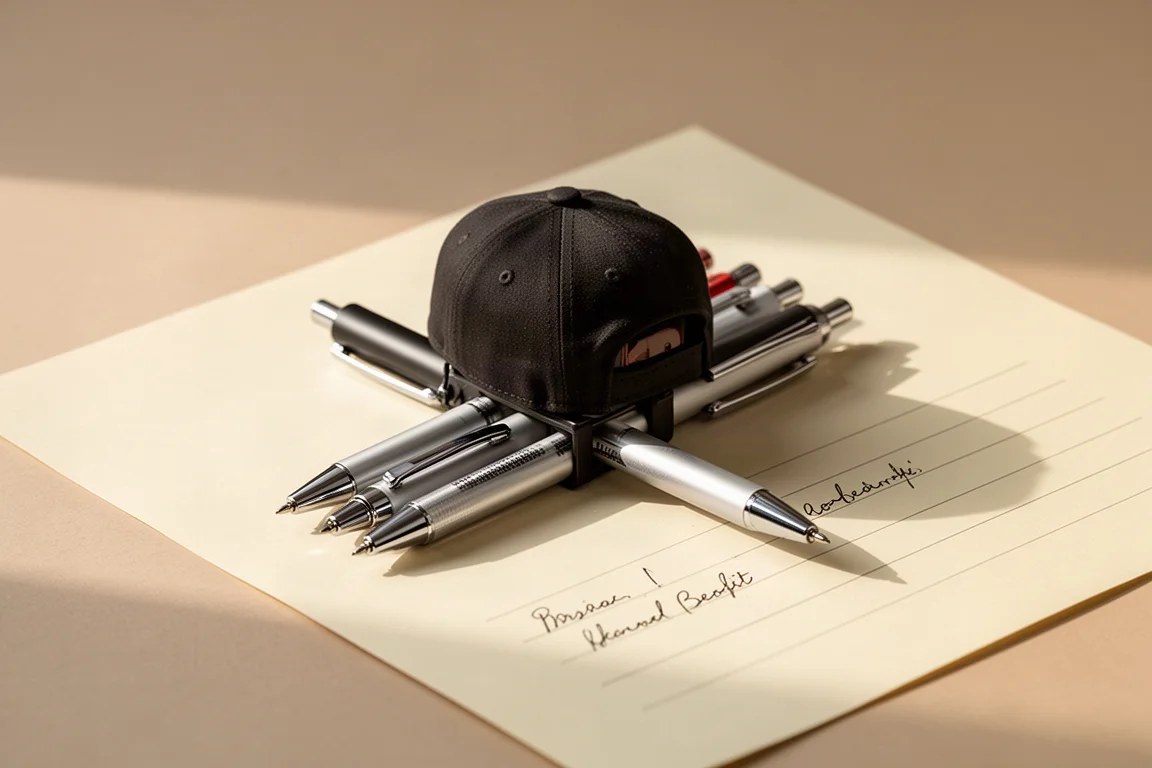
The grip is deliberately resin rather than metal for a softer, non-slip feel, with metal placed inside to add weight and keep the center of gravity low. The cap closes magnetically and weighs just 6.6 g, slightly lighter than the 505MF’s despite the magnets, a sign of careful tuning. Its twist-action knock is designed to be used while posted, the lower section meshing with the inside of the cap, and the tip locks securely whether extended or retracted, with a satisfying precision-knock sound. A subtle front color indicator provides just enough information without compromising the design. Unlike the 505MF, there is no pencil mechanism.
Writing Experience Compared
The 505MF’s oil-based ink sits on the firmer side and is a pleasure for those who like that feel, with almost no tip wobble, which is rare in a multi-pen. The pencil mechanism writes just as comfortably. The Uni-ball One P offers nearly zero tip wobble as well, and despite being water-based it never feels runny. Its color payoff runs deeper than the 505MF’s oil-based ink, and the elastic water-based character is genuinely impressive, appealing even to writers who usually prefer low-viscosity oil-based inks.
Which One Should You Choose?
If you want a ballpoint and mechanical pencil in one, prefer thick, heavy instruments, or are drawn to a distinctive mechanism, the 505MF is the obvious pick. It also stands as a design piece worth enjoying in its own right, and it remains an exceptional multi-pen that would be hard to top even at a much higher price.
If you are a working professional who rarely reaches for a pencil, the Uni-ball One P fits better: black, red, and blue ballpoints in one, smooth next-generation water-based ink, and refined touches from the magnetic cap to the tactile twist mechanism. Rather than declaring a winner, these two pens show how expectations for a 5,000-yen writing instrument have evolved, with the newer model comprehensively surpassing its predecessor while matching its price.
Conclusion
The Zoom 505MF is a testament to how far ahead of its time a 2018 design can be, with postable cap mechanics that still feel fresh. The Uni-ball One P shows what modern engineering does with the same concept: lighter magnetic caps, secure tip locking, and superb water-based ink. Choose the 505MF for its pencil and character, the One P for its polish and writing feel, and you will be happy either way.
Product link
View more details for Tombow Zoom 505MF
This product is mentioned in the review. Check the specifications, options, and compatibility before buying.
View more details for Tombow Zoom 505MFFurther reading
Related Reviews
Stationery
Musgrave Pencils Review: Four Classic Pencils from Tennessee's Last Pencil Factory
We put four Musgrave pencils to paper, from the classic Harvest to the Unigraph 1200 drawing pencil, to see what a century-old Tennessee workshop can still do.
Stationery
Fountain Pen Tiers Explained: From Starter Pens to Luxury Grails
A practical overview of the different levels of fountain pens and inks, from a sub-$20 starter setup to Italian piston fillers and retractable gold-nib everyday carries.
Stationery
HP Premium 32 lb Copy Paper Review: A Fountain Pen Friendly Everyday Printer Paper
A heavy, smooth 120 GSM copy paper that handles fountain pens far better than standard printer stock, with only minor trade-offs in shading and sheen.