Cycling
TI Raleigh vs 2025 Trek Madone: Two Road Bikes, 45 Years Apart
A limited edition steel classic, a modern carbon race bike, and a set of pedal-based power meters: what back-to-back testing reveals about speed, comfort and the parts that genuinely moved on.
Introduction
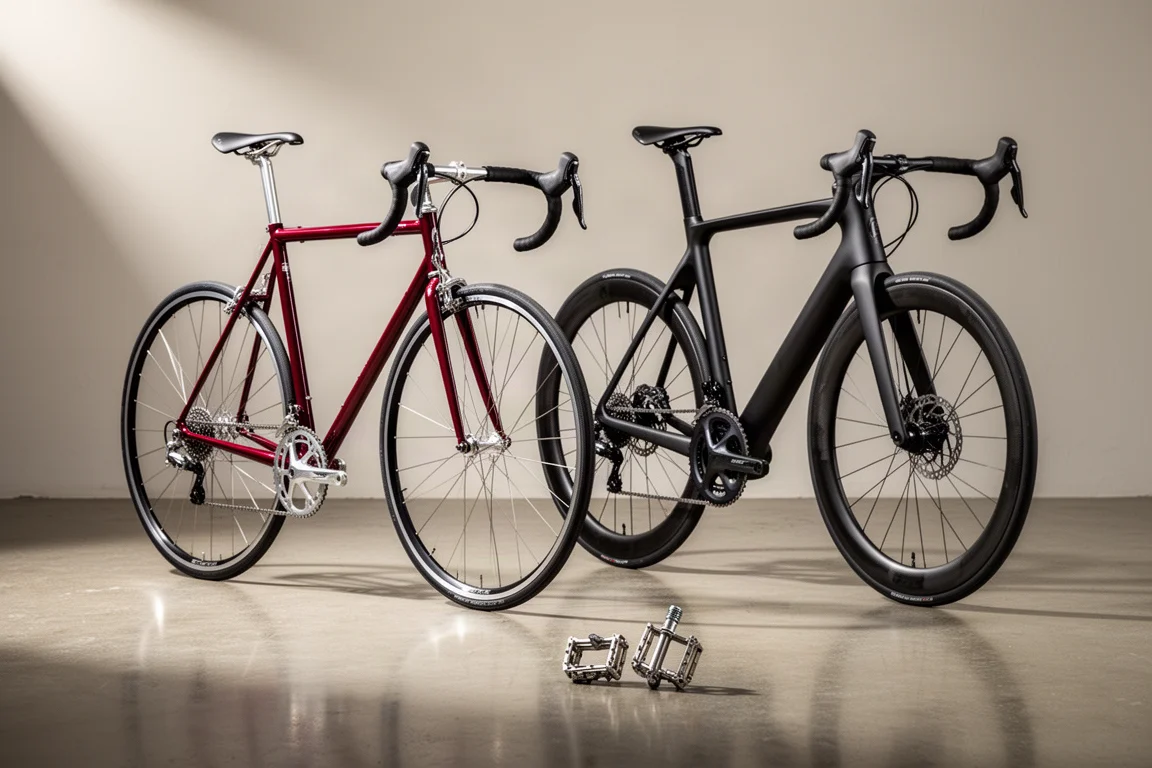
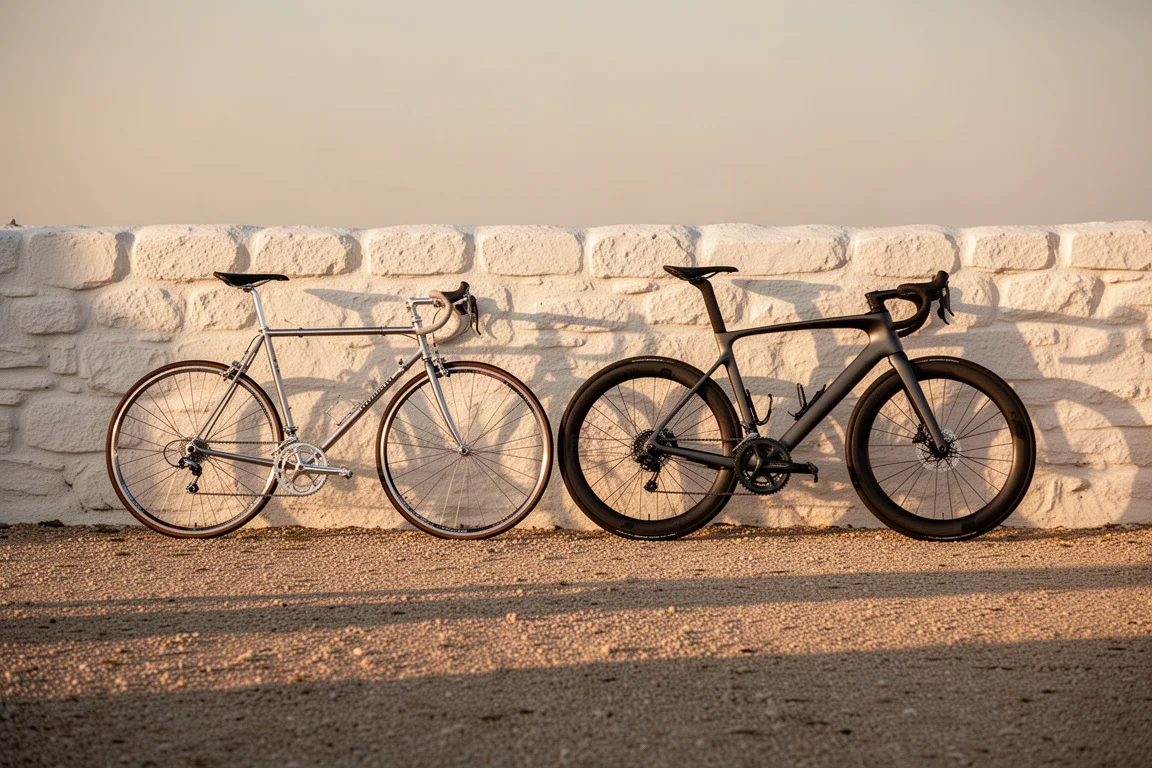
Forty-five years separate these two road bikes. One is a limited edition of the machine that won the 1980 Tour de France, built from thin steel tubing and fitted with rim brakes and down tube shifters. The other is a 2025 Trek Madone, a carbon fiber race bike with disc brakes, electronic gearing and tires that would have looked enormous in 1980.
The interesting question is not which one is prettier. It is what actually changed for the person turning the pedals. To find out, both bikes were ridden back to back over the same roads, on the same day, by the same rider, with a set of Favero Assioma Pro RS power meter pedals measuring the effort in watts.
How These Two Bikes and One Pedal Set Were Tested
Three tests shaped the comparison: a flat loop ridden at a fixed power output, a hill climb, and a sprint.
The flat test used a 10 kilometer loop that was not perfectly flat but was about as level as most real rides get. It was run on a still day, on traffic-free roads, with the rider targeting 250 watts on both bikes. The hill climb was close to one kilometer long at an average gradient of 10 percent. The sprint test was deliberately less scientific: it existed to show how each bike felt when asked for everything at once.
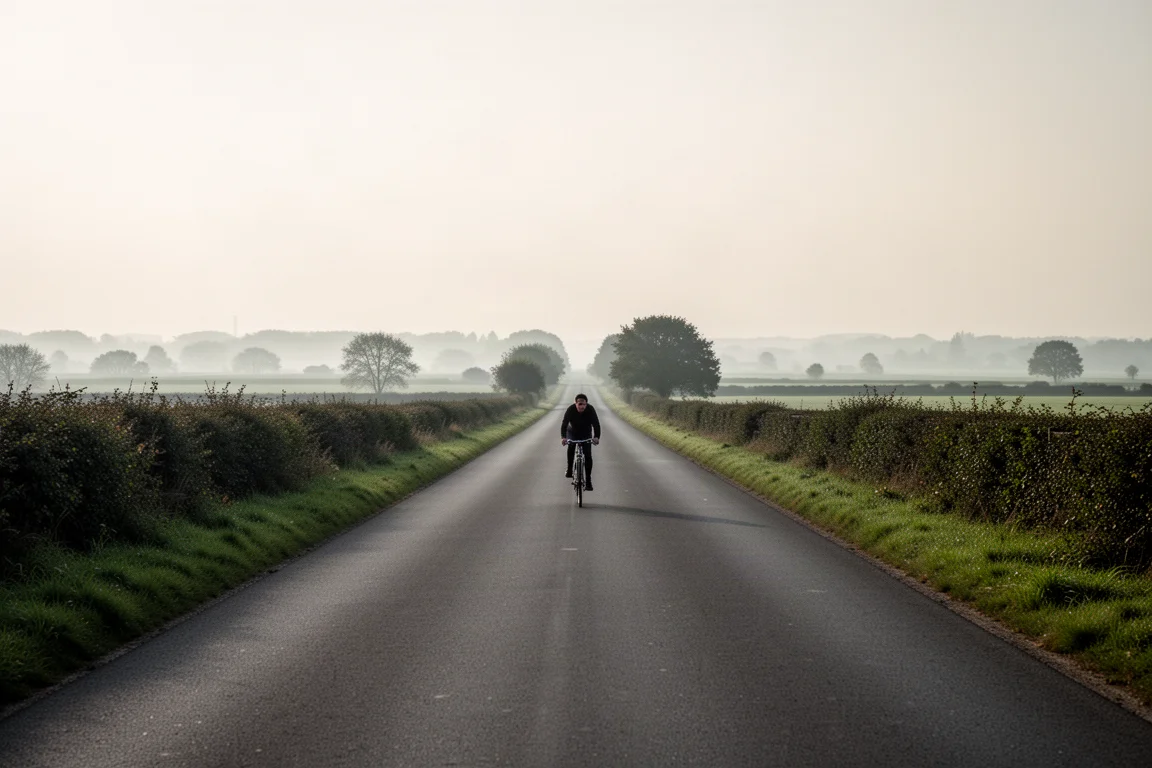
Real-world testing like this is not a wind tunnel, so the numbers are best read as a guide rather than a laboratory result. What makes the comparison useful is that the rider, the roads, the weather and the measuring device all stayed the same across both bikes.
TI Raleigh: A Limited Edition Steel Classic
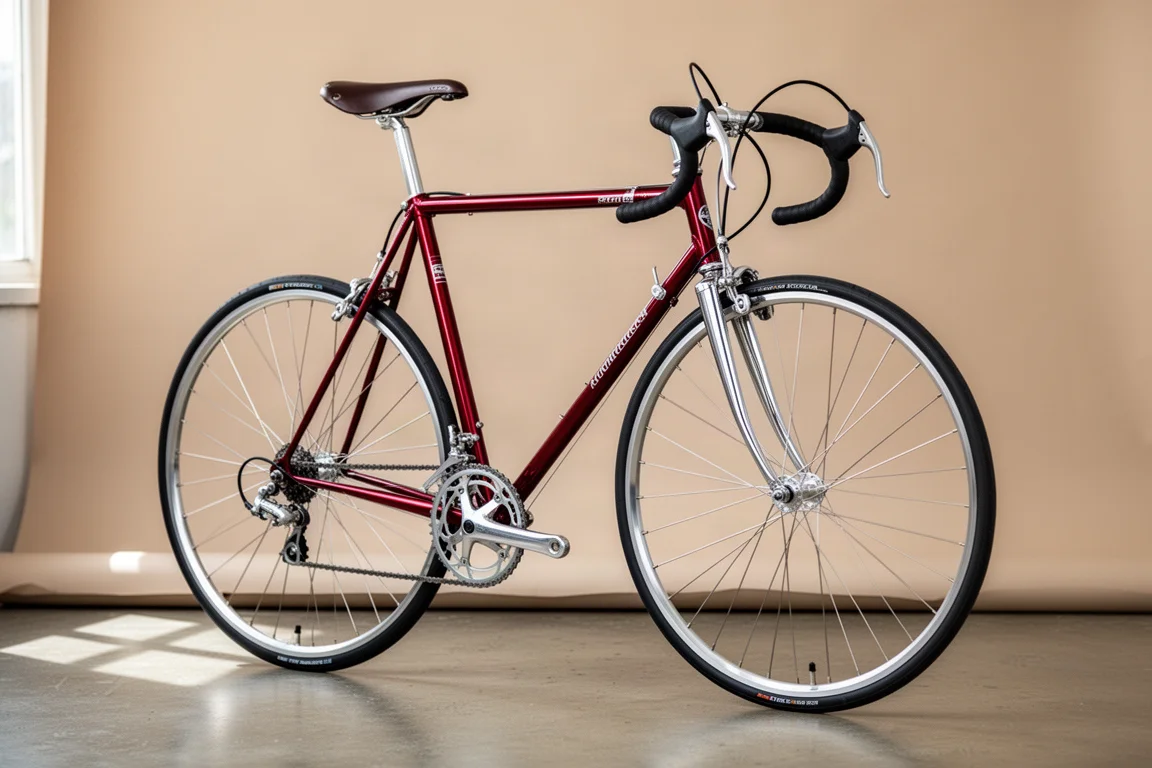
The TI Raleigh is a limited edition tribute to the bike that won the 1980 Tour de France. Its frame uses Reynolds 753 tubing, a steel that was remarkable at the time because the walls could be drawn so thin that the frame had to be silver brazed at a lower temperature to avoid damaging them.
Everything about it on the road is of its era. Rim brakes slow the wheels. Gears are changed by reaching down to levers mounted on the down tube. The tires measure 23 mm, which was considered generous at the time. On the scales it weighed 9.8 kg with the pedals fitted.
In the flat test, the Raleigh completed the 10 kilometer loop in 17 minutes 30 seconds at roughly the target power. Riding it at the same speed as the modern bike would have required somewhere in the region of 15 to 20 additional watts. On the hill climb it recorded 3 minutes 27 seconds, and average cadence was around eight revolutions per minute lower than on the carbon bike.
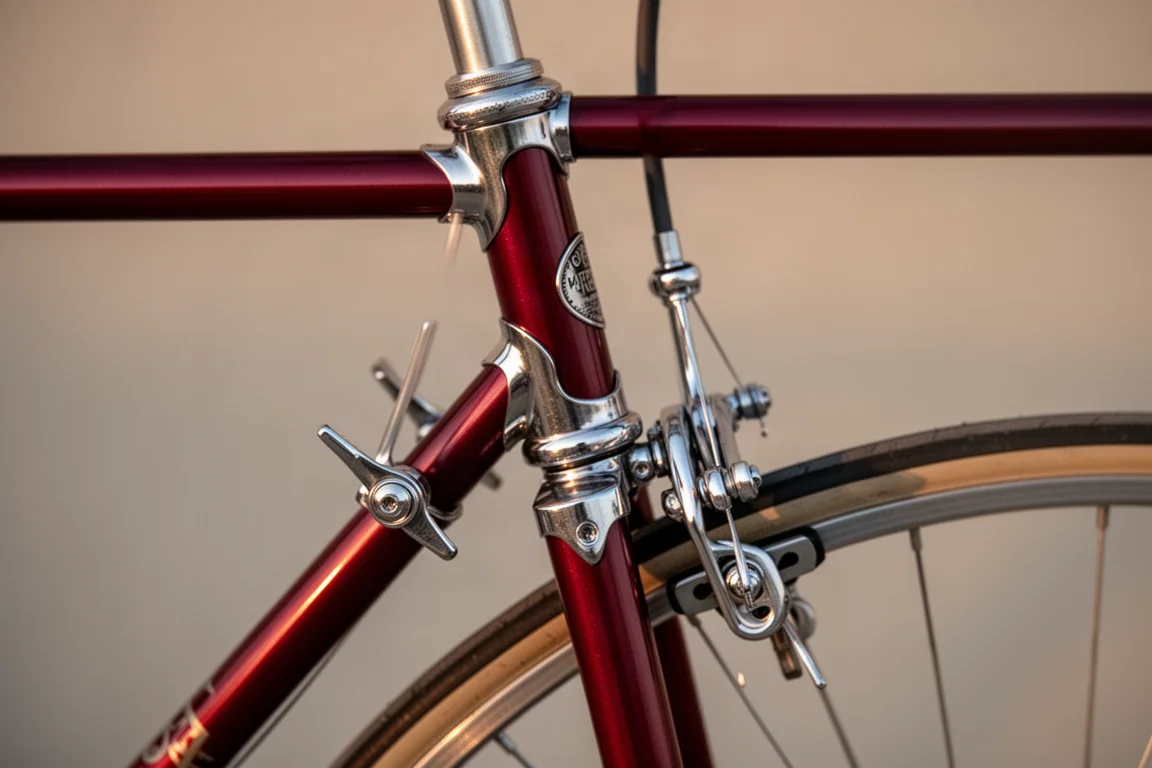
The gearing is where the experience changes most. Down tube shifters mean taking a hand off the bars for every gear change, and the range is narrower, so a steep gradient leaves fewer options. The indexed shifting itself worked beautifully, with each gear easy to feel through the lever. Sprinting on it was involving in a way that is hard to fake, though reading exactly which gear you are in during a full effort takes practice.
2025 Trek Madone: The Modern All-Rounder
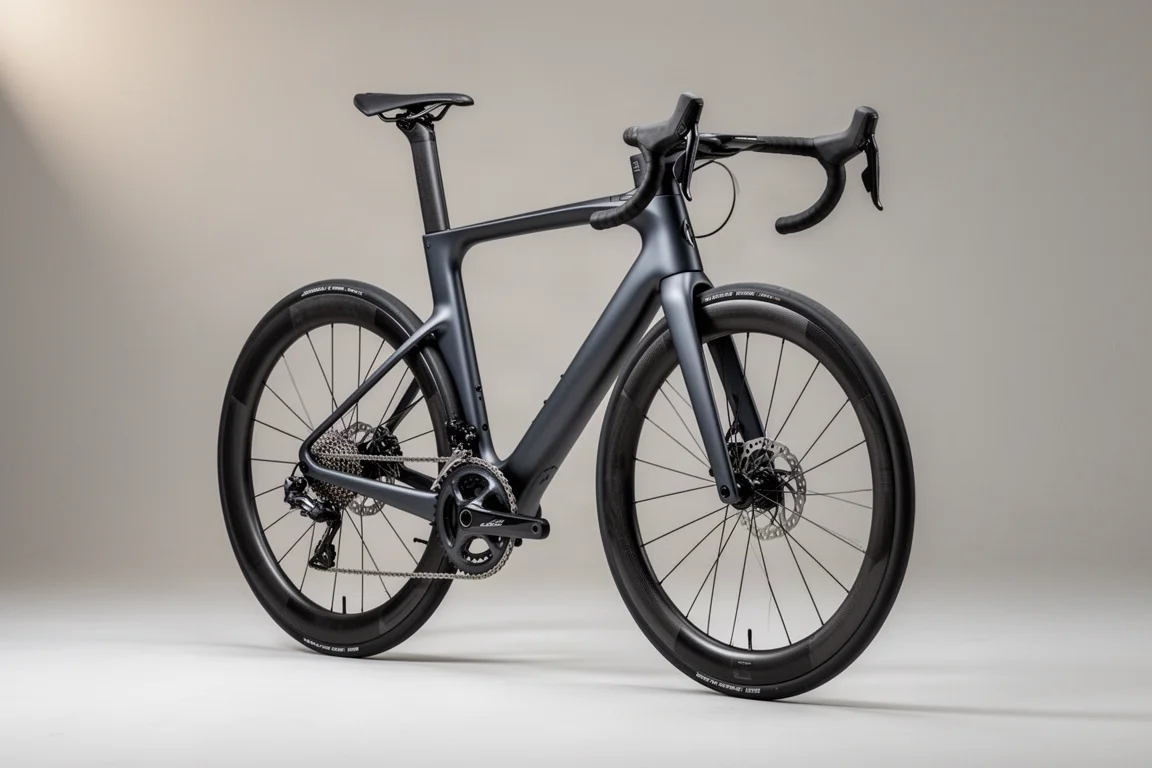
The 2025 Trek Madone reflects a shift in how a modern race bike is conceived. Where there used to be a dedicated aero model and a separate climbing model, this generation is designed to cover both jobs. The tubes are noticeably slimmer than the previous, fully aero-focused version, and the frame is claimed to be as aerodynamic as before, a figure measured with aero bottle cages fitted.
The build tested here is not the lightest Madone available, and the wheels are not the lightest option either, yet the bike still weighed 8.45 kg on the scales. It carries a carbon frame, carbon wheels, carbon handlebars, disc brakes and a 12-speed electronic groupset, rolling on 28 mm tires.
On the flat loop it was 26 seconds quicker than the steel bike at comparable power. On the hill climb it was two seconds faster despite lower average power. The most obvious difference was not the clock, it was comfort: less road vibration through the hands and the saddle, a bottom bracket that felt like it translated power more directly, and a chunkier cockpit whose hoods were far more comfortable to hold. The rider also changed gear more often and spent more of the climb seated, because there was simply more range to work with.
Favero Assioma Pro RS: Power Data Across Every Bike
The Favero Assioma Pro RS made the comparison possible. Pedal threads are one of the very few standards that have not changed in 45 years, so a single set of pedals fitted both bikes, and moving them between machines takes only minutes.
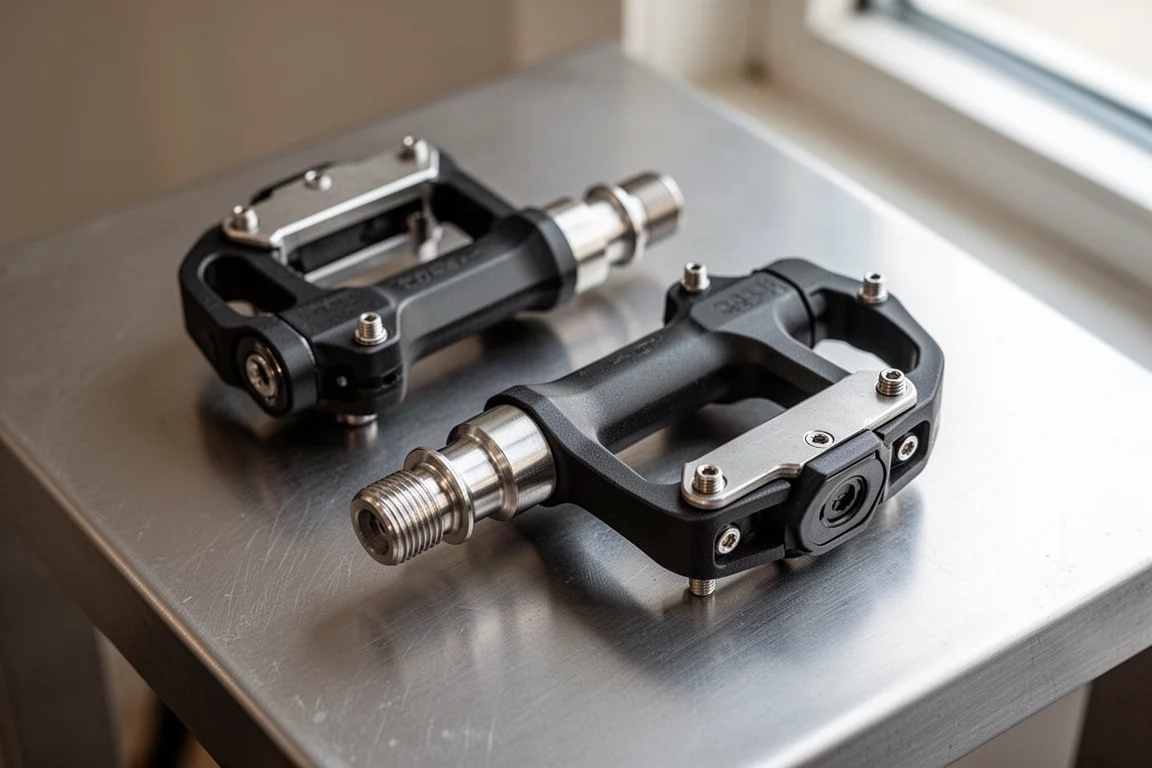
All of the electronics live inside the stainless steel axle: the battery, the strain gauges and the gyroscopes. That means there are no external pods to knock against a curb or catch on a shoe, and accuracy is quoted at plus or minus 1 percent. Each pedal is claimed to weigh 123.5 grams, which would make these the lightest power meter pedals available. They work with Shimano-style cleats, so there is no need to change pedal systems on an existing bike.
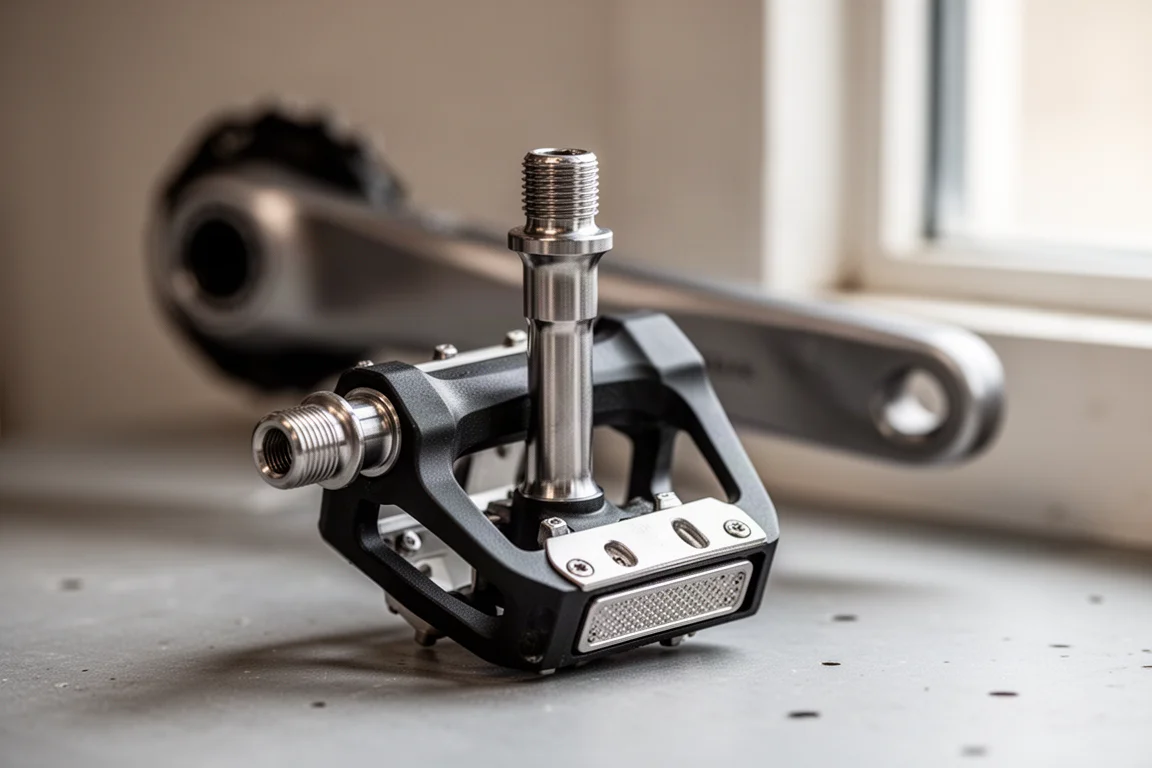
The design also leaves the ride unchanged. Stack height, the distance from the pedal axle to the cleat, is 10.5 mm, which is low for a power meter pedal, and the Q-factor of 53 mm matches a standard road pedal. The pedal bodies can be removed with an Allen key, so the same axles can be paired with off-road pedal bodies for a mountain or gravel bike.
A dual-sided set was used for this test. A single-sided version is also available, and it can be upgraded to dual-sided later.
What 45 Years of Progress Actually Buys You
Look only at the stopwatch and the gap between these two bikes is smaller than most people would guess. The modern bike was faster, but by seconds rather than minutes, and a large part of that came down to the rider rather than the equipment. Around 80 percent of the air resistance a cyclist fights comes from the body, not the bike.
Where the decades show up clearly is comfort and ease of use. The carbon bike was smoother over rough surfaces, easier to shift, easier to hold on the hoods, and easier to ride hard without thinking about it. The steel bike demanded more involvement and rewarded it with character, but a hand had to leave the bars for every gear change and the narrower range made steep gradients harder work.
Geometry and frame materials are where the real evolution sits. Modern race bikes are shaped so a rider can get on and ride to their potential almost immediately, whether that means a sprint, a climb or a long day out. The steel classic is a machine you ride deliberately, not one you simply get on.
Which Bike and Which Pedals Make Sense for You
If the goal is to ride fast with as little friction as possible, the modern carbon race bike is the straightforward answer. It is more comfortable, more confidence-inspiring in corners, and it asks less of the rider. For anyone buying one road bike to cover everything from fast group rides to long weekend loops, that is the sensible direction.
The steel classic is a different proposition. It is a limited edition with genuine racing history behind it, and the ride is an event in itself, which is exactly what makes it appealing for a Sunday ride to the cafe or as a collector’s bike. It is not the choice for someone chasing personal bests, and its narrower gearing and down tube shifters ask for a different kind of attention.
The power meter pedals are the one piece of equipment here that makes sense for almost any rider. They fit any bike with standard pedal threads, they can be moved between bikes in minutes, and they are the clearest way to know whether the difference between two rides is the bike or the legs. For riders who already own a bike they like, pedal-based power measurement delivers the most usable information for the money.
Conclusion
Put a 1980 Tour de France winning design and a 2025 carbon race bike on the same roads and the honest result is this: the modern bike is faster, but the margin is modest. What has genuinely improved is everything around the speed, from comfort and braking to shifting and tire volume. The steel classic remains a beautiful thing to ride, and the power meter pedals are what turn a subjective feeling into numbers you can act on.
Further reading
Related Reviews
Cycling
2026 Bike of the Year and the Cycling Gear Worth Watching
A drop bar roundup for 2026 covering the Ridley Kanzo Fast 2.0, Shimano Dura-Ace Di2 R9300, Trek Checkpoint ALR Gen 3, Specialized Tarmac SL9, Garmin Fenix 9 and Insta360 X6.
Cycling
Best All-Road Bikes 2026: Six Versatile Endurance Road Bikes Worth Considering
A practical look at six all-road and endurance road bikes, from lightweight carbon speed machines to steel all-rounders and comfort-focused mile eaters.
Cycling
Best All-Road Bikes 2026: 8 Endurance Bikes for Road and Light Gravel
Eight all-road bikes that blur the line between endurance road and light gravel, compared on tire clearance, ride character, practicality, and value.