Travel Bags
Thule Landmark 40 vs Kathmandu LightHaul 38: Two Full-Featured Travel Duffels Compared
Two carry-on-sized travel duffels with padded laptop compartments, stowable backpack straps, and very different approaches to organization. Here is how they stack up.
Introduction
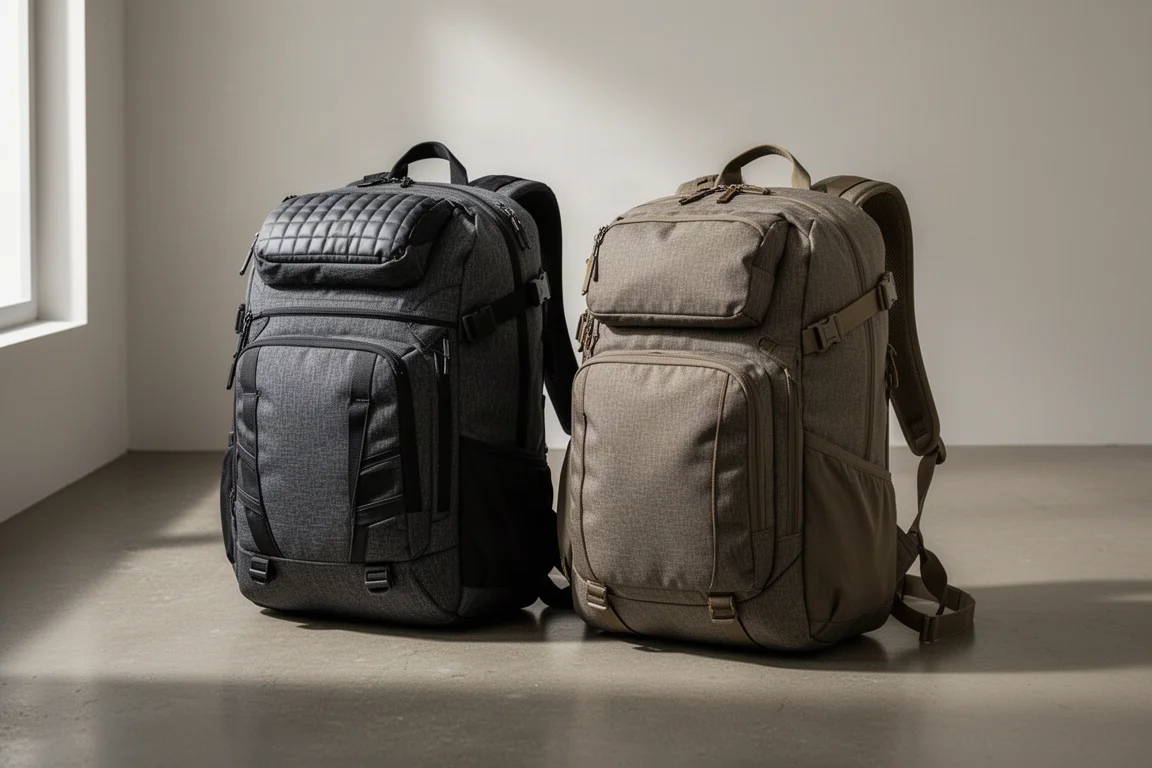
If you want a full-featured travel duffel, the Thule Landmark 40 and Kathmandu LightHaul 38 are two of the more interesting options around. Both packs include features you rarely see on duffels, such as a padded laptop compartment, external water bottle pockets, and stowable backpack straps, which makes each one usable as both checked-style luggage and a carry-on travel backpack.
Because they are so similar on paper, it is worth comparing them side by side. Both also come in multiple sizes: the Landmark is available in 40, 60, and 70 liter versions plus a women’s fit for shorter torso lengths, while the LightHaul comes in 28, 38, 48, and 65 liter versions. The 40 and 38 liter models covered here are the largest that still work as a carry-on, though they are too big to double as a personal item.
Size and Capacity
The two packs are nearly identical in capacity and dimensions. The Landmark offers a slightly larger 40 liters against the LightHaul’s 38, and both measure roughly 22 by 13 inches, with a depth of about 9 to 10 inches depending on how fully you pack them, or around 56 by 33 by 23 to 25 centimeters. In practice, the difference in real carrying capacity is small.
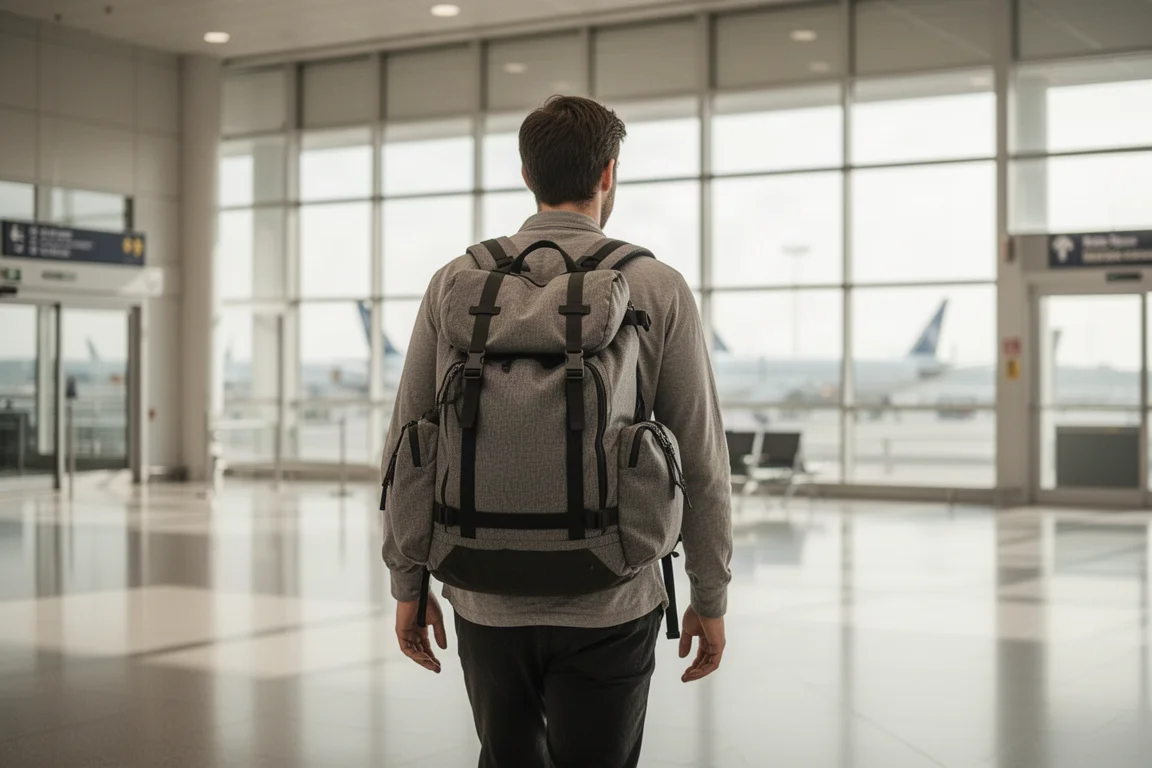
If you are choosing between them, size will rarely be the deciding factor. Fit, organization, and how the harness feels on your back matter far more than the two-liter difference.
Materials and Hardware
Both bags use good quality materials and hardware, with different styling but comparable substance. Each uses a medium denier polyester fabric, and both main compartments run on a number 8 YKK zipper that locks on the main compartment. The LightHaul adds a few more locking options, including a locking zipper on the laptop compartment, which the Landmark does not have.
Buckles and hardware are decent nylon on both, with a slight edge to the Landmark, which uses Duraflex hardware, while the LightHaul uses Illusion hardware. Neither bag cuts corners here, but if lockable laptop access matters to you, the LightHaul has the advantage.
Exterior Organization
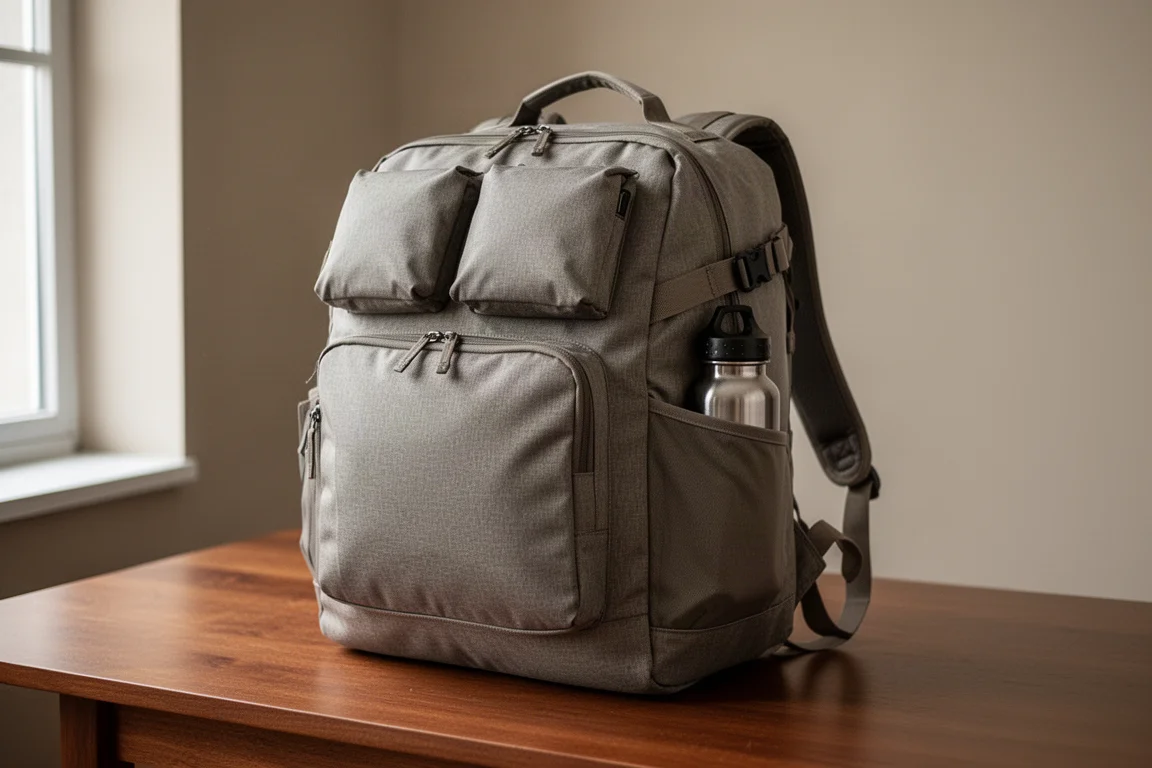
The exterior layouts share the same core features, a laptop compartment, water bottle pocket, and a large top pocket, but the designs differ noticeably. The Landmark’s top pocket is a heavy, padded tech pouch with thick firm padding on top, a mesh pocket on one side, and another zippered pocket on the bottom. The LightHaul instead has two very large unpadded top pockets: one works well as a shoe compartment or dirty laundry spot, and the other functions as a tech pouch with a fuzzy lining but no padding.
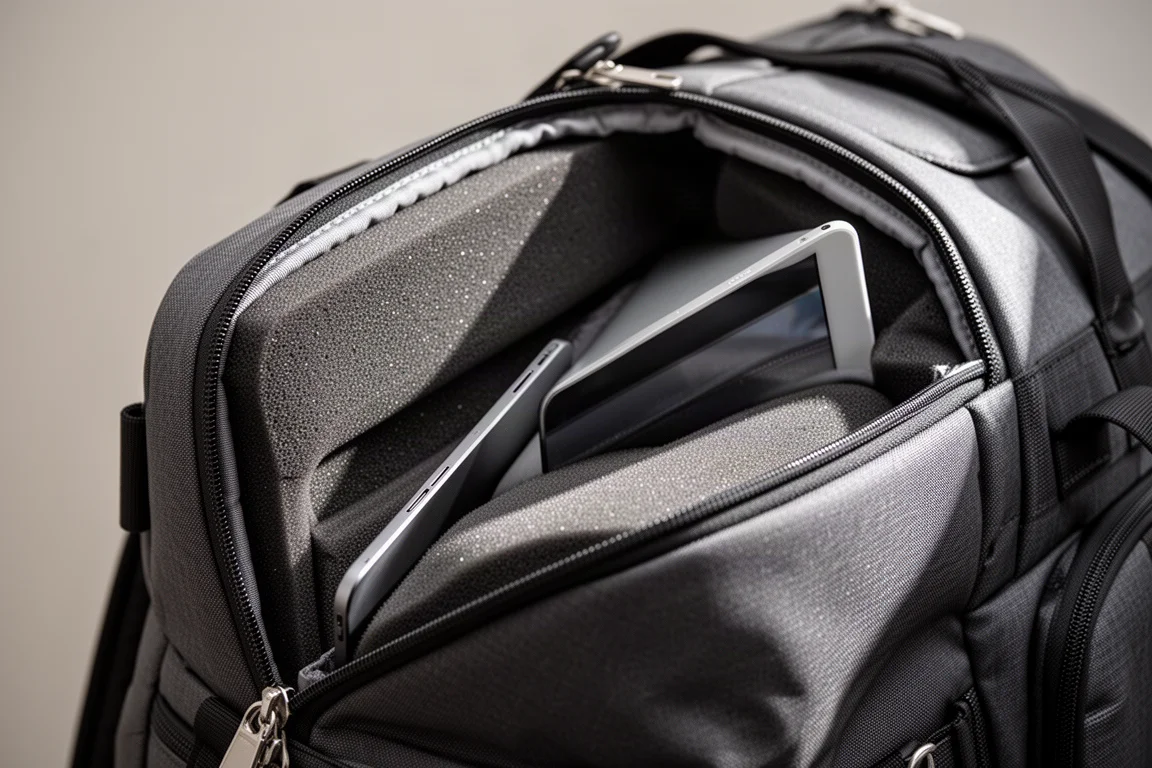
In short, gear in the Thule pocket is much better protected, but that padded pouch is heavy and takes up space inside the pack. The LightHaul’s pockets consume almost no internal space, at the cost of padding.
Laptop Compartments
The laptop compartments are almost identical: large side-facing pockets on the back of the bag with thick, firm back padding. The main difference is the LightHaul’s locking zipper on this compartment. Inside, the Landmark uses a thicker piece of softer foam, while the LightHaul lines the compartment with a simple piece of fabric. Neither has a false bottom, but both include some padding at the bottom to protect the laptop, and the Landmark adds an extra sleeve for a 13-inch tablet.
Water Bottle Pockets
The water bottle pockets on these versions are very different. The Landmark uses a large side-opening zipper with a huge pocket that easily holds a one-liter bottle. The LightHaul pocket can also fit a one-liter bottle, but it works much better with smaller bottles. Note that the LightHaul has been updated recently, and newer versions now use a similar style to the Landmark’s, so check which version you are buying.
Carry System and Comfort
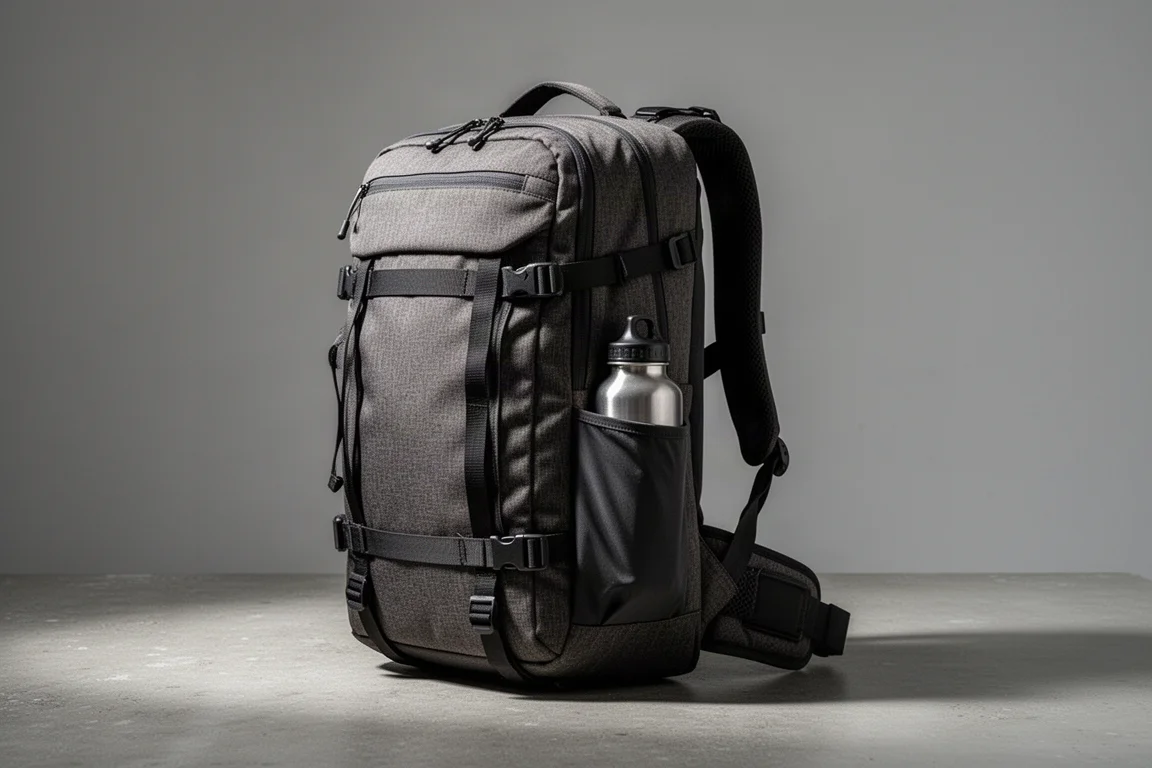
Both bags have comfortable straps and hip belts, and both carry systems are stowable. On the LightHaul, the entire harness zips behind a fabric panel. On the Landmark, you tuck the shoulder straps in from the top and the hip belts tuck in from the sides behind the back padding. Both work well, though the LightHaul is noticeably quicker and easier to stow, while the Landmark takes a minute to stuff the straps into place.
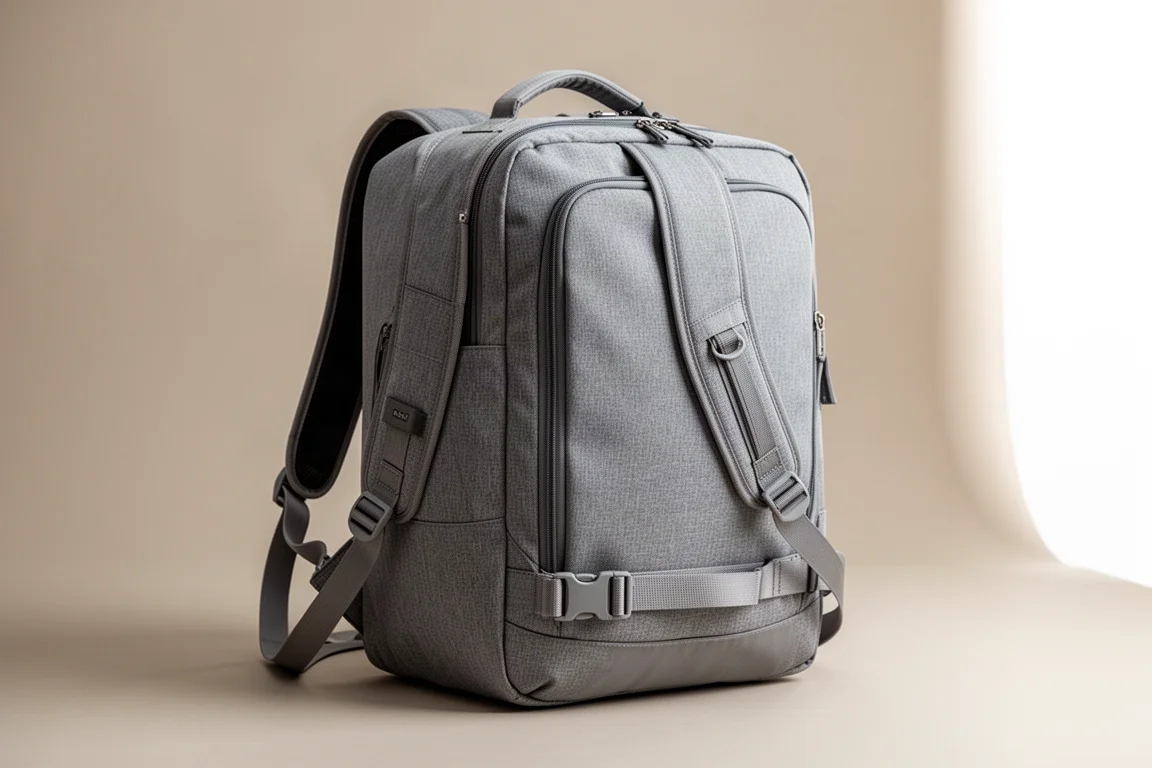
The straps themselves are very similar: wide, thick, and padded with mesh backing and an adjustable sternum strap on both. The LightHaul adds top load adjusters, which is a nice touch on a pack this size. Both have a padded hip belt with a large strap and big buckle. The Landmark’s hip belt padding is a little wider and longer, but the LightHaul’s is thicker with good air ventilation and a curve that fits the back well. The Landmark’s padding is also comfortable but more minimalist, using just two rows of foam.
Access and Interior Organization
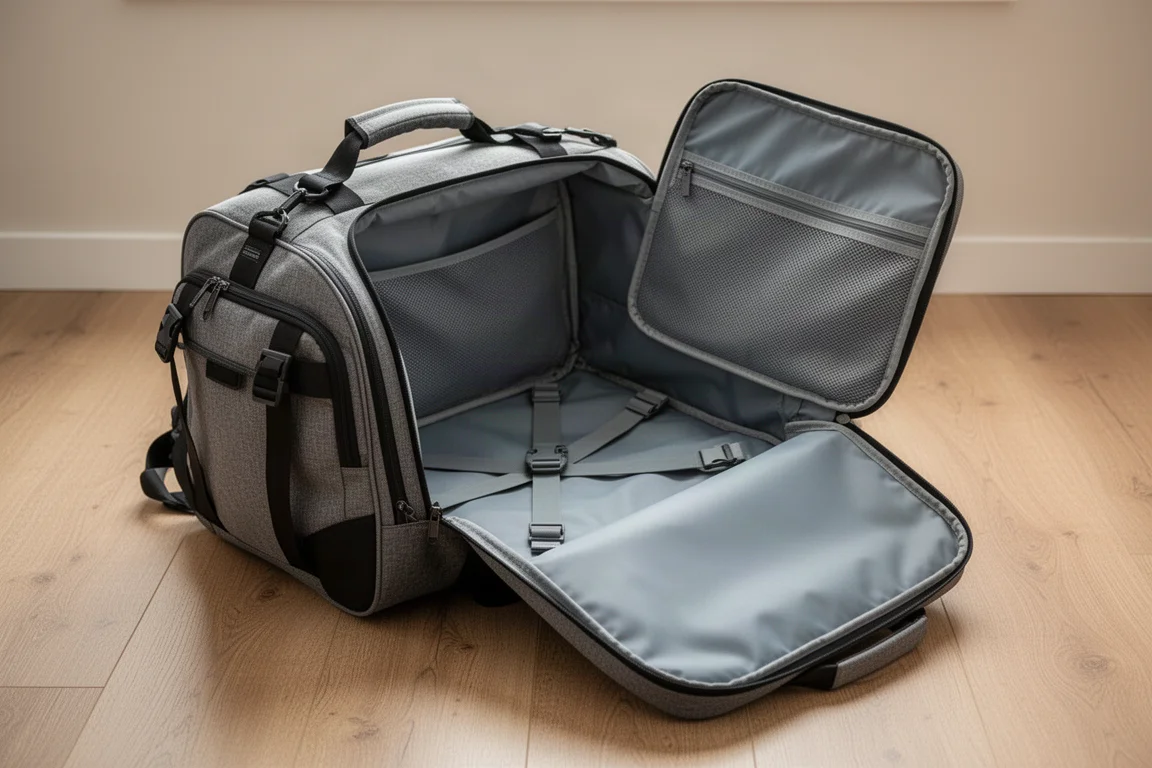
Access is very similar: a large side opening duffel lid that opens from the side into the main compartment. The Landmark’s main compartment looks and feels bigger, at roughly eight inches deep compared to the LightHaul’s five and a half. The LightHaul’s stated volume is a little lower at 38 versus 40 liters, but because its lid comes over the top of the bag, real packed capacity ends up very similar.
Inside, the Landmark has a mesh pocket in the lid, plus a couple of luggage tie-down straps, though its lid pocket is smaller. The LightHaul has a fabric panel leading into a much larger lid pocket, giving it more internal organization space.
Which One Should You Buy?
Choose the Landmark 40 if you value better protection for your gear, a deeper main compartment, a dedicated tablet sleeve, and slightly better Duraflex hardware. It suits travelers who pack electronics they want properly cushioned and who do not mind a few extra minutes stowing the harness.
Choose the LightHaul 38 if you want quicker and easier harness stowage, a locking laptop zipper, more locking options overall, better hip belt ventilation, and huge exterior pockets that do not eat into packing space. It is the more flexible option for mixed loads with shoes or laundry you want separated. If you need a different capacity, remember both lines offer smaller and larger versions, so the same design logic applies across the range.
Conclusion
These two duffels prove you do not have to choose between duffel simplicity and backpack travel. The Thule Landmark 40 leans toward protection and a deeper main compartment, while the Kathmandu LightHaul 38 emphasizes stowage convenience, lockable compartments, and space-saving external pockets. Either one is a strong pick for carry-on travel; the better choice comes down to how you pack and which organizational style fits your habits.
Further reading
Related Reviews
Travel Bags
Bubba Goose Duffel Review: A Featherweight 34L Duffel With Serious Materials
A minimalist X-Pac VX21 duffel from a Seattle workshop brand that weighs just over a pound while swallowing a huge main compartment.
Travel Bags
Carry-On vs Personal Item: Two Travel Bags Worth Comparing
A practical look at how much you can actually pack in a max-size carry-on duffel versus a personal-item-sized pack, and which travel style each suits.
Travel Bags
Double Oak Essentials Travel Bags: Weekender, Backpack, and Dop Kit Review
Three waxed canvas and full grain leather travel bags with YKK zippers and a lifetime warranty, reviewed up close.