Aquarium Filtration
Theiling RollerMat Review: Automatic Fleece Filtration for Reef Tanks
An automatic fleece roller filter that removes solid waste before it breaks down, plus the flow-rate, skimmer, and maintenance details worth knowing before you buy.
Introduction
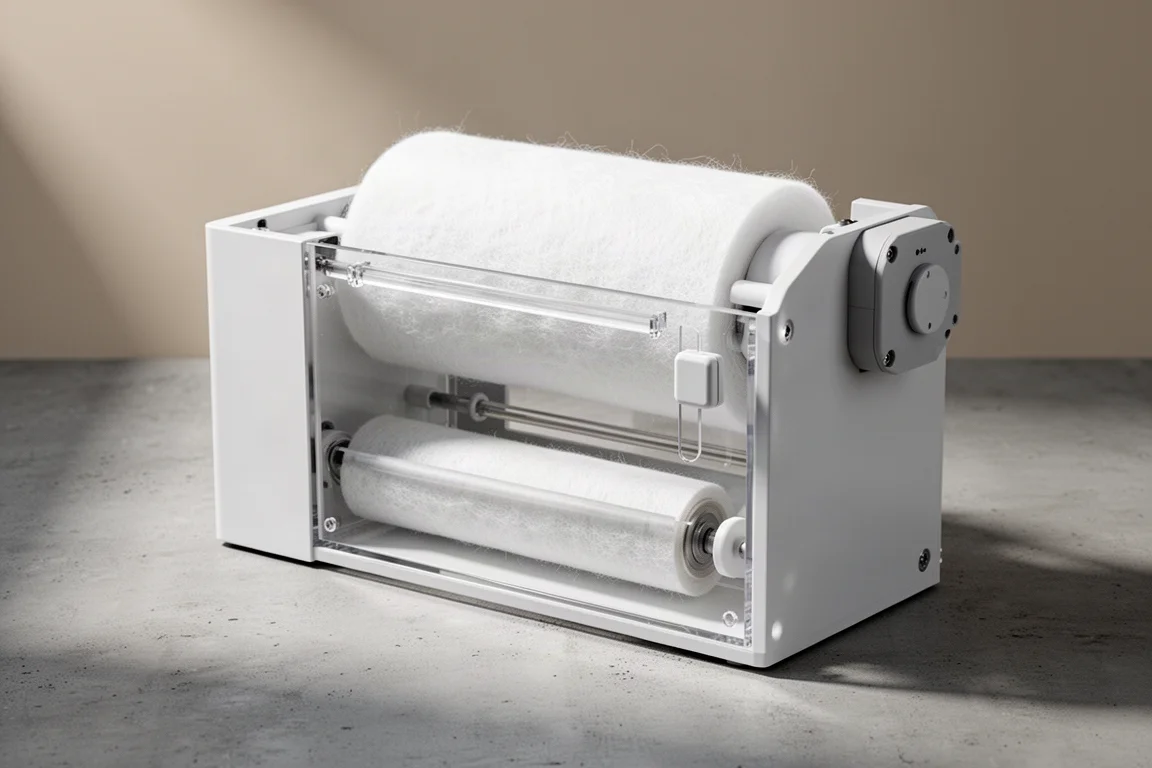
The Theiling RollerMat is an automatic fleece filter for reef aquariums. Instead of trapping waste in a sock that sits in the sump and slowly breaks down, it uses a roll of filter paper that advances when the water level inside the unit rises, carrying captured waste out of the system. The result is filtration that removes large particles before they have a chance to decay and feed nitrate and phosphate problems.
That effectiveness is the whole point, and it is also the thing that shapes how you should set it up. A roller filter changes the balance of the rest of the filtration in a tank, and getting the most from it means thinking about plumbing, flow rate, and skimmer sizing rather than simply dropping it in.
Who the Theiling RollerMat Is For
This is a filter for reef keepers who want to take solid waste out of the water column early, rather than letting it break down and relying on a skimmer to clean up what is left. It suits tanks where the drain can feed the unit directly.
Flow capacity is the practical limit. The RollerMat has a maximum flow rate of 500 gallons per hour. For a 100-gallon tank that is roughly five times turnover per hour, which is more than enough. Run at about two and a half times turnover, the same unit suits a tank up to around 200 gallons.
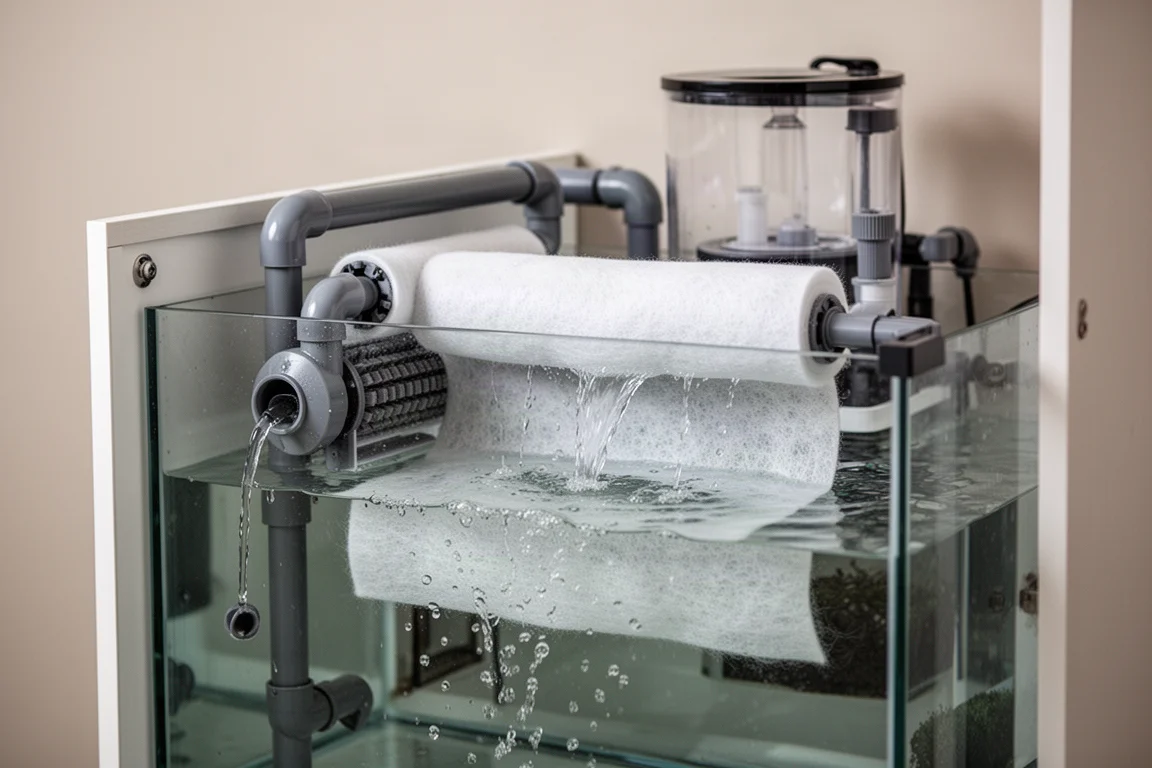
If your overflow moves more water than the unit can handle, you do not have to route all of it through the fleece. Splitting a single drain, using two drains, or teeing off above the unit lets you send part of the flow through the filter and the rest around it. Capturing even half of the solid waste before it degrades is a meaningful step up from a filter sock.
Main Strengths: Waste Removed Before It Breaks Down
The core advantage is timing. A filter sock catches waste, but much of it continues to deteriorate in the sock and returns to the tank in smaller particles. A roller filter captures the same material and then rolls it out of the system, so the waste leaves before it can break down further. Whole pieces of food, shrimp, and other solids from frozen feeding are removed rather than dissolved into the water.
That is a different level of nutrient export. The RollerMat can end up being the most effective filtration and nutrient removal component in a system precisely because it intercepts material before it becomes fuel for algae and nuisance growth.
Installation Options: Overflow Versus Recirculating Pump
There are two ways to feed the unit, and they do not perform the same.
Plumbing the RollerMat off the overflow is the better installation. Everything that goes down the drain, including pellet food, waste, and pieces of frozen food, lands directly on the fleece and is rolled out of the tank. Nothing has to be drawn in.
The alternative is to place a pump in the sump and recirculate water through the unit. It is much easier to install, especially if the tank is already plumbed, and it still delivers some of the benefits. What it captures is mostly material that has already broken down into smaller particles, because the unit has to pull that material in rather than receiving it. It works, but it is not the same result as an overflow feed.
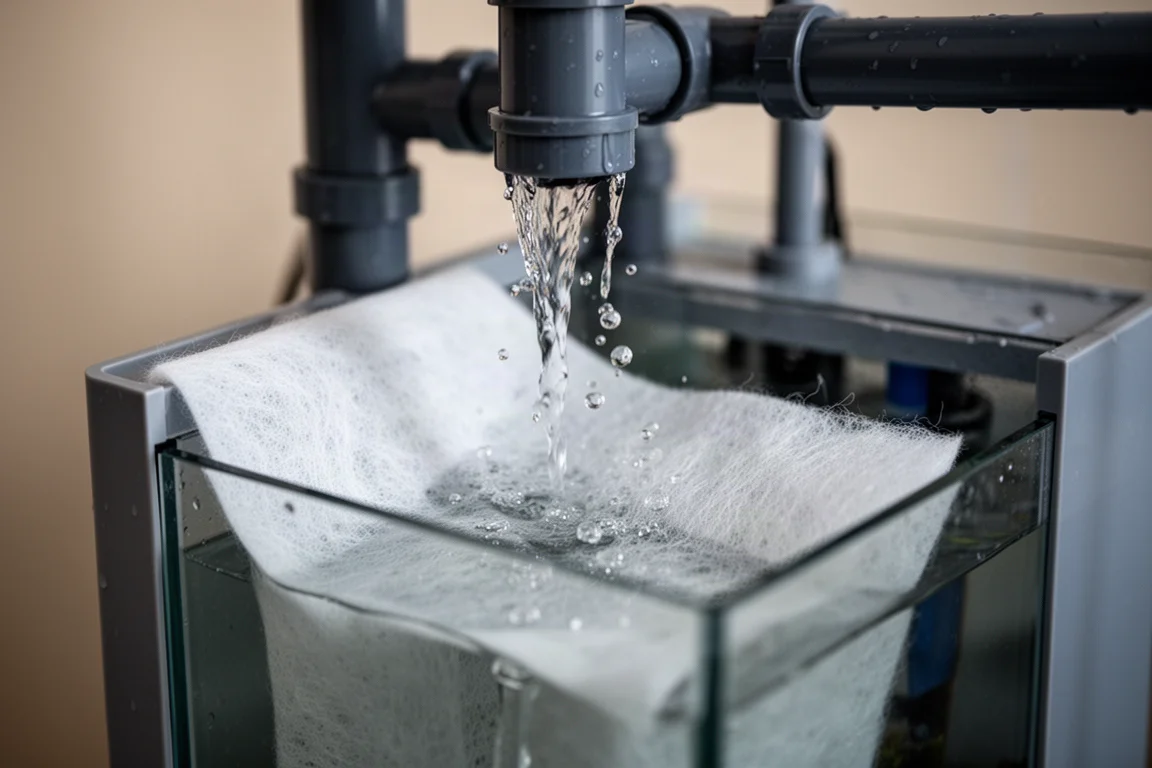
One practical note on fittings: the unit ships with barb fittings, and a 1.5-inch union threads directly onto the top. That makes hard plumbing straightforward and, just as usefully, makes the unit easy to remove for maintenance.
Adjustability: How Flow Rate Changes Performance
Flow rate is the main control you have over how aggressively the RollerMat filters, and it changes both how much waste is captured and how quickly it leaves the tank.
Inside the unit there is a float switch. As the fleece clogs, water backs up, the level rises, the float trips, and the motor advances a section of paper. Lower flow through the unit creates less back pressure, so the level rises more slowly, the paper advances less often, and a roll lasts longer. Some of the captured material also has more time to degrade in the tank before it is removed.
Higher flow does the opposite. Back pressure builds sooner, the fleece clogs faster, the paper advances more often, and waste is pulled out faster, before it has a chance to decay.
That makes the unit tunable to your tank. If nitrate and phosphate are climbing and filtration is not keeping pace with feeding, increasing flow through the RollerMat removes more, sooner. If those numbers are sitting at zero, reducing flow softens the filtration and slows paper consumption at the same time. Turning down the overflow or diverting some water around the unit are both legitimate ways to make that adjustment.
Things to Consider Before Buying
The most important consideration is that this filter can be too effective. Combined with a high-powered skimmer and other equipment, a roller filter can strip a tank down to zero nitrate and zero phosphate. For a tank full of coral that consumes nitrogen and phosphorus, that is not a good outcome.
Protein skimmers need organic material to work. When the RollerMat removes large particles before they break down, that material never becomes skimmable, and an oversized skimmer ends up with nothing to pull. The practical response is to size the skimmer down or rebalance the system around the roller filter, since oversized skimmers generally perform worse than correctly sized ones.
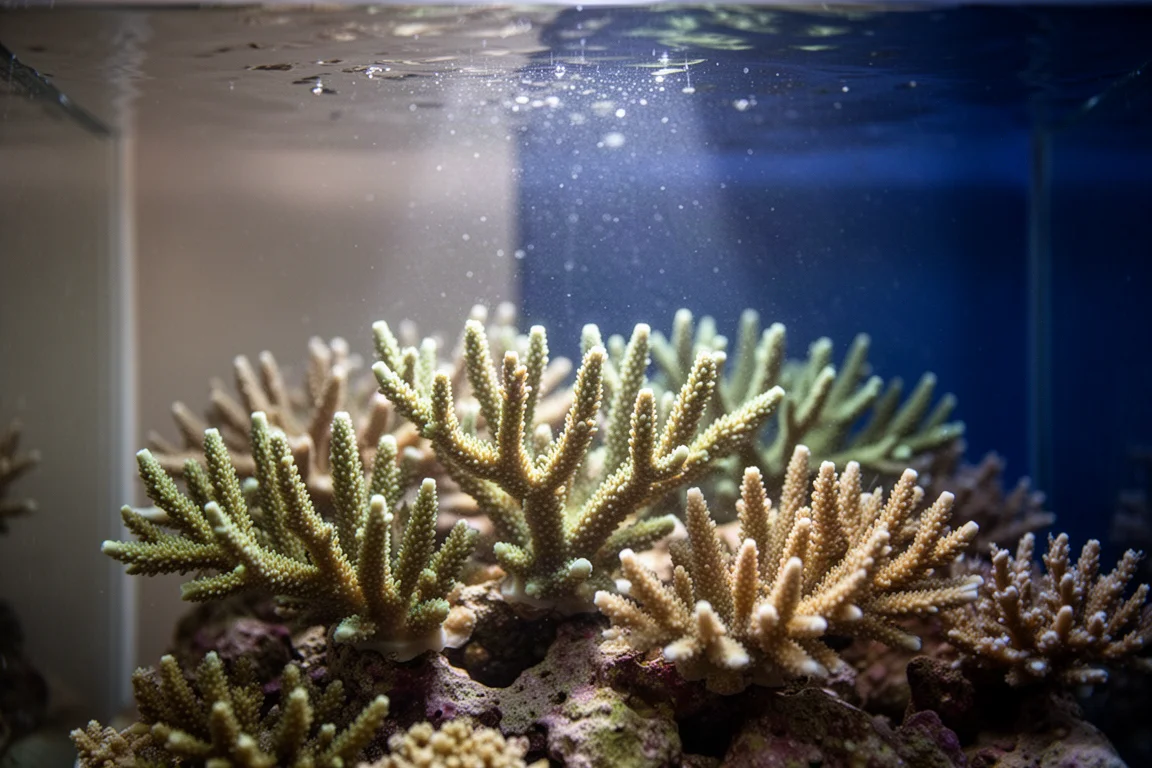
Skimmer ratings also deserve a second look. They are often judged against fish load, but what actually matters is how much food goes in to support those fish. If the RollerMat is capturing a large share of that input, the skimmer does not need to be as large.
Maintenance and Consumable Rolls
There is one moving part that needs attention: the float switch. It is a standard float, and like the float in an auto top-off system it collects a film of grime over time. Cleaning it roughly quarterly is enough to keep it working reliably. If it sticks, the unit will either waste paper or let water run over the edge. There is an overflow port for exactly that situation, which sends water into the sump and makes enough noise to tell you something needs attention.
The other consumable is the fleece itself. Keeping spare rolls on hand matters, because a roller filter with no paper is not filtering. Three rolls in reserve is a reasonable buffer, particularly since the rolls are imported from Europe and occasionally take longer to arrive. The rolls themselves are inexpensive, so stocking up is a small cost against interrupted filtration.
Buying Advice
The RollerMat rewards a little planning. Decide first how it will be fed. An overflow installation delivers the full benefit, while a recirculating pump is the simpler route when the tank is already plumbed.
Then think about the rest of the filtration. If you run a large skimmer, expect to adjust it or move to something smaller so the two systems are balanced. Plan the plumbing, take advantage of the 1.5-inch union thread on top if you want a clean hard-plumbed install, and keep spare fleece rolls in the cabinet.
Finally, treat flow rate as a dial rather than a fixed setting. Start at a sensible turnover for your tank size, watch nitrate and phosphate, and adjust from there.
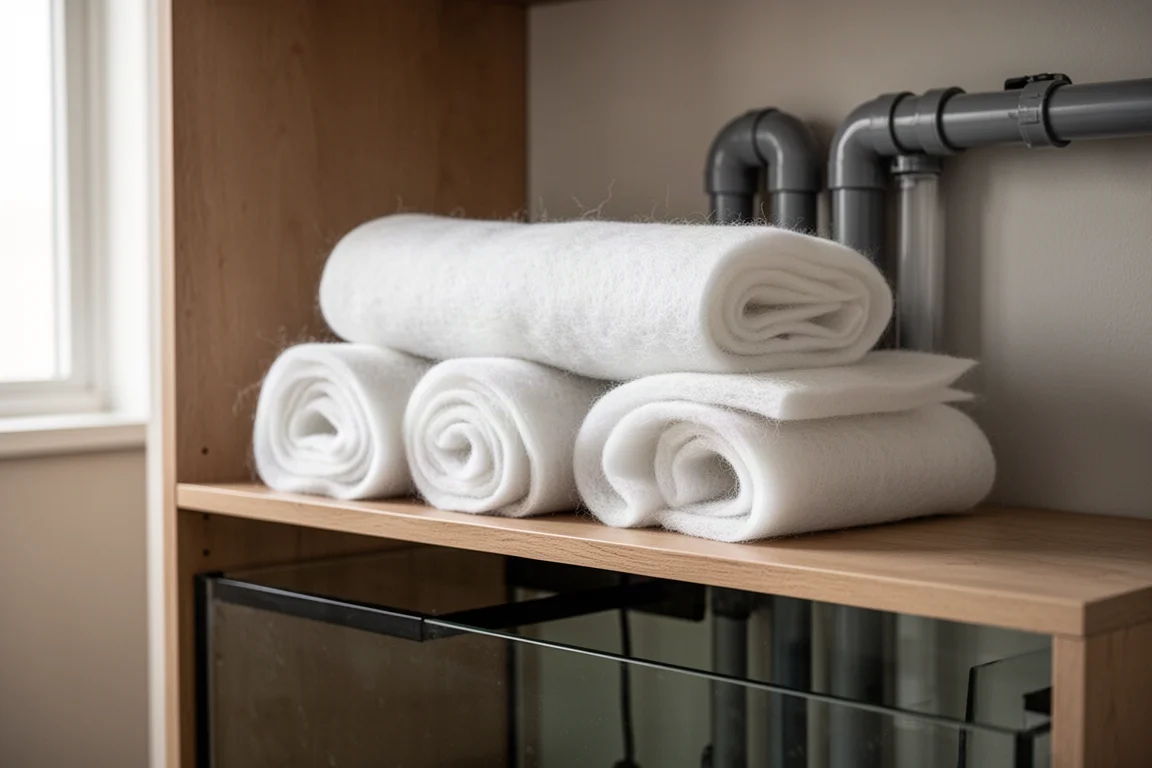
Reef tanks change over time, and the RollerMat can change with them. A tank that needed less filtration a year ago may need more today, and the flow rate is the simplest way to move in either direction without buying new equipment.
Conclusion
The Theiling RollerMat is a strong option for reef keepers who want solid waste removed before it breaks down and feeds nitrate and phosphate problems. Its real value is that it is adjustable: flow rate governs how much it captures and how quickly that material leaves the tank, so you can find the balance your system needs.
Pair it with a sensibly sized skimmer, keep spare rolls on hand, and clean the float switch on a regular schedule. Set up that way, it becomes a filtration tool you can tune to your tank rather than a fixed piece of equipment you have to work around.
Product link
View more details for Theiling RollerMat
This product is mentioned in the review. Check the specifications, options, and compatibility before buying.
View more details for Theiling RollerMatFurther reading
Related Reviews

Aquarium Filtration
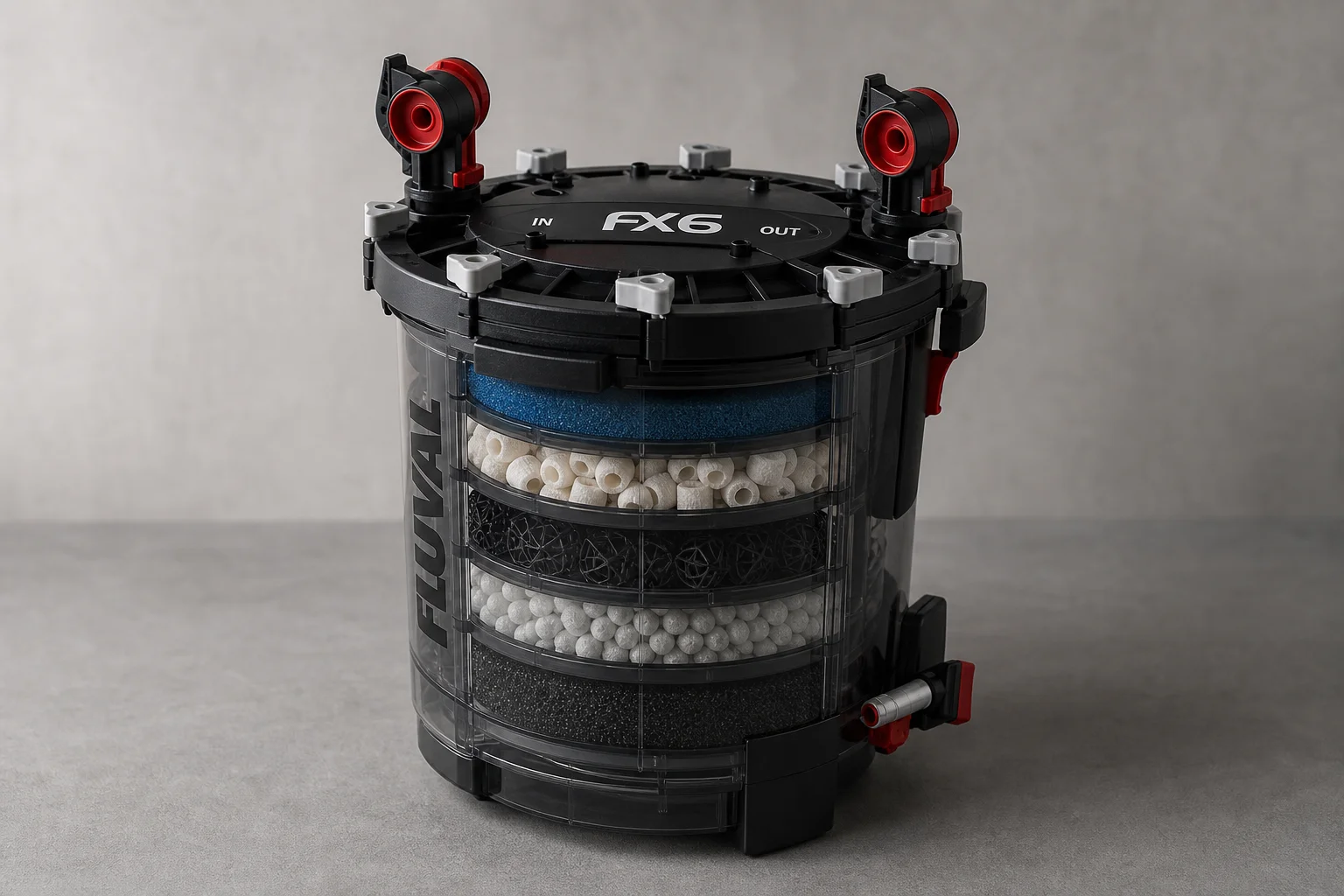
Adaptive Reef Refugium Reactor Review: A Simple Way to Grow Nuisance Algae Outside Your Display
A vessel designed to grow nuisance algae in a controlled space so it stops taking over the display tank, with an adjustable stand, a removable basket, and a single LED light on top.
Aquarium Filtration
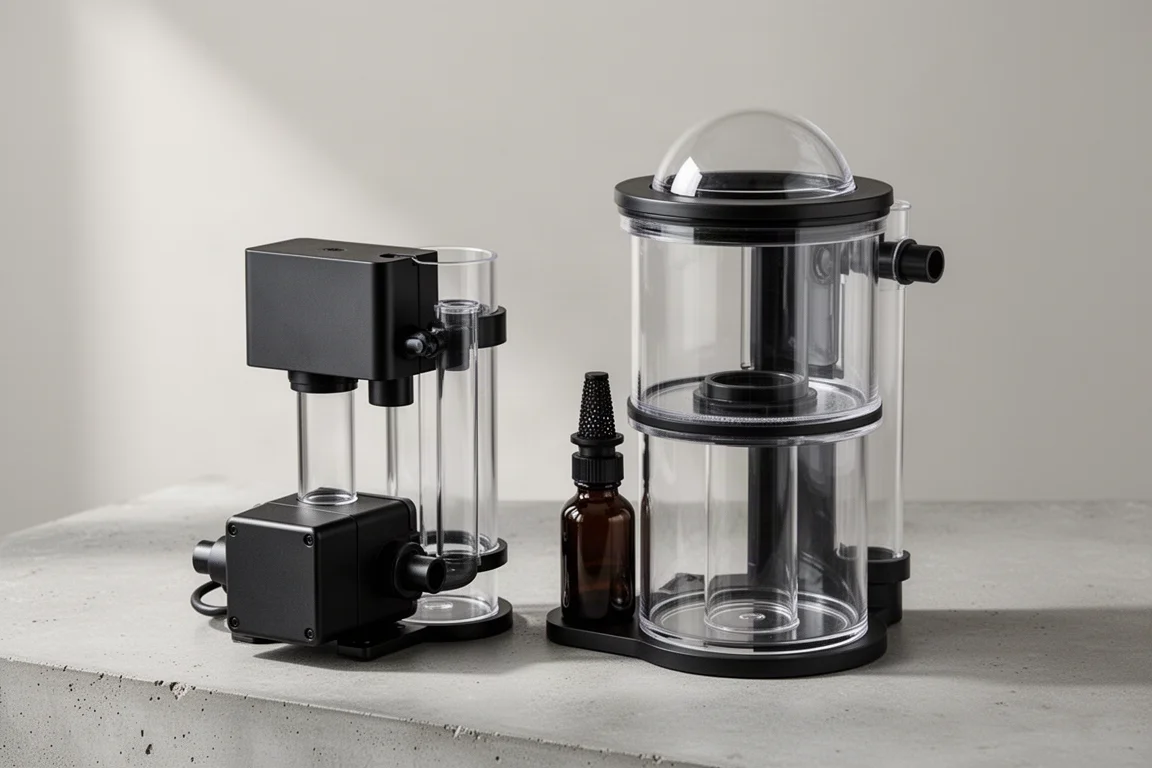
Affordable Aquarium Filter Media: Testing Budget Alternatives to Expensive Biomedia
Can cheap pot scrubbers replace expensive ceramic biomedia in a canister filter? One aquarist tests the theory on a heavily stocked 210-gallon tank.
Aquarium Filtration
AquaMaxx Bullet 2 and Bullet 3 Review: Hang-On Protein Skimmers Compared
A closer look at two larger AquaMaxx hang-on protein skimmers, covering capacity ratings, clearance needs, and the design details that separate the Bullet 3 from the Bullet 2.