Aquarium Filtration
Theiling Compact Rollermat Review: Automatic Fleece Filtration Made Simple
A drop-in automatic fleece roller rated for up to 500 GPH, with a float-triggered motor, a backup drain, and rolls that can last three months or more.
Introduction
Mechanical filtration is one of the simpler forms of aquarium filtration. It traps debris and waste and pulls it out of the water column before it has a chance to break down into ammonia, phosphate, nitrate, and other nutrients that can fuel algae and foul a tank. Sponges, foam, floss pads, and filter socks all do that job well, but they share the same flaw: if they are not regularly removed, cleaned, and replaced, the waste they hold simply breaks down anyway, because it is still sitting in the water. That means frequent maintenance is the price of effectiveness, and a chore that is easy to postpone is a chore that often does not happen often enough.
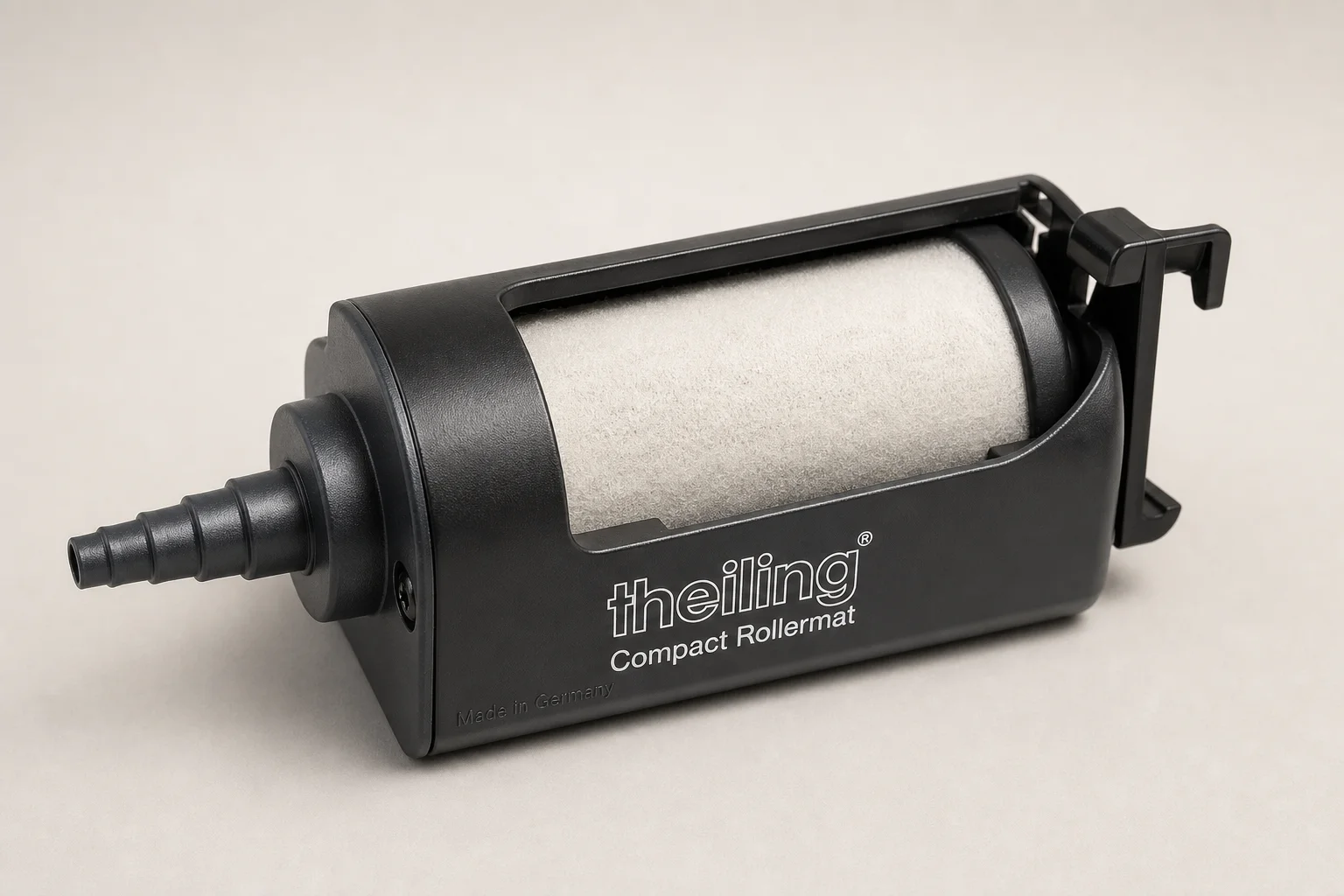
An automatic fleece roller removes that daily task. Water passes through a moving sheet of fleece, waste is captured, and the fleece advances automatically so fresh media keeps meeting the flow. Theiling’s Compact Rollermat is a drop-in version of that idea, rated for up to 500 gallons per hour and ready to run straight out of the box.
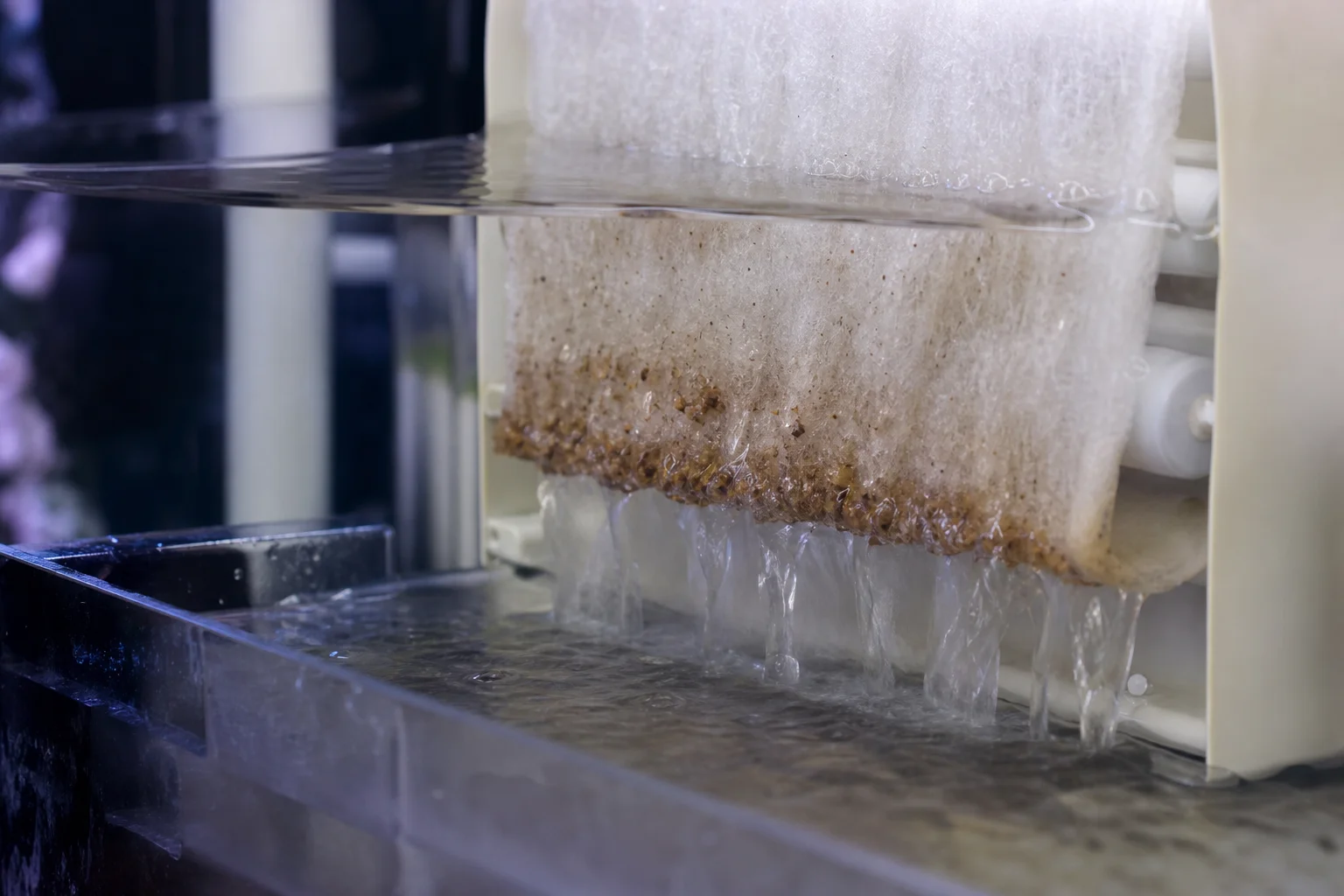
The appeal is straightforward: less dripping, less washing, and less replacing of mechanical media, with waste removed from the system before it has a chance to become a nutrient problem.
Who This Product Is For
This rollermat suits aquarists running a sump who are tired of swapping filter socks every other day and want mechanical filtration that largely maintains itself. It is a good match for reef keepers who feed heavily, keep a meaningful bioload, and want uneaten food, fish and coral waste, and strands of wayward algae pulled out of the water column rather than left to decay.
It also fits neatly into a few different sump layouts. The unit can sit inside the sump on the included stand, or, if the sump is rimless, it can hang on the side using the clip on the back. The one installation limit to respect is water depth: the water line should sit no more than four inches up the black body of the rollermat.
Riders of flow matter too. With a rating of up to 500 gallons per hour, it is intended for setups whose drain flow falls within that range rather than high-flow systems.
Main Strengths
The core strength here is automation that does not depend on the aquarist remembering anything. Water enters through the inlet pipe at the center of the unit and has to pass through the fleece before it can reach the sump. As the fleece traps waste, the water level inside the rollermat rises and lifts an internal float switch, which activates the motor and spools up fresh fleece while the loaded section is wound away. Waste leaves the water column rather than recycling back into it.
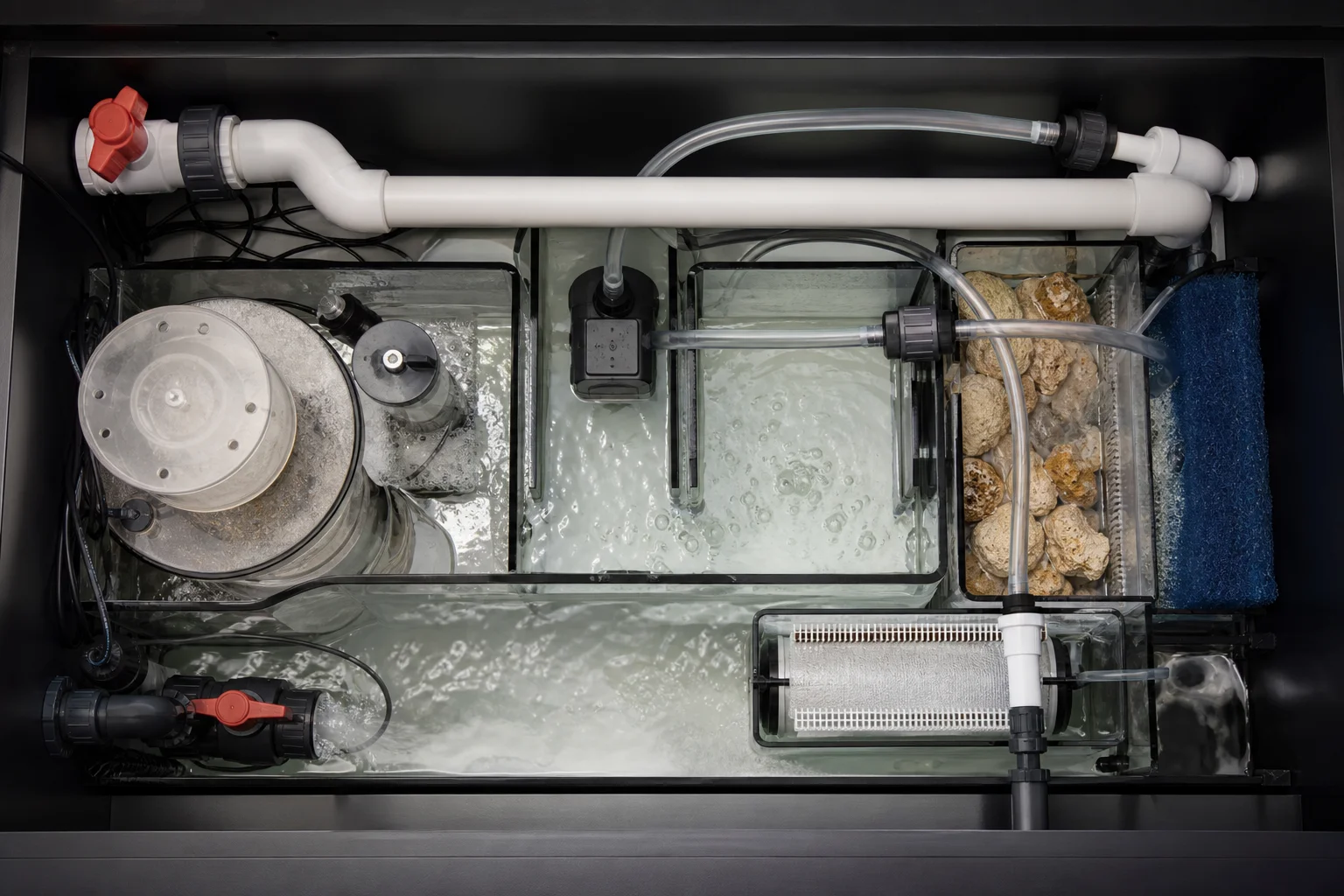
Because the fleece captures the bulk of the physical waste, whatever is small enough to pass through it becomes a prime candidate for removal by the protein skimmer. That division of labor is what makes the unit useful in a broader filtration plan rather than as a standalone fix.
Hands-Off Operation and a Backup Drain
The float-switch design means the roller responds to actual loading rather than to a fixed timer, so fleece is only advanced when it needs to be. There is also a roughly one inch backup drain. If the water level inside the rollermat climbs too high, whether from a clog or from flow that is too high, water can exit safely back to the sump instead of backing up.
Simple Setup Out of the Box
Setup is minimal. Screw on the stepped barb fitting and the unit is ready to connect to a drain line using 1 inch, 1 1/4 inch, or 1 1/2 inch tubing. The same threading also accepts standard 1 1/2 inch PVC fittings, which is useful if you prefer hard plumbing for a custom fit. From there, either set it in the sump on the included stand or hang it on the side of a rimless sump with the rear clip, keeping the water depth within the four inch limit.
Simple Fleece Changes and Running Costs
Fleece changes are straightforward. Turn the rollermat off with the switch on the back, remove the empty roll side first, open the clip at the inlet pipe and remove the inlet, then take the old roll out. Slip the ends of that spool onto the new roll, attach the end of the new roll to the opposite roller with the gears, and roll a little on so it holds snugly. Reinsert the inlet pipe, clamp it in place, set the new roll into the rollermat, and switch it back on.
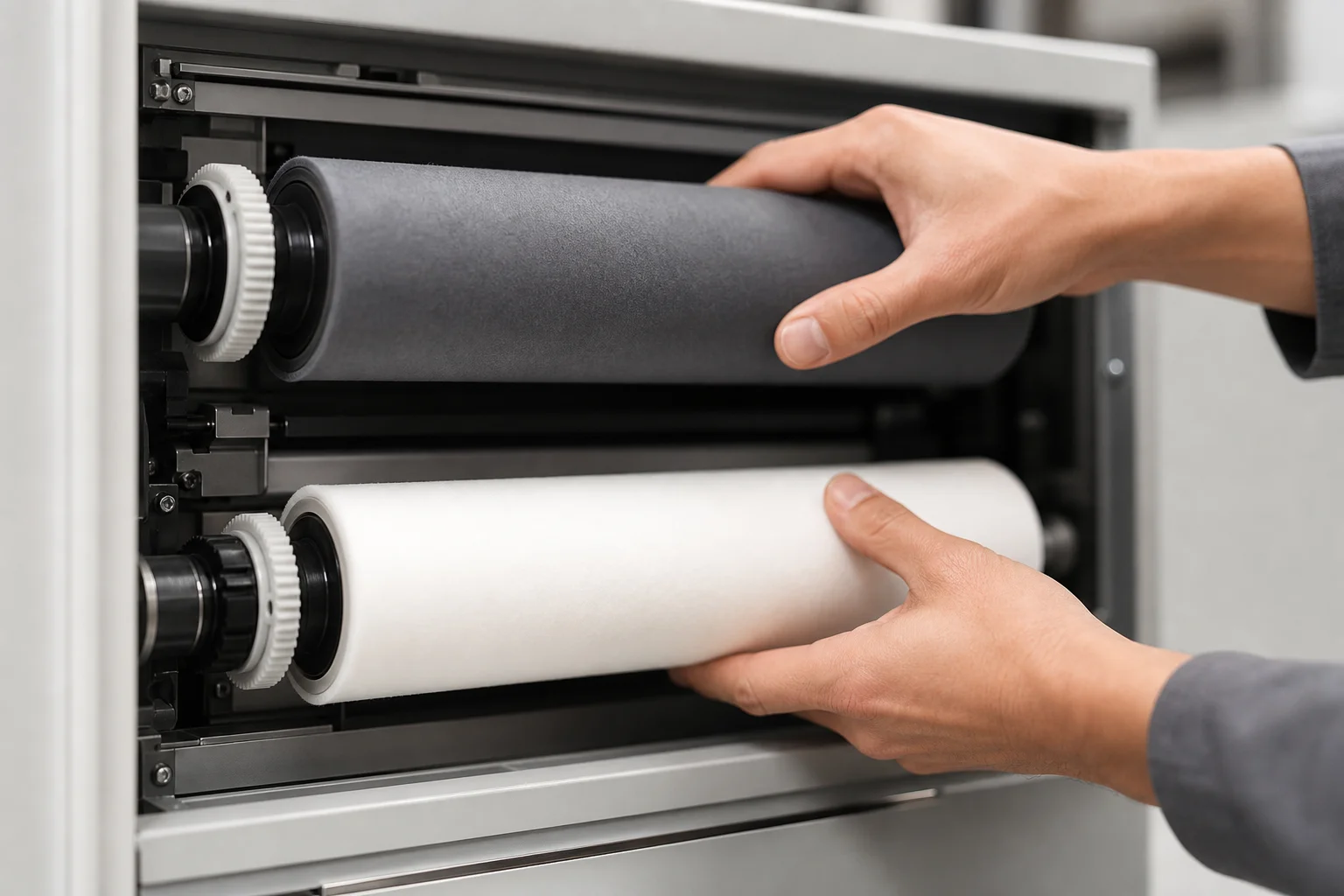
Consumable costs are modest. Each roll can last around three months or more for the average reefer, depending on feeding, bioload, maintenance habits, and other filtration. At just under $17 per roll when buying a three pack, that averages out to about $6 or less per month.
Things to Consider Before Buying
This is a compact unit, so it needs a sump with room for it, and the four inch water depth limit is a real installation constraint to check before purchase. The 500 gallon per hour rating is also a ceiling rather than a target, and systems pushing more flow than that are outside its intended range.
Fleece is a consumable, so there is an ongoing cost even though it works out to a modest monthly figure for most setups. Roll changes still need to happen occasionally, so this reduces maintenance rather than eliminating it entirely. Finally, the backup drain is a safety feature rather than a substitute for sensible plumbing, so it is worth planning how that water returns to the sump.
If you already run filter socks or another mechanical method and are happy with the routine, this is not a mandatory upgrade. It is a way to remove a recurring chore and to keep captured waste out of the water before it breaks down.
Buying Advice
For aquarists who want mechanical filtration handled automatically and who have a sump that can accommodate a compact roller, this unit is a sensible, easy to implement option, and it is positioned among the more affordable fleece rollers available. The strongest case for it is a tank with regular feeding and a real bioload, where filter socks would need attention every other day.

Before buying, confirm three things: that your drain flow stays within the 500 gallon per hour rating, that your sump can hold the unit at no more than four inches of water depth, and that you are comfortable with a consumable fleece roll every few months. If those check out, the change in daily routine is the main benefit, and it is a meaningful one.
Conclusion
Theiling’s Compact Rollermat turns one of the more tedious parts of aquarium upkeep into something that largely looks after itself. It traps uneaten food, fish and coral waste, algae strands, and other debris before they break down into nutrients, advances its own fleece through a float-triggered motor, and includes a backup drain for peace of mind. Setup is quick, fleece changes are simple, and running costs are low enough that the convenience is easy to justify.
Product link
View more details for Theiling Compact Rollermat
This product is mentioned in the review. Check the specifications, options, and compatibility before buying.
View more details for Theiling Compact RollermatFurther reading
Related Reviews
Aquarium Filtration
Adaptive Reef Refugium Reactor Review: A Simple Way to Grow Nuisance Algae Outside Your Display
A vessel designed to grow nuisance algae in a controlled space so it stops taking over the display tank, with an adjustable stand, a removable basket, and a single LED light on top.
Aquarium Filtration
Affordable Aquarium Filter Media: Testing Budget Alternatives to Expensive Biomedia
Can cheap pot scrubbers replace expensive ceramic biomedia in a canister filter? One aquarist tests the theory on a heavily stocked 210-gallon tank.
Aquarium Filtration
AquaMaxx Bullet 2 and Bullet 3 Review: Hang-On Protein Skimmers Compared
A closer look at two larger AquaMaxx hang-on protein skimmers, covering capacity ratings, clearance needs, and the design details that separate the Bullet 3 from the Bullet 2.