Floorstanding Speakers
Tekton Pendragon Review: A 2 Ohm Floorstander With Remarkable Bass and Tone
A close look at the 2 ohm Tekton Pendragon floorstanding speaker, covering its low-frequency reach, natural tone, amplifier matching, and placement needs.
Introduction
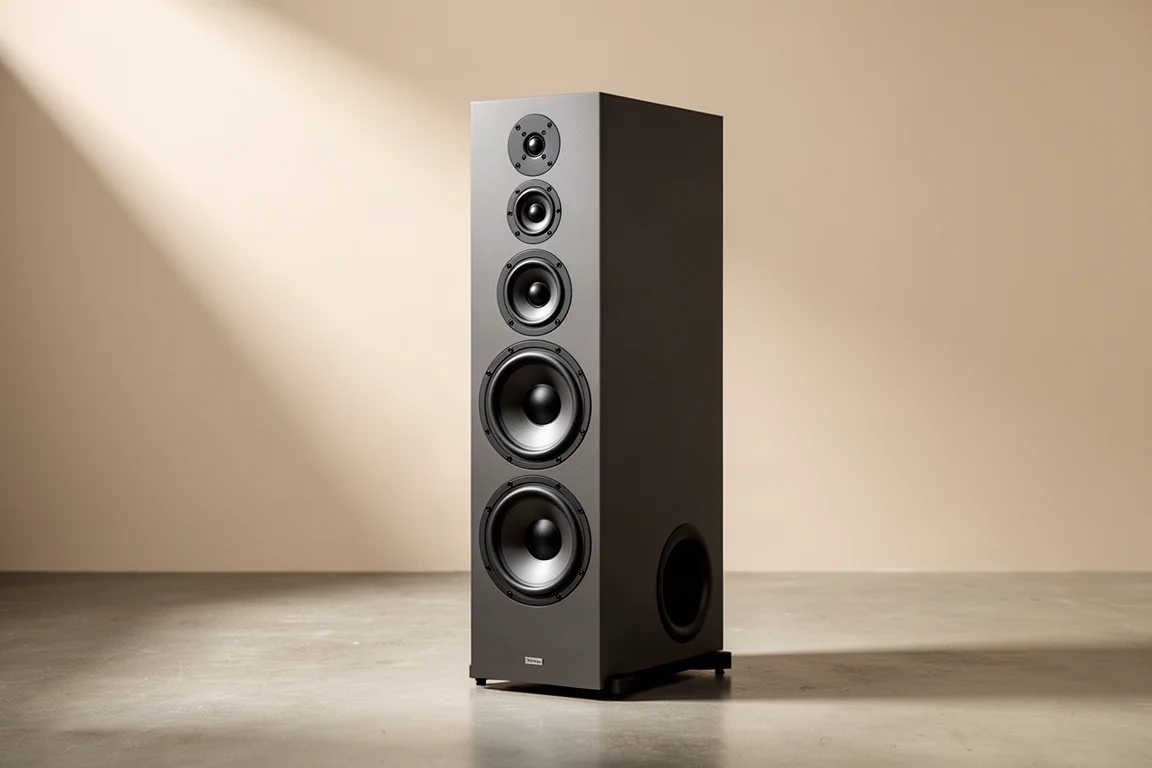
The Tekton Pendragon is a large floorstanding loudspeaker, and the version discussed here is the 2 ohm model. It lands in rare territory for the money: deep, physical bass, a natural tonal character, and a sense of scale that smaller speakers cannot reproduce. Pricing starts at $2,200 USD, which is a genuine bargain for a cabinet and driver complement of this size.
That combination of price and performance is what makes the Pendragon one of the most compelling values in high-end audio. It is not, however, a plug-and-play speaker for every system. A 2 ohm nominal load places specific demands on the amplifier, and the cabinet is large enough that placement and room space matter as much as the electronics.
Who This Speaker Is For
This is a speaker for listeners who want a full-range floorstander and are prepared to build a system around it. The Pendragon rewards owners who already have, or plan to buy, an amplifier with a published 2 ohm rating. It suits people who value realistic instrumental timbre, particularly with guitar and drums, and who want the physical sensation of air moving in the room rather than a polite, scaled-down presentation.
It is also a good fit for a larger listening room. In a mid-sized room the speaker works well, but its quick decay and low-frequency control suggest it would open up further with more space around it. Listeners who mostly play quietly in small rooms, or who want a compact speaker that disappears into a shelf, should look elsewhere.
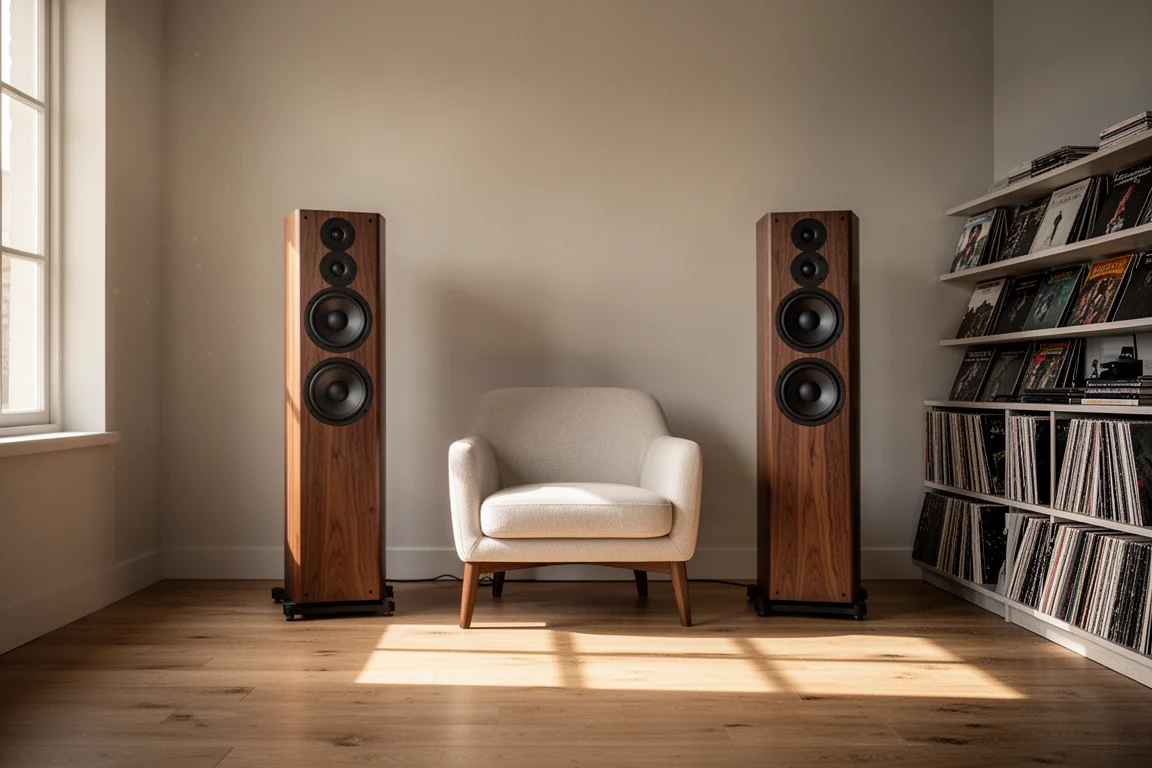
Where the Pendragon makes its strongest case is in how it handles the bottom two octaves while keeping the midrange and treble intact. That is a difficult balance at any price, and it is the main reason this speaker stands out in its class.
Design and Build Notes
The driver layout is unusual and worth understanding before judging it by appearance. The Pendragon uses five tweeters rather than the three found on other Tekton floorstanders. Only the centre tweeter reproduces the highest frequencies; the remaining four cover midrange frequencies. Because each driver works in a different band rather than duplicating the same signal, the usual worry about multiple tweeters cancelling one another out does not apply here. Measurements of Tekton designs have not flagged comb filtering as a practical concern.
The bass drivers are pro audio units normally used in guitar amplifiers, slightly modified for this speaker. The cabinet is rear-ported with two large ports, and it is big. It is the largest floorstander in the listening room, noticeably bigger than other large models in the same space.
Finish quality on the base cabinet is not the strongest part of the package, which is a predictable trade-off at this price for a cabinet this size. Tekton does offer a range of finishes and paints so buyers can match the speaker to their room.
Main Strengths
Low-frequency performance is the headline. In-room extension reached down to roughly 25 Hz, enough to make the floor and nearby microphone stands vibrate. More impressive than the depth is the texture: bass notes decay quickly and stop cleanly rather than lingering in the room, which keeps the presentation tight even in a mid-sized space. The bass drivers move a great deal of air simply because of their size.
Tonal accuracy is the second strength. The speaker sounds natural and realistic with guitar and drums, and recorded voice reproduction stayed close to the original take, with a touch of extra low-end weight and slightly tamed sibilance compared with the source recording.
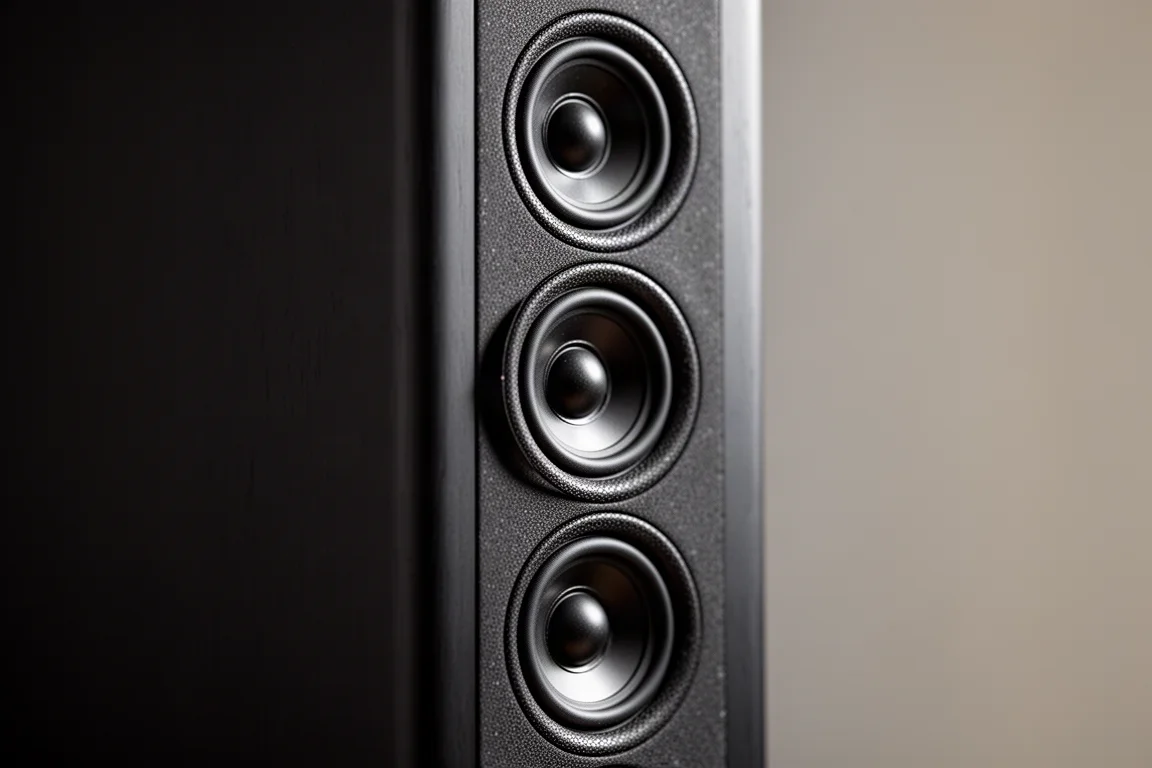
Treble performance is crisp and clear, with convincing snap and decay. Because the high frequencies are produced by small, fast-moving drivers, the speaker projects in a way that creates a large, three-dimensional soundstage and surrounds the listener, yet imaging stays pinpoint rather than diffuse. Instrument and vocal positions are easy to place, particularly with a high-quality amplifier upstream.
The 2 Ohm Question and Amplifier Matching
A 2 ohm nominal rating sounds alarming to anyone who remembers older amplifiers that could not cope with low loads. That concern is largely historical. Many modern amplifiers, and most Class D designs in particular, are stable at 2 ohms, and a large number now publish a 2 ohm power rating. The design intent is straightforward: draw more current from the amplifier and let the speaker make use of capability that would otherwise sit idle.
The Pendragon is also easier to drive than its nominal figure suggests, because its impedance curve is unusually flat. The lowest impedance is 2.3 ohms and the highest is 2.8 ohms, so the load stays above 2 ohms and below 3 ohms across the range. Most speakers swing far more widely than that, which is what actually stresses an amplifier. Here the amplifier sees a consistent load instead of sudden dips.
The practical requirement is simple: use an amplifier with a published 2 ohm rating. Beyond that, the speaker scales with the quality of what feeds it. With a high-current solid-state amplifier rated stable at 2 ohms, and capable of a 1200 W peak at that load, bass texture, midrange refinement, and treble snap all improved noticeably over a more modest pairing. Buyers should expect the Pendragon to reveal the character of their electronics.
Setup and Placement
The rear ports and the cabinet volume mean this speaker needs breathing room. Roughly three feet from the wall behind it proved to be the sweet spot. Pushing it further out kept the bass extension but thinned the midrange presence, so a little patience with positioning pays off. In total, the speaker demands real floor space, and a larger room will suit it better than a small one.
Toe-in is a matter of taste. With the drivers angled just outside the listener’s shoulders, the balance between soundstage width and image focus was at its best. Adding more toe-in sharpens the treble and increases detail, at some cost to the sense of space.
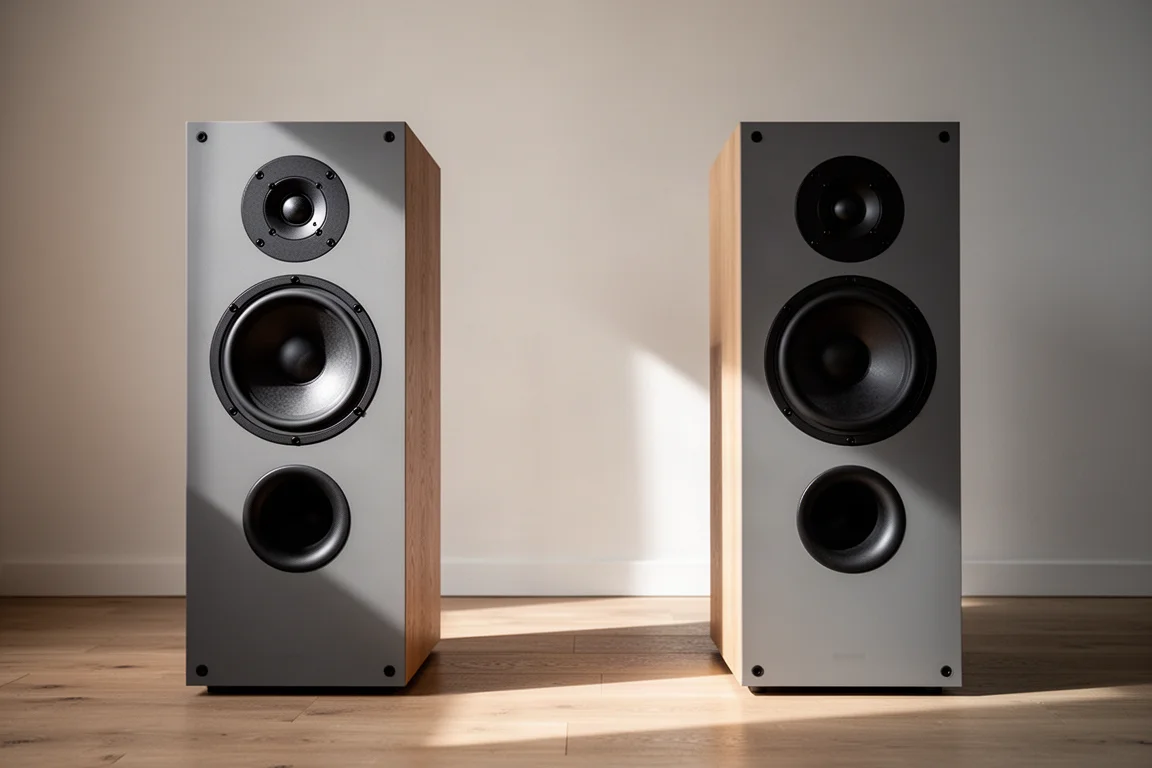
Isolation feet under the cabinets helped tighten the bass region, which is worth doing given how much low-frequency energy this speaker produces. Setup itself is otherwise straightforward: the challenge is space, not complexity.
Things to Consider Before Buying
The amplifier requirement is the first thing to check. If the current amplifier does not have a 2 ohm rating, budget for a replacement or an upgrade alongside the speaker.
Size and finish are the next considerations. The cabinet is large and needs distance from the wall behind it, so measure the room before committing. The base finish is modest, although the available finish options allow buyers to match their decor.
The five-tweeter array is visually polarising. Some listeners find it distinctive and appealing, others find it busy. It is a design signature rather than a defect, but it is worth seeing in person before buying.
Finally, this speaker will expose the quality of everything upstream. That is a benefit for owners with good electronics and a consideration for anyone hoping to pair a resolving floorstander with entry-level amplification.
For most material, no subwoofer is required. Only the very deepest pipe organ repertoire reaches low enough to benefit from one.
Buying Advice
The Pendragon makes the most sense for buyers who already own, or are willing to invest in, a high-current amplifier with a 2 ohm rating. Budget for the total system rather than the speaker alone, because the difference between an adequate amplifier and a genuinely capable one is audible here.
Value is the strongest argument. At a starting price of $2,200 USD, the Pendragon delivers bass extension, tonal realism, and scale that normally cost considerably more. Buyers with the room and the amplification will find very little at this price that competes on those terms.
Plan the placement before the speaker arrives. Three feet of clearance from the front wall, a slight toe-in, and isolation feet under the cabinets are the three decisions that will shape the result most.
Conclusion
The Tekton Pendragon in its 2 ohm form is a large, capable floorstander that delivers deep and textured bass, natural tone, and a big, well-defined soundstage for a price that undercuts most rivals. Its requirements are clear rather than hidden: an amplifier rated for 2 ohms, a room with space behind the speakers, and a tolerance for an unusual driver layout. Meet those conditions and the Pendragon rewards the investment with performance that feels out of proportion to its price.
Product link
View more details for Tekton Pendragon
This product is mentioned in the review. Check the specifications, options, and compatibility before buying.
View more details for Tekton PendragonFurther reading
Related Reviews
Floorstanding Speakers
Acoustic Energy AE109 Mark II Review: A Refined Floorstander at £699
The Acoustic Energy AE109 Mark II is a slim, warm sounding floorstander that delivers clarity, midrange body and strong imaging in small to medium rooms.
Floorstanding Speakers
Acoustic Energy AE509 Review: A Slim Floorstander With Deep, Defined Bass
A practical look at the Acoustic Energy AE509, a slim floorstanding speaker with carbon fibre drivers, deep and well-defined bass, and an easy-going character that rewards careful system matching.
Floorstanding Speakers
Arendal 1528 Tower 8 Review: Reference Neutrality With Real Demands
A close look at the Arendal 1528 Tower 8, a nearly five-foot, 200-pound floorstander that rewards generous space, serious power, and high listening levels with reference-grade neutrality.