TVs
TCL X11L Review: A 98-Inch Mini LED Built to End the Upgrade Cycle
TCL's 98-inch mini LED flagship pairs extreme brightness headroom with OLED-level dimming control, plus the mounting and accuracy details worth knowing first.
Introduction
The television market spent much of the past decade racing toward lower prices, but the balance has started to shift. Budget TV sales have plateaued, while premium large-format displays grew by more than 20% in 2025. With 4K, HDR, and smart interfaces now mature, more households are stepping off the upgrade treadmill and looking for a set that stays good for years rather than seasons.
The TCL X11L is the most aggressive answer to that shift. It became the headline story of CES on the strength of two numbers: 20,000 local dimming zones and a claimed 10,000 nits of peak brightness. For most people, a $3,000 television already looks remarkable, which raises the obvious question of why anyone would spend roughly $10,000 instead.
The honest answer is that the X11L is overengineered far beyond daily need, from its light output to its aluminium chassis, and that surplus is exactly what makes it feel like an exit strategy rather than another upgrade. It is a television you buy in order to stop shopping.
Who This TV Is For
The X11L suits buyers who want one display to last: someone with a large wall, a room that can carry a 98-inch panel, and an appetite for HDR content that swings from moody and dark to genuinely blinding. It also suits a home theater build where the television becomes the hub rather than one component in a rack, and buyers who would rather not pay for professional calibration.
It is not the obvious choice for everyone. The 98-inch model weighs around 150 lb and demands a serious mount, and its peak output is physically uncomfortable in a dark room. If a smaller set already satisfies your viewing habits, the X11L’s headroom will be hard to justify on paper.
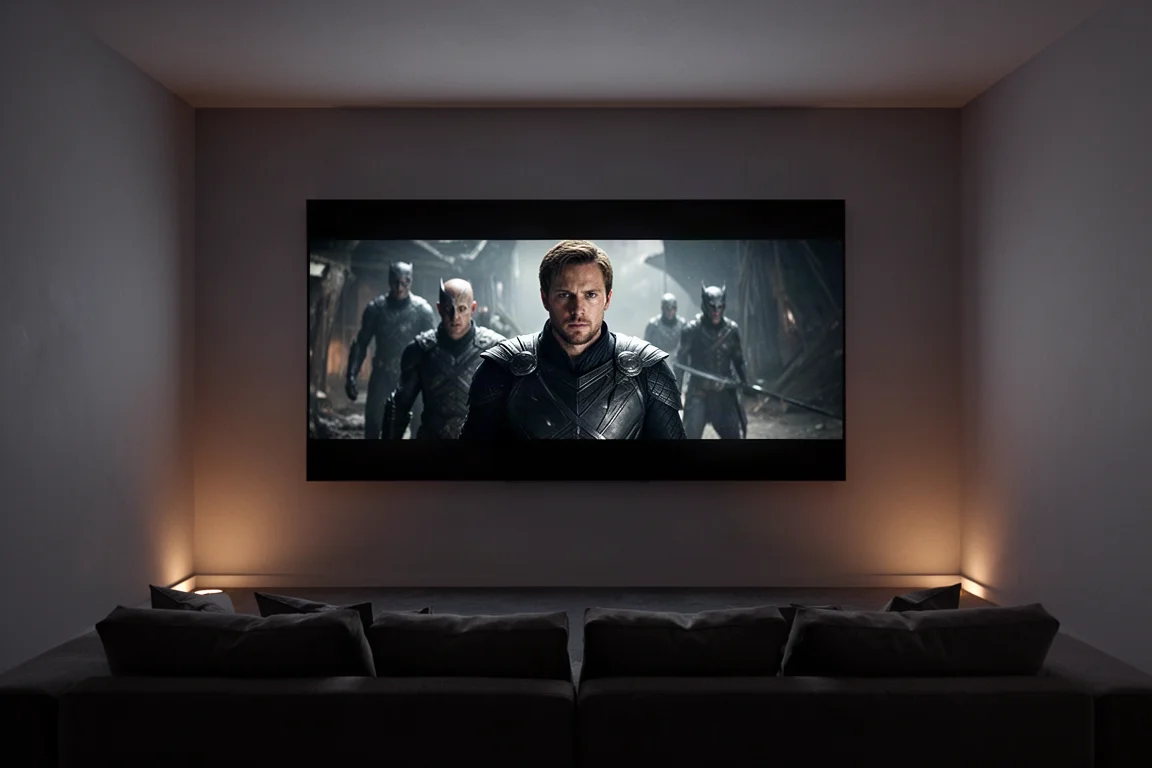
What separates it from a merely good large television is how rarely it asks for a compromise: contrast, colour, motion, and brightness are all handled at a level that leaves little room for second-guessing later.
Main Strengths
The X11L’s advantages cluster in a few areas: brightness headroom, dimming control, processing, motion, build quality, and audio integration. Each one is a meaningful step past what mainstream mini LED sets deliver.
Brightness Headroom That Redefines HDR
TCL claims a peak of 10,000 nits. Measured output sustained more than 5,000 nits on a 20% window, which is bright enough to make HDR highlights startling rather than simply vivid. Dropping peak brightness to its lowest setting still produced around 2,500 nits, and even at that level this is the brightest display we have measured.
That headroom is not wasted on a number. Modern HDR grades vary enormously, from dark, stylised palettes to vivid high-contrast highlights, and the X11L renders both without clipping or crushing either end of the range. A power supply that stays silent at full output is a detail worth noting too.
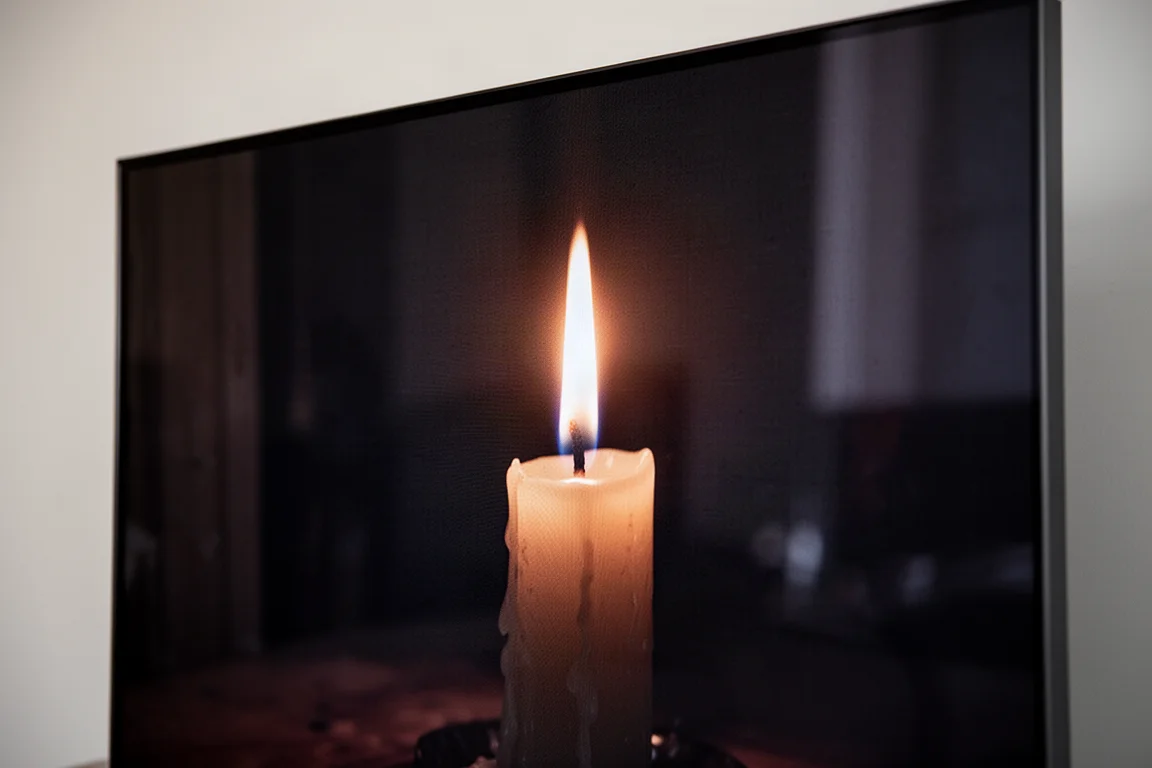
The trade-off is accuracy drift. As brightness rises, the white point and grayscale rendering shift, which means colour and grayscale accuracy changes with the brightness setting. If calibration is part of your plan, lock in your preferred brightness level first. In practice, a full calibration delivered a negligible visible improvement over the out-of-the-box Movie profile, which measured around Delta E 3 and landed close to reference.
Local Dimming and Blooming Control
Local dimming is where the X11L pulls away from most LED-based displays. Around high-contrast objects such as stars, street lamps, or bright white subtitles, blooming is suppressed to a level that approaches and arguably matches OLED behaviour.
The clearest demonstration is mixed-aspect content. In a film framed at 1.3:1 with heavy black bars, the bars stayed inky black while fine shadow texture inside the image remained visible, a combination that very bright televisions usually struggle to hold together.
Processing and Upscaling
TCL’s revamped processing is a clear step beyond the QM9K. Upscaling of 720p and 1080p material and cleanup of compressed signals now stand alongside the best in the category, and the combination of highlight control, inherent sharpness, and deep contrast produces unusually lifelike images.
Banding compensation and super resolution are the surprise here. Those settings have historically introduced artefacts on TCL sets, yet this panel cleaned up starved 8-bit streams without destroying detail. Only very fast panning in low-bitrate content remains a hard case, and that is true of nearly every display.
Motion and Gaming
Motion handling is strong across both sports and high frame rate gaming. Auto game mode engages the set’s gaming features immediately, and native 24p film content and 120 Hz gameplay both run smoothly without the motion interpolation that ships enabled by default.
Design, Build, and Everyday Setup
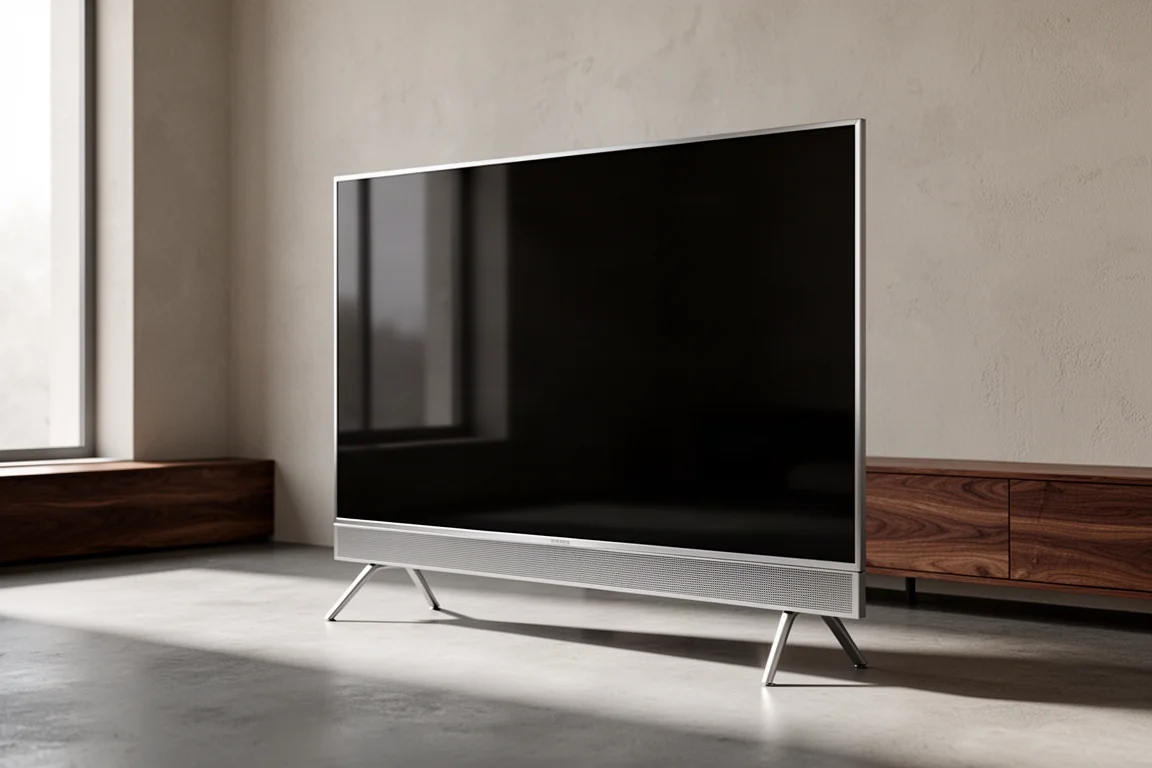
The 98-inch X11L uses heavy aluminium instead of plastic, and the difference is obvious in person. The chassis is under an inch deep and hides its speakers behind a horizontal aluminium rib grille, a design that reads as more integrated than the usual flagship OLED treatment. Tabletop legs are included in the box.
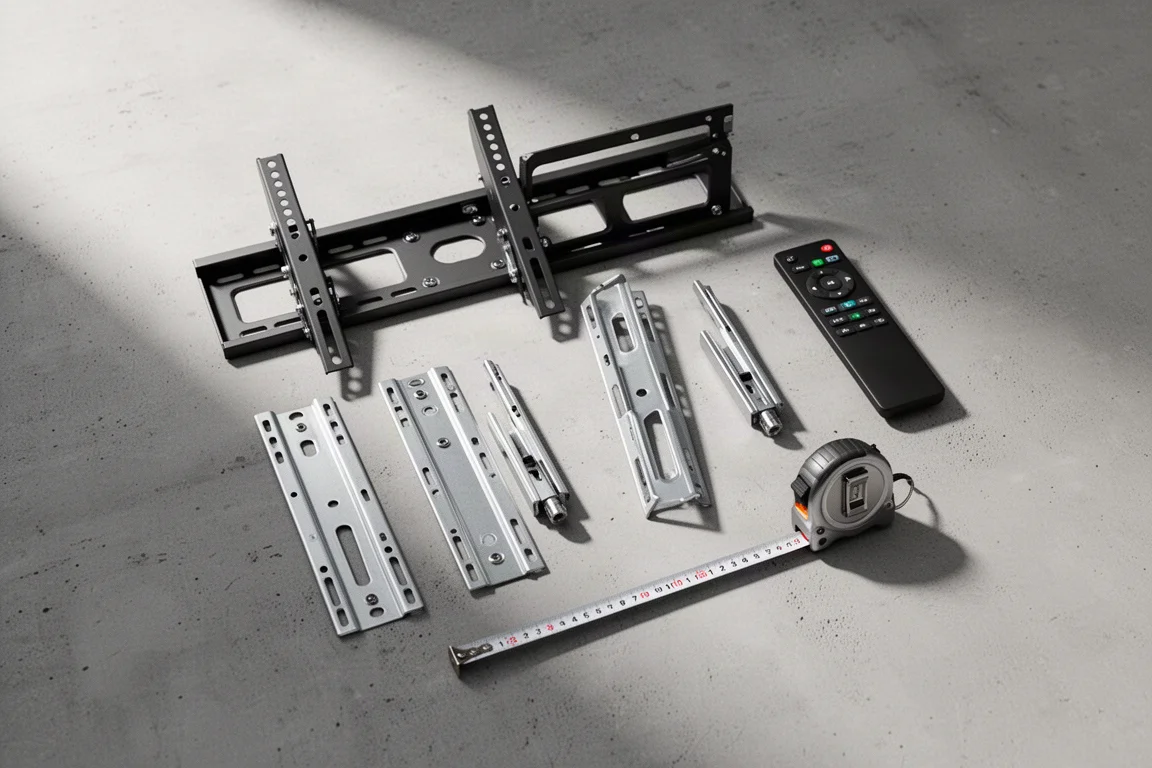
Wall mounting takes planning. At around 150 lb the panel needs a heavy duty mount, and the VESA points sit unusually high on the chassis, so the television hangs noticeably lower on the wall than the model it replaces. Reusing an existing mount may require extenders.
Setup itself is quick. The X11L runs Google TV, so the interface will be familiar to anyone who has used the platform, and the 2026 update adds conversational voice control to the operating system. Voice input works, though a remote remains faster for everyday navigation.
Audio and Dolby Flex Connect
The built-in audio is tuned with Bang & Olufsen, but the more significant development is Dolby Flex Connect. Rather than routing surround processing through a separate AV receiver, the television handles it, so compatible TCL Flex Connect speakers such as the Z100 and a subwoofer can be paired directly to the display.
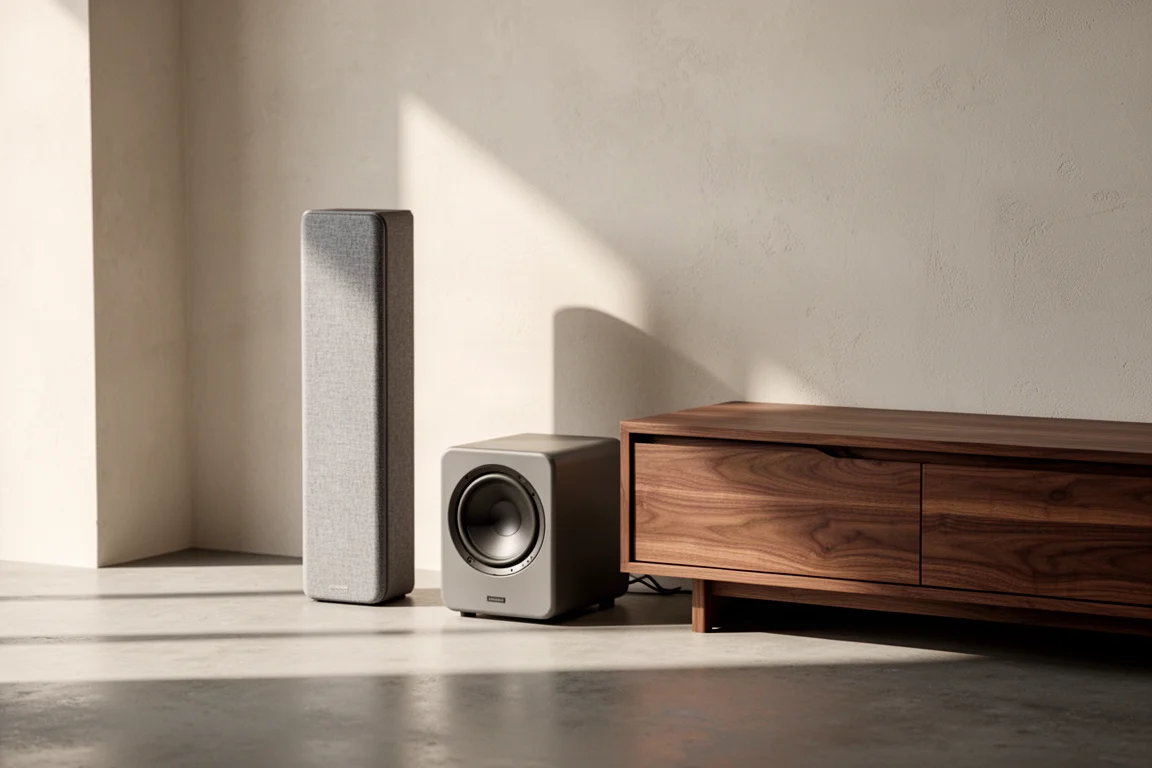
That arrangement turns the television into the processor for a complete Dolby Atmos system, with no receiver and far less cable clutter. Adding two Z100 speakers and a subwoofer transforms the experience enough that a separate home speaker system becomes unnecessary for many rooms, and it makes the X11L a more sensible living room centerpiece than a stack of separates.
Things to Consider Before Buying
Brightness and accuracy pull against each other. Because white point and grayscale rendering shift as output climbs, anyone who calibrates should settle on a brightness level first and leave it there.
Most owners will run the panel far below its ceiling. Peak output is uncomfortable in a dark room, and the lowest brightness setting still delivers around 2,500 nits, which is more than enough for typical evening viewing.
The standard picture mode ships with an eco brightness clamp and is inaccurate in both grayscale and colour, so Movie is the sensible starting point rather than a matter of taste.
Physical installation deserves attention. Roughly 150 lb of panel needs a heavy duty mount, and the unusually high VESA points mean the screen will sit lower than expected on an existing bracket.
Finally, there is the price. Around $10,000 for the 98-inch size puts the X11L firmly in flagship territory, and the performance surplus is only worth paying for if you intend to keep the set for a long time.
Buying Advice
If the goal is one television that stays satisfying for years, the X11L is the strongest candidate in this class. It behaves like an OLED in the areas that matter most, including contrast, black levels, colour fidelity, resolution, and gaming performance, while adding brightness headroom no OLED can match.
Cheaper routes exist and they are worth weighing. Within TCL’s own range, the QM7K remains the next best option for buyers who cannot stretch to the X11L, although the step-up 8K and 9K models carry a buzzing noise when driven to their fullest. Sony’s Bravia 9 is a comparable performer at a much lower price, but it tops out at 85 inches and delivers far less light output. Panasonic’s Z95B is arguably the best OLED on the market, with sizes more limited still and the largest 77-inch version priced around $4,700. LG’s C5 offers a strong OLED alternative at roughly $3,000 for 83 inches. For OLED quality at the X11L’s scale, LG’s 97-inch G5 costs around $25,000, which is more than double for a set that matches the TCL everywhere except brightness.
For most buyers the decision comes down to how long the display is expected to stay in service. The X11L’s surplus performance is what makes that longevity believable rather than optimistic, and it is the reason the price can be read as a one-time cost instead of a starting point for the next round of upgrades.
Conclusion
The TCL X11L is a mini LED flagship that behaves like an OLED without the usual OLED drawbacks, and it represents a genuine leap for the technology. Its brightness is far beyond what most rooms need, its dimming control is exceptional, and its build and audio integration feel considered rather than ornamental. For anyone shopping for a display that suits today’s content and tomorrow’s, it deserves a place at the top of the list.
Product link
View more details for TCL X11L
This product is mentioned in the review. Check the specifications, options, and compatibility before buying.
View more details for TCL X11LFurther reading
Related Reviews
TVs
Best Sony XR TVs Compared: X90K, X95K, A80K, A90K, A90J, A95K and Z9K
A practical guide to Sony's XR television range, from the value-focused X90K to the 8K Mini LED Z9K, with clear advice on which model suits which room.
TVs
Hisense 100UR8SG Review: A 100-Inch RGB Mini-LED That Takes On OLED
A 100-inch RGB mini-LED television with measured peak brightness of 3,850 nits, wide color volume, and a price far below large-format OLED.
TVs
Hisense U9 vs Hisense U8 vs Samsung S90C OLED: Which TV Is Worth Buying?
A practical comparison of two Hisense RGB Mini-LED televisions and an OLED alternative, with real strengths, trade-offs and a clear buying recommendation.