TVs
Best Sony XR TVs Compared: X90K, X95K, A80K, A90K, A90J, A95K and Z9K
A practical guide to Sony's XR television range, from the value-focused X90K to the 8K Mini LED Z9K, with clear advice on which model suits which room.
Introduction
Sony’s XR television range covers an unusually wide spread of panel technologies within a single family. There are full array LED sets, the company’s first Mini LED models, OLED and QD-OLED panels, and an 8K Mini LED flagship at the very top. Screen sizes run from a compact 42 inches up to a room-dominating 85 inches.
Because the same image processor sits behind all of them, the differences between models come down to the panel, the backlight, the audio system and the available sizes rather than to a completely different picture philosophy. That makes the range easier to shop than the spec sheets suggest, but it also means a step up between two models is usually about one specific improvement rather than a wholesale change.
This guide covers the shared technology first, then each XR series in turn, and finishes with practical advice on matching a model to your room.
What Every Sony XR Model Shares
The XR processor is the common foundation. It applies cognitive intelligence, analysing each frame as thousands of separate elements at the same time and processing colour, contrast, motion and clarity separately before combining them. The processor doing this directing work is identical across the XR models, so the differences between series come from the panel and the backlight rather than the processing core.
For this generation, Sony added depth control mapping, which separates near objects from the background more accurately, particularly around the focal point of a shot. A new colour algorithm analyses each frame to control luminance and saturation so brighter colours can be produced without washing out. XR Triluminos Pro widens the colour space further, and the processor also smooths the banding that can show up in subtle gradients on lesser screens. XR upscaling handles the large amount of 1080p and 1080i material that still dominates streaming libraries.
Every XR model runs Google TV with Google Assistant search and is compatible with Alexa for smart home control. Bravia Core is included as well, with Pure Stream technology that needs a connection of around 100 Mbps to deliver picture quality comparable to a 4K UHD Blu-ray disc, alongside a large library of IMAX Enhanced content.
For gaming, all XR sets include HDMI 2.1 with support for up to 48 Gbps and 4K at 120 frames per second, and each one has at least two of those high-bandwidth ports, so two current consoles can be connected at once. Auto Low Latency Mode reduces delay for competitive play. ARC and eARC pass a full Dolby Atmos signal back to a soundbar or receiver, and Netflix Calibrated Mode is available through the native Netflix app for a picture tuned closer to the studio master.
The Bravia Cam and Ambient Optimization Pro are bundled with the top models and available as an optional accessory on the others. The camera enables video calls on the big screen and gesture controls, and it can adjust picture and sound settings based on the room and your seating position.
Sony also points to sustainability changes in this generation: some models use 99 percent recycled plastic, packaging is 15 percent smaller, and ink and plastic use in packaging are reduced by 90 percent and 35 percent respectively.
Sony X90K: The Value Entry Into XR Processing
The X90K replaces the X90J and is offered in 55, 65, 75 and 85 inch sizes. It is the most affordable route into the XR processor and carries XR Contrast Booster 10, an improvement over the previous generation that produces bright highlights alongside solid black levels. XR Triluminos Pro adds wide colour reproduction with natural skin tones and fine textural detail.
Sony also states that the X90K ships with variable refresh rate enabled from launch, which matters if you plan to connect a current games console. For buyers who want the core Sony picture and the most popular screen sizes without moving into premium pricing, this is the sensible starting point.
Sony X95K: Mini LED Arrives in the 4K Range
The X95K is a premium 4K LED series and replaces the X95J. It is Sony’s first television to use Mini LED, with thousands of significantly smaller LEDs behind the panel. Combined with XR Backlight Master Drive Pro, that density allows very precise light control, while XR Contrast Booster 15 brightens highlights and deepens blacks by dimming one area of the screen while boosting another. Sizes are 65, 75 and 85 inches.
Audio is more elaborate than on the step-down model: Acoustic Multi-Audio uses sound-position tweeters at the back of the chassis that track the action on screen, and Acoustic Center Sync can synchronise the built-in speakers with a compatible Sony Dolby Atmos soundbar. For LED buyers, this is likely the strongest value in the range.
Sony A80K: OLED Picture Quality at a More Reasonable Price
The A80K replaces the A80J and comes in 55, 65 and 77 inches. It pairs a new high luminance OLED panel with the XR OLED Contrast Pro engine, which is what allows the deep blacks OLED is known for to hold up in rooms with a lot of ambient light. Colour reproduction and overall depth are both improved over the previous generation.
HDR10 and Dolby Vision support cover the majority of streaming and disc content, so the brightest parts of a scene keep their impact. Acoustic Surface Audio Plus and Acoustic Center Sync round out the package. If you want OLED contrast with Sony processing at a more accessible price, this is the model to look at first.
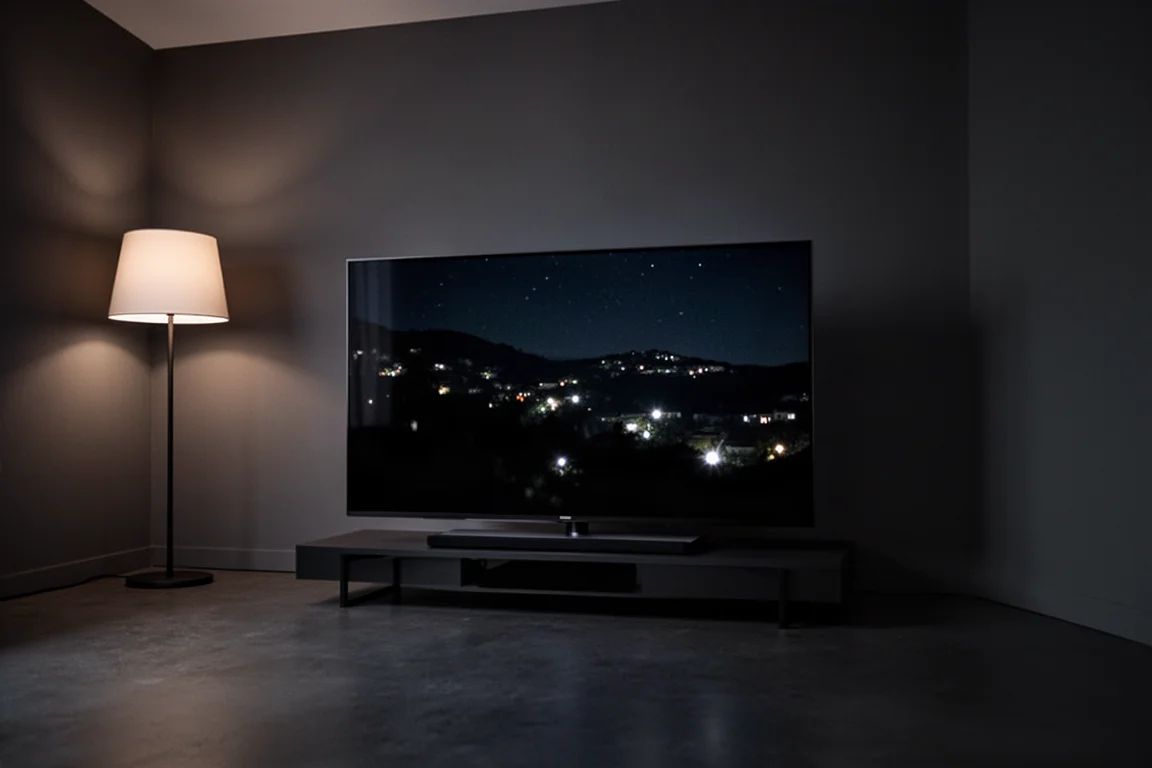
The 77 inch option is worth noting, since it gives buyers a large OLED panel without stepping all the way into the flagship tier. It is also the most practical large-screen OLED size for many living rooms.
Sony A90K: A Compact Master Series OLED
The A90K is a Master Series set, which means each panel is calibrated at the factory against a reference standard, and it comes in 42 and 48 inch sizes only. It uses the same high luminance OLED panel and XR OLED Contrast Pro engine as the larger OLED models, so the colour and contrast boost applies here too, including in brightly lit rooms.
An optional high position stand raises the screen so it can serve as a high performance gaming monitor. Between the compact sizes, the Master Series build quality and the gaming-friendly stand, this is the model aimed at desk setups, bedrooms and smaller living rooms.
Sony A90J: The Carryover Flagship OLED
Sony carried the A90J over from 2021, where it collected a number of awards, and it remains one of the strongest OLEDs in the lineup. It is available in 55, 65 and 83 inches. Buyers who want the largest OLED panel Sony offers will find it here, and the model continues to benefit from the XR processing that the rest of the range shares.
Because it is a carryover rather than a new panel generation, it sits slightly apart from the newer OLED models, but its reputation and its 83 inch option keep it relevant for anyone prioritising screen size.
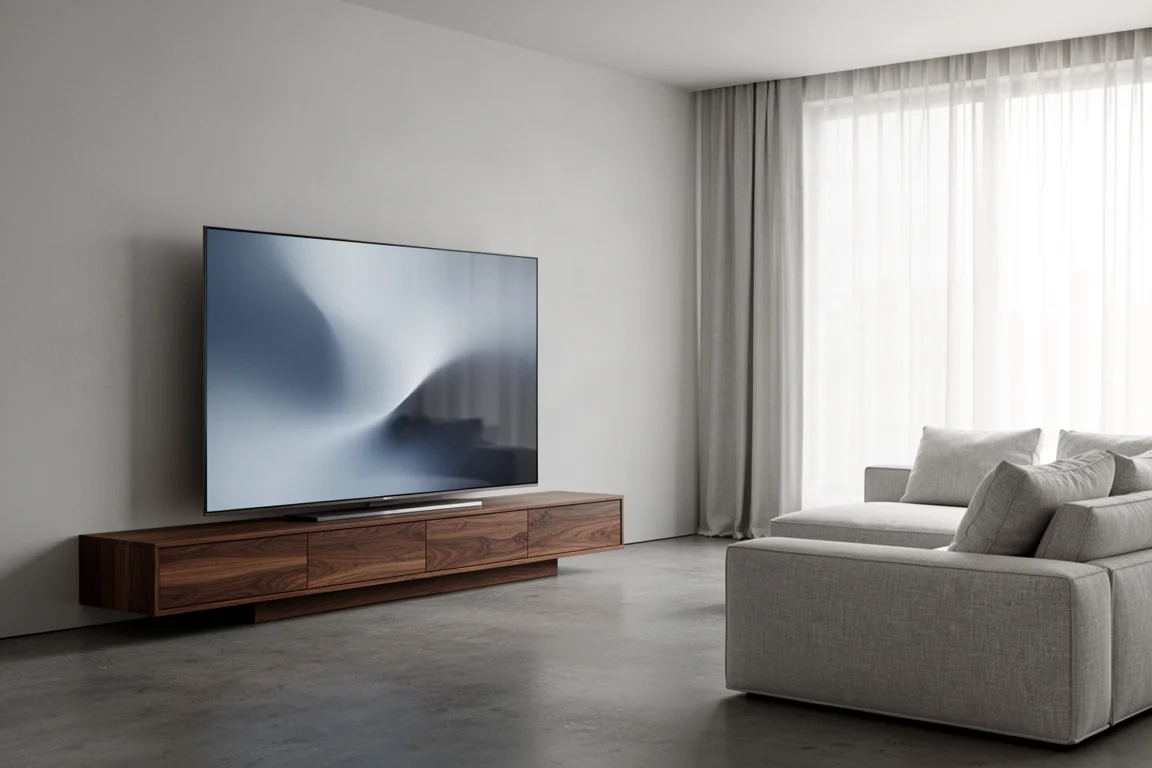
For a large room with controlled lighting, the combination of OLED black levels and a screen this size is difficult to match, and the carryover status means it is a known quantity rather than a first-generation design.
Sony A95K: The First QD-OLED
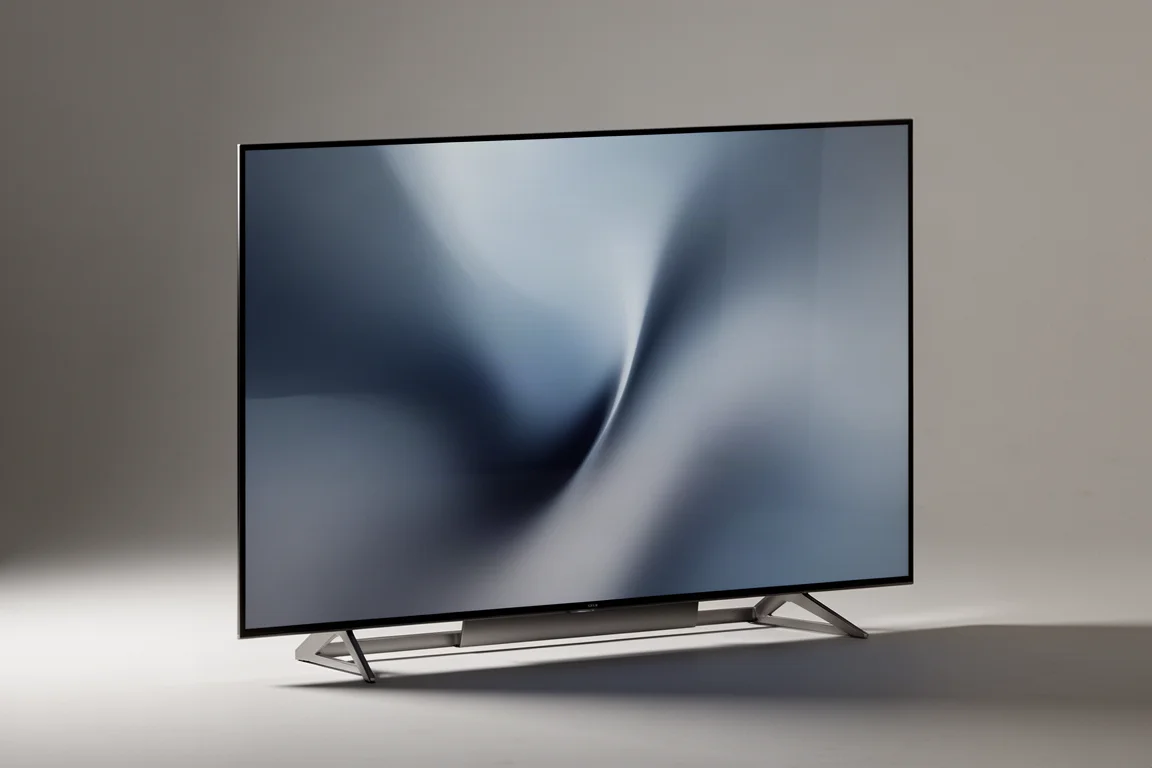
The A95K is Sony’s first QD-OLED, using a quantum dot layer on top of an OLED panel. Sony states a boost in colour brightness of up to 200 percent compared with conventional OLEDs, which addresses the one area where OLED has traditionally trailed LED. It is offered in 55 and 65 inch sizes only.
Bravia Cam hardware is bundled with the set, and audio is handled by actuators on the back of the panel that send vibrations through the screen to produce sound from its entire surface. That system produces better audio than standard television speakers and can act as the centre channel in a traditional home theatre setup via centre speaker mode, so dialogue, effects and music appear to come directly from the screen.
Sony Z9K: 8K Mini LED at the Top of the Range
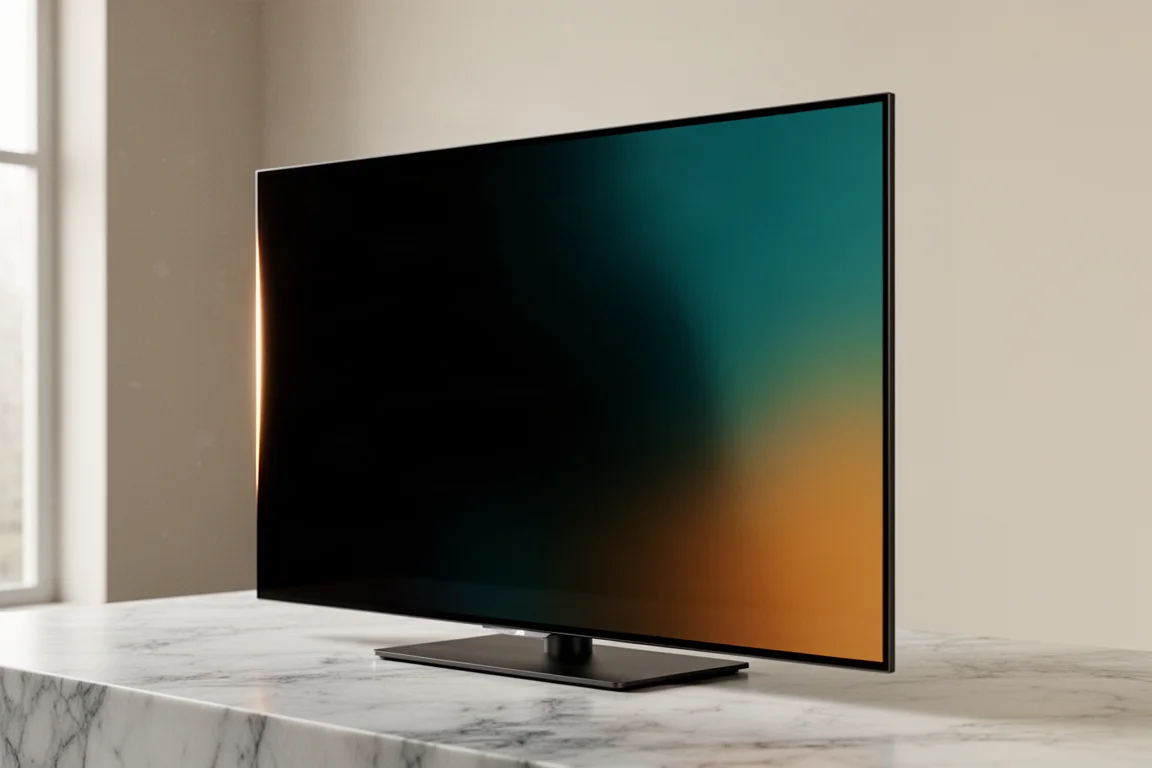
The Z9K replaces the Z9J as the flagship Mini LED model and is available in 75 and 85 inches. It uses XR 8K upscaling and thousands of densely packed 8K Mini LEDs to bring any source close to 8K resolution, which is what makes fine detail and texture readable on a screen this large. Bravia Cam is bundled as well.
Mini LED backlighting also addresses blooming, the halo effect that appears around brightly lit objects on dark backgrounds on conventional LED panels. With thousands of small LEDs driving the backlight, black levels can be controlled far more tightly, so the Z9K delivers deep blacks alongside LED brightness and substantially less halo than a standard LED set.
Buying Advice: Matching a Model to Your Room and Budget
The simplest way to narrow the range is to start with the room. A bright room with large windows benefits from the higher light output of the LED and Mini LED models, while a space with more controlled lighting lets an OLED show what it can do. The X90K covers the most common sizes at the most accessible price, and the X95K is the strongest LED value in the lineup.
Gaming buyers should weigh the two compact A90K sizes and the high position stand, while the X90K and X95K both bring HDMI 2.1 features that suit current consoles. If you want the largest possible OLED, the A80K and A90J cover the 77 and 83 inch options, and the A95K is the choice for buyers who want OLED contrast with a significant step up in colour brightness.
For 8K and the biggest screens, the Z9K sits alone at the top. It is worth remembering that Master Series models are individually calibrated at the factory against a reference standard, which is part of what separates them from the rest of the range. If you keep a television for ten years or more, the step up between series is easier to justify than the price gap first suggests.
Conclusion
Sony’s XR range is structured so that the picture processing stays consistent while the panel technology and size options change. The X90K is the value entry point, the X95K is the LED model most buyers should consider first, the A80K brings OLED within easier reach, the A90K suits smaller rooms and gaming setups, the A90J covers the largest OLED sizes, the A95K adds QD-OLED brightness, and the Z9K sits at the top with 8K Mini LED.
Further reading
Related Reviews
TVs
Hisense 100UR8SG Review: A 100-Inch RGB Mini-LED That Takes On OLED
A 100-inch RGB mini-LED television with measured peak brightness of 3,850 nits, wide color volume, and a price far below large-format OLED.
TVs
Hisense U9 vs Hisense U8 vs Samsung S90C OLED: Which TV Is Worth Buying?
A practical comparison of two Hisense RGB Mini-LED televisions and an OLED alternative, with real strengths, trade-offs and a clear buying recommendation.
TVs
LG B4 OLED TV Review: Entry-Level OLED With Excellent Out-of-Box Accuracy
A practical look at the LG B4 OLED, covering picture accuracy, gaming features, webOS responsiveness, and how it compares to brighter LED sets and pricier OLED rivals.