TVs
TCL QM8L Review: Nearly Flagship Mini LED Performance for Much Less
The TCL QM8L pairs SQD mini LED brightness with strong out-of-the-box accuracy, four 144Hz HDMI 2.1 ports, and a price well below the flagship X11L.
Introduction
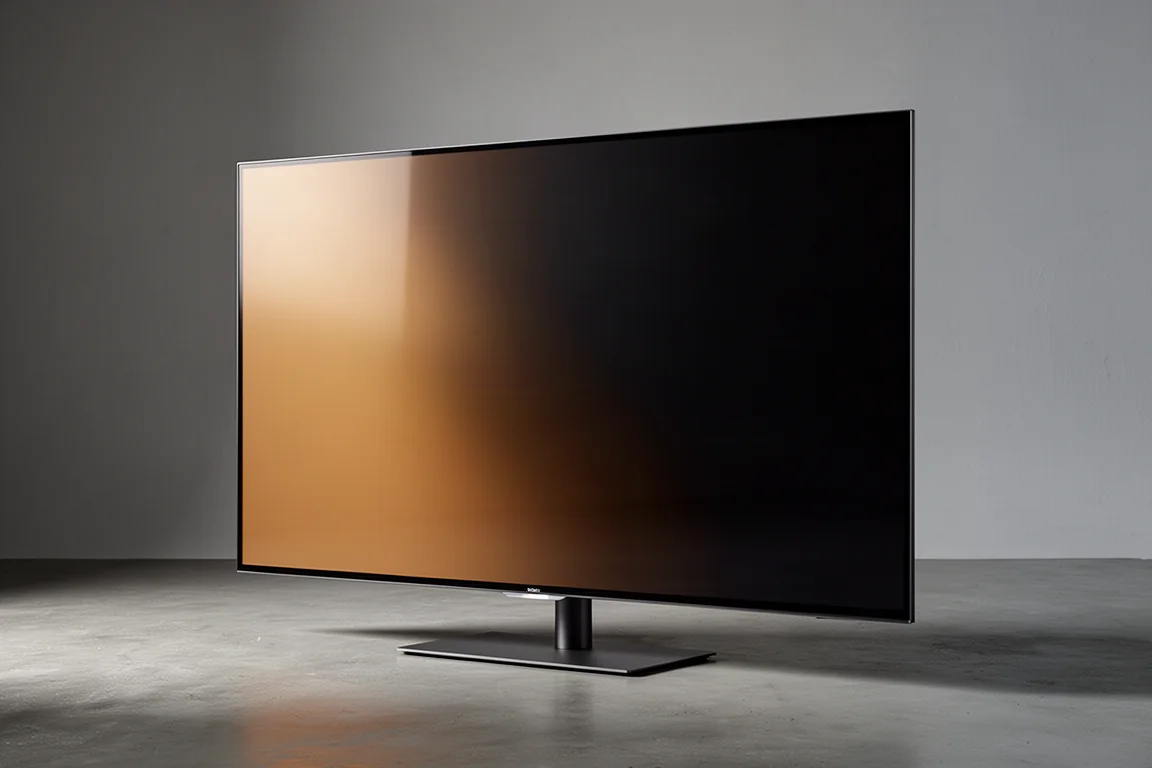
TV technology moves at a remarkable pace. Flagship features that once took a year or more to reach more affordable sets now arrive within weeks rather than seasons. The TCL QM8L is a clear example of that shift. It is an SQD mini LED television that shares a substantial amount of DNA with the brand’s flagship X11L, a set that tops out at nearly $10,000. There are genuine differences between the two, mostly in peak brightness and in how the backlight is controlled, but they have far more in common than the price gap would suggest.
Who the TCL QM8L Is For
The QM8L is offered in sizes from 65 up to 98 inches, and the 85-inch model sits in the middle of that range. From the front it is almost impossible to tell apart from the X11L, thanks to the same zero edge design, although it is a little thicker and a bit lighter in the hand.
This is a television for people who want a bright, accurate picture without paying flagship money. It suits mixed streaming, films, and everyday viewing in a normally lit room, and it works well for casual console gaming, since it includes four HDMI 2.1 ports capable of 4K at 144Hz. Anyone shopping for a well-built, easy-to-use TV that performs straight out of the box is unlikely to see the QM8L as a compromise.
Brightness is the first thing that registers. Like most modern TCL sets, the QM8L pops the moment it is switched on, and that initial impression holds up once the picture settings are dialled in.
Main Strengths
The QM8L gets a great deal right, and most of its strengths are the kind you notice within the first few minutes of watching.
Brightness and HDR Performance
Out of the box, the television defaults to its standard profile. The dedicated eco mode is finally gone, and eco-friendly settings can instead be toggled inside any picture profile, with a small green leaf icon appearing when they are active. In standard mode the QM8L is extremely bright, but not especially accurate: expect a blue shift in the highlights and some oversaturation in the primaries. That is standard practice for nearly every LED television on the market, and most viewers prefer a punchy, slightly cool image, so the profile does exactly what it is designed to do.
Among the SDR and HDR10 profiles, movie mode, rather than filmmaker mode, delivers the highest level of accuracy out of the box. Grayscale and colour both land under a delta E of 3, at 2.6 and 1.8 respectively. In calibration terms, anything below 3 means the difference between the picture on screen and a reference image is essentially invisible to the human eye. Simply switching to movie mode therefore provides a highly accurate image without touching another setting.
Brightness in movie mode initially measured 351 nits, which is fine for SDR in a darkened room but well below the 6,000-nit claims. The catch is that brightness was capped at 45 while an energy-saving mode was active by default across several profiles. With the eco setting disabled and brightness at its maximum, the figure jumped to 700 nits with no effect on grayscale or colour accuracy. Pushing further with the real-time contrast and brightness enhancements maxed out drove movie mode past 4,000 nits, an unusual result for a profile built around accuracy. The trade-off is that those enhancements push the margin of error just outside its ideal range. With brightness at 100 and the enhancements set to low, the set settled at a sustained real-world brightness of around 1,500 nits, which proved to be the sweet spot in a brightly lit room and brought accuracy back within standard.
With calibration tools, the margins of error came down to roughly 1.5 for both grayscale and colour. That is remarkably close to the X11L after calibration, and in some cases the QM8L measured slightly better out of the box.
Colour Accuracy and Coverage
HDR10 tracked almost identically to SDR in movie mode, which is exactly what you want to see. Dolby Vision needed more scrutiny: none of the profiles pass as fully calibrated out of the box, and Dolby Vision Dark comes closest with a margin of error of around 4. Ideally that figure would be 3 or below, but 4 is still a solid result and not a strong enough reason to hire a professional calibrator.
TCL states that its deep colour system, built on super quantum dots, can reach 100% of the BT.2020 colour space. Measured results came in closer to 90% of BT.2020 and 98% of P3. Those are excellent figures, but colour coverage is one area where the claim may be slightly overstated.
Backlight Control and Black Levels
Claims about blooming are largely accurate. Image blooming is very well controlled and very subtle when it appears, even in high-contrast scenes or with white subtitles set against a black background.
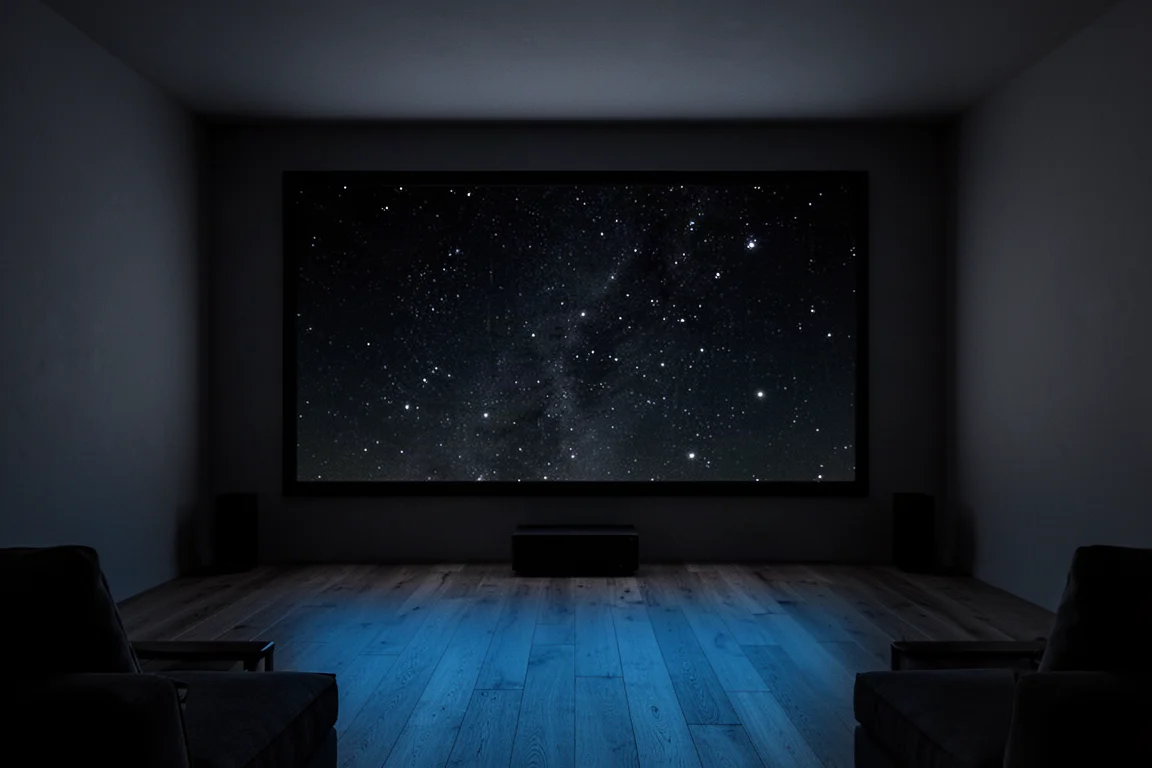
It does not match the X11L, which gets incredibly close to OLED-level control, and this is one of the few places where the difference between the two sets is genuinely visible. The gap between 20,000 and 4,000 dimming zones, and the processing behind each, shows up here. Even so, the QM8L remains one of the best mini LED performers on the market, with very good black levels and contrast that arguably place it a close second or third behind the X11L or an OLED.
Panel uniformity is solid, with a slight and consistent vignette near the edges as you approach the bezel. That is a pattern seen on other TCL models with this design, and it is essentially the trade-off for extending the image edge to edge without a thicker frame to conceal the backlight. Off-axis viewing is good and an improvement over previous QM models, though still not quite on par with the X11L or an OLED. It is good enough to keep colour and contrast looking right even from the far end of a 10-foot sofa.
Processing, Motion, and Gaming
Processing is a genuine strength. When it comes to cleaning up compression noise and upscaling HD content to 4K, the QM8L sits right alongside what has traditionally been seen from Sony. Even 720p transfers look excellent.
Casual gamers are unlikely to be disappointed. First-person shooters and golf simulators on a PS5 looked and responded great. Motion tests push televisions to speeds far beyond what films, shows, or most games actually use, and most real-world motion falls in the 200 to 300 range, where the QM8L looks fine. Anyone chasing the last few percent of motion performance would be better served by an LG OLED, but for everyone else, plugging a console into one of the four HDMI 2.1 ports and playing is the sensible approach.
Things to Consider Before Buying
A few trade-offs are worth understanding before you commit.
The first is the relationship between brightness and accuracy. The default eco settings hold brightness back until they are disabled, and the aggressive real-time enhancements that push the set past 4,000 nits also nudge it outside its accuracy targets. The most balanced configuration is brightness at maximum with the enhancements kept low, which lands around 1,500 nits sustained.
The second is dimming precision. Blooming is impressively well controlled, but the set does not have the pinpoint dimming performance of the flagship X11L, and that gap is visible in the most demanding high-contrast material. Dolby Vision profiles also arrive short of fully calibrated, with Dolby Vision Dark the closest of the group.
There is also the question of wireless audio. Over a month of use, roughly 10 to 12 brief audio dropouts occurred while using Dolby FlexConnect, each lasting a second or two. That is frustrating, but not a deal-breaker given the flexibility of adding four Z100 wireless speakers and a sub, which remains more affordable than most high-end sound bars, let alone a premium multi-speaker system such as Sony’s Theater Quad.
Finally, expect a slight vignette near the panel edges. It is consistent and unobtrusive, and it is the visible cost of the zero edge design.
Buying Advice
Against TCL’s own X11L, the QM8L does not quite pull off the upset, but it gets much closer than expected. It gets close enough that, for most people, the X11L becomes a much tougher sell. Taking roughly 90% of that flagship performance at a fraction of the cost is a straightforward trade.
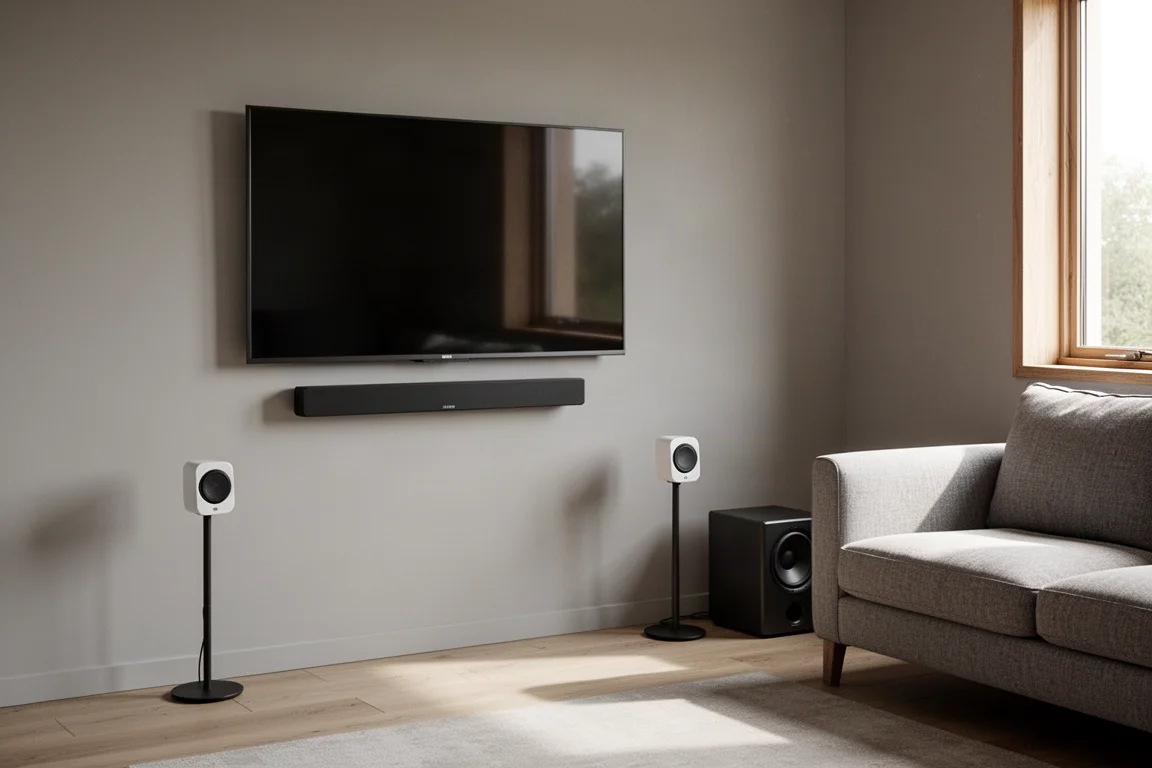
Compared with the QM8K, the 8L is the better television for one key reason: it does not have the power supply noise encountered on the QM8K and QM9K. As a result it has better control over its backlighting and can hold and sustain its brightness levels for longer periods.
Against heavy hitters such as the Sony Bravia 9 or the newest OLEDs from LG and Panasonic, the QM8L is right there with them in most mixed viewing, especially when streaming. The best OLEDs remain undefeated, but mini LED can deliver sustained brightness at scale without the massive price tag, and for most viewers that matters more than marginal gains in response time or tiny improvements in colour accuracy. In real-world terms, the QM8L can go toe to toe with an OLED.
If the X11L caught your eye but the price gave you pause, the QM8L is proof that good things come to those who wait. In mini LED, that wait is now measured in weeks and months rather than years.
Conclusion
The TCL QM8L delivers a bright, accurate, and genuinely enjoyable picture with very little setup effort. Movie mode alone gets you close to reference performance, the backlight is well behaved, and the set holds its own against the wider mini LED and OLED field in everyday viewing. Its compromises, mainly pinpoint dimming control and the occasional wireless audio dropout, feel fair for the money. For anyone who wants flagship-adjacent performance without flagship pricing, this is an easy set to recommend.
Product link
View more details for TCL QM8L
This product is mentioned in the review. Check the specifications, options, and compatibility before buying.
View more details for TCL QM8LFurther reading
Related Reviews
TVs
Best Sony XR TVs Compared: X90K, X95K, A80K, A90K, A90J, A95K and Z9K
A practical guide to Sony's XR television range, from the value-focused X90K to the 8K Mini LED Z9K, with clear advice on which model suits which room.
TVs
Hisense 100UR8SG Review: A 100-Inch RGB Mini-LED That Takes On OLED
A 100-inch RGB mini-LED television with measured peak brightness of 3,850 nits, wide color volume, and a price far below large-format OLED.
TVs
Hisense U9 vs Hisense U8 vs Samsung S90C OLED: Which TV Is Worth Buying?
A practical comparison of two Hisense RGB Mini-LED televisions and an OLED alternative, with real strengths, trade-offs and a clear buying recommendation.